
Review · ATHENS
Athens: The Acropolis and Acropolis Museum Tour in German
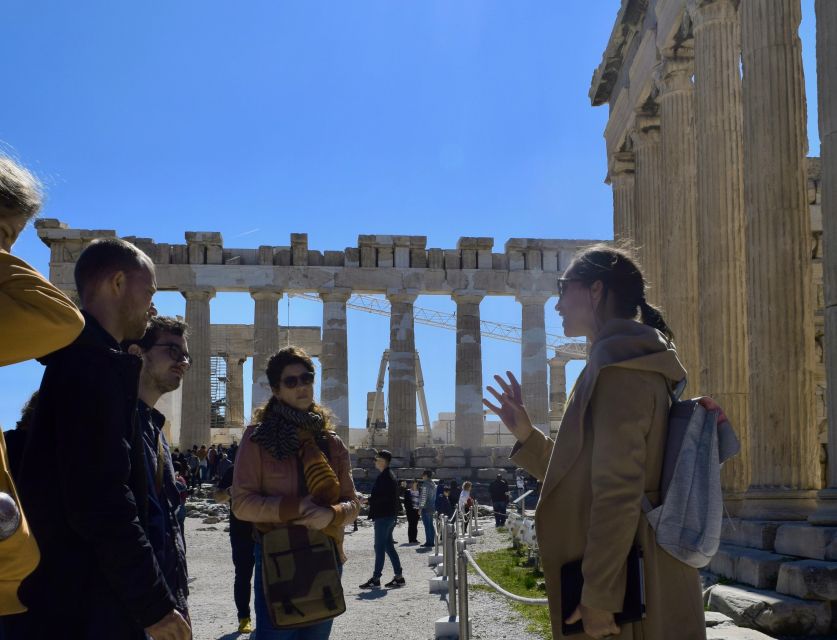
The best part of this tour is the way it connects the Acropolis monuments with their original sculptures. You first see the temples in their high, sunlit setting, then walk down to the museum to view the Caryatids, Parthenon sculptures, and other authentic works. I like the story-led German guiding, especially when the guide turns the contest for Athens, the birth of democracy, and ancient theater into memorable tales rather than a list of dates.
I also like the sensible route from the south entrance and the built-in photo time at the top. The main drawback is the price, listed at $152 per person, and the physical effort: you walk uphill over uneven, sometimes slippery ground with no elevator. On a hot day, the Acropolis can be closed from noon to 5 p.m., so an early start matters.
Key points to know before booking
- The south entrance gives you the Theater of Dionysus first, linking the Acropolis to the origins of Greek drama.
- German-speaking guide Jessica has led especially lively tours, with stories that work well for adults and children.
- The route includes every major monument, from the Propylaea and Temple of Athena Nike to the Erechtheion and Parthenon.
- The museum adds the missing pieces, including the original Caryatids and Parthenon sculptures.
- You get about 20 minutes for photos at the Parthenon, useful in a group tour where sightseeing time is otherwise guided.
- Expect a real uphill walk, hot sun, uneven stones, and no elevator, not a gentle museum outing.
Why the Acropolis works best with the museum
The Acropolis is not just a collection of old stones on a hill. From the top, you see the temples in the place and light that give them meaning. Yet many of the statues you expect to see there are replicas or absent, while their originals are protected inside the Acropolis Museum.
That pairing makes this three-hour experience more useful than an Acropolis visit alone. At the hilltop, your guide explains the buildings, their purpose, and the methods used to construct them. At the museum, you can look closely at the sculpture and decoration that help you understand what these temples once looked like.
I especially like this order: ancient monuments first, museum second. You get the big view before focusing on the details. By the time you reach the museum, the Caryatids and Parthenon sculptures are not random pieces in glass cases. You have already seen where they belonged.
The tour is conducted in German, which makes a real difference if you want to follow mythology, architectural terms, and historical connections without translating in your head. Guide Jessica has been praised for mixing clear explanations with humor and short stories. That approach should suit families too. Children aged 11 and 12 were specifically included in one very positive experience, and the guide kept the visit lively for both adults and children.
More Museum Tours in Athens
- Athens: Acropolis, Parthenon & Acropolis Museum Guided Tour
★ 4.8 · 9,316 reviews - The Acropolis, Parthenon & Acropolis Museum Guided Tour
★ 4.7 · 8,493 reviews - Athens: Mythology of Delphi, Museum and Arachova Guided Tour
★ 4.7 · 5,102 reviews
Starting at the south entrance and the Theater of Dionysus
The meeting point is around Acropoli, though the exact meeting location can vary with the option you book. From there, the group walks for roughly two minutes to the Acropolis area and begins at the south entrance.
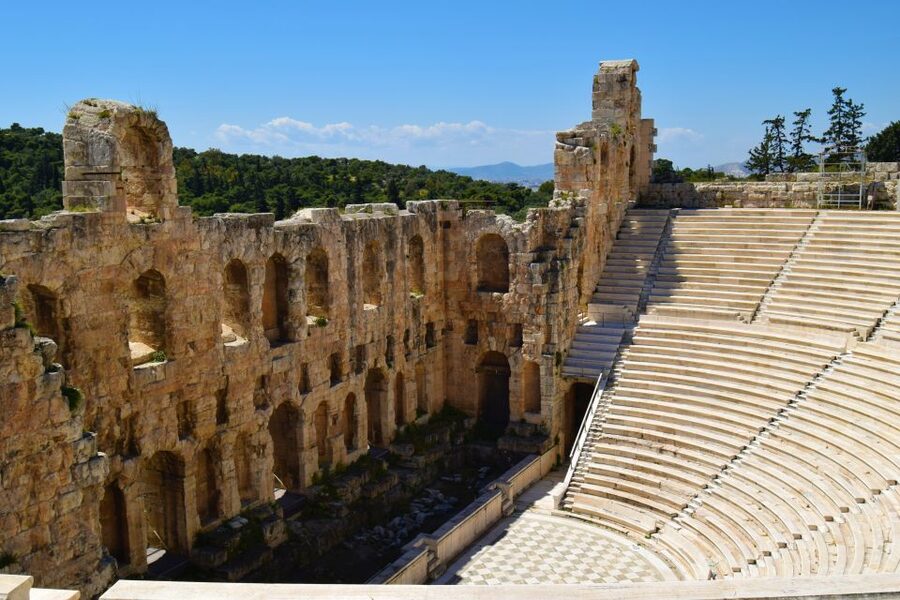
This is a smart starting point. The south slope gives you access to the Theater of Dionysus, often described as the first ancient Greek theater. Here, the guide sets up the cultural world behind the ruins. This was not simply a place to sit and watch a performance. Theater was tied to civic life, religious festivals, public debate, and the worship of Dionysus.
I prefer seeing this site before the temples above because it shows that the Acropolis was more than a religious summit. It was connected to the city below, where Athenians gathered for performances and public life. The remains may look spare, so the guide’s storytelling matters. Without an explanation, you might spend only a few minutes taking pictures and move on.
You will also pass the Odeon of Herodes Atticus. Its surviving curved structure gives you a stronger sense of the scale and drama of ancient performance spaces. The route then continues up the south slope, where the walk begins to feel more demanding.
The uphill walk past the Herodion
The ascent is not long by modern hiking standards, but it is a genuine climb. The surface is uneven, and parts may be slippery. Wear shoes with a firm sole, bring water, and use a sun hat. There is little value in looking stylish if your feet are unhappy before you reach the Parthenon.
The south slope is exposed to the sun, especially in warmer months. One July group faced a temporary closure from noon to 5 p.m. because of extreme heat. Their 10 a.m. start allowed the visit to continue, with several shaded pauses along the way. That is useful practical advice: select the earliest available time rather than assuming the Acropolis will remain open all day.
The guide can also use these pauses well. Jessica has been praised for filling rest stops with stories, which turns a necessary break into part of the tour. You should still expect heat and exertion. This is not suitable for wheelchair users or people with limited mobility, and the tour is not recommended for pregnant women according to the activity information.
Along the route, you pass the Herodion and the remains of Athens’ first pharmacy. These details give the climb a human scale. The Acropolis is usually presented as a grand symbol, but small references to later city life help you see that the hill continued to have practical and cultural importance long after classical Athens.
Entering through the Propylaea
The Propylaea is the monumental gateway to the Acropolis. Passing through it changes the feel of the visit. Before this point, you are climbing toward the sacred center. After it, the major monuments begin to appear together.
The entrance is impressive for its size and design, and your guide explains why such an ambitious gateway was built. You will also learn about the planning and building methods used across the Acropolis. This is where a good German guide earns the fee. A quick photo stop tells you what the Propylaea looks like. A clear explanation helps you understand how it controlled movement and framed the approach to the temples.
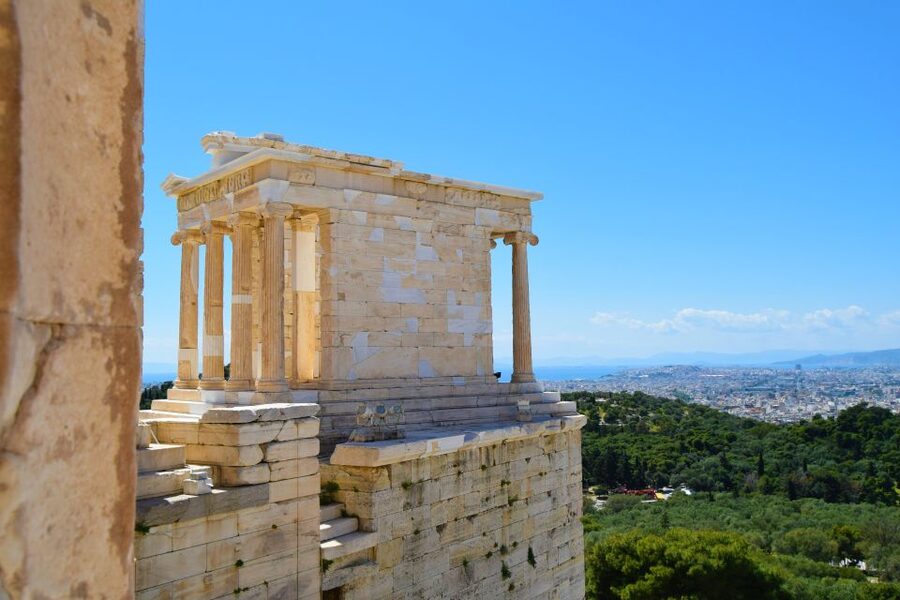
Near the entrance, you see the Temple of Athena Nike. It is smaller than the Parthenon, but its position gives it great visual importance. The guide connects the temple to Athena in her role as a bringer of victory and explains why this spot mattered to the city.
The route is compact, but the ground can be crowded and uneven. Stay close enough to hear the guide and be ready for pauses while the group moves through narrow or busy areas. The tour is designed as a walking group experience, not a private, stop-anywhere visit.
More Acropolis Museum visits:
- Athens: Acropolis, Parthenon & Acropolis Museum Guided Tour
★ 4.8 · 3,579 reviews - Acropolis monuments & Parthenon Walking Tour with Optional Acropolis Museum
★ 5.0 · 2,678 reviews - Athens All Included: Acropolis and Museum Guided Tour with Ticket
★ 4.5 · 2,673 reviews - Athens: Acropolis Museum Ticket with optional Audio Guide
★ 4.4 · 2,652 reviews
The Erechtheion and its famous Caryatids
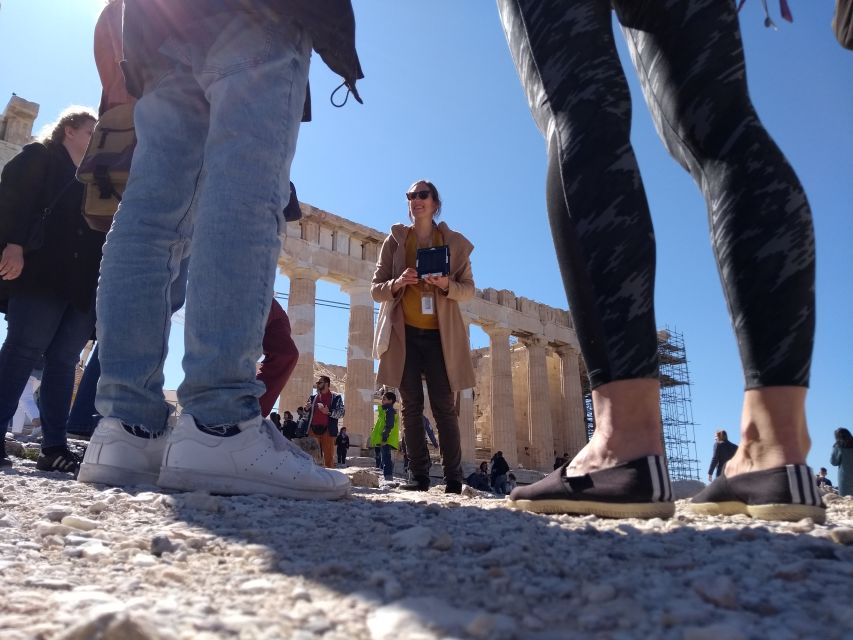
The Erechtheion is one of the most unusual buildings on the Acropolis. Rather than presenting the simple balance of the Parthenon, it has an irregular form connected with several sacred traditions.
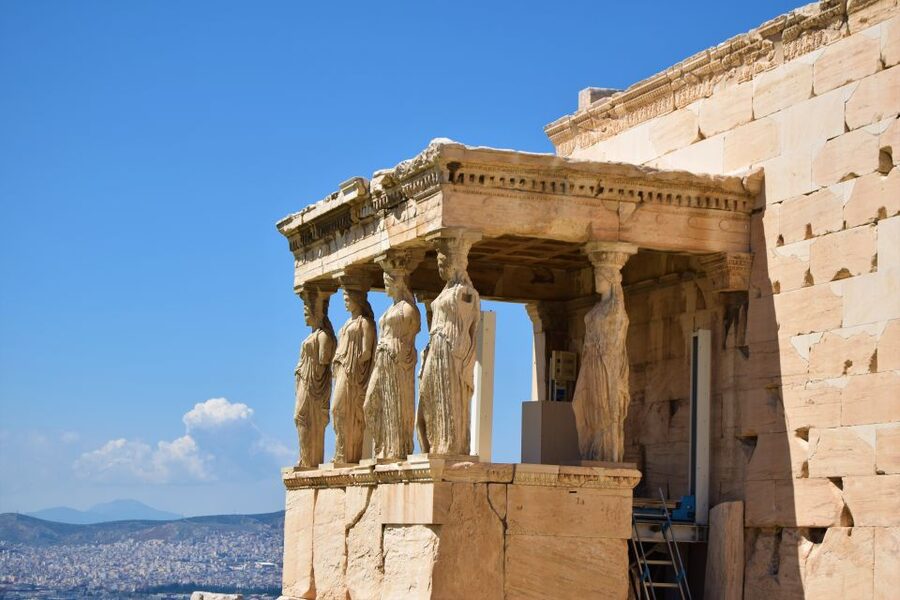
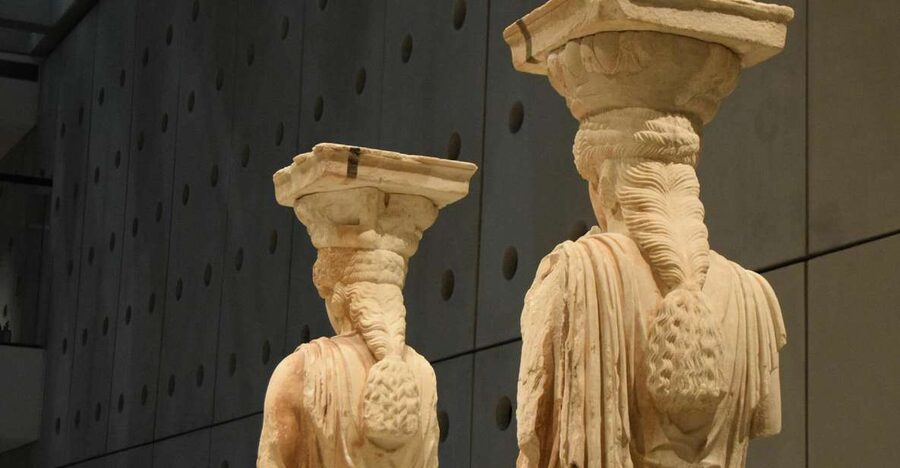
Its best-known feature is the porch supported by the Caryatids, the sculpted female figures that appear to carry the roof. Seeing the building above gives you the architectural setting. Later, inside the Acropolis Museum, you see the original sculptures preserved in far better condition.
That two-part comparison is one of the strongest reasons to book the combined tour. The replicas or replacements on the hill can look convincing from a distance, but the originals in the museum reward close attention. You can examine their carving, posture, and details without trying to understand them through a guidebook photograph.
The guide also discusses the myths tied to Athens and the contest for control of the city. These stories help explain why Athena became the city’s patron and why the Acropolis carried such importance. You are not just memorizing which building came first. You are hearing how religion, civic identity, and political power overlapped.
The Parthenon from the hilltop

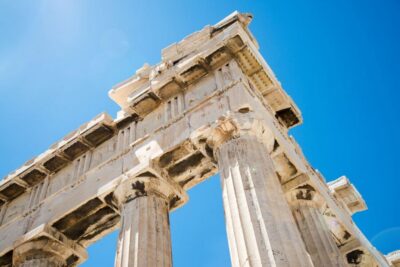
The Parthenon is the main event for most people, and the tour gives it the attention it deserves. From here, you can study its columns, proportions, and surviving decoration while hearing why it was built and how its architects solved difficult construction problems.
The building was designed to look balanced and stable, but the effect depends on careful adjustments rather than a simple stack of straight blocks. The guide explains the techniques behind its appearance, giving you more to notice than damage and missing sculptures.
You also hear about the historical era of democracy and the ambitions of ancient Athens. The Parthenon was a religious building, but it also expressed the city’s power and wealth. That wider context makes the monument more interesting than a purely architectural stop.
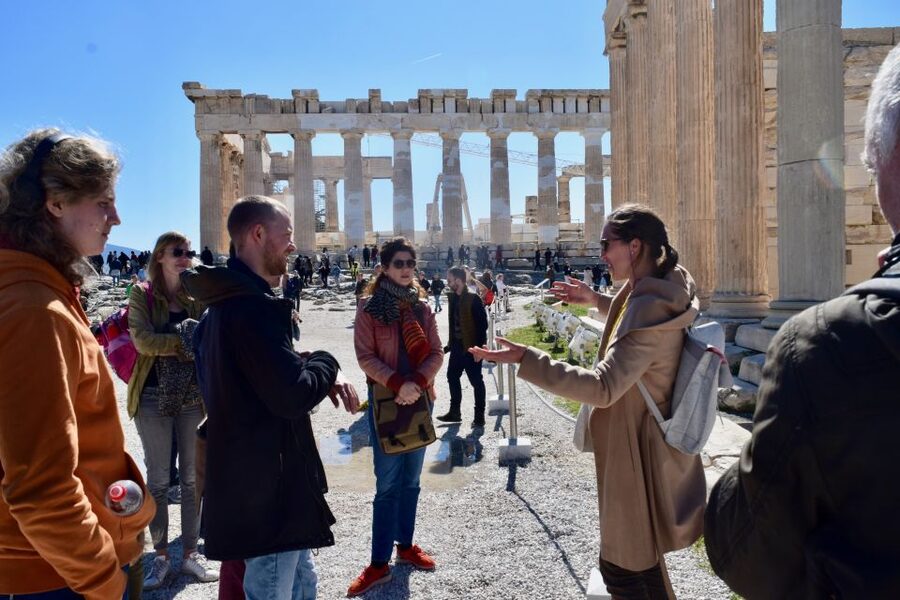
The tour includes around 20 minutes of free time for pictures at the Parthenon. I value this because guided visits can sometimes move too quickly for a good photograph. You can take in the views, record the details that caught your eye, and enjoy the setting without a constant stream of commentary.
Still, do not expect to wander off for a long private exploration. The time is limited, and the Acropolis itself has rules, crowds, and changing access conditions. Keep your camera ready, but listen for the meeting instructions so the group can continue on time.
Walking down to the Acropolis Museum
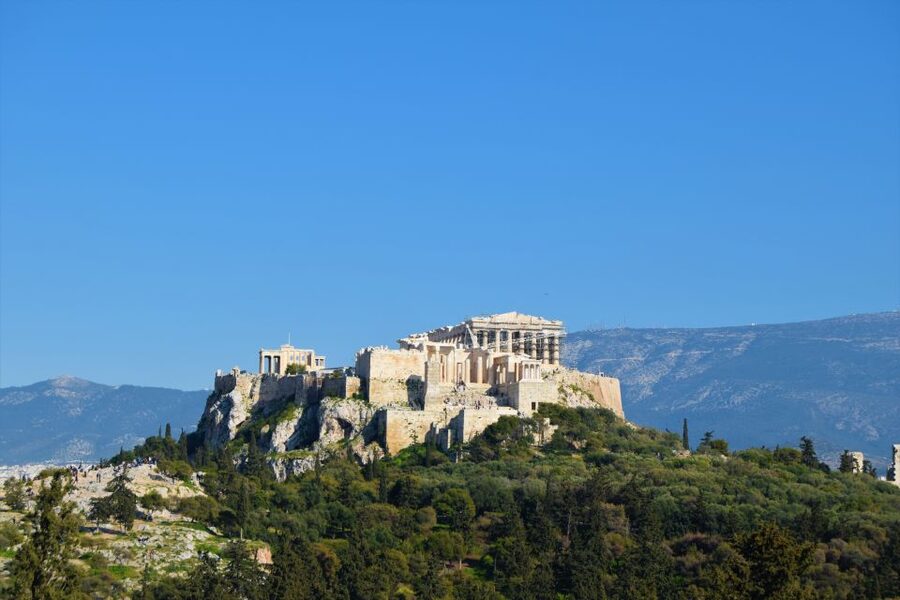
After the Acropolis, the guide leads the group to the museum, a walk of about two minutes according to the planned route. The museum is where the visit shifts from wide views and monumental scale to close study.
You will see original sculptures connected with the Acropolis, including the Caryatids and Parthenon sculptures. Authentic statues and architectural pieces help fill the gaps left by the weathered buildings above. The museum is also housed in a modern building, which creates a clear contrast with the ancient sites.
The museum portion is not an optional extra in terms of value. It is the part that lets you test what you have just heard. After learning how the temples were designed, you can look at the surviving sculpture and see the quality of the carving at close range.
This final stop also makes the three-hour schedule feel well balanced. The hilltop portion is physical and exposed. The museum offers a calmer ending, with more shade and time for careful observation. If you have limited time in Athens, this combination covers the city’s most important ancient sight without requiring separate planning for two major attractions.
German guiding, group pace, and the role of Jessica
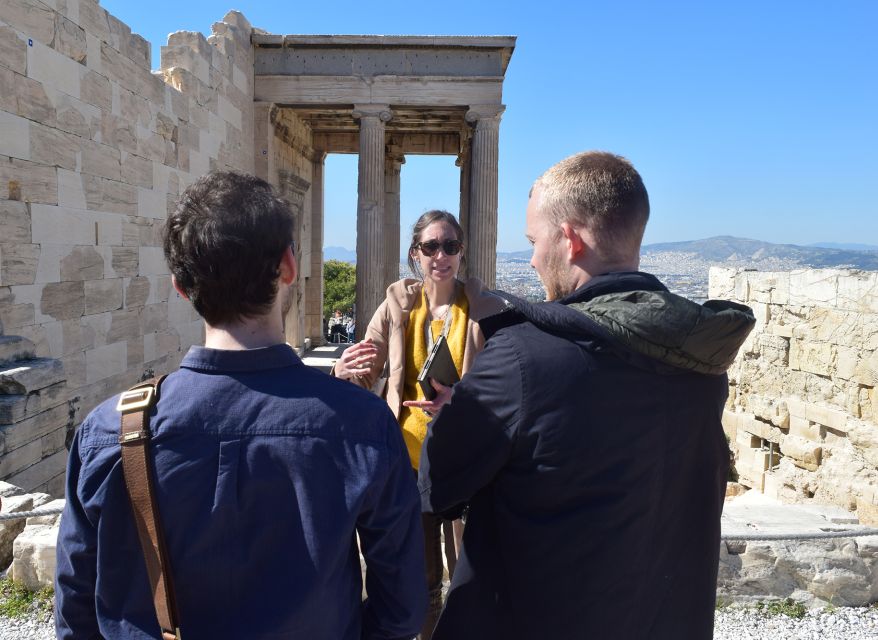
The language is German throughout, with a live licensed guide. If Jessica leads your visit, expect a warm, story-focused style. Her explanations have been described as amusing, clear, and full of useful tips, with enough energy to hold the attention of children.
That style suits this subject. Greek mythology can become a blur of names, and ancient architecture can feel dry when presented as measurements alone. Short stories about the gods, the struggle for Athens, democracy, and theater give the sites a human thread.
The group size can vary. One July group had nine people, while the museum portion of that same outing had four. A smaller group usually makes it easier to hear the guide and ask questions, but the booking information does not promise a fixed size.
You should also know that a group tour cannot match the freedom of a private guide. The route, timing, and photo break are shared with other people. In exchange, you get a licensed German guide, pre-booked entry, and a carefully arranged visit to both major sites.
Is $152 a fair price?
The listed price is $152 per person. That is not a budget ticket, especially if you are traveling with a family. Older bookings have been made at a lower price, including one reported cost of 118 euros per person, so the final amount may vary by date, option, or booking conditions.
The price includes entry to the Acropolis and Acropolis Museum, a guided walking tour, photo time, and ticket pre-booking fees. Food, drinks, and hotel pickup are not included. You need to reach the meeting point in central Athens yourself.
I would judge the value this way: if you only want admission and prefer to read on your own, the price may feel high. If you want a German explanation that links mythology, architecture, politics, theater, and sculpture in one compact visit, it is easier to justify.
The tour is particularly useful on a first visit to Athens. It removes the need to work out which monuments matter, how to connect the Acropolis with the museum, and what you are actually looking at. The value is less about saving time in a simple queue and more about making three hours count.
Practical advice for a smoother visit
Book the earliest suitable start time, especially in hot weather. A morning start can mean less heat and a better chance of avoiding an afternoon closure during extreme conditions.
Wear comfortable shoes with good grip. The uphill route is uneven, and the surface can be slippery. Bring water and a sun hat, but do not bring food or drinks into the tour areas. Weapons, sharp objects, and drones are not allowed.
The activity is not suitable for wheelchair users, people with mobility impairments, or those who cannot manage an uphill walk. There is no elevator. If you need frequent rests, tell the guide early so you can pace yourself safely.
The meeting point may change depending on the option booked, so check your confirmation carefully. Hotel pickup and drop-off are not provided. Cancellation is flexible up to 24 hours before the start, and you can reserve now and pay later if that option is available for your date.
Who should book this Acropolis tour?
I would choose this tour if you want the Acropolis and museum handled in one visit, prefer German guiding, and enjoy explanations built around myths and stories. It also suits families with older children who can manage the climb and benefit from a guide who keeps the subject lively.
I would think twice if you want a slow, private visit, dislike group pacing, or have trouble walking uphill on uneven ground. The sun and stone surfaces are part of the experience, not minor details.
For most German-speaking first-time visitors, the combination is strong. You see the Theater of Dionysus, pass through the Propylaea, stand before the Parthenon, and then meet the original sculptures in the museum. That connection is the real reason to book. You leave with more than a checklist of Athens sights. You understand why the buildings and the objects belong together.
FAQ
Is the tour conducted in German?
Yes. The activity includes a live German-speaking guide, and the guide is licensed.
How long does the tour last?
The planned duration is approximately three hours, covering the Acropolis and the Acropolis Museum.
What sites are included on the Acropolis?
The route includes the Theater of Dionysus, Odeon of Herodes Atticus, Temple of Athena Nike, Propylaea, Erechtheion, and Parthenon.
Are entrance tickets included?
Yes. Entry tickets to the Acropolis and Acropolis Museum are included, along with ticket pre-booking administration fees.
Is the tour suitable for wheelchair users?
No. The tour is not suitable for wheelchair users or people with mobility impairments. There is no elevator, and the route includes an uphill walk over uneven surfaces that may sometimes be slippery.
What should I bring?
Bring comfortable shoes, a sun hat, and water. Food and drinks, weapons or sharp objects, and drones are not allowed.
Just added around Athens
- Ancient Athens tour: Acropolis, Parthenon and Acropolis Museum★ 5.0 · 256 reviews
- The Acropolis, Athens Walking City Tour and Acropolis Museum★ 5.0 · 442 reviews
- Athens: Acropolis Museum Ticket with Self-Guided Audio tour App★ 3.5 · 40 reviews
- Family Acropolis & Acropolis Museum Tour inspiredby Percy Jackson★ 4.5 · 40 reviews
- Acropolis of Athens, Parthenon and Acropolis Museum private tour with dinner★ 5.0 · 77 reviews
- Shore Excursion: Acropolis, Athens City tour and The New Acropolis Museum★ 4.5 · 30 reviews
- Athens National Archaeological Museum E-Ticket with Audio Guide★ 3.0 · 57 reviews
- Private Tour: Half day Athens Sightseeing and Acropolis Museum★ 4.5 · 28 reviews
Museum Tours in Athens, compared.
Acropolis, Parthenon & Acropolis Museum Guided Tour
Read our review →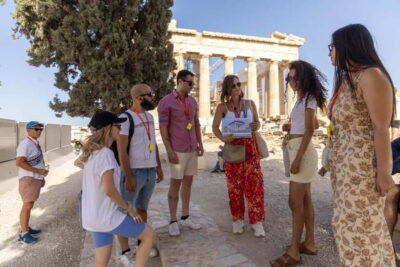
The Acropolis, Parthenon & Acropolis Museum Guided Tour
Read our review →Acropolis, Parthenon & Acropolis Museum Guided Tour
Read our review →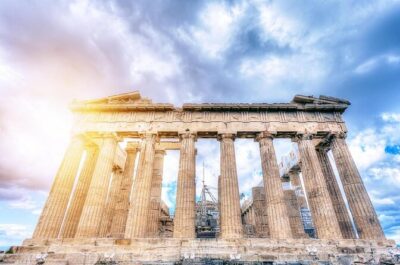
Acropolis monuments & Parthenon Walking Tour with Optional Acropolis Museum
Read our review →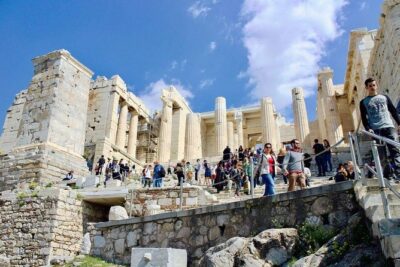
Athens All Included: Acropolis and Museum Guided Tour with Ticket
Read our review →
Acropolis Museum Ticket with optional Audio Guide
Read our review →
Small-Group Delphi, Museum & Arachova Day Trip
Read our review →
Delphi Oracle & Museum Tour with a Licensed Guide
Read our review →Browse the lists this tour appears in