

Review · ATHENS
Athens: National Archaeological Museum Private Guided Tour
The museum’s biggest treasure is not one statue, but the sweep of time inside its walls. In two hours, a licensed guide leads you from prehistoric Aegean objects to classical sculpture, Roman-era pieces, and the Antikythera mechanism, often called the world’s oldest analogue computer. Christos Theodoropoulos has guided many of these visits, and his quick pace helps turn a huge museum into a manageable first look.
I like the private format, since you can ask questions without losing your place in a large group. I also like the focus on major objects rather than a slow march past every case. The main drawback is simple: two hours is not enough for all 11,000-plus exhibits, and the $400 group price is best value when shared by several people.
Key points to know before you book
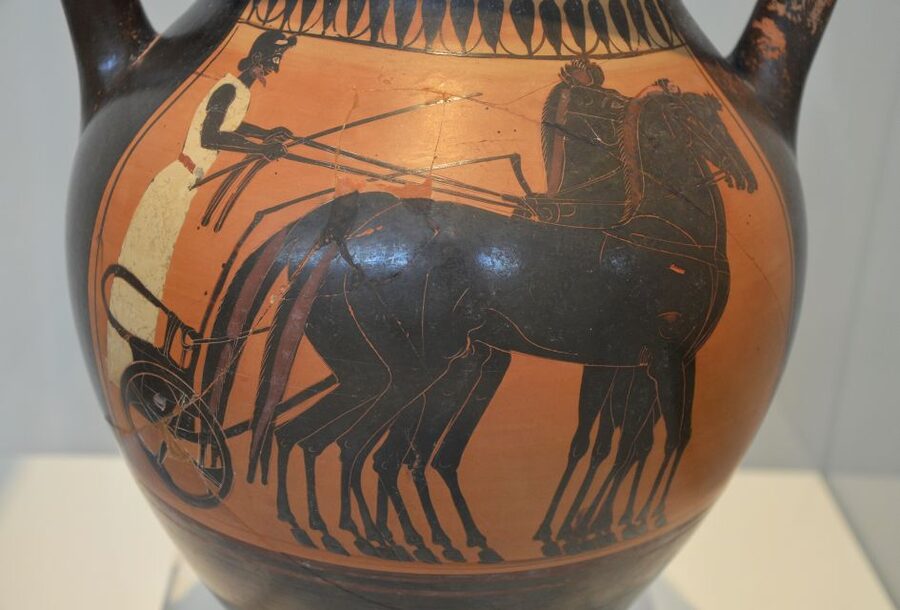
- The Antikythera mechanism is a major stop: See the ancient geared device often described as the world’s oldest analogue computer.
- Christos brings structure to a huge museum: His tour links objects to the larger story of Greek civilization instead of treating each display as an isolated artifact.
- You cover several collections in one visit: Expect prehistoric finds, sculpture, pottery, bronze works, and Egyptian and Near Eastern antiquities.
- The tour moves at a brisk pace: The museum is too large for a relaxed full visit in two hours, so plan to stay longer if you want to explore alone.
- The $400 fee is per private group: Up to six people can join, making the cost easier to justify for families or a small group.
- The museum ticket costs extra: Budget €10 per person for entry, and arrive at the steps by the main entrance on 44 Patission Street.
Why this Athens museum deserves two focused hours
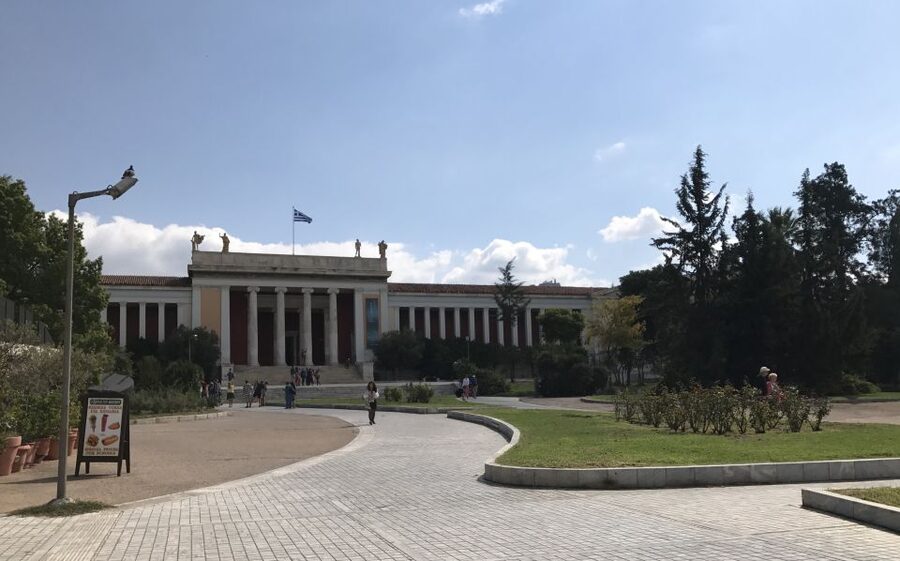
Athens is filled with famous ancient sites, but the National Archaeological Museum gives you something the Acropolis cannot: a broad view of Greek art across thousands of years. You see how styles, materials, beliefs, and daily life changed from the Neolithic period through late antiquity.
The museum began with a narrower purpose. It was meant to hold finds from 19th-century excavations around Athens. Over time, objects from across Greece came here, turning the building into the country’s central archaeological museum.
That scale is both its strength and its problem. The museum holds more than 11,000 exhibits across about 8,000 square meters of galleries. You can spend hours here and still leave with whole sections unseen. A guide is useful mainly because you do not have to decide alone which rooms deserve your limited time.
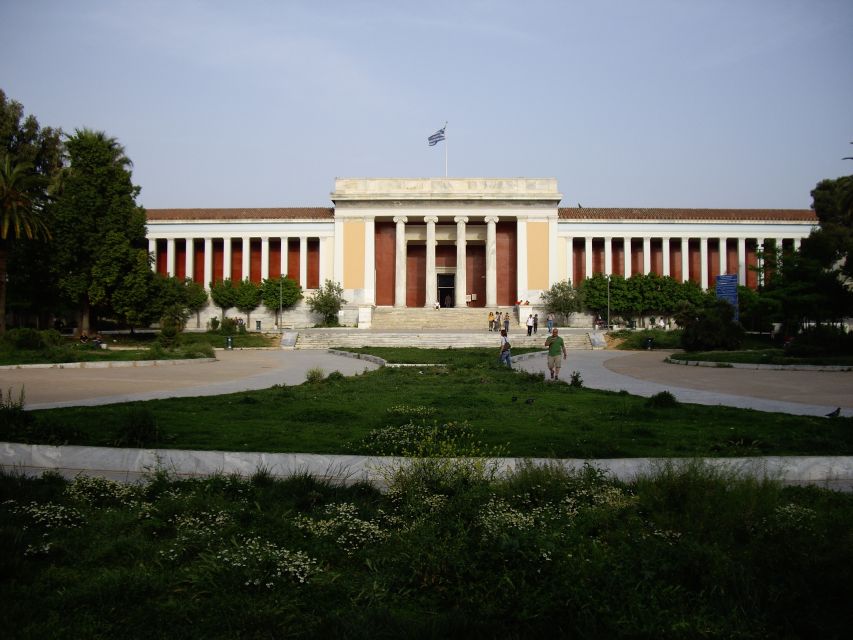
The building itself helps set the mood. It is an imposing neoclassical structure designed by L. Lange and later remodeled by Ernst Ziller. Its long galleries and formal rooms suit the grand subject, though the size can feel intimidating when you first enter.
More Museum Tours in Athens
- Athens: Acropolis, Parthenon & Acropolis Museum Guided Tour
★ 4.8 · 9,316 reviews - The Acropolis, Parthenon & Acropolis Museum Guided Tour
★ 4.7 · 8,493 reviews - Athens: Mythology of Delphi, Museum and Arachova Guided Tour
★ 4.7 · 5,102 reviews
Meeting Christos at the Patission Street entrance
Your meeting point is at the steps in front of the main entrance of the National Archaeological Museum, at 44 Patission Street, 10682. The activity information also identifies the starting location as 28is Oktovriou 42, so use the confirmed meeting instructions supplied with your booking if the street address causes confusion.
Hotel transfer is not included. You make your own way to the museum and meet the guide outside. That keeps the arrangement simple, but you should allow enough time to reach the entrance without rushing.
The experience is a private group tour for up to six people. That matters inside a museum, where a large group can easily scatter around a display case. With a small party, you can hear the explanation more clearly and ask for extra attention to a period, object, or question that interests you.
The guide is listed as Christos Theodoropoulos. The tour is available in English, Turkish, German, or Greek. The supplied information and past bookings also point to Christos as the regular guide, so he is a familiar name to look for at the meeting point.
The first galleries: prehistoric Greece and the Aegean world
The tour begins with the oldest material in the museum, including the Collection of Prehistoric Antiquities. This section covers the Neolithic, Cycladic, and Mycenaean worlds, with objects dating from the 6th millennium BC to about 1050 BC.
This is where a guide can add real value. Without context, early objects may seem disconnected from the better-known temples and statues you expect from Greece. Christos’s role is to show how these early cultures fit into the long development of Aegean civilization.
The collection also includes finds from the prehistoric settlement at Thera. These objects give you a look at a world that existed long before classical Athens. The point is not simply that the pieces are old. It is that Greek civilization did not begin with the familiar marble ideal of the 5th century BC.
You should expect the tour to move quickly here. The museum contains far more prehistoric material than a two-hour visit can cover. A guide helps select the pieces that best explain the period, while you avoid spending your opening minutes trying to read every label.
Sculptures that show Greek art changing over time
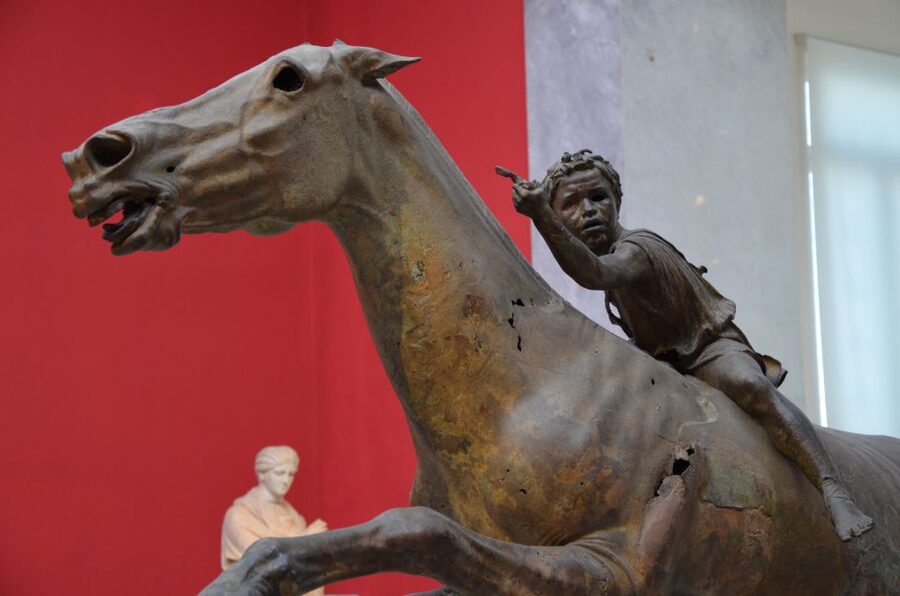
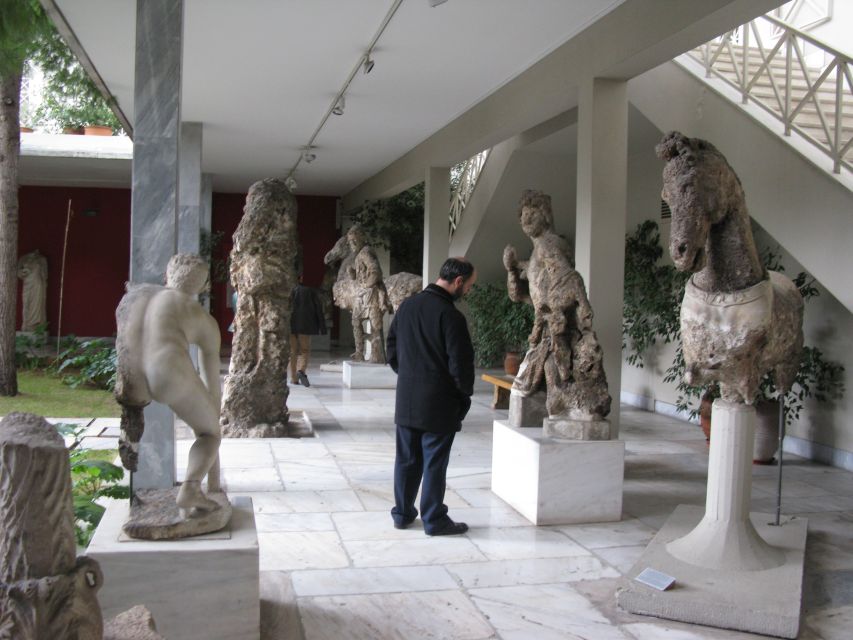
The Sculpture Collection follows the development of ancient Greek sculpture from the 7th to the 5th centuries BC. This is one of the museum’s essential sections, especially if your other Athens visits focus on buildings rather than individual works of art.
A good explanation can help you notice changes that are easy to miss. Early figures can look rigid and formal. Later works suggest more movement, balance, and attention to the human body. The museum’s masterpieces let you see this shift in a direct way, rather than reading about it in a guidebook.
This is also a place where pacing matters. It is tempting to stop at every famous statue, but a private guide can connect several works and explain what changed from one period to the next. You get a short lesson in artistic development instead of a string of disconnected names.
The tour is not designed as a complete survey of every sculpture. Think of it as an orientation to the most important works and the ideas behind them. If you already know Greek art well, you may want to request more time in a particular room.
More archaeological museums in Athens:
- Athens: National Archaeological Museum Ticket w/ Opt. Audio
★ 4.4 · 713 reviews - Athens National Archaeological Museum E-Ticket with Audio Guide
★ 3.0 · 57 reviews - National Archaeological Museum Private Tour with Licensed Expert Guide
★ 5.0 · 53 reviews - Athens: National Archaeological Museum Ticket
★ 3.5 · 44 reviews
The Antikythera mechanism and ancient scientific skill
The Antikythera mechanism is one of the tour’s most distinctive highlights. It is often described as the world’s oldest analogue computer, a compact geared device that points to the technical skill of the ancient world.
You should not expect a large monument or an elaborate gallery experience. The appeal lies in the object’s purpose and precision. It pushes back against the lazy idea that ancient Greece was concerned only with temples, poetry, and sculpture.
A guide’s explanation is especially helpful here because the mechanism can be difficult to understand from a label alone. You learn why it matters and how it fits into the wider story of ancient Greek science and craftsmanship.
For many people, this is the object that makes the museum visit feel personal and surprising. The marble statues are familiar symbols of Greece. The mechanism shows another side of the culture, one built around observation, calculation, and complex metalwork.
Pottery, small objects, and everyday Greek life
The Vase and Minor Objects Collection covers Greek pottery from the 11th century BC through the Roman period. It also includes the Stathatos Collection, a group of smaller objects from different eras.
These rooms are useful because they move you away from the grand scale of sculpture. Painted vessels, tools, ornaments, and other small objects can show how people lived, traded, worshipped, and represented stories.
I find this type of collection easy to rush through, especially after the major statues. That is another reason a guide helps. You can learn why a particular vase matters, how decoration changed, and what the scenes reveal about ancient life.
The tradeoff is time. Two hours goes quickly, and pottery alone could fill a substantial visit. If this is your favorite area, tell the guide early. A private tour gives you more room to shape the visit than a fixed large-group route.
Bronze works and the museum’s famous material variety
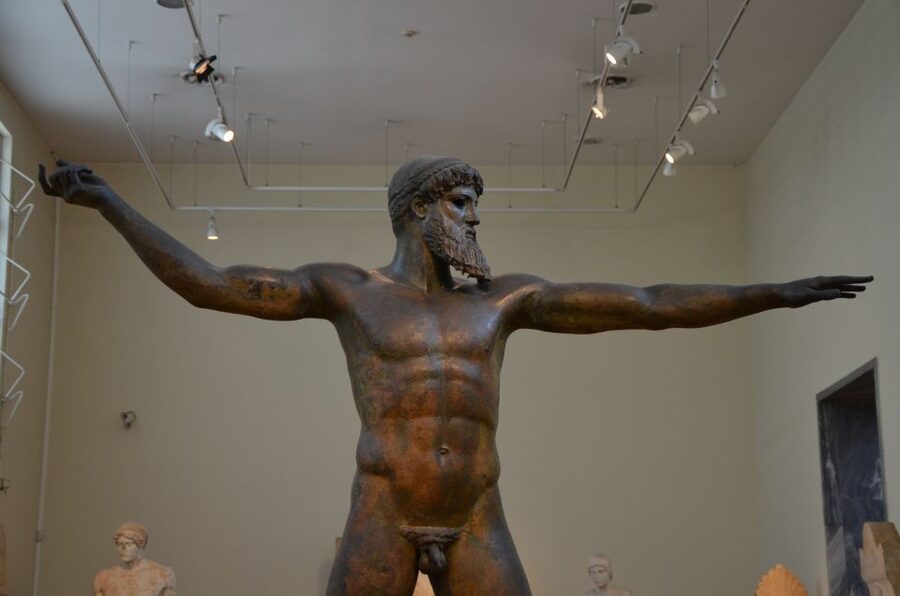
The Bronze Collection contains statues, figurines, and smaller objects. Bronze offers a different visual and technical experience from marble. It can suggest movement and detail in ways that a solid stone figure does not, and the collection shows that ancient Greek art was not limited to one material.
The guide’s job here is to keep the museum from becoming a procession of impressive objects with no connection. You can ask how bronze works were made, why certain pieces survived, or how they relate to the marble tradition. The available information does not promise a set list of objects, so the exact stops may depend on the guide and the rooms open during your visit.
This section also helps balance the better-known classical works. If you want a short introduction to the range of ancient Greek craftsmanship, bronze is an important part of the route.
Egyptian and Near Eastern antiquities in Greece
The museum’s final major collection is its Egyptian and Near Eastern Antiquities Collection, described as the only collection of its kind in Greece. It includes works from the predynastic period, around 5000 BC, through the Roman conquest.
This section adds useful context to a museum otherwise centered on Greek material. Ancient Greece did not exist in isolation, and these objects help you think about contact among cultures around the eastern Mediterranean.
You may find this collection especially appealing if you have visited Egypt or other archaeological museums. It also makes a good final request if Greek sculpture is not your main interest. The two-hour format may not allow much time here, so ask Christos if you want this section included in the route.
What the guide adds to a museum with labels
The museum is well labeled and arranged in a way that many people can follow without a guide. That is an important point. You can visit independently, and the tour is not essential for simply finding the galleries.
The value comes from interpretation and selection. Christos is described as presenting Greek history in an accessible way, with enough humor and energy to keep the visit moving. He also has a reputation for adjusting the pace and answering questions rather than delivering a fixed speech.
Past visitors have described him as especially good with families, including teenagers and younger children. One family with children aged nine and seven found the visit engaging, while another group with a teenage and young adult family member appreciated the way he moved them through the highlights.
His pace can be fast because the museum is so large. That is not necessarily a flaw, but you should know what you are buying. You get a strong first orientation, not an unhurried examination of every gallery.
One particularly useful example involved a visitor with a professional interest in ancient jewelry. Christos arranged access to a jewelry room that was usually locked at that time of year. That kind of request cannot be promised for every booking, but it shows why you should tell the guide in advance if you have a specific academic or professional interest.
Is $400 good value for a private group?
The price is $400 per group of up to six people, before the separate €10 museum entry fee. For one person or a couple, this is a costly way to visit a museum that you can enter and read on your own.
For four to six people, the calculation looks better. Split among six, the guiding fee is about $67 per person, plus the museum admission. You are paying for a private route, a licensed archaeologist guide, and the ability to ask questions without waiting for a large group to move.
Families may find the cost easier to justify because a guide can keep younger visitors focused and explain difficult subjects in plain terms. It is also a practical choice for a small group with only a short time in Athens.
If you are a solo visitor who enjoys studying labels at your own speed, independent entry may be the better value. The museum is laid out clearly, and you can return to the objects that interest you. The private tour makes more sense when you want a strong overview, have limited time, or value expert explanation.
How to use the rest of your museum time
Plan to stay after the two-hour tour if you can. Several people found the guided portion useful as an orientation, then continued alone to see rooms that the tour could not reach.
That is the best way to treat the duration. Two hours is enough to understand the museum’s main story and see selected highlights. It is not enough to cover every permanent collection in a relaxed way.
Before you begin, decide what matters most to you. You might ask for emphasis on prehistoric objects, sculpture, the Antikythera mechanism, pottery, bronze, or Egyptian antiquities. You cannot assume every room will receive equal attention, so a clear request helps shape the visit.
The museum’s scale can also make a second visit worthwhile, but the tour works well as a first introduction. Afterward, you will know which collection deserves more of your time.
Booking details that affect your choice
The tour lasts two hours and includes the licensed archaeologist guide. The museum entry ticket is not included and costs €10. Hotel transfer is also not included.
You can cancel up to 24 hours before the activity for a full refund. The reserve-now, pay-later option lets you hold the booking without paying immediately, which is useful if your Athens schedule is still shifting.
Starting times depend on availability. Since no fixed time is supplied here, check the available options before booking and allow enough time to reach the Patission Street entrance.
The overall rating is 4.5 from 47 reviews, with especially strong praise for Christos’s explanations, humor, flexibility, and ability to make a large museum understandable. One recent rating gave four stars while still noting that the guide explained the material well, so the experience is highly regarded but not beyond criticism.
Should you book this museum tour?
Book it if you want a clear, lively introduction to ancient Greek art and you are visiting with a small group. It is particularly useful for families, first-time visitors, and anyone who finds large museums hard to organize alone.
I would also book it if the Antikythera mechanism, prehistoric Greece, or the development of sculpture interests you and you want more than labels can provide. Tell Christos your priorities before the tour, especially if you have a special interest such as ancient jewelry.
Skip the private tour if you prefer a slow, solitary museum visit or if you are watching every dollar. The museum can be visited independently, and two hours will only cover a fraction of its holdings.
For a group of several people, the cost becomes easier to defend. You get a focused route through one of Europe’s major archaeological collections, then you can stay on your own for the galleries the tour leaves out.
FAQ
Where does the tour meet?
Meet at the steps in front of the main entrance of the National Archaeological Museum at 44 Patission Street, 10682. The activity information also lists 28is Oktovriou 42 as the starting location, so check your booking details for the final address.
How long does the guided visit last?
The guided tour lasts two hours.
How many people can join the private group?
The price covers a private group of up to six people.
Is the museum entry ticket included?
No. The museum entry ticket is separate and costs €10.
Is hotel transfer included?
No. Hotel transfer is not included, so you must make your own way to the museum.
Which languages are available?
The live guide is available in Turkish, English, German, and Greek.
Who is the guide?
The experience provider is Christos Theodoropoulos, a licensed archaeologist guide.
What major object will I see?
The tour includes the Antikythera mechanism, described as the world’s oldest analogue computer, along with important artifacts from ancient Greek civilization.
Can I cancel the booking?
Yes. You can cancel up to 24 hours in advance for a full refund. You can also reserve now and pay later.
Just added around Athens
- Ancient Athens tour: Acropolis, Parthenon and Acropolis Museum★ 5.0 · 256 reviews
- The Acropolis, Athens Walking City Tour and Acropolis Museum★ 5.0 · 442 reviews
- Family Acropolis & Acropolis Museum Tour inspiredby Percy Jackson★ 4.5 · 40 reviews
- Acropolis of Athens, Parthenon and Acropolis Museum private tour with dinner★ 5.0 · 77 reviews
- Athens: Acropolis Museum Ticket with Self-Guided Audio tour App★ 3.5 · 40 reviews
- Shore Excursion: Acropolis, Athens City tour and The New Acropolis Museum★ 4.5 · 30 reviews
- Athens National Archaeological Museum E-Ticket with Audio Guide★ 3.0 · 57 reviews
- Private Tour: Half day Athens Sightseeing and Acropolis Museum★ 4.5 · 28 reviews
Museum Tours in Athens, compared.
Acropolis, Parthenon & Acropolis Museum Guided Tour
Read our review →
The Acropolis, Parthenon & Acropolis Museum Guided Tour
Read our review →Acropolis, Parthenon & Acropolis Museum Guided Tour
Read our review →
Acropolis monuments & Parthenon Walking Tour with Optional Acropolis Museum
Read our review →
Athens All Included: Acropolis and Museum Guided Tour with Ticket
Read our review →
Acropolis Museum Ticket with optional Audio Guide
Read our review →
Small-Group Delphi, Museum & Arachova Day Trip
Read our review →
Delphi Oracle & Museum Tour with a Licensed Guide
Read our review →Browse the lists this tour appears in