
Review · ATHENS
Athens: Museum of Illusions Admission Ticket
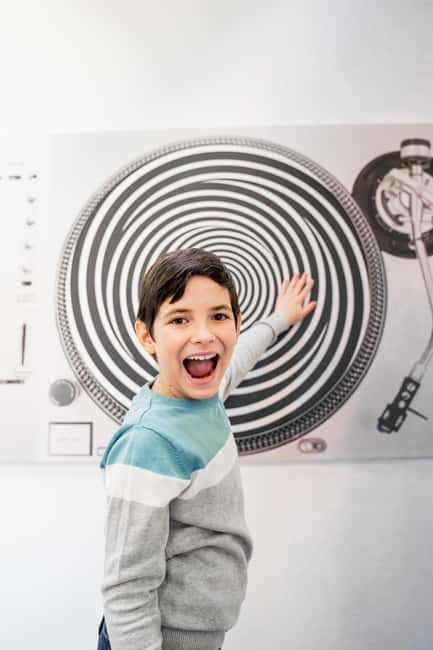
The Museum of Illusions turns a simple museum visit into a series of visual tricks. You can appear to shrink, lose your head, walk on the ceiling, or stretch reality inside rooms built for both learning and silly photos. The exhibits explain how vision, perspective, and other stimuli shape what you think you see.
I like the hands-on design, since you do not just look at displays from behind glass. I also like the friendly staff, who often help with camera angles and take photos for solo visitors or parents traveling without a second photographer. The main drawback is size: many people finish in 30 to 60 minutes, and busy periods can make the small rooms feel rushed.
Key points to know before you go

- Sixty interactive installations: Expect optical tricks, mirror displays, holograms, an infinity room, an inverted room, and a chair illusion.
- Built for photos: Bring a charged smartphone or camera, since many exhibits work best when someone captures the illusion from the right angle.
- A good family stop: Children can play with the exhibits while adults get a simple lesson in vision and perception.
- No guide included: You move through the museum on your own, with staff available to help at the installations.
- Plan around 30 to 60 minutes: The official visit limit in the supplied information is 50 minutes due to health measures, though some people move through faster.
- Useful on a hot afternoon: The indoor setting gives you a cool break from Athens sightseeing, especially during summer.
What the Athens Museum of Illusions actually offers
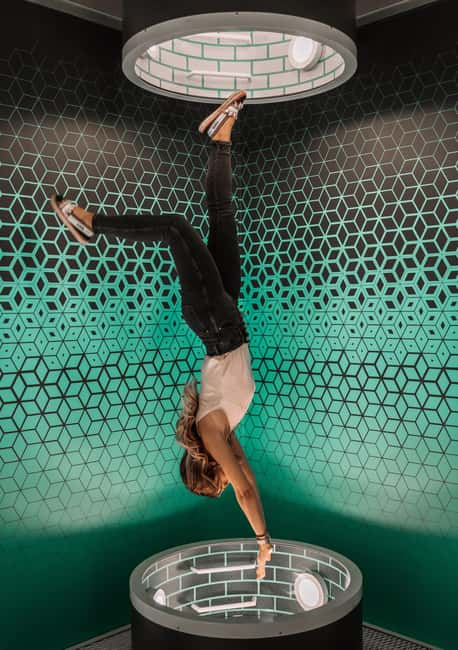
This is not a traditional museum filled with ancient objects, long labels, and quiet galleries. It is a compact collection of rooms and installations designed to make your eyes question what your brain is telling you.
You become part of the display. Stand in the right place, pose at the right angle, and a friend can photograph you floating, towering over someone, disappearing into a room, or losing the usual sense of up and down. The fun depends partly on your willingness to pose. If you prefer to observe rather than participate, the visit may feel brief.
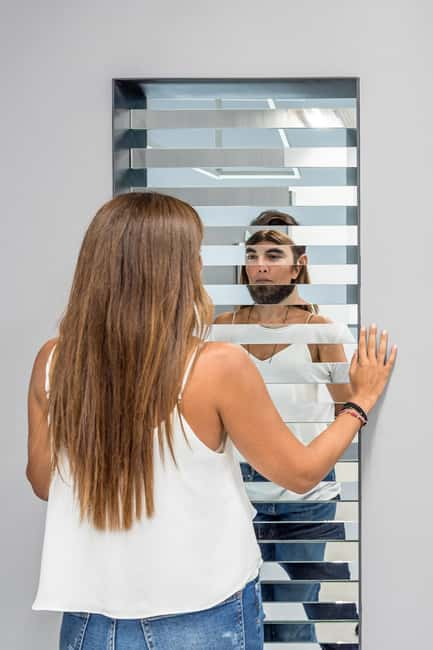
The 60 installations cover several types of visual tricks. Some use mirrors and repeated reflections. Others play with scale, perspective, balance, light, or movement. Holograms add another layer, while the infinity room creates the most obvious wow moment through repeated reflections that appear to continue far beyond the walls.
Each display connects the trick to a basic idea about perception. You do not need a science background to understand it. The explanations are there to show why your eyes and brain can disagree, but the real lesson comes from trying the installation yourself.
I see the museum as a playful indoor activity rather than a major cultural attraction. It will not replace the Acropolis Museum or Athens’ ancient sites. That is precisely why it works well between larger sightseeing plans.
More Museum Tours in Athens
- Athens: Acropolis, Parthenon & Acropolis Museum Guided Tour
★ 4.8 · 9,316 reviews - The Acropolis, Parthenon & Acropolis Museum Guided Tour
★ 4.7 · 8,493 reviews - Athens: Mythology of Delphi, Museum and Arachova Guided Tour
★ 4.7 · 5,102 reviews
Entering the museum and getting your bearings
Your admission ticket gives you access to the installations for one day, with no guided tour included. In practice, you follow the exhibition from one illusion to the next and spend as much time as the visit rules and crowd allow.
The staff are an important part of the experience. They can point out how to use an installation, suggest a better pose, or take your picture when your group has no person left behind the camera. This is especially useful for a solo visitor or a parent visiting with a child.
One useful tip: do not rush straight through the first few displays. Look at the suggested position, then try the exhibit from a different angle. Many optical tricks work only when you stand in a marked spot, and the final photograph often depends on where the photographer stands as much as where you pose.
The entrance experience may not be equally smooth for everyone. One visitor found the first welcome less friendly, while the staff helping inside were described as kind and attentive. I would keep expectations practical: this is a busy, hands-on attraction, not a personal tour.
The first illusions: perception, perspective, and scale
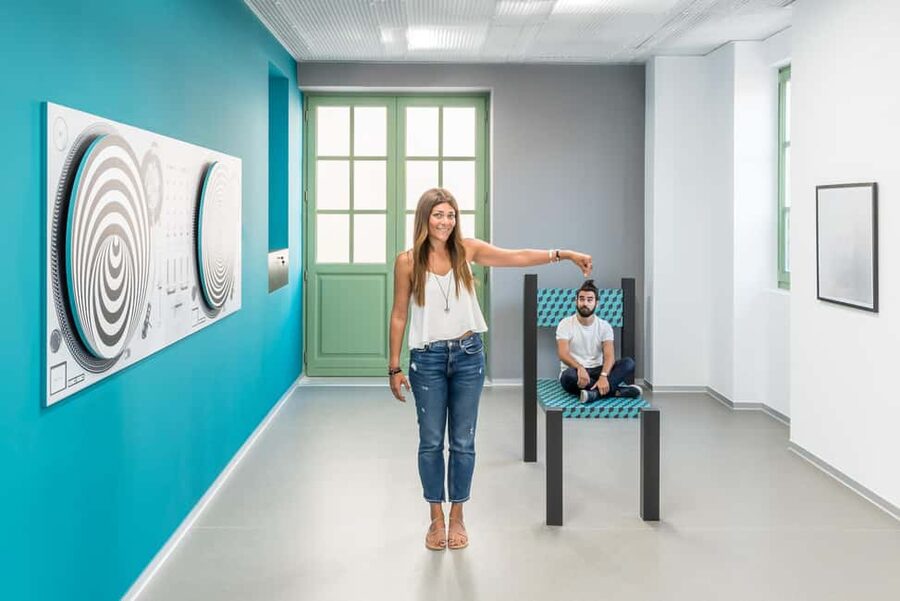
Early installations introduce the main idea that your eyes do not simply record reality. They interpret light, distance, position, and patterns, then your brain turns that information into a picture of the world.
The chair illusion is a good example of how scale and perspective can trick you. A person seated in the wrong part of the setup may appear much larger or smaller than another person nearby. It is the sort of illusion that makes sense once explained, but still looks strange in a photograph.
Rooms that reverse normal perspective play a similar game. In an inverted room, the floor becomes a ceiling and familiar objects seem to defy gravity. Your body knows the room is not really upside down, but the camera can make the effect convincing.
These displays work best with two or more people. One person poses while another takes the picture, then you switch roles. If you visit alone, ask a staff member for help. Staff have been especially helpful with photos, including for solo visitors and parents who want pictures with their children.
Mirrors, holograms, and the infinity room
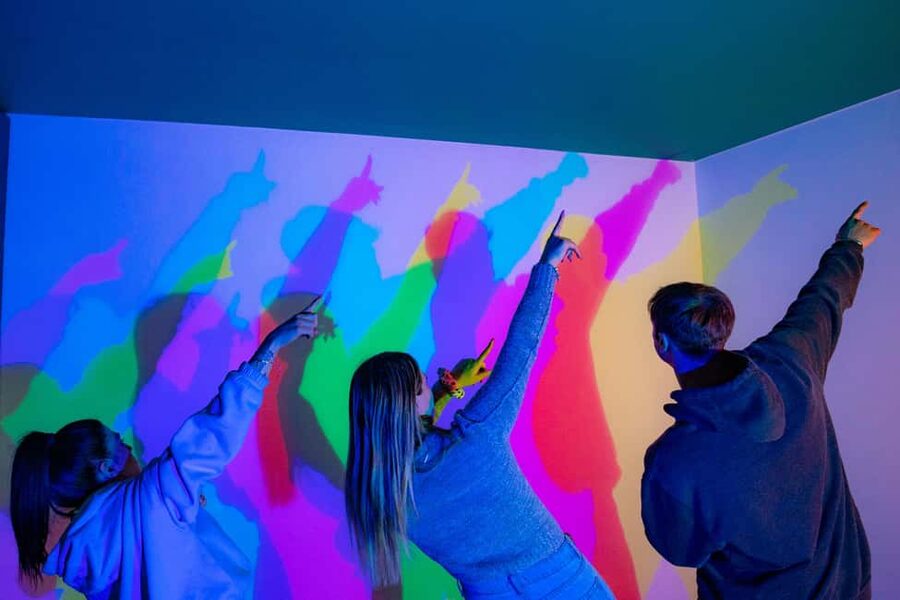
Mirror installations are among the simplest exhibits, but they remain effective because they create immediate visual confusion. Repeated reflections can make a small space appear larger, multiply your image, or make it hard to tell where the room ends.
The infinity room is likely to be one of the most photographed stops. Its repeated lights and reflections create the sense of endless space. It is not a long experience, but it gives you the kind of photograph that is difficult to produce anywhere else in Athens.
Holograms shift the experience from physical rooms to changing images. They show how light and perspective can suggest depth or movement where there is no solid object in front of you. You may find these displays more interesting if you take a moment to watch rather than simply snap a picture and move on.
Crowding matters here. The museum itself is not large, and several people may want the same popular photo at once. If you are visiting with children, give them a little time to try each display, but be ready to move along when another group is waiting.
More Museum of Illusions tickets:
- Prague: Museum of Fantastic Illusions Entry Ticket
★ 4.3 · 4,337 reviews - Madrid: Museum of Illusions Ticket
★ 4.1 · 1,909 reviews - Vienna: Museum of Illusions Vienna Admission Ticket
★ 4.0 · 1,392 reviews - Seville: Museum of Illusions Entry Ticket
★ 4.2 · 1,196 reviews
The photo side of the experience

Bring a fully charged phone. This is not optional if you want the full value of the visit.
Many installations are made to be photographed, and the result often depends on a very specific camera position. A staff member may suggest where to stand or how to frame the shot. That help can make a big difference, especially when the illusion is hard to understand from inside the room.
You will also want to take more than one photo. Small changes in height, angle, or distance can make the effect much stronger. Try a serious pose, a silly pose, and one with everyone in the group. The museum encourages playful behavior, so this is not the place to worry about looking dignified.
Parents should expect children to want repeated turns. An eight-year-old can remain engaged because every room offers something to touch, test, or photograph. Adults may enjoy the science more than the games, but the best moments usually come when the whole group participates.
If you are alone, you are not shut out of the photo experience. Staff can take pictures, and their familiarity with the displays means they may know the useful camera angle. Still, a solo visit can be quicker because you do not have a group to pose and photograph.
How long should you allow?
Plan on about 30 to 60 minutes. The official information notes a 50-minute stay limit under health measures, so check the current conditions when booking. Some people move through the museum in about 25 to 30 minutes, while families may use the full available time.
This makes the museum easy to fit into a day in central Athens. You can use it as a short break between ancient sites, a cool indoor stop before lunch, or a simple activity when the heat becomes tiring.
It is not a full-day attraction despite the ticket being valid for one day. The one-day validity gives you flexibility with the booking time, but you should not plan to spend several hours inside. The displays are compact, and the experience depends on moving from one installation to the next.
Crowds can change the pace. When the museum is busy, you may wait for a favorite room or take fewer turns with an installation. Go at a quieter time if your schedule allows, though no guaranteed quiet period is provided.
Is the $14 admission good value?

At $14 per person, the ticket is reasonable if you want an active, photo-friendly stop and use most of the available visit time. For a family, the total cost adds up quickly, so the value depends on whether your group enjoys posing, experimenting, and taking pictures.
I would compare it with the cost of a larger attraction by asking what kind of afternoon you want. This ticket does not buy a major collection or a long guided visit. It buys a compact, air-conditioned activity with 60 interactive displays and plenty of chances to laugh together.
The price feels strongest for families, couples, friends, and anyone looking for a break from Athens’ outdoor sightseeing. It is less compelling for a solo adult who plans to move quickly through exhibits and does not care much about photos.
The ticket includes admission and access to the installations. Personal expenses are not included, and there is no guided tour. If you want souvenirs, the museum shop has playful riddles and other fun items, but those purchases are extra.
Free cancellation is available up to 24 hours before the visit for a full refund. You can also reserve now and pay later, which helps if your Athens schedule is still changing.
Who will enjoy it most?

Families with children are the clearest match. The exhibits give younger visitors something to do with their hands, while the explanations give adults a reason to pay attention. Children can enjoy the strange rooms without needing to understand every scientific detail.
Friends also get good value because the installations work well as group photo challenges. Try to create the most convincing perspective trick, then help one another with camera placement.
Couples may enjoy it as a lighthearted break from monuments and museums. It is also useful for a solo visitor, but you should be comfortable asking staff to take pictures and accept that you may finish in less than an hour.
The museum can work for older children and adults who like visual puzzles. It is not suitable for people with mobility impairments, according to the supplied information. Because the displays require movement, positioning, and sometimes balancing, check your own comfort before booking.
When to place it in your Athens day
Summer is a sensible time to visit because the indoor setting gives you a cool pause from the heat. A visit shortly before lunch, around lunchtime, or during the afternoon can break up a day spent walking outdoors.
You might pair it with other central Athens plans, but do not treat it as a substitute for the city’s major archaeological and historical sights. The museum offers a playful change of pace, not ancient Greek history.
Halloween decorations and special activities have appeared during October, including face painting, mask decoration, and potion making. These extras are seasonal rather than guaranteed, so check what is running during your dates. If they are offered, they can make the visit more appealing for children.
Allow time for the photo process. If everyone wants several pictures, the visit may take close to the full 50 minutes. If you are mainly interested in seeing the displays, 25 to 35 minutes may be enough.
Final decision: should you book it?
Book the Museum of Illusions if you want short, hands-on fun in Athens, especially with children, friends, or a partner who enjoys taking photos. The staff can help with tricky angles, the installations explain simple ideas about vision, and the cool indoor setting is useful on a hot day.
Skip it if you want a large museum, a guided cultural experience, or several hours of serious sightseeing. The space is compact, popular displays can feel crowded, and solo adults may finish quickly.
At $14, I would treat it as a well-priced filler activity rather than a main Athens attraction. It earns its place when you need a cheerful break, want unusual vacation photos, or are traveling with children who need something more active than another ancient monument.
FAQ
Is a guide included with the Museum of Illusions ticket?
No. This is an admission ticket only, and no guide is present for the experience. You explore the 60 installations on your own, with staff available to help with exhibits and photographs.
How long does the visit last?
The visit can take about 30 to 60 minutes. The supplied information notes a 50-minute stay limit due to health measures, while some people complete the exhibits in about 25 to 30 minutes.
What installations can I see?
The museum includes 60 visual and interactive installations, including an infinity room, inverted room, chair illusion, mirror displays, holograms, and other perspective-based exhibits.
Can I take photographs inside?
Yes. Photography is a central part of the experience, and you should bring a charged smartphone or camera. Staff may help with camera angles or take pictures for you if needed.
Is the museum suitable for children?
Yes. The activity is designed for all ages, and children can interact with the displays while learning about vision, perspective, and perception.
Is the museum accessible for people with mobility impairments?
No. The supplied information lists the experience as unsuitable for people with mobility impairments.
Can I cancel my booking?
Yes. You can cancel up to 24 hours in advance for a full refund. Reserve now and pay later is also available.
Just added around Athens
- Ancient Athens tour: Acropolis, Parthenon and Acropolis Museum★ 5.0 · 256 reviews
- The Acropolis, Athens Walking City Tour and Acropolis Museum★ 5.0 · 442 reviews
- Athens: Acropolis Museum Ticket with Self-Guided Audio tour App★ 3.5 · 40 reviews
- Family Acropolis & Acropolis Museum Tour inspiredby Percy Jackson★ 4.5 · 40 reviews
- Acropolis of Athens, Parthenon and Acropolis Museum private tour with dinner★ 5.0 · 77 reviews
- Shore Excursion: Acropolis, Athens City tour and The New Acropolis Museum★ 4.5 · 30 reviews
- Athens National Archaeological Museum E-Ticket with Audio Guide★ 3.0 · 57 reviews
- Private Tour: Half day Athens Sightseeing and Acropolis Museum★ 4.5 · 28 reviews
Museum Tours in Athens, compared.

Acropolis, Parthenon & Acropolis Museum Guided Tour
Read our review →
The Acropolis, Parthenon & Acropolis Museum Guided Tour
Read our review →Acropolis, Parthenon & Acropolis Museum Guided Tour
Read our review →
Acropolis monuments & Parthenon Walking Tour with Optional Acropolis Museum
Read our review →
Athens All Included: Acropolis and Museum Guided Tour with Ticket
Read our review →
Acropolis Museum Ticket with optional Audio Guide
Read our review →
Small-Group Delphi, Museum & Arachova Day Trip
Read our review →
Delphi Oracle & Museum Tour with a Licensed Guide
Read our review →Browse the lists this tour appears in