
Review · GREECE
Athens: Kotsanas Museum of Ancient Greek Technology Ticket
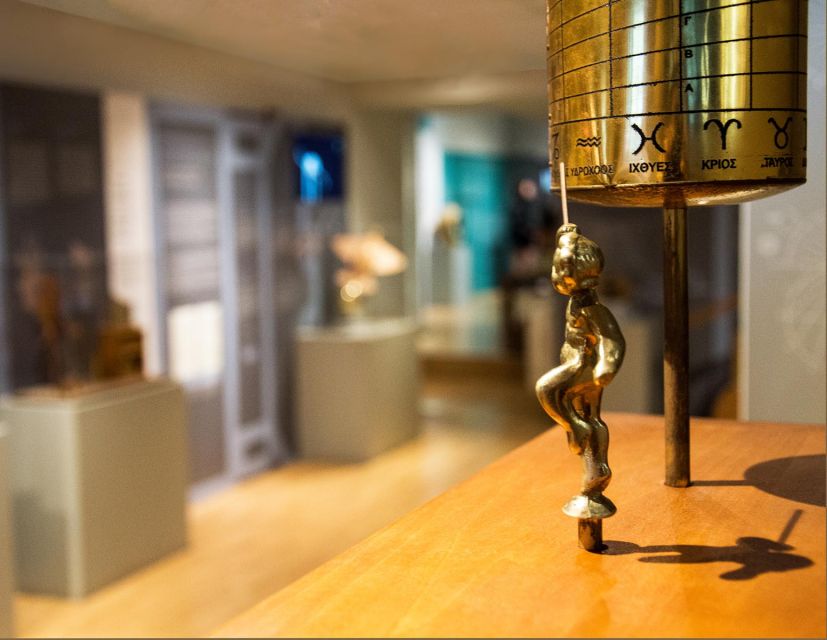
Ancient Greek technology was far more practical and clever than the usual statues-and-temples story suggests. At the Kotsanas Museum, you can see about 100 working models, including the Antikythera calculating mechanism, an ancient analog computer, hydraulic clocks, automata, and early theatrical devices.
I like the hands-on displays, since you can operate some mechanisms instead of simply reading about them. I also like the excellent location, just five minutes on foot from Syntagma Metro Station, making this an easy addition to a central Athens day.
The main consideration is that your ticket is for entry only, not a guided tour. You will rely on English labels, diagrams, videos, and projected explanations, so visitors who prefer a live expert may want to allow extra time to read and watch the material.
Key points to know before you go
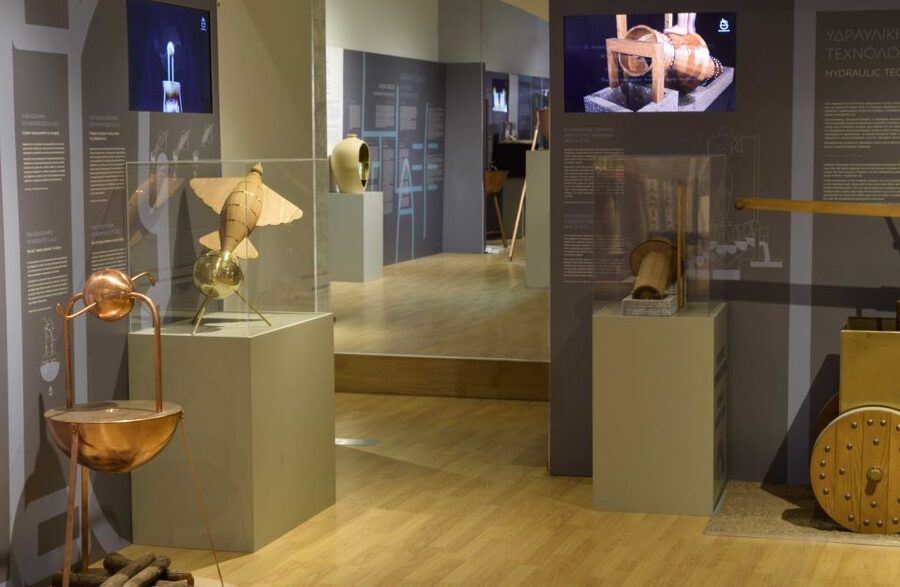
- See the Antikythera mechanism: Examine a working model of the ancient calculating device often described as the world’s oldest analog computer.
- Try selected mechanisms yourself: Several exhibits are interactive, giving you a better feel for how the technology worked.
- Explore 700 square meters: The museum occupies a historic Art Nouveau building near Syntagma.
- Follow the technology in English: Labels, giant posters, diagrams, photographs, videos, animations, and documentaries explain the exhibits.
- Expect a self-guided visit: The entry ticket does not include a guided tour.
- Pay about $7.90: For a full day of validity and roughly 100 operating models, the price is reasonable for a central Athens museum stop.
A different side of ancient Greece in central Athens
Most first-time visitors meet ancient Greece through the Acropolis, the Agora, and classical sculpture. The Kotsanas Museum gives you a different subject: the machines, instruments, and mechanical tricks that helped ancient Greek thinkers measure time, create movement, produce sound, and stage effects.
That change of focus is the museum’s real appeal. Instead of looking at broken columns and trying to picture how they were used, you can study reconstructed devices that move, turn, pour, calculate, or perform a sequence. The models make ancient technology feel less distant.
I find the museum particularly useful for anyone who has already seen Athens’ major archaeological sites and wants something smaller and more focused. It also gives children and teenagers a concrete way into ancient history, especially since some displays can be operated by hand.
The museum is on Pindarou 6, about five minutes from Syntagma Metro Station. You do not need a special transport plan, and the central address makes it easy to fit around shopping, the National Garden, the Acropolis, or a meal in the nearby streets.
A few more museum visits around Greece worth comparing
- Athens All Included: Acropolis and Museum Guided Tour with Ticket
★ 4.5 · 2,673 reviews - Athens: Acropolis Museum Ticket with optional Audio Guide
★ 4.4 · 2,652 reviews - Athens: National Archaeological Museum Ticket & Audio Guide
★ 4.3 · 1,330 reviews
Inside the 700-square-meter Art Nouveau building
The setting adds a little character before you even reach the exhibits. The museum occupies a historic Art Nouveau building with about 700 square meters of exhibition space. That is large enough to hold a substantial collection, but still compact enough for a focused visit rather than an all-day museum marathon.
You enter an exhibition devoted to the high-technology inventions of ancient Greeks. The display includes roughly 100 selected models, so you get variety without facing a huge collection that takes hours to sort through.
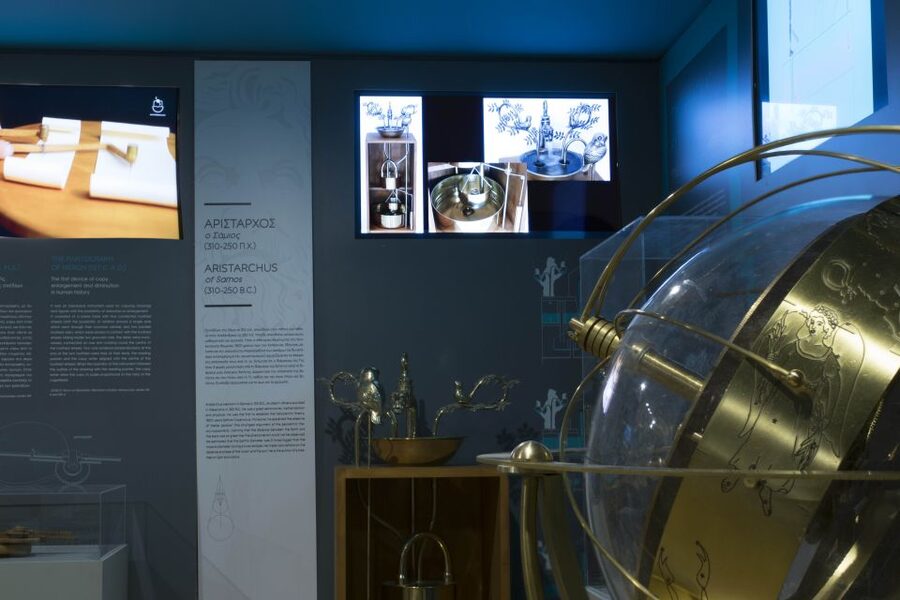
The layout is built around explanation. You will find labels in Greek and English, large posters, technical diagrams, photographs, and bibliographical references. Projected videos and animations add another layer, while documentaries show how the mechanisms function and how they were used.
This matters because many of the devices are not immediately obvious. A static model of a hydraulic clock or an automatic figure can look like a collection of pipes and gears. The diagrams and moving demonstrations help you understand the sequence rather than simply admire the shape.
Start with mechanisms that move and perform
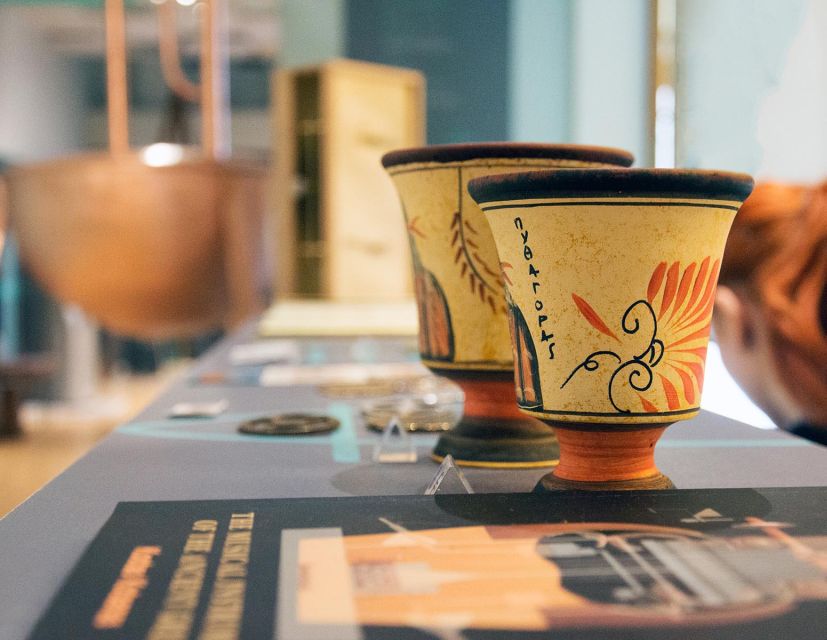
One of the strongest parts of the collection is its group of automata. Ancient Greek inventors developed devices that could produce movement without a person visibly operating every part. The museum includes a robot-servant associated with Philon and an automotive puppet show linked to Heron.
These exhibits connect ancient engineering with ideas you recognize from modern machines. A moving figure, a timed sequence, or an automatically triggered action can feel surprisingly familiar. The difference is that the ancient versions rely on weights, water, air, ropes, gears, and carefully arranged mechanical parts.
The puppet show is especially useful for showing how technology and entertainment overlapped. It was not just about making a machine work in isolation. Mechanical systems could create a staged performance, with movement unfolding in an arranged sequence.
The museum also includes Philon’s cinema, presented as part of the collection of technological inventions. The display helps show how ancient engineers used visual effects and mechanical motion to create an experience for an audience.
You should take your time with these models. The most interesting part is often the explanation of what happens inside, not the first movement you see on the outside.
The Antikythera mechanism and ancient calculation
The Antikythera calculating mechanism is likely to be the museum’s biggest draw. It is presented as a working model of what is widely described as the oldest analog computer in the world.
The original device is famous because it used complex gearing to calculate astronomical cycles. At Kotsanas, the reconstructed model gives you a way to understand the principle through visible mechanical action. You can see why the object changed modern ideas about the technical ability of ancient Greek engineers.
I like this display because the phrase ancient computer can sound exaggerated until you see the system represented mechanically. The point is not that it worked like a modern digital computer. It is that it used a carefully designed physical mechanism to process information and display calculated results.
For you, the value lies in seeing the idea made clear. A written description can leave the Antikythera mechanism feeling abstract. A model, diagram, and video can show how gears and rotations translated cycles into useful calculations.
Allow extra attention here. It is one of the exhibits most worth reading about rather than passing quickly.
Same city, a completely different collection:
- Athens: Acropolis, Parthenon & Acropolis Museum Guided Tour
★ 4.8 · 9,316 reviews - The Acropolis, Parthenon & Acropolis Museum Guided Tour
★ 4.7 · 8,493 reviews - Athens: Mythology of Delphi, Museum and Arachova Guided Tour
★ 4.7 · 5,102 reviews - Athens: Acropolis, Parthenon & Acropolis Museum Guided Tour
★ 4.8 · 3,579 reviews
Clocks, water power, and controlled timing
The hydraulic clock of Ktesibios introduces another important strand of ancient engineering: using water to control time and movement.
Water clocks may sound simple, but the real challenge was maintaining a steady flow and turning that flow into a reliable indication of time. The model helps you see the relationship between water, pressure, containers, floats, and measurement.
This is where the museum’s operating models do their best work. You are not asked to imagine the movement from a label alone. The display lets you follow a process and understand how a basic material can become part of a precise instrument.
The exhibit also links to the wider collection. Ancient inventors were not working in isolated categories. The same knowledge of water, pressure, balance, and motion could support clocks, automatic devices, theatrical effects, and mechanical demonstrations.
If you enjoy engineering, this section may take longer than expected. If you are mainly interested in famous ancient monuments, it may feel more technical. The English explanations and visual material help, but this is a museum where patience improves the visit.
Why the interactive displays matter
The museum is not fully hands-on, so you should not expect to operate every object. Still, many exhibits are interactive, and you can put selected mechanisms into use with your own hands.
That small amount of participation changes the visit. Turning a handle, watching a sequence begin, or observing water move through a system gives you a physical sense of cause and effect. You start to understand the inventors as problem solvers rather than as distant names from a textbook.
The displays also make the museum a good choice for families. Younger visitors may not read every technical panel, but movement gives them a reason to look closely. Older children can connect gears, timing, and automation with technology they already know.
You should still set realistic expectations. This is not an amusement attraction, and the museum does not promise that every exhibit will be available for active use at all times. The interactive elements support the explanations; they do not replace them.
How the self-guided visit works
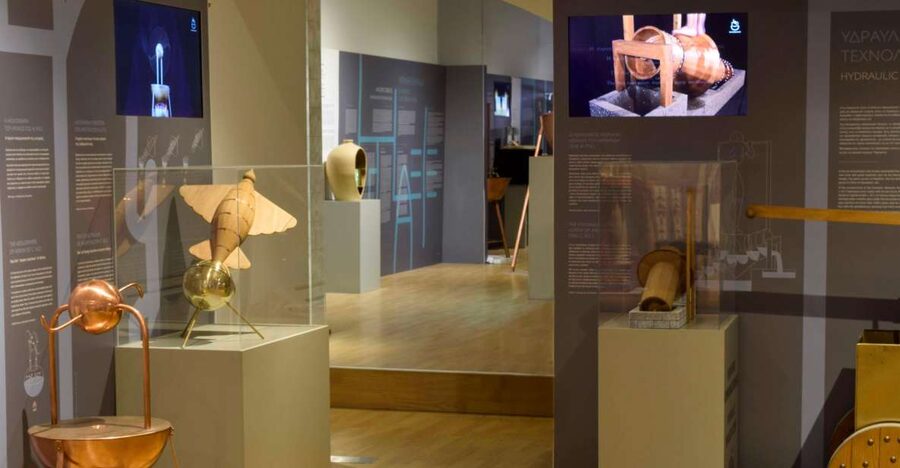
Your ticket covers museum entry. A guided tour is not included, and the listed host or greeter language is English. The museum supplies the information through labels, posters, diagrams, photographs, projected videos, animations, and documentaries.
I see this as a good arrangement for independent visitors. You can move quickly through familiar material, then stop when a device catches your attention. You are not tied to a group schedule or required to follow a guide’s pace.
The tradeoff is that you need to read and watch your way through the collection. If you want a flowing story told by a person, this may feel less satisfying than a guided archaeological tour. If you prefer control, the self-guided format is useful.
The ticket is valid for one day, with available starting times shown when you book. That gives you some flexibility, but you should still check the opening time you select before arranging the rest of your Athens day.
How much time should you allow?
The activity information does not give a fixed visit length. Since the ticket is valid for one day, you can plan the museum as a flexible stop rather than a timed tour with a strict end.
I would allow enough time to examine the major models and watch some of the explanatory material. A quick visit can introduce you to the main inventions, but rushing would undercut the museum’s best feature: seeing how the mechanisms work.
If you read the labels, study the diagrams, try the interactive models, and watch the documentaries, you will need more time than someone who simply walks through the rooms. The exact length depends on your interest and pace.
The central location helps. You can visit before or after another Syntagma-area activity without committing to a full day inside the museum.
Is the $7.90 ticket good value?
At about $7.90 per person, the ticket is fairly priced for a specialist museum with around 100 operating models and a full set of English explanations. The value improves if you enjoy science, engineering, ancient history, or hands-on displays.
You are paying for a focused collection rather than a large national museum. That means the experience is narrower, but also more coherent. Nearly every exhibit supports the same main idea: ancient Greek technology was inventive, practical, and often much more advanced than its surviving reputation suggests.
The price is less attractive if you only want a quick photo stop or prefer traditional art and archaeology. This museum asks you to spend time with mechanisms and explanations. Its strengths appear when you engage with the displays.
The 4.9 rating from 26 reviews also suggests strong satisfaction, but I would judge the ticket mainly by your interests. The museum is good value for a curious visitor who wants an accessible, unusual subject in central Athens.
Who should visit Kotsanas Museum?
I would recommend it to:
- Families looking for an educational stop that is more active than a standard display case museum
- Adults interested in engineering, inventions, astronomy, or mechanical design
- Visitors who want a different angle on ancient Greek culture
- Anyone fascinated by the Antikythera mechanism
- People with a spare part of the day near Syntagma
- Repeat visitors who have already seen Athens’ major archaeological sites
I would be more cautious if you dislike technical explanations, do not want to read English labels, or expect a live guide to lead you from room to room. The museum is welcoming to independent exploration, but it does not include a guided tour.
The museum is wheelchair accessible, which makes it a practical choice for visitors who need step-free access. Food and drinks are not allowed inside.
Should you book this Athens museum ticket?
Book it if you want to see ancient Greek culture through machines rather than monuments. The Antikythera mechanism, hydraulic clock, automata, and theatrical devices give you plenty to think about, while the interactive models make the subject easier to grasp.
Skip it if your Athens schedule is already packed with major archaeological sites and you have little interest in technical displays. This is a specialist museum, not a replacement for the Acropolis Museum or the city’s ancient ruins.
For most curious visitors, the low price, central location, English material, and unusual collection make it an easy addition to an Athens itinerary. Plan enough time to read, watch, and try the working models, and you will get far more from it than a quick walk through.
FAQ
Where is the Kotsanas Museum located?
The museum is at Pindarou 6, Athens 106 71, Greece. It is about a five-minute walk from Syntagma Metro Station.
How much does admission cost?
The ticket costs about $7.90 per person.
How long is the ticket valid?
The ticket is valid for one day. You should check availability for the starting times offered when booking.
Is a guided tour included?
No. The entry ticket includes admission only, and a guided tour is not included.
What language is available at the museum?
The listed host or greeter language is English. Exhibition information is provided in Greek and English.
What can I see inside the museum?
You can see about 100 operating models of ancient Greek inventions, including the Antikythera calculating mechanism, a hydraulic clock, automata, a robot-servant, and theatrical mechanical devices.
Can I interact with the exhibits?
Many exhibits are interactive, and you can operate some mechanisms with your own hands.
Is the museum wheelchair accessible?
Yes. The museum is wheelchair accessible.
Can I bring food or drinks inside?
No. Food and drinks are not allowed inside the museum.
Just added around Greece
- Ancient Athens tour: Acropolis, Parthenon and Acropolis Museum★ 5.0 · 256 reviews
- The Acropolis, Athens Walking City Tour and Acropolis Museum★ 5.0 · 442 reviews
- Acropolis of Athens, Parthenon and Acropolis Museum private tour with dinner★ 5.0 · 77 reviews
- Athens: Acropolis Museum Ticket with Self-Guided Audio tour App★ 3.5 · 40 reviews
- Family Acropolis & Acropolis Museum Tour inspiredby Percy Jackson★ 4.5 · 40 reviews
- Shore Excursion: Acropolis, Athens City tour and The New Acropolis Museum★ 4.5 · 30 reviews
- Athens National Archaeological Museum E-Ticket with Audio Guide★ 3.0 · 57 reviews
- Private Tour: Half day Athens Sightseeing and Acropolis Museum★ 4.5 · 28 reviews
Museum Tours in Greece, compared.

Acropolis, Parthenon & Acropolis Museum Guided Tour
Read our review →
The Acropolis, Parthenon & Acropolis Museum Guided Tour
Read our review →Acropolis, Parthenon & Acropolis Museum Guided Tour
Read our review →
Acropolis monuments & Parthenon Walking Tour with Optional Acropolis Museum
Read our review →
Athens All Included: Acropolis and Museum Guided Tour with Ticket
Read our review →
Combo: Acropolis & Acropolis Museum with Optional Tours
Read our review →
Acropolis Museum Ticket with optional Audio Guide
Read our review →
Small-Group Delphi, Museum & Arachova Day Trip
Read our review →Browse the lists this tour appears in