
Review · ATHENS
Athens: Acropolis Museum and Acropolis Tour in the Afternoon
The clever part of this four-hour Athens tour is its order: you see the Acropolis Museum first, then walk onto the Acropolis with the background fresh in your mind. Instead of meeting the Parthenon as a pile of famous stones, you first see statues, pottery, architectural pieces, and reconstructions that help explain what you are looking at above.
I like the late-afternoon timing, which can mean gentler heat and fewer morning crowds. I also like the guides’ use of stories, from the contest between Athena and Poseidon to the odd remedies of ancient healing centers. The main drawback is ticket handling: if you do not choose the ticket-included option, you must buy two timed admissions yourself, and a mistake can cost you the tour.
Key points to know before booking
- The museum comes first: The 75-minute visit gives you useful context before the Acropolis.
- The Acropolis entry is timed: You enter about 90 minutes after the tour begins, so late arrival is not workable.
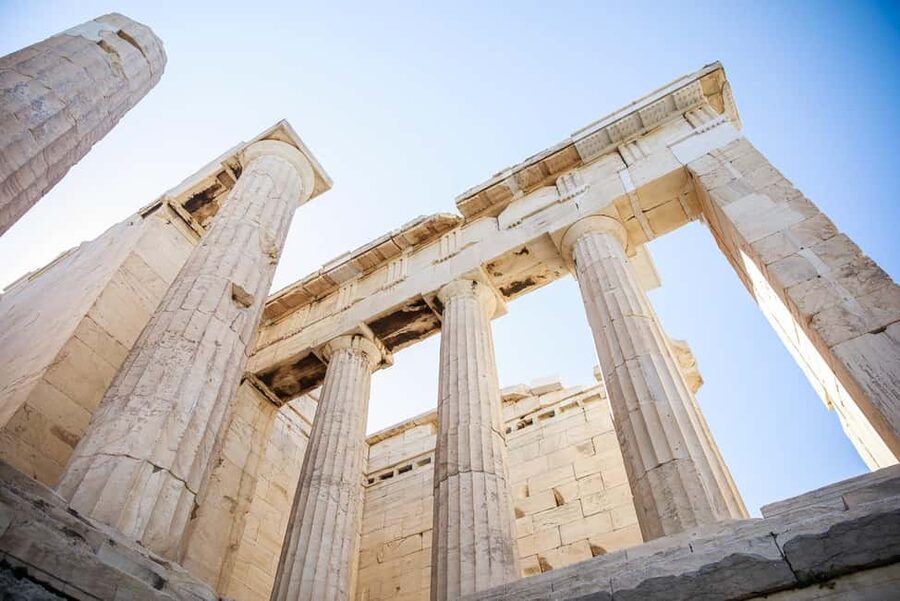
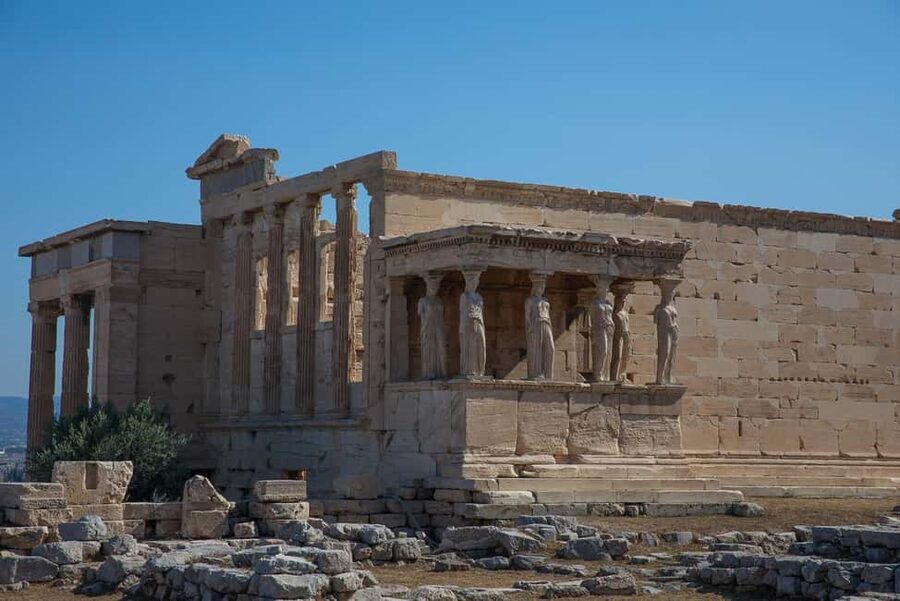
- The route covers the south side: Expect the Theater of Dionysus, Herodes Atticus Theater, Propylaea, Erechtheion, Parthenon, and Temple of Athena Nike.
- Afternoon helps with heat: The later start is especially useful in July and August, though the stone surfaces can still feel hot.
- The $55 price needs checking: It is strongest value when pre-booked tickets are included, since separate admissions and timing take careful planning.
- This is a walking tour: Comfortable shoes, water, a hat, and sunscreen matter. It is not suited to wheelchair users or people with mobility impairments.
Why the museum-first plan works so well

The Acropolis Museum sits near the ancient hill, in a modern building designed to keep the archaeological site in view. That setting matters. You are not studying Greek art in an isolated gallery, then trying to connect it to Athens later. The hill is right there, waiting for the second half of the afternoon.
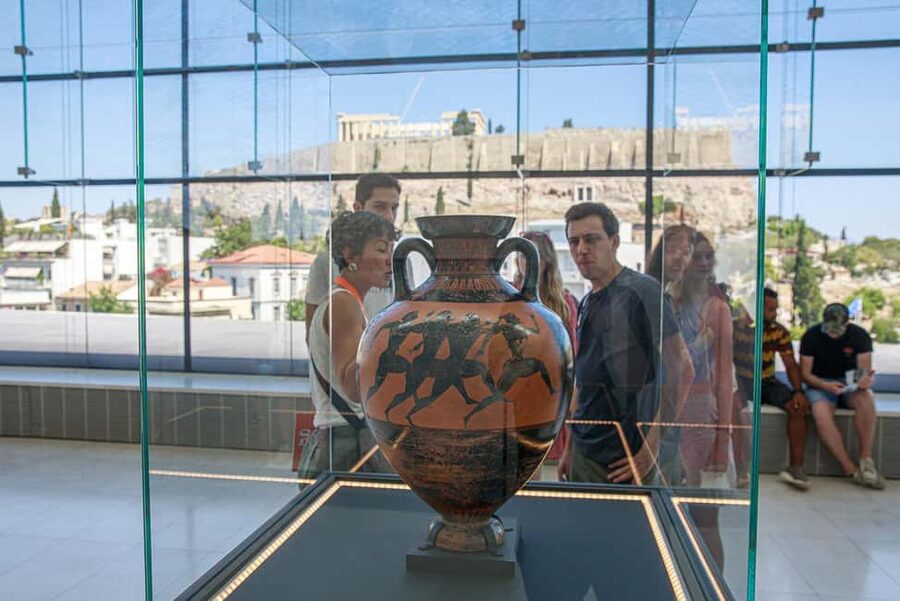
Your guide leads you through material from the Archaic, Classical, Hellenistic, and Roman eras. You will see statues, pottery, architectural remains, and pieces connected to Greek myths and civic life. The Parthenon sculptures are a major focus, but the useful part is the way the objects explain the buildings and rituals you will see outside.
The museum portion lasts about 75 minutes. That is enough time for a guided introduction, but not enough for a slow, independent museum visit. One practical point is worth keeping in mind: the tour moves as a group, so you should not expect much free time to wander through every gallery.
That tradeoff is clear. You get a strong introduction and a guide who can answer questions, but you give up the chance to linger over individual objects. If you want a full museum visit, plan to return on another day or choose a separate ticket and allow more time.
More Museum Tours in Athens
- Athens: Acropolis, Parthenon & Acropolis Museum Guided Tour
★ 4.8 · 9,316 reviews - The Acropolis, Parthenon & Acropolis Museum Guided Tour
★ 4.7 · 8,493 reviews - Athens: Mythology of Delphi, Museum and Arachova Guided Tour
★ 4.7 · 5,102 reviews
Starting at Dionysiou Areopagitou Street
Meet at 3 Dionysiou Areopagitou Street, near the beginning of the pedestrian walkway from Hadrian’s Arch and Syngrou Avenue. Look for the orange Athens Walking Tours sign. This is a useful location because the road leads directly toward the Acropolis area, but give yourself time to find it.
The tour starts at the museum, not at the Acropolis gate. That detail is easy to miss when you are planning your day. If you select an option without tickets, you need a valid museum admission and a separate Acropolis ticket arranged in advance.
The ticket rules deserve serious attention. You must select the correct date, entry time, and citizenship category, such as EU or non-EU. Bring your passport, since citizenship may need to be checked. The tour fee is non-refundable if you arrive without a valid ticket.
If you choose the ticket-included option, this problem largely disappears. At $55 per person, the price is reasonable for a four-hour guided visit, headsets, an Athens map, and a guidebook with local suggestions. The value is best when the admission tickets are included and you want interpretation rather than simply entry.
Inside the Acropolis Museum

The museum is where the tour builds its case. Your guide connects objects to the monuments above, explains the role of mythology, and gives you a way to read the Acropolis rather than simply photograph it.
Look for the Parthenon material, architectural fragments, and statues from earlier periods. The Archaic and Classical sections help you see that the Acropolis was not created in one single moment. Athens changed, rebuilt, and reused the hill over time.
The mythology adds color without being mere decoration. You hear how the city’s protection became tied to the contest between Athena and Poseidon. That story gives meaning to the rivalry between the gods and helps explain why Athena mattered so much to Athens.
Guides have different personalities, but the strongest ones keep the pace measured. Ellenica was praised for explaining things without going too fast or overloading the group. Vassilika was noted for connecting ancient stories with present-day Athens and Greece. Apollo made the material lively for one solo participant, while Yiannis was praised for clear explanations and practical care when rain arrived.
You may hear similar themes from different guides, but each can add a personal angle. The English-language guiding is a central part of the experience, so this tour suits you best if you want interpretation instead of a quiet self-guided visit.
The short café break
After the museum, you get about 10 minutes at a local café. Think of this as a practical pause, not a meal stop. Food and drinks are not included, and the schedule is too tight for a long break.
This is your chance to buy water, use the restroom if available, and prepare for the uphill walk. The pause can feel useful on a hot day, especially after 75 minutes indoors and before walking over ancient stone.
There is also a possible weakness here. The gap between the museum and Acropolis entry is controlled by the timed admission, so you may spend some of it waiting rather than exploring. If you hoped to remain inside the museum and look around on your own, this format will feel restrictive.
Bring water with you and do not count on the café break as your only chance to refresh. The schedule is fixed by the Acropolis entry time, and the guide cannot simply delay the group for late arrivals.
More Acropolis Museum visits:
- Athens: Acropolis, Parthenon & Acropolis Museum Guided Tour
★ 4.8 · 3,579 reviews - Acropolis monuments & Parthenon Walking Tour with Optional Acropolis Museum
★ 5.0 · 2,678 reviews - Athens All Included: Acropolis and Museum Guided Tour with Ticket
★ 4.5 · 2,673 reviews - Athens: Acropolis Museum Ticket with optional Audio Guide
★ 4.4 · 2,652 reviews
Walking up the Acropolis south slope
The Acropolis portion begins at the south slope, about 90 minutes after the tour starts. The approach gives you several important stops before the Parthenon, and the guide explains how theater, worship, medicine, and public life were tied together on this hill.
The route is not a gentle city stroll. You will walk over uneven ancient surfaces, slopes, and steps. Good shoes are essential, and anyone with mobility limits should think carefully before booking. Strollers, backpacks, food, and drinks are not allowed, so pack lightly and check current entry rules before you go.
Security can also slow the route. Airport-style checks may create waits of 30 minutes or more during busy periods. This is another reason to arrive early and keep the whole afternoon free.
Theater of Dionysus
The Theater of Dionysus is an excellent first stop because it connects the Acropolis to the birth of theater. Your guide explains how drama developed in ancient Athens and points out the setting where public performance became part of civic and religious life.
You spend about 15 minutes here. That is long enough for an explanation and a look around, but not enough for a detailed study of every remaining seat or stone. The value comes from the setting: you can see how the theater sits below the sacred hill and why this part of Athens mattered beyond temples.
Odeon of Herodes Atticus
The Odeon of Herodes Atticus gets a shorter explanation, around five minutes. It is still an important stop, especially because its curved stone structure remains one of the most recognizable features on the southern approach.
Your guide gives you the basic story and helps place the building within the route. Since the stop is brief, expect a focused orientation rather than a long architectural lecture.
Asclepius Sanctuary
The Asclepius Sanctuary brings a different subject into the tour: ancient medicine. Here you hear about the healing center and the remedies used by people seeking relief.
The stories can be memorable because ancient treatment was not always what modern visitors expect. The guide links the sanctuary to the broader Greek idea of healing, worship, and care. It is a good reminder that the Acropolis was not only a place for grand temples and political symbols.
Reaching the Propylaea and upper hill
The Propylaea marks the grand entrance to the upper Acropolis. The stop is short, but its position makes it easy to understand the sense of arrival built into the site.
From here, the walking surface becomes especially important. Crowds can bunch up, and the group must keep moving to respect the timed route. One participant had trouble keeping up in the crowd, so stay close to your guide and use the provided headset. The headsets are helpful when other groups are nearby or when the guide needs to speak from a few steps away.
Afternoon light can make the marble and honey-colored stone look especially fine, but do not assume the site will be quiet. The later time often helps compared with the morning, yet the Acropolis remains one of Athens’ busiest places.
The Erechtheion and Athena’s sacred stories
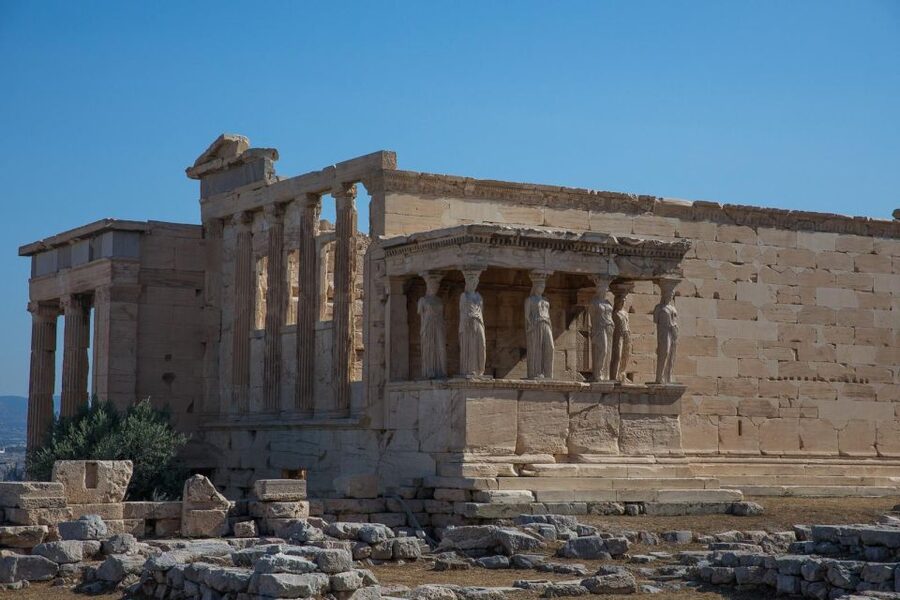
The Erechtheion is one of the most visually distinctive buildings on the hill, with its unusual layout and famous female figures supporting the porch. Your guide explains the building’s connection to Athena and the older sacred traditions of the Acropolis.
This is also where the contest between Athena and Poseidon becomes more than a mythological tale. The story reflects the city’s identity and its choice of patron. Listen for the details, since a good guide turns the stones into a story about power, religion, and the character Athens wanted to project.
You get about 10 minutes here. That is enough to understand the main points and take photographs, although groups may need to keep moving around crowded viewing spots.
The Parthenon as the final main stop

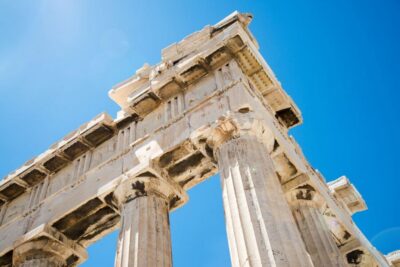
The tour saves the Parthenon for the grand finish. You have already seen related sculpture and architecture in the museum, so the building above feels less abstract. You can connect the broken columns and remaining decoration with what you saw indoors.
The guided stop lasts about 20 minutes. That is a sensible amount of time for the major facts, photographs, and a clear explanation of the temple’s role. Your guide discusses the structure, its dedication to Athena, and the way the monument has changed through the centuries.
Do not expect an empty foreground for your perfect photograph. The Parthenon is crowded, and the route is shared by many groups. Still, the scale of the building and its position over Athens make this the moment that justifies the visit.
The Temple of Athena Nike comes near the end, with about five minutes of explanation. Its compact size makes a nice contrast to the Parthenon. It also brings the tour back to the question of Athena’s protection and the city’s use of the hill as both a sacred center and a statement of power.
The tour finishes at the Acropolis, not back at the museum. That is convenient if you plan to continue exploring Plaka or head toward another central Athens sight. You will need to arrange your own onward plans.
Heat, crowds, and the late start
The afternoon schedule is one of the strongest reasons to choose this experience. Starting later can help you avoid the sharpest morning rush and the worst early heat, especially in summer.
It does not make the Acropolis cool. You are still walking on exposed stone, and shade is limited. Wear a hat, use sunscreen, and carry water. Guides have adjusted the pace for hot conditions, using shady spots for explanations and allowing short pauses when needed.
The schedule also gives you a chance of seeing evening light as you leave the museum and reach the hill. Exact sunset conditions depend on the date and start time, so treat this as a possibility rather than a promise.
The tour runs in rain or shine. Weather-appropriate clothing matters, and a light rain layer is sensible. One guide even provided a rain poncho when conditions changed, but you should not depend on that being part of the standard package.
Who gets the most value from $55
I would choose this tour if you want the Acropolis and museum explained in a logical order, and you prefer a guide to an audio app or book. The headsets, map, guidebook, and four-hour structure add useful support for a first visit.
It is also a good fit if you are trying to avoid the hottest part of the day. Families with older children, first-time visitors, and solo visitors who want help with photographs can all benefit from the guided format.
The value is less clear if you already know ancient Greek art well or want hours to inspect the museum independently. You may find the fixed route too brisk, especially inside the museum and at the shorter stops.
The ticket option changes the calculation. With pre-booked admissions included, $55 is easier to justify because you are paying for both access and interpretation. Without tickets, you must buy from the official museum and Acropolis sites before booking, select the correct time, and coordinate the 90-minute gap. That can be done, but it takes care.
Practical details for a smoother afternoon
Wear shoes with a secure grip. The ancient surfaces are uneven, and the walk includes uphill sections.
Carry a small amount of water, a hat, sunscreen, and a camera. Food and drinks are not allowed on the Acropolis, and backpacks are not permitted, so avoid arriving with bulky luggage.
Arrive early at the orange sign on Dionysiou Areopagitou Street. The Acropolis entry time is strict, and the group will not wait for late arrivals. There are no refunds if you miss the timed entry.
You can cancel up to 24 hours before the tour for a full refund, and the reserve-now-pay-later option keeps payment flexible. The experience is offered in English only.
Should you book this Athens Acropolis tour?
Book it if you want clear context before the monuments, a later start, and a guide who can connect mythology, theater, medicine, and architecture. The museum-first order is the real strength, and guides such as Vassilika, Apollo, Ellenica, Yiannis, and Margarita have provided the kind of clear, friendly explanations this site needs.
Skip it if you need wheelchair access, dislike fixed group pacing, or want lots of unstructured museum time. If you do book, choose the ticket-included option when available, arrive early, and treat the $55 price as payment for both organization and interpretation. For a first Athens visit, that is a sensible bargain.
FAQ
Where does the tour meet?
Meet at 3 Dionysiou Areopagitou Street. Look for the orange Athens Walking Tours sign at the start of the pedestrian walkway leading toward the Acropolis from Hadrian’s Arch and Syngrou Avenue.
Where does the tour begin?
The guided experience begins at the Acropolis Museum. The Acropolis portion starts about 90 minutes after the tour begins.
Are Acropolis and museum tickets included?
Tickets are included if you select the option with tickets. If you choose an option without tickets, you must purchase valid admissions from the official museum and Acropolis websites before booking the tour.
What happens if I buy my own tickets?
You must select the correct date, time, and citizenship category for both admissions. Bring your passport for verification. A missing or incorrect ticket can prevent you from joining, and the tour fee is non-refundable.
How long is the tour?
The experience lasts four hours. The museum visit takes about 75 minutes, followed by a 10-minute café break and the guided Acropolis route.
What language is the tour offered in?
The live guided tour is offered in English.
What should I bring?
Bring comfortable shoes, a hat, sunscreen, water, a camera, and clothing suited to the weather.
Is the tour suitable for wheelchair users or people with mobility impairments?
No. The experience is not suitable for wheelchair users or people with mobility impairments. Baby strollers, backpacks, food, and drinks are also not allowed.
Just added around Athens
- Ancient Athens tour: Acropolis, Parthenon and Acropolis Museum★ 5.0 · 256 reviews
- The Acropolis, Athens Walking City Tour and Acropolis Museum★ 5.0 · 442 reviews
- Athens: Acropolis Museum Ticket with Self-Guided Audio tour App★ 3.5 · 40 reviews
- Family Acropolis & Acropolis Museum Tour inspiredby Percy Jackson★ 4.5 · 40 reviews
- Acropolis of Athens, Parthenon and Acropolis Museum private tour with dinner★ 5.0 · 77 reviews
- Shore Excursion: Acropolis, Athens City tour and The New Acropolis Museum★ 4.5 · 30 reviews
- Athens National Archaeological Museum E-Ticket with Audio Guide★ 3.0 · 57 reviews
- Private Tour: Half day Athens Sightseeing and Acropolis Museum★ 4.5 · 28 reviews
Museum Tours in Athens, compared.
Acropolis, Parthenon & Acropolis Museum Guided Tour
Read our review →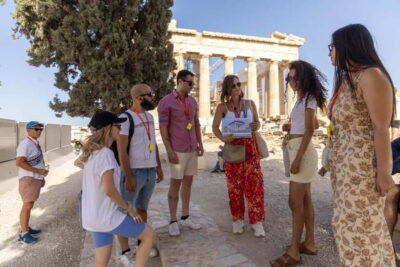
The Acropolis, Parthenon & Acropolis Museum Guided Tour
Read our review →Acropolis, Parthenon & Acropolis Museum Guided Tour
Read our review →
Acropolis monuments & Parthenon Walking Tour with Optional Acropolis Museum
Read our review →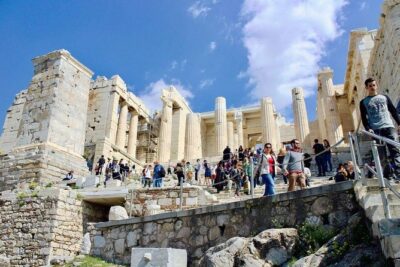
Athens All Included: Acropolis and Museum Guided Tour with Ticket
Read our review →
Acropolis Museum Ticket with optional Audio Guide
Read our review →
Small-Group Delphi, Museum & Arachova Day Trip
Read our review →
Delphi Oracle & Museum Tour with a Licensed Guide
Read our review →Browse the lists this tour appears in