
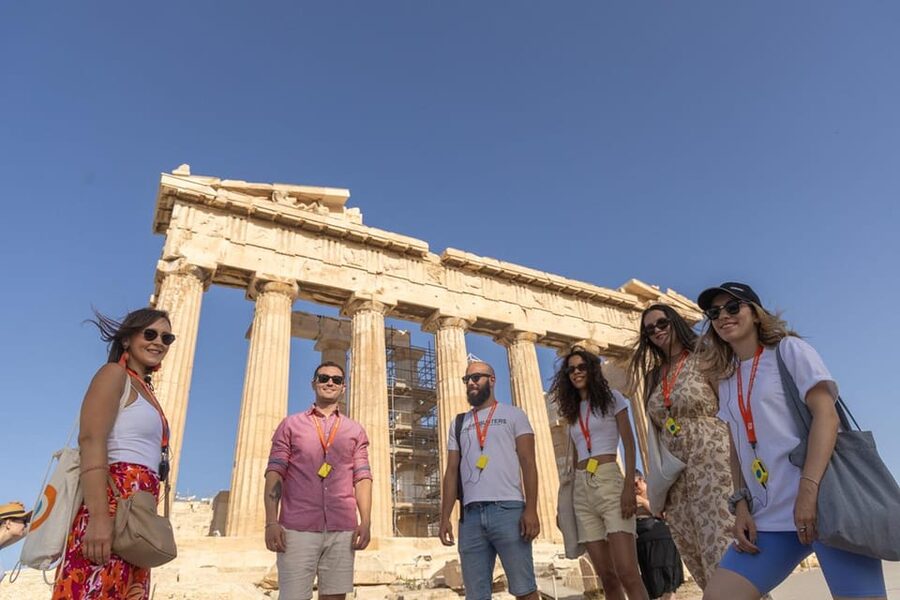
Review · ATHENS
Athens: Acropolis and Acropolis Museum Premium Guided Tour
The best part of this Athens tour is the way it links the Acropolis ruins with the objects now housed below at the Acropolis Museum. You first see the monuments in their setting, then study the sculpture, carvings, and excavation remains with a guide who can explain what you are looking at.
I like the route from the south slope, which brings you past the Theatre of Dionysus and the Dionysus Sanctuary before reaching the hilltop. I also like the museum finish, since the glass floors and galleries help fill in the pieces that the weathered ruins cannot show. The drawback is simple: 3.5 hours of walking, stairs, sun, and uneven rock can be tiring, especially when you visit both sites in one go.
Key points at a glance
- South-slope approach: Begin near the Theatre of Dionysus and avoid starting with the busiest main approach.
- Core Acropolis sights: See the Propylaea, Erechtheion, Temple of Athena Nike, Parthenon, and the views from the summit.
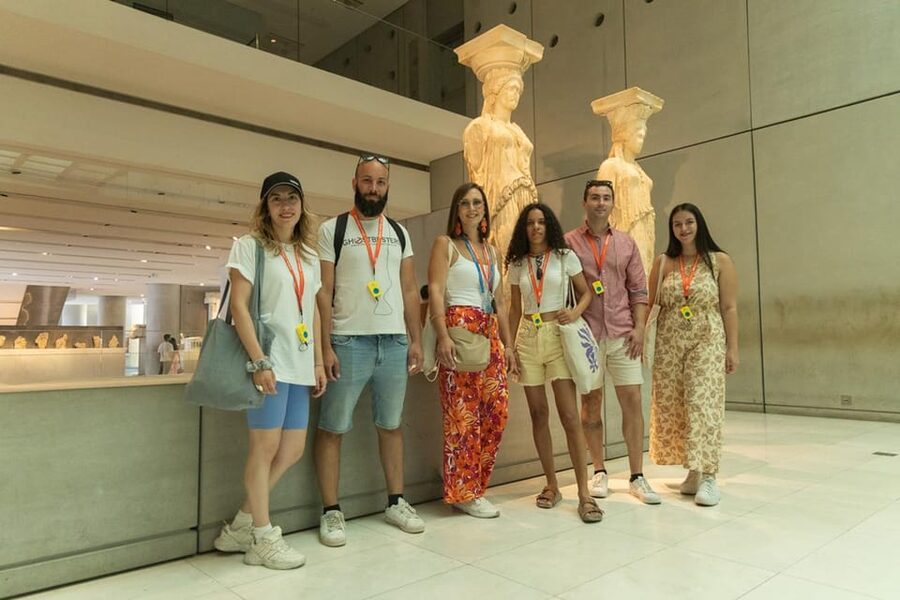
- Museum connection: Continue to the Acropolis Museum for statues, relics, and the Gallery of the Slopes.
- Strong guiding: Guides such as Yolanda, Apollon, Maria, Sissy, and Angeliki have been praised for clear explanations, stories, and good pacing.
- Good practical value: At $55 per person, the price includes guiding at both sites, though you must check if your booking includes admission tickets.
- Physical demands: Wear sturdy shoes, carry water, and arrive 20 minutes early for a strict timed entry.
Why this Acropolis tour works better than simply wandering
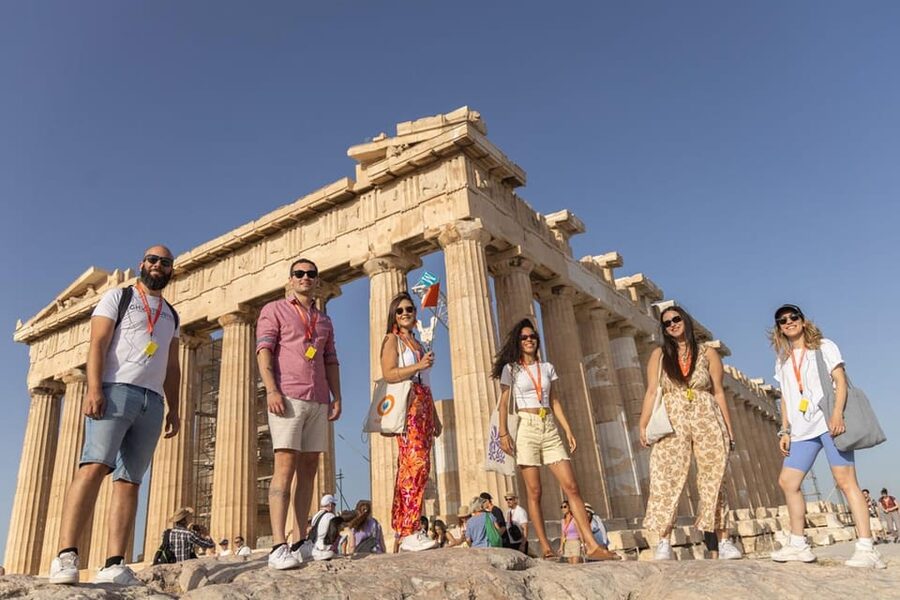
The Acropolis is easy to recognize and surprisingly hard to understand on your own. You can see the Parthenon, take a few photographs, and walk away with the broad outline. A guide adds the details that turn broken columns and marble fragments into a story about religion, politics, art, theater, and daily life.
That matters most at the Acropolis itself. The monuments are magnificent, but they are also damaged, rebuilt, moved, and surrounded by layers of construction. A licensed guide can point out what belongs to which period and explain why the buildings were placed where they were.
This experience also gives you a useful two-part visit. The hill shows the setting and scale. The museum shows the sculpture and architectural details at close range. I find that pairing much more useful than seeing either one alone.
The tour is in English, and the company has operated Athens walking tours for more than 20 years. Guide quality can vary from person to person, but the names attached to especially strong tours include Yolanda, Apollon, Maria, Philippina, Sissy, Angeliki, and Olysia. Their strengths have included clear storytelling, humor, careful pacing, and practical help in hot weather.
More Museum Tours in Athens
- Athens: Acropolis, Parthenon & Acropolis Museum Guided Tour
★ 4.8 · 9,316 reviews - The Acropolis, Parthenon & Acropolis Museum Guided Tour
★ 4.7 · 8,493 reviews - Athens: Mythology of Delphi, Museum and Arachova Guided Tour
★ 4.7 · 5,102 reviews
Meeting at Dionysiou Areopagitou Street
The meeting point is at 3 Dionysiou Areopagitou Street, in front of the Lukumades and Pilino stores. It is at the start of the pedestrian walkway leading from Hadrian’s Arch toward the Acropolis, about three minutes from Acropolis Metro Station.
Look for the orange Athens Walking Tours sign. You should arrive 20 minutes before departure. This is not a place to cut things close. Acropolis entry is timed, and late arrivals cannot be accommodated or refunded.
Before setting out, make sure your ticket arrangement is clear. The booking can be made with entrance tickets included, or without tickets. With the latter option, you receive a link after booking to buy the Acropolis and museum tickets yourself. The Acropolis entry time must match the tour start time exactly.
If you qualify for a reduced or free ticket, bring official proof and a valid ID showing your age and nationality. Failure to show the required documents can mean paying the full price, if tickets are still available, and the tour fee is not refunded in that situation.
Walking the south slope to the Theatre of Dionysus

The walk begins at the lower slopes of the Acropolis and heads toward the Theatre of Dionysus. This route is a smart choice because it introduces the hill through its theatrical and religious side rather than sending you straight into the main entrance crowds.
The Theatre of Dionysus is a fifth-century amphitheater and is described as the birthplace of the performing arts. Your guide can help you picture the site filled with ancient spectators, watching plays that shaped Greek drama. The semicircular seating and open-air setting make the connection between theater and civic life easy to grasp.
Nearby, the Dionysus Sanctuary honors the god linked with wine and fertility. It is not as visually famous as the Parthenon, but it gives the tour a broader frame. The Acropolis was not simply a collection of grand buildings. It was also a sacred place tied to festivals, worship, performance, and public life.
The route includes about ten minutes of walking between several points, but the whole visit involves uphill sections, steps, and rough stone. Comfortable shoes are essential. Smooth soles are a poor choice here, particularly where the rock has been polished by many feet.
Reaching the Propylaea and the sacred hilltop
The Propylaea is the monumental gateway to the Acropolis. It gives you the first strong sense that you are crossing from ordinary city space into a carefully planned sacred precinct.
From there, the tour continues to the Temple of Athena Nike and the Erechtheion. The Temple of Athena Nike is small beside the Parthenon, yet its position and elegant design make it an important stop. The Erechtheion is known for its unusual layout and the famous female figures used as architectural supports.
Your guide should help you read the buildings rather than just name them. Look for changes in scale, unusual floor plans, decorative details, and the way each structure served a different purpose. This is where a good explanation earns its keep. Without one, the Parthenon tends to swallow the attention of everything around it.
The summit also opens wide views over Athens. You can see the city spreading around the Acropolis and hear about nearby sites such as Mars Hill, the Odeon of Herodes Atticus, and the Ancient Agora. These references help you place the Acropolis in the wider city rather than treating it as an isolated monument.
More Acropolis Museum visits:
- Athens: Acropolis, Parthenon & Acropolis Museum Guided Tour
★ 4.8 · 3,579 reviews - Acropolis monuments & Parthenon Walking Tour with Optional Acropolis Museum
★ 5.0 · 2,678 reviews - Athens All Included: Acropolis and Museum Guided Tour with Ticket
★ 4.5 · 2,673 reviews - Athens: Acropolis Museum Ticket with optional Audio Guide
★ 4.4 · 2,652 reviews
The Parthenon, photos, and the cost of crowds
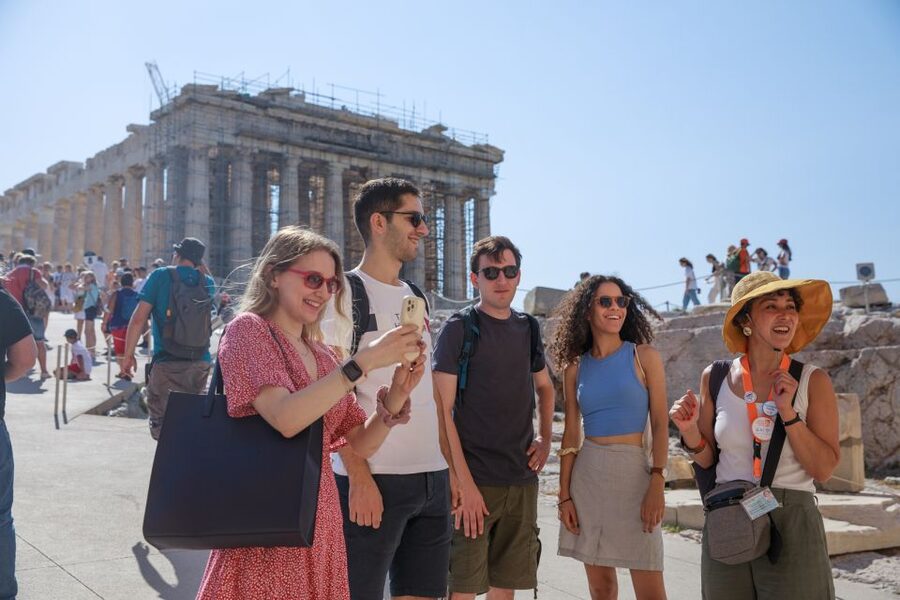
The Parthenon is the central moment of the hilltop visit. You will have time to stop, listen, and take photographs, with around 15 minutes set aside for a break and photo stop after the main explanations.
Do not expect solitude. Even a Monday morning in shoulder season can be very crowded, and peak periods may bring large groups to the same viewpoints. That is one reason a guide can be useful. Someone who knows the route can keep the group moving, find a workable place to stop, and make sure you see the main features without wasting time in a crowd.
The views are excellent, but the exposure can be hard in summer. Several guides have made a point of finding shade when possible and warning people about awkward footing. That practical care is important here. Bring water, wear a hat, and use sunscreen. The tour runs in rain or shine.
Security is similar to an airport check. Skip-the-ticket-line access does not mean you walk straight through every checkpoint. Waiting can be anywhere from a few minutes to 10 or 30 minutes, and on rare occasions longer, depending on visitor numbers and the site’s security flow.
Inside the Acropolis Museum for 90 minutes
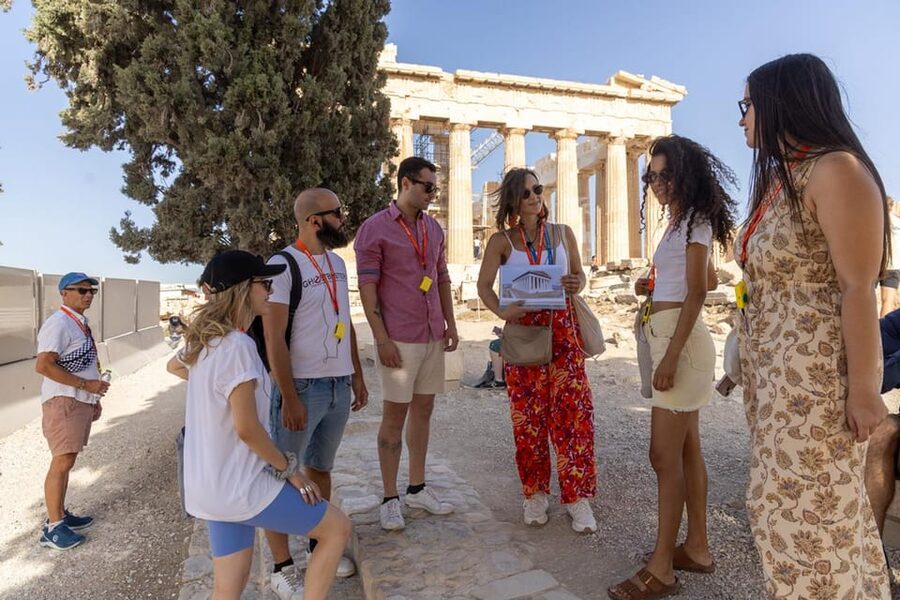
After the hilltop visit, you continue to the Acropolis Museum for about 1.5 hours of guided viewing. The tour ends inside the museum at 11 Chatzichristou Street, leaving you free to continue looking around afterward.
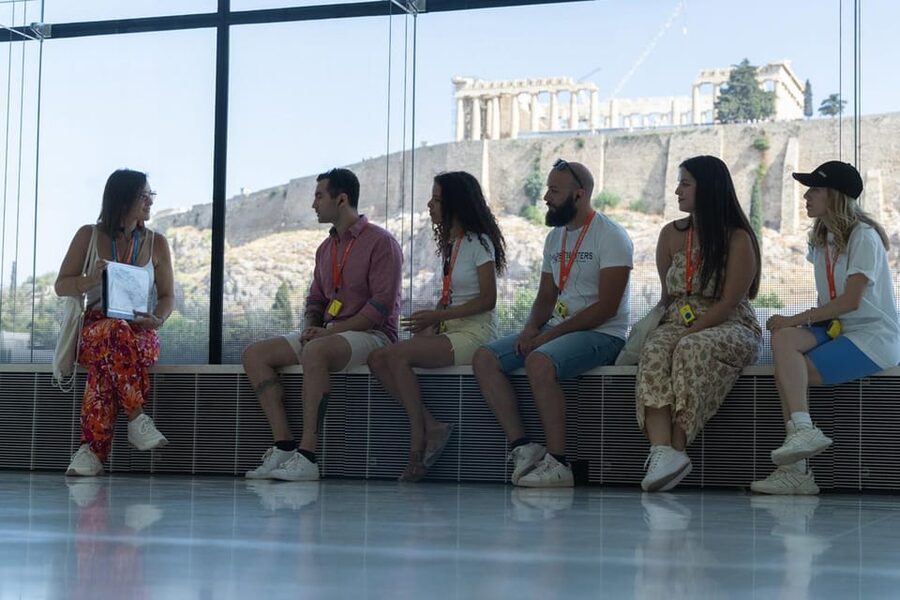
This is not just an indoor extra. The museum gives you a chance to see sculpture and architectural fragments at eye level, with better lighting and more context than you get on the hill. The collection includes statues and relics from the Acropolis, and the Gallery of the Slopes has glass floors that reveal excavation areas below.
That glass-floor section is especially useful because it shows that Athens history is not confined to the hilltop monuments. The city has been built, altered, and excavated over many centuries. A guide can connect what you see under the floor with the streets and buildings around the Acropolis.
The museum is also where a long morning can catch up with you. One four-star assessment described the combined visit as too much at once after time in the hot sun. I understand that reaction. The museum is excellent, but if you are already tired, the last hour may feel more like study than sightseeing.
If you enjoy archaeology, architecture, mythology, and ancient art, the museum is well worth keeping. If you prefer a shorter, more visual visit, an Acropolis-only tour may suit you better.
What $55 buys you

At $55 per person, the tour offers solid value if you want both major sites explained by a licensed guide. The package includes roughly two hours at the Acropolis, 1.5 hours at the museum, an Athens Guide magazine, and an Athens map. Food, drinks, and hotel transfers are not included.
The main value is time and interpretation. You are not paying only for access to famous stones. You are paying for a route through a crowded site, help with the timed entry process, and explanations that connect mythology, architecture, politics, theater, and city life.
Ticket inclusion needs close attention when comparing prices. One booking option includes admission, while the no-ticket option requires you to buy the Acropolis and museum tickets separately after booking. On free-entry days, the admission cost is already removed from the tour price.
The tour has a rating of 4.7 from 160 ratings, and the most consistent praise has focused on guide quality. Past guides have been singled out for storytelling, clear English, sensible pacing, and the ability to balance information with time for photographs. That consistency is a strong reason to consider a guided visit rather than simply buying entry and walking in alone.
Group size, pace, and physical effort
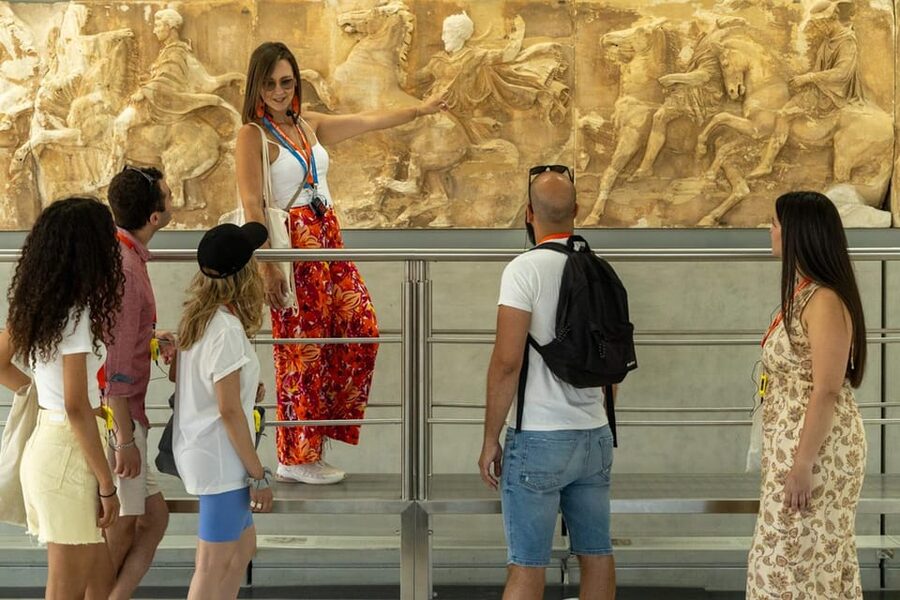
The group is not advertised as private, but several tour descriptions place the group below 20 people or describe it as a comfortable size. That is small enough for questions without creating the feel of a huge procession, though the exact number can vary.
The pace is active but not a race. You walk between the lower slope, the Acropolis monuments, and the museum, with time for explanations and photographs. One guide was praised for keeping a good balance between walking and talking, while another extended the visit to give the group more time.
You need to be comfortable with stairs, inclines, slippery stones, and uneven ground. The experience is not suitable for wheelchair users or people with mobility impairments. Baby strollers are not allowed, and large bags and luggage are also prohibited.
At the museum, backpacks may need to be checked. A smaller bag is the safer choice. Plan your clothing for movement and heat rather than style. The advice is basic but important: sturdy shoes, comfortable clothes, water, and a hat.
Who should book this experience
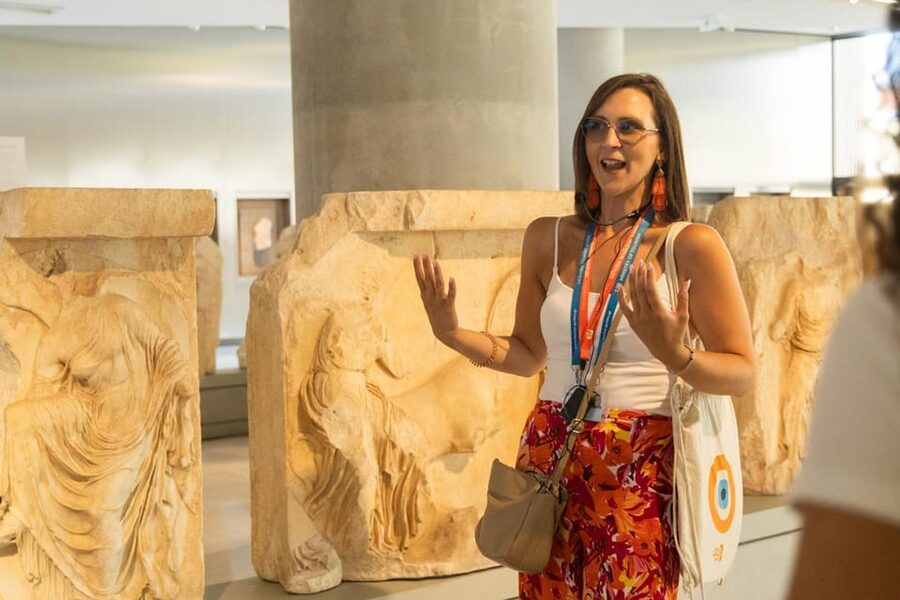
I would choose this tour if you are visiting Athens for the first time, want historical context, or feel that the Acropolis would be confusing without help. It is also a good choice if your schedule allows one substantial morning or afternoon and you want the hill and museum handled together.
Families with older children can benefit from the stories about Athena, theater, and city life, but the physical demands and long duration may be tiring for young children. The strict entry time also leaves little room for a slow departure from your hotel.
History and archaeology fans will get the most from the museum portion. If you mainly want photographs of the Parthenon and a quick look around, the combined tour may feel too long. The Acropolis alone would be less demanding.
Timing matters. Early starts, including an 8:30 departure, have worked well for avoiding the worst heat and some of the heaviest crowds, but no time guarantees an empty hill. Even shoulder-season mornings can be very busy.
Should you book the Acropolis and museum together?
Book it if you want the full story, not just the postcard view. The south-slope route, licensed English-speaking guide, summit panoramas, and museum visit make this a well-rounded introduction to Athens for $55, provided your ticket option is clear.
Skip it if you dislike guided pacing, have limited energy, or want a short visit focused only on the Parthenon. The combined program is rewarding but demanding. For most first-time visitors who can manage the walking, I think the guide adds enough context and practical help to justify the cost.
FAQ
How long does the tour last?
The advertised duration is 3.5 hours. The schedule includes about two hours at the Acropolis and 1.5 hours at the Acropolis Museum, although some tours may run slightly longer.
What language is the tour conducted in?
The live guided tour is conducted in English.
Where is the meeting point?
Meet at 3 Dionysiou Areopagitou Street, in front of the Lukumades and Pilino stores. The meeting point is near the start of the pedestrian walkway toward the Acropolis and about three minutes from Acropolis Metro Station.
How early should I arrive?
Arrive 20 minutes before the scheduled departure time. The Acropolis uses strict timed entry, and late arrivals cannot be accommodated or refunded.
Are entrance tickets included?
They are included only when you select the option with tickets. If you choose the no-ticket option, you receive a link after booking to purchase the Acropolis and museum tickets.
What should I wear and bring?
Wear comfortable clothes and sturdy, comfortable shoes. Water and a hat are sensible choices, especially in warm weather. Large bags, luggage, strollers, and pets are not allowed.
Is the tour suitable for wheelchair users?
No. The tour is not suitable for wheelchair users or people with mobility impairments because of stairs, inclines, uneven surfaces, and slippery stones.
Can I cancel the tour?
You can cancel up to 24 hours before the tour for a full refund. A reserve-now-and-pay-later option is also available.
Just added around Athens
- Ancient Athens tour: Acropolis, Parthenon and Acropolis Museum★ 5.0 · 256 reviews
- The Acropolis, Athens Walking City Tour and Acropolis Museum★ 5.0 · 442 reviews
- Athens: Acropolis Museum Ticket with Self-Guided Audio tour App★ 3.5 · 40 reviews
- Family Acropolis & Acropolis Museum Tour inspiredby Percy Jackson★ 4.5 · 40 reviews
- Acropolis of Athens, Parthenon and Acropolis Museum private tour with dinner★ 5.0 · 77 reviews
- Private Tour: Half day Athens Sightseeing and Acropolis Museum★ 4.5 · 28 reviews
- Shore Excursion: Acropolis, Athens City tour and The New Acropolis Museum★ 4.5 · 30 reviews
- Athens National Archaeological Museum E-Ticket with Audio Guide★ 3.0 · 57 reviews
Museum Tours in Athens, compared.
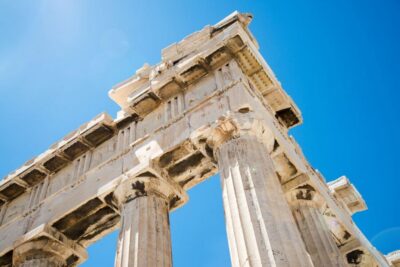
Acropolis, Parthenon & Acropolis Museum Guided Tour
Read our review →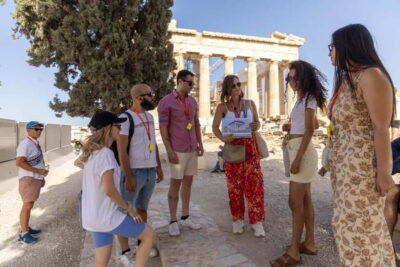
The Acropolis, Parthenon & Acropolis Museum Guided Tour
Read our review →Acropolis, Parthenon & Acropolis Museum Guided Tour
Read our review →
Acropolis monuments & Parthenon Walking Tour with Optional Acropolis Museum
Read our review →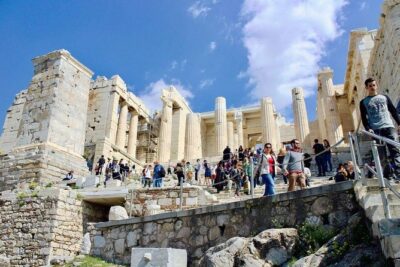
Athens All Included: Acropolis and Museum Guided Tour with Ticket
Read our review →
Acropolis Museum Ticket with optional Audio Guide
Read our review →
Small-Group Delphi, Museum & Arachova Day Trip
Read our review →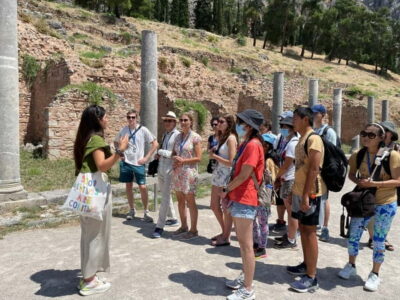
Delphi Oracle & Museum Tour with a Licensed Guide
Read our review →Browse the lists this tour appears in