
Review · THE NETHERLANDS
Amsterdam: National Maritime Museum Skip-the-Line Ticket
The most memorable part of this museum visit is not behind glass. It is the full-size replica of the 1749 East Indiaman Amsterdam, where you can step into cramped cabins, inspect the decks, sit in a sailor’s hammock, and even handle a cannon. The museum also gives you a clear look at how seafaring shaped Amsterdam’s power.
I especially like the 11-language audio tour, which helps connect paintings, maps, ships, and trade into one story. I also like the covered courtyard, a striking 1656 space where the old Admiralty storehouse is protected by a glass roof based on a nautical map.
The main drawback is time. The museum closes at 5:00 PM, and there is enough here for several hours, especially if you use the audio tour, try the VR experience, and take your time aboard the ship. A rushed one-hour visit will only skim the surface.
Key points to know before you go
- Board the replica Amsterdam: Walk through the decks and cabins of an 18th-century Dutch East Indiaman.
- See the Royal Barge: This ornate vessel gives the museum a strong link between maritime power and Dutch royalty.
- Use the 60-minute audio tour: It is included and available in 11 languages, including English, Spanish, Chinese, French, German, Italian, Japanese, Korean, Portuguese, Russian, and Dutch.
- Try the Dutch Golden Age VR trip: The experience shows Amsterdam from above during the early 17th century.
- Bring children: Several displays use screens, sound, games, and hands-on activities rather than asking young visitors to stand quietly beside cases.
- Allow more than an hour: The museum is open from 10:00 AM to 5:00 PM, and the collection covers art, navigation, trade, naval warfare, exploration, and modern sailing.
Why this museum matters to Amsterdam
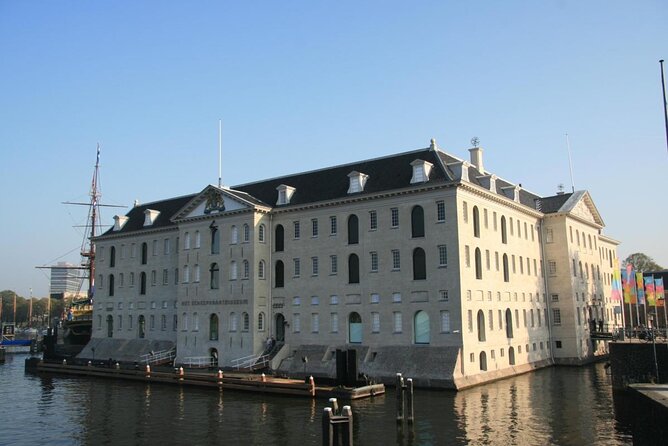
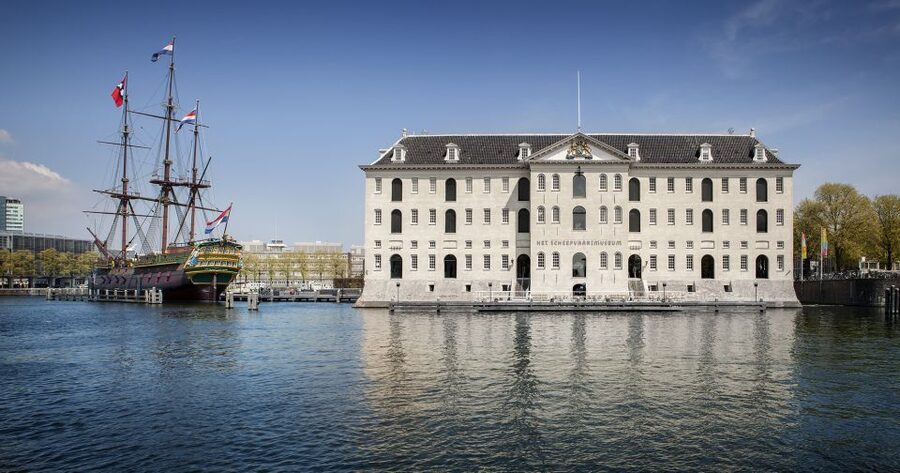
Amsterdam’s story is tied to water. The city grew through shipping, fishing, naval strength, overseas trade, mapmaking, and the work of the Dutch East India Company. The National Maritime Museum puts those subjects together in one large former storehouse, built in 1656 for the Admiralty.
That setting matters. You are not entering a modern gallery with a few nautical objects placed inside. You are walking into a building made for the machinery of Dutch maritime power. Its central courtyard is covered by a large glass roof formed from 1,200 pieces. The roof design repeats the lines of an old nautical map, so even the building makes a point about navigation and the sea.
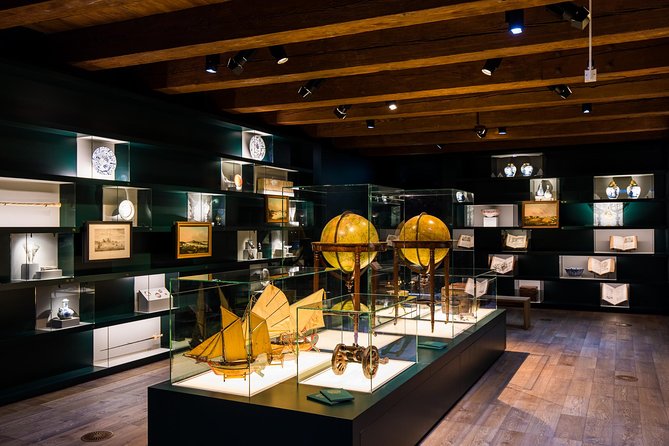
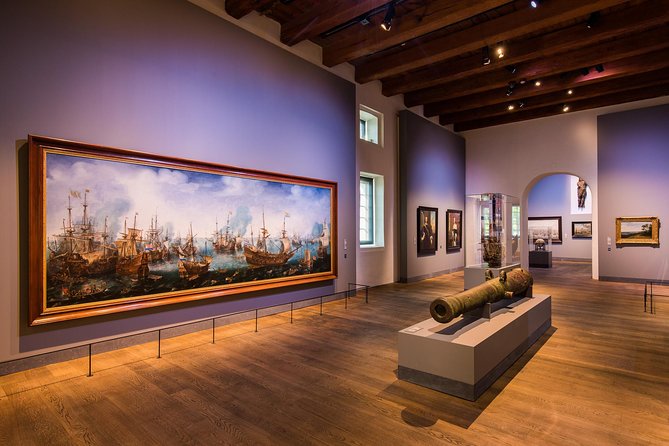
I find the museum most useful when you want to understand more than ships alone. Paintings and sea charts show how Dutch sailors pictured the world. Navigation instruments explain the practical side of ocean travel. Weapons and naval displays show how trade depended on force. Decorative carvings and figureheads reveal the pride and symbolism built into a ship.
The museum also addresses uncomfortable parts of this story. The Dutch role in colonialism and the slave trade is included, along with trade and sea battles. That wider treatment helps prevent the familiar mistake of viewing the Dutch Golden Age as only a period of painting, commerce, and clever shipbuilding.
More skip-the-line museum tickets in the Netherlands:
- Amsterdam National Maritime Museum Skip-the-line-Ticket
★ 4.0 · 105 reviews - Florence: Skip-The-Line Uffizi Gallery Timed Entry Ticket
★ 4.5 · 27,832 reviews - Vatican Museums & Sistine Chapel Skip-the-Line Entry Ticket
★ 4.4 · 13,838 reviews
Starting in the 1656 Admiralty storehouse
Begin inside the main building and take a few minutes to get your bearings. The covered courtyard gives you an open, spacious starting point, which is useful because the collection covers many subjects and can otherwise feel broad.
The audio tour is included with admission and lasts about 60 minutes. You can listen in English, Spanish, Chinese, Dutch, French, German, Italian, Japanese, Korean, Portuguese, or Russian. I would use it even if you normally skip museum audio guides. Here, the objects cover several centuries and many technical subjects, so the explanations help turn a collection of separate items into a connected story.
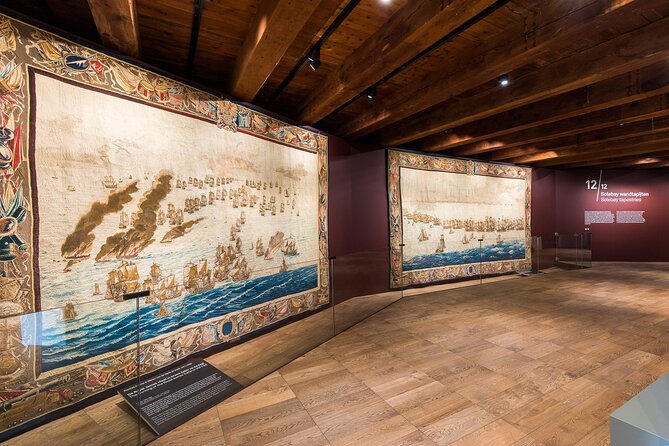
The displays include paintings, ship models, sea charts, navigation tools, naval material, and objects linked to trade. The mapmaking section deserves real time. It shows how sailors and mapmakers recorded coastlines, routes, ports, and changing ideas about the world. If you enjoy old maps, this may be one of the strongest parts of the visit.
The artwork is not only decoration. Figureheads, carvings, and ship details show how vessels were given character and status. A careful look at these objects also reminds you that ships were public symbols as well as working machines.
The museum is well suited to different interests. You can focus on art, military history, exploration, navigation, trade, or daily life at sea. The one weakness is that the subjects do not always connect in a single straight path. If you want a tightly ordered timeline, follow the audio tour rather than wandering at random.
Boarding the replica ship Amsterdam
The replica ship Amsterdam is the museum’s great physical attraction. Built as a copy of an 18th-century Dutch East Indiaman from 1749, it lets you see the scale and layout of a ship in a way a model cannot.
You can walk around the decks and enter parts of the vessel. The captain’s quarters offer a sense of the limited space available even to the person in command. Below deck, the sailor’s hammock shows how little privacy and comfort ordinary crew members had. You may also see lifelike displays that help explain travel at sea.
The ship is particularly good for families because it turns abstract subjects into actions. You can explore rather than simply read. Touching or operating parts of a display, seeing the cannon, and moving through low or narrow areas make the visit more memorable for children.
I would not describe the ship as a quick photo stop. Give it enough time to inspect the decks, cabins, and lower areas. The experience works because you can compare the captain’s quarters with the cramped sailor spaces and think about the different lives lived aboard the same vessel.
There is a practical limit, of course. A replica cannot give you the full motion, noise, smell, and danger of an ocean crossing. Still, it provides a strong sense of scale and helps explain why sea travel demanded strict routines and hard work.
The VR journey through 17th-century Amsterdam
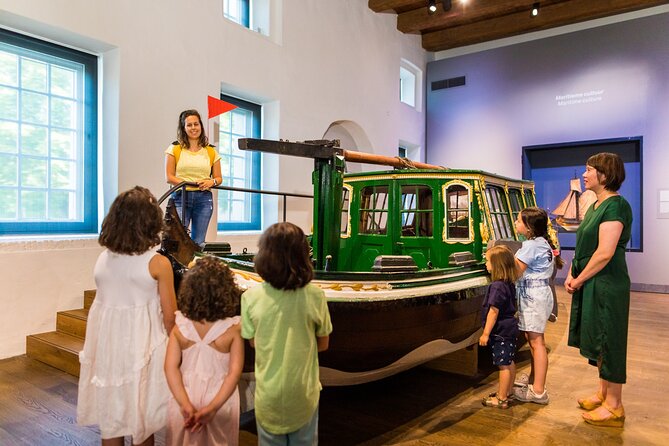
Inside the bow of the ship, you can take a virtual reality trip over central Amsterdam. The journey presents the city as it appeared during the Dutch Golden Age, when the harbor and waterways were central to its wealth and daily life.
This is a useful change of pace after the cases and audio explanations. Instead of looking at a map or painting, you see the city from a high viewpoint and watch how the harbor fits into the urban setting. It helps explain why Amsterdam’s waterways were more than scenic canals. They were routes for people, goods, ships, and power.
The VR feature is also one of the better reasons to include children in the visit. Younger visitors may not want to study navigation instruments for long, but a virtual flight through old Amsterdam gives them a direct way into the subject.
Availability and waiting details are not specified, so I would not plan your entire schedule around doing it at a precise time. Treat it as one of several highlights, not the sole reason to buy the ticket.
A few more museum visits around the Netherlands worth comparing
- Amsterdam: Van Gogh Museum Ticket
★ 4.7 · 52,054 reviews - Moco Museum Amsterdam Entrance Tickets with Banksy & More
★ 4.4 · 10,088 reviews - Amsterdam: The Upside Down Museum Entrance Ticket
★ 4.4 · 9,506 reviews - Amsterdam: Red Light Secrets Museum Entry Ticket
★ 4.2 · 5,722 reviews
Displays for children and curious adults

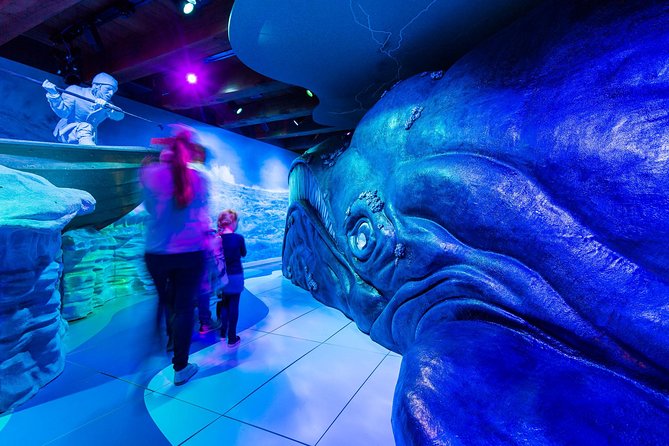
The museum makes a real effort to include young visitors. Some exhibitions use interactive screens, videos, sounds, movable elements, and seating areas. The activities are not simply children’s decoration added beside serious displays. They help explain how ships worked and what life at sea involved.
Adults can enjoy these sections too, especially when you want a break from labels. The hands-on displays give you a practical sense of navigation, shipboard routines, and maritime technology. They also help families visit at different speeds without turning the museum into a silent endurance test.
If you are visiting with children, I would start with the ship and interactive areas, then return to the paintings and maps. That order gives young visitors an immediate highlight and makes the more detailed galleries easier to handle afterward.
The museum still has plenty for adults who prefer quiet observation. The sea charts, ship models, carvings, and historical objects reward slow looking. The best approach is to mix active areas with the more traditional collection rather than trying to see every case.
Royal Barge, modern sailing, and wider perspectives
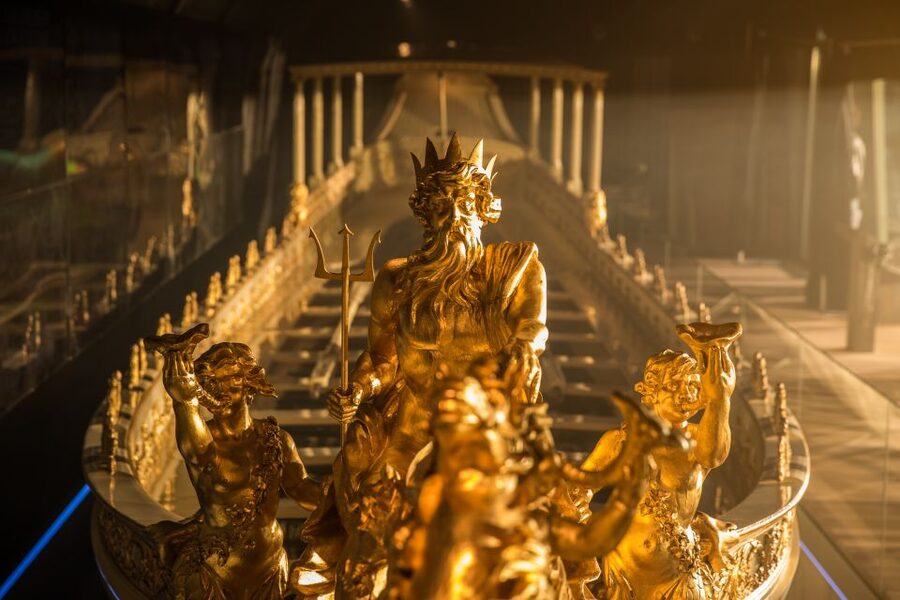
The Royal Barge is another strong object. Its polished appearance and ceremonial purpose provide a contrast with the working ship Amsterdam. One vessel represents royal display, while the other shows the demanding practical world of long-distance trade.
The museum also connects older maritime traditions with modern sea life. One display concerns a solo voyage around the world, asking you to consider what it means to sail alone in an age shaped by digital communication and advanced technology. That comparison gives the collection a useful present-day edge.
The museum does not present Dutch maritime success without difficult subjects. Its coverage includes colonialism and the slave trade, along with military action and overseas commerce. I appreciate that these issues are included in the same institution that displays the achievements of Dutch navigation and trade. You get a fuller picture of how wealth and influence were built.
Some sections may feel less connected than others. The collection is large, and a visitor interested mainly in ships could find the broader social and political material a little scattered. The audio tour helps, but you should accept that this is a museum with several threads rather than one simple story.
How much time should you allow?

The ticket is valid for one day, and the museum is open daily from 10:00 AM to 5:00 PM. The supplied information does not require you to stay for the whole day, but I would allow at least two to three hours if you want the ship, audio tour, VR feature, courtyard, and main collection.
An hour is enough for a quick look at the building and the most famous objects. It is not enough for the full experience. One visitor found the museum worth a full day because there was so much to see and do, while another felt an hour or so worked well. Both views make sense: your interests and pace will decide the ideal length.
The early afternoon can feel short because the museum closes at 5:00 PM. If this is high on your list, visit earlier rather than trying to squeeze it in at the end of a sightseeing day.
The location is Kattenburgerplein 1, in Amsterdam’s North Holland setting. The museum is wheelchair accessible. No guided tour is included, but the audio tour provides structure without tying you to a group schedule.
Is the $24 ticket good value?
At $24 per person, the ticket is a sensible buy if you plan to use the museum’s main features. You are not paying only for a room of paintings. Admission includes the collection, the replica Amsterdam, the audio tour, the family activities, the VR experience, and access to the historic building and courtyard.
The value is strongest for people who like museums with both objects and activities. You can look at maps, listen to explanations, walk through a ship, and try interactive displays in the same visit. The price is less compelling if you only want a short stop or have little interest in maritime subjects.
The fast-track entry can also help on a busy Amsterdam day, though no exact wait-time guarantee is provided. The booking allows free cancellation up to 24 hours before the visit, and you can reserve now and pay later. Those terms are useful if your schedule is still changing.
The ticket does not include a guided tour. If you want a personal guide leading you from room to room, this is not that kind of experience. The audio tour gives you independence, but you need to choose your own pace and pay attention to the route.
Who should book the National Maritime Museum?
I would recommend it to families, ship enthusiasts, people interested in Dutch trade and exploration, and anyone who enjoys museums with room to move. The replica ship is the main reason to come, but the maps, Royal Barge, audio tour, and VR trip give the visit enough variety to fill several hours.
It is also a good choice on a rainy day. The courtyard is covered, the main collection is indoors, and the ship visit adds a change of setting without leaving the museum.
I would be more cautious if you dislike museums with several themes or if you want a short, tightly guided tour. The collection can feel broad, and the lack of a live guide means you must set your own route. Families should also remember that the museum closes at 5:00 PM, so a late start may leave too little time.
Should you book it?
Book this ticket if you want Amsterdam’s maritime past explained through real objects, a walkable ship, interactive displays, and a short virtual trip through the old city. At $24, it offers good value for a half-day visit and can easily occupy longer if you listen to the audio tour carefully.
Skip it only if your Amsterdam schedule is extremely tight or if ships, maps, and trade do not interest you. For most visitors, the replica Amsterdam alone makes the museum memorable, while the wider collection gives you a better understanding of how the city became a major European port.
FAQ
Where is the National Maritime Museum?
The museum is at Hetscheepvaartmuseum, Kattenburgerplein 1, 1018 KK Amsterdam.
How much does the ticket cost?
The listed price is $24 per person.
How long is the ticket valid?
The ticket is valid for one day.
What are the museum’s opening hours?
The museum is open daily from 10:00 AM to 5:00 PM.
Is the replica ship Amsterdam included?
Yes. Admission includes a visit to the replica 18th-century ship Amsterdam, based on the 1749 VOC East Indiaman.
Is an audio guide included?
Yes. A free audio tour lasting about 60 minutes is included with admission.
Which languages are available for the audio tour?
The audio tour is available in Spanish, Chinese, Dutch, English, French, German, Italian, Japanese, Korean, Portuguese, and Russian.
Is the museum wheelchair accessible?
Yes. The National Maritime Museum is wheelchair accessible.
Can I cancel the booking?
Yes. You can cancel up to 24 hours in advance for a full refund. You can also reserve now and pay later.
Just added around the Netherlands
- Van Gogh Museum Tour excluding Entrance Tickets★ 5.0 · 16 reviews
- Van Gogh Museum Entry Ticket and Guided Tour★ 4.5 · 48 reviews
- Van Gogh Museum with Audio Guide★ 3.5 · 80 reviews
- Amsterdam: Explore the Van Gogh Museum & His Masterpieces★ 3.5 · 64 reviews
- Van Gogh Museum Skip the Queue with Audio Guide★ 4.0 · 261 reviews
- Amsterdam Van Gogh Museum with Audio or Guided Tour★ 4.0 · 266 reviews
- Van Gogh Museum, Rijks Museum & Walking Tour – Private Day Tour★ 5.0 · 17 reviews
- Van Gogh Museum Ticket with Audio Guide and Unlimited Access Time★ 5.0 · 25 reviews
Museum Tours in the Netherlands, compared.

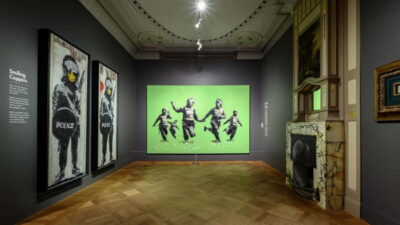
Moco Museum Amsterdam Entrance Tickets with Banksy & More
Read our review →

Amsterdam’s Weirdest Museum: Ripley’s Believe It or Not!
Read our review →


Browse the lists this tour appears in