

Review · ATHENS
Acropolis and Acropolis Museum Private Tour with Licensed Expert
The smartest part of this Athens experience is the pairing of the Acropolis and Acropolis Museum. On the hill, you see the temples in their original setting. In the museum, you get close to the carvings and statues that explain what the weather and centuries have worn away. Guides such as Betty, Vicki, Lydia, Eva, and Nicole are noted for strong storytelling and personal attention.
I like the private format, since you can slow down for questions instead of keeping pace with a large group. I also like the choice of adding the Ancient Agora or a five-hour vehicle tour. The main catch is cost: $188.65 per person does not include admission, so the standard Acropolis and museum visit adds another €50 per person.
Key points to know before booking
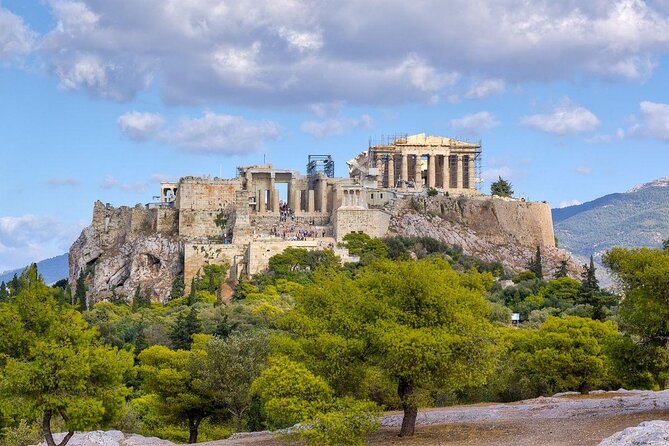
- Meet by Acropoli Metro Station: Your guide waits at street level at 7 Makrygianni Street, near the Acropolis Museum.
- Two sites, two perspectives: Plan on roughly 80 minutes at the Acropolis and 80 minutes in the museum.
- Tickets cost extra: The Acropolis is €30 and the museum is €20 per person.
- Private attention matters: You set the pace and can ask questions throughout the visit.
- Early starts help: Summer heat and crowds build quickly, with one group finding 8 a.m. far easier than 10 a.m.
- Several formats are available: Choose the Acropolis and museum, Acropolis only, Acropolis and Agora, or a five-hour vehicle tour.
Why the Acropolis and museum work so well together
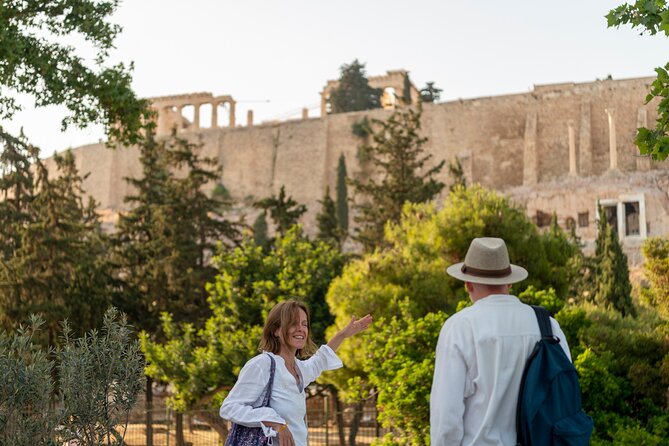
The Acropolis can feel like a pile of pale marble until someone explains what you are seeing. A licensed guide gives each building a role in the larger story: the Propylaea was the grand entrance, the Parthenon was the central temple of Athena, and the Erechtheion carried its own unusual myths and sacred traditions.
Then the museum fills in the missing pieces. Original sculptures, architectural details, models, videos, and interactive displays help you understand how the monuments once looked. The pairing also lets you compare the weathered remains on the hill with the preserved statues inside.
I would choose this combination over an Acropolis-only visit if you have three hours and care about art, architecture, or ancient Greek culture. The museum is not a minor add-on. It helps you see why the Acropolis matters, rather than simply giving you a fine view and a famous photograph.
The advertised price is $188.65 per person, before admission. That is a serious expense, especially for a couple or family. You are paying for a private licensed guide rather than transport or entry, so the value depends on how much you want interpretation and flexibility.
For a group of several people, the private arrangement can make more sense than booking separate small-group tours. Group discounts are available, though the exact savings depend on the booking. For a solo visitor, the price is harder to justify unless you place a high value on expert guidance.
More Museum Tours in Athens
- Athens: Acropolis, Parthenon & Acropolis Museum Guided Tour
★ 4.8 · 9,316 reviews - The Acropolis, Parthenon & Acropolis Museum Guided Tour
★ 4.7 · 8,493 reviews - Athens: Mythology of Delphi, Museum and Arachova Guided Tour
★ 4.7 · 5,102 reviews
Meeting your guide near the Acropolis Museum
The meeting point is at 7 Makrygianni Street, at street level by Acropoli Metro Station. This is a useful location, not just a random corner. You are close to the museum and can see part of the Acropolis wall from below.
Your guide begins with an introduction to the hill, its role in ancient Athens, and the monuments ahead. That orientation is worth having before you climb. It gives you a basic map in your head, so the Propylaea, temples, theaters, and sanctuaries do not blur together.
The tour is offered in English. Guides named in the feedback include Betty, Vicki, Lydia, Eva, Nicole, Lisa, Valia, Catherine, and Maria. Their approaches vary, but the strongest pattern is clear: the company assigns licensed guides who focus on explanation, storytelling, and questions rather than simply pointing out buildings.
One honest note concerns accents and background noise. One party of six found its guide very helpful and flexible, but sometimes had trouble following her English beside the noise of the busy site. A private guide still improves the experience, but you should speak up if you miss something.
Climbing through the Theater of Dionysus
The route usually begins at the Acropolis with the Theater of Dionysus. Built in the fourth and fifth centuries BC on the southern slope, it is described as the world’s oldest theater and once held about 25,000 people.
This is one of the most human stops on the route. The Parthenon can feel monumental and distant. The theater connects the Acropolis to performances, audiences, comedy, tragedy, and the first presentations of famous Greek plays.
The ground is uneven, and the walk is demanding. One person described the climb as a slow-and-steady outing, which is sound advice. You should wear sturdy shoes and allow time for pauses, especially during hot weather.
Entering through the Propylaea
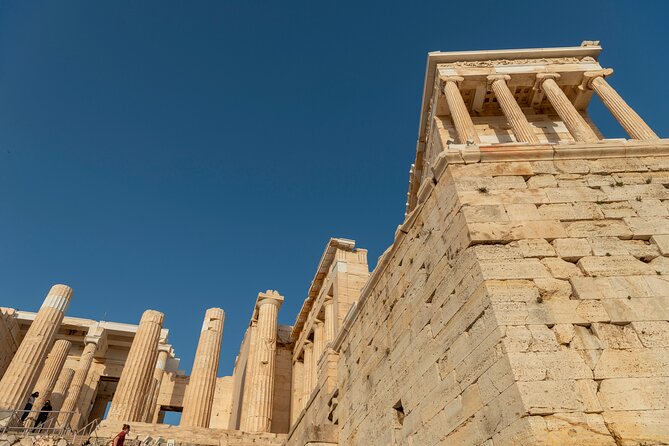
The path continues upward toward the Propylaea, the monumental gateway to the Acropolis. This is the point where the site begins to feel more ceremonial.
Your guide explains how ancient visitors would have approached the sacred hill. The tour also introduces the giant bronze statue of Athena that once greeted people arriving from the sea. Its raised spear was said to catch the sunlight and could be seen by ships approaching Athens.
Stories like this are useful because they turn a broad archaeological site into a place with movement and purpose. You are not only looking at columns. You are thinking about who approached, what they saw, and how the city presented its patron goddess.
More Acropolis Museum visits:
- Athens: Acropolis, Parthenon & Acropolis Museum Guided Tour
★ 4.8 · 3,579 reviews - Acropolis monuments & Parthenon Walking Tour with Optional Acropolis Museum
★ 5.0 · 2,678 reviews - Athens All Included: Acropolis and Museum Guided Tour with Ticket
★ 4.5 · 2,673 reviews - Athens: Acropolis Museum Ticket with optional Audio Guide
★ 4.4 · 2,652 reviews
Seeing the Temple of Athena Nike
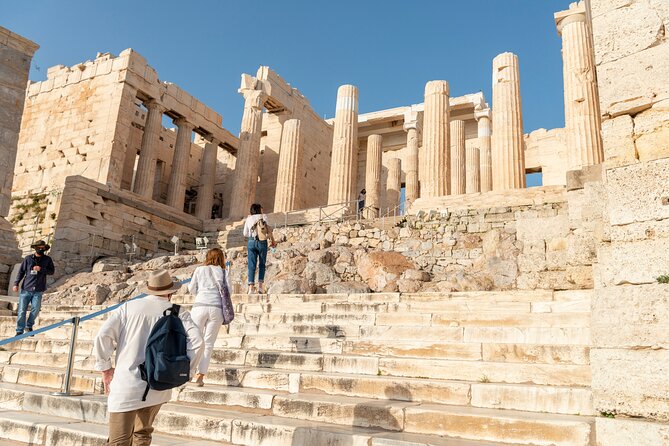
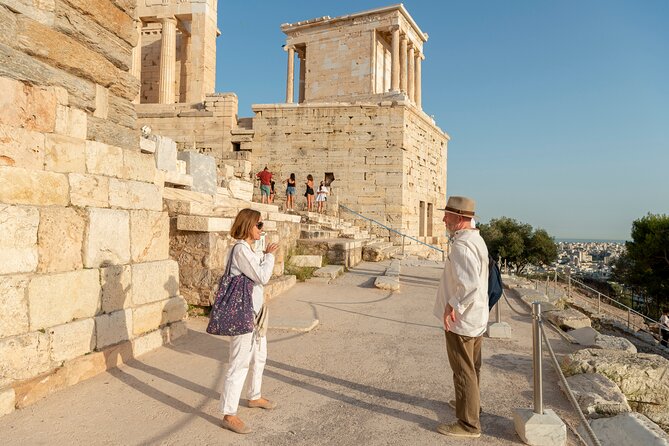
Near the entrance is the Temple of Athena Nike, an Ionic temple built around 420 BC. It is one of the earlier temples on the Acropolis and occupies a prominent position above the city.
The temple is small compared with the Parthenon, but its setting gives it force. Your guide explains its connection to Athena and points out the restored elements. This is a good place to ask about restoration, since much of what you see on the Acropolis has been repaired, rearranged, or reconstructed over time.
A private visit helps here because you can spend a little longer on a smaller monument instead of being pulled along by a fixed group schedule.
Standing before the Parthenon
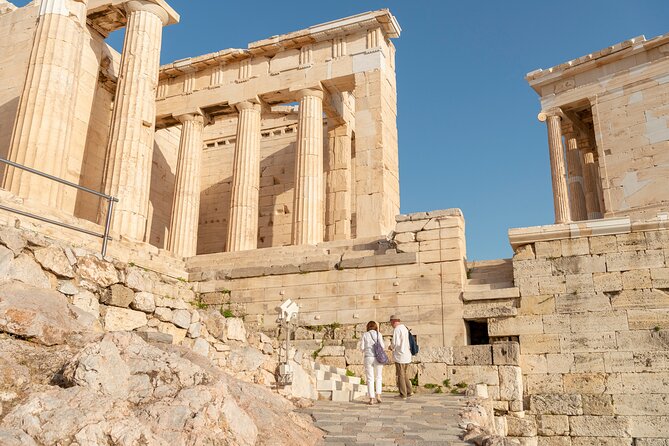
The Parthenon is the emotional center of the visit. Built during the fifth century BC, it was a temple dedicated to Athena and a major expression of Athenian power, worship, art, and engineering.
Your guide covers its construction, purpose, decoration, and place in the Golden Age of Classical Greece. That context matters. Without it, you may see a famous ruined building. With it, you begin to understand the planning, labor, ceremony, and political meaning behind the marble.
You will not walk through an intact interior, and the site can be crowded. Still, the structure remains impressive from every angle. Look beyond the standard front view. The setting above Athens, the proportions of the columns, and the surviving architectural fragments make the visit worthwhile even when scaffolding or crowds affect the view.
If you choose the Acropolis-only option, the tour may finish inside the site. That gives you time to stay for photos and city views, but you will need to manage your own exit and remaining visit time.
Exploring the Erechtheion and its myths
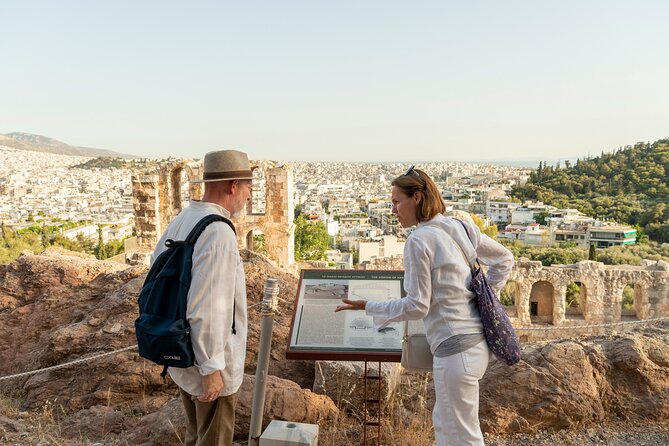
The Erechtheion is the second-largest temple on the Acropolis and one of its most distinctive buildings. It was dedicated to more than one deity, including Athena, and its unusual design reflects the many sacred traditions tied to this part of the hill.
Your guide explains the mythology and points out the famous female figures associated with the building. The original sculptures are now displayed in the museum, so this stop prepares you for what you will see indoors.
This is a good example of why the two-part tour works. The hill gives you the building and its setting. The museum gives you the details that time and exposure have taken away.
Looking down at the Odeon of Herodes Atticus
The Odeon of Herodes Atticus was built in AD 161 by Herodes Atticus in memory of his wife. Its marble semicircle remains one of the most striking structures on the southern side of the Acropolis.
Unlike many ancient buildings, it still functions as a theater. You may not enter during this tour, but your guide explains its purpose and points out how it fits into the modern city’s cultural life.
The theater also helps you understand that the Acropolis is not only about the Parthenon. Temples, gateways, performance spaces, retaining walls, and smaller sanctuaries all form part of the visit.
Inside the New Acropolis Museum
After about 80 minutes on the hill, you walk a short distance to the New Acropolis Museum. The indoor portion lasts about 80 minutes and offers shelter from the sun, along with a clearer look at the site’s art.
Your guide focuses on major sculptures and important architectural pieces rather than trying to cover every case. Models and videos show how the monuments may have appeared in earlier periods. Interactive displays add useful detail for families and for anyone who learns better through visual material.
The museum is also where you see statues connected with the Erechtheion. That makes the earlier stop more meaningful, since you can now link the figures to the building you have just seen above the city.
Some people prefer to visit the museum first, and guide Lisa has recommended that order for certain groups. The usual plan begins at the Acropolis, but the best sequence can depend on your selected start time, energy level, and ticket availability. If the museum is especially important to you, ask about the order when you book.
At the end of the Acropolis and museum option, your guide may leave you at the museum. That is convenient if you want more time indoors or plan to explore the surrounding streets on your own.
Choosing the Agora or a vehicle tour
The Ancient Agora option keeps the experience on foot and adds one of Athens’ major archaeological areas. Your guide connects the Acropolis to the civic center where public life, politics, commerce, and philosophy developed.
The walk between the Acropolis and Agora includes rough cobbles and some distance. I would not choose this version if you have limited mobility. The tour ends at the Agora, not back at the original meeting point.
The five-hour luxury vehicle option is a different product in scale and pace. It includes pickup and return to a central Athens hotel, cruise terminal, or other address, plus the Acropolis, Acropolis Museum, Temple of Zeus, Hadrian’s Arch, Olympic Stadium, Athens Trilogy, Syntagma Square, and the guards.
A licensed guide accompanies you at the Acropolis and museum, while the vehicle makes the wider city easier to cover. This option suits a cruise stop, a first day in Athens, or anyone who wants to limit long walks. It costs more than the basic tour, but return transfers and several city sights add practical value.
Timing, heat, crowds, and comfort
I would book the earliest reasonable start in summer. One party found 8 a.m. pleasant and manageable, while conditions had become hotter and busier by 10 a.m. Morning light also gives the temples attractive honey-colored tones.
The tour requires good walking ability. Expect an uphill route, uneven surfaces, exposed sun, and time on stone. The Agora option adds more rough cobbles. Most people can take part, but this is not a gentle sightseeing stroll.
Bring water, sun protection, and shoes with a reliable grip. Groups of six or more receive a whisper communication system, which helps when other visitors are nearby. Smaller private groups can usually hear the guide more easily, though the hill remains a noisy place.
The tour lasts about three hours for the Acropolis and museum, with roughly 80 minutes at each. That is enough for a guided introduction, but not enough to study every museum display or linger at every viewpoint. If you want a slow museum visit, plan to remain after the guided portion.
Who will get the most from this tour
I would recommend it to first-time visitors who want the meaning behind the monuments, families who need explanations to hold children’s attention, and anyone who prefers asking questions to reading plaques.
It also suits groups that want control over the pace. Guide Valia reportedly extended the visit when a family arrived late, and several guides are described as patient with children and attentive to mixed-age groups. That kind of flexibility is one of the best reasons to choose private touring.
History and architecture fans will get the most from the licensed guide format. If you only want a quick look at the Parthenon and a few photos, the price may feel high. You can visit the area without a private guide, but you will lose the connected explanation that ties the theater, temples, myths, and museum pieces together.
Free cancellation is available up to 24 hours before the start time. Changes or cancellations inside that window are not accepted, and poor weather can lead to a new date or a full refund.
Is the Acropolis and Museum Private Tour worth booking?
I would book this tour if you want the Acropolis to make sense, not simply appear in your camera roll. The licensed guide, private setting, and museum pairing give you a fuller visit than the hill alone.
The value is strongest for a small group that can share the private cost, or for a family that wants a guide who can adjust explanations and pace. Book early, check the ticket arrangements carefully, and aim for morning in summer.
I would skip it if you are watching every euro, dislike guided touring, or want several hours to explore the museum alone. For most first visits, though, the combination of temples above Athens and original art inside the museum is a sound way to spend three hours.
FAQ
How long does the Acropolis and museum tour last?
The main private tour lasts about three hours, with roughly 80 minutes at the Acropolis and 80 minutes at the Acropolis Museum.
Where do I meet the guide?
Meet your guide at street level by Acropoli Metro Station, at 7 Makrygianni Street, near the Acropolis Museum.
Is admission included in the tour price?
No. Admission costs €30 per person for the Acropolis and €20 per person for the Acropolis Museum, for a total of €50 per person when visiting both.
Is the guide licensed?
Yes. The guides are fully accredited official experts licensed to enter the Acropolis and museum with you.
Is the tour offered in English?
Yes. English is the stated tour language.
Can I choose an Acropolis-only tour?
Yes. The Acropolis-only option is described as a 90-minute visit, though the booking information also refers to it as a two-hour option. Check the exact duration during booking.
Can I add the Ancient Agora?
Yes. The Acropolis and Ancient Agora option lasts about three hours and ends at the Agora.
Is transportation included?
Transportation is not included in the standard options. The luxury vehicle option includes pickup and return transfers from a central Athens hotel, cruise terminal, or another address.
Is the tour suitable for people with limited mobility?
The Acropolis requires uphill walking and uneven surfaces. The route between the Acropolis and Ancient Agora includes rough cobbles and is not recommended for people with limited mobility.
What happens if I need to cancel?
You can cancel at least 24 hours before the start time for a full refund. Cancellations or changes made less than 24 hours before the start time are not refunded or accepted.
Just added around Athens
- Ancient Athens tour: Acropolis, Parthenon and Acropolis Museum★ 5.0 · 256 reviews
- The Acropolis, Athens Walking City Tour and Acropolis Museum★ 5.0 · 442 reviews
- Athens: Acropolis Museum Ticket with Self-Guided Audio tour App★ 3.5 · 40 reviews
- Family Acropolis & Acropolis Museum Tour inspiredby Percy Jackson★ 4.5 · 40 reviews
- Acropolis of Athens, Parthenon and Acropolis Museum private tour with dinner★ 5.0 · 77 reviews
- Shore Excursion: Acropolis, Athens City tour and The New Acropolis Museum★ 4.5 · 30 reviews
- Athens National Archaeological Museum E-Ticket with Audio Guide★ 3.0 · 57 reviews
- Private Tour: Half day Athens Sightseeing and Acropolis Museum★ 4.5 · 28 reviews
Museum Tours in Athens, compared.
Acropolis, Parthenon & Acropolis Museum Guided Tour
Read our review →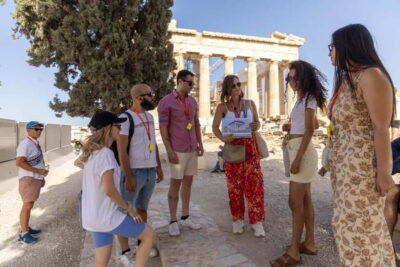
The Acropolis, Parthenon & Acropolis Museum Guided Tour
Read our review →Acropolis, Parthenon & Acropolis Museum Guided Tour
Read our review →
Acropolis monuments & Parthenon Walking Tour with Optional Acropolis Museum
Read our review →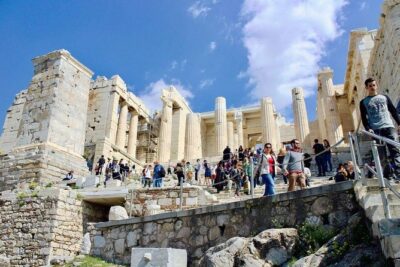
Athens All Included: Acropolis and Museum Guided Tour with Ticket
Read our review →
Acropolis Museum Ticket with optional Audio Guide
Read our review →
Small-Group Delphi, Museum & Arachova Day Trip
Read our review →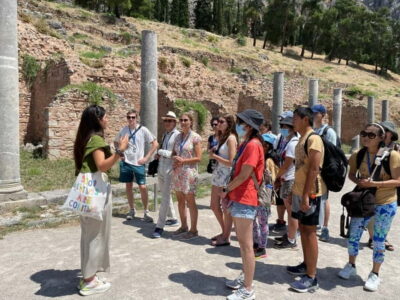
Delphi Oracle & Museum Tour with a Licensed Guide
Read our review →Browse the lists this tour appears in