
Review · MOROCCO
Fes: Attarine Madrasa, Museum, Tannery, Souk and Medina Tour
Fes is easiest to understand on foot, and this tour puts you inside the city’s narrow medieval lanes rather than leaving you to guess which turn leads to the next monument. You’ll see Attarine Madrasa, the Chouara leather pits, Al-Karaouine Mosque, craft souks and the Nejjarine Museum in one well-packed outing.
I like the low $12 price, which makes a local guide an easy choice, and I like the way the route mixes major sights with working craft areas. Guides such as Houssine, Mouanis, Amin and Youssef Elbargui have been praised for clear explanations and patience. The main catch is the pace: four hours of walking on uneven, narrow lanes is not ideal for anyone with serious mobility limits.
Key points at a glance
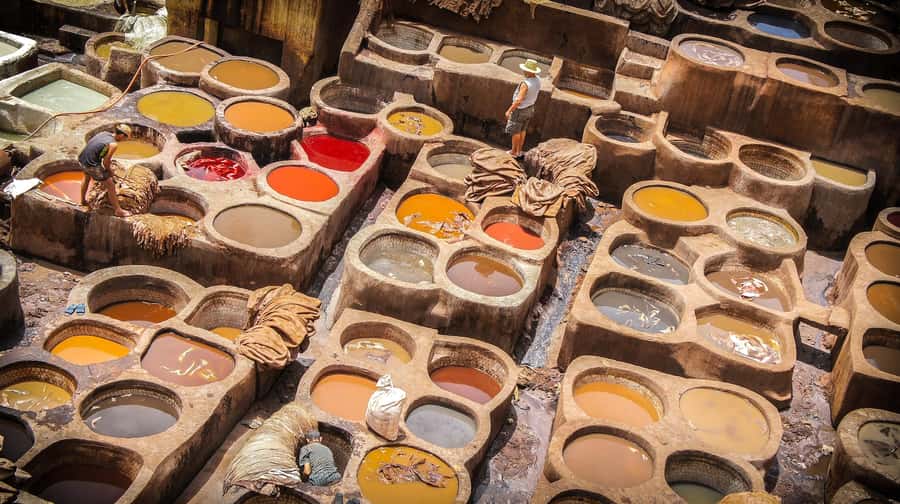
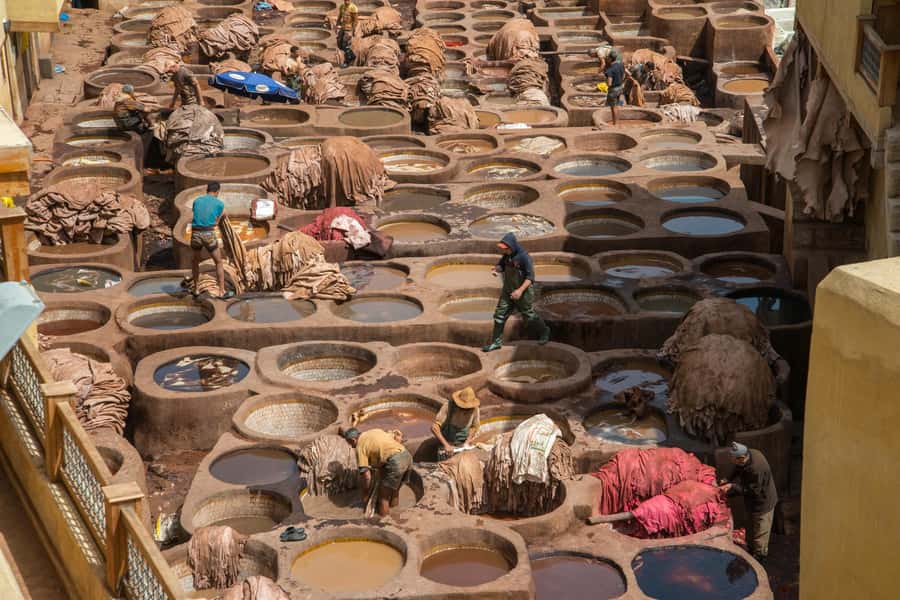
- Chouara Tannery from a terrace: Watch leather being treated and dyed in the famous stone pits using old methods and natural colors.
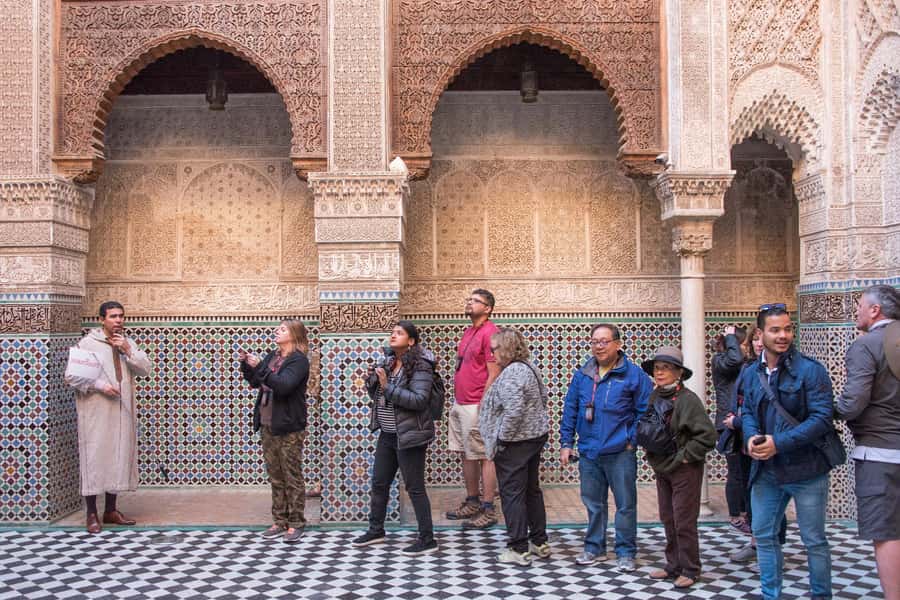
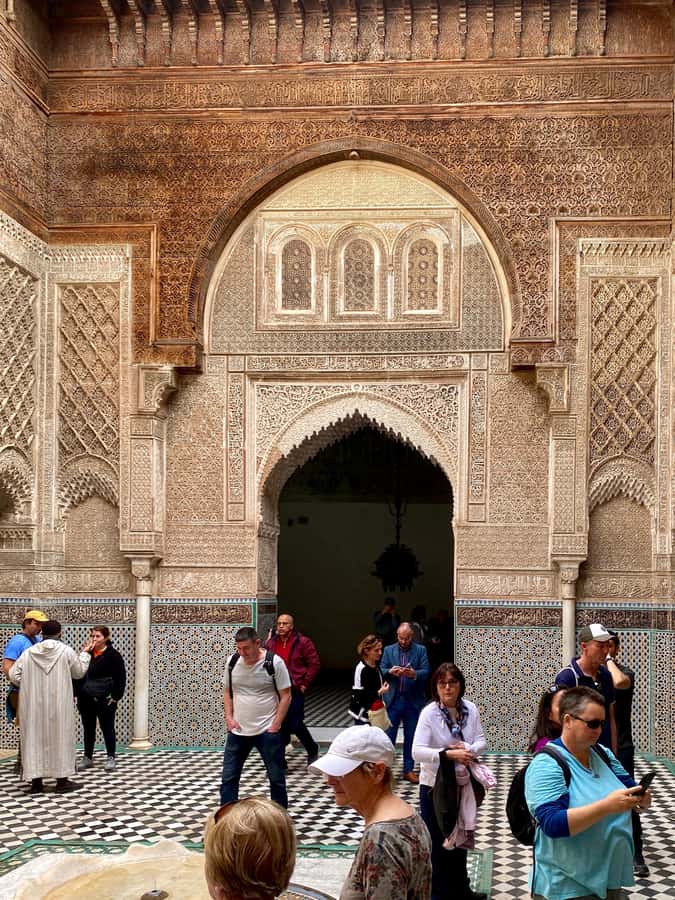
- Attarine Madrasa: See Marinid zellige tilework, carved cedar and marble details in a former Quranic school.
- A guide for the Medina maze: The route helps you make sense of Fes’ tight lanes, souks and lesser-known corners.
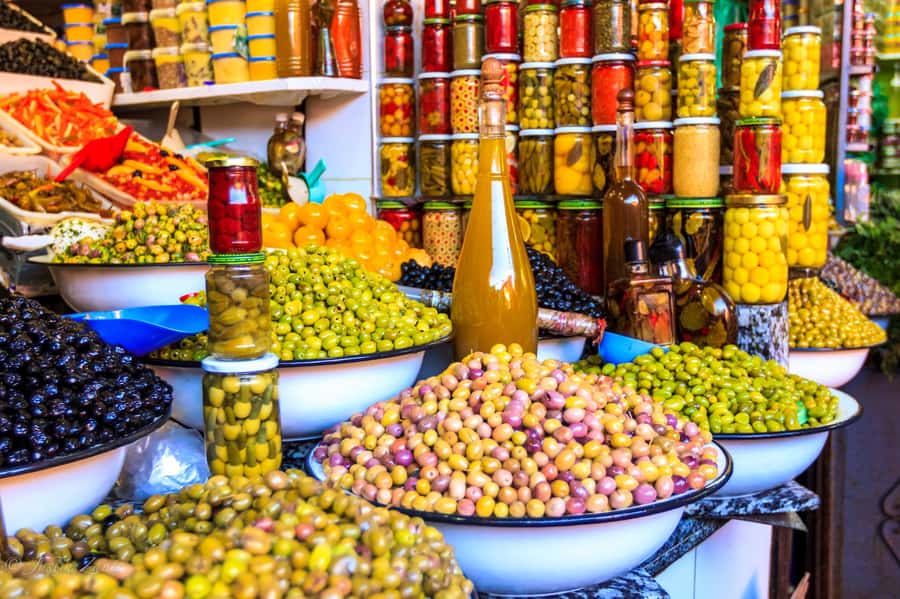
- Crafts beyond the usual postcard stops: Look for textiles, spices, perfumes, copperwork, pottery and hand-cut zellige tiles.
- Good value at $12: Monument tickets cost extra, but the guided walk covers several major sights and lasts up to four hours.
- Flexible group format: Choose a private option or a small group, with English or French guiding and optional riad pickup inside the Medina.
Fes is not a city you simply look at. You hear hammering from a copper workshop, smell spices in a dark lane, dodge handcarts, and find a quiet courtyard behind an unmarked door. The old Medina is a working city, not a museum set.
That is why I think this tour makes sense for a first visit. A licensed local guide gives you a route through the maze, explains what you are seeing, and helps connect the grand monuments with the crafts and daily work around them.
The tour lasts about 210 minutes to four hours, depending on the selected option and the pace of the group. It is a walking experience with no transport included. You can meet at Hotel Batha on Avenue de la Liberté, or, with the private option, arrange pickup from a riad inside the Medina.
Starting at Bab Boujloud and Entering the Old City
Bab Boujloud, often called the Blue Gate, is the natural starting point. It marks the entrance to the Fes Medina and gives you a clear visual transition from the newer city streets to the old quarter.
The stop itself is short, about 10 minutes, but it helps you orient yourself. From here, the streets tighten quickly. Your guide can explain the basic shape of the Medina before you enter its narrow lanes, where a map becomes far less useful than local knowledge.
The Medina is a UNESCO World Heritage Site and is described as the world’s oldest living medieval city. That phrase matters because this is not a quiet historic shell. Shops, workshops, homes, religious buildings and food stalls all share the same dense network of lanes.
Wear shoes with a firm sole. The route includes plenty of walking, and the ground may be uneven. Sunglasses, a sun hat and water are sensible, especially during the warmer part of the day.
A few more museum visits around the world worth comparing
- Vatican: Museums & Sistine Chapel Entrance Ticket
★ 4.5 · 144,003 reviews - Vatican Museums, Sistine Chapel & St. Peter’s Basilica Tour
★ 4.3 · 73,970 reviews - Paris: Louvre Museum Timed-Entrance Ticket
★ 4.6 · 71,977 reviews
Attarine Madrasa and Marinid Detail
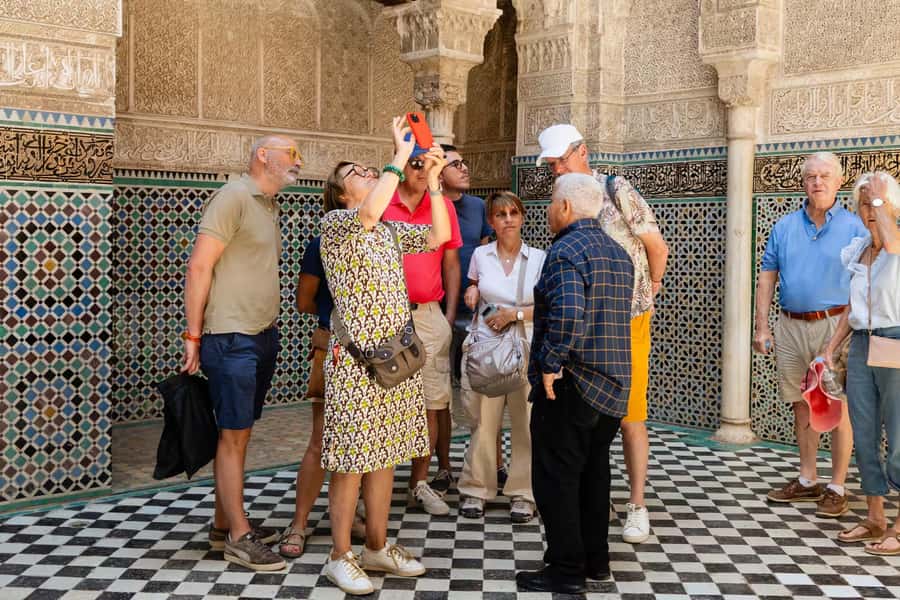
The Al Attarine Madrasa is one of the tour’s strongest stops. Built in the early 14th century under Sultan Abu Sa’id of the Marinid dynasty, it was once a Quranic school and remains one of Fes’ best places to see refined Moroccan decoration.
You get about 35 minutes here for a guided visit, photographs and some free time. Look closely at the small details rather than rushing for one grand view. The building is known for patterned zellige tiles, carved cedarwood and marble columns. Together, these features show how much care went into a religious school that could appear modest from the lane outside.
This is also where a guide adds real value. Without context, the tilework can blur into a general impression of Moroccan design. With explanations, you can better understand the role of the madrasa as both a place of study and a symbol of the city’s religious and intellectual life.
Admission is not included. Allow 20 Moroccan dirhams per adult for the Madrasa. The tour includes skip-the-line access to selected monuments, but that does not remove the separate entry charge.
Al-Karaouine Mosque and University from Outside
The next major stop is Al-Karaouine Mosque and University, founded in 859 by Fatima al-Fihri. It is recognized as one of the world’s oldest universities and has long been linked with Islamic learning in Fes.
The visit is mainly exterior. You can see the green-tiled roofs and monumental doors, while your guide explains the institution’s place in the city. You should not expect a full interior sightseeing visit here, so keep your expectations clear.
Even from outside, this stop helps explain why Fes became such an important center of scholarship. It also gives the route a useful balance. You are not only looking at decorative buildings. You are seeing places connected to education, worship and the long public life of the Medina.
About 30 minutes are assigned to this part of the walk, including photographs and commentary. Ask questions as you go. Guides such as Houssine, Mouanis, Reda and Youssef Elbargui have been praised for giving clear answers and adding cultural details rather than simply naming buildings.
Chouara Tannery and the Leather Trade
Chouara Tannery is the tour’s most visually striking stop, though it is also the one where you should prepare for strong smells. From a panoramic terrace, you can look down at the famous dyeing pits and see workers treating leather by hand.
The process uses traditional methods and natural dyes such as saffron and indigo. Leather craft has been carried out here since the 11th century, and the work remains a central part of Fes’ craft identity.
You get about 35 minutes for the tannery, including a guided explanation, photographs and time to look around. The terrace gives you the best view of the colored pits, but remember that a terrace connected with a leather shop may also lead to shopping. You can browse if you want, but you do not need to buy anything. A clear no, thank you should be enough.
This is a good place to ask how the leather moves from raw material to finished bags, slippers or belts. The stop is more useful when you pay attention to the labor behind the color, rather than treating the pits as a quick photograph.
Same city, a completely different collection:
- Amsterdam: Van Gogh Museum Ticket
★ 4.7 · 52,054 reviews - Vatican Museums, Sistine Chapel & St Peter’s Basilica Guided Tour
★ 4.5 · 39,149 reviews - NYC: 9/11 Memorial & Museum Timed-Entry Ticket
★ 4.8 · 31,428 reviews - London: Tower of London and Crown Jewels Exhibition Ticket
★ 4.6 · 28,769 reviews
Nejjarine Fondouk and the Museum of Wooden Arts
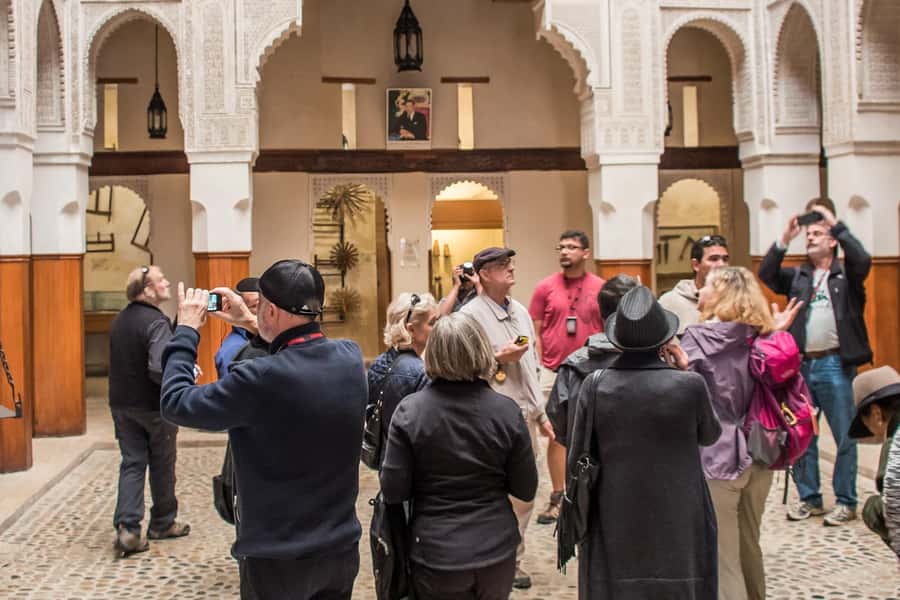
The route continues to Nejjarine Fondouk, a restored caravanserai that now houses the Museum of Wooden Arts and Crafts. The visit lasts about 20 minutes and includes guided sightseeing, free time and an opportunity to browse.
The museum focuses on Moroccan woodworking, with examples of carving, marquetry and antique furniture. The building itself is part of the appeal. A fondouk was traditionally linked with merchants and trade, so the setting helps connect craft, commerce and the old Medina’s role as a place of exchange.
Admission costs 20 Moroccan dirhams per adult and is not included in the tour price. If you are watching your spending, this is still a modest extra for a museum stop that adds variety after the religious architecture and tannery.
You may also have a chance to see local products for sale during the route. The shopping element is worth handling carefully. Some guides, including Houssine and Mouanis, have been praised for taking people to local places without applying pressure, but the exact stops can vary by guide and group.
Souk Sabaghine, Souk El Attarine and Hammam Seffarine
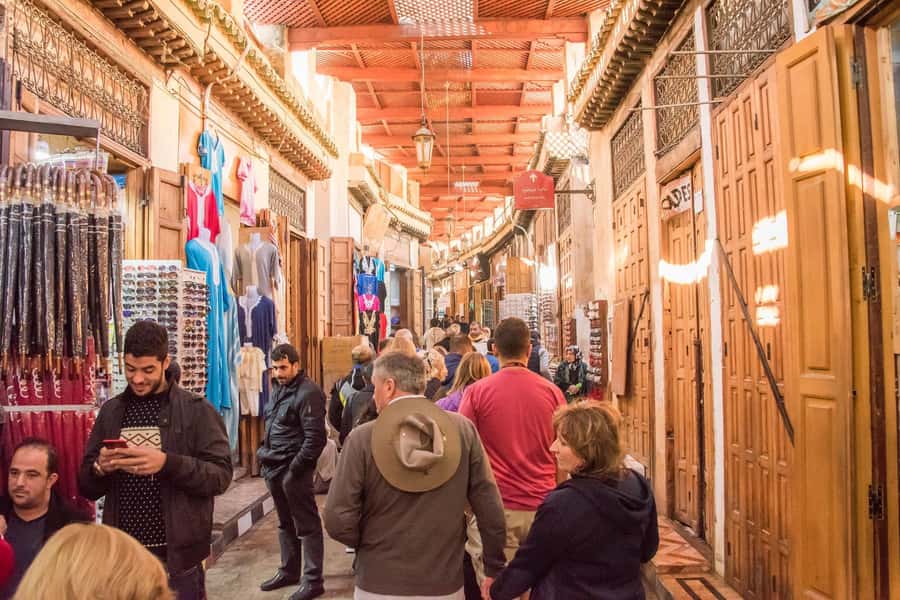
The Medina walk is not just a parade of monuments. It takes you through working souks where the city’s traditional trades are still visible.
Souk Sabaghine is associated with handwoven textiles and traditional fabrics. Souk El Attarine is known for spices, perfumes and herbal remedies. These are useful places to slow down and notice the smells, colors and sounds around you. You might find that the most memorable part is not a single shop, but the way each lane has its own trade.
Near the souks, Hammam Seffarine adds another layer of working Fes. The rhythmic hammering of coppersmiths brings the old metalworking tradition right into the street. This is the kind of detail you could easily miss if you were only moving between famous buildings.
Shopping is built into this part of the route, so bring some cash if you might buy spices, textiles, leather or crafts. You are not required to purchase anything. The value here is being shown how the Medina works, not being guided toward a particular souvenir.
Pottery, Zellige and the Final Walk
A pottery and zellige workshop rounds out the cultural picture. You can see clay being shaped, ceramics hand-painted and small tiles cut for mosaic patterns.
Zellige is one of Fes’ signature arts. Artisans cut tiles into precise shapes and arrange them into geometric designs used in fountains, palaces, mosques and other buildings across Morocco. The work looks decorative when finished, but the workshop helps you see the patience and hand skill behind it.
The final Medina section gives you time to walk, take photographs and browse before returning toward Bab Boujloud. The published route lists a second short stop at the gate, then finishes at Hotel Batha. One practical point deserves attention: one booking party found the ending farther from the starting point than expected, so confirm the final meeting and drop-off arrangement with your guide if you need to return to your riad quickly.
What the $12 Price Really Buys
At $12 per person, this is inexpensive for a four-hour guided walk through Fes. The price does not include the 20 dirham entry fees for Attarine Madrasa and Nejjarine Museum, food, drinks or transport, but the required extras remain small.
The real value is the route and the guide. You are covering several major places in one outing, including two monuments that can be hard to place in context on your own. You also get help with navigation inside lanes that can feel confusing even after you have walked them once.
A private option costs more than the basic group rate, but it may be worthwhile for families, couples or anyone who wants to control the pace. Small groups are a good middle ground. One small group was able to move through the back lanes easily and still stop for questions and photographs.
The guide quality matters more than the low headline price. Recent guide assignments have included Houssine, Youssef Elbargui, Amin, Mouanis, Ami, Rachid, Reda, Jamal and Idriss. The strongest feedback centers on clear English, cultural explanations, patience and an ability to navigate without hesitation.
Walking Difficulty, Timing and Practical Limits
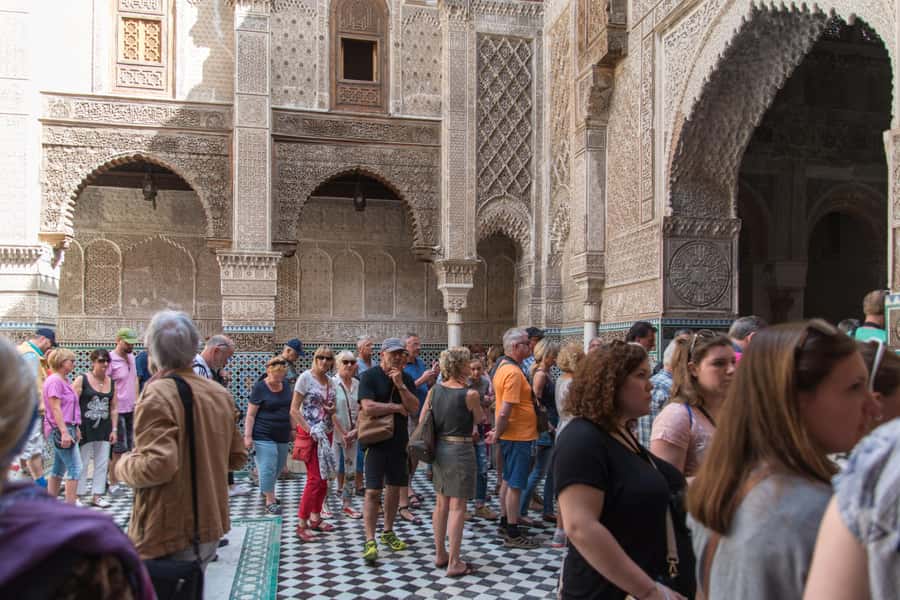
This is a serious walking tour, even though the stops are close together on a map. The Medina has narrow lanes, frequent turns and uneven surfaces. The activity information describes it as wheelchair accessible but also says it is not suitable for people with mobility impairments. Those two points do not sit comfortably together, so ask the provider about your exact needs before booking.
A guide can slow the pace. One guide was especially patient with an older parent, and another helped a participant with mobility problems. Still, patience cannot remove every step, tight passage or uneven stretch.
The route can take 210 minutes or closer to four hours. Bring water and cash, and avoid carrying a large bag. Since there is no transportation included, plan your own way to Hotel Batha if your accommodation is outside the Medina.
English and French guiding are available. The provider sends a WhatsApp reminder with the guide’s name, meeting point and useful tips the day before, which is helpful in a city where the correct entrance can matter.
Who Should Book This Fes Walk?
I would choose this tour for a first visit to Fes, especially if you want the main sights explained without paying for a full private day. It suits solo visitors, couples, families and small groups who enjoy walking and want a practical introduction to the Medina.
It is also a good fit if you care about crafts. The route covers leather, wood, copper, textiles, pottery, spices and zellige instead of treating Fes as a collection of old doors.
You may prefer a slower private tour if you want long museum visits, extended shopping or frequent breaks. The group route covers a lot, so some stops are introductions rather than detailed specialist visits.
Should You Book It?
Book this tour if you want an affordable guide, a clear first route through Fes and a useful mix of monuments, souks and workshops. The strongest reasons are the Medina navigation, Attarine Madrasa, the Chouara Tannery viewpoint and the chance to understand local craft in context.
Skip it if you dislike walking, shopping areas or a fixed sightseeing route. Also confirm the finish point and accessibility details before booking. For most first-time visitors who can handle four hours on foot, $12 is a sensible price for a well-filled introduction to Fes.
FAQ
Where does the tour start?
The standard meeting point is in front of Hotel Batha on Avenue de la Liberté in Fes. If you choose the private option and stay in a riad inside the Medina, pickup from your accommodation reception may be available.
How long does the tour last?
The tour lasts about 210 minutes to four hours. Starting times depend on availability and the option you choose.
What languages are available?
Guiding is available in English and French.
Are entrance fees included?
No. Entry to Attarine Madrasa costs 20 Moroccan dirhams per adult, and entry to Nejjarine Museum of Wooden Arts and Crafts costs 20 Moroccan dirhams per adult.
Is transportation included?
No. This is a walking tour, and transportation is not included. Pickup is optional for the private option when your accommodation is inside the Medina.
Is the tour suitable for someone with mobility issues?
The activity information describes the tour as wheelchair accessible but also says it is not suitable for people with mobility impairments. Because the route involves narrow lanes and extended walking, contact the provider before booking to discuss your needs.
What should I bring?
Bring comfortable shoes, sunglasses, a sun hat, water and cash. There is free time for shopping, and food and drinks are not included.
Just added around the world
- Girona, Figueres, Dalí Museum and Cadaqués Tour from Barcelona★ 4.5 · 36 reviews
- Dali Museum and Costa Brava Small Group Day Trip from Barcelona★ 5.0 · 77 reviews
- Football Club Barcelona Museum Immersive Tour Guided Visit★ 3.5 · 52 reviews
- Erotic Museum Admission Ticket with Audioguide★ 5.0 · 527 reviews
- Madrid by High-Speed Train with Prado Museum Private Tour★ 4.0 · 33 reviews
- Guitar Legends Hall: Entrance to the Immersive Rock Museum★ 5.0 · 25 reviews
- White Rabbit Museum: The Best Immersive Experience in Catalonia★ 5.0 · 538 reviews
- Private Dali Museum, Besalú & Girona Tour from Barcelona★ 5.0 · 15 reviews
Museum Tours in Morocco, compared.
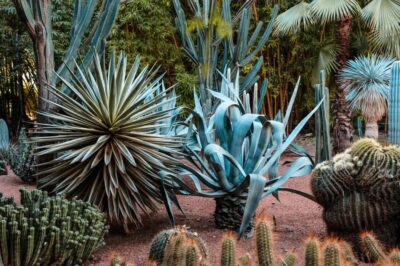
Majorelle Garden, YSL, and Berber Museum Entry
Read our review →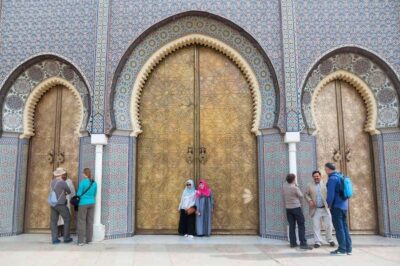
Fes: Museum, Al Attarine Madrasa & Tannery and Medina Tour
Read our review →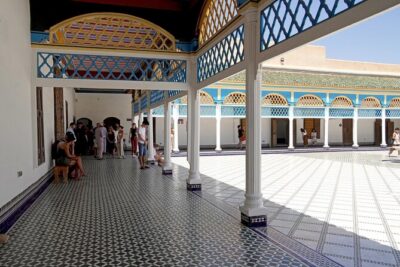
Palace, Museum, Madrasa & Medina Highlights Tour
Read our review →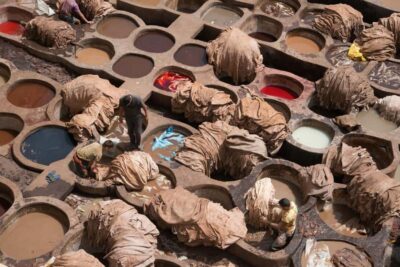
Fes: Bou Inania Madrasa, Museum, Tannery, Souk & Medina Tour
Read our review →
Majorelle Garden, Museums Tickets, & Audio Guide
Read our review →Browse the lists this tour appears in