
Review · AMSTERDAM
Entry ticket to Museum of Illusions Amsterdam
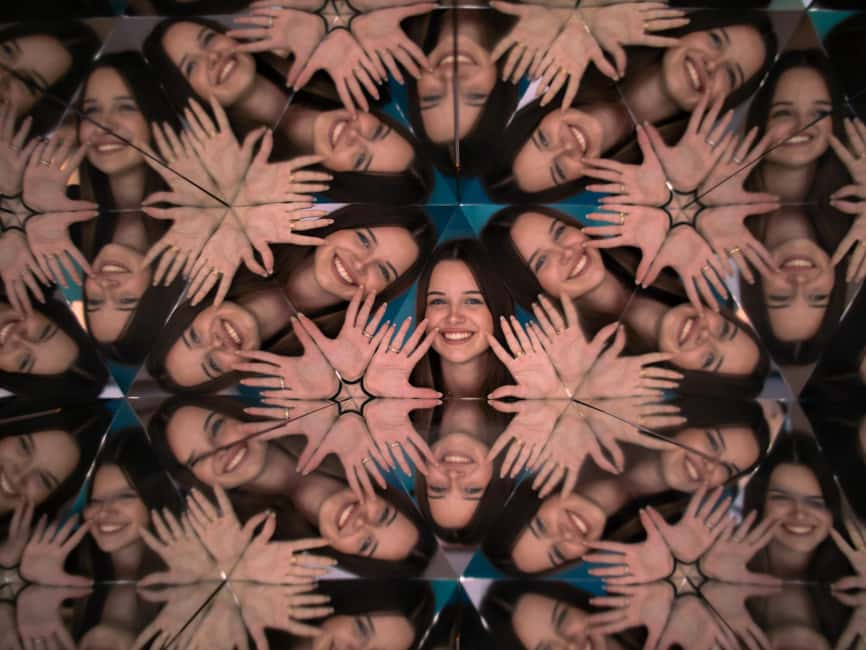
Amsterdam’s Museum of Illusions turns a former church on the Keizersgracht into a playground for your eyes and brain. You’ll walk into rooms that twist your sense of size, depth, balance, and direction, then try to work out why your senses got the answer wrong.
I like the mix of hands-on science and silly photo opportunities. I also like that staff can explain the tricks and take pictures, so you are not left trying to set a timer while balancing on a wall. The main drawback is the price: at about $23 per person, it is best for people who will spend time reading, testing, and thinking, not just taking a quick photo.
- Former Nieuwe Waalse Kerk: Find the museum on Amsterdam’s Keizersgracht, inside a striking historic church building.
- Visual tricks with a purpose: Exhibits show how your brain handles contrast, motion, perspective, and missing information.
- Photo-friendly rooms: Staff can help take pictures while you test the displays.
- About 1.5 hours: The visit fits neatly between canal walks, museum stops, or a meal.
- Dutch and English support: A host or greeter can provide help in either language.
- Small-group format: The listed group size is limited to five participants.
Entering the Museum on Keizersgracht
The first pleasure is finding the museum in an old church rather than in a plain modern building. The Museum of Illusions Amsterdam occupies the former Nieuwe Waalse Kerk on Keizersgracht, one of the city’s well-known canals. Look for the clear museum signage and historic façade.
That setting gives the visit a little more character before you even reach the first exhibit. You are not simply entering a room filled with colored panels and novelty props. You are stepping into a historic Amsterdam building that now asks you to distrust what you see.
The location also makes this an easy add-on to a day in central Amsterdam. You can pair it with a canal walk or another nearby stop, but the ticket is for a focused experience rather than an all-day museum visit. Plan on about 90 minutes.
The museum uses a host or greeter who speaks Dutch and English. The small-group limit of five participants should make it easier to get an explanation or ask for help, especially at displays that need a little patience. It also matters for photographs. You are less likely to feel rushed when you are trying to frame a picture or repeat an illusion.
How the Illusions Work on Your Eyes

The museum’s best idea is simple: it makes psychology physical. Instead of reading a long panel about perception, you test the idea with your own body and eyes.
You will encounter installations built around space, depth, and balance. The details of each room can vary, but the purpose is clear. A surface may appear to slope, an object may seem out of proportion, or a room may make you question which direction is level. The fun comes from noticing the gap between what your eyes report and what you know must be true.
This is also why the experience works for adults. You do not need a child with you to enjoy it. Adults tend to bring their own assumptions into the rooms, and those assumptions are exactly what the exhibits challenge.
The educational notes explain the ideas behind the effects. You will learn about contrast, motion, and perspective, along with the way the brain fills in missing information. Your eyes take in fragments, patterns, and signals. Your brain then turns them into a picture that feels complete. The museum shows how that process can go slightly wrong.
I find this more useful than a collection of random optical jokes. Once you understand that your brain is making quick guesses, the exhibits become easier to appreciate. You begin asking not just What am I seeing? but Why does my mind interpret it that way?
More Museum Tours in Amsterdam
- Amsterdam: The Upside Down Museum Entrance Ticket
★ 4.4 · 9,506 reviews - Amsterdam: Red Light Secrets Museum Entry Ticket
★ 4.2 · 5,722 reviews - Amsterdam’s Weirdest Museum: Ripley’s Believe It or Not!
★ 4.5 · 4,920 reviews
A Visit Built Around Testing, Not Just Looking
The museum encourages you to take part. You will not get much from standing back and letting other people try each display. Step into the installations, change your position, look from another angle, and test your first impression.
That active approach is important for families. Children can enjoy the surprise right away, while adults can explain the basic science. The exhibits give parents a natural way to discuss vision and perception without turning the outing into a classroom lesson.
At the same time, the museum does not demand advanced knowledge. You do not need to understand psychology or physics before arriving. The explanations are there to make the experience clearer, and staff can offer guidance in Dutch or English.
You should expect a playful tone rather than a formal art museum atmosphere. The aim is to make you laugh, pose, question your balance, and then think about what just happened. If you prefer quiet galleries and carefully protected objects, this may feel too light. If you enjoy learning through trial and error, it is a better fit.
The Photo Rooms and Staff Help

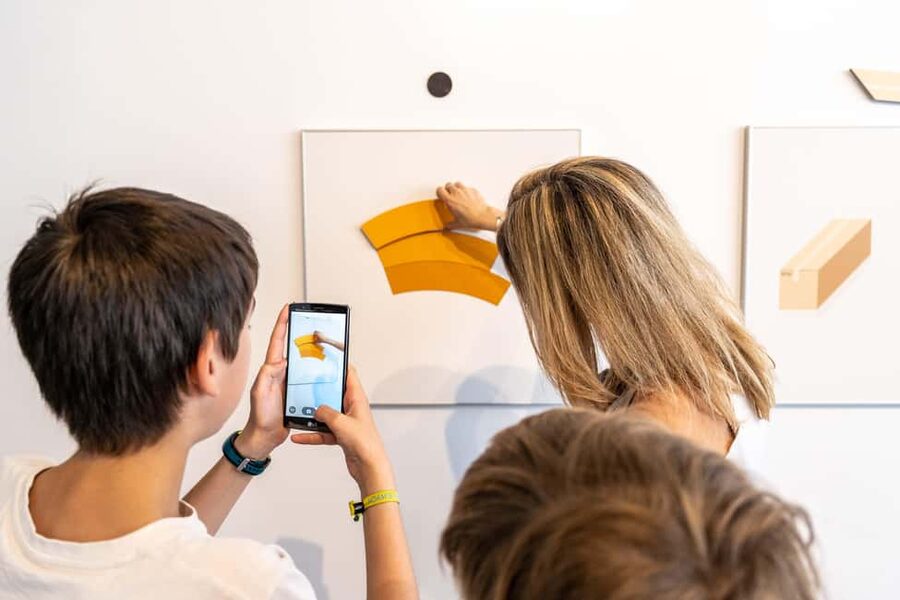
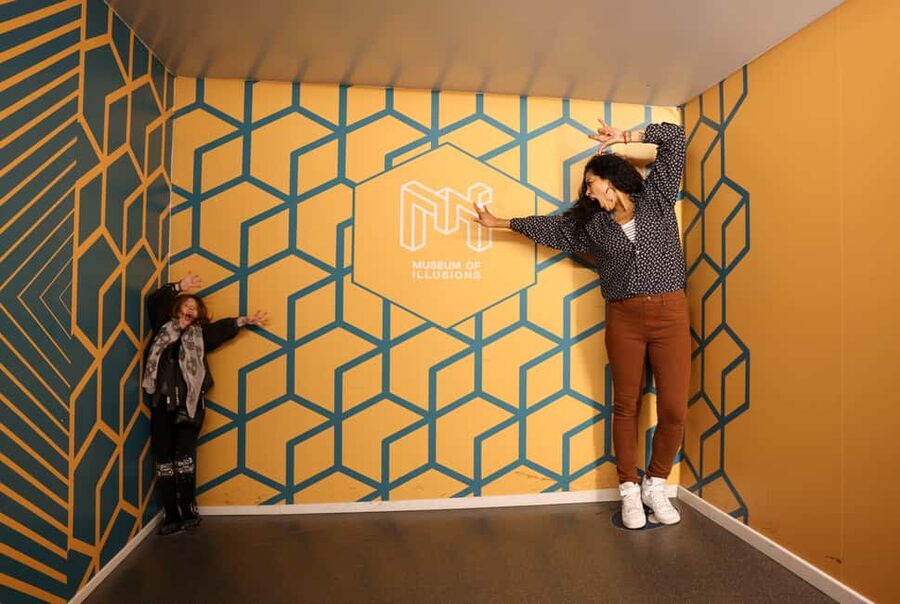
Photography is a major part of the appeal. Several installations are designed to make you look as if you are walking on a wall, changing size, or occupying an impossible space. These are not just displays to admire. They are set up for you to become part of the picture.
Staff assistance makes a real difference here. You can ask for help with the exhibit and have someone take the photo, instead of relying on a stranger or trying to balance a phone at an awkward angle. One of the strongest practical points about this visit is the combination of explanations and photo help.
Bring a phone or camera if you want to keep the images. The experience includes opportunities for unusual photographs, but the supplied information does not promise professional photography or unlimited photo services. Think of the staff as helpful guides who can assist with the moment, not as a dedicated photo crew.
Take a little time with each picture. The most amusing image may need a specific position or camera angle. If you rush through, you may get a normal-looking room with a person standing inside it. If you follow the display’s instructions and check the frame, the effect becomes much clearer.
The museum shop is included as part of the visit, though the ticket does not include any shop purchases. It can be a quick final stop for a souvenir linked to puzzles, perception, or visual tricks.
What Your 90 Minutes Might Feel Like
The visit does not follow a guided city-tour route with a fixed story and a long talk. Instead, you move through a series of interactive installations, reading short explanations and trying each effect.
A practical way to approach it is to give yourself three stages:
- Get oriented. Take in the first display and notice how the museum uses simple visual information to confuse your expectations.
- Test the larger installations. Spend time with rooms and setups that affect your sense of space, depth, or balance. Try them more than once if the result is not clear at first.
- Return to the ideas. Read the explanations and connect the trick to contrast, motion, perspective, or the brain’s habit of filling gaps.
That structure keeps the visit from becoming a rapid photo stop. The advertised duration is 1.5 hours, which is enough for a proper look at the exhibits without making the outing feel like a full-day commitment.
You might finish sooner if you move quickly or spend little time reading. You might also take the full time if you are with children, want several photos, or enjoy testing an illusion from different angles. The museum gives you room to set your own pace within the visit.
More Museum of Illusions tickets:
- Prague: Museum of Fantastic Illusions Entry Ticket
★ 4.3 · 4,337 reviews - Madrid: Museum of Illusions Ticket
★ 4.1 · 1,909 reviews - Vienna: Museum of Illusions Vienna Admission Ticket
★ 4.0 · 1,392 reviews - Seville: Museum of Illusions Entry Ticket
★ 4.2 · 1,196 reviews
Why the Science Adds Value
At $23 per person, this is not the cheapest short activity in Amsterdam. Its value depends on how much you want from it.
If you only want two or three amusing photographs, the price may feel high for a 90-minute stop. The visit becomes a better purchase when you treat it as entertainment with an educational layer. You are paying for access to a set of installations, explanations, staff help, and a chance to take part rather than simply look at objects behind glass.
The science also gives the experience a longer afterlife. Once you leave, you may notice how often your eyes and brain make quick judgments about distance, shape, and movement. That is a modest benefit, but it separates this museum from a simple photo set.
I would compare the ticket with the rest of your Amsterdam day. If you already plan to spend hours at major art or history museums, this offers a change of pace. It is especially useful on a rainy afternoon or when you want something that does not require a long attention span from younger children.
The free cancellation option up to 24 hours before the visit and the reserve-now, pay-later choice add flexibility. Those terms are useful in Amsterdam, where weather and busy sightseeing days can change your plans. Check the available starting times before booking, and confirm the museum is open on your chosen date. One dated booking record noted a closure, so checking current operating information is sensible.
Who Will Enjoy It Most
This experience suits families, couples, groups of friends, and curious adults who like a little silliness in their sightseeing. Children up to four years old enter free and do not need a ticket, which can make the cost easier for families with very young children.
Older children can test the displays themselves and ask why an effect works. Adults can enjoy the same rooms while paying more attention to the explanations. The museum does not force you to choose between education and fun, though you get the most from it when you do both.
It is also a good option for people who enjoy taking photos together. The displays create an obvious reason to pose, and staff can help with the camera. A small group of up to five should make that process more manageable than a crowded attraction with many people competing for the same setup.
I would be less likely to recommend it if you want a traditional museum with original paintings, extensive historical material, or a quiet viewing experience. The focus is on interaction and perception. The historic church setting adds atmosphere, but the exhibits are the main event.
Practical Details That Matter
The ticket includes entry, access to all interactive exhibits and installations, educational information at each exhibit, staff assistance, the photo opportunities, the museum shop, local taxes, and fees. Food and drinks are not allowed inside, so finish your snack before entering.
The listed languages are Dutch and English. That covers the main explanatory support for this experience, and the host or greeter can help you understand how to use the displays.
The meeting point is the Museum of Illusions Amsterdam on Keizersgracht. The former Nieuwe Waalse Kerk has a noticeable façade, and the museum signage should help you identify the entrance.
The visit lasts about 1.5 hours. That makes it easy to fit into a larger day, but leave enough time to arrive at the starting time shown for your booking. Since the museum is interactive, you may want to keep your hands free for testing the displays and taking pictures.
The stated group type is small, with up to five participants. That is helpful for explanations and photos, though the exact feel of your visit will depend on the other people in your group and how busy the museum is at that time.
My Take on the $23 Ticket
I see this as a compact, good-value experience for the right audience, not a must-see replacement for Amsterdam’s major museums. The price makes sense if you will read the explanations, try the exhibits, and use the staff’s help with photographs.
The strongest parts are the clear connection between the tricks and human perception, the chance to participate rather than simply observe, and the easy 1.5-hour length. The staff support is especially useful because it turns awkward photo setups into shared activities.
The weakness is also clear: the visit can feel brief for the cost if you move through only the most obvious rooms. Make your money count by slowing down, asking questions, testing displays more than once, and looking for the science behind each effect.
Should You Book the Museum of Illusions Amsterdam?
Book it if you want a playful break from Amsterdam’s traditional museums, especially if you are visiting with children, enjoy unusual photographs, or like learning through physical demonstrations. The Dutch and English staff, small group size, and clear explanations make it more than a quick collection of photo props.
Think twice if you are looking for deep cultural history or a long, quiet museum visit. At $23, the ticket rewards participation. Go ready to test your balance, question your eyes, and spend the full 90 minutes with the exhibits. That is when this short outing earns its place in your Amsterdam plans.
FAQ
Where is the Museum of Illusions Amsterdam located?
It is located in the former Nieuwe Waalse Kerk on Keizersgracht in Amsterdam, North Holland. The historic façade and museum signage help identify the meeting point.
How long does the visit last?
The stated duration is about 1.5 hours. Your exact time may depend on how long you spend testing the installations, reading explanations, and taking photographs.
What languages are available?
The host or greeter support is available in Dutch and English. Educational information and staff guidance are provided in those languages.
Is the ticket suitable for children?
Yes. The experience is designed for curious minds of all ages, and children up to four years old can enter free without a ticket.
What is included with the entry ticket?
The ticket includes entry to the museum, access to all interactive exhibits and installations, educational information, staff assistance, photo opportunities, access to the museum shop, and local taxes and fees.
Can I cancel my booking?
You can cancel up to 24 hours in advance for a full refund. A reserve-now, pay-later option is also available, subject to the booking terms.
Just added around Amsterdam
- Van Gogh Museum Tour excluding Entrance Tickets★ 5.0 · 16 reviews
- Van Gogh Museum Entry Ticket and Guided Tour★ 4.5 · 48 reviews
- Van Gogh Museum with Audio Guide★ 3.5 · 80 reviews
- Van Gogh Museum Skip the Queue with Audio Guide★ 4.0 · 261 reviews
- Amsterdam: Explore the Van Gogh Museum & His Masterpieces★ 3.5 · 64 reviews
- Amsterdam Van Gogh Museum with Audio or Guided Tour★ 4.0 · 266 reviews
- Van Gogh Museum, Rijks Museum & Walking Tour – Private Day Tour★ 5.0 · 17 reviews
- Van Gogh Museum Ticket with Audio Guide and Unlimited Access Time★ 5.0 · 25 reviews
Museum Tours in Amsterdam, compared.


Amsterdam’s Weirdest Museum: Ripley’s Believe It or Not!
Read our review →

Van Gogh Museum Amsterdam Exclusive Tour w/ Reserved Entry
Read our review →
Moco Museum Amsterdam Admission Ticket with Banksy and more
Read our review →Browse the lists this tour appears in