
Review · ITALY
Fortress: Prisons, Museum of Fortifications and Alps Museum
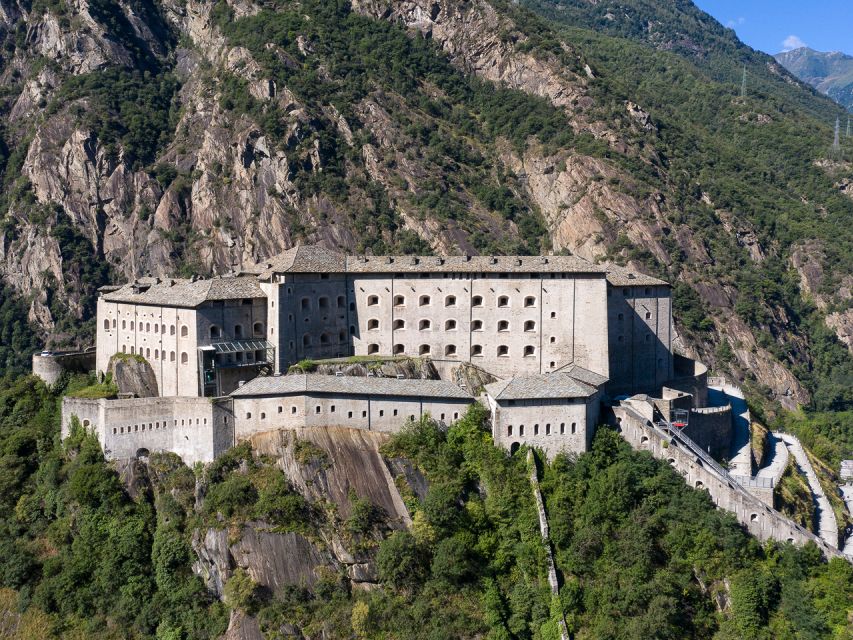
Bard Fortress turns a mountain stronghold into a walk-through lesson in war, architecture, and Alpine life. I like the way the panoramic lifts make the steep site easier to explore, and I like the choice of three museum spaces, so you can shape the visit around your interests. The small prison cells, just 1.3 by 2 metres, add a stark human touch.
The main drawback is that the ticket does not include a live guide. You need a smartphone for the Museon app and must exchange your voucher at one of two ticket counters. Also, anyone expecting a Marvel-themed stop may be disappointed: part of Avengers: Age of Ultron was filmed at Bard, but no Marvel exhibition is promised.
Key points at a glance
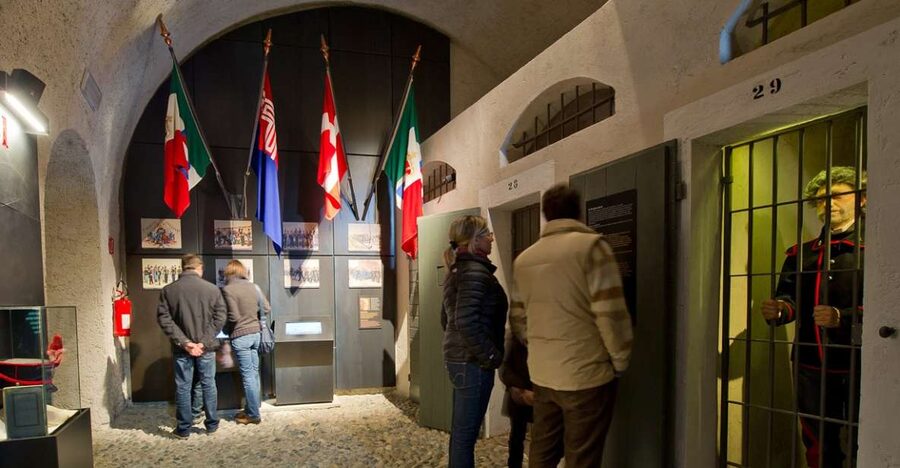
- The prison block has 24 tiny cells: Four sections are arranged around an entrance gallery devoted to images of the fortress.
- Three museums cover different sides of Bard: Choose from the Museum of Fortifications and Frontiers, the Alps Museum, and the Prisons, plus art exhibitions open during your visit.
- The Fortifications Museum follows changing warfare: Models, weapons, film footage, and reconstructions show how Alpine defenses developed.
- The Alps Museum moves from nature to modern life: Its displays cover the mountain environment, Alpine civilization, and later changes brought by modernity.
- Panoramic lifts connect the fortress levels: You can reach the upper parts without relying only on steep routes.
- The $17 ticket is flexible for 90 days: It includes the fortress, museums, lifts, courtyards, chapel, walkways, and an audio guide, but not a live guide.
Why Bard Fortress is more than a pretty mountain stop
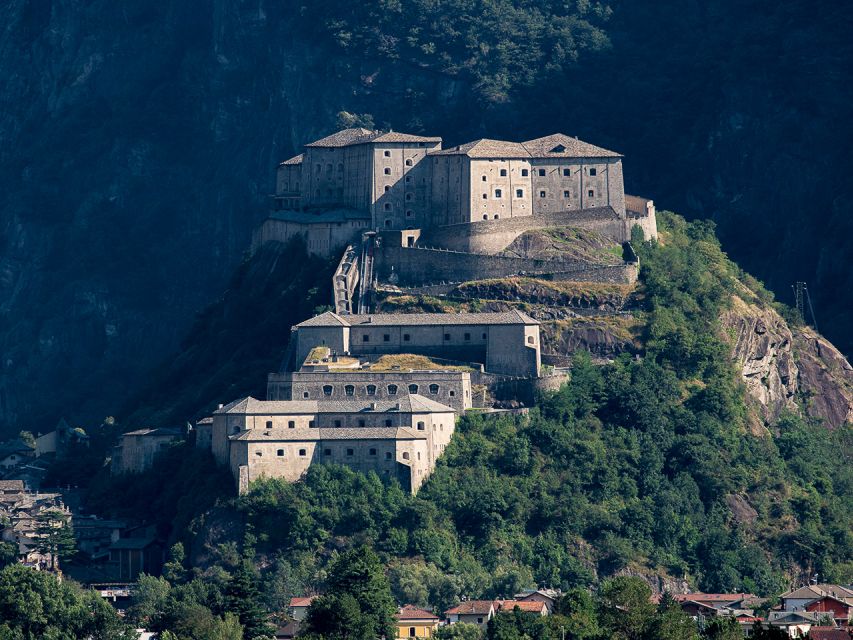
Bard Fortress occupies a strategic point in the Aosta Valley, where the Alps have long shaped movement, trade, and defense. You are not simply walking through an old building. You are following the logic of a place built to watch, control, and protect a route through the mountains.
The fortress gives you several ways to read that past. Its walls and courtyards show the physical side of defense. The Fortifications Museum explains weapons and military planning. The prisons show what confinement looked like inside the stronghold. The Alps Museum widens the subject, shifting from military power to nature, local life, and the effects of modernity.
I like this mix because it avoids making the visit only about military architecture. You can spend time with thick walls and parade grounds, then move into questions about how people lived in the Alps and how the idea of a mountain border changed over time.
The visit is self-guided. That gives you freedom, but it also means you should pay attention to the audio guide setup. You download the Museon app on your smartphone and receive a QR code at the ticket office. If you prefer a guide who explains the site in person and answers questions, this ticket is not the right choice.
More citadels and fortress museums in Italy:
- Bard: Fortress Exhibitions and Museums Entrance
★ 4.3 · 29 reviews - Cairo: Egyptian Museum, Citadel, and Old Cairo Guided Tour
★ 4.7 · 853 reviews - Museum of Egyptian Civilization, Citadel & Old Cairo Tour
★ 4.7 · 530 reviews
Getting started at the two ticket counters
Before entering, exchange your voucher at the ticket counter. You have two possible points for this:
- The first is at the start of the first panoramic lift.
- The second is at the top of the medieval village, behind the Church of Bard.
This matters because the fortress is built into a steep setting, and your starting point can affect the order of your visit. If you reach the first lift, the lower counter is the obvious place to begin. If you are already in the medieval village, the upper counter may save you a return walk.
At the counter, you receive access to the included services and the QR code needed for the Museon audio guide. I would handle this before getting too far into the fortress, since the audio material adds useful context to the architecture and history.
The ticket also gives you a 10 percent discount at the Fort bookshop. That is a small extra, but useful if you want a book on the fortress, Alpine defense, or the exhibitions.
Riding the panoramic lifts through the fortress
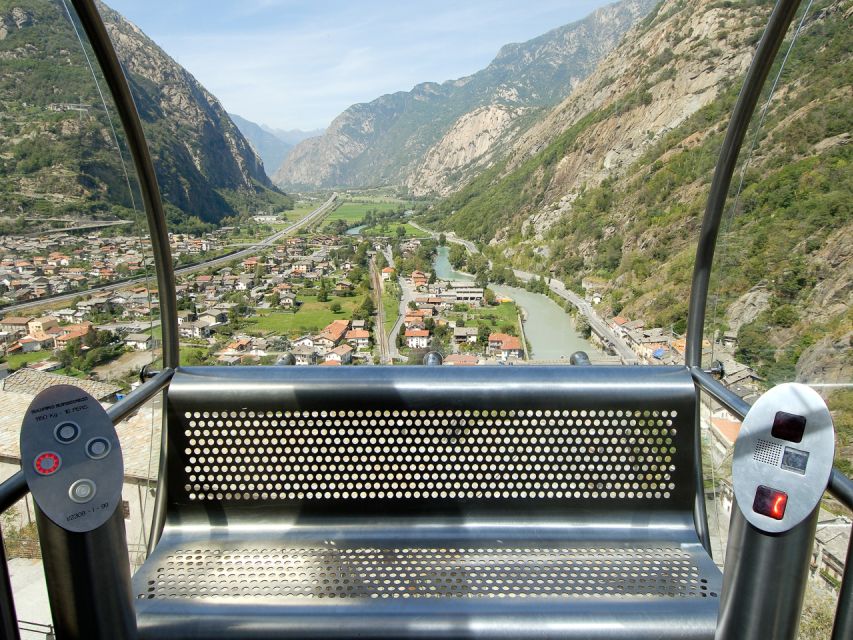
The panoramic lifts are one of the most practical parts of the experience. Bard Fortress rises above the valley, and the lifts help you reach its upper areas while giving you views across the Alpine setting.
I would treat the lift ride as part of the visit, not just as transportation. The fortress is easier to understand when you see its position from above. You can connect the heavy walls and elevated platforms with the surrounding valley, which explains why this site mattered to armies and rulers.
The included access covers the panoramic lifts, along with the chapel, parade grounds, courtyards, and walkways. These open areas help break up the museum rooms. You can pause outside, look closely at the original architectural elements, and take in the scale of the fortification.
The lifts do not remove every physical demand from the visit. You still move between exhibition spaces and walk through historic areas. The activity is listed as wheelchair accessible, which is important for many visitors, but exact route details are not provided here. If you need a particular access arrangement, ask at the ticket counter.
The Prisons and their 24 cramped cells
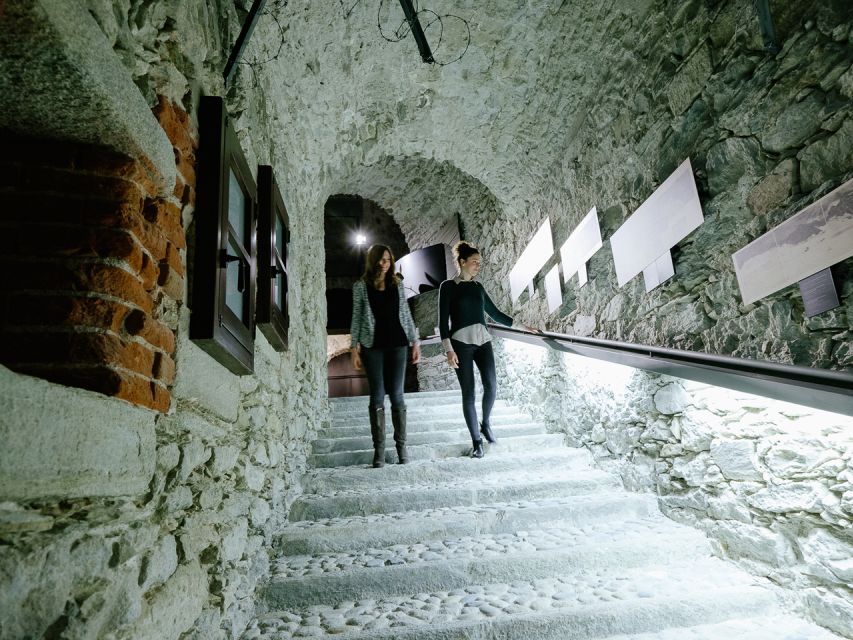
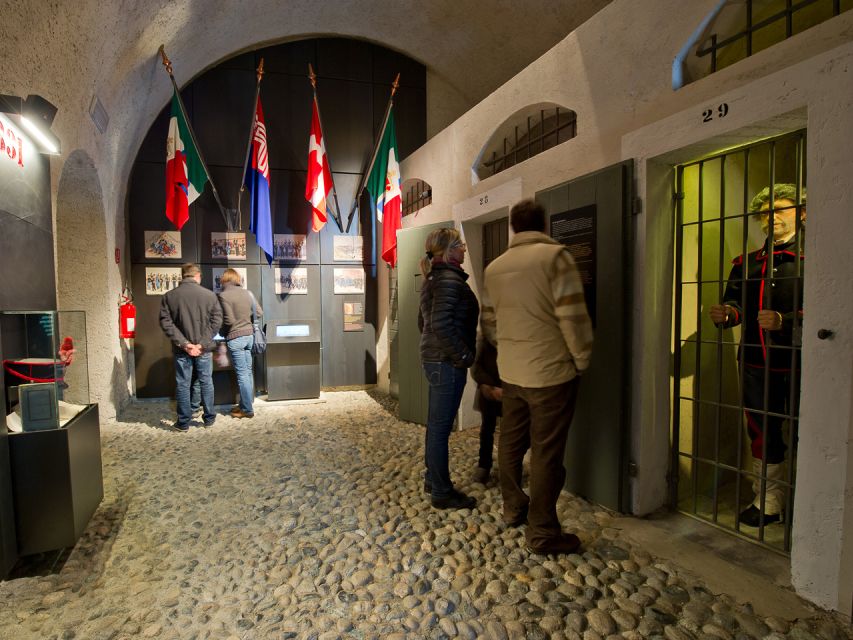
The prisons are among the most memorable parts of Bard Fortress because their scale is so direct. There are 24 cells, each about 1.3 by 2 metres, arranged in four sections.
Those measurements change the way you understand the building. Military walls can feel grand and distant, but a cell this small brings the fortress down to the level of the person held inside it. You do not need a long explanation to understand how confined the space was.
An entrance gallery presents an iconographic representation of the fortress before you enter the cell sections. This gives you a visual introduction to the site and helps place the prison inside the larger complex.
I would allow enough time here to move slowly rather than treating the cells as a quick corridor. The prison area is not a large exhibit packed with objects. Its force comes from the repeated layout, the narrow rooms, and the contrast between the enormous fortress outside and the tiny spaces within.
This section may not suit anyone looking only for broad valley views or military models. It is quieter and more enclosed than the panoramic routes. For many people, though, it is the part that makes the fortress feel human.
A few more museum visits around Italy worth comparing
- Vatican: Museums & Sistine Chapel Entrance Ticket
★ 4.5 · 144,003 reviews - Vatican Museums, Sistine Chapel & St. Peter’s Basilica Tour
★ 4.3 · 73,970 reviews - Vatican Museums, Sistine Chapel & St Peter’s Basilica Guided Tour
★ 4.5 · 39,149 reviews - Florence: Skip-The-Line Uffizi Gallery Timed Entry Ticket
★ 4.5 · 27,832 reviews
The Fortifications Museum and the changing art of defense
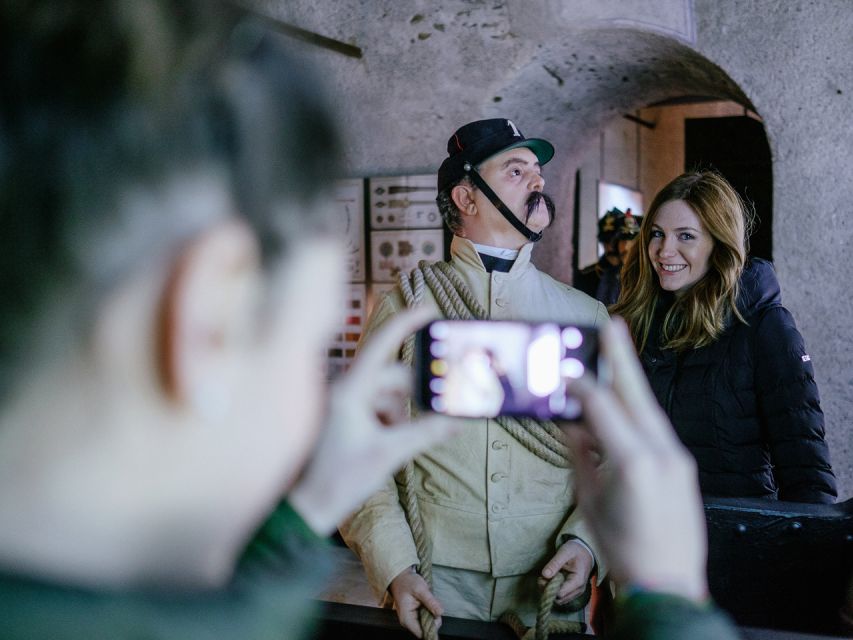
The Museum of Fortifications begins with the long development of military defense in the Western Alps. Its displays use historical settings, models, film footage, and authentic weapons to show how fortresses changed as weapons and military strategies changed.
That approach gives you more than a collection of old arms. It links technology with architecture. When weapons improve, walls, towers, firing positions, and defensive plans have to change as well. The museum lets you follow that process through the mountain region.
The second part focuses on transformations in the late 19th and early 20th centuries. Fort Bard is placed within the wider system of 19th-century fortresses, with scale models and large reconstructions. This is especially useful if you want to understand Bard as part of a defensive network rather than as an isolated structure.
The final part asks whether the Alps are a boundary. That question gives the museum a broader purpose. A boundary can be a border, a barrier, an obstacle, or a line joining places. The exhibit encourages you to think about the Alps in more than military terms.
I like this three-part progression. It starts with weapons and strategy, moves to the fortress system of the modern era, then asks what a border means. You can visit for the architecture and still leave with a clearer sense of how geography shapes politics.
The Alps Museum, from mountain nature to modern change
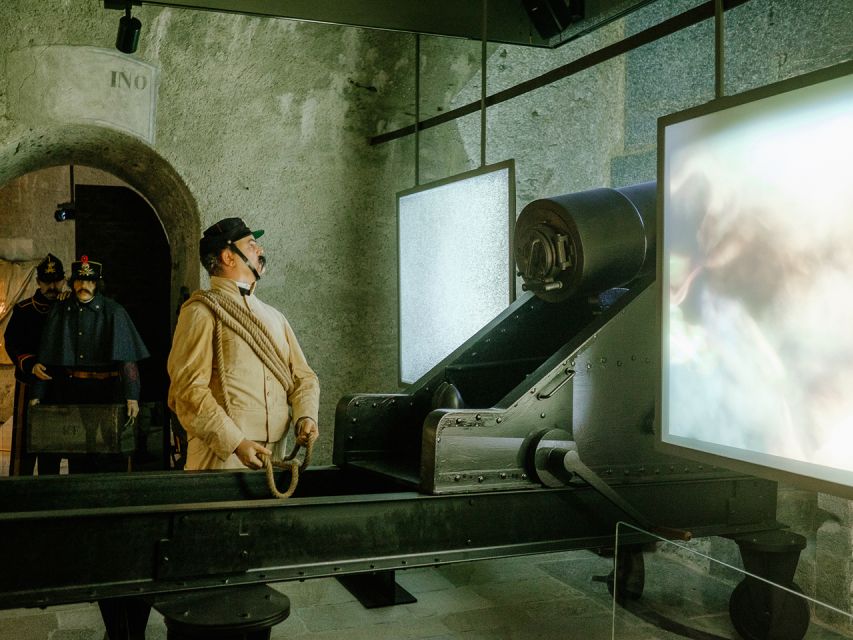
The Alps Museum shifts the focus from defense to the mountain environment and the people who live in it. Its exhibition is divided into three parts.
The first looks at the main natural and human components of the mountains. This gives you a base for understanding the setting around Bard. The Alps are not just a dramatic backdrop. They affect travel, work, settlement, climate, and daily life.
The second section presents Alpine civilization. Here, the emphasis is on how people have organized life in the mountains. The supplied information does not list every object or display, so I would expect the value to come from seeing cultural life placed within its physical surroundings.
The third section examines the transformation of the mountains in the modern era. This makes the museum a useful companion to the Fortifications Museum. One explains how defense changed; the other shows how mountain life changed as the modern world reached Alpine communities.
The Alps Museum is a good choice if you want more than military history. It also helps families and mixed-interest groups find something beyond weapons and prison cells. If your main goal is the fortress structure itself, you may prefer to spend more time in the courtyards, walkways, and fortification exhibits.
Choosing your three exhibition spaces
The ticket includes access to three exhibition spaces of your choice from the permanent museums, including the Museum of the Alps, the Prisons, and the Museum of Fortifications and Frontiers. It also includes art exhibitions that are open at the time of your visit.
Because the ticket gives you a choice, check what is open when you arrive. The three permanent areas each offer a different experience:
- Choose the Prisons for the most immediate and compact historical experience.
- Choose the Museum of Fortifications and Frontiers for weapons, models, military strategy, and the development of fortress systems.
- Choose the Alps Museum for nature, Alpine culture, and modern changes in mountain life.
The wording about three exhibition spaces matters. You should not assume that every possible museum area is automatically included if the ticket is framed around a selection. Ask at the counter if a temporary art exhibition is available and how it fits into your choices.
A recent visit rated the organization highly, and that matches the structure of the ticket. You have a clear set of included areas, but you still need to make a choice. I would decide based on your group before you enter. With children, the prison cells and models may hold attention better than a long cultural display. With an interest in architecture, the fortifications and original building elements deserve priority.
Audio guide or live guide
The included audio guide is accessed through the Museon app. You need to download the app on your smartphone, then use the QR code supplied at the ticket office.
This setup lets you explore at your own pace. You can stop at a courtyard, move ahead to a museum, or spend longer with the prison sections without keeping up with a group. It also avoids the fixed timing that comes with a live tour.
The tradeoff is simple: no live guide is included. You cannot rely on a person at each stop to answer questions, add local stories, or adjust the explanation for children. Make sure your phone is ready for the app before you leave the ticket counter.
The audio guide is particularly useful for the architecture. Bard is large enough that its walls, passages, and courtyards can otherwise feel like a series of impressive but disconnected spaces. The guide helps explain what you are looking at and why the fortress developed in this form.
Is $17 a fair price?
At $17 per person, the ticket offers good value if you use the fortress facilities and visit several exhibitions. The price includes the fortress entrance, panoramic lifts, chapel, parade grounds, courtyards, walkways, three chosen exhibition spaces, available art exhibitions, and the audio guide.
That is a broad package for a self-guided visit. You are paying for both the historic site and the museum content, not only for access to a viewpoint.
The value is weaker if you plan to rush through one room, skip the museums, or mainly want a quick photo from the valley. In that case, you may not use enough of what the ticket includes.
The 90-day validity adds flexibility. You can reserve now and pay later, then use the ticket within its validity period, subject to availability and the starting times shown when you check. Free cancellation is available up to 24 hours in advance for a full refund.
Who should book Bard Fortress?
I would recommend this experience to you if you like historic buildings but also want interpretation. The museums give the fortress a wider setting, while the original walls, courtyards, and walkways keep the visit grounded in the actual place.
It suits visitors with different interests because you can choose among military history, Alpine culture, prison history, and art exhibitions. It also works well for a day when you want both indoor museum time and outdoor views.
The visit may be less satisfying if you require a live guide or have no interest in museums. The Marvel connection is also not a reason to book on its own. The fortress was used for part of Avengers: Age of Ultron, but the experience offered here is about Bard itself, not the film.
The strong 4.5 rating from 125 bookings reflects a generally positive experience, while the individual scores show that expectations matter. One person found the organization excellent, and another found the content interesting overall. The lower score came from disappointment that there was no Marvel exhibition, not from a problem with the fortress itself.
Should you book it?
Book Bard Fortress if you want a flexible, self-guided visit that combines Alpine views, military architecture, small prison cells, and three distinct museum choices for $17. I would make the Fortifications Museum and Prisons priorities, then add the Alps Museum if you want a fuller picture of mountain life.
Skip it if you want a live guide, a dedicated film-location tour, or a short stop with no museum time. For everyone else, the 90-day validity and broad access make this an easy addition to an Aosta Valley itinerary. Just exchange your voucher, set up the Museon app, and choose your exhibitions before you start climbing through the fortress.
FAQ
How much does entry to Bard Fortress cost?
The listed price is $17 per person.
How long is the ticket valid?
The ticket is valid for 90 days. You should check availability for the starting times connected with your visit.
What museums can I visit?
You can access three exhibition spaces of your choice from the permanent museums, including the Museum of the Alps, the Prisons, and the Museum of Fortifications and Frontiers. Art exhibitions open during your visit are also included.
Are the panoramic lifts included?
Yes. Access to the panoramic lifts is included with the ticket.
Is a live guide included?
No. A live guided tour is not included. An audio guide is provided through the Museon app.
How do I use the audio guide?
Download the Museon app on your smartphone. A QR code for the included service is provided at the ticket office.
Is the fortress wheelchair accessible?
Yes. The activity is listed as wheelchair accessible.
Just added around Italy
- Oil museum and oil mill in Tuscany: tour and tasting★ 5.0 · 16 reviews
- Enchanted Castle of Sciacca – Museum Tickets★ 3.5 · 63 reviews
- Torino: FIAT Historic Museum and Lingotto District Tour★ 4.9 · 14 reviews
- Torino: The Car Museum Skip-The-Line Tour★ 4.7 · 22 reviews
- Timed Entry Ticket to the Uffizi Gallery★ 4.5 · 498 reviews
- Florence: Accademia Gallery Entry Ticket with Audio Guide★ 4.1 · 88 reviews
- Vatican City: Sistine Chapel, Museums, Basilica Private Tour★ 4.8 · 158 reviews
- Rome: Capitoline Museums and Centrale Montemartini Tickets★ 4.4 · 328 reviews
Museum Tours in Italy, compared.
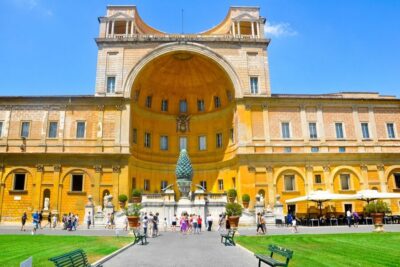
Vatican: Museums & Sistine Chapel Entrance Ticket
Read our review →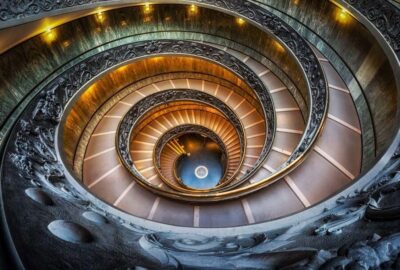
Vatican Museums, Sistine Chapel & St. Peter’s Basilica Tour
Read our review →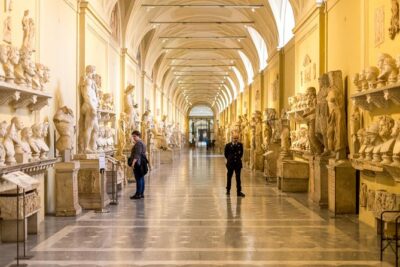
Vatican Museums, Sistine Chapel & St Peter’s Basilica Guided Tour
Read our review →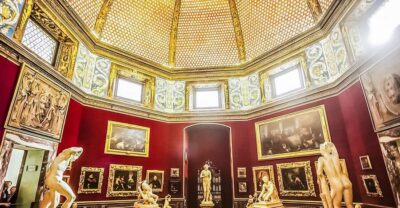
Skip-The-Line Uffizi Gallery Timed Entry Ticket
Read our review →
Vatican Museums, Sistine Chapel and Basilica Tour
Read our review →
Vatican Museums & Sistine Chapel Skip-the-Line Entry Ticket
Read our review →
Vatican Museums, Sistine Chapel & Basilica Tour
Read our review →
Browse the lists this tour appears in