
Review · SOUTH AFRICA
Cape Town: Private Guided Tour of Cape Town Diamond Museum
Cape Town’s Diamond Museum offers more than glass cases and polished stones. At the V&A Waterfront, you’ll learn how diamonds formed, how South Africa shaped the diamond trade, and how a rough stone becomes jewelry. The best part is the private guide, who can adjust the tour to your questions. Guides such as Aloma, Sandy, Shani, and Constantina have been praised for their warmth, clear explanations, and real passion for the subject.
I like the small private format, which makes it easier to ask about the 4Cs, diamond mining, or the cutting process without waiting for a group to move along. I also like the free South African wine or soft drinks, a civilized touch at the start and during the visit. The main consideration is that this is also a working jewelry business, so the tour ends with a chance to shop or design a diamond. Most visitors find the sales approach gentle, but you should arrive knowing that buying is part of the experience.
Key points to know before you go
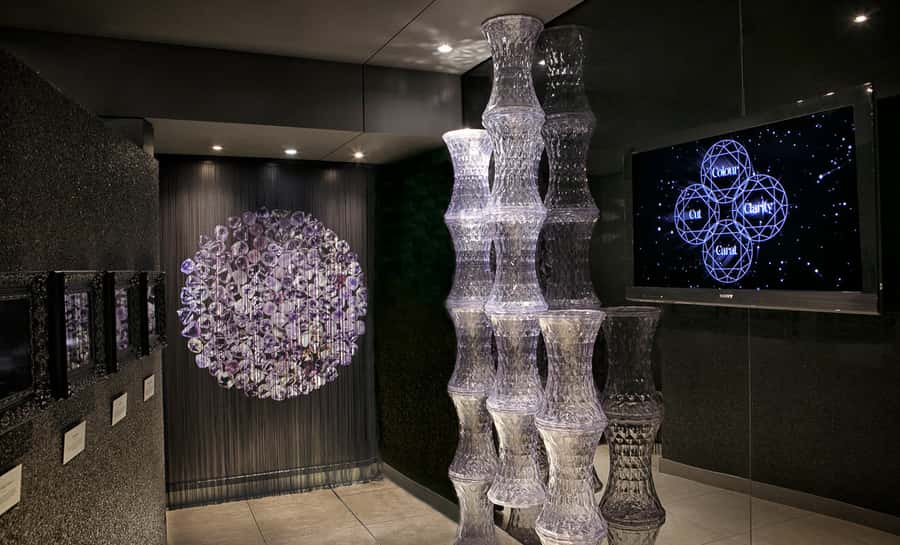
- See more than 3,000 pieces: The museum connects with a diamond-cutting factory and jewelry workshop.
- Ask for a private guide: English and Afrikaans tours are available, with guides such as Aloma, Sandy, Shani, and Constantina praised for their engaging style.
- Learn the 4Cs: Cut, carat, color, and clarity are explained in practical terms.
- Enjoy a drink while you learn: South African wine and soft drinks are included at arrival and during the tour.
- Design a diamond if you wish: You can discuss a personal piece with an on-site designer and request a GIA certificate.
- Plan for about an hour: The guided museum portion lasts 45 minutes, followed by time for shopping or design discussions.
Starting at the Gavin Collins Gallery
You meet your guide at reception inside the Gavin Collins Gallery at the V&A Waterfront. This detail matters because the museum is part of the Shimansky jewelry operation, rather than a large, separate public museum with an obvious street entrance. Tell the reception team you are there for the Cape Town Diamond Museum tour, then wait for your private guide.
The Waterfront is a practical setting for this experience. You can fit the visit around other sightseeing, shopping, or a meal, though food is not included. Parking is also not included, so you’ll need to make your own arrangements if you are driving.
At the start, you receive a soft drink or South African wine. Drinks remain available during the tour. This gives the visit a relaxed, showroom feel rather than the brisk pace of a standard museum stop. If you prefer not to drink alcohol, the soft drink option keeps things simple.
The meeting point is wheelchair accessible. You should bring a passport or ID card and some cash, and leave large bags and luggage behind. Weapons and sharp objects are not allowed.
More private museum tours in South Africa:
- Private Rhino and Lion Park, Cradle Caves or Maropeng Museum
★ 4.6 · 25 reviews - Private Soweto,Mandela House,Apartheid Museum,Constitution
★ 4.6 · 15 reviews - Half Day Private Soweto and Apartheid Museum tour
★ 4.6 · 14 reviews
South Africa’s diamond story in 45 minutes
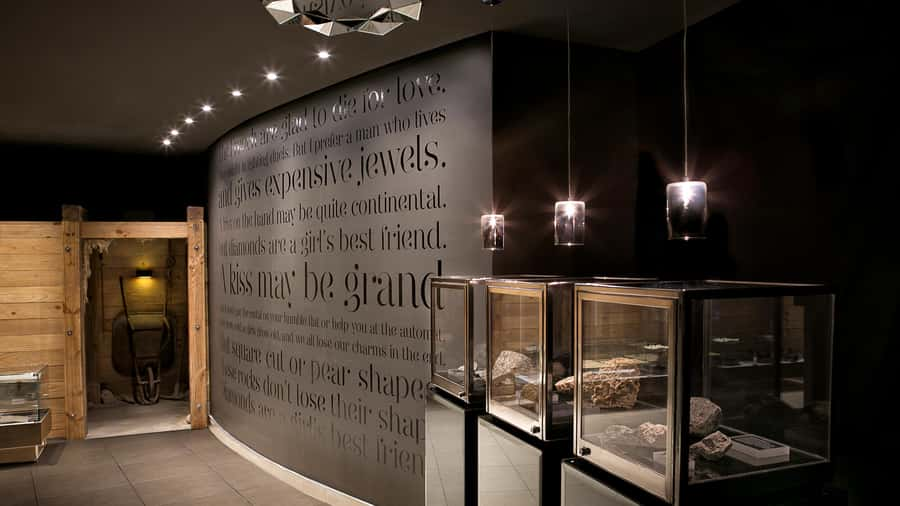
The main guided section lasts 45 minutes. That may sound brief, but a private guide can cover a surprising amount in that time. You’ll hear about South Africa’s roughly 3-billion-year diamond story, the formation of diamonds, and the country’s role in the growth of the diamond trade.
The story includes early discoveries, the rise of major mining interests, and the development of the Kimberley brand. One guide may also explain the connection with the Oppenheimer family and the first recorded South African discovery linked to Erasmus Jacobus. The exact balance depends on your guide and your questions, which is one reason the private format works well.
I would not treat this as a full course in South African mining history. The focus is diamonds, their origins, and the industry built around them. Still, it gives you useful context before you look at the stones themselves. A diamond stops being just a shiny object when you understand the time involved in its formation and the long chain of work needed to turn it into jewelry.
Ask questions early. If you want more science, request extra detail about formation and geology. If you are interested in business and history, ask about South Africa’s mining companies and the development of the local diamond trade. If you are considering an engagement ring, ask the guide to explain how the 4Cs affect appearance and price.
From rough stone to finished jewelry
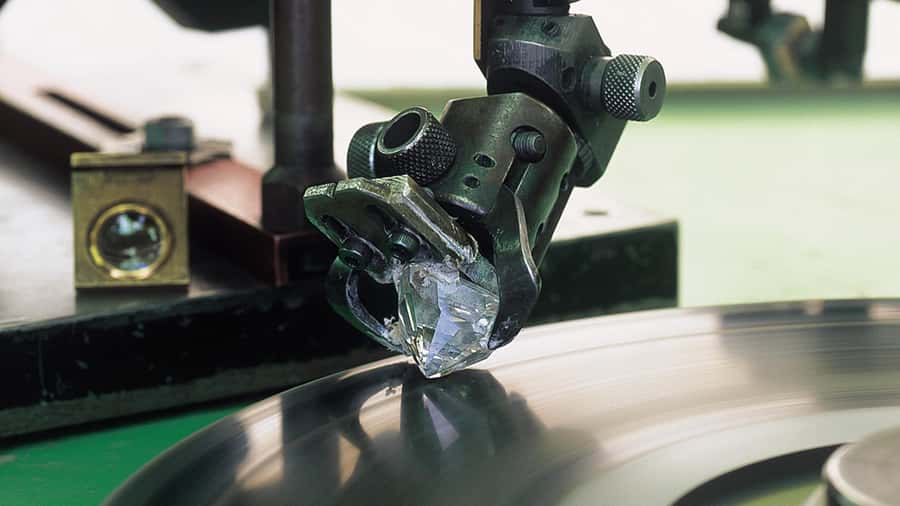
The most useful part of the visit is the explanation of how diamonds are selected, cut, and polished. Shimansky describes its diamonds as hand-selected and ethically sourced. Your guide explains how a rough stone is assessed before cutting, then shaped and polished for appearance.
This is where the museum becomes more than a display of finished jewelry. You get a sense of the decisions behind a cut: how much of the original stone to preserve, how to bring out brightness, and how clarity, color, carat, and cut work together.
The 4Cs are easy to memorize but harder to judge in real life. Cut refers to how the stone is shaped and finished, not simply whether it is round or square. Carat measures weight. Color concerns the body color of a diamond, while clarity refers to internal and external marks. Your guide can show how these factors affect what you see and what you pay.
One memorable teaching point used on the tour is a playful fifth C: confidence. That is a useful reminder when shopping. A diamond certificate matters, but your comfort with the purchase matters just as much. Do not let a polished display or a free glass of wine rush your decision.
The cutting factory and jewelry workshop
The experience includes access to displays of more than 3,000 pieces in the diamond-cutting factory and jewelry workshop. The precise amount of live workshop activity can depend on the time of your visit.
For the best chance of seeing actual jewelry and diamond carving at work, schedule a weekday visit between 9 a.m. and 1 p.m. During other times, you may see finished pieces, tools, and the working environment without catching every stage of production. One useful piece of advice is to visit during the week if watching the goldsmiths matters to you.
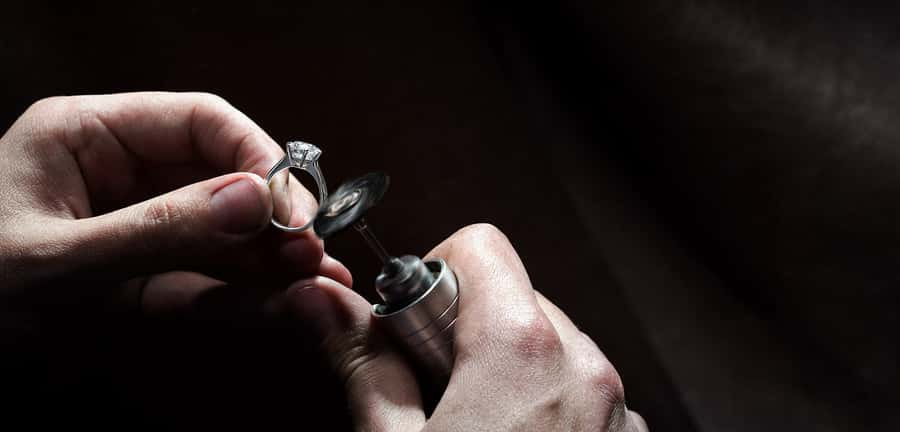
Seeing the workshop helps connect the history lesson with a physical skill. Cutting a diamond is not a theatrical show. It is careful work, and the workshop setting gives you a better idea of the concentration and precision involved.
The displays also include jewelry and colored stones such as tanzanite. If your interest is broader than diamonds, ask about the different stones on view. The jewelry area offers plenty of photo opportunities, but remember that this is still an operating shop. You are looking at pieces that can be purchased, not just museum objects behind a barrier.
A few more museum visits around South Africa worth comparing
- Soweto /Johannesburg and Apartheid Museum Guided Full Day Tour
★ 5.0 · 932 reviews - Vatican Museums, Sistine Chapel & St Peter’s Basilica Guided Tour
★ 4.5 · 39,149 reviews - Rome: Vatican Museums & Sistine Chapel Guided Tour
★ 4.3 · 12,117 reviews - Louvre Museum Masterpieces Guided Tour with Access
★ 4.5 · 12,023 reviews
A private guide changes the pace
The strongest feature here is the guide. The names associated with especially well-received tours include Aloma, Sandy, Shani, Constantina, Nadya, and others. Aloma has been singled out for making a one-person visit feel lively and for answering a large number of questions. Sandy has led detailed explanations of South African diamond mining and the 4Cs. Shani and Constantina have also been praised for friendly, engaging presentations.
You may not receive one of these particular guides, so book this for the private format and subject matter rather than a promised individual host. The English and Afrikaans options make the tour accessible to many visitors, but the experience is not well suited to children who do not speak English. One family found the language barrier a real drawback.
A private tour is especially useful if you are buying an engagement ring, comparing stones, or simply want to ask basic questions without feeling self-conscious. You can ask a guide to repeat a term, compare two stones, or explain why a higher carat weight does not automatically mean a better-looking diamond.
The tone appears to be polished and professional. Some guides wear formal attire, and the setting has a refined jewelry-store feel. That can be part of the fun, but it may feel less casual than a traditional museum.
Designing your own diamond
After the museum portion, you have the opportunity to discuss buying or designing a diamond with a personal designer on-site. A GIA certificate is available with the finished diamond, which is an important point if you are considering a serious purchase.
You do not need to buy anything to benefit from the educational part of the tour. The design option is best viewed as an extra for people already thinking about a ring, pendant, or custom piece. You can use the guide’s explanation of the 4Cs to frame your questions before speaking with the designer.
This is also the point where the experience may feel less like a museum and more like a sales appointment. That is not necessarily a problem. The sales setting can be useful if you want to handle jewelry, compare styles, or understand how custom design works. But if you are on a tight sightseeing schedule or have no interest in jewelry, you may find the final shopping section longer than needed.
A practical approach is to decide before arrival how much time and money you want to spend. You can enjoy the tour, ask questions, and leave without making a purchase. The free wine does not obligate you to buy a diamond.
What the $24 price really covers
At $24 per person, this is a reasonable price for a private, guide-led stop in a major Cape Town attraction area. You are paying for a 45-minute private tour, drinks, access to the museum and workshop displays, and the chance to speak with a designer. The value is strongest for couples, jewelry buyers, and anyone curious about South Africa’s diamond industry.
It is less compelling if you only want a quick look at expensive jewelry. In that case, the visit may feel like a salesroom with a history presentation attached. The price does not include food or parking, so factor those costs into a Waterfront outing.
The listed duration is one day because that is the validity period for the booking, but the actual visit is much shorter. Plan for about an hour at the gallery and museum, including the 45-minute tour and any time you spend discussing jewelry. Do not confuse the one-day validity with a full-day guided activity.
Who will enjoy this Cape Town stop?
I would recommend this tour to anyone who wants a compact indoor activity with a clear theme. It fits well into a day at the V&A Waterfront and gives you a break from outdoor sightseeing. It is also a good choice for couples considering an engagement ring or custom jewelry, since you can learn the basics before looking at designs.
It suits adults and older children who can follow an English or Afrikaans explanation. It may not work well for young children, especially if they do not speak English. The subject calls for listening, and the jewelry displays are not designed as a hands-on children’s attraction.
You’ll get the most from it if you enjoy asking questions. A guest who simply follows the guide may receive a solid overview. Someone who asks about the 4Cs, ethical sourcing, Kimberley, mining history, cutting methods, and the difference between stones can turn the same 45 minutes into a much more useful lesson.
The private format also helps couples and small groups with different interests. One person can ask about history while another asks about rings. You do not have to follow a large group’s pace.
Practical details that matter
Free cancellation is available up to 24 hours before the visit, and you can reserve now while paying later. Starting times vary, so check availability for your date. The tour is private, and you skip the ticket line once you arrive at the correct reception point.
English and Afrikaans are the available guide languages. The venue is wheelchair accessible. Bring identification and cash, and avoid bringing large luggage or bags.
If seeing craftspeople at work is important, choose a weekday morning between 9 a.m. and 1 p.m. If you are mainly interested in the history and the 4Cs, other times can still work well. I would allow extra time if you may want to discuss a custom diamond, take photos, or browse the jewelry.
Should you book the Cape Town Diamond Museum tour?
Book it if you want a short, polished, private introduction to diamonds and South Africa’s mining story. The combination of a personal guide, workshop displays, free drinks, and an optional design consultation gives the $24 price solid value, especially at the V&A Waterfront.
Skip it if you dislike jewelry shops, have no interest in buying or designing a stone, or need a fully casual museum with no commercial element. For everyone else, this is a smart add-on to a Waterfront day. Go on a weekday morning if you want the best chance of seeing cutting or goldsmith work, and arrive ready to ask questions.
FAQ
How long does the Cape Town Diamond Museum tour last?
The guided museum portion lasts 45 minutes. The full stop is generally about an hour, depending on how long you spend shopping or discussing a custom diamond.
Where does the tour begin?
You meet your guide at reception at the Gavin Collins Gallery at the V&A Waterfront.
What drinks are included?
Soft drinks and South African wine are included on arrival and remain available during the tour.
Can I design my own diamond?
Yes. You have the opportunity to discuss designing and buying a diamond with a personal designer on-site. A GIA certificate is available.
Is the tour private?
Yes. The activity is offered as a private group experience with an English or Afrikaans-speaking live guide.
Can I see diamond cutting or goldsmith work?
You can see the diamond-cutting factory and jewelry workshop. For the best chance of seeing active cutting and goldsmith work, visit on a weekday between 9 a.m. and 1 p.m.
What should I bring to the tour?
Bring a passport or ID card and cash. Large bags, luggage, weapons, and sharp objects are not allowed.
Just added around South Africa
- Soweto & Johannesburg and Apartheid Museum★ 4.7 · 41 reviews
- Private Soweto,Mandela House,Apartheid Museum,Constitution★ 4.6 · 15 reviews
- ROBBEN ISLAND MUSEUM TOUR, WITH OPTIONAL LAST MINUTE TICKETS★ 3.4 · 85 reviews
- Cape Town: Robben Island Boat Trip & Museum Tour Ticket★ 3.9 · 28 reviews
- Johannesburg: Soweto & Apartheid Museum Half-Day Tour★ 4.9 · 99 reviews
- Soweto and Apartheid Museum Tour★ 4.4 · 38 reviews
- Soweto: Hop-On Hop-Off Bus, City Tour and Apartheid Museum★ 4.5 · 250 reviews
- Johannesburg: Half-Day Apartheid Museum Tour★ 4.5 · 73 reviews
Museum Tours in South Africa, compared.
Soweto /Johannesburg and Apartheid Museum Guided Full Day Tour
Read our review →
Jo’berg in 1 Day: Soweto, Apartheid Museum & City Tour
Read our review →
Full-Day Tour with Soweto and Apartheid Museum
Read our review →
Full-Day Soweto, Apartheid Museum and Lunch Tour
Read our review →
Soweto: Hop-On Hop-Off Bus, City Tour and Apartheid Museum
Read our review →
Museum of Contemporary African Art: Fast-Track Zeitz MOCAA
Read our review →

ROBBEN ISLAND MUSEUM TOUR, WITH OPTIONAL LAST MINUTE TICKETS
Read our review →Browse the lists this tour appears in