
Review · NORWAY
Bergen: Troll Museum Entry Ticket + audio guide
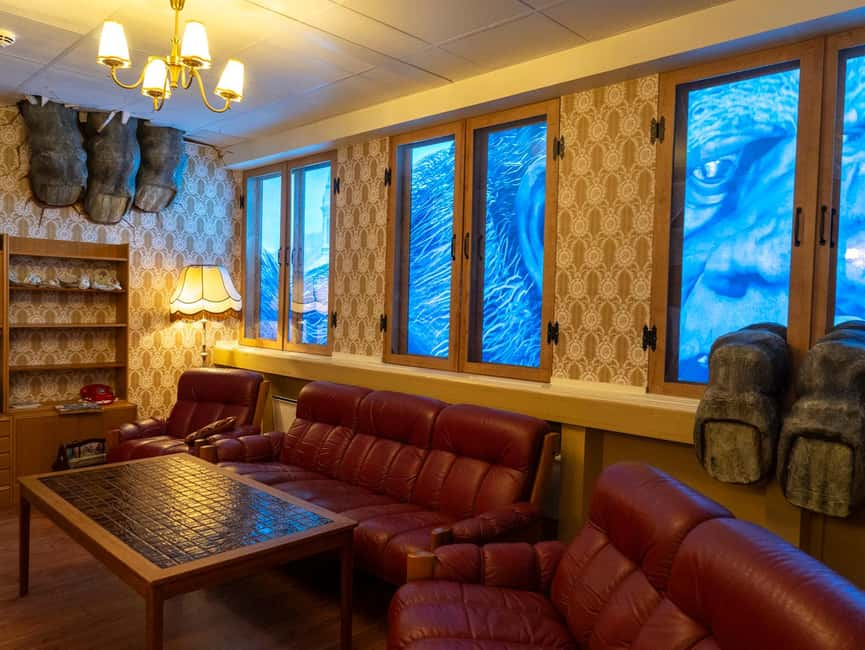
Norway’s trolls are more than cute souvenirs, and Bergen’s Troll Museum makes that clear with fairy tales, Norse mythology, handmade art, and digital effects. Augmented reality adds moving images and sound to the artwork, while the Troll Habitat gives these legendary creatures a place to live.
I especially like the mix of old and new: traditional stories sit beside holographic fans, touch screens, and interactive displays. The museum also works well for mixed-age groups, since adults can follow the folklore while children head for the games and creativity areas. Allow at least 90 minutes, and more if you want time for the games room. Arriving only an hour before closing may leave you rushing.
Key points to know before you go
- Norwegian folklore in modern form: Explore trolls, Huldrefolket, fjord creatures, and Viking ideas about the universe.
- Augmented reality tablets: Point the tablets at selected artworks to add movement, sound, and extra story details.
- A useful language setup: Exhibit text is in English and Norwegian, with audio guides in 10 languages and digital tools in 11.
- Best for families and curious adults: Hands-on displays, board games, and creativity zones give younger visitors plenty to do.
- Central Bergen location: Find the museum at Øvre Dreggsallmenningen 6, open daily from 09:00 to 19:00.
- Flexible ticket validity: The ticket remains valid for 90 days, and cancellation is free up to 24 hours before the visit.
Entering Bergen’s world of trolls
The Troll Museum offers a focused look at Norwegian folk belief rather than a general museum about Norway. That focus is its strength. You are not simply looking at carved troll figures. You are following the way these creatures appear in stories, art, nature, and older ideas about the world.
The museum is the largest in Norway devoted entirely to trolls and fairy tales. That does not mean every room is old-fashioned. The experience combines detailed handmade art with digital storytelling, so the museum feels part gallery, part storybook, and part hands-on attraction.
I would begin by giving yourself time to get oriented. The museum is open from 09:00 to 19:00 every day, and the central Bergen address makes it easy to fit into a day of sightseeing. The ticket is listed at $26 per person, which is a reasonable price if you use the interactive features and stay long enough to see the museum properly. It is less convincing value if you rush through in a short visit.
Your admission includes the audio guide, so you do not need to pay extra for the main explanatory material. All exhibit text is available in English and Norwegian. The audio guide adds German, French, Italian, Spanish, Dutch, Polish, Russian, and Portuguese, along with English and Norwegian.
A few more museum visits around Norway worth comparing
- Istanbul: Topkapi Palace & Harem Museum Ticket & Audio Guide
★ 4.1 · 3,977 reviews - Paris: Orsay Museum Entry Ticket and Digital Audio Guide App
★ 4.4 · 3,170 reviews - Florence: Uffizi Gallery Timed Entry Ticket & Audio Guide
★ 4.2 · 2,794 reviews
The Norse mythology section explains the starting point
The Norse mythology section gives the museum a useful foundation. Before meeting the trolls in their storybook settings, you can learn how Vikings imagined the universe.
This section matters because Norwegian folklore did not appear in isolation. The old stories connect people, gods, nature, and supernatural beings. Starting here helps you understand why trolls belong to a larger system of beliefs rather than being only comic monsters from children’s books.
The museum presents this material through art and digital elements rather than a long academic display. That keeps the subject approachable. You can take in the broad idea of the Viking universe, then continue toward the fairy tales that Norwegian parents have passed down for generations.
The audio guide is particularly useful here if you want more context without reading every screen. You can choose from 10 languages, and the information touch screens offer 11 language choices, including Chinese. That makes the museum easier to follow for international visitors traveling together.
The Hall of Trolls brings folklore into view
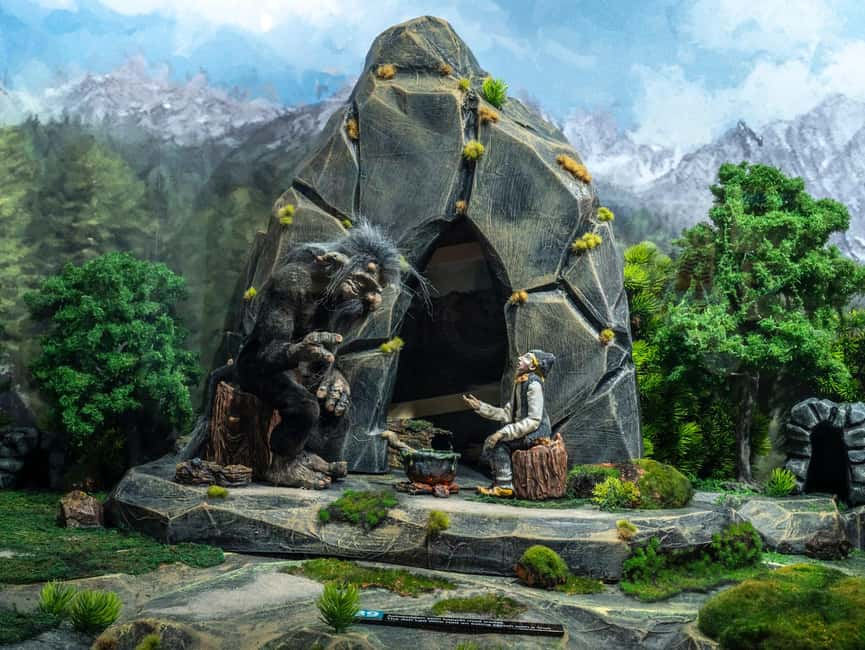
The Hall of Trolls is the central stop for anyone who came to see the creatures themselves. The displays explore what trolls look like, where they live, and how the idea of them has changed over time.
You will find handmade art alongside digital additions. The physical pieces give the room a crafted, storybook feel, while moving images and sound add a modern layer. With the augmented reality tablets, selected artwork can gain motion and extra effects when you view it through the device.
I like this format because you can approach it at two levels. If you want a quick introduction, the visual displays are easy to follow. If you want more, the audio guide, touch screens, and AR features offer extra material.
The technology is not simply there for decoration. It helps show how a fixed picture can become a small scene. A troll is no longer only a figure on a panel. The artwork can suggest movement, atmosphere, and sound, giving you a better sense of the story attached to it.
Still, this is not a traditional museum of rare historic objects. The experience is built around presentation and interpretation. If you prefer quiet galleries with original artifacts and long written labels, you may find the digital style a little busy. If you enjoy art that responds to your actions, the format should suit you well.
The Troll Habitat gives the creatures a place to live
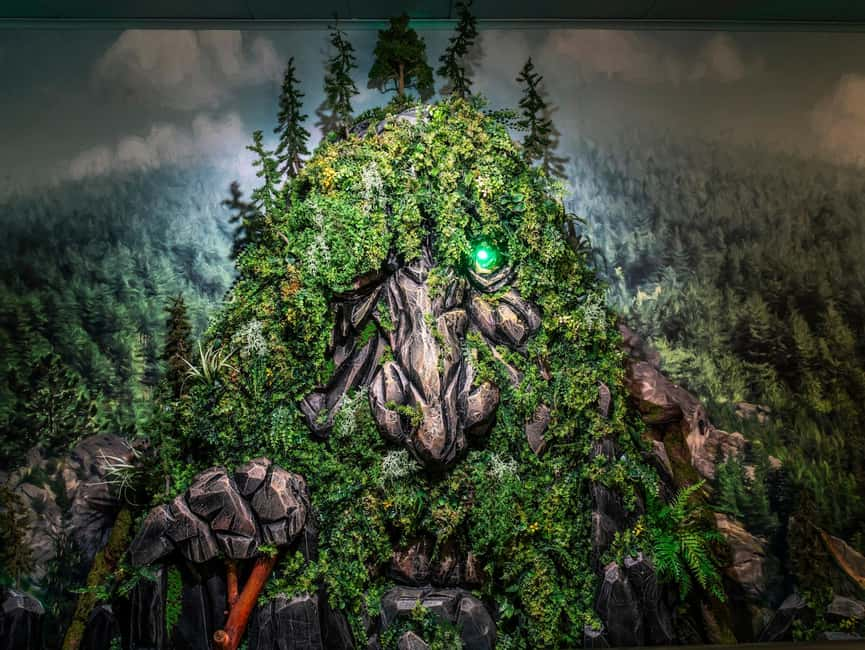
The Troll Habitat is one of the more memorable parts of the visit because it shifts the focus from individual stories to the creatures’ surroundings. Instead of seeing trolls as isolated characters, you get a sense of them in their natural setting.
The museum uses immersive technology and holographic fans to expand the physical displays. These effects help create the feeling that the folklore continues beyond the frame or panel in front of you.
I would take your time here and watch how the digital features add to the handmade art. The point is not to race from one effect to the next. The pleasure comes from seeing how the old idea of a troll can be presented through modern tools while still keeping its connection to Norwegian storytelling.
The museum does not provide a detailed timetable for moving through the rooms, so you can set your own pace. That flexibility is helpful, especially for families. Younger children can spend longer with a display that catches their attention, while adults can use the audio guide to pick up more background.
More audio-guided museum visits in Norway:
- Athens: Acropolis Museum Ticket with optional Audio Guide
★ 4.4 · 2,652 reviews - Bruges: Choco-Story Museum with Audio Guide and Tastings
★ 4.2 · 1,825 reviews - Athens: National Archaeological Museum Ticket & Audio Guide
★ 4.3 · 1,330 reviews - Madrid: Prado Museum Ticket with In-App Audio Guide
★ 3.6 · 1,154 reviews
Hidden Beneath the Waves looks below Norway’s fjords
Norway’s folklore is not limited to forests and mountains. The marine exhibit, Hidden Beneath the Waves, introduces creatures associated with the depths of Norwegian fjords.
This section broadens the visit. You are not only learning about the familiar troll of popular culture. You are also meeting secretive beings tied to water and the unknown places below the surface.
The fjord setting gives the stories a clear sense of place. Norway’s waterways are central to its identity, and the museum uses that setting to show how folk beliefs can grow from the natural world around people.
The display uses modern visual technology to build on the physical exhibit. That makes it a good place to use the included tablet and touch-screen tools. You can choose how much extra information you want, rather than depending on a single guide speaking to the whole room.
The Huldrefolket hall adds a different kind of mystery
The Huldrefolket hall focuses on another group of hidden beings from Norwegian folklore. You can learn who they are, where they live, and why they hold an important place in local stories.
This room is useful because it prevents the museum from becoming only a collection of troll jokes and large fantasy figures. Huldrefolket introduces a more secretive side of folk belief, with stories linked to people, nature, and places that are not always visible.
I would pay attention to the contrast between this hall and the main Troll Hall. The museum shows that supernatural figures in Norwegian stories are not all used in the same way. Some are playful, some are threatening, and some are connected to the boundary between the ordinary world and a less visible one.
The displays are supported by the same language tools used elsewhere. Exhibit text is in English and Norwegian, and the digital screens and AR tablets provide 11 language options. That is helpful if you are visiting with family members who prefer different languages.
AR tablets and holographic effects make the visit active
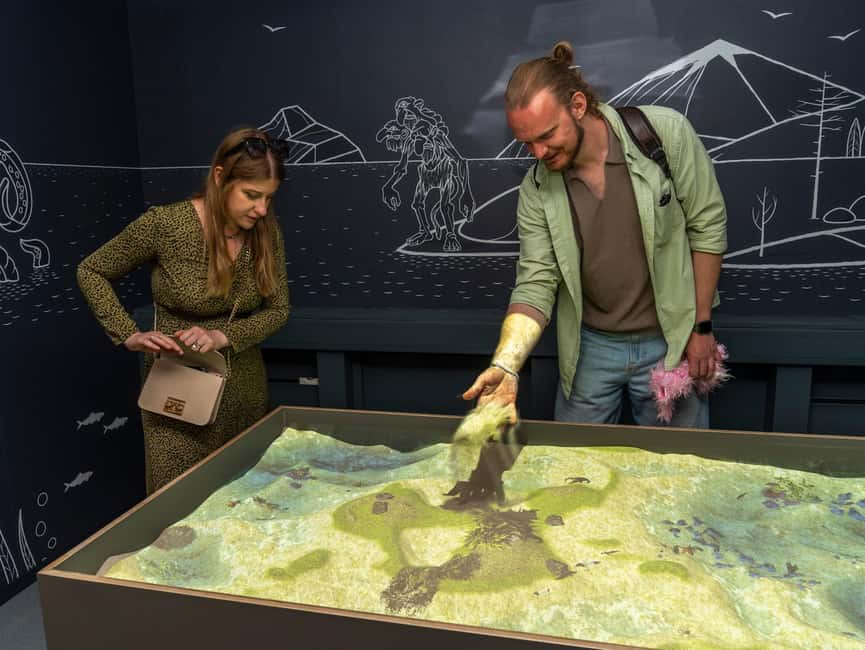
The museum’s main selling point is its use of technology. The AR tablets can add moving elements and sound to the artwork, while information screens let you explore the subject at your own pace.
This is a good setup for a short city break. You do not need a specialist background in mythology to take part. The digital tools make the stories more direct, and the visual effects help children understand that the artwork is connected to a larger tale.
At the same time, technology can affect the pace of your visit. You may spend longer at each display while trying the tablet features, listening to the audio guide, and reading the screen. That is why I would not plan this as a quick 30-minute stop.
The technology also gives the museum a different feel from a conventional folklore exhibition. It is more active and theatrical. For some people, that will make the stories easier to remember. For others, the screens and effects may compete with the art. The museum works best when you treat the digital elements as tools for understanding the folklore, not as the whole point of the visit.
Games, creativity zones, and the small library
After the main displays, the museum offers board games and creativity zones. These areas are important if you are visiting with children, since they provide a break from listening and reading.
The games room may also appeal to adults who want a more relaxed end to the visit. One practical point is timing: arriving only 60 to 90 minutes before closing may not give you enough time for the games room as well as the main exhibits.
The small library contains fairy tale and mythology books in several languages. It is a quiet way to continue the subject after the digital displays. You can use it to look at the stories in more detail, or simply browse before leaving.
I see the library as a useful extra rather than a reason to visit on its own. Its value depends on how much time you have and whether you want to read beyond the main route. Families should build in extra time if children are likely to stop at the books, games, and creativity areas.
How long should you plan for?
The ticket is valid for 90 days, but that describes the period in which you can use the admission, not the length of a single museum visit. The museum is open daily from 09:00 to 19:00.
For a comfortable visit, I would plan around 90 minutes at minimum. That gives you time for the Norse mythology section, Hall of Trolls, Troll Habitat, marine exhibit, and Huldrefolket hall without treating every display as a quick stop.
Allow more time if you want to use the audio guide in full, try the AR tablets, read the touch screens, and spend time in the games room or library. A late arrival can work for a quick look, but it is not ideal if you want the full experience.
There is no fixed tour departure to catch. The host or greeter service is available in Norwegian and English, while the included audio guide gives you more language choices. This makes the museum easy to fit around other plans in Bergen.
Is $26 good value?
At $26 per person, the ticket is not a bargain attraction for a very short visit. The value improves if you use the museum as a full indoor activity and spend enough time with the interactive displays.
You are paying for more than entry to a room of troll figures. The ticket includes the audio guide, AR tablets, information screens, and access to the museum’s themed halls and activity areas. The language support is also strong, with 10 audio-guide languages and 11 languages on the touch screens and tablets.
I think the price makes the most sense for families, visitors interested in folklore, and anyone looking for an indoor stop in Bergen that does not depend on the weather. Adults who enjoy mythology and presentation technology should also find enough material to justify the cost.
If you only want a few photographs of trolls, you may not get full value. The museum rewards curiosity and time. Use the tools, listen to the explanations, and allow yourself to follow the stories rather than simply walking through.
Who should book the Troll Museum?
I would recommend this experience to families with children, couples looking for a light cultural stop, and adults who want an introduction to Norwegian folklore without reading a specialist book first.
It is also a good choice if your group speaks different languages. English and Norwegian appear on the exhibits, while the audio guide covers 10 languages and the digital screens and tablets cover 11.
The museum is wheelchair accessible, which makes it a practical option for a wider range of visitors. The central Bergen location and long opening hours also make it easy to place before or after other city sights.
I would be more cautious if you dislike interactive technology or expect a traditional museum built around historic objects. This is a modern storytelling attraction. Its purpose is to make folklore accessible and entertaining, not to present a large collection of original artifacts.
My booking advice
Book the Troll Museum if you want an approachable introduction to Norwegian trolls, Viking ideas, fairy tales, Huldrefolket, and fjord legends, with digital tools that keep the visit active. At $26, it offers fair value when you stay for around 90 minutes or longer and make use of the audio guide and AR features.
Skip it if you have very little time in Bergen or only want a quick photo stop. If you do go, avoid arriving near closing, especially with children. The games room and creativity areas can add a lot to the visit, but they are the first things you may miss when time is short.
FAQ
Where is the Troll Museum in Bergen?
The museum is at Øvre Dreggsallmenningen 6 in central Bergen, Norway.
What are the museum’s opening hours?
The Troll Museum is open every day from 09:00 to 19:00.
How much does admission cost?
The listed price is $26 per person.
How long is the museum ticket valid?
The ticket is valid for 90 days. This refers to the period in which you can use the ticket, not the duration of one visit.
Is an audio guide included?
Yes. An audio guide is included in the ticket price.
Which languages are available on the audio guide?
The audio guide is available in Norwegian, English, German, French, Italian, Spanish, Dutch, Polish, Russian, and Portuguese.
Are the exhibits available in English?
Yes. Exhibit text is available in English and Norwegian.
Which languages are available on the touch screens and AR tablets?
The information screens and AR tablets are available in Norwegian, English, German, French, Italian, Spanish, Dutch, Polish, Russian, Portuguese, and Chinese.
Is the museum wheelchair accessible?
Yes. The Troll Museum is wheelchair accessible.
Can I cancel my booking?
You can cancel up to 24 hours in advance for a full refund. You can also reserve now and pay later, according to the booking conditions.
Just added around Norway
- Ålesund-Aksla-Alnes-Giske-Sunnmøre museum 100 % Highlights 4.5 H★ 5.0 · 84 reviews
- Stavanger: Norwegian Petroleum Museum – Entrance Ticket★ 4.8 · 78 reviews
- Oslo: Munch Museum Admission Ticket★ 4.5 · 193 reviews
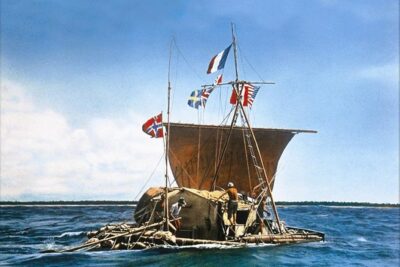
- Oslo: Kon-Tiki Museum Entry Ticket★ 4.6 · 18 reviews
- Narvik: Narvik War Museum★ 4.8 · 21 reviews
- Maihaugen Museum/The Norwegian Olympic Museum, Lillehammer.★ 4.4 · 48 reviews
- Tromso: Full Steam Museum Entrance★ 4.1 · 43 reviews
- Kristiansand: Highlights Tour w/ Kristiansand Museum Ticket★ 4.4 · 17 reviews
Museum Tours in Norway, compared.



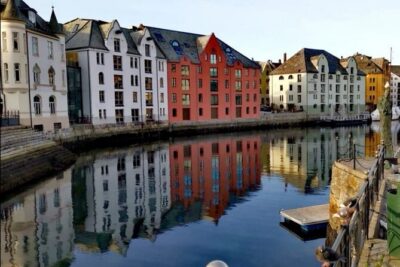
Ålesund-Aksla-Alnes-Giske-Sunnmøre museum 100 % Highlights 4.5 H
Read our review →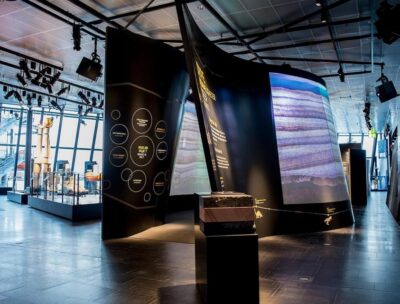
Stavanger: Norwegian Petroleum Museum – Entrance Ticket
Read our review →
Maihaugen Museum/The Norwegian Olympic Museum, Lillehammer.
Read our review →Browse the lists this tour appears in