
Review · BARCELONA
Guitar Legends Hall: Entrance to the Immersive Rock Museum
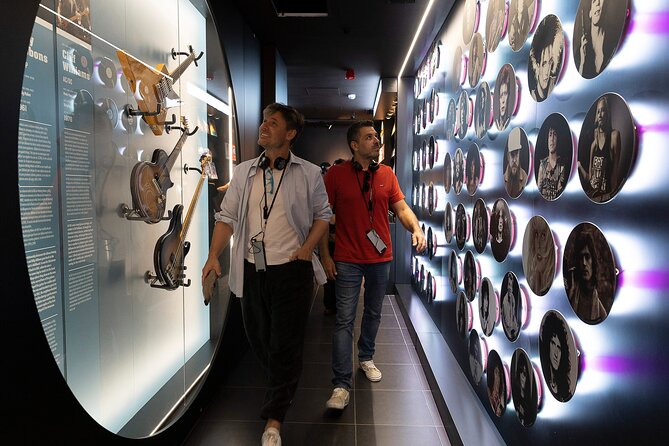
Rock music becomes a walk-through story at Guitar Legends Hall, where guitars lead you from early blues to stadium concerts. This is not a quiet room of glass cases. You move through eight themed spaces with music, lights, projections, interactive displays, and holograms.
I like the clear journey through the decades, especially the 1950s guitars, 1960s festival setting, and the record-store feel of the 1970s and 1980s. I also like that the audio guide comes in four languages and that the experience is small, with a maximum of 10 people. The main caution is simple: if you are not interested in rock, electric guitars, or twentieth-century music culture, the roughly $21.69 price may feel high.
Key points to know before you go
- Eight rooms follow rock from blues to stadium concerts, so the visit has a clear beginning, middle, and end.
- Interactive displays, lights, projections, and holograms make this more active than a standard guitar museum.
- The 1950s and 1960s rooms focus on the rise of electric guitar and the festival era.
- The MTV and music video section connects rock with television, fashion, and changing social trends.
- A four-language audio guide is included, though the experience is listed as offered in English.
- The museum is on Carrer de la Portaferrissa in Ciutat Vella, close to public transportation and easy to pair with central Barcelona sightseeing.
From blues bar to rock history
Your visit begins with the roots of the sound. The first room is designed as a blues bar, showing how blues moved toward rock through the growing role of the electric guitar.
That starting point matters. Instead of presenting rock as a finished product, the experience gives you a musical cause-and-effect story. You begin with the sound that shaped early rock, then follow how instruments, performers, and popular culture changed over time.
The setting also gives the visit a theatrical opening. You are not simply reading a panel about blues. You are placed in a room built around the look and feel of a bar, with the guitar as the link between one era and the next.
I would give this first section a little time, even if you came mainly to see famous guitars. It sets up the rest of the visit and helps explain why the electric guitar became such a powerful symbol.
More Museum Tours in Barcelona
- Barcelona: FC Barcelona Museum “Barça Immersive Tour” Ticket
★ 4.4 · 10,944 reviews - Barcelona: Park Güell and Gaudí House Museum Entry Ticket
★ 4.5 · 6,326 reviews - Barcelona: Picasso Museum Skip-the-Line Guided Tour
★ 4.5 · 3,355 reviews
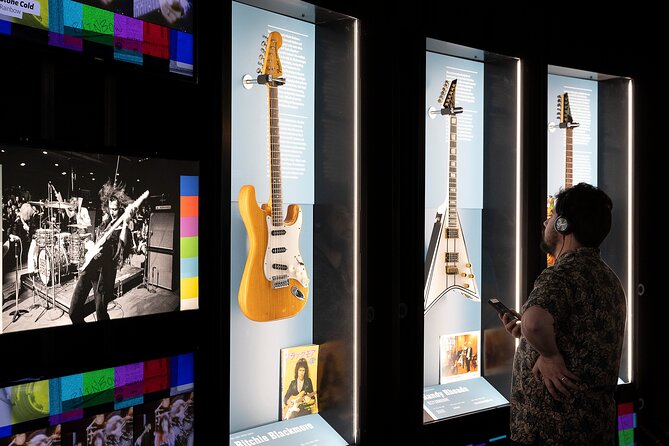
Guitars and programs from the 1950s
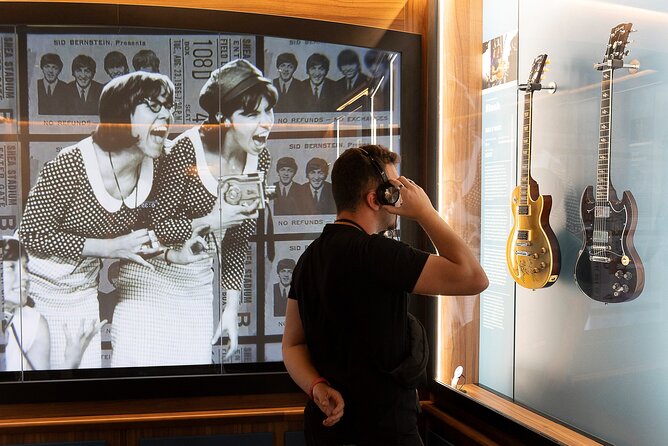
The second space turns toward the 1950s, with iconic guitars and concert programs from the period. This is where the guitar shifts from an instrument into a public image.
The programs add useful context. A guitar alone can be beautiful, but an old concert program shows how music reached its audience and how performers were presented at the time. Together, the objects help place the instrument within the entertainment culture of the decade.
This section should appeal to anyone curious about the beginnings of electric guitar use. One Spanish-language comment on the experience specifically praised how much you can learn about the early use of the electric guitar. That is a good clue about the museum’s strength: it is not only about famous names. It also explains how the instrument became central to rock.
You may find this room more traditional than the later sections. There are guitars and printed materials to examine, but the strongest visual effects come farther along.
The 1960s festival era
The third space recreates the feeling of 1960s festivals. The decade changed rock from a popular music style into a major cultural force, and festivals helped create that shift.
This part is useful because it broadens the story beyond instruments. The music connects with crowds, youth culture, fashion, and public performance. You get a sense of rock as a shared event rather than something heard only on a record or radio.
If you enjoy the social side of music history, this may be one of the most rewarding rooms. If you want a long list of dates and biographies, the format may feel lighter. The experience favors atmosphere and visual storytelling over a traditional academic display.
That approach also makes the museum easier to enjoy with companions who are not serious guitar fans. They can follow the changes in style and public life, even if they cannot identify every instrument.
A record store from the 1970s and 1980s
The fourth space takes you into a record store from the 1970s and 1980s. It is a smart change of setting, since record shops were key meeting places for music fans and important gateways to new sounds.
This room places rock within the world of buying, collecting, and discovering music. It also marks the point when the genre had become broad enough to support many styles and audiences.
The record-store idea should feel familiar even if you did not grow up with vinyl. It gives you a physical sense of how people once found music before streaming and instant search. The room is likely to work best when you slow down and look at the details rather than rushing toward the more dramatic displays.
For me, this is also where the museum’s story becomes more cultural than purely musical. You are not just following guitar design. You are seeing how music entered homes, shops, youth culture, and everyday life.
A few more museum visits around Barcelona worth comparing
- Moco Museum Barcelona: Modern & Contemporary Art
★ 4.6 · 3,229 reviews - Girona & Dali Museum Small Group Tour with Pick-up from Barcelona
★ 5.0 · 2,965 reviews - Barcelona Card: 25+ Museums and Free Public Transportation
★ 4.4 · 2,265 reviews - From Barcelona: Girona, Figueres, Dalí Museum, and Cadaqués
★ 4.7 · 1,928 reviews
MTV, music videos, and the television age
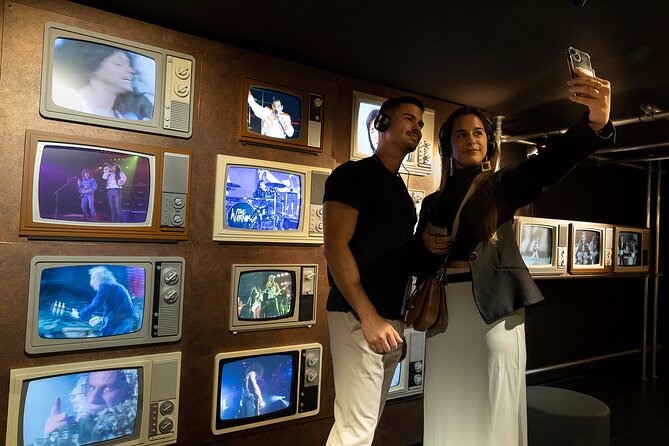
The fifth space covers music videos and MTV. This is an important chapter because television changed how rock performers were seen, not just how they were heard.
Music videos made image part of the performance. Clothing, stage design, editing, and attitude could matter as much as the song itself. The room connects rock with television and the visual style of the late twentieth century.
This section gives the experience wider appeal. You do not need to play guitar to understand the effect of a music video. You only need to recognize that popular music changed once artists could reach you through a screen.
It also helps explain the museum’s larger purpose. The guitars are the main thread, but the visit is really about music culture. You move through sound, fashion, television, performance, and changing social habits.
The VIP room and the feel of a concert
The sixth space places you in a VIP room with the energy of a rock concert. This changes your role again. Instead of looking at the past from a distance, you are given a more personal view of the concert world.
The VIP setting suggests access and excitement rather than formal display. It is a playful way to show how concerts became large-scale events, with special spaces and a sense of status around the performers and their audience.
You should expect the experience to become more theatrical at this point. The museum is building toward its final concert setting, and the rooms use different moods to keep the visit moving.
This is also where the small group size may help. With a maximum of 10 people, you should have a better chance to see the displays and follow the audio guide without being swallowed by a large crowd. The information provided does not promise a private tour, so think of the group limit as a comfort feature, not a personal guide service.
A garage filled with light and projection
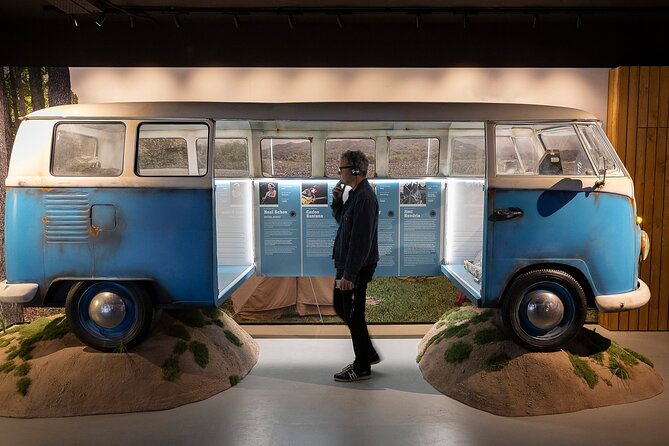
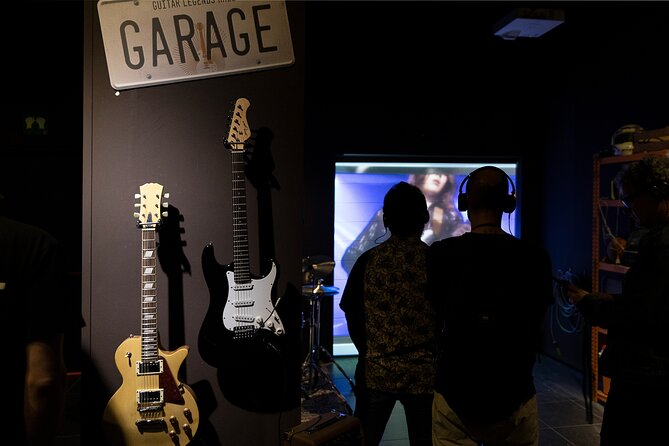
The seventh space places music in a garage, using projections and lights. The garage is a fitting setting for the do-it-yourself side of rock, where rehearsal, experimentation, and raw energy matter more than polished presentation.
The display uses the room itself as part of the story. Lights and projections give the space a less fixed quality than the guitar displays earlier in the visit. It should appeal to you if you like a museum experience that changes around you instead of asking you to stand in front of one object at a time.
This section may be less satisfying if you prefer original objects and detailed labels. The supplied information does not specify which guitars or performers appear in each room, so you should not book this expecting a complete catalog of every instrument on display.
Think of the garage as a bridge. It brings the story back to the act of making music before the final move to the large concert stage.
Holograms of rock legends
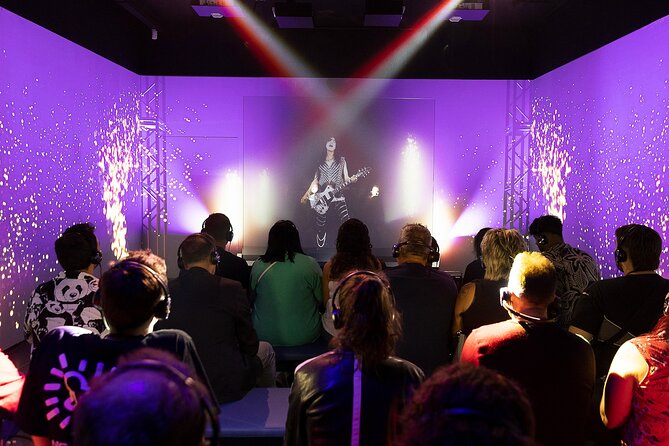
The eighth and final space is an immersive concert with holograms of rock legends. It is the most overtly theatrical part of the visit and provides a clear finish to the journey from blues roots to stadium performance.
Holograms can make a concert feel larger than a normal display, but they also set the tone for the entire experience. Guitar Legends Hall is best understood as a multimedia attraction with museum content, not as a conventional museum devoted only to original artifacts.
That distinction is important when you decide if it suits you. If you want to stand quietly beside rare instruments and read long descriptions, the hologram concert may feel like too much show. If you want music, light, and performance built into the visit, it is likely to be the room you remember.
The final space also ties together the museum’s central idea. The guitar starts as a tool for creating sound and ends as part of a huge public spectacle.
What the audio guide adds
Your admission includes an audio guide in four languages. The activity is listed as offered in English, but the supplied details do not name all four language options, so check the available choice when booking or entering.
An audio guide is especially useful here because the rooms rely on mood as well as objects. It can explain the period behind a guitar, concert program, festival setting, or television display while you look around.
The guide also lets you control your pace. The stated visit length ranges from one to 10 hours, which is unusually broad. In practical terms, you can make this a short stop of about an hour or spend several hours with the displays and audio content. The exact time depends on how closely you examine each room and how long you stay with the interactive sections.
One visitor found it easy to spend a couple of hours inside. I would plan for at least 60 to 90 minutes if you want more than a quick look, with extra time if you are a committed rock fan.
Price, location, and practical value
The stated price is $21.69 per person. The details also label the admission ticket as free, which is inconsistent. Treat $21.69 as the advertised booking price, but confirm the final amount before paying so you know exactly what is included.
The package includes museum entrance and the audio guide. Transport is not included, so you make your own way to Carrer de la Portaferrissa, 16, in Barcelona’s Ciutat Vella. The location is near public transportation, making it practical to combine with other central Barcelona plans.
Value depends on how you use it. At one hour, the price is harder to justify if you are only mildly curious about rock. At two hours or more, with the audio guide and interactive rooms, it becomes a more substantial stop.
There is also a shop with exclusive guitar and rock items. The supplied information does not list prices or specific products, so consider it an optional extra rather than part of the ticket’s value.
Confirmation arrives when you book. Service animals are allowed, and most people can take part. The group maximum is 10, but this is not described as a guided tour led by a named person.
Who will enjoy Guitar Legends Hall?
I would recommend it most to:
- Rock and electric-guitar fans who want a visual account of the genre.
- Music lovers interested in how blues, festivals, records, television, and concerts connect.
- Couples or families looking for a central Barcelona activity that is more active than a standard museum.
- Visitors who enjoy projections, lights, interactive displays, and holograms.
- People with one to several hours available in Ciutat Vella.
I would be more cautious if you dislike loud or theatrical museum settings, or if you want a specialist collection with detailed information on every guitar. The experience uses guitars as its main thread, but it also focuses on the wider culture of the twentieth century.
The positive rating of 4.8 from 25 reviews and the 96 percent recommendation suggest strong approval, though the sample is modest. The clearest praise centers on the number of guitars, the information about musicians, and the interactive displays.
Should you book it?
Book Guitar Legends Hall if you want a lively, compact look at rock culture rather than a silent collection of instruments. The eight rooms give you a logical route from blues and early electric guitar to MTV and hologram concerts, while the audio guide adds background without requiring a live guide.
I would reserve it for a day when you already plan to be in central Barcelona. Rock fans can spend a couple of hours here, while casual visitors can keep it to a shorter stop. If the $21.69 price is confirmed at checkout and you have little interest in rock, compare it with other museums before committing, since the ticket cannot be refunded or changed after purchase.
FAQ
Where is Guitar Legends Hall located?
It is at Rock Museum Barcelona, Carrer de la Portaferrissa, 16, Ciutat Vella, 08002 Barcelona, Spain.
How much does the experience cost?
The stated price is $21.69 per person. The supplied details also label the admission ticket as free, so confirm the final price before booking.
How long does the visit take?
The approximate duration is listed as one to 10 hours. You can make a short visit or spend a couple of hours with the displays and audio guide.
Is an audio guide included?
Yes. The ticket includes an audio guide in four languages.
Is the experience offered in English?
The activity is listed as offered in English. The audio guide is described as available in four languages, though the specific language list is not provided.
How many themed spaces are there?
There are eight themed spaces, covering blues, the 1950s, 1960s festivals, 1970s and 1980s record stores, MTV, a VIP concert room, a projection-filled garage, and a hologram concert.
Is transportation included?
No. Transport is not included. The museum is near public transportation.
Can service animals enter?
Yes. Service animals are allowed.
Can I cancel or change my booking?
No. The experience is non-refundable and cannot be changed for any reason.
Just added around Barcelona
- Girona, Figueres, Dalí Museum and Cadaqués Tour from Barcelona★ 4.5 · 36 reviews
- Dali Museum and Costa Brava Small Group Day Trip from Barcelona★ 5.0 · 77 reviews
- Football Club Barcelona Museum Immersive Tour Guided Visit★ 3.5 · 52 reviews
- Erotic Museum Admission Ticket with Audioguide★ 5.0 · 527 reviews
- Madrid by High-Speed Train with Prado Museum Private Tour★ 4.0 · 33 reviews
- White Rabbit Museum: The Best Immersive Experience in Catalonia★ 5.0 · 538 reviews
- Private Dali Museum, Besalú & Girona Tour from Barcelona★ 5.0 · 15 reviews
- Private tour: Dali Museum in Figueres and Púbol Tour with Hotel pick-up★ 5.0 · 12 reviews
Museum Tours in Barcelona, compared.
Park Güell and Gaudí House Museum Entry Ticket
Read our review →
Moco Museum Barcelona: Modern & Contemporary Art
Read our review →
Girona & Dali Museum Small Group Tour with Pick-up from Barcelona
Read our review →
Barcelona Card: 25+ Museums and Free Public Transportation
Read our review →

Dali Museum, House & Cadaques Small Group Tour from Barcelona
Read our review →Browse the lists this tour appears in