
Review · NEW ZEALAND
Māori Cultural Experience & Auckland Museum General Admission
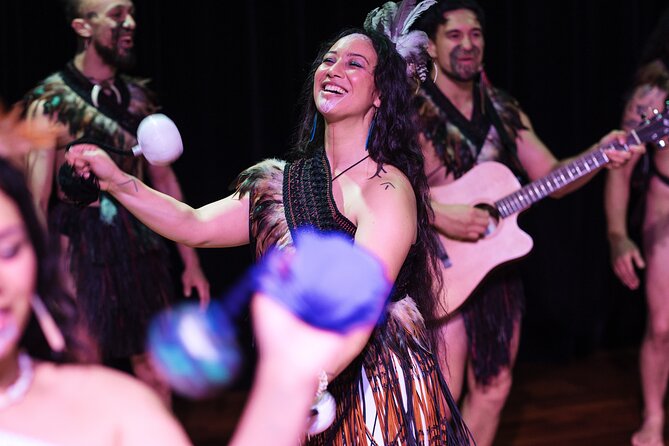
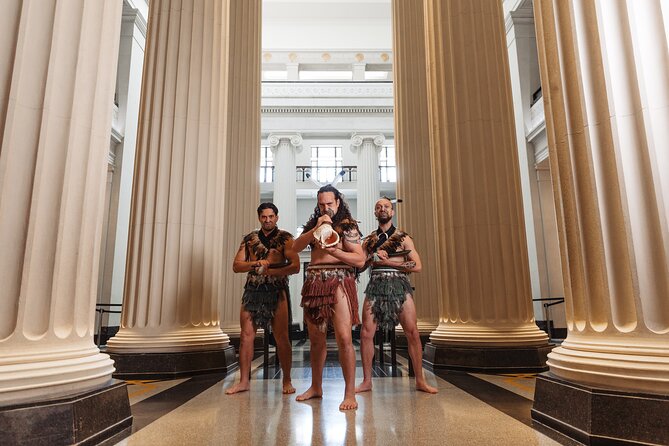
A haka is not simply a dance for visitors to watch. It carries ideas of strength, unity, welcome, identity, and challenge. This Auckland Museum experience explains that context through waiata, poi, storytelling, and movement, followed by time to explore one of New Zealand’s major museums.
I like two things here: the ticket combines the cultural performance with museum admission, and the presentation gives you meaning rather than only spectacle. The main caution is expectation. The performance may last about 30 minutes, and some people find the haka shorter or less forceful than expected. Māori Court and the Pacific Galleries are temporarily closed, too.
Key points to know
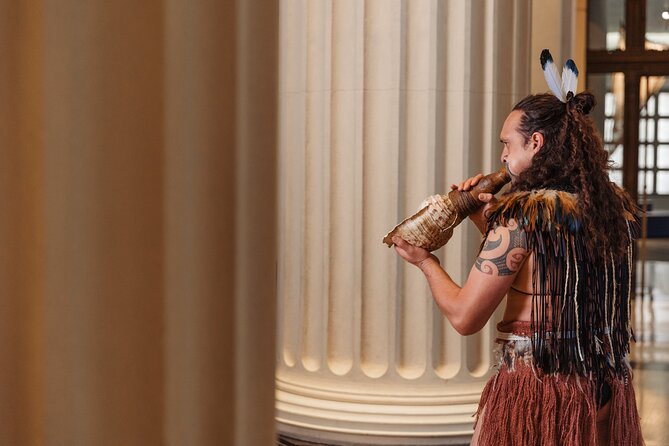
- A 30-minute introduction to Māori culture: Expect songs, poi, storytelling, movement, and an explanation of haka traditions.
- Museum admission is included: You can continue into natural history, New Zealand heritage, and other displays after the performance.
- The haka may be abbreviated: Several visitors wanted a longer or more dramatic haka, so this is a cultural introduction, not a full evening show.
- A useful first stop in Auckland: The performance gives context before you explore the museum’s Māori and New Zealand collections.
- Allow up to three hours: The presentation is short, but the museum can fill much of your day.
- Some galleries are closed: Essential maintenance has temporarily shut the Māori Court and Pacific Galleries.
A haka explained, not simply performed
The strongest part of this experience is its attempt to explain what you are seeing. The artists introduce Māori culture through waiata, or songs, poi work, storytelling, and dance. You also learn about the origins and traditional uses of the haka, including the differences between forms of this well-known ritual.
That context matters. A haka can be treated too easily as a photo opportunity, especially by people who know it only from sports broadcasts. Here, the performance places it within Māori ideas of identity, unity, strength, and endurance. You get a short cultural lesson with movement and music, rather than a silent stage show where you are left to guess at the meaning.
The performance has been described as welcoming, respectful, educational, and moving. Some people have found the singing especially beautiful, while others valued the careful explanation of gestures and implements. The presentation can also create an emotional response, particularly when the performers sing together or deliver the haka with force.
Still, keep the scale in mind. The advertised experience is a short introduction, not a complete study of Māori culture. One performance may include only four artists rather than the larger number some people expect, and the haka may be abbreviated. If you want an extended cultural show with many performance pieces, this may feel slight.
A few more museum visits around the world worth comparing
- Vatican: Museums & Sistine Chapel Entrance Ticket
★ 4.5 · 144,003 reviews - Vatican Museums, Sistine Chapel & St. Peter’s Basilica Tour
★ 4.3 · 73,970 reviews - Paris: Louvre Museum Timed-Entrance Ticket
★ 4.6 · 71,977 reviews
What happens inside Auckland Museum
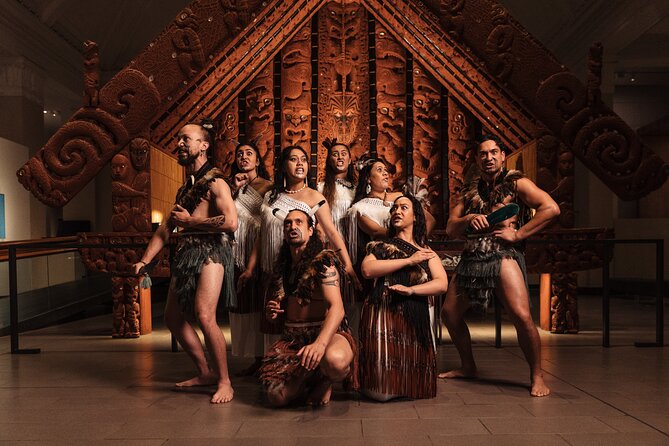
Your starting point is Auckland War Memorial Museum in Parnell. The activity begins and ends at the museum, so you do not move between several distant sites or spend the visit on a bus. The museum sits near public transportation, which makes it a practical stop during an Auckland sightseeing day.
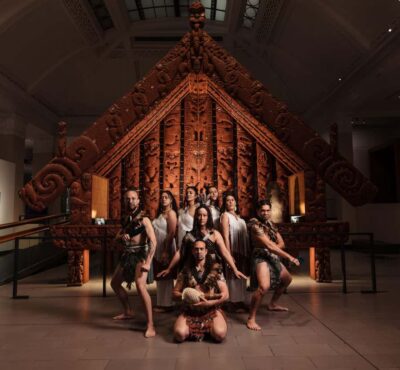
The cultural performance comes first as the main scheduled activity. A group of Māori artists and orators presents songs, poi skills, storytelling, and dance. You hear about Māori endurance through history and learn how these forms connect to cultural practice.
The sequence is useful for first-time visitors. Waiata lets you hear the musical side of the culture. Poi demonstrates skill, rhythm, and controlled movement. Storytelling supplies the background, while the haka gives the presentation its most commanding moment.
The exact balance may vary. Some descriptions of the experience suggest around 45 minutes, while several accounts put the performance closer to 30 minutes. In practical terms, plan on a short presentation and use the rest of your time for the museum. The overall booking window is listed as approximately 45 minutes to three hours.
After the performance, general admission lets you explore the museum’s natural history, New Zealand heritage, and cultural collections. The museum is not an optional add-on. It is part of the value of this ticket, and it gives you a chance to place the performance in a wider New Zealand setting.
Why the museum makes the ticket more useful
I like this combination because the performance alone could feel brief. Museum admission changes the calculation. You can hear an introduction to Māori culture, then spend more time with objects, displays, and New Zealand stories at your own pace.
The museum includes natural history and heritage material, so the visit is not limited to Māori culture. You might also find exhibits about the geological character of New Zealand, wider national history, and war history. That broader mix makes the ticket work well on a first Auckland visit, especially when you want one indoor activity with several subjects under one roof.
The cultural performance can also give your museum visit a clearer starting point. Instead of walking through displays with no background, you begin with ideas about Māori identity, welcome, performance, and continuity. You can then look at later exhibits with more attention to how Māori culture fits into New Zealand life.
There is an important limitation. The Māori Court and Pacific Galleries are temporarily closed for essential maintenance. That affects the parts of the museum most directly connected to the cultural performance. General admission remains included, but you should not book this expecting every Māori and Pacific display to be available.
The closure also makes it more important to check current conditions before you go. The experience still has value, but your museum time may feel different from what you expect if you have visited the museum before or planned around those galleries.
The performance: songs, poi, and storytelling

The presentation’s best feature is its range. You are not shown only one haka. The artists use several forms to introduce culture, which gives you a more balanced first look.
Waiata brings a slower, more reflective element. The singing helps you hear the group’s unity and gives the presentation emotional weight. Some people have wished for English translations of the songs and haka words. The spoken explanations help, but you may not understand every lyric directly.
Poi adds visual energy. The performers show control, timing, and traditional use rather than presenting it as a simple prop trick. The combination of movement and explanation is useful because you see both the skill and the cultural setting.
Storytelling connects the pieces. The orators explain beliefs, practices, and the meaning behind gestures. One of the most useful parts for a first visit is learning that Māori concepts do not always move neatly into English. A good explanation can give you the main idea without pretending that one short translation captures everything.
The tone is generally welcoming and inclusive. You are invited to listen and learn, not treated as though you should already know the customs. That makes this a good introduction for people who have little previous contact with Māori culture.
At the same time, the format is condensed. One person may find the spoken portion too long compared with the dancing, while another may want more history and explanation. This is a short introduction with performance elements, not a detailed lecture or a long theatrical production.
Same city, a completely different collection:
- Amsterdam: Van Gogh Museum Ticket
★ 4.7 · 52,054 reviews - Vatican Museums, Sistine Chapel & St Peter’s Basilica Guided Tour
★ 4.5 · 39,149 reviews - NYC: 9/11 Memorial & Museum Timed-Entry Ticket
★ 4.8 · 31,428 reviews - London: Tower of London and Crown Jewels Exhibition Ticket
★ 4.6 · 28,769 reviews
What to expect from the haka

The haka is the part most likely to shape your opinion of the experience. If you expect a long, thunderous performance like a stadium haka, you may be disappointed. Several accounts describe the haka as brief or abbreviated, and some people felt it was not presented in the way they had expected.
That does not make the haka unimportant. The presentation explains its origins, traditional uses, and differences between forms. The point is to show that haka is not one single routine with one fixed meaning. It can express challenge, welcome, unity, identity, and collective strength.
I would approach this part with respect and curiosity. Watch the facial expressions, posture, rhythm, and group movement. Listen to the explanation before judging the performance by its length. A short haka can still carry meaning, though the experience does not always provide a full translation of the words.
You should also know that the performance is presented for a general museum audience. That means it aims to be accessible to people from many countries. Some viewers find that balance thoughtful and clear. Others find it less raw or less spontaneous than expected. If you want a highly theatrical show built around a dramatic finale, choose your expectations carefully.
Is this a genuine cultural introduction?
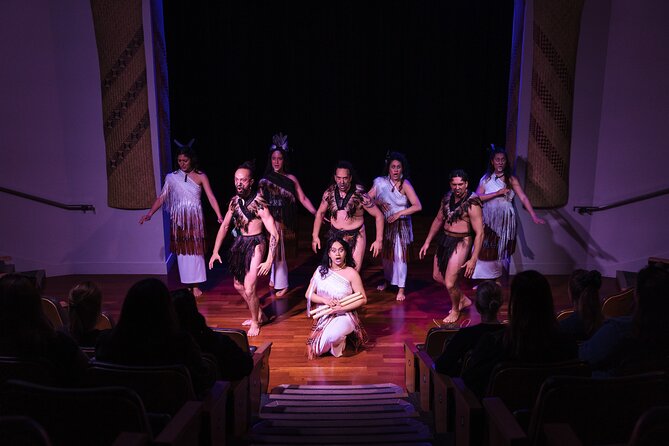
The answer depends partly on what you mean by genuine. The performance is presented by Māori artists and orators and focuses on cultural forms, history, beliefs, and customs. It is not a private community gathering, and it is designed for paying museum visitors. Like any scheduled cultural presentation, it has a set format.
For a first introduction, that format can work well. You receive an explanation of what you see, and the performers preserve the connection between movement and meaning. The strongest parts are the singing, the storytelling, and the effort to explain Māori concepts rather than reduce them to costume and dance.
A few people have questioned the scale or authenticity of the presentation, especially when fewer performers appear than expected or when the haka feels shortened. That is a fair concern to consider before booking. You should not treat a 30-minute museum presentation as a full account of Māori life or as a substitute for longer cultural programs elsewhere in New Zealand.
The respectful approach is to listen, avoid demanding spectacle, and remember that the performers are presenting their culture on their own terms. The experience works best when you see it as an introduction that can lead you to further learning, not as a complete answer.
Value at $38.48

At $38.48 per person, the price is easier to justify because general museum admission is included. You receive two related activities: a scheduled Māori performance and access to the museum’s permanent displays.
The value depends on how you use the museum portion. If you attend the performance and leave immediately, the ticket may feel expensive for a short show. If you stay for natural history, New Zealand heritage, and the wider museum collections, the package becomes a more sensible half-day option.
The ticket can also save time and money compared with arranging separate admission through the museum. One account found the combined booking quicker and cheaper than buying through the museum website. Still, prices and conditions can change, so check the current amount when booking.
I would not choose this solely because it is inexpensive. I would choose it because the performance gives your museum visit a human and cultural starting point. That added context is the real value.
Who should book this experience
This is best for you if you are visiting Auckland for the first time and want a clear, respectful introduction to Māori culture. It suits people who enjoy explanation as much as spectacle, and it works well for families and mixed groups with different interests because the museum offers more than one subject.
It is also a strong choice if you want an indoor activity near central Auckland and would like to spend several hours at one location. The museum can fill the rest of your visit after the performance.
You may want another option if your main goal is a long haka show, a large cast, or a performance lasting well beyond 30 minutes. The presentation may not meet that expectation. It is also less complete while the Māori Court and Pacific Galleries are closed.
I would be cautious about booking if you have already studied Māori culture in depth and want new material rather than an introductory overview. You may still enjoy the singing and movement, but the spoken content is aimed at a broad audience.
Practical details that affect your day
Confirmation is sent within 48 hours of booking, subject to availability. The activity has a minimum number of participants, so a cancellation for that reason may lead to another date or experience, or a full refund.
You can cancel for a full refund up to 24 hours before the start time. Changes or cancellations inside that 24-hour window are not accepted for a refund. The cut-off follows local Auckland time.
The meeting and ticket redemption point is Auckland War Memorial Museum in Parnell, Auckland 1010. The experience finishes at the same location. It is near public transportation, service animals are allowed, and most people can take part.
There are no guided museum tours included, and special ticketed exhibitions cost extra. General admission covers the museum’s standard displays, not every temporary or paid exhibition.
I would allow at least two hours if you want to attend the performance and see a useful portion of the museum. Allow up to three hours if you prefer a slower visit. Since the performance may finish in about 30 minutes, do not confuse the short show with the total time available at the museum.
My call: book it for context, not spectacle
I recommend this experience for a first Auckland visit, particularly if you already plan to see Auckland Museum. The performance adds songs, movement, and cultural explanation, while the admission gives you enough museum time to make the price work.
Book it with realistic expectations. You are getting a short, structured introduction, not an extended haka production or a complete portrait of Māori culture. The temporary closure of the Māori Court and Pacific Galleries is another reason to check current conditions.
If you listen closely, the experience can give you a respectful starting point for understanding Māori traditions and New Zealand identity. If all you want is a dramatic performance, spend your money elsewhere. If you want a thoughtful introduction paired with a substantial museum visit, this is a practical choice.
FAQ
Where does the Māori Cultural Experience take place?
It takes place at Auckland War Memorial Museum in Parnell, Auckland 1010, New Zealand. The activity also ends back at the museum.
What does the cultural performance include?
The presentation includes waiata, poi, storytelling, dance, and information about the origins, traditional uses, and differences of the haka.
Is Auckland Museum admission included?
Yes. General admission to Auckland Museum is included with the Māori Cultural Performance ticket.
Are special exhibitions included?
No. Special exhibitions that require a separate ticket are not included.
Are guided museum tours included?
No. The booking includes general museum admission, but not guided tours.
How long does the full experience take?
The approximate duration is 45 minutes to three hours. The cultural presentation itself may last about 30 minutes, leaving the rest of the time for the museum.
Which museum galleries are temporarily closed?
The Māori Court and Pacific Galleries are temporarily closed because of essential maintenance work.
Is the haka included?
The experience includes an explanation of the haka and a haka performance element. The presentation may use an abbreviated haka, so it may not match expectations of a long, full-scale haka show.
Is the experience near public transportation?
Yes. The meeting point is near public transportation.
Can I cancel for a full refund?
Yes, if you cancel at least 24 hours before the experience start time. Cancellations or changes made less than 24 hours before the start time are not accepted for a refund.
Just added around the world
- Girona, Figueres, Dalí Museum and Cadaqués Tour from Barcelona★ 4.5 · 36 reviews
- Football Club Barcelona Museum Immersive Tour Guided Visit★ 3.5 · 52 reviews
- Erotic Museum Admission Ticket with Audioguide★ 5.0 · 527 reviews
- Dali Museum and Costa Brava Small Group Day Trip from Barcelona★ 5.0 · 77 reviews
- White Rabbit Museum: The Best Immersive Experience in Catalonia★ 5.0 · 538 reviews
- Madrid by High-Speed Train with Prado Museum Private Tour★ 4.0 · 33 reviews
- Guitar Legends Hall: Entrance to the Immersive Rock Museum★ 5.0 · 25 reviews
- Private Dali Museum, Besalú & Girona Tour from Barcelona★ 5.0 · 15 reviews
Museum Tours in New Zealand, compared.

Explore gardens & galleries filled with incredible art, Matakana
Read our review →
Skip the Line: Auckland Museum General Admission Ticket
Read our review →
Māori Cultural Experience & Auckland Museum Admission
Read our review →
Browse the lists this tour appears in