
Review · ATHENS
Private 4-hour Walking Tour of Acropolis and Acropolis Museum in Athens
The smartest part of this Athens tour is the order: you begin at the Acropolis Museum, where the statues and temple pieces make sense, then climb to the hill and see the actual monuments above the city. That sequence turns scattered marble ruins into a story you can follow.
I like the private format, which lets your guide slow down for questions or adjust the pace for your group. I also like the included admission to both sites, since you avoid sorting out tickets and can focus on the Parthenon, Erechtheion, and the museum’s superb fifth-century sculpture.
The main consideration is the price, $383.55 per person, which is a serious investment. The tour also involves a steady uphill walk on ancient surfaces, so bring water, wear practical shoes, and allow more time if anyone in your group needs frequent pauses.
Key points to know before booking
- The museum comes first: See original sculptures, inscriptions, and architectural pieces before visiting the hill itself.
- You get a private English-speaking guide: Past guides have included Anna, Kathy, Ioanna, Maria, and Nikos.
- Admission is included: Tickets cover the Acropolis and Acropolis Museum.
- The tour lasts about four hours: The route covers the museum, Acropolis entrance, Parthenon, Propylaea, Athena Nike, Erechtheion, and smaller remains.
- You meet at the Acropolis Museum: Pickup can be offered, but transportation is not included.
- The pace can suit your party: A small private group makes it easier to ask questions and discuss mobility limits.
Why starting at the Acropolis Museum makes sense
Meet your guide in front of the Acropolis Museum on Dionysiou Areopagitou Street. This is a useful starting point because the museum provides the visual background you need before facing the actual ruins. You first see the sculptures in a controlled setting, then recognize their counterparts and architectural homes on the Acropolis.
The museum’s permanent collection is arranged by place and period. On the Acropolis Slopes section, you’ll find everyday objects, pottery, reliefs, and offerings. These are not as famous as the Parthenon sculptures, but they help you picture the hill as a lived-in sacred area rather than a pile of isolated temples.
The Archaic gallery brings you face to face with works made before the Persian Wars. Look for the Moskophoros and the collection of korai, the carved female figures once dedicated at the sanctuary. Your guide can explain their stiff poses, patterned clothing, and painted surfaces, details that are easy to miss if you simply walk past the display cases.
The Parthenon gallery is the museum’s central prize. Here you see parts of the frieze, metopes, and pediments, along with inscriptions connected to the temple. The building itself was designed with the Parthenon’s orientation and proportions in mind, and excavated remains beneath the museum are visible through sections of the floor.
That design choice gives the museum a strong sense of place. You are not just looking at objects removed from the hill. You can connect the carved marble to the temples, processions, religious ceremonies, and political ambitions that shaped ancient Athens.
The collection also includes material from the Propylaea, Temple of Athena Nike, and Erechtheion. A final section covers the period from the fifth century BC through the fifth century AD, including Classical, Hellenistic, and Roman sculpture, reliefs, inscriptions, and portraits.
One hour is allocated to the museum. That is enough for a guided introduction to the major galleries, but not enough to study every case. If you already know you want extra museum time, ask your guide at the start how the four hours will be divided.
More Museum Tours in Athens
- Athens: Acropolis, Parthenon & Acropolis Museum Guided Tour
★ 4.8 · 9,316 reviews - The Acropolis, Parthenon & Acropolis Museum Guided Tour
★ 4.7 · 8,493 reviews - Athens: Mythology of Delphi, Museum and Arachova Guided Tour
★ 4.7 · 5,102 reviews
Walking up to the Acropolis
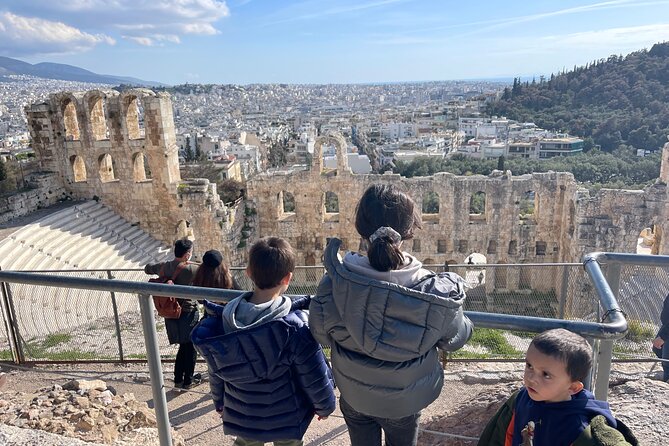
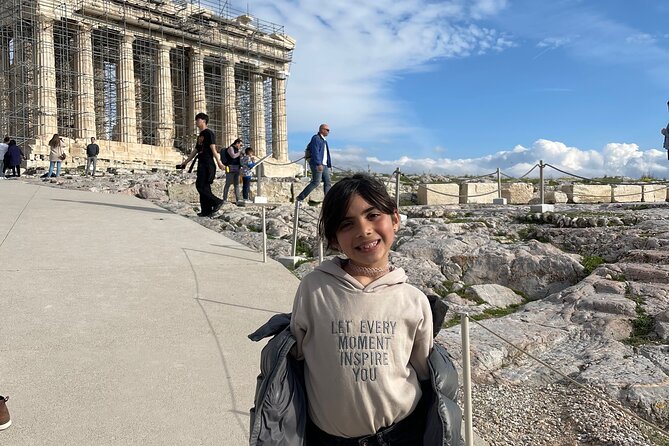
From the museum, you continue on foot toward the Acropolis. The hill rises 156 meters above sea level, and the approach is not a flat city stroll. You’ll walk uphill and across uneven ancient surfaces, with pauses at important remains along the route.
The private setup matters here. A guide can stop to explain a fragment of a wall or a foundation instead of rushing your group to the most famous temple. At the same time, four hours passes quickly, so you should expect highlights and interpretation rather than a slow archaeological survey of every stone.
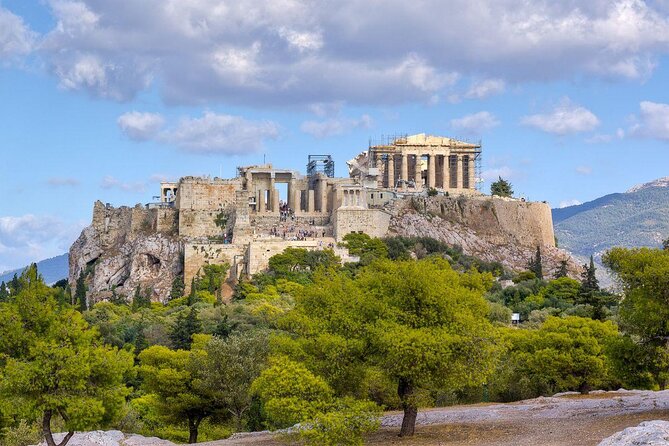
The Acropolis has served as a sacred and fortified enclosure tied to Athens’ myths, festivals, and political life. Its monuments were built at different times, then altered, damaged, reused, and repaired. Restoration has continued since modern Greece gained independence, so scaffolding or repair work can be part of the view.
The Beulé Gate and the first approach
The Beulé Gate is the current access point on the west side of the Acropolis, just beyond the Propylaea. It dates from the third century AD and was likely built to strengthen the sacred precinct after the Herulian invasion.
The gate is framed by two rectangular towers made partly from reused building material. One piece came from the choregic monument of Nikias, a late fourth-century BC structure once located on the southern slope. This kind of reuse gives you a quick lesson in how ancient monuments were altered over time.
The gate takes its name from the French archaeologist who investigated it in 1852. It is easy to hurry through this area, but your guide can point out the inscription set into the wall and explain why the entrance looks more like a defensive gateway than a grand ceremonial approach.
The Propylaea and Temple of Athena Nike
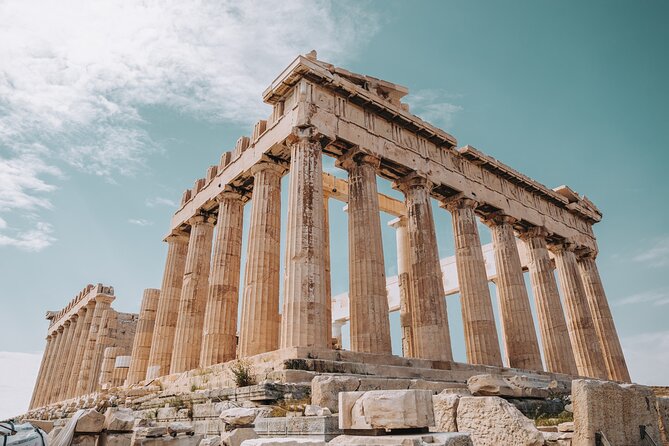
The Propylaea were the monumental entrance to the Acropolis, built under Pericles between 437 and 431 BC. Architect Mnesicles designed the porticoes to resemble the fronts of Doric temples, while Ionic columns supported the inner structures.
As you pass through, notice the broad central opening that allowed processions and vehicles to enter. The gate replaced an earlier entrance from the time of Peisistratus, giving the western approach a more imposing scale.
The small Temple of Athena Nike sits on a bastion beside the entrance. Built between 426 and 421 BC, it replaced earlier temples and honored Athena as a bringer of victory. Its Ionic design is more delicate than the heavier Doric Parthenon.
The temple’s frieze showed gods, battles between Greeks and Persians, and conflicts between Greek forces. The southern side referred to the Athenian victory at Marathon in 490 BC. Only part of the sculpture remains in place, with important pieces displayed in the museum.
The listed visit gives about 15 minutes here. That is enough for the guide to explain the temple’s role and point out its position above the entrance, but you won’t have long to linger over every carved fragment.
More Acropolis Museum visits:
- Athens: Acropolis, Parthenon & Acropolis Museum Guided Tour
★ 4.8 · 3,579 reviews - Acropolis monuments & Parthenon Walking Tour with Optional Acropolis Museum
★ 5.0 · 2,678 reviews - Athens All Included: Acropolis and Museum Guided Tour with Ticket
★ 4.5 · 2,673 reviews - Athens: Acropolis Museum Ticket with optional Audio Guide
★ 4.4 · 2,652 reviews
The Parthenon, Athens’ great symbol
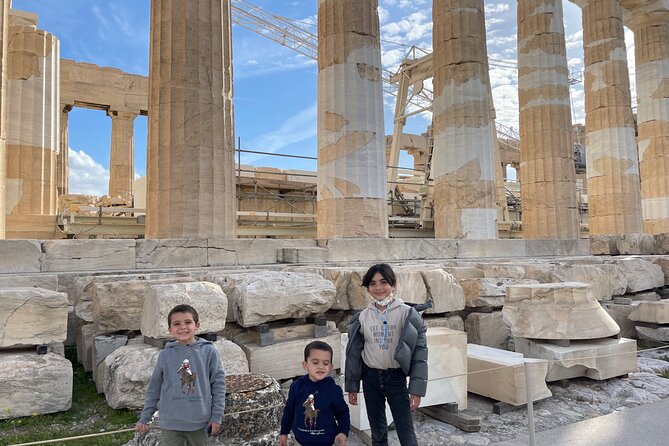
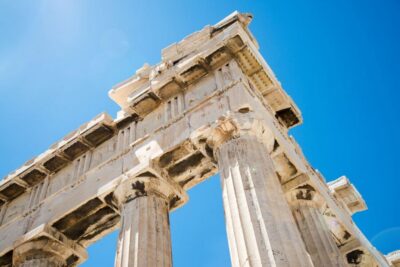
The Parthenon receives about 20 minutes, and this is where the tour’s earlier museum visit pays off. You have already seen parts of its decoration, so the columns and surviving structure are easier to understand.
Built between 447 and 432 BC, the temple was dedicated to Athena and designed to hold a colossal statue of Athena Parthenos made of wood, ivory, and gold. The statue was about 12 meters tall and has not survived.
The Parthenon is often treated as a perfect, untouched symbol of classical architecture. In person, you see something more complicated and more interesting: a monument with missing sculpture, active restoration, weathered marble, and a long record of change.
Your guide can help you separate the building’s original purpose from its later reputation. The temple was part of a larger sacred complex, not a freestanding object. Its relationship to the hill, the city, and the other sanctuaries is part of what makes the view memorable.
Because the Parthenon attracts intense attention, a private guide is useful for keeping the visit focused. You can ask about the sculpture, construction, religious purpose, or restoration without trying to hear a guide speaking to a large crowd.
Smaller sites that many people miss
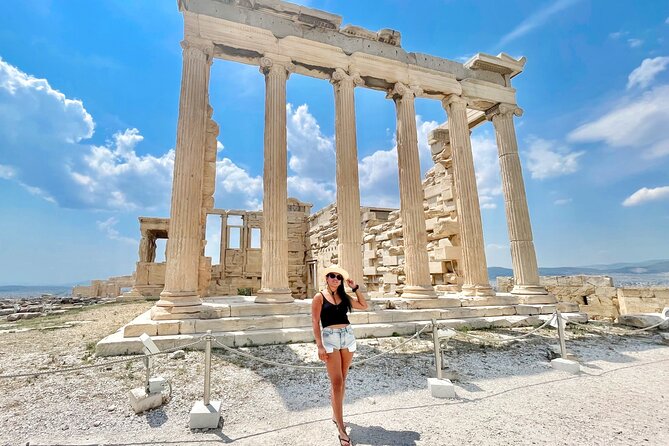
The Sanctuary of Artemis Brauronia lies south of the Propylaea. It honored Artemis as a protector of women before and after childbirth and probably worked alongside the goddess’s larger sanctuary at Brauron in Attica.
The sanctuary was founded in the middle of the sixth century BC. Its main structure was a pi-shaped Doric stoa with enclosed wings for sacred treasures. Today, mainly foundation cuts in the bedrock remain. Your guide’s explanation is important here because the surviving stones do not immediately reveal the original layout.
Nearby is the Temple of Rome and Augustus, a small circular building from the late first century BC. The city of Athens dedicated it to the goddess Rome and Octavian Augustus. Its single ring of nine Ionic columns and white marble roof represented Roman power within an older Greek sanctuary.
The Monument of Agrippa is easier to miss because only its tall pedestal survives. It originally honored Eumenes II of Pergamon after a chariot-race victory at the Panathenaic Games. Around 27 BC, the city dedicated a replacement quadriga to Marcus Agrippa.
These stops may sound secondary beside the Parthenon, but they show how the Acropolis continued to carry meaning long after its Classical building program. They also give your guide opportunities to explain political change, religious practice, and the reuse of sacred space.
The Erechtheion and its famous Caryatids
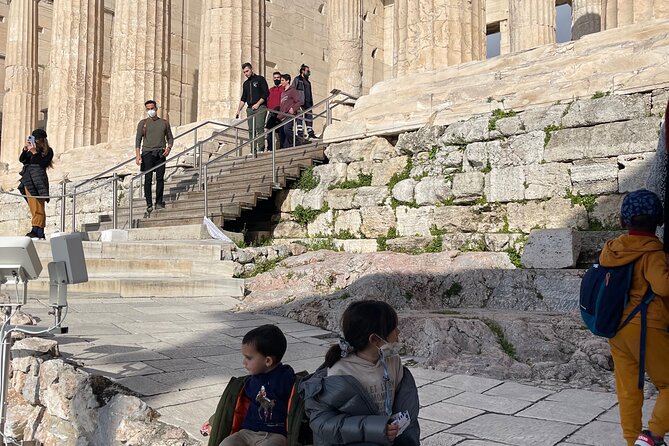
The Erechtheion is one of the most unusual buildings on the hill. Unlike the balanced Parthenon, it had to fit uneven ground and preserve several older sacred places, including areas linked to Poseidon, Hephaestus, and the legendary Erechtheus.
Its two major porticoes have different designs. Tall Ionic columns support the northern and western areas, while the southern porch is held by six female figures known as Caryatids.
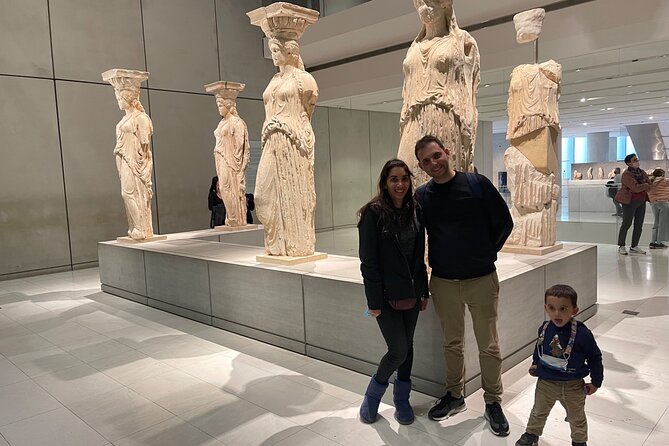
The Caryatids are among the most recognizable figures on the Acropolis, but the full story is more complicated than the familiar postcard view. Several originals are now protected in the museum, while the figures visible on the monument are copies. Seeing the museum first helps you understand what you are looking at outside.
The Erechtheion receives about 15 minutes in the planned route. That is a short visit for such a complex building, but your guide can focus your attention on the uneven plan, the sacred functions, and the Caryatid porch.
What the private format adds
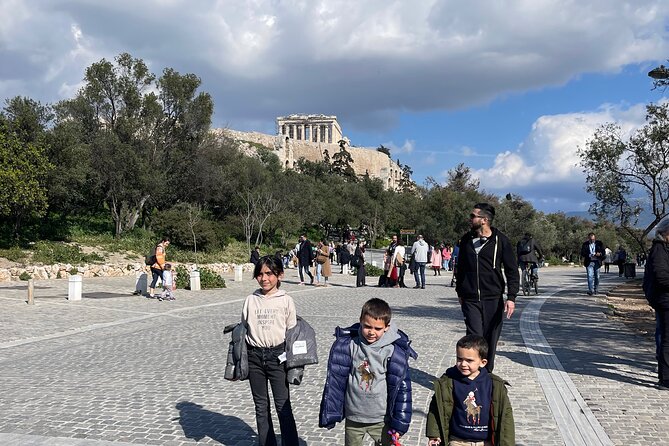
A private four-hour tour works best if you want interpretation rather than a quick checklist. You have one guide for your group, with no strangers competing for the guide’s attention. Past guides have included Anna, Kathy, Ioanna, Maria, and Nikos, and the strongest feedback focuses on their friendly manner, clear explanations, and ability to adjust the pace.
That flexibility is especially helpful for mixed groups. One past group included people with different physical limits, and the guide adjusted the walk with frequent stops. You should still be prepared for uphill walking, stairs, and uneven ground, but you can discuss limitations at the beginning rather than trying to keep up with a fixed group.
The private format also gives you room to ask the questions that interest you. One person may want mythology, another may care about engineering, and someone else may want to understand the damage and restoration. A good guide can move between those subjects without forcing everyone into a set script.
The tour is offered in English. A minimum of two people is required, and only your party participates.
Price, meeting point, and practical value
At $383.55 per person, this is not a low-cost Acropolis visit. The value comes from the private guide, included admission to both major sites, and the chance to cover the museum and hill in a single organized visit.
For two people, the price buys a very personal experience but may feel high compared with joining a group tour. For a family or small party, group discounts may improve the calculation. The tour is most worthwhile if you want historical context, dislike managing tickets, or have limited time in Athens.
The meeting point is in front of the Acropolis Museum, at Dionysiou Areopagitou 15. Pickup may be offered at a nearby place, but transportation is not included. Confirm the exact meeting instructions before setting out, since the museum area has several entrances and busy pedestrian routes.
Bring water. You can buy water near the Acropolis, but it is better not to rely on finding a shop at the moment you need one. Wear shoes with a secure sole, and avoid planning another demanding activity immediately afterward if your group prefers a relaxed pace.
Free cancellation is available up to 24 hours before the start time. A cancellation made less than 24 hours ahead is not refundable, and late changes are not accepted.
Who should book this Acropolis tour?
I would choose this tour for a couple, family, or small group that wants a guide’s help with both the museum and the ruins. It is also a good fit if ancient mythology feels confusing, since the museum’s sculptures and the hill’s temples make more sense when someone connects them.
You may want another option if your main goal is the lowest possible price, if you prefer spending several hours alone in the museum, or if a four-hour uphill walking route is too demanding. The planned schedule is full, and the museum portion may feel brief for serious art and archaeology fans.
Should you book it?
Book this private tour if you want the Acropolis explained, not just photographed. The strongest reasons are the museum-first sequence, included admission, small-group attention, and guides who can adapt the pace.
At $383.55 per person, you are paying for focus and convenience rather than cheap entry. If that fits your budget, four hours gives you a well-shaped introduction to Athens’ most important ancient site, with enough context to make the marble ruins feel human and connected.
FAQ
How long does the tour last?
The tour lasts approximately four hours.
Where does the tour begin?
It begins at the Acropolis Museum, at Dionysiou Areopagitou 15 in Athens. Your guide will meet you in front of the museum or at a nearby place.
Where does the tour end?
The activity ends back at the meeting point.
Is admission included?
Yes. Admission to the Acropolis and entrance to the Acropolis Museum are included.
Is the tour private?
Yes. Only your group participates in the private activity.
How many people are required to book?
A minimum of two people is required per booking.
What language is the tour offered in?
The tour is offered in English.
Does the tour include transportation?
No. Transportation is not included. Pickup may be offered, but the stated meeting point is the Acropolis Museum.
Is food or drink included?
No. Food and drinks are not included. You should bring water for the uphill walk.
Can I cancel for a full refund?
Yes, if you cancel at least 24 hours before the experience begins. Cancellations made less than 24 hours ahead are not refunded.
More Walking Tours in Athens
- The Acropolis, Athens Walking City Tour and Acropolis Museum
★ 5.0 · 442 reviews - Acropolis & Parthenon Walking Tour with Optional Acropolis Museum
★ 4.5 · 39 reviews - Acropolis and Acropolis Museum (Small Group Afternoon Walking Tour)
★ 5.0 · 26 reviews - Acropolis & Acropolis Museum (Small Group Morning Walking Tour)
★ 5.0 · 23 reviews
Just added around Athens
- Ancient Athens tour: Acropolis, Parthenon and Acropolis Museum★ 5.0 · 256 reviews
- The Acropolis, Athens Walking City Tour and Acropolis Museum★ 5.0 · 442 reviews
- Athens: Acropolis Museum Ticket with Self-Guided Audio tour App★ 3.5 · 40 reviews
- Family Acropolis & Acropolis Museum Tour inspiredby Percy Jackson★ 4.5 · 40 reviews
- Acropolis of Athens, Parthenon and Acropolis Museum private tour with dinner★ 5.0 · 77 reviews
- Shore Excursion: Acropolis, Athens City tour and The New Acropolis Museum★ 4.5 · 30 reviews
- Athens National Archaeological Museum E-Ticket with Audio Guide★ 3.0 · 57 reviews
- Private Tour: Half day Athens Sightseeing and Acropolis Museum★ 4.5 · 28 reviews
Museum Tours in Athens, compared.
Acropolis, Parthenon & Acropolis Museum Guided Tour
Read our review →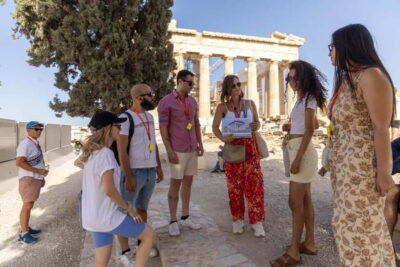
The Acropolis, Parthenon & Acropolis Museum Guided Tour
Read our review →Acropolis, Parthenon & Acropolis Museum Guided Tour
Read our review →
Acropolis monuments & Parthenon Walking Tour with Optional Acropolis Museum
Read our review →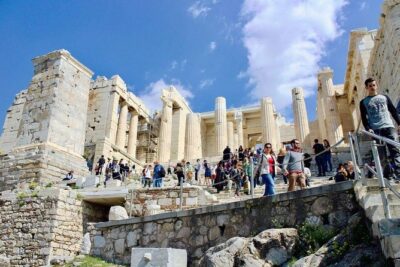
Athens All Included: Acropolis and Museum Guided Tour with Ticket
Read our review →
Acropolis Museum Ticket with optional Audio Guide
Read our review →
Small-Group Delphi, Museum & Arachova Day Trip
Read our review →
Delphi Oracle & Museum Tour with a Licensed Guide
Read our review →Browse the lists this tour appears in