
Review · ATHENS
Acropolis of Athens, Ancient Agora and the Agora Museum Tour
The best thing about this Athens walk is the way it connects two sides of ancient life. The Acropolis shows power, religion, and art, while the Ancient Agora reveals where civic life, trade, debate, and daily business took place. With a good guide, you are not just looking at broken columns. You learn what each place was for and why it still matters.
I like the clear progression from the Acropolis to the Agora, and I like that the tour includes the small Museum of the Ancient Agora rather than stopping at the open-air ruins. Guides such as Pam, Tina, Helen, Hermes, Eli, and Angeliki have been praised for turning difficult history into stories you can follow. The main drawback is the physical effort: this is a real walking tour with steep ramps, uneven stones, heat, and little shade.
Key points to know before booking
- The Acropolis comes first at 10:30 am, with the Agora scheduled for about 1 pm.
- Entrance tickets may be separate, and the correct tickets must be arranged before the tour if you select the without-ticket option.
- The route includes steep climbs and slippery ancient stones, so sturdy shoes matter.
- Security can add 30 minutes or more during the busiest periods.
- Groups can reach 24 people, large enough to affect how easily you hear the guide.
- A baby pouch is more practical than a stroller, since strollers are not allowed on the Acropolis and there is no cloakroom at the side entrance.
Starting below the Acropolis at 10:30 am
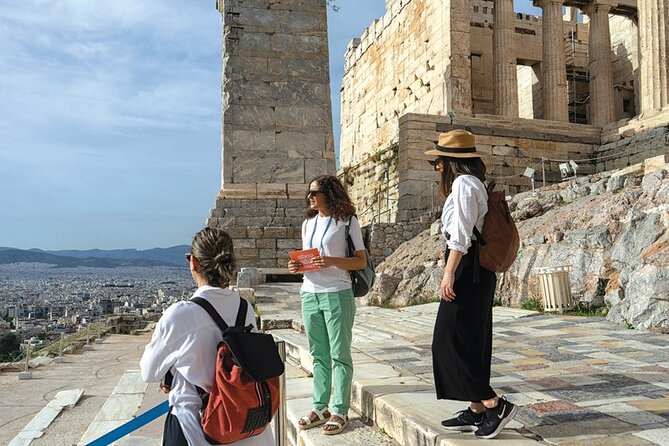
The meeting point is at Dionysiou Areopagitou 3, near the Acropolis pedestrian zone. This is a sensible place to begin because the Acropolis forms an immediate backdrop, and the route starts with the city’s biggest sight rather than saving it for the end.
You should arrive early. Strict Acropolis entry times mean the group cannot wait for late arrivals, and no refund is offered if you miss the start. One past booking also had a time problem shown online, so check your voucher and local Athens time carefully before setting out.
The tour is offered in English and is led by a licensed local guide. You also receive an Athens map and guide magazine, useful for marking places you may want to revisit later. There is no hotel pick-up, so plan your own way to the meeting point using Athens public transportation or a short walk from your accommodation.
More Museum Tours in Athens
- Athens: Acropolis, Parthenon & Acropolis Museum Guided Tour
★ 4.8 · 9,316 reviews - The Acropolis, Parthenon & Acropolis Museum Guided Tour
★ 4.7 · 8,493 reviews - Athens: Mythology of Delphi, Museum and Arachova Guided Tour
★ 4.7 · 5,102 reviews
The Acropolis: one hour above Athens
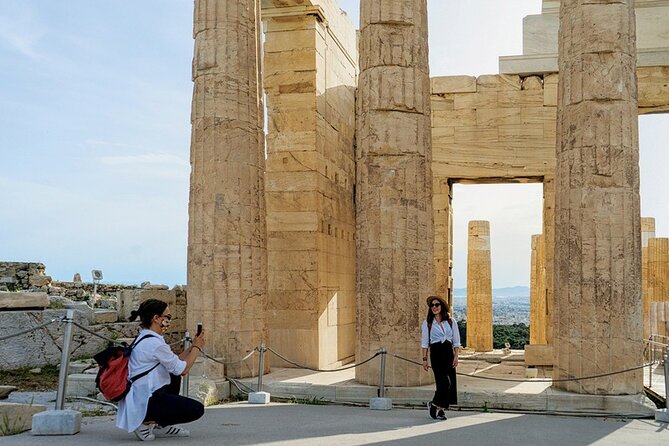
The first major section covers the Acropolis and its monuments. The route includes the Parthenon, the Temple of Athena Nike, the Dionysus Theater, the Herod Atticus Odeon, and other features of the hilltop complex.
The Acropolis is much easier to understand when someone explains the layout. Without context, the hill can feel like a series of marble fragments and scaffolding. A guide can point out how the monuments relate to one another and explain their role in Athenian religious and public life.
The Dionysus Theater is especially useful as an opening stop. It reminds you that ancient Athens was not only a place of temples and military power. Drama was part of public culture, and the theater gives the Acropolis visit a human scale before you climb toward the monuments above.
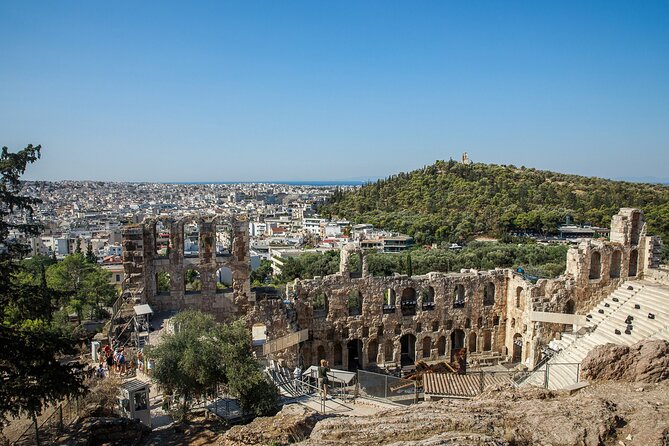
The Herod Atticus Odeon adds another layer. Its preserved form makes it easier to picture performance spaces in the ancient city, even though the Acropolis is usually dominated by the Parthenon in photographs.
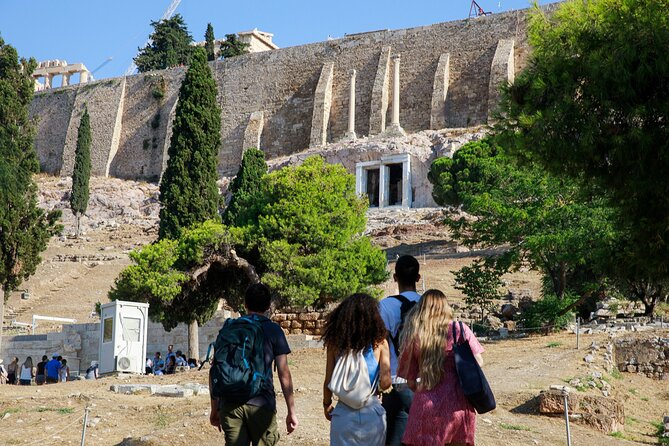
Expect a steady walk uphill, rough paving, steps, and exposed sun. Guides have made a point of finding shade where possible, but there is no way to turn this into a cool indoor visit. In hot weather, bring more water than you think you need. Several people have found two liters per person a sensible target for a warm day, along with a hat, sunscreen, and comfortable sports shoes.
The Parthenon and the views from the summit
The Parthenon receives about 30 minutes of focused attention. That is enough time to study the building, hear its story, and take photographs without spending the entire morning in one spot.
The view is part of the experience. From the top, you see Athens spreading out below, with the city’s modern scale set against the ancient hill. A strong guide will help you connect the building to the wider development of Greek civic thought, art, education, and public life.
The most praised guides have done more than list dates. Stavros, Eli, Tina, Sissy, and Angeliki were singled out for explaining how ancient ideas continue to affect the modern world. That approach gives the Parthenon more meaning than a quick recitation of construction facts.
You should still make room for your own photographs. The pace generally allows time to stop, look, and take pictures, but this is a shared walk rather than a private photo session. If you want long stretches alone with the view, plan to return independently after the tour.
Take care on the stone surfaces. Ancient paving can be slick, especially on slopes and worn steps. This is one place where sandals with poor grip can become a bad choice.
The walk down toward the Ancient Agora
After the Acropolis, the group moves through the historic center toward the Ancient Agora. The timing aims for an Agora arrival at about 1 pm, though the exact pace can vary with security lines, group movement, and the heat.
This break between sites matters. The Acropolis focuses on the ceremonial and symbolic side of Athens. The Agora gives you the working city below. You begin to see how religion, politics, commerce, and ordinary public life fitted together.
The four-hour schedule is efficient, but it is not leisurely. By the time you reach the Agora, you may already have spent close to two hours in sun and on stone. One guide may keep the group moving at a comfortable pace, while another may give longer explanations. The strongest feedback points to guides who adjust for people struggling with the climbs, but you should still judge your own energy honestly.
There is no food or drink included. Bring water and a small snack, especially if you are combining the tour with more sightseeing afterward.
More Acropolis Museum visits:
- Athens: Acropolis, Parthenon & Acropolis Museum Guided Tour
★ 4.8 · 3,579 reviews - Acropolis monuments & Parthenon Walking Tour with Optional Acropolis Museum
★ 5.0 · 2,678 reviews - Athens All Included: Acropolis and Museum Guided Tour with Ticket
★ 4.5 · 2,673 reviews - Athens: Acropolis Museum Ticket with optional Audio Guide
★ 4.4 · 2,652 reviews
The Ancient Agora: where Athenian life happened
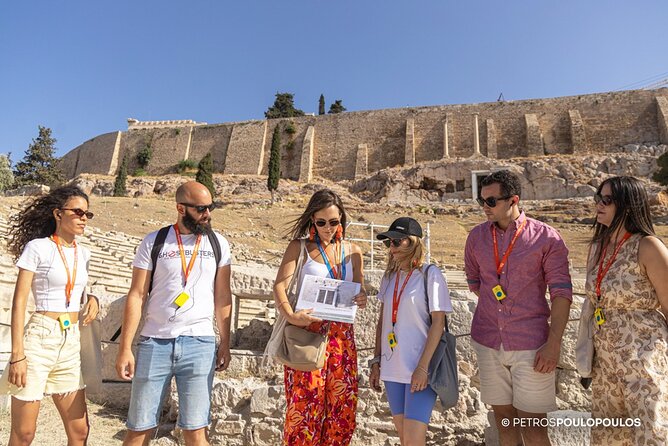
The Ancient Agora section lasts about an hour and is one of the best reasons to choose this experience instead of an Acropolis-only walk. Located at Adrianou 24, the site helps explain how the city functioned beyond its famous temples.
The Agora was a public center, so the remains connect more directly to daily civic life. Your guide can help you picture the setting as more than foundations and scattered stones. The value here lies in the interpretation: the ruins make sense when you understand how people gathered, conducted business, discussed public matters, and took part in the city’s institutions.
Several guides have been praised for explaining the origins of democracy and the way ancient Greek ideas shaped later Western society. That does not mean the ancient system was modern or equal in the way we use those words today. It does mean the Agora gives you a useful place to examine how public decision-making developed.
You also have time to visit the Temple of Hephaestus within the Agora area. Its survival makes it easier to grasp the scale and design of ancient religious buildings than the more damaged remains elsewhere.
The Agora is less physically demanding than the Acropolis in some places, but you still walk on uneven ground. The open setting can also be hot. If you are already tired from the hilltop, sit when you can and listen closely rather than trying to keep moving through every corner.
The Museum of the Ancient Agora in 30 minutes

The final stop is the Museum of the Ancient Agora, located at 24 Adrianou. The visit lasts about 30 minutes, which gives you a compact look at objects connected with the site.
This museum helps fill in details that ruins cannot show. After seeing foundations, streets, and temples outdoors, you can use the indoor displays to understand the people and activities behind them. The shorter visit keeps the tour from becoming an all-day museum program, which will suit anyone who wants the main archaeological story without spending hours indoors.
There is one practical warning: the museum has been closed for renovations at times. Check current operating conditions before you count on seeing the collection. The Ancient Agora itself remains worthwhile, but a closure can change the balance of the final part of the tour.
Some people find the museum less memorable than the Acropolis and Agora. I see it as a useful finishing piece rather than the main event. If you are tiring by this stage, focus on the displays your guide highlights and save extra museum time for another visit if the site allows it.
What the guides add to the experience
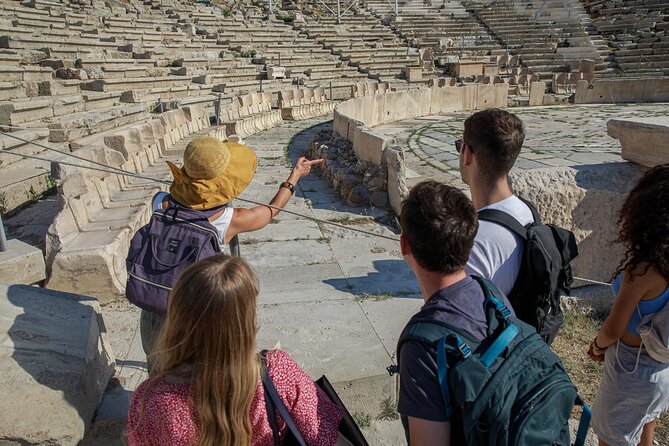
The guide is the most important variable here. The strongest experiences have come from guides who combine facts with clear storytelling and who answer questions without losing the group.
Pam has been praised for her historical detail and kindness. Tina connected the monuments with each person’s own background and kept the pace comfortable. Helen brought strong enthusiasm and an impressive command of the subject, while Hermes was described as a careful guide and a good storyteller.
Other guides, including Amaryllis, Eli, Sissy, Stavros, Daphne, Angeliki, and Costas, were valued for making the ancient world easier to picture. Angeliki’s archaeology background added another level of detail, while Eli placed ancient Greek ideas in a modern context.
The experience is not identical with every guide. One account found the explanation too repetitive, and another found the detail more extensive than preferred, especially in the heat. If you like history and questions, that level of detail may be a benefit. If you want a quick photo stop at each monument, four hours may feel long.
Tickets, security, and the real price
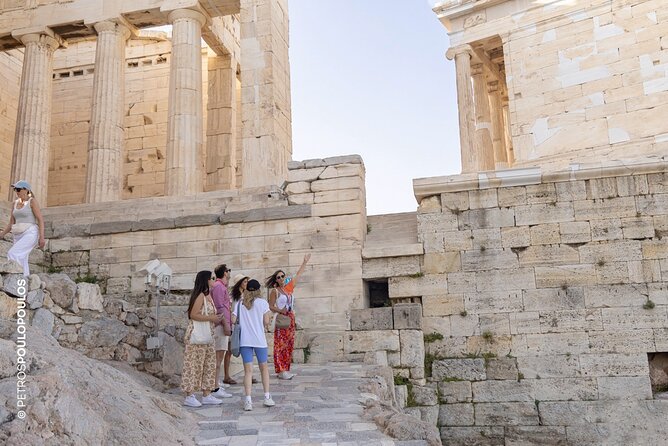
The listed price is $67.58 per person. That is a reasonable price for a licensed guide and a half-day visit to two major archaeological areas, but you must read the ticket option carefully.
Entrance fees are not always included. If you choose the without-ticket option, you must follow the voucher instructions and purchase the correct site tickets before booking or before the tour, as directed. You need valid admission at the start. Arriving without it can prevent you from joining, and the tour fee will not be refunded.
This is the most confusing part of the arrangement. The guide service and archaeological admission are treated separately, so the total cost may be higher than $67.58. Some visitors have used a multi-site ticket covering the Acropolis, Ancient Agora, Roman Agora, Hadrian’s Library, and Kerameikos. Check which ticket applies to your date and option rather than assuming the standard entry will cover everything.
Security is another time factor. All visitors pass through airport-style checks, and peak-season waits can exceed 30 minutes. The skip-the-ticket-line service can reduce the ticket queue, but it does not mean you bypass every security check.
Heat, clothing, and physical demands
Treat this as an outdoor hike with history, not an easy city stroll. You will climb, descend, cross uneven stones, and spend much of the visit in exposed areas.
Wear sturdy walking or hiking shoes with good grip. Bring water, sunscreen, and a hat. A small umbrella may help with sun, though you should keep it manageable in a group.
The tour operates in rain or shine. Dress for the forecast and expect the route to continue in poor weather unless the operator cancels. A baby stroller is not allowed on the Acropolis archaeological site, and there is no cloakroom at the side entrance used by the group. A baby pouch is the practical choice.
Most people can take part, but anyone with serious difficulty on steep or uneven ground should think carefully before booking. Guides may slow the pace and seek shade, yet they cannot remove the climbs from the route.
Who should book this four-hour walk
I would choose this tour if you want a strong first orientation to ancient Athens and prefer explanations to silent wandering. It suits couples, families with older children, first-time visitors, and anyone who wants the Acropolis placed within the wider life of the city.
It is also a good choice if you have limited time. In one morning and early afternoon, you see the Parthenon, theater, Odeon, Temple of Hephaestus, Agora ruins, and Agora Museum.
You may want an Acropolis-only visit instead if your energy is limited, if you mainly want photographs, or if you already know the history well. The Agora section adds real value, but it also makes the day longer and more tiring.
Book at least 24 hours ahead if your plans may change, since cancellation is free up to that point. The activity requires a minimum number of participants, and a cancellation for that reason comes with an alternative date or a full refund.
Should you book the Acropolis and Agora tour?
Yes, if you want the ancient sites explained rather than simply photographed. The combination is stronger than an Acropolis visit alone, and the best guides connect monuments to democracy, theater, religion, education, and ordinary city life.
Book it with the correct tickets already arranged, arrive early, and prepare for heat and steep ground. At $67.58 before any separate admission fee, the value depends on the ticket option, but the licensed guide and focused route make this a sensible choice for a first visit to Athens.
Just added around Athens
- Ancient Athens tour: Acropolis, Parthenon and Acropolis Museum★ 5.0 · 256 reviews
- The Acropolis, Athens Walking City Tour and Acropolis Museum★ 5.0 · 442 reviews
- Athens: Acropolis Museum Ticket with Self-Guided Audio tour App★ 3.5 · 40 reviews
- Family Acropolis & Acropolis Museum Tour inspiredby Percy Jackson★ 4.5 · 40 reviews
- Acropolis of Athens, Parthenon and Acropolis Museum private tour with dinner★ 5.0 · 77 reviews
- Shore Excursion: Acropolis, Athens City tour and The New Acropolis Museum★ 4.5 · 30 reviews
- Athens National Archaeological Museum E-Ticket with Audio Guide★ 3.0 · 57 reviews
- Private Tour: Half day Athens Sightseeing and Acropolis Museum★ 4.5 · 28 reviews
Museum Tours in Athens, compared.
Acropolis, Parthenon & Acropolis Museum Guided Tour
Read our review →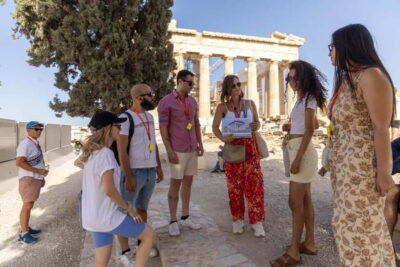
The Acropolis, Parthenon & Acropolis Museum Guided Tour
Read our review →Acropolis, Parthenon & Acropolis Museum Guided Tour
Read our review →
Acropolis monuments & Parthenon Walking Tour with Optional Acropolis Museum
Read our review →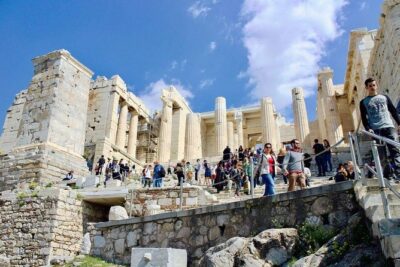
Athens All Included: Acropolis and Museum Guided Tour with Ticket
Read our review →
Acropolis Museum Ticket with optional Audio Guide
Read our review →
Small-Group Delphi, Museum & Arachova Day Trip
Read our review →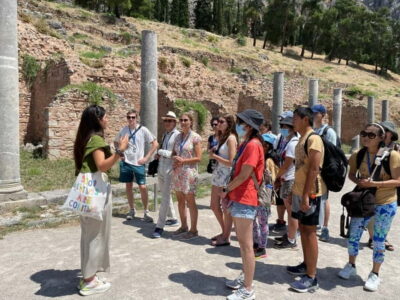
Delphi Oracle & Museum Tour with a Licensed Guide
Read our review →Browse the lists this tour appears in