
Review · AMSTERDAM
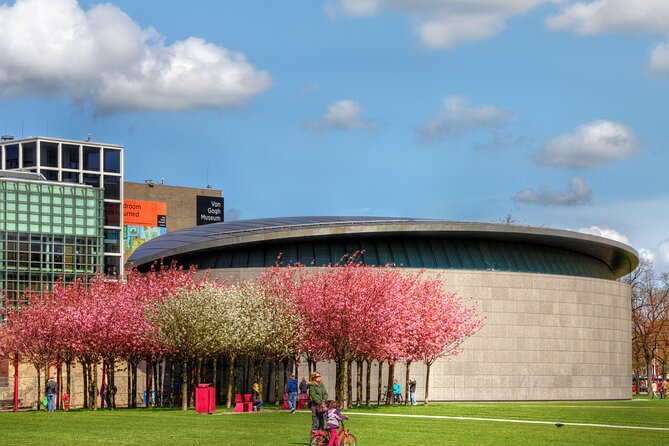
Van Gogh Museum Amsterdam Small Group Guided Tour
The most useful thing about this Van Gogh Museum tour is its clear story. Instead of wandering from one famous painting to another, you follow Vincent from early peasant scenes to Paris, Arles, Saint-Rémy, and Auvers. The route makes his artistic changes easier to see.
I like the small group limit of 14 adults and the wireless headphone system. I also like that guides such as Martina, Claire, Kawika, and Roland have been praised for linking Van Gogh’s life to his brushwork, color, and artistic influences. The main drawback is that two hours goes quickly, and the guided route may give you less time with lesser-known works than a self-guided visit.
Key points to know before you book
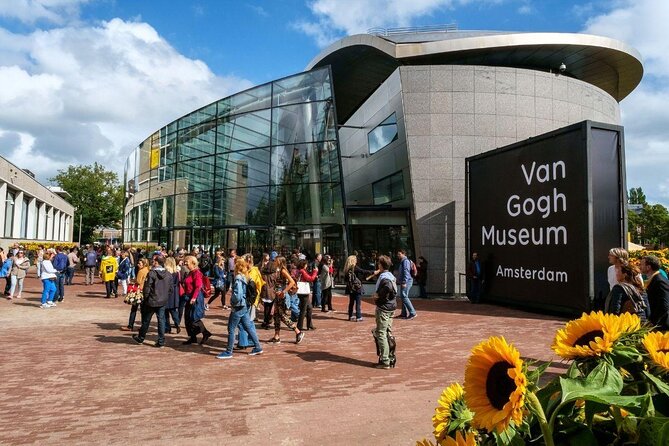
- Six focused museum stops: Follow Van Gogh’s career through self portraits, The Potato Eaters, Sunflowers, The Bedroom, Almond Blossoms, Iris, and his final paintings.
- English-language guidance: The tour is offered in English, with a live guide and wireless headsets.
- Small adult group: The maximum is 14 people, and only adults age 18 and older may join.
- Admission is included: Your ticket covers the permanent collection and the guided visit.
- You can stay afterward: The tour ends inside the museum, so you can continue viewing the collection until closing time.
- A useful two-hour format: Morning and afternoon departures let you fit the visit around the rest of your Amsterdam plans.
Why this tour works better than wandering alone
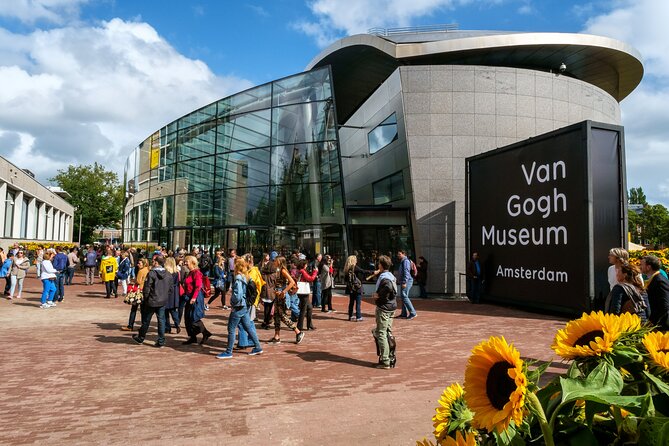
The Van Gogh Museum is one of those places where a little structure helps. You can certainly walk through on your own, but the collection is large enough that it is easy to focus only on Sunflowers and The Bedroom. A good guide gives you a sequence, points out changes in technique, and explains why a work matters beyond its fame.
This tour follows Van Gogh’s development in a sensible order. You begin with his early work, move through his years in Paris, then see the stronger color and restless brushwork of Arles and Saint-Rémy before reaching the paintings made at Auvers. I like this approach because you see an artist changing in front of you, rather than a stack of unrelated masterpieces.
The guide also provides context about his influences, including Millet, Jules Breton, Delacroix, Japanese prints, and the European art movements around him. That context is useful even if you know little about painting. It helps explain why Van Gogh copied Japanese prints, why he painted rural workers, and how his handling of color shifted over time.
The wireless headset matters in a crowded museum. You can stay close to a painting while still hearing the guide, rather than standing at the back of a cluster and trying to catch every word. This is especially handy when the guide pauses to discuss a small detail, a brushstroke, or the way Van Gogh layered paint.
More Museum Tours in Amsterdam
- Amsterdam: The Upside Down Museum Entrance Ticket
★ 4.4 · 9,506 reviews - Amsterdam: Red Light Secrets Museum Entry Ticket
★ 4.2 · 5,722 reviews - Amsterdam’s Weirdest Museum: Ripley’s Believe It or Not!
★ 4.5 · 4,920 reviews
Meeting at Museumplein and getting started
The tour begins at Cobra Café on Hobbemastraat 18, close to Amsterdam’s Museumplein area. The route ends at the Van Gogh Museum, Museumplein 6. The museum is near public transportation, so the starting area is practical for a day built around Amsterdam’s major museums.
Allow enough time to find the café and meet the group. Confirmation is provided at booking, and the tour is booked well ahead by many people, often about 26 days before the visit. If your Amsterdam dates are fixed, I would not leave this until the last minute.
The experience is for adults age 18 and older. That restriction is important if you are arranging a family outing. The group can include up to 14 people, which is small enough for questions and personal attention without the price of a private tour.
Morning and afternoon options give you some planning freedom. A morning visit can leave the rest of your day open for the Rijksmuseum, canals, or another neighborhood. An afternoon tour may work better if you prefer a slower start or want to pair the museum with lunch.
Self portraits: seeing Van Gogh look back at you
The opening section focuses on Van Gogh’s self portraits. This is a sensible beginning because the paintings show his changing appearance, technique, and confidence over time.
A self portrait is not only a record of a face. It also shows how the artist wanted to work, what colors and marks he was testing, and how directly he faced the viewer. With a guide beside you, you can pay attention to the direction of the brushwork, the treatment of the background, and the contrast between the earlier and later works.
The scheduled time here is about 20 minutes. That can feel generous if you mainly want the famous paintings, and one less favorable experience specifically found the self portraits received too much attention. I see this as a matter of interest. If you already know these works well, this will be the least essential part of the route. If you want to understand Van Gogh’s development, it gives you a useful starting point.
The Potato Eaters and Van Gogh’s early purpose
The first-floor section moves to Van Gogh’s interest in rural life. You see paintings connected with Millet and Jules Breton, Woman Lifting Potatoes, the portraits grouped under Head of a Peasant Woman, and The Potato Eaters.
This is one of the most important sections for understanding what Van Gogh was trying to do before his famous bright colors. The early work is serious and earthy. His subjects are working people, and the paintings focus on labor, fatigue, and ordinary domestic life rather than glamour.
The Potato Eaters is especially valuable in a guided setting. It is easy to dismiss the dark palette if you are waiting for the yellow and blue of Arles. A guide can show you how the rough faces, heavy hands, and dim room serve the subject. You begin to see that Van Gogh was not simply chasing pretty color. He wanted the painting to carry the weight of the people in it.
The connections to Millet and Breton also help place Van Gogh within a wider artistic conversation. You get a clearer sense of his admiration for artists who treated rural workers with dignity. This section receives about 20 minutes, and I would stay engaged even if your main goal is the later work.
More Van Gogh Museum tickets:
- Amsterdam: Van Gogh Museum Ticket and City Canal Cruise
★ 4.6 · 3,899 reviews - Amsterdam: Van Gogh Museum Ticket & Canal Cruise
★ 4.5 · 3,304 reviews - Van Gogh Museum Amsterdam Exclusive Tour w/ Reserved Entry
★ 5.0 · 1,760 reviews - Van Gogh Museum Tour Reserved Entry Semi Private
★ 5.0 · 1,437 reviews
Paris from 1886 to 1888: the palette changes
The Paris section marks a sharp turn. Here you see Self Portrait with Felt Hat, Still Life with Absinthe, In the Café: Agostina Segatori in Le Tambourin, and Garden with Courting Couples.
Van Gogh moved to Paris between 1886 and 1888, and the works in this part of the museum show him responding to new ideas. The colors become lighter and the marks more energetic. His paintings begin to feel less restricted by the dark tones of his early years.
This is where a guide can make the collection feel like a visual lesson. You can compare paintings made at different points and notice how he handled small marks, brighter color, and stronger contrast. The story is not just that he became more colorful. It is that he was testing how color and brushwork could suggest mood and movement.
Still Life with Absinthe and the café scene give you something different from the rural paintings. The subjects are urban and modern, while Garden with Courting Couples offers a more open, decorative feeling. The guide may also connect these works to the art world Van Gogh encountered in Paris and to the influences that helped push his work forward.
The museum schedules another 20 minutes here. For many people, this is the turning point of the visit because the change from the early paintings becomes easy to see.
Arles: Sunflowers, The Bedroom, and Japanese prints
The Arles section contains several of the museum’s major draws. Van Gogh moved to Arles in 1888, and the route includes Sunflowers, Almond Blossoms, The Bedroom, Japanese paintings copied from prints, and The Yellow House.
This is likely the busiest and most anticipated part of the tour. Sunflowers is famous for good reason, but the guided visit can help you look past the name. Pay attention to the surface, the individual flowers, and the way the yellow range carries the whole composition. The guide can also explain how Van Gogh used paint to create a sense of heat, energy, and directness.
The Bedroom offers a different kind of lesson. Its simple furniture and unusual perspective make it instantly recognizable, yet the painting rewards close attention. The colors, outlines, and slightly unstable space create a mood that is more complex than a simple picture of a room.
The Japanese print copies are useful because they show Van Gogh looking outward. He was not working in isolation. Japanese prints helped him explore flat areas of color, bold outlines, unusual framing, and scenes that did not follow older European habits of composition.
The Yellow House brings the Arles story together. It connects the paintings to Van Gogh’s hope for a working home for artists. You do not need to know every detail of his life to appreciate the importance of this idea, but the guide can show how the location and his ambitions shaped the work.
This section also lasts about 20 minutes. That is enough for a guided introduction, but not enough to linger indefinitely at every major painting. If Sunflowers or The Bedroom is your priority, note the location during the tour so you can return after the group portion.
Saint-Rémy: paintings made under pressure
On the third level, the tour turns to Saint-Rémy-de-Provence. The works include Almond Blossoms, Wheatfield with a Reaper, Iris, and Pieta, after Delacroix.
This section gives you a chance to consider the relationship between Van Gogh’s difficult circumstances and his sustained output. The guide can discuss his frame of mind without reducing every painting to illness. That balance matters. Van Gogh’s life is part of the story, but the paintings also deserve attention as carefully made works with their own visual aims.
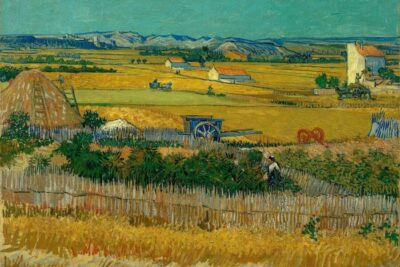
Iris is a good example of how the museum lets you study his treatment of nature. The flowers are not merely botanical subjects. Their movement, color, and thick marks make the scene feel active. Almond Blossoms presents another side of his work, while Wheatfield with a Reaper brings back the rural subject he cared about earlier in his career.
Pieta, after Delacroix, shows Van Gogh responding to another artist. This helps reinforce a theme running through the whole tour: he was original, but he was also constantly looking, studying, borrowing, and transforming what he saw.
The route allows about 20 minutes here. I would pay close attention to how the guide compares this work with the earlier paintings. The value is in the progression.
Auvers and the final room
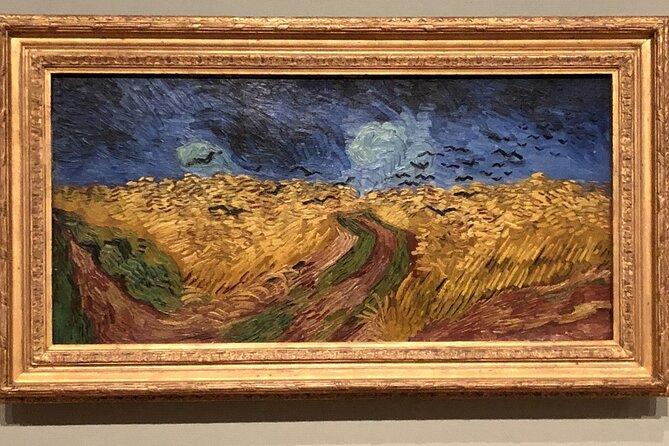
The last stop is the Auvers room, with Tree Roots and Wheatfield with Crows. It receives about 15 minutes, so it is shorter than the other sections.
These works carry emotional weight, but the best guide will keep the discussion grounded in the paintings themselves. Tree Roots draws attention to tangled forms and strong directional marks. Wheatfield with Crows is often discussed in connection with Van Gogh’s final period, but it is worth looking carefully at its composition, movement, and color rather than treating it only as a biographical clue.
Ending here gives the tour a strong shape. You have moved from early rural scenes to Paris experimentation, the intense color of Arles, the paintings of Saint-Rémy, and the final works at Auvers. The story feels complete without pretending that an artist’s life can be explained in two hours.
Guide quality and the value of the headset
The guide is the part of this experience that can make the extra cost worthwhile. Guides named in the feedback include Martina, Claire, Kawika, Roland, Marlene, Holly, Caroline, and Sylvia. Several were praised for clear pacing, enthusiasm, useful personal stories, and the ability to connect Van Gogh’s life with his changing technique.
Martina was especially noted for using an iPad to show extra facts and photographs, and for extending one tour beyond two hours. Kawika was praised for explaining paint types, working methods, artistic influences, and the feeling Van Gogh tried to bring out in his subjects. Roland’s handling of the headset system was appreciated by a person using hearing aids.
Those details also point to a fair warning. A guided tour depends heavily on the individual assigned to your group. Most accounts describe an engaging and well-informed guide, but one poor experience found the guide disappointing and felt an audio guide would have been better value. Another person reported that the guide did not appear at all and that museum entry was then impossible. That kind of failure appears to be unusual, but it is a real risk to consider when buying a guided package.
Is $77.43 a fair price?
At $77.43 per person, this is not the cheapest way to enter the museum. You are paying for admission, a live English-language guide, a two-hour route, and the convenience of a small group with wireless audio.
I think the price is fair if you want interpretation rather than simple entry. The museum contains enough important work that a strong guide can save you from missing the links between paintings. The value is highest for first-time visitors, people who want art explained in plain language, and anyone who finds museums easier to enjoy with a clear route.
The value is lower if you already know Van Gogh well, prefer to read wall labels quietly, or want to spend a long time with a few paintings. In that case, you may prefer an independent visit and an audio guide. The guided tour still gives you admission and access to the permanent collection, but the fixed pace limits your freedom during the two hours.
A useful compromise is to treat the guided portion as your introduction. Since the tour ends inside the museum, you can stay until closing time and continue on your own. That extra time makes the price easier to justify, especially if you return to Sunflowers, The Bedroom, or another work that caught your attention.
Practical details that affect your visit
The tour lasts about two hours, though one guide has occasionally gone longer. Food and drinks are not included, so plan those separately around the morning or afternoon departure.
Special exhibitions are not part of the guided experience. You can visit them afterward at your own pace, but they are separate from the permanent-collection tour.
Free cancellation is available if you cancel at least 24 hours before the local start time. Within 24 hours, the amount paid is not refunded, and changes are not accepted. Since the experience is often reserved well ahead, check your plans before committing.
Most adults can take part, and the museum is near public transportation. The age rule is firm: this activity is only for people 18 and older.
Who should book this Van Gogh Museum tour?
I would book it for a first visit to the museum, especially if you want to understand how Van Gogh changed rather than simply photograph his best-known paintings. It also suits couples or friends with different levels of interest in art, since a lively guide can give the less enthusiastic person a useful reason to keep looking.
It is a good pick if you value personal explanation, want to ask questions, or have trouble hearing guides in crowded rooms. The wireless system and small group help with that.
I would skip it if you want complete freedom, plan to spend five minutes or half an hour at each painting, or already have a detailed plan for the collection. The fixed route is the point, but it is also the constraint.
Should you book it?
Book this tour if you want the Van Gogh Museum to tell a coherent story. The strongest part is the connection between the paintings: dark early peasant scenes, Paris experimentation, the high color of Arles, the intense work of Saint-Rémy, and the final paintings at Auvers.
The tour is not perfect for every art lover. Two hours can feel short, and the guide’s quality matters. Still, the small group, included admission, clear chronological route, wireless headsets, and extra time inside the museum make it a sound choice for most first-time visitors. If you book, arrive ready to listen, then use the remaining museum time to revisit the works that stayed with you.
FAQ
How long does the Van Gogh Museum tour last?
The guided experience lasts approximately two hours. One guide has occasionally continued beyond the scheduled time.
What language is the tour offered in?
The tour is offered in English.
What is included in the price?
The price includes admission to the Van Gogh Museum’s permanent collection, a two-hour guided tour, a live English-language guide, and the wireless Whisper System.
Where does the tour begin?
The tour begins at Cobra Café, Hobbemastraat 18, 1071 ZB Amsterdam, Netherlands.
Where does the tour end?
The tour ends inside the Van Gogh Museum at Museumplein 6, 1071 DJ Amsterdam, Netherlands.
Can I stay in the museum after the guided tour?
Yes. The tour ends inside the museum, and you can remain until closing time to continue viewing the collection independently.
Are special exhibitions included?
No. Special exhibitions are not included in the guided tour, but you can visit them afterward at your own pace.
Is the tour suitable for children?
No. This activity is available only to adults age 18 and older.
What happens if I need to cancel?
You can receive a full refund if you cancel at least 24 hours before the experience start time. Cancellations or changes made within 24 hours are not refunded or accepted.
Just added around Amsterdam
- Van Gogh Museum Tour excluding Entrance Tickets★ 5.0 · 16 reviews
- Van Gogh Museum Entry Ticket and Guided Tour★ 4.5 · 48 reviews
- Van Gogh Museum with Audio Guide★ 3.5 · 80 reviews
- Amsterdam: Explore the Van Gogh Museum & His Masterpieces★ 3.5 · 64 reviews
- Van Gogh Museum Skip the Queue with Audio Guide★ 4.0 · 261 reviews
- Amsterdam Van Gogh Museum with Audio or Guided Tour★ 4.0 · 266 reviews
- Van Gogh Museum, Rijks Museum & Walking Tour – Private Day Tour★ 5.0 · 17 reviews
- Van Gogh Museum Ticket with Audio Guide and Unlimited Access Time★ 5.0 · 25 reviews
Museum Tours in Amsterdam, compared.


Amsterdam’s Weirdest Museum: Ripley’s Believe It or Not!
Read our review →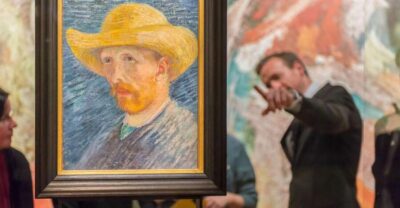

Van Gogh Museum Amsterdam Exclusive Tour w/ Reserved Entry
Read our review →
Moco Museum Amsterdam Admission Ticket with Banksy and more
Read our review →Browse the lists this tour appears in