
Review · AUSTRALIA
Sydney Cricket Ground (SCG) and Museum Walking Tour
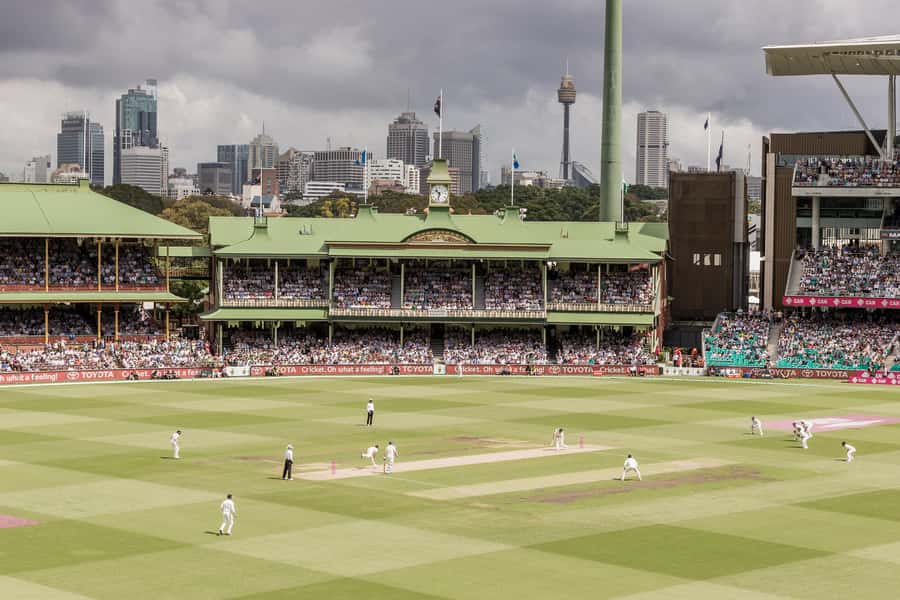
Sydney Cricket Ground is more than a place to watch cricket. On this 90-minute walking tour, you enter the rooms and corners usually kept away from match-day crowds, from the players’ dressing rooms to the old pavilion and media centre. The stories bring the ground to life, especially when guides such as Stuart, Peter, Warwick, and Rod connect the rooms with famous players and big matches.
I like the mix of sporting history and real behind-the-scenes access, and I like that the tour covers more than cricket, with rugby, football, and AFL links around the precinct. The main drawback is that groups can be large, making it harder to hear every question while walking. Access to particular rooms can also change, so the exact route is not guaranteed.
Key points at a glance
- Enter through Gate A at Driver Avenue: The tour begins at the SCG Tour Experience in Moore Park, less than 3 kilometres from central Sydney.
- See the places players use: The route can include the field of play, team dressing rooms, the old pavilion, the Members Reserve, and the media centre.
- Hear personal sporting stories: Guides such as Stuart, Peter, Warwick, Rod, Vanessa, and Jim Robson are known for mixing facts with humour and match memories.
- Visit the SCG Museum: Your ticket includes entry to displays of bats, balls, cricket records, rugby league, football, and AFL memorabilia.
- Allow 90 minutes: The pace is generally steady, with time for photographs and questions, though larger groups may feel less personal.
- Pay $23 for a broad stadium visit: That is fair value if you care about sport, architecture, or Sydney’s sporting identity, not just cricket.
Entering Sydney’s home of sport
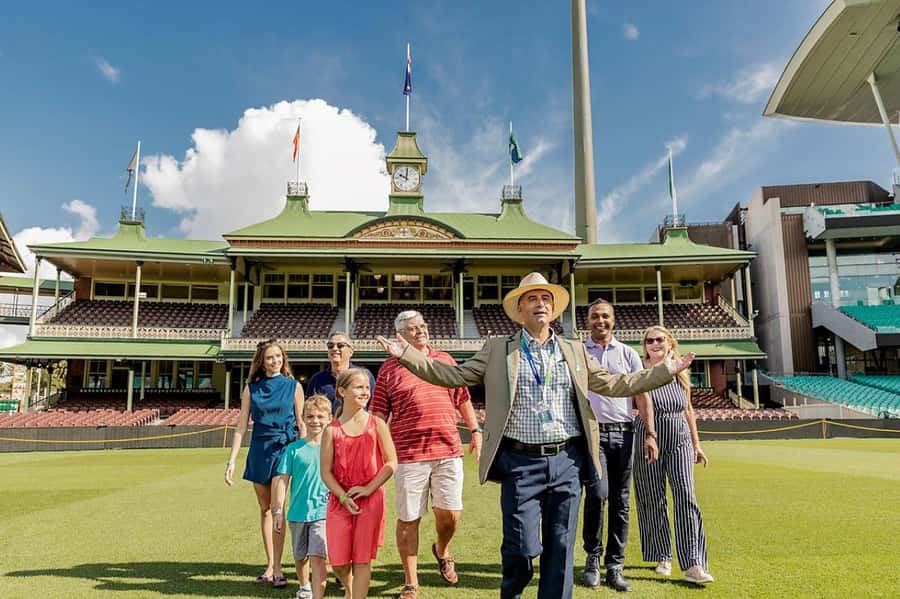
The SCG precinct sits in Moore Park, about 3 kilometres from Sydney city centre and 6 kilometres from Sydney Airport. You meet at Gate A on Driver Avenue, at the SCG Tour Experience, and return there at the end.
That simple start matters. You do not need to find a distant suburban venue or work out a complicated meeting point inside the stadium. Once you are gathered, the guide leads you into a working sports ground with layers of old and new architecture around the playing area.
The tour is led in English and lasts 90 minutes. That is long enough to cover the main rooms without taking up half your day in Sydney. I would pair it with another Moore Park activity or schedule it before or after time in the city, rather than treating it as a full-day outing.
The SCG hosts cricket, rugby union, rugby league, football, and AFL. Cricket remains the emotional centre of the tour, but you are not limited to cricket records and batting statistics. The wider sporting story helps explain why the ground matters to Sydney and New South Wales.
A few more museum visits around Australia worth comparing
- Acropolis monuments & Parthenon Walking Tour with Optional Acropolis Museum
★ 5.0 · 2,678 reviews - Frida Kahlo VIP [Museum Tickets Included] Walk, Markets & Churros
★ 5.0 · 982 reviews - French Quarter Walking Tour With Comp 1850 House Museum Admission
★ 5.0 · 781 reviews
From the stands to the field of play
One of the first pleasures is seeing the ground from a different angle. Instead of arriving as a ticket holder, you get a guided look at the playing area, sporting architecture, and views from inside the stadium.
The field gives the tour its sense of place. You can look across the ground and imagine the pressure faced by international players, then move into the areas where those players prepared and worked. For a cricket fan, that shift from spectator space to player space is the heart of the experience.
Access to the field and exact viewing points can depend on what is happening at the SCG. One recent tour could not enter the home changing room but included a walk around the pitch instead. That is worth keeping in mind: the tour offers behind-the-scenes access, but the SCG remains an active venue, not a museum frozen for visitors.
I like this part because it adds scale. On television, the SCG can seem like a field surrounded by seats. From inside, you notice how the old sections, newer facilities, stands, and service areas fit together.
Dressing rooms and the old pavilion
The team dressing rooms are usually the most anticipated stop. You sit or stand in spaces used by players and hear who has occupied those seats over the years. For many visitors, that connection makes the tour feel personal rather than simply architectural.
A cricket fan will get the most from these rooms, especially if the guide names famous Australian and international players linked with the ground. Even if you follow another sport, you can still appreciate the ritual of preparation, the separation between teams, and the difference between public match-day areas and private player rooms.
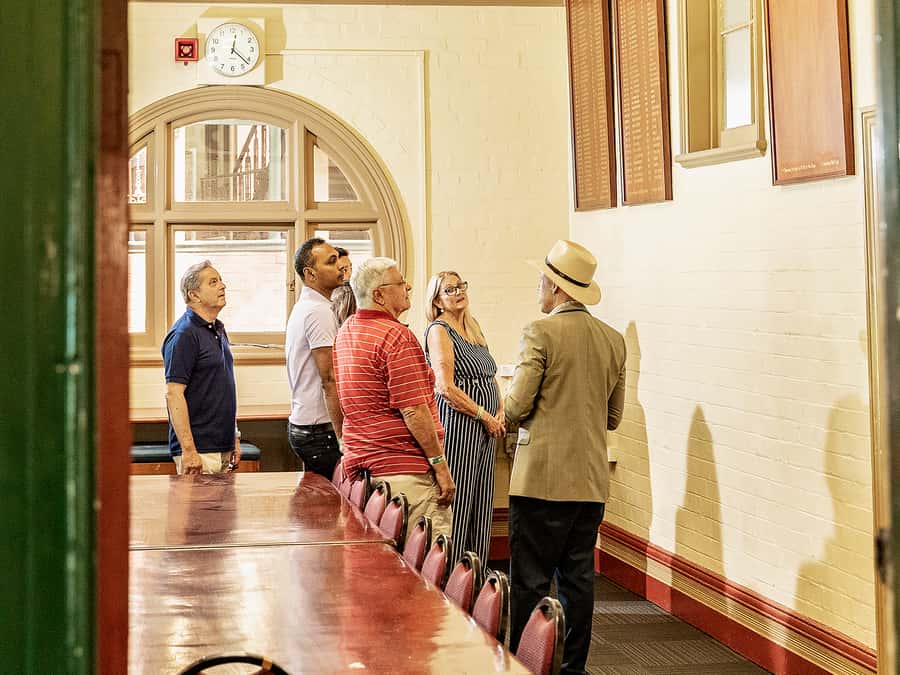
The old pavilion and Long Room add another layer. These rooms carry the formal side of cricket, with their traditional atmosphere and links to the Members Reserve. The Long Room is often a highlight for visitors who want to see the inner sanctum of a famous sports ground.
I would not expect every room to feel grand or polished. Some of the appeal is that you are seeing functional spaces with a long sporting connection. The interest comes from the guide’s stories and the people associated with each room, not from elaborate displays in every corner.
The Members Reserve and SCG architecture
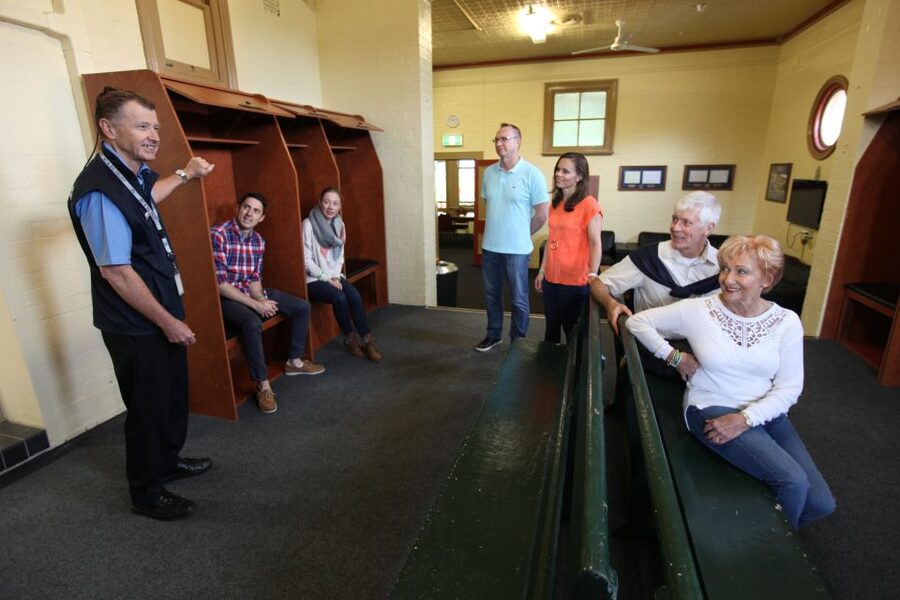
The historic Members Reserve shows how the SCG has developed over time. The precinct blends older areas with modern facilities, and the tour gives you a chance to look at that change from inside rather than simply reading about it.
Guides often explain how the ground has grown and how different sporting uses shaped the buildings. I found this type of context more useful than a list of construction dates. It helps you understand why the SCG does not feel like one uniform stadium.
From higher seating areas, you may get broad views across the ground and surrounding parts of Moore Park. These are good photo stops, especially if you want a view that differs from the usual city centre sights.
The architecture will mean more to you if you pay attention to contrasts: formal rooms beside practical changing areas, historic sections beside newer media and sporting facilities, and public seating beside private club spaces. The tour is not only about famous players. It is also about how a sporting venue keeps adapting while holding on to its identity.
Same city, a completely different collection:
- Bundaberg Rum Behind The Scenes Distillery Tour And Museum Experience
★ 5.0 · 724 reviews - Melbourne: MCG and Australian Sports Museum Guided Tour
★ 4.7 · 638 reviews - ArtVo Immersive Gallery Experience
★ 4.5 · 423 reviews - Bundaberg: Brew Tasting and Self-Guided Gallery Tour
★ 4.8 · 256 reviews
The media centre and Walk of Honour
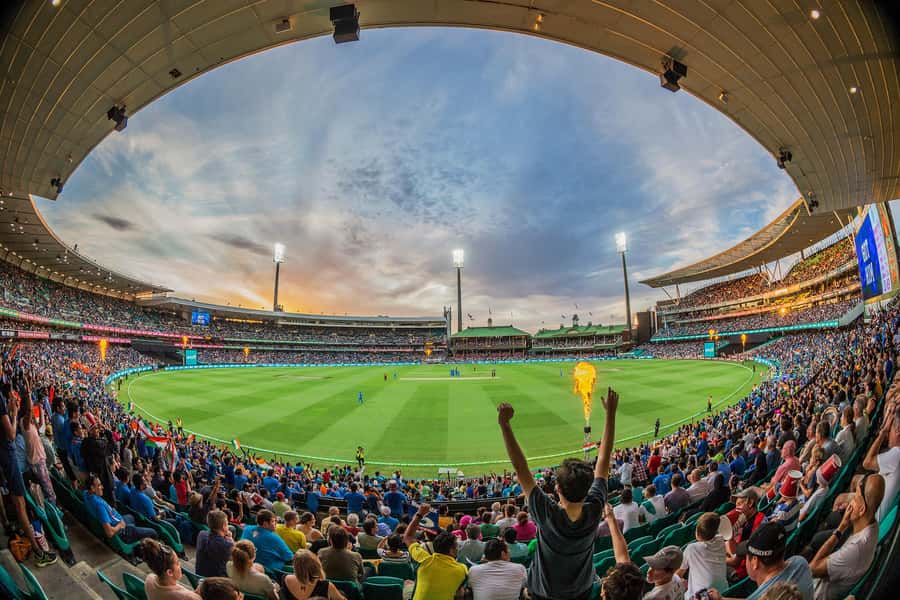
The media centre is another useful stop because it reveals how the match reaches people who are not in the stadium. You see the working side of sport, where journalists and broadcasters report on events happening below.
The attraction here is not a special exhibit so much as the change in viewpoint. A player sees the ground from the field. A spectator sees it from the seats. The media sees it through reports, interviews, and match analysis. The tour lets you consider all three perspectives in a short time.
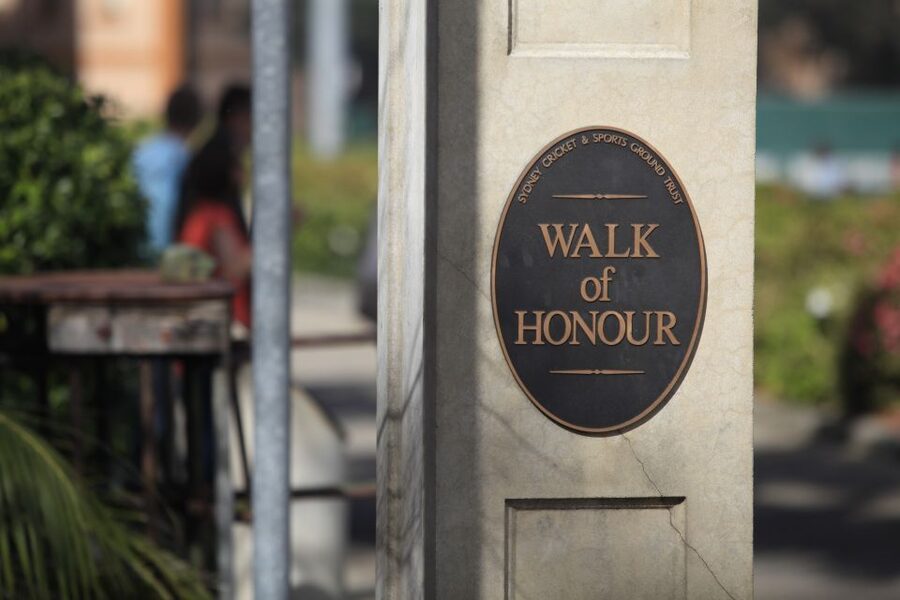
The Walk of Honour pays tribute to important figures in New South Wales sport. It adds a sense of ceremony to the route and gives the guide plenty of names, records, and stories to connect with the buildings around you.
This is where a good guide makes a clear difference. Stuart is often praised for his detailed player knowledge and lively storytelling. Peter is known for explaining the ground’s past with enthusiasm, while Warwick and Rod bring humour into the facts. Jim Robson is particularly strong on cricket and the history of the venue. The guide you receive will vary, but the tour depends heavily on that person’s ability to keep a group together and make the names meaningful.
The SCG Museum and its sporting treasures
Entry to the SCG Museum is included, and you visit it as part of the guided experience. Displays include cricket bats, balls, records, and other cricket items, along with rugby league, football, and AFL memorabilia.
The museum is fairly small. That is both its strength and its limit. You can see the main displays without needing another hour, but you should not expect the scale of a major national sports museum.
Some visitors may find the museum less satisfying if they want a large collection covering every international team and era. The displays can feel more focused on the SCG, New South Wales, and Australian sporting connections. If your main interest is a particular overseas player or country, the museum may not contain as much as you hope.
I still think it works well at the end of the tour. After seeing the dressing rooms and field, you understand why a bat, ball, record board, or player display matters. The objects are not presented in isolation. They are tied to the rooms and stories you have just encountered.
The guides are a major part of the experience
The guide can shape your entire impression of the SCG. The strongest guides do not simply repeat dates. They tell stories about players, spectators, famous performances, rivalries, and the odd character connected with the ground.
Stuart receives especially strong praise for his passion, detailed knowledge, and ability to bring the SCG alive. Peter is a good choice for visitors who enjoy clear explanations of the ground and Australian cricket. Warwick adds light humour, sometimes with playful attention to English cricket fans. Rod, Vanessa, Ron, and Jim Robson have also led tours praised for warmth, pace, and strong sporting detail.
You should expect a friendly, enthusiastic tone rather than a dry architectural lecture. That works well for most people, including those who know cricket only in broad terms. One visitor even brought a non-cricket fan and found the tour enjoyable for both of them.
The only guide-related concern is group size. On a busy day, you may be part of a large group. If you walk at the back, hearing questions and answers between stops can be difficult. Stay near the guide when possible, and do not be shy about asking for a point to be repeated.
Is $23 good value?
At $23 per person, I consider this a reasonably priced Sydney activity. You get a 90-minute guided tour plus entry to the SCG Museum, rather than paying only for a short look from the stands.
The value is strongest if you care about cricket, Australian sport, or famous stadiums. You are paying for access to rooms that are not part of a normal match ticket, along with a guide who can explain why each space matters.
It is also good value for couples and families with older children who want something different from another harbour viewpoint or city walk. Children under 5 are not suitable for the activity, so families with very young children will need another plan.
For a casual visitor who does not follow sport, the price still makes sense if you enjoy architecture, local history, or stories about public life. But if stadiums hold no interest for you, the museum and dressing rooms may not be enough to carry the experience.
Free cancellation up to 24 hours before the start gives you some flexibility, and you can reserve now and pay later. Check the available start times before building the rest of your day around it.
Practical tips for a better visit
Arrive at Gate A on Driver Avenue with enough time to find the SCG Tour Experience. The meeting point is outside the wider precinct, so do not assume that any stadium entrance will lead you to the group.
Wear comfortable shoes. This is a walking tour through several areas, and you may be moving between stands, rooms, and museum spaces rather than remaining in one place.
Keep your attention on the guide while walking. The best stories often come between the formal stops, and large groups can make those moments harder to hear.
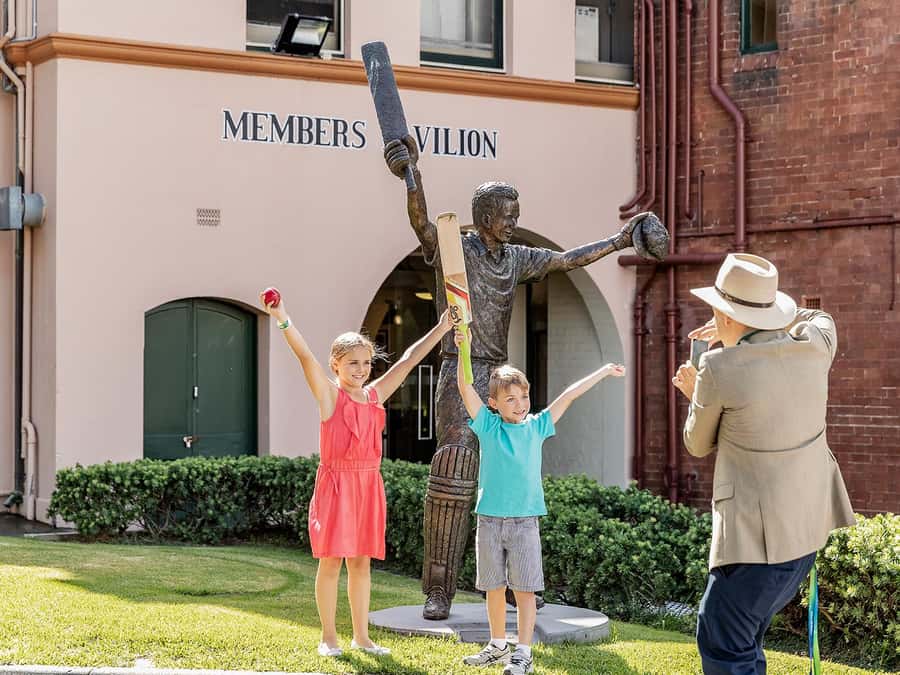
Bring a camera if you like sporting architecture and ground views. There are several natural photo opportunities, including the field, stands, pavilion areas, and displays. Specific access can change if the venue is being used, so treat the route as flexible.
I would book this early in your Sydney stay if you are a keen cricket fan. It gives you a useful sense of the city’s sporting culture, and it can be a good way to meet the SCG before attending a match.
Who should book the SCG tour?
Book it if you want to see beyond the spectator experience. The dressing rooms, Long Room, Members Reserve, media centre, Walk of Honour, and museum create a fuller picture of the SCG than a seat in the stands can provide.
I especially recommend it to cricket fans visiting from overseas. You hear about Australian players, international contests, and the traditions attached to the ground. English visitors may get some friendly teasing, but the tone is light and welcoming.
It also suits Australians who have attended matches but never explored the venue’s private areas. The tour can reveal a familiar place from a new angle.
Skip it if you dislike walking, have no interest in sport or stadium architecture, or need guaranteed access to one particular room. The route can change, and the museum is compact. For everyone else, $23 buys a well-paced introduction to one of Sydney’s most important sporting venues.
FAQ
Where does the Sydney Cricket Ground tour begin?
The meeting point is Gate A at the Sydney Cricket Ground, on Driver Avenue, Moore Park, New South Wales 2021.
How long does the tour last?
The guided walking tour lasts 90 minutes.
What language is the tour conducted in?
The tour is conducted in English with a live guide.
What areas can I see during the tour?
The route can include the field of play, player dressing rooms, the historic Members Reserve, media centre, Walk of Honour, and SCG Museum. Access to specific areas can vary on the day.
Is entry to the SCG Museum included?
Yes. The ticket includes exclusive entry to the SCG Museum.
What can I see in the museum?
The museum displays cricket bats, balls, and other cricket memorabilia, along with sporting items connected with rugby league, football, and AFL. Temporary exhibitions may also be shown.
Are young children allowed on the tour?
Children under 5 years are not suitable for this activity.
How much does the tour cost?
The listed price is $23 per person. You can cancel up to 24 hours in advance for a full refund, and reserve now while paying later.
Just added around Australia
- Sydney Summer Art Exhibitions Art Gallery of New South Wales★ 4.0 · 16 reviews
- Sovereign Hill: Museum General Admission Ticket★ 4.5 · 74 reviews
- Perth: Video Game Console Museum★ 4.8 · 42 reviews
- Melbourne: Australian Sports Museum Admission Ticket★ 4.6 · 14 reviews
- Melbourne Museum: LEGO® Star Wars: The Exhibition Ticket★ 4.7 · 40 reviews
- Melbourne: Melbourne Museum Entry Ticket★ 4.7 · 122 reviews
- Melbourne: Immigration Museum Entry Ticket★ 4.7 · 14 reviews
- Longreach: Qantas Founders Museum First Class Experience★ 5.0 · 18 reviews
Museum Tours in Australia, compared.

Bundaberg Rum Behind The Scenes Distillery Tour And Museum Experience
Read our review →


Bundaberg: Brew Tasting and Self-Guided Gallery Tour
Read our review →

Australian National Maritime Museum: See It All Ticket
Read our review →

Browse the lists this tour appears in