
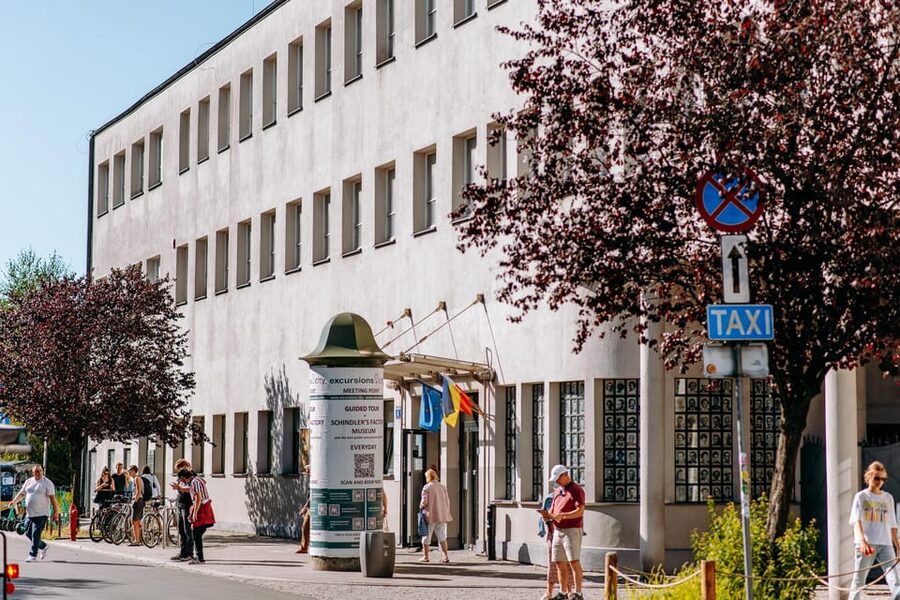
Review · KRAKOW
Schindler’s Factory Museum in Krakow – Guided Tour
Schindler’s Factory is not simply a museum about one man. It tells the story of Krakow under Nazi occupation, using cramped rooms, photographs, artifacts, and recreated streets to show how war changed daily life. Oskar Schindler’s rescue of more than 1,000 Jewish workers is part of the story, but the museum gives you the wider picture.
I like the licensed guide, who keeps the complicated history in focus, and the skip-the-line admission, especially at Krakow’s most popular museum. The main drawback is pace: a 90-minute group tour may move too quickly for you to read every display, and larger groups can make it harder to stay close to the guide.
Key points
- The museum goes beyond Schindler: You’ll learn about Jewish and non-Jewish residents, persecution, deportations, and the destruction of Krakow’s Jewish community.
- The setting does real work: Narrow, dark rooms create an uneasy sense of pressure and fear rather than presenting the war as a dry timeline.
- A guide adds needed context: The exhibition is packed with detail, so a licensed guide helps connect personal stories to the larger events.
- The tour lasts 90 minutes: That is enough for a strong overview, but not enough to study every photograph and text panel at leisure.
- Language choice matters: Tours are offered in English, French, German, Spanish, and Italian.
- Check the ticket rules carefully: From January 1, 2026, full participant names and a passport or ID are required, and the scheduled time may shift.
Why Schindler’s Factory tells a larger story
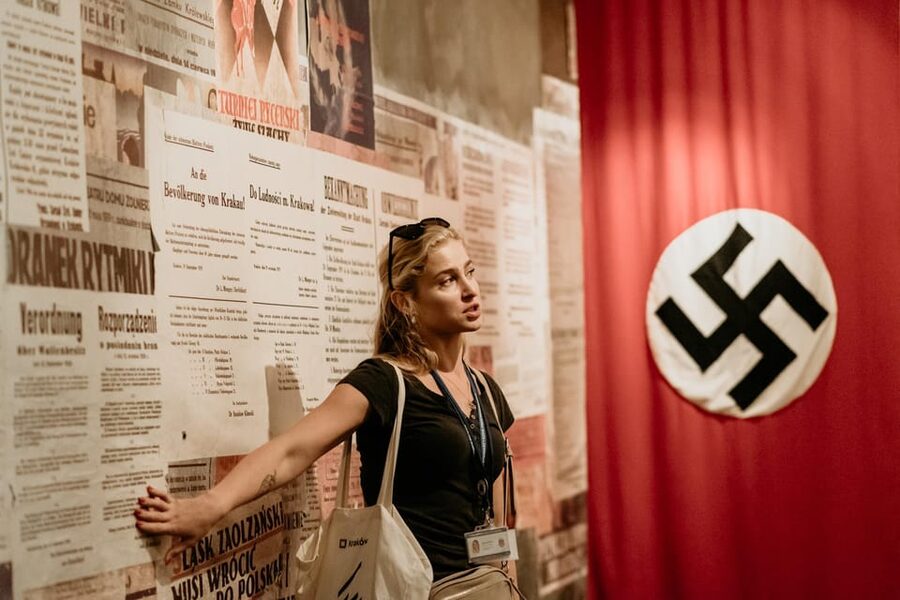
The museum occupies Oskar Schindler’s former enamel factory in Krakow. That location gives the visit an immediate sense of place, but the exhibition does not treat the building as a shrine to Schindler alone.
Instead, you follow the city through the years from 1939 to 1945. You see how Nazi rule altered work, family life, movement, religion, and personal safety. The focus falls on ordinary people as much as on famous names, including Jewish and non-Jewish residents of Krakow.
That wider view matters. Schindler’s decision to protect Jewish workers was extraordinary, but it makes the most sense when set beside the much larger system of persecution and murder. The museum shows both the scale of the disaster and the small, risky choices that could help someone survive.
You should arrive ready for a serious visit. This is not a light historical stop to squeeze in between cafés. The subject is difficult, and the exhibition uses its design to make that clear.
More Museum Tours in Krakow
- Schindler’s Factory in Krakow: Guided Tour & Skip the Line Ticket
★ 4.5 · 1,714 reviews - Auschwitz-Birkenau Museum and Memorial Guided Tour from Krakow
★ 4.5 · 1,510 reviews - Krakow: Rynek Underground Museum Guided Tour
★ 4.6 · 1,122 reviews
Entering the former enamel factory
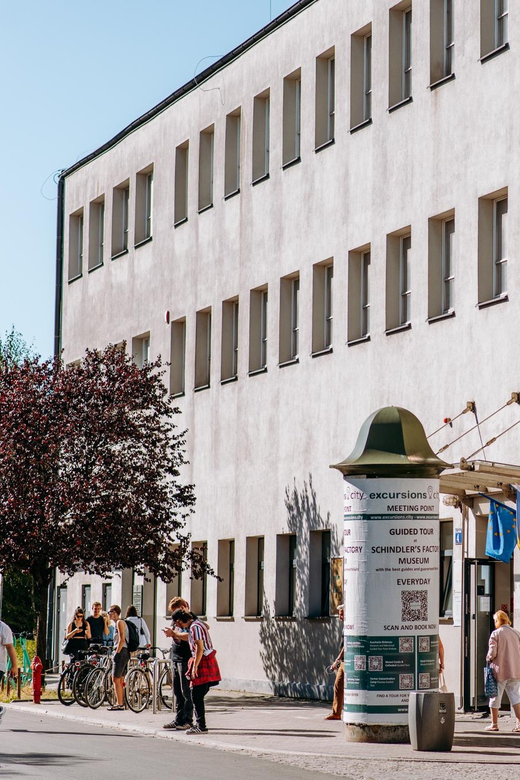
Your meeting point is in front of the museum entrance. Look for the person holding an excursions.city sign. This is worth taking seriously because a busy museum entrance can be confusing, and the group needs to gather before admission.
The guided format is useful from the start. A museum covering six years of occupation can easily become a blur of dates and names. Your guide supplies a route through the material, explains the key events, and helps you understand why particular objects or rooms matter.
The entry is advertised as skip-the-line admission. That can save time, especially when the museum is busy and timed entry is in demand. Still, allow a little breathing room before the scheduled start so you can find the meeting point without rushing.
From January 1, 2026, the museum’s personalized ticket rules require the full names of everyone in your booking. You also need to bring a passport or identity card for entry. This is not a minor detail. If you arrive without the required identification, admission may be refused.
The scheduled tour time may also be approximate because the museum controls the timing. You can choose a preferred slot when booking, but the exact start time is not guaranteed under the updated arrangement.
A museum built around daily life under occupation
The main exhibition is called Krakow under Nazi Occupation 1939 to 1945. Its strength is the way it connects major events with ordinary routines.
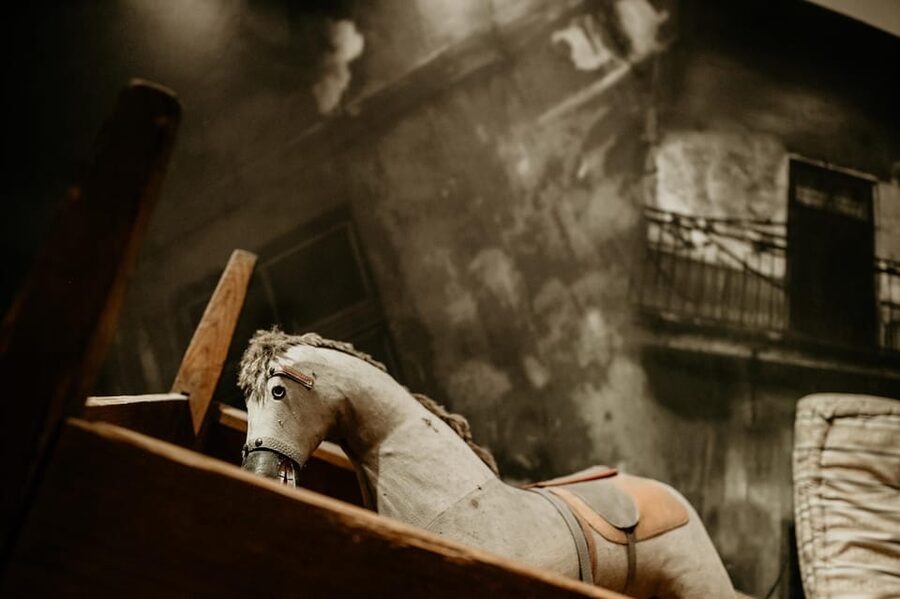
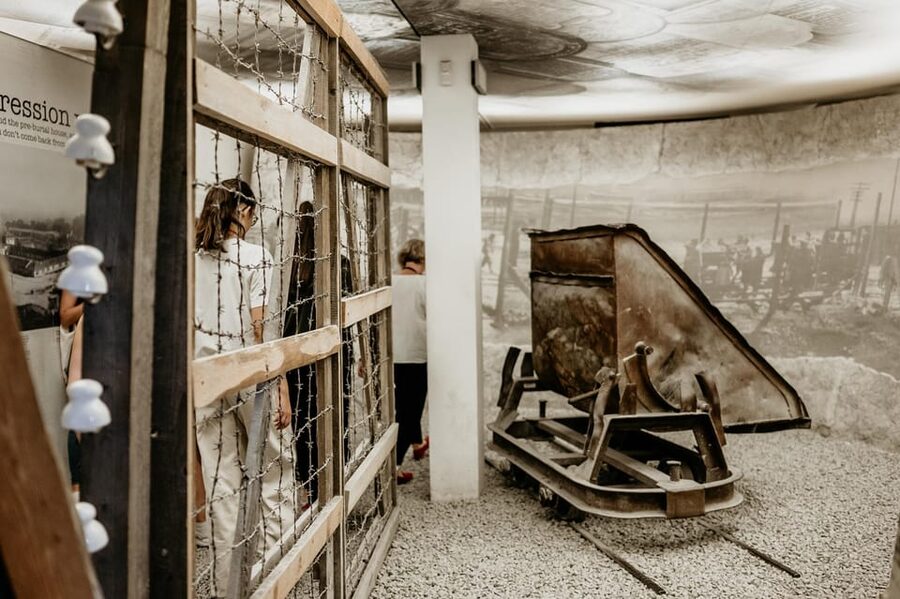
You will encounter authentic artifacts, photographs, and reconstructed settings. These displays help answer practical questions that a list of military dates cannot: How did people work? How did they move around the city? What happened to Jewish families? How did fear enter daily decisions?
The museum also gives space to Krakow’s non-Jewish population. That balance helps you see the occupation as a citywide experience, while still recognizing the specific and devastating persecution of Jewish residents.
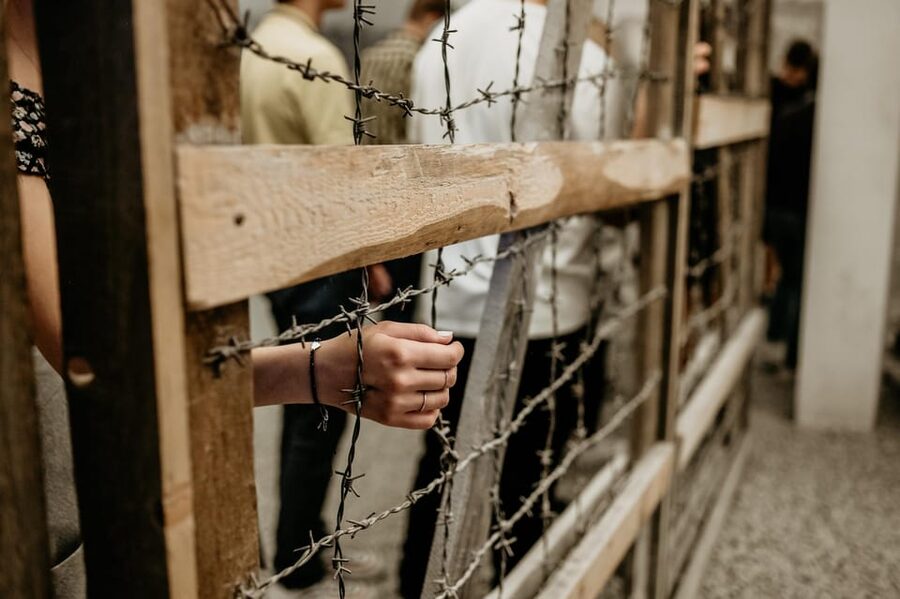
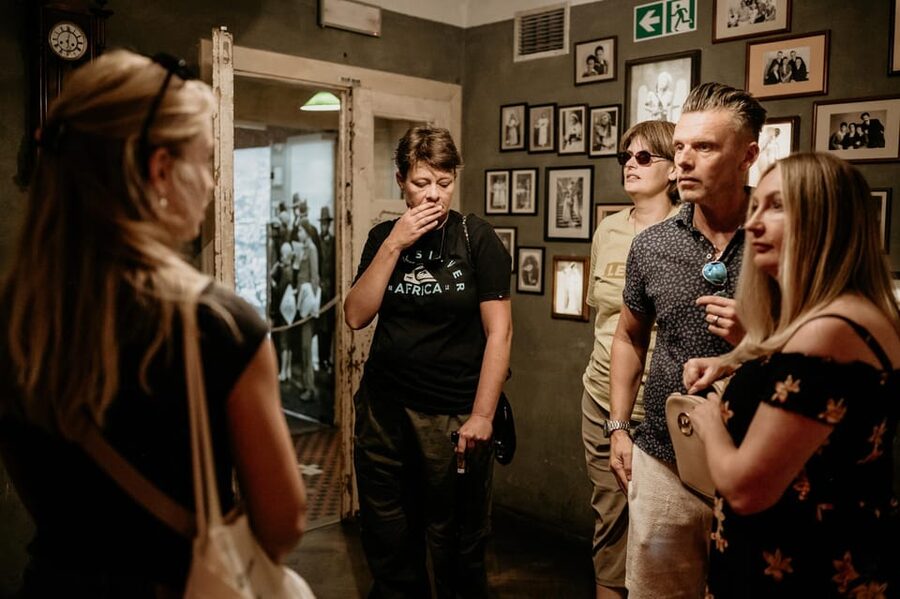
The rooms are often narrow and dimly lit. This design may feel theatrical, but it has a clear purpose. The museum wants you to sense confinement, uncertainty, and pressure. You are not just reading that life became restricted. You are moving through spaces designed to suggest how restriction felt.
That approach will not suit everyone. Some people prefer a quiet museum with open galleries and time to think. Here, the setting pushes the emotional side of the story. I find that effective, but you should expect a heavy atmosphere rather than a relaxed afternoon indoors.
How Schindler’s story fits into the tour
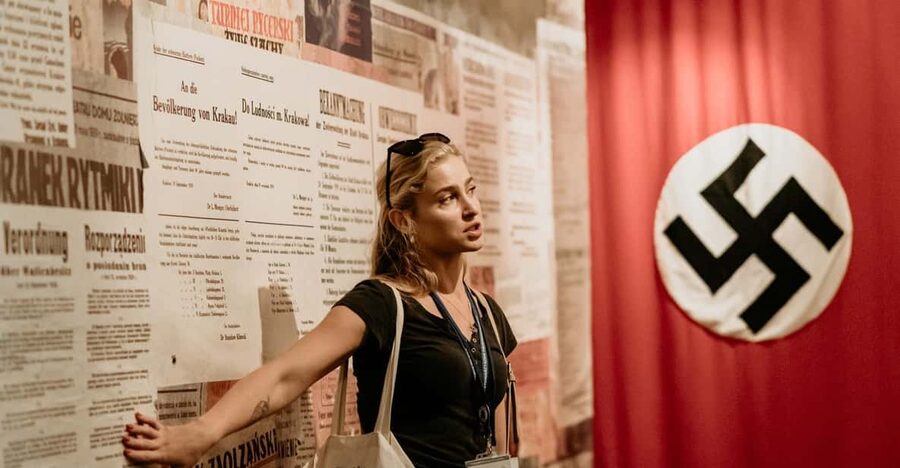
Oskar Schindler’s story is the best-known part of the museum, partly because of the film Schindler’s List. The tour places his actions within the larger history rather than treating him as the sole subject.
His enamel factory provided refuge to more than 1,000 Jewish workers. You learn how that protection operated against a backdrop of deportations, violence, and the destruction of Krakow’s Jewish community.
That contrast is the heart of the visit. Schindler’s actions matter because the danger around his workers was real and enormous. The museum lets you see individual courage without losing sight of the many people who had no protection.
A guide is particularly helpful here. The subject involves names, policies, places, and changing conditions. Without context, you could leave with a simplified story about a good businessman who saved workers. The tour points you toward the harder truth: survival depended on circumstance, luck, relationships, and acts of courage within a brutal system.
Do not expect every part of the visit to focus on Schindler. If you want a museum devoted only to his biography, this may feel broader than expected. If you want to understand why his factory became important, the wider approach is a strength.
A few more museum visits around Krakow worth comparing
- Krakow Schindler’s Factory Museum Guided Tour in English
★ 4.5 · 650 reviews - Krakow: Auschwitz Birkenau Museum Guided Tour with Pickup
★ 3.6 · 544 reviews - Krakow: Auschwitz-Birkenau Tour & Museum Expert Guide
★ 5.0 · 498 reviews - Auschwitz Birkenau Guided Tour Small Group with Hotel Pick up
★ 4.5 · 446 reviews
What the 90-minute guided route feels like
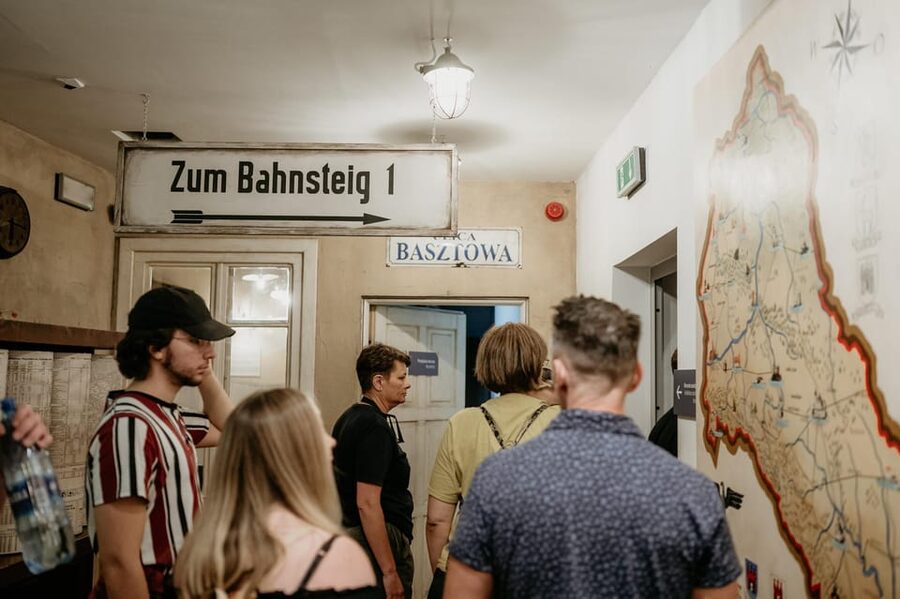
The tour lasts about an hour and a half. That is long enough to create a clear framework, but short enough to fit into a busy Krakow schedule.
You will move through the main exhibition with the guide stopping at selected displays. The route may include photographs, objects, reconstructed interiors, and scenes that show the city under Nazi control. The exact order and pace can depend on museum scheduling and group movement.
The advantage is focus. You are less likely to lose time wondering which room matters most. The guide draws your attention to key evidence and explains how separate displays connect.
The tradeoff is limited reading time. One guest found the guide very well informed but wished the group moved more slowly so there was more time to read each exhibit. That is a fair concern. A museum can offer more information than a 90-minute tour can absorb.
My advice is simple: listen closely during the tour, then do not expect to examine every panel in detail. If a particular photograph or document catches your attention, remember it and return to it if the tour format and museum timing allow. The guided visit is best treated as a structured introduction, not an exhaustive reading session.
Group size, headsets, and the guide’s role
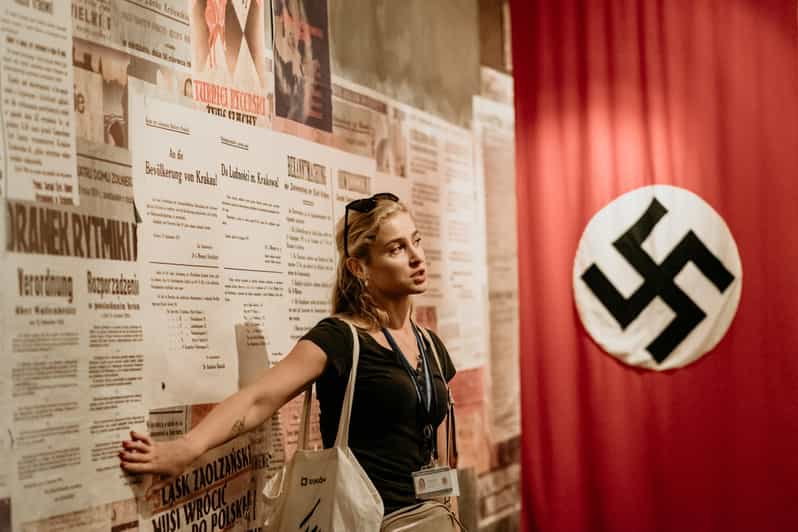
This is a group tour, not a private visit. That keeps the price lower than a one-to-one guide but affects how close you can stay to the explanation.
For groups of 15 or more, headsets are provided. That helps, especially in narrow rooms where people may spread out or where other groups are nearby. Even so, you may prefer to stand close to the guide when possible.
Group size can shape the experience. A smaller group makes it easier to see displays, ask a question, and hear the guide without relying on the headset. A larger group may feel less personal, though the equipment should make the main commentary easier to follow.
The guides are licensed and offer tours in English, French, German, Spanish, and Italian. The quality of a museum tour depends heavily on delivery, and the strongest feedback here has been for clear language, careful group control, and strong preparation. Italian speakers, in particular, can choose a fully Italian tour rather than depending on partial translation.
No individual guide names are provided, so you should choose by language and schedule rather than by a specific guide. The important point is that you receive live interpretation of the museum rather than a simple entry ticket.
Is the $50 price good value?
At $50 per person, this is not the cheapest way to enter the museum. The value depends on what you want from the visit.
If your main goal is to walk through the museum at your own pace, a guided tour may feel expensive. You are paying for the guide, the reserved arrangement, and the convenience of having the main route explained. You also give up some freedom to stop whenever you like.
If you have limited time in Krakow, the calculation changes. A guide helps you use 90 minutes well and reduces the risk of spending the whole visit reading background panels without understanding the larger sequence of events. Skip-the-line access can also matter during busy periods.
There is one practical warning. A booking issue reported in January 2026 involved a participant being asked to buy another museum ticket on site, which cost less than the original booking. Since this conflicts with the stated skip-the-line admission, you should bring your booking details, confirm the meeting point, and make sure the names on the reservation match your identification.
I would consider the price reasonable for you if you value context, have a tight schedule, or feel uncertain about handling a large historical exhibition alone. I would think twice if you are a slow reader, want complete control of your pace, or are mainly looking for the lowest admission cost.
Who will get the most from this visit
This tour suits first-time visitors to Krakow who want a clear introduction to the occupation years. It is also a good fit if you have already seen Schindler’s List and want to separate the film’s story from the wider historical record.
You will likely appreciate it if you enjoy museums that connect objects with personal stories. The recreated settings and dim rooms make the visit more physical and emotional than a standard display of documents.
History students and readers who already know the basic story may find the 90-minute limit restrictive. You may want more time with the photographs and written material than the group schedule permits.
Families should consider the subject and the age of their children. The supplied information does not specify a recommended age, but the themes include persecution, deportation, and the destruction of a community. Younger children may find both the subject and the dark museum design difficult.
The tour is wheelchair accessible, which makes it a practical choice for visitors who need an accessible museum setting. You should still make sure the meeting point and group arrangements suit your own needs.
Practical ways to prepare before you go
Bring the identification required by the museum, especially for visits from January 1, 2026 onward. Every participant’s full name must be supplied at booking, and each person needs a passport or ID for entry.
Choose your language carefully. English, French, German, Spanish, and Italian are available, and a tour in your strongest language will make a major difference with this much historical detail.
Plan your day around a serious 90 minutes. You may want a quieter activity afterward rather than another major museum. The subject can stay with you, particularly because the exhibition uses close rooms and subdued lighting to create a sense of unease.
Arrive at the entrance with time to find the excursions.city sign. The museum is popular, and a late arrival could mean missing the group while it is being admitted.
Finally, keep your expectations realistic. Skip-the-line access does not mean the museum will feel empty, and a guided tour does not guarantee time to read every word. The benefit is a strong route and clear explanation, not total independence.
Should you book Schindler’s Factory guided tour?
Book it if you want the museum’s difficult history explained in a logical order, prefer a live guide, and value saving time at a popular Krakow attraction. The tour gives you more than the story of Oskar Schindler. It shows how Nazi rule reshaped the city and what happened to its Jewish community.
Skip it if you strongly prefer to read at your own speed or want the least expensive admission option. The 90-minute schedule can feel brisk, especially for careful readers, and a larger group may keep you farther from the guide.
For most first-time visitors, I think the guided format is worthwhile. Go in prepared for a serious, sometimes unsettling museum, bring the correct identification, and treat the tour as a focused introduction rather than the final word on wartime Krakow.
FAQ
Where does the Schindler’s Factory guided tour meet?
The meeting point is in front of the entrance to Oskar Schindler’s Enamel Factory. Look for the person holding an excursions.city sign.
How long does the guided tour last?
The guided tour lasts 90 minutes, or one and a half hours.
What languages are available?
The live guide is available in English, French, German, Spanish, and Italian.
Is admission to Schindler’s Factory included?
Yes. The experience includes skip-the-line admission to Schindler’s Factory.
Are headsets provided?
Headsets are provided for groups of 15 or more participants.
Do I need identification to enter?
From January 1, 2026, you must bring a passport or ID for entry. You must also provide the full names of all participants when reserving.
Is the tour wheelchair accessible?
Yes, the activity is wheelchair accessible.
Just added around Krakow
- Schindler’s Factory Skip-the-line Museum Ticket★ 4.9 · 15 reviews
- Schindler’s Factory Museum Guided Tour – Krakow★ 4.5 · 15 reviews
- Krakow: Schindler’s Factory Museum Guided Tour★ 4.1 · 86 reviews
- Krakow: Rynek Underground Museum Skip-the-line Guided Tour★ 4.7 · 138 reviews
- Krakow: Vodka Factory Museum Entry Ticket and Tasting★ 4.3 · 75 reviews
- Krakow: Rynek Underground Museum Guided Tour & Stories★ 4.8 · 26 reviews
- Krakow: Skip-the-Line Rynek Underground Museum Guided Tour★ 4.7 · 26 reviews
- Krakow’s Rynek Underground Museum Tour with Ticket and Guide★ 4.4 · 25 reviews
Museum Tours in Krakow, compared.
Schindler’s Factory in Krakow: Guided Tour & Skip the Line Ticket
Read our review →
Auschwitz-Birkenau Museum and Memorial Guided Tour from Krakow
Read our review →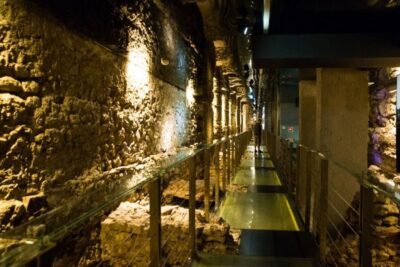
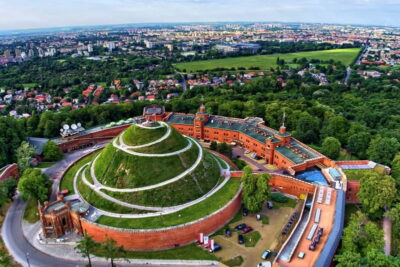

Krakow Schindler’s Factory Museum Guided Tour in English
Read our review →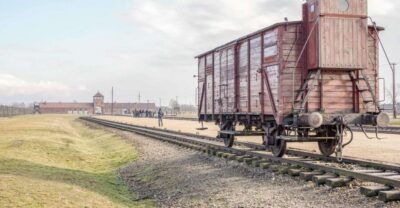
Auschwitz Birkenau Museum Guided Tour with Pickup
Read our review →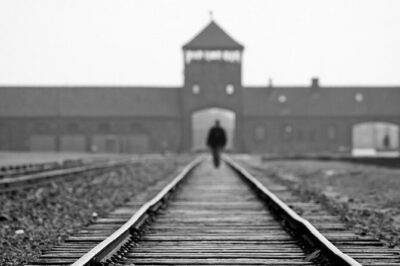
Auschwitz Birkenau Guided Tour Small Group with Hotel Pick up
Read our review →Browse the lists this tour appears in