Review · ITALY
Perugia: Chapter Museum entry ticket
Perugia’s Capitular Museum makes a small space carry a surprisingly large story. Inside the cathedral complex, eight rooms bring together works by Perugino, Luca Signorelli, and Agostino di Duccio, along with vestments, embroidery, manuscripts, and the famous ring linked to the Holy Virgin Mary.
I like the museum’s one-day flexibility and its setting in the 1700s cloister, reached through the big portal on Piazza IV Novembre. I also like the price: at $9, it is an easy add-on to a day in central Perugia, especially if you already plan to see the cathedral or Perugia Underground.
The main drawback is that this is primarily a self-guided visit. You receive an Italian or English brochure, but not a full guided tour as part of the ticket. A guide or greeter may be present, and one recent visitor warmly praised a clear, enthusiastic woman wearing a headband, but you should book this expecting to explore independently.
Key points to know before entering
- Eight themed rooms: The museum arranges its collection by subject, making the visit easier to follow than a random gallery walk.
- A 2023 renovation: The refreshed presentation gives the museum a more current setting while keeping its historic cloister and cathedral connection.
- Major Umbrian artists: Look for works linked to Perugino, Signorelli, Agostino di Duccio, and other artists tied to the city.
- The Virgin Mary’s ring: One of the museum’s most unusual stories concerns the ring traditionally associated with the Holy Virgin Mary.
- A $9 cultural stop: The ticket is valid for one day, with no need to commit to a long tour or fixed schedule.
- Practical access: Enter through the large portal in Piazza IV Novembre and go to the ticket office inside the cathedral cloister.
Why this museum belongs on a Perugia day
Perugia can feel like several cities stacked on top of one another. There is the busy central square, the cathedral above, the underground streets below, and a long artistic and religious story threaded through the buildings. The Capitular Museum gives you a compact way to connect those pieces.
The museum was founded in 1923 and renovated in 2023. That combination matters. You are not walking through an untouched collection with little help on offer. The rooms have been arranged to explain how the city, its religious institutions, its artists, and its people shaped the objects now on display.
The museum occupies part of the monumental San Lorenzo complex. The same complex includes the Cathedral of San Lorenzo and the Perugia Underground, so the ticket works best as part of a larger visit to Piazza IV Novembre. You can enter the cloister, get your ticket, and then decide how much time you want to give the museum.
At $9 per person, I see this as a low-risk cultural stop. It is not a full-day attraction by itself, despite the ticket being valid for one day. Instead, it gives you a focused hour or so of art and local context, though the exact length depends on how closely you read the brochure and study each object.
A few more museum visits around Italy worth comparing
- Vatican: Museums & Sistine Chapel Entrance Ticket
★ 4.5 · 144,003 reviews - Florence: Skip-The-Line Uffizi Gallery Timed Entry Ticket
★ 4.5 · 27,832 reviews - Vatican Museums & Sistine Chapel Skip-the-Line Entry Ticket
★ 4.4 · 13,838 reviews
Entering through the 1700s cloister
Your first task is simple but worth knowing: go to the ticket office inside the cathedral cloister. The meeting point is not a separate street entrance somewhere else in town. Use the large portal on Piazza IV Novembre to access the cloister and then find the ticket office for the Chapter Museum and Perugia Underground.
The 1700s cloister provides a calm change from the square outside. That transition is part of the pleasure here. You move from one of Perugia’s main public spaces into a more enclosed setting, then into rooms built around the cathedral’s religious and artistic world.
This is also where you can sort out practical questions. The host or greeter languages are Italian and English, and the museum supplies an informational brochure in either language. Since the visit is self-guided, take the brochure before you begin rather than rushing straight into the first room.
The site is wheelchair accessible. Food and drinks are not allowed, pets are not permitted except for assistance dogs, and flash photography is forbidden. These rules are standard for a museum, but they are useful to know if you are planning a longer stop in the cathedral complex.
Eight rooms that connect art and devotion
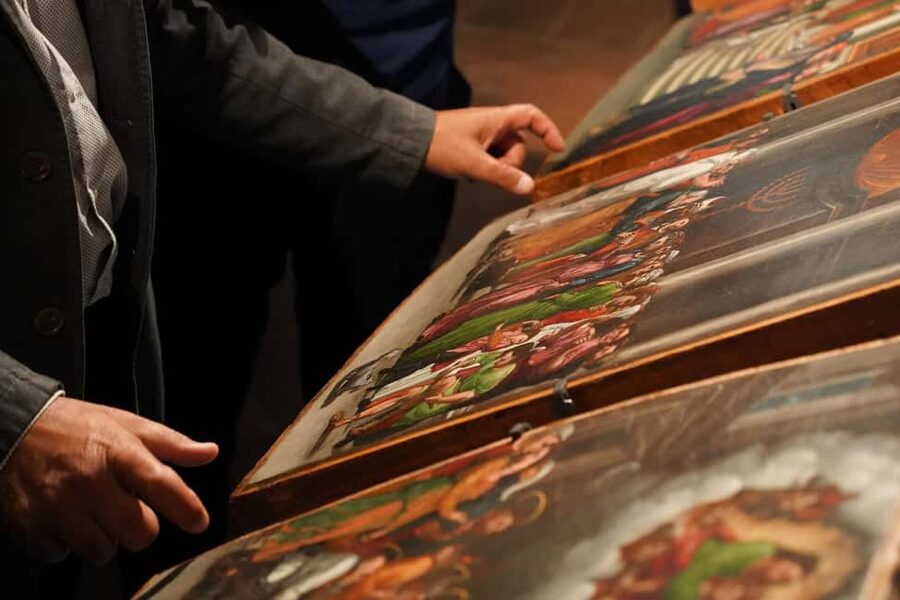
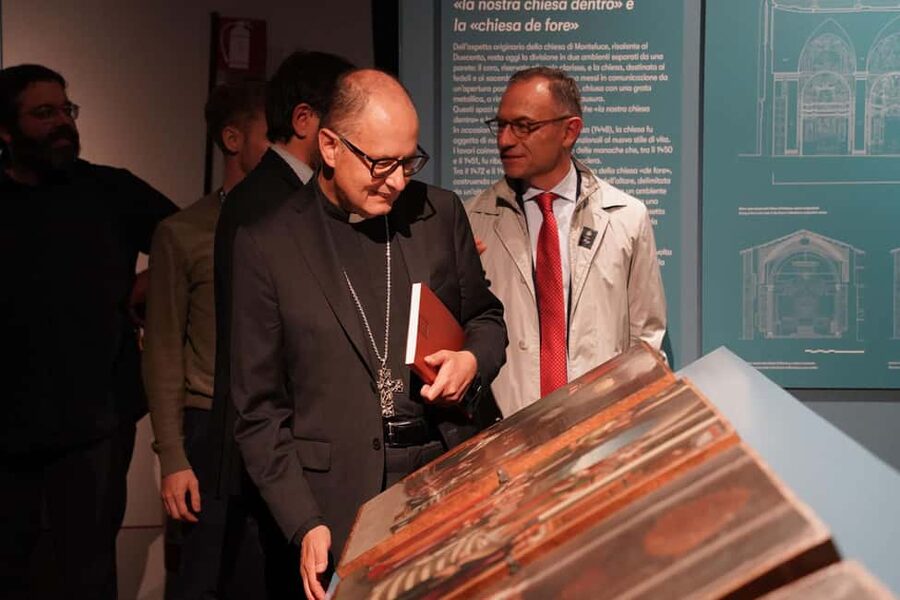
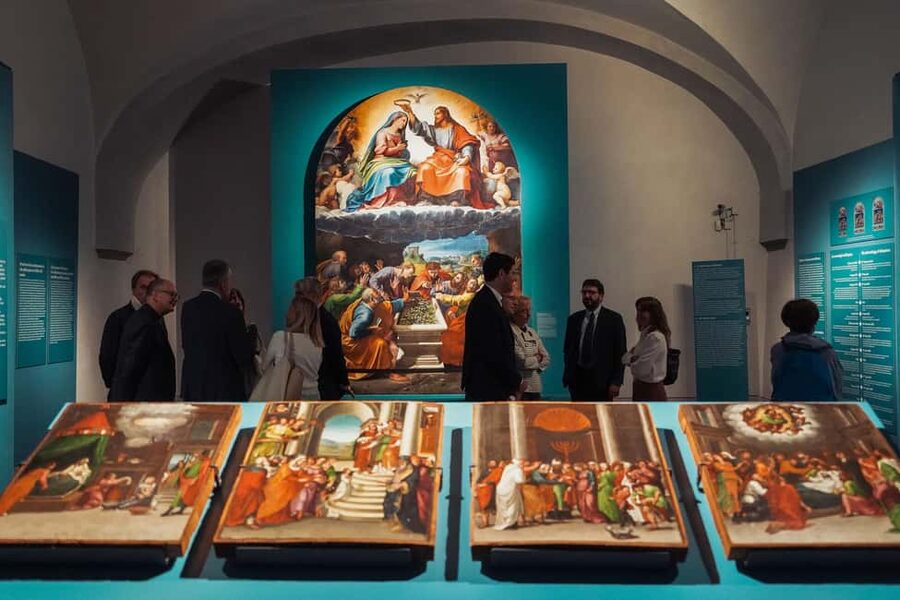
The museum is divided into eight rooms by subject. That layout helps you read the collection as a series of connected themes rather than as a pile of valuable objects.
Expect a mix of paintings, sculptures, colors, textiles, and embroidery. The works do not only show what artists could create. They also show how religious institutions expressed status, devotion, ceremony, and local identity.
The collection’s purpose is especially clear when you move between the major works and the more personal or practical objects. A Renaissance painting can tell you about artistic ambition. A decorated garment can show the resources and taste of a cardinal. A manuscript can preserve a story that survived through writing rather than paint or stone.
The museum asks you to pay attention to those links. The artists are important, but so are the people who commissioned, wore, protected, and passed down the objects. This makes the visit useful for anyone who wants more than a checklist of famous names.
Because there is no standard guided tour included, give yourself permission to move slowly. Read the brochure, look for the connections between rooms, and do not assume the largest painting is the only important object. The smaller pieces may carry the oddest stories.
Perugino and the Umbrian artistic tradition
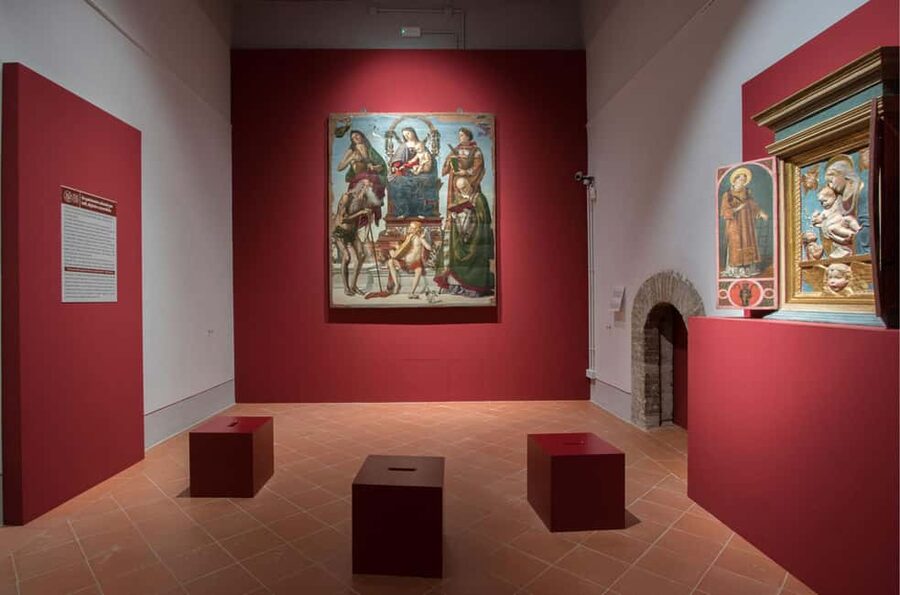
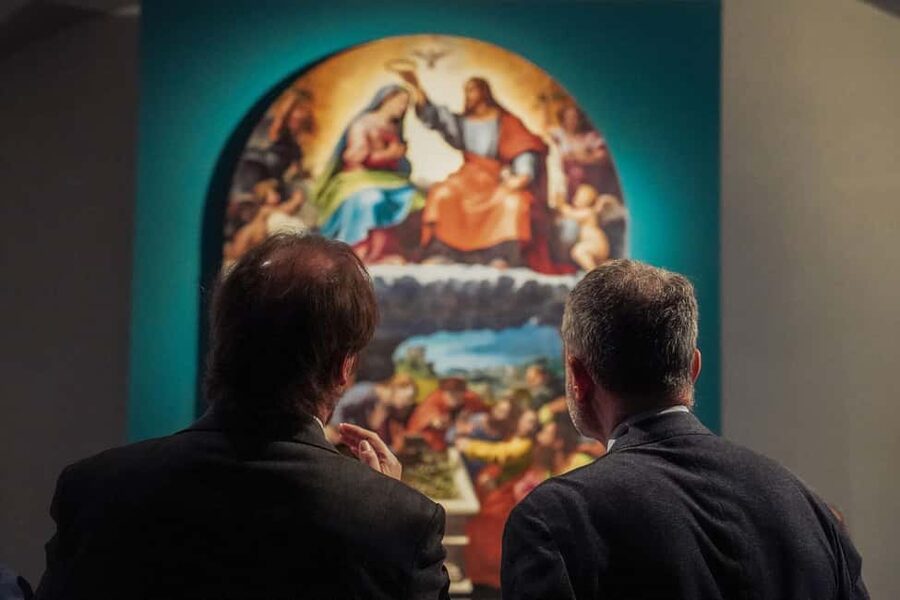
Perugino is one of the names that gives this museum its artistic weight. His work helps place Perugia within the wider development of Renaissance painting in Umbria. The museum also includes works connected with Luca Signorelli and Agostino di Duccio, giving you more than one version of the region’s artistic character.
Signorelli is especially important here because the museum highlights the greatness of one of his Renaissance masterpieces. You may want to make this work a deliberate stop rather than simply passing it on the way to something else.
The museum’s value is not only that it contains respected artists. It lets you see those artists within a local setting. In a major national museum, a Perugino or Signorelli may be presented as part of a broad story of Italian art. Here, the works sit inside the religious and civic world of Perugia.
That local frame changes how you look. You are not only asking how a painting was made or why an artist matters. You are also asking why this work was kept here, who valued it, and how it fit the life of the cathedral.
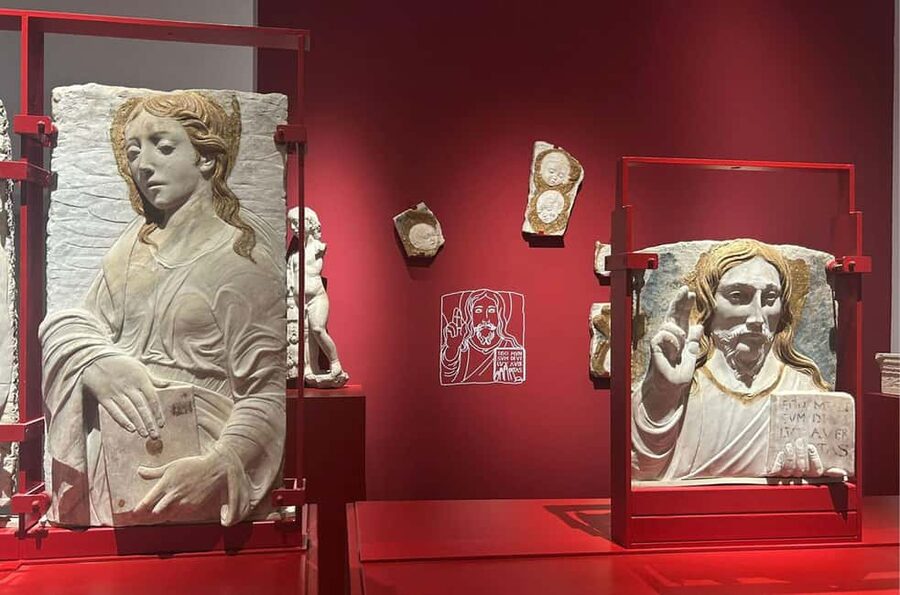
Agostino di Duccio adds another angle through sculpture. The presence of sculpture alongside paintings, garments, and manuscripts keeps the visit from becoming a single-medium art lesson. You get a sense of the range of skill and material used to express sacred ideas.
Same city, a completely different collection:
- Vatican Museums, Sistine Chapel & St. Peter’s Basilica Tour
★ 4.3 · 73,970 reviews - Vatican Museums, Sistine Chapel & St Peter’s Basilica Guided Tour
★ 4.5 · 39,149 reviews - Rome: Vatican Museums, Sistine Chapel and Basilica Tour
★ 4.3 · 16,039 reviews - Rome: Vatican Museums, Sistine Chapel & Basilica Tour
★ 4.7 · 13,217 reviews
The story of the Virgin Mary’s ring
The Holy Virgin Mary’s wedding ring is one of the museum’s most memorable subjects. It gives the visit a story with a strong human hook, even for people who are not normally drawn to religious collections.
The ring’s history includes changes in custody and circumstances, described as its vicissitudes. That word matters because the object is not simply displayed as a precious piece of jewelry. It carries a long story of belief, protection, and the way sacred objects gain meaning over time.
This is the sort of display that can make a museum feel connected to the people of a town. You are looking at an object, but you are also considering why a community would preserve it and what it represented to generations of worshippers.
If you are visiting with children or with companions who are less interested in paintings, this may be the room or subject that keeps them engaged. It has a clear narrative and a concrete object at its center.
Do not expect the ticket to include a special presentation about the ring. The museum visit is self-guided, and the brochure is your main aid. If a staff member or greeter is available, you can ask for help in Italian or English, but the published format does not promise a dedicated talk.
Cardinals, clothing, and the Acre manuscript
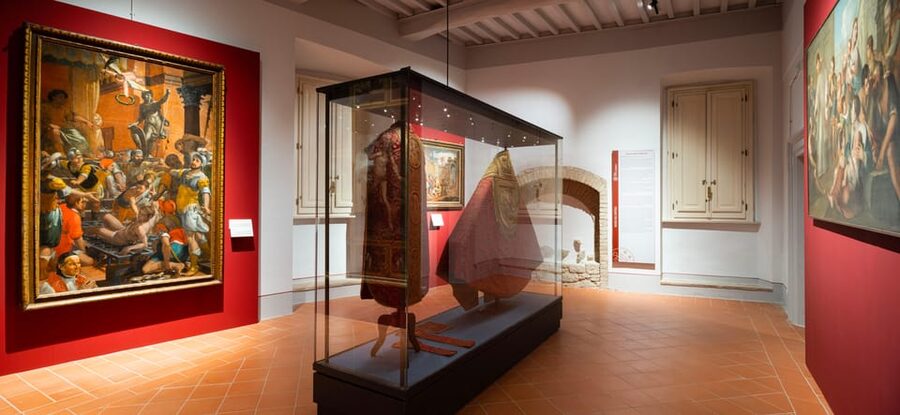
The museum also points you toward the clothes of Cardinal Armellini, described in the museum material as the clothing of an unscrupulous cardinal. This is a useful reminder that the collection is not only about polished religious ideals. The people connected to the cathedral could be powerful, complicated, and far from perfect.
Clothing can be easy to overlook in an art museum. Here, it helps show how rank and authority were made visible. Fabric, decoration, and ceremonial dress turned religious office into something the public could see.
The Acre manuscript offers a different kind of story. Manuscripts require patience because their details are often quieter than a painting or sculpture. Yet the reference to Acre adds a wider geographic reach to the collection and gives you a reason to consider how documents, ideas, and religious traditions moved across borders.
These displays are part of what makes the museum more than a small painting gallery. You get art, devotion, power, clothing, writing, and local memory in one compact route. The range also means some rooms may appeal to you more than others. If you prefer painting, spend extra time with Perugino and Signorelli. If you enjoy unusual objects and human stories, look closely at the ring, garments, and manuscript.
Self-guided, but not without help
The ticket includes a brochure in Italian or English, not a guided tour. That distinction should shape your expectations.
A self-guided visit gives you control. You can move quickly if you have a packed day in Perugia, or stop for longer at the works that catch your eye. There is no need to follow a group or keep pace with a scheduled talk.
The tradeoff is interpretation. A guide can explain why a work matters, connect it to the cathedral, and point out details you might miss. The museum’s materials give you a basic path, but you will need to do more of the connecting yourself.
One recent visit received warm praise for a female guide who was described as clear, concise, and enthusiastic. Since a guided tour is not included in the ticket description, treat that as a possible benefit rather than a guaranteed part of your booking. The safe assumption is that you will enter with the brochure and explore at your own pace.
This format suits independent visitors who enjoy looking closely and reading enough to build their own understanding. It is less suitable if you want a fully narrated art tour with a specialist beside you from the first room to the last.
How much time and money should you allow?
The ticket costs $9 per person and is valid for one day. The price is reasonable for the setting, the works on display, and the chance to combine the museum with other parts of the San Lorenzo complex.
I would not buy this as a stand-alone reason to spend an entire day in Perugia. I would add it to a central Perugia itinerary. You can visit the cathedral, see the cloister, explore the Capitular Museum, and consider the Perugia Underground as part of the same area.
The one-day validity gives you useful freedom. You do not need to force every part of the visit into a narrow time slot, though you should check the available starting times when booking. The ticket is not described as an open-ended pass across several days, so plan to use it on the selected day.
You can also cancel up to 24 hours before the visit for a full refund, and the reserve-now-pay-later option lets you hold a place without paying immediately. Those policies are helpful if your Perugia plans are still shifting, but the real value comes from the modest entry price and central location.
Who will get the most from this visit?
I would recommend the museum to art lovers who want to see Umbrian artists in their local setting rather than only in a large national collection. It also works well for anyone interested in church history, sacred objects, textiles, or the relationship between art and power.
The museum is a good choice for a rainy spell, a slower afternoon, or a short cultural stop between other sights in the historic center. The eight-room format gives you structure without taking over your entire day.
Families may find the ring and the stories around the cardinal’s clothing easier to discuss than a room filled only with paintings. The self-guided format also lets you leave when interest fades, rather than waiting for a tour to finish.
I would be more cautious if your main goal is a full guided art lecture. The ticket does not include that service. You should also avoid expecting a huge collection. This is a focused museum, and its strength is the connection between the objects and the cathedral complex, not sheer size.
Should you book the Capitular Museum ticket?
Book it if you will already be in Piazza IV Novembre and want a compact look at Perugia’s art, religious life, and local stories. At $9, it offers good value, especially for the Perugino and Signorelli connections, the Virgin Mary’s ring, and the unusual mix of paintings, sculpture, clothing, embroidery, and manuscript material.
Skip it if you want a fully guided experience or if your schedule has room for only the city’s largest headline sights. For most independent visitors, though, this is an easy addition: enter through the cloister, collect the brochure, and let the eight rooms show you a more personal side of Perugia.
FAQ
Where is the Capitular Museum located?
The museum is in the monumental San Lorenzo complex in Perugia, accessed through the large portal in Piazza IV Novembre.
Where do I get the ticket?
Go to the ticket office for the Chapter Museum and Perugia Underground inside the cathedral cloister.
How much does admission cost?
The listed price is $9 per person.
How long is the ticket valid?
The ticket is valid for one day.
Is the visit guided?
The ticket provides a self-guided visit. An informational brochure is available in Italian or English, and a guided tour is not included.
Which artists are represented?
The museum features works by Perugino, Luca Signorelli, Agostino di Duccio, and other artists.
What unusual objects can I see?
The collection includes the story of the Holy Virgin Mary’s wedding ring, the clothing of Cardinal Armellini, and the Acre manuscript, as well as paintings, sculptures, and embroidery.
Is the museum wheelchair accessible?
Yes, the activity is listed as wheelchair accessible.
Can I cancel my booking?
Yes. You can cancel up to 24 hours in advance for a full refund. A reserve-now-pay-later option is also available.
Just added around Italy
- Oil museum and oil mill in Tuscany: tour and tasting★ 5.0 · 16 reviews
- Enchanted Castle of Sciacca – Museum Tickets★ 3.5 · 63 reviews
- Torino: FIAT Historic Museum and Lingotto District Tour★ 4.9 · 14 reviews
- Torino: The Car Museum Skip-The-Line Tour★ 4.7 · 22 reviews
- Timed Entry Ticket to the Uffizi Gallery★ 4.5 · 498 reviews
- Florence: Accademia Gallery Entry Ticket with Audio Guide★ 4.1 · 88 reviews
- Vatican City: Sistine Chapel, Museums, Basilica Private Tour★ 4.8 · 158 reviews
- Rome: Capitoline Museums and Centrale Montemartini Tickets★ 4.4 · 328 reviews
Museum Tours in Italy, compared.
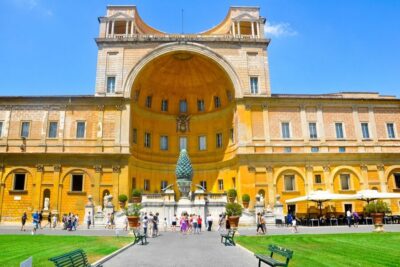
Vatican: Museums & Sistine Chapel Entrance Ticket
Read our review →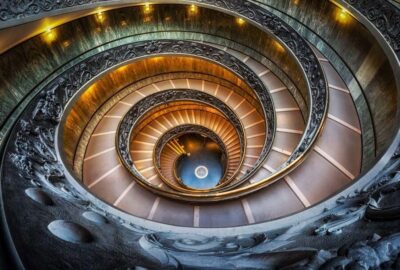
Vatican Museums, Sistine Chapel & St. Peter’s Basilica Tour
Read our review →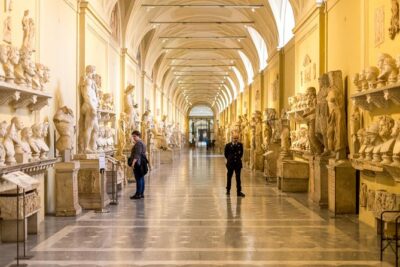
Vatican Museums, Sistine Chapel & St Peter’s Basilica Guided Tour
Read our review →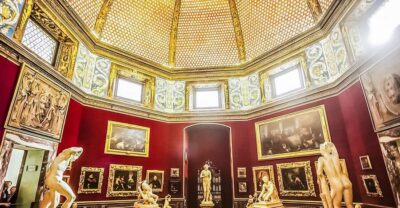
Skip-The-Line Uffizi Gallery Timed Entry Ticket
Read our review →
Vatican Museums, Sistine Chapel and Basilica Tour
Read our review →
Vatican Museums & Sistine Chapel Skip-the-Line Entry Ticket
Read our review →
Vatican Museums, Sistine Chapel & Basilica Tour
Read our review →