
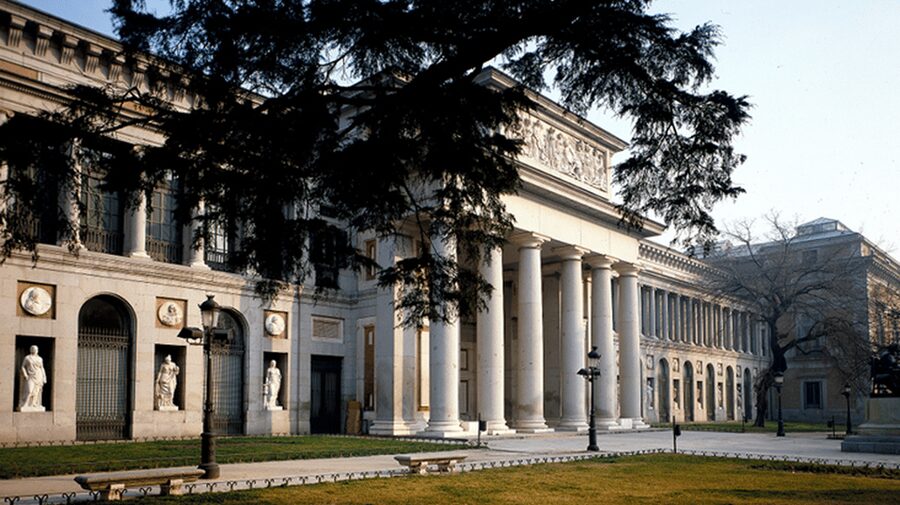
Review · MADRID
Prado Museum Tour with ticket, small group & expert guide
The Prado is easiest to appreciate when someone helps you connect the paintings to the kings, church leaders, artists, and patrons who shaped them. This two-hour small-group tour follows a focused route through major works by Velázquez, Goya, Bosch, Rubens, Titian, and others, rather than leaving you to wander a huge museum without a plan.
I like the maximum group size of 10, which gives you a better chance to hear the guide and ask questions. I also like that the guides make the art approachable for families. Rubén kept two children, ages 10 and 12, interested, while Loreta brought Italian-speaking teenagers into the discussion with humor and clear explanations.
The main consideration is time. Two hours is enough for the Prado’s essential works, but not enough to see the whole museum. The collection contains more than 35,000 works, and this tour gives you a selected route rather than a full survey.
Key points before you book
- Follow a focused route through a vast museum: You’ll see major paintings without spending your first hour figuring out where to go.
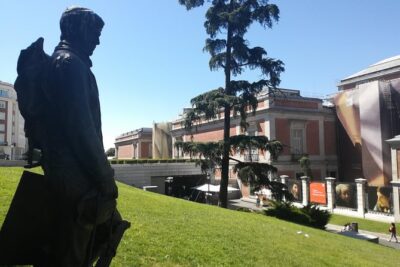
- Meet near the Velázquez statue: Look for the guide with a blue umbrella at the stated meeting point.
- Expect a small group of no more than 10: This is a more personal setup than a large museum crowd.
- See the Prado’s major names: Velázquez, Goya, Bosch, Rubens, Titian, Murillo, and Fra Angelico are part of the planned route.
- Choose from three tour languages: Live guiding is offered in English, Spanish, and Italian.
- Plan for a brisk introduction, not a complete museum visit: The two-hour format covers highlights and interpretation, not every gallery.
Meeting the guide near the Velázquez statue
Your tour begins at the Monumento a Velázquez, close to the Prado. The guide will be identified by a blue umbrella, a useful detail in a busy museum district where several groups may be gathering at once.
Arrive with enough time to find the statue and spot the umbrella. The meeting point is outside, and the tour runs rain or shine, so a light rain jacket is sensible if Madrid’s forecast looks uncertain. Hotel pickup and drop-off are not included, and you make your own way to the museum.
The meeting location also sets the tone. Velázquez is not just a name on the itinerary. He is one of the Prado’s central figures, and the statue gives you an immediate link to the painter whose work you’ll soon see inside.
One practical plus is communication before the visit. Rubén contacted one family the day before to confirm the meeting details. That sort of message can remove a small but real worry, especially if you are arriving at the Prado for the first time.
More Museum Tours in Madrid
- Madrid: Prado Museum Entry Ticket
★ 4.6 · 20,699 reviews - Madrid: Reina Sofía Museum Entrance Ticket
★ 4.5 · 8,788 reviews - Madrid: Small Group of Prado Museum Tour & Optional Tapas
★ 4.6 · 2,437 reviews
Entering the Prado with a selected plan
The Prado is not a museum you should treat like a quick stop between lunch and shopping. Its collection is huge, and the grand building can make it hard to know where to begin. A guide gives you a route and a reason for each stop.
Your ticket is included, and priority access to the ticket line is part of the tour. That saves time, though it does not turn the museum into a private space. You will still be visiting a major public institution, and the galleries may feel busy.
The planned route brings together the best-known works in the collection. You will not see every room or every important painter. Instead, you’ll spend time on paintings that help explain Spanish and European art from the Middle Ages through the 19th century.
That focus is valuable for first-time visitors. You can leave with a clear picture of the Prado’s main strengths instead of a blur of names and rooms. It also works well if your Madrid schedule is tight and you want two solid hours of art without committing half a day.
Las Meninas and the world of Velázquez
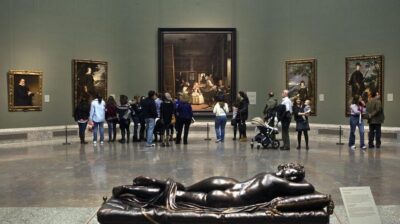
Velázquez is likely to be one of the most important stops. His Las Meninas is famous not simply because it is large or beautiful, but because it makes you question who is looking at whom.
The painting places the young Infanta Margarita, her attendants, a dog, a painter, and the royal couple into an unusual arrangement. Velázquez appears at work, while the king and queen are reflected in a mirror. Your guide can help you follow the shifting points of view and explain how the painter’s position at the court of Philip IV affected his work.
This is where expert interpretation earns its keep. You can look at Las Meninas for several minutes and admire its atmosphere, but a good explanation helps you notice the relationships between the figures, the mirror, the painter, and you as the viewer.
The tour also places Velázquez in his political setting. Court painting was not merely decoration. Portraits helped present power, rank, and royal identity. Seeing that context makes the Prado feel less like a hall of isolated masterpieces and more like a record of how Spain’s monarchy wanted to be seen.
Goya’s portraits and a change in Spanish painting
Francisco de Goya brings a different mood. The tour includes his royal portraits, which mark an important change in Spanish painting.
Goya could record the outward signs of rank while also giving a portrait a sharper, more human edge. His court work connects official image-making with personal expression, and the guide can point out how his approach differs from the polished formality associated with earlier royal portraiture.
This part of the visit is especially helpful if you are not already familiar with Spanish art. Goya is not presented only as a famous name. His paintings open a path into questions about power, personality, and the role of an artist working for the monarchy.
The Prado experience also links Goya’s paintings to wider forces such as politics, faith, conflict, and society. You may not study every stage of his career in two hours, but the guide’s explanation gives you a framework for understanding why his work matters.
More Prado tours and tickets:
- Madrid: Prado Museum Guided Tour with Skip-the-Line Ticket
★ 4.5 · 2,018 reviews - Madrid: Prado Museum Guided Tour With Fast Access
★ 4.8 · 1,785 reviews - Prado Museum Small Group Tour with Skip the Line Ticket
★ 5.0 · 1,738 reviews - Royal Palace & Prado Museum Skip the Line Guided Tour
★ 4.5 · 1,347 reviews
Bosch’s Garden of Earthly Delights
Hieronymus Bosch’s The Garden of Earthly Delights is one of the tour’s most memorable stops. It is packed with strange figures, symbolic scenes, temptations, and unsettling details. Even after several centuries, it refuses to give up all its secrets.
This is a painting that benefits from standing in front of it with time and guidance. You can enjoy its odd creatures and surprising scenes on your own, but the guide helps you consider its religious setting and the many ways viewers have tried to interpret its imagery.
The painting also breaks up the royal portraits and grand Baroque scenes with something more mysterious. It reminds you that the Prado is not only about Spanish monarchs. Its collection reaches across centuries and borders, bringing together different ideas about sin, pleasure, faith, and human behavior.
You should not expect the guide to explain every tiny detail in the work. No one can do that in a few minutes, and pretending otherwise would make the stop less useful. The goal is to give you enough context to look more closely and form your own response.
Titian and Rubens: art for royal power
The route includes Titian, the Venetian painter whose influence reached across Europe. His connection to the Spanish monarchy shows how royal patrons looked beyond Spain for art that could express status and taste.
Titian’s use of color and his approach to portraiture influenced later painters. The guide can place his work beside the Spanish examples, helping you see how ideas moved from one court and region to another.
Rubens offers another change in style. His paintings bring the force and motion of Flemish Baroque art into the Prado. Monumental forms, energetic compositions, and dramatic gestures give his work a very different feel from Bosch’s strange symbolism or Velázquez’s controlled court scenes.
Seeing these painters in one route is one of the tour’s strongest features. You are not only ticking off famous names. You are comparing artistic languages: Venetian color, Flemish movement, Spanish restraint, and Bosch’s crowded symbolic world.
The tour may also include works by Murillo and Fra Angelico, along with other important painters. Since the exact order and emphasis can depend on the guide and the museum’s current conditions, think of the route as a guided selection rather than a fixed checklist.
How the two-hour format feels
Two hours is a sensible length for a first Prado visit. It is long enough to cover major paintings without turning into a tiring march through room after room.
The pace will still be active. You will stop, listen, look closely, and move on. If you like to read every wall label or sit with one painting for 20 minutes, a guided highlights tour may feel too quick.
I see that as the main tradeoff. You gain structure, context, and access to the essential rooms, but you give up the freedom to spend the whole visit on one artist. The answer depends on your museum habits.
For a first visit, the route should leave you better prepared to return on your own. After the tour, you can choose whether to revisit Las Meninas, spend more time with Bosch, or explore another section of the collection at your own pace.
The tour ends at either the Monumento a Velázquez or the Museo Nacional del Prado. There is no transport back to your hotel, and food and drinks are not included, so plan your next stop separately.
A small group that works well for families
The maximum of 10 participants is a real advantage inside a museum. You are less likely to lose the guide in a crowd, and it is easier to ask for a point to be explained again.
The guides also appear to adjust their style to the group. Rubén kept the history lively for children aged 10 and 12, including practical restaurant suggestions for lunch afterward. Loreta drew teenagers into the conversation during an Italian-language visit and made a two-hour art lesson feel light without stripping away the substance.
Amanda was also praised for clear communication, friendliness, and strong teaching. Laura received similar praise for her explanations and command of the museum. Guide assignments can vary, so you should not book on the assumption that one specific person will lead your visit. Still, the named guides give you a useful sense of the team’s approach.
This format suits adults who want context and families who worry that the Prado may feel too serious for children. It is also a good fit for people who enjoy art but do not have a background in art history.
Price, access, and practical value at $72
At $72 per person, this is not the cheapest way to enter the Prado. The price includes the museum ticket, priority access to the ticket line, and a live guide in a group limited to 10.
The value depends on what you want from the visit. If you already know the Prado well and prefer to wander alone, you may find the added cost hard to justify. If you have one short window in Madrid, the guided route can save time and help you see the museum’s major works with more meaning.
The small group matters here. You are paying not only for entry, but also for a guide who can explain composition, history, symbolism, and court life as you stand in front of the art. That can be especially useful with paintings that are famous but not immediately easy to understand.
Priority access is another practical benefit, though you should still expect normal museum conditions. The tour does not promise an empty gallery or unlimited time at each work.
The museum is wheelchair accessible. Photography inside is not allowed, and pets are not allowed. The tour is offered in English, Spanish, and Italian.
You can cancel up to 24 hours before the activity for a full refund, and the reserve-now, pay-later option keeps your plans flexible. Check the available start times before booking because the two-hour duration is fixed, but the departure time can vary.
Who should book this Prado tour
I would point this tour toward first-time Prado visitors, families, and anyone who wants the main works explained rather than simply photographed in memory.
It is also a good choice if your Madrid visit is short. Two hours gives you a clear introduction to Velázquez, Goya, Bosch, Titian, Rubens, and other major artists without asking you to spend an entire day inside the museum.
Choose it if you like asking questions, learning the story behind a painting, and comparing different artistic styles. The English, Spanish, and Italian options make it practical for mixed-language planning as well.
You may want a different approach if you are a serious art student, already know the Prado, or prefer a slow, unplanned visit. The selected route is designed to prevent museum overload, but it also means you will pass many works without stopping.
Should you book it?
Book this tour if you want a well-organized introduction to the Prado and value a guide who can make famous paintings easier to read. The strongest reasons are the small group, included ticket, priority entry, and focus on artists who define the museum.
I would be especially comfortable recommending it to families. The guide style has worked well for children and teenagers, and the two-hour length is manageable. Italian-speaking visitors may appreciate the option to request Loreta, though guide assignment cannot be guaranteed.
Skip it if you want to explore every room alone or spend your whole visit with one painter. For everyone else, $72 buys a focused, useful first look at one of Madrid’s most important museums.
FAQ
How long does the Prado Museum tour last?
The guided museum visit lasts two hours.
What is included in the price?
Entry to the Prado Museum is included. Food, drinks, hotel pickup, and hotel drop-off are not included.
Where is the meeting point?
Meet near the Monumento a Velázquez, close to the Prado. Look for the guide with a blue umbrella.
What languages are available?
The live guide is available in English, Spanish, and Italian.
How large is the tour group?
The group is limited to a maximum of 10 participants.
Is the Prado tour wheelchair accessible?
Yes, the activity is wheelchair accessible. Photography inside the museum is not allowed, and pets are not permitted.
Just added around Madrid
- Madrid: Afternoon Prado Museum Tour with Skip-the-Line Entry★ 4.4 · 491 reviews
- Small Group Prado Museum Guided Tour with Skip the Line★ 4.2 · 106 reviews
- Madrid: Reina Sofía Museum Guided Tour, Small Group★ 4.9 · 67 reviews
- Reina Sofía Museum – Guided tour IN ITALIAN with family discount.★ 4.8 · 19 reviews
- Madrid: Prado Museum Skip-the-Line Guided Tour★ 4.3 · 254 reviews
- Prado Museum for kids & families: Private fun tour★ 5.0 · 32 reviews
- Madrid: Prado Museum guided tour optional Reina Sofía Museum★ 4.8 · 38 reviews
- Madrid: Guided visit to Reina Sofia Museum- SMALL GROUP★ 4.2 · 41 reviews
Museum Tours in Madrid, compared.
Prado Museum Guided Tour with Skip-the-Line Ticket
Read our review →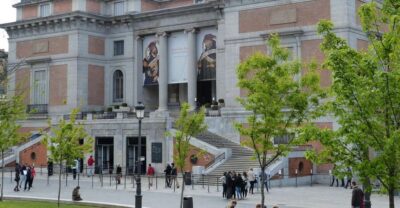
Prado Museum Small Group Tour with Skip the Line Ticket
Read our review →
Royal Palace & Prado Museum Skip the Line Guided Tour
Read our review →
Browse the lists this tour appears in