Review · ITALY
Pompeii: Virtual Museum ticket
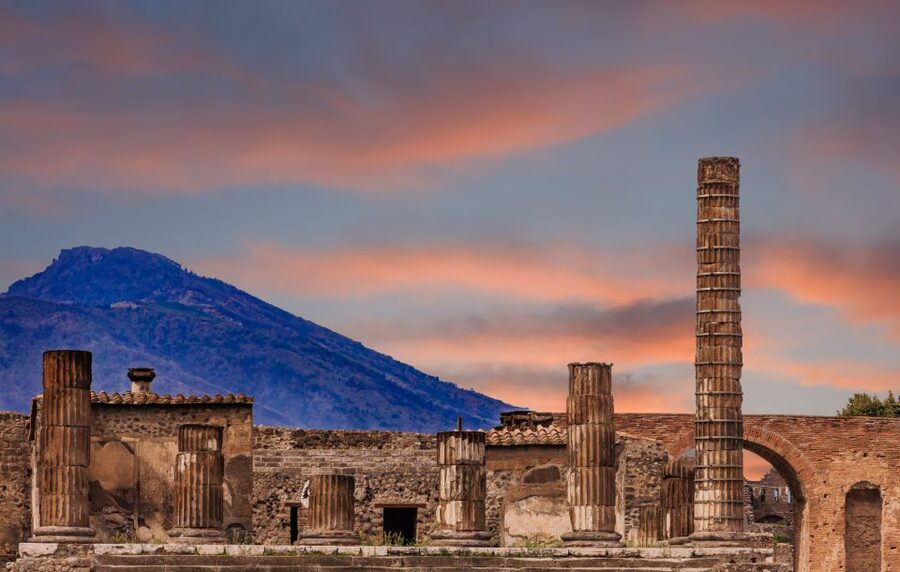
Pompeii Virtual Museum lets you see the city before Vesuvius turned it into a time capsule. Animated reconstructions show the Forum, baths, amphitheater, homes, banquets, and the Lupanar as living places, not just walls and broken columns. I especially like the way it sets up the archaeological site, and the final eruption sequence gives the disaster a clear human scale.
I also like the chance to use the museum as a short introduction before walking through Pompeii itself. A French-speaking mediator has guided visitors through the displays, adding useful details about daily life and the eruption. The catch is value: at $14 per person, the museum alone may feel brief or costly if you expect a full museum visit rather than a 30-minute audiovisual presentation.
Key points to know before you go
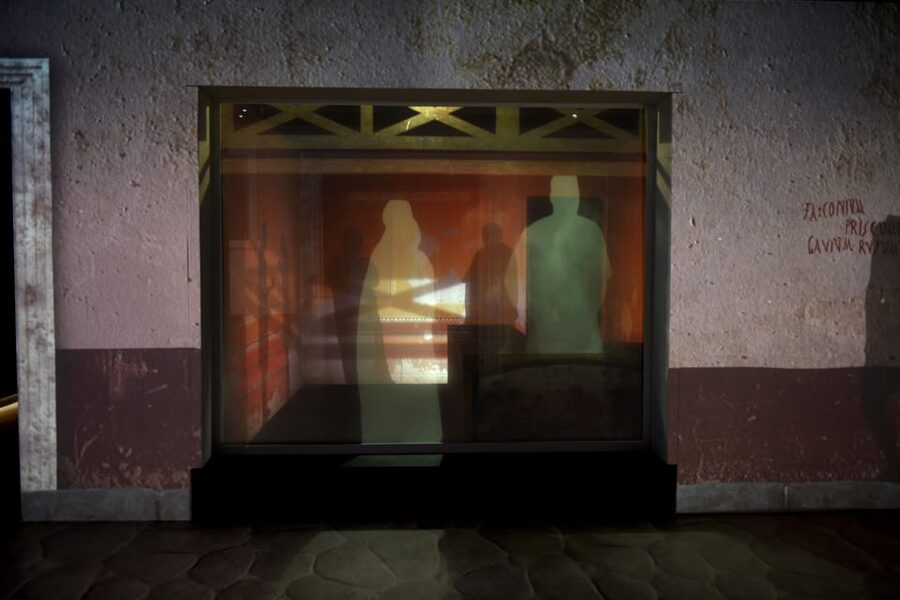
- Pompeii before the ash: See homes, public buildings, banquets, baths, and street life reconstructed in 3D.
- The eruption has a clear ending: The presentation shows how Vesuvius destroyed the city in 79 AD.
- Best paired with the ruins: You can add an entry ticket to the Pompeii archaeological area and compare the virtual buildings with what survives.
- A useful French-language introduction: A mediator may explain the scenes in French, with anecdotes about ordinary Roman life.
- Plan for a short or long visit: The experience can take 30 minutes alone or up to four hours when combined with Pompeii.
- Bring only essentials: Large bags, food, drinks, pets, and indoor photography are not allowed.
What the Pompeii Virtual Museum actually adds
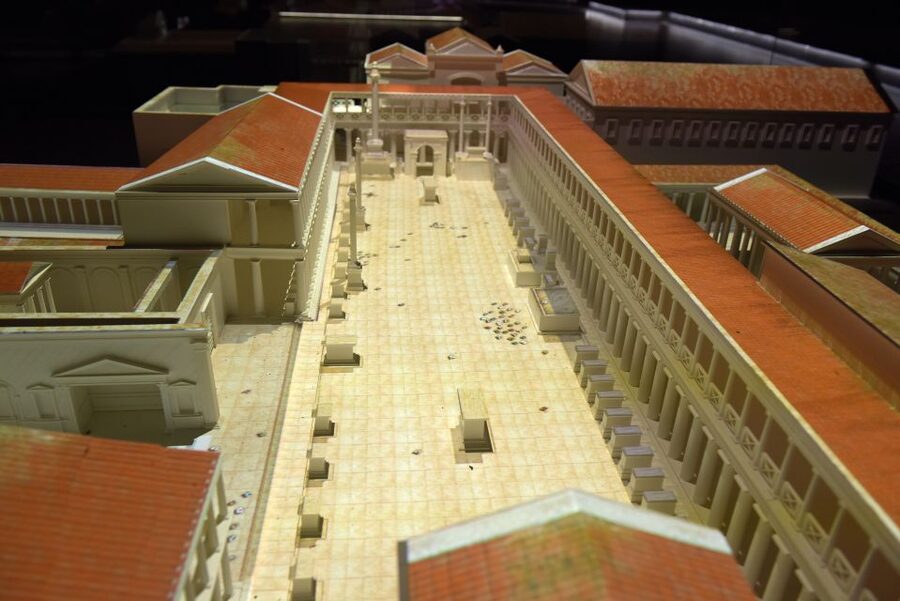
Pompeii can be hard to read on your first visit. You see a wall, a pavement, a few columns, and perhaps a faded fresco, but the original building is gone. The virtual museum tackles that problem by rebuilding part of the city on screen and in models.
You begin with Pompeii as a working Roman town, before the eruption. The focus is not only on emperors or grand monuments. You see a place where people lived, ate, argued, traded, enjoyed public baths, and sought entertainment. That everyday angle gives the later disaster more weight.
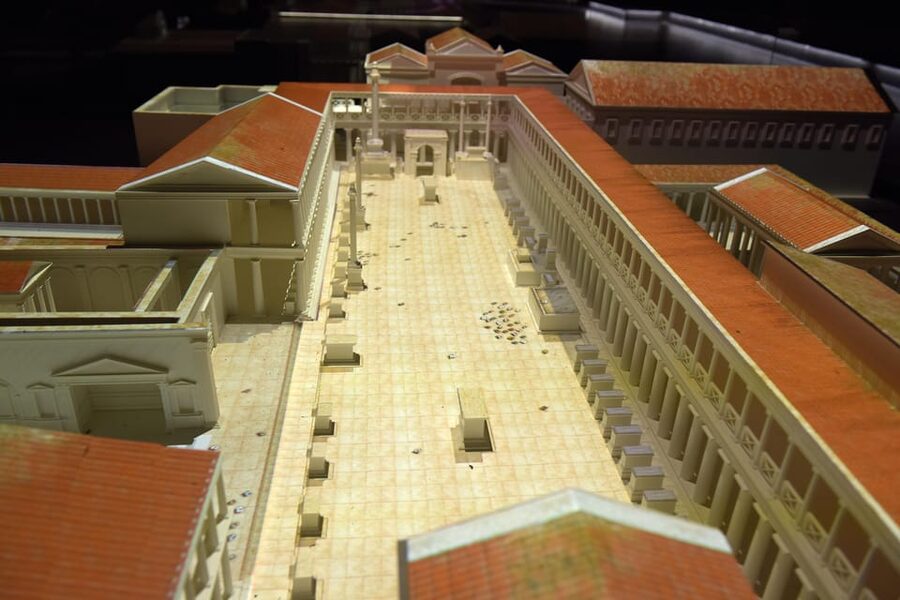
The presentation uses animated reconstructions and 3D scenes rather than a traditional display of objects. You are shown the form and purpose of important buildings, including the Forum, baths, and amphitheater. From above, you can understand how these places related to one another, something that is often difficult when you are standing among the ruins.
The museum also recreates private and less respectable corners of Roman life. A banquet scene gives you a sense of food, status, and social display. The Lupanar is presented as part of the city’s real life, not as a sanitized footnote. The result is direct and sometimes earthy, which suits Pompeii better than a polished, overly formal presentation would.
A few more museum visits around Italy worth comparing
- Vatican: Museums & Sistine Chapel Entrance Ticket
★ 4.5 · 144,003 reviews - Florence: Skip-The-Line Uffizi Gallery Timed Entry Ticket
★ 4.5 · 27,832 reviews - Vatican Museums & Sistine Chapel Skip-the-Line Entry Ticket
★ 4.4 · 13,838 reviews
The opening scenes: Pompeii alive before 79 AD
The first part is the most useful for orientation. You see Pompeii before Vesuvius erased its buildings, with the city presented as a place of movement and noise rather than a silent ruin.
The Forum is one of the key reconstructions. In the archaeological area, the Forum can look wide, bare, and difficult to picture in use. The virtual version helps you imagine its original scale and purpose. You get a better sense of how the city’s public life centered on this space.
The baths are another strong stop. Roman baths were not simply places to wash. They were social spaces, and the reconstruction helps you understand the sequence and function of the rooms. You can then look for the remains of similar spaces in the real site with a sharper eye.
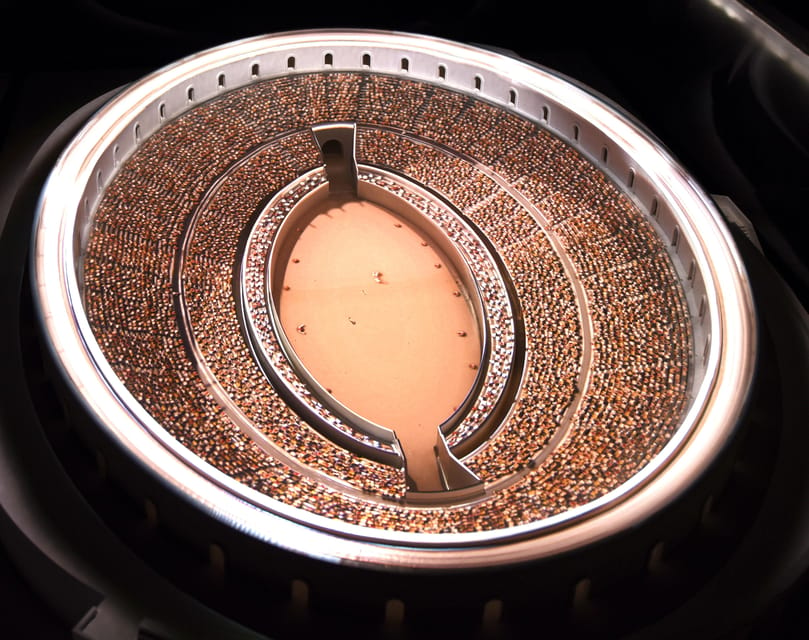
The amphitheater is shown from above, which is especially helpful. At ground level, you may see entrances, seating, and walls without immediately understanding the whole structure. The aerial view supplies that missing shape.
This is where the museum earns its place before a Pompeii visit. You are not just collecting facts. You are building a mental picture that makes the ruins easier to read.
Houses, banquets, and the less polished side of Roman life
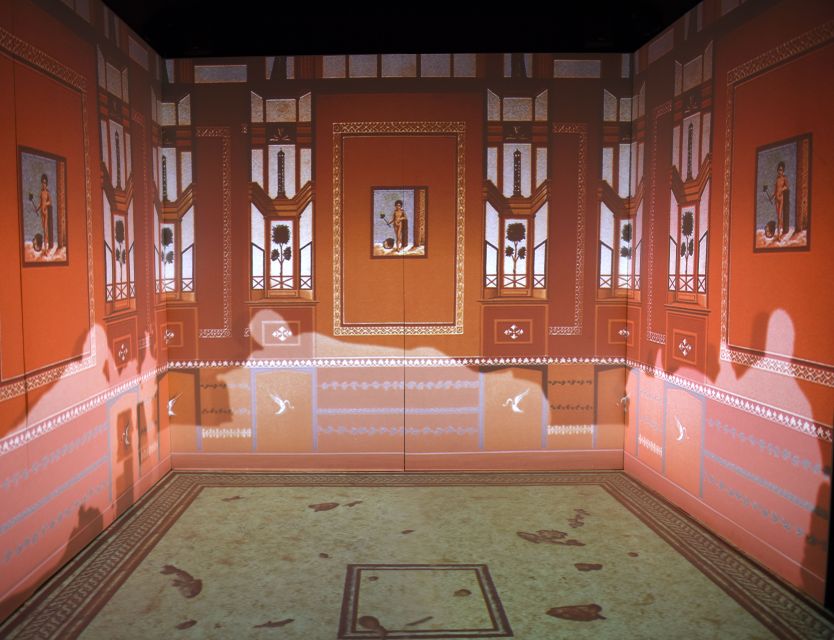
The virtual scenes move beyond public monuments. You can enter reconstructed houses and see how Roman domestic life may have been arranged. The experience also places you at a banquet, where eating was tied to social rank and public display.
I like this part because it avoids making Pompeii only a story about disaster. The city was full of routine pleasures and private habits. People cooked, entertained friends, conducted business, attended spectacles, and used public facilities. That ordinary rhythm is exactly what was interrupted by the volcano.
The Lupanar scene gives the presentation a more candid tone. Pompeii’s brothel is famous, and the virtual format lets you understand its place in the city without needing to infer everything from a few small rooms and surviving paintings. It is not a stop for every family, so parents should decide in advance how comfortable they are with that subject.
The reconstructions are not a substitute for the actual remains. They are an interpretation of how the city looked and functioned. Treat them as a visual aid, then use the archaeological site to examine what is still there.
The eruption sequence and why it works
The presentation ends with the eruption of Vesuvius in 79 AD. This is the dramatic section, but it is also the part that gives the earlier scenes their purpose.
You see the city change from a place of daily life to a city facing fire, ash, and destruction. The final sequence explains how Pompeii disappeared while also preserving it for later generations. The wording in the presentation may be theatrical, but the basic idea is powerful: the catastrophe ended the city and protected a record of Roman life beneath the volcanic material.
I find this more useful than arriving at the ruins with only a vague idea that a volcano erupted. It gives you a sense of the sudden break between the busy city before the disaster and the damaged remains you see today.
Do not expect a scientific lecture or a full account of every stage of the eruption. The experience is designed as a visual introduction. If you want detailed archaeological interpretation, you will need time at the site itself or a separate guide.
Same city, a completely different collection:
- Vatican Museums, Sistine Chapel & St. Peter’s Basilica Tour
★ 4.3 · 73,970 reviews - Vatican Museums, Sistine Chapel & St Peter’s Basilica Guided Tour
★ 4.5 · 39,149 reviews - Rome: Vatican Museums, Sistine Chapel and Basilica Tour
★ 4.3 · 16,039 reviews - Rome: Vatican Museums, Sistine Chapel & Basilica Tour
★ 4.7 · 13,217 reviews
Pairing the museum with the archaeological area
The optional archaeological-area ticket is the major decision when booking. The museum alone may take about 30 minutes. With Pompeii entry, the full experience can run from 30 minutes to four hours, depending on the option selected and the time you spend among the ruins.
I recommend the combination for a first visit if the price fits your plans. The virtual reconstruction explains what you are looking at, while the real site shows the surviving streets, walls, pavements, public buildings, and houses. One gives you the complete shape. The other gives you the original material and the wear of time.
The order matters. Start at the virtual museum, then enter the archaeological area. That way, the Forum, baths, amphitheater, and houses already have a visual reference in your mind. A French-speaking mediator has helped make this sequence especially useful by explaining the reconstructed buildings and adding details about daily life and the eruption.
The archaeological ticket is included only when you select that option. Check your booking carefully. The museum ticket by itself does not automatically give you entry to the ruins, and it does not include Villa dei Misteri.
The optional skip-the-line feature applies to the archaeological area when that ticket is selected. This can save time at a busy entrance, though you still need to reach the meeting office first and follow the staff’s directions.
What the $14 price gets you
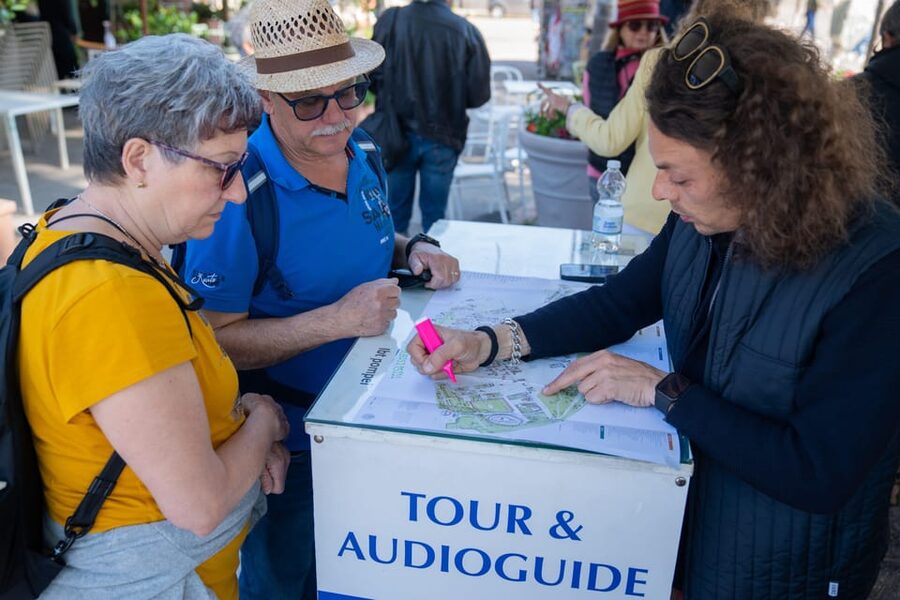
At $14, the ticket includes reserved admission to the Pompeii Virtual Museum, a paper city map, assistance at the Touristation office, and free Wi-Fi. It does not include a guided tour, an audio guide, transport, food, drinks, or the archaeological-area ticket unless you choose the combined option.
The value depends on how you use it. If you want a short visual introduction before seeing Pompeii, the museum can be worthwhile. If you expect several hours of exhibits, original artifacts, or a full live tour, the price may disappoint.
The strongest value comes from pairing the museum with the ruins. You are paying for context that can make the larger archaeological visit less confusing. It is particularly helpful if you have not studied Roman buildings beforehand or if you want a clear explanation in French.
The low price also makes it easier to consider as a family or mixed-interest activity, but remember that the presentation itself is not a replacement for a long archaeological visit. If your schedule is tight, the museum can fit neatly into a short window. If you already have a private guide or a strong understanding of Pompeii, you may prefer to spend the money and time directly inside the site.
Meeting point, rules, and practical planning
You meet at the IBT Center and Touristation office next to Chalet Donna Lucia. Allow time to find this office before your selected start time, since the staff provides assistance and your reserved admission begins from there.
The listed duration ranges from 30 minutes to four hours. That wide range reflects the difference between the virtual museum alone and the version combined with the archaeological area. Check the available starting times when you book rather than assuming the visit will last a set number of hours.
Food and drinks are not allowed inside, and large bags or luggage are prohibited. Photography inside the virtual museum is also not allowed, so take any exterior photographs before entering and keep your phone away during the presentation.
Pets are not allowed in the virtual museum. Small dogs are permitted in the archaeological area, but they must remain on a leash and be carried inside buildings. That rule matters if you choose the combined ticket.
Free admission is available for disabled visitors with a certified disability. The supplied information does not detail every accessibility feature of the virtual museum, so contact the Touristation office if you need specific arrangements.
The booking offers cancellation up to 24 hours in advance for a full refund, and you can reserve now and pay later. Those terms are useful if your Campania plans depend on weather, train schedules, or a changing sightseeing day.
Who will get the most from this experience
I would choose the museum for a first visit to Pompeii, especially if you plan to enter the ruins afterward. The reconstructions give you a working picture of the city before the walls and columns become your main evidence.
It also suits you if you enjoy visual presentations more than long labels. The animated scenes move quickly and show buildings from angles that are hard to achieve on foot. The Forum and amphitheater benefit most from this treatment.
Families may appreciate the clear story and the shorter format, though the Lupanar scene may require parental judgment. The no-food and no-photography rules are simple, but they may matter to anyone planning a long day with children.
French-speaking visitors have an extra reason to consider it. The French guidance described for the experience can turn a general presentation into a more useful introduction, with anecdotes about daily life and the city’s disappearance.
I would be more cautious if you want a full guided tour. No guide or audio guide is included as a standard part of the ticket. The mediator may provide explanations, but this is not advertised as a private or fully guided archaeological visit.
Should you book the Pompeii Virtual Museum?
Book it if you want to understand Pompeii before walking through it, and select the archaeological-area add-on if this is your main Pompeii visit. The combination gives the $14 museum ticket a clearer purpose and helps you connect 3D reconstructions with the surviving streets and buildings.
Book the museum alone if you have only a short window, want a visual introduction, or prefer a compact activity near the archaeological area. Skip it if you already have a detailed guided visit planned and would rather spend every available minute among the original ruins.
The practical choice is simple: treat the virtual museum as an orientation tool, not as Pompeii itself. Used that way, it can turn a confusing field of ruins into a city you can actually picture.
FAQ
Where is the Pompeii Virtual Museum?
The meeting point is the IBT Center and Touristation office next to Chalet Donna Lucia in Campania, Italy.
How much does the experience cost?
The listed price is $14 per person. The final price may differ if you select the optional archaeological-area entry.
How long does the visit take?
The experience lasts from 30 minutes to four hours, depending on whether you choose the virtual museum alone or add entry to the archaeological area.
Is entry to Pompeii included?
Entry to the Pompeii archaeological area is included only if you select that option when booking.
Does the ticket include a guided tour?
No. A guided tour and audio guide are not included. Assistance is available at the Touristation office, and a mediator may explain the virtual displays.
Is Villa dei Misteri included?
No. Entrance to Villa dei Misteri is not included.
Can I take photographs inside?
No. Photography inside the virtual museum is not allowed.
Can I bring food, drinks, luggage, or pets?
Food and drinks, luggage or large bags, and pets are not allowed in the virtual museum. Small dogs are allowed in the archaeological area if kept on a leash and carried inside buildings.
Can I cancel the booking?
Yes. You can cancel up to 24 hours in advance for a full refund. You can also reserve now and pay later.
Just added around Italy
- Oil museum and oil mill in Tuscany: tour and tasting★ 5.0 · 16 reviews
- Enchanted Castle of Sciacca – Museum Tickets★ 3.5 · 63 reviews
- Torino: FIAT Historic Museum and Lingotto District Tour★ 4.9 · 14 reviews
- Torino: The Car Museum Skip-The-Line Tour★ 4.7 · 22 reviews
- Timed Entry Ticket to the Uffizi Gallery★ 4.5 · 498 reviews
- Florence: Accademia Gallery Entry Ticket with Audio Guide★ 4.1 · 88 reviews
- Vatican City: Sistine Chapel, Museums, Basilica Private Tour★ 4.8 · 158 reviews
- Rome: Capitoline Museums and Centrale Montemartini Tickets★ 4.4 · 328 reviews
Museum Tours in Italy, compared.
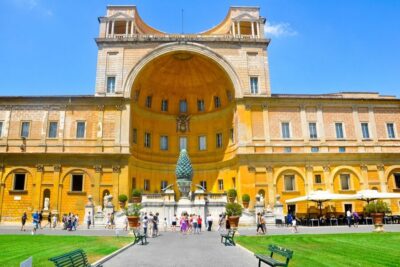
Vatican: Museums & Sistine Chapel Entrance Ticket
Read our review →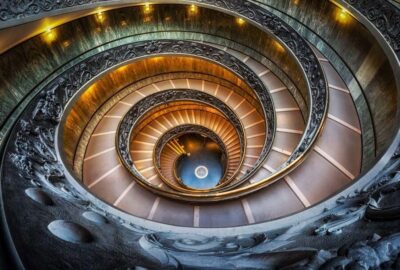
Vatican Museums, Sistine Chapel & St. Peter’s Basilica Tour
Read our review →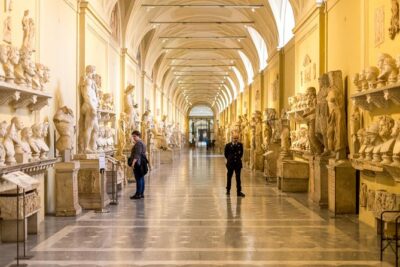
Vatican Museums, Sistine Chapel & St Peter’s Basilica Guided Tour
Read our review →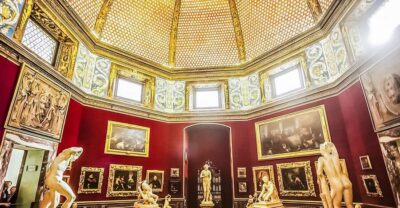
Skip-The-Line Uffizi Gallery Timed Entry Ticket
Read our review →
Vatican Museums, Sistine Chapel and Basilica Tour
Read our review →
Vatican Museums & Sistine Chapel Skip-the-Line Entry Ticket
Read our review →
Vatican Museums, Sistine Chapel & Basilica Tour
Read our review →