
Review · ITALY
Pompeii: Skip-the-Line Ticket and Virtual Museum
Pompeii is most powerful when the ancient city starts to feel ordinary: a fountain on a street corner, a shop doorway, a bathhouse, and the Forum laid out beneath Vesuvius. This experience pairs independent exploration with a virtual presentation that reconstructs Pompeii before the eruption of 79 AD.
I like the reserved entry, which can save time at a busy archaeological site, and I like seeing the Virtual Museum before or around your visit because its 3D scenes help you picture missing walls and crowded public buildings. The tradeoff is clear: there is no live guide or audio guide, and the virtual presentation may feel dated if you expect modern museum technology.
Key points to know before you book
- The Virtual Museum adds context: Animated reconstructions show the Forum, baths, amphitheater, and other major buildings as they may have looked before the eruption.
- You explore Pompeii independently: The ticket lets you set your own pace across a site covering more than 50 hectares.
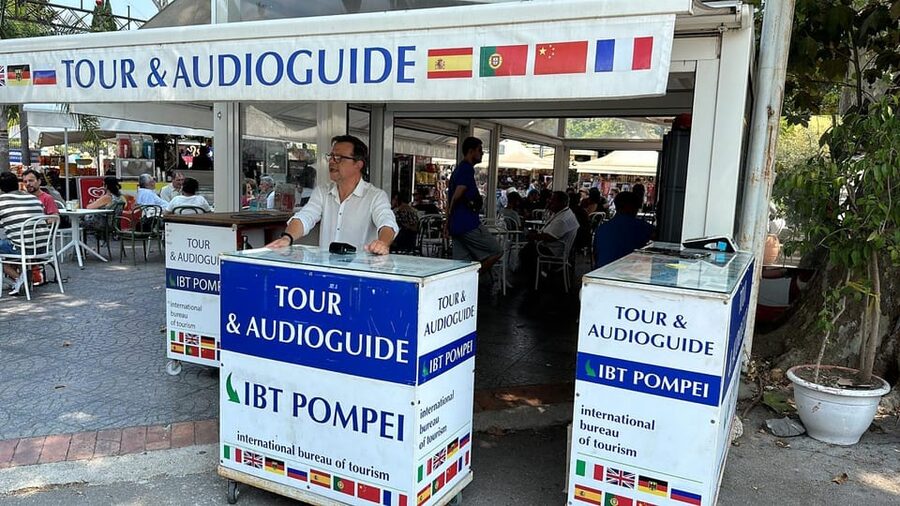
- Reserved entry saves hassle: You meet at the IBT Center/Touristation beside Chalet Donna Lucia rather than joining the regular ticket line.
- The $60 price covers the essentials: Entry, the reserved Virtual Museum ticket, a city map, and Wi-Fi are included.
- Villa dei Misteri is not included: Plan for this if its famous frescoes are a priority.
- The experience is not a guided tour: Bring your own background knowledge, guidebook, or phone notes if you want detailed explanations on site.
The Virtual Museum gives Pompeii a human scale
The Virtual Archaeological Museum is the unusual part of this ticket. Instead of beginning with scattered ruins and asking you to picture the original city, the presentation uses animation and 3D reconstruction to show Pompeii before Vesuvius buried it.
You can expect scenes of daily life, major public buildings, and the final eruption. The Forum, public baths, amphitheater, houses, and other important spaces are shown in their former glory. This matters because Pompeii can be hard to read at first. A low wall may have been part of a large home, a business, or a public building. A few surviving columns may be all that remains of a much grander structure.
The presentation is especially useful if you have never visited an archaeological site of this scale. It gives you a mental picture before you set out. Afterward, a broken doorway or faded fresco has more meaning because you can connect it to the complete building shown on screen.
The strongest reports about this part of the experience focus on the explanations provided in different languages. A French-language presentation was particularly helpful for one visitor, while a Swedish-speaking visitor found the guidance useful for understanding the ruins afterward. No guide names are provided, so you should not book this expecting a specific presenter. Language availability may depend on the staff and schedule.
The main caution is quality. One visitor found the virtual museum presentation outdated and disappointing. That is a fair warning. Treat it as a helpful orientation, not as a cutting-edge cinema attraction. Its value comes from putting the ruins into context, not from impressive special effects.
More skip-the-line museum tickets in Italy:
- Florence: Skip-The-Line Uffizi Gallery Timed Entry Ticket
★ 4.5 · 27,832 reviews - Vatican Museums & Sistine Chapel Skip-the-Line Entry Ticket
★ 4.4 · 13,838 reviews - Rome: Vatican Museums & Sistine Chapel Skip-The-Line Ticket
★ 4.2 · 11,708 reviews
Entering Pompeii with a reserved ticket
You report to the IBT Center/Touristation next to Chalet Donna Lucia. Bring your passport or ID card, since identification is required for all participants. The experience is listed as a one-day activity, but it does not give you a fixed guided itinerary. You visit Pompeii at your own pace after arranging your starting time.
The skip-the-line benefit is practical rather than glamorous. Pompeii is a major sight, and avoiding the regular ticket queue can give you more time inside. It does not turn the archaeological site into a short visit, and you may still need to follow the entrance procedures in place on the day. Still, reserved entry is useful when you have limited time or want a cleaner start.
A city map is included. Use it. Pompeii covers more than 50 hectares, and the streets can begin to blur together after several hours. The map helps you keep track of the Forum, theaters, baths, houses, shops, and other areas rather than wandering without a plan.
Wi-Fi is also included, which may help with meeting arrangements or looking up information. It is not a substitute for a full audio guide. Since no guided tour or audio guide is included, you will need to read the site signs, use your own guidebook, or prepare a little before arrival.
Walking through the Forum beneath Vesuvius
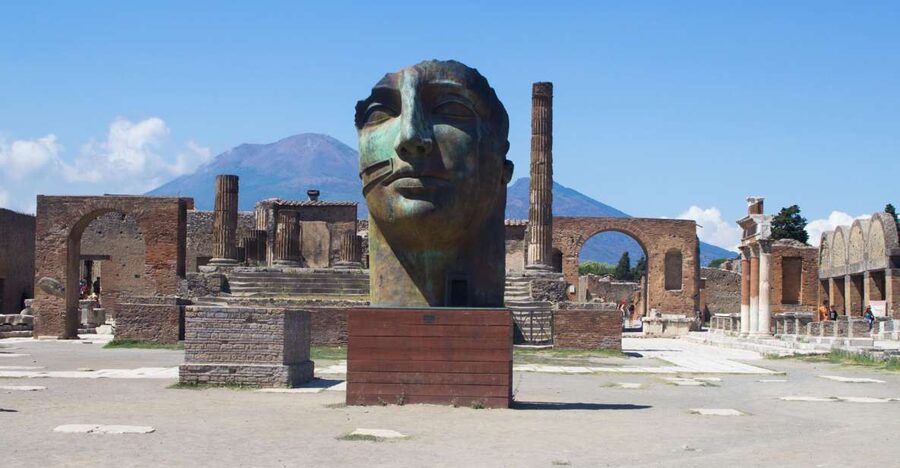
The central Forum is the natural place to begin understanding Pompeii. This broad public space was the city’s civic heart, surrounded by important buildings and framed by the distant presence of Mount Vesuvius.
You will see remnants of columns, doorways, and other architectural pieces. The surviving fragments give you the outline of public life, but the Virtual Museum helps fill in the missing parts. Look back at the 3D images in your mind as you walk. The experience works best when you move between the two views: the animated city that once existed and the stone remains in front of you.
The Forum is also where Pompeii’s scale becomes clear. This was not a small village frozen by disaster. It was an active Roman city with public institutions, commercial spaces, homes, religious buildings, and entertainment venues. The city’s destruction is dramatic, but the ordinary details are what make the visit memorable.
You may find the open areas exposed and tiring, especially if you spend the entire day on foot. The activity provides no food or drinks, so plan accordingly within the site rules and your own schedule. You cannot bring luggage or large bags, which is sensible in narrow ancient streets but important to know before you arrive.
Streets, fountains, shops, and private homes
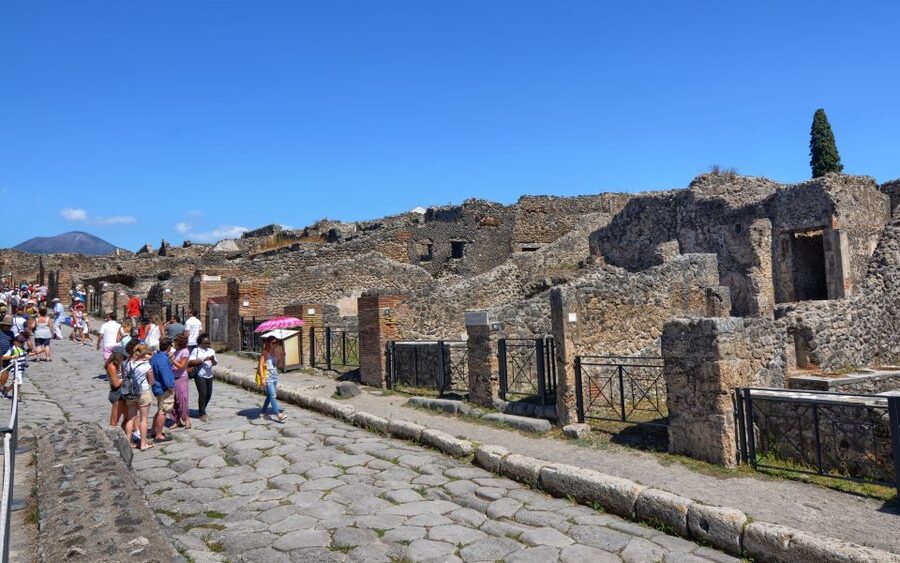
Pompeii becomes most vivid away from the main Forum. Walk through the ancient streets and look for the practical systems that made daily life possible: aqueduct remains, street fountains, public baths, businesses, and private houses.
The fountains and waterworks remind you that this was a functioning city, not a stage set. Shopfronts and doorways show where commercial life took place. Houses reveal a different side of Pompeii, with rooms and wall paintings that hint at social rank, taste, and domestic routines.
The frescoes are among the site’s most rewarding details. Many are damaged or faded, but surviving patches of color can still be striking. The Virtual Museum’s reconstructions are useful here because they let you imagine how much stronger the colors and decoration may once have been.
Do not rush from one famous building to the next. I would give yourself time to stop at smaller streets and ordinary homes. The Forum explains civic Pompeii, while these side streets show how people moved, worked, washed, decorated their homes, and met one another.
Because the ticket is self-guided, you can linger when something catches your eye. That freedom is a real benefit for independent visitors. It is less helpful if you want someone to explain every building as you go. The product is best for people comfortable setting their own route.
A few more museum visits around Italy worth comparing
- Vatican: Museums & Sistine Chapel Entrance Ticket
★ 4.5 · 144,003 reviews - Florence: Leonardo Interactive Museum Entry Ticket
★ 4.5 · 12,957 reviews - Vatican Museums & Sistine Chapel Skip-the-Ticket-Line Tour
★ 4.3 · 10,486 reviews - Rome: Vatican Museums & Sistine Chapel Skip-the-Line Ticket
★ 4.3 · 8,103 reviews
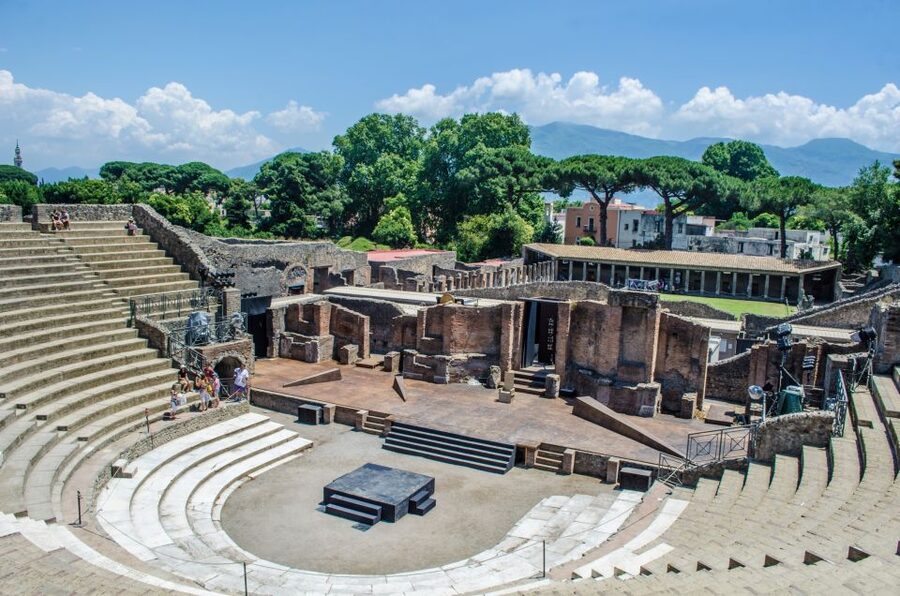
The amphitheater and theaters
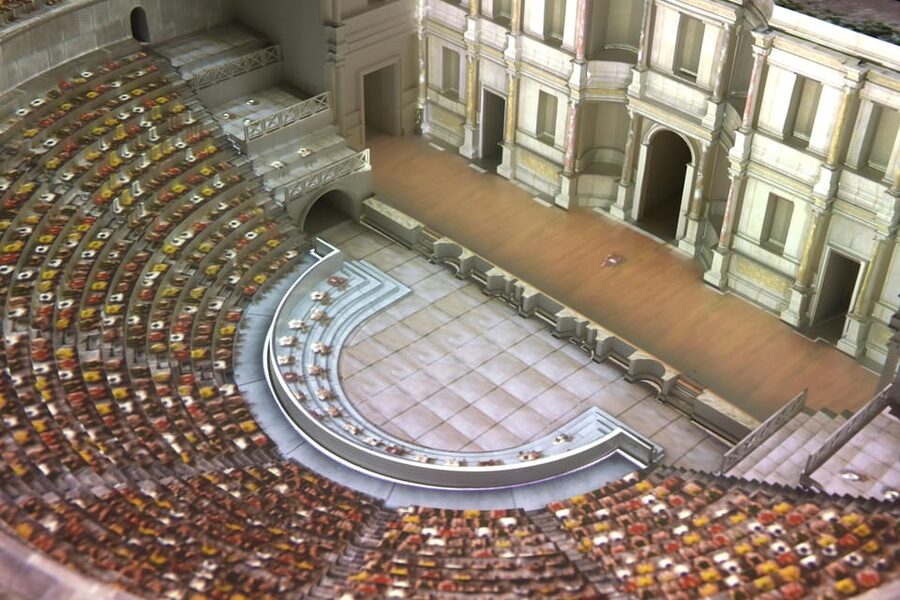
Pompeii’s amphitheater offers a strong sense of public entertainment. It was built for crowds, and its surviving structure helps you picture the noise and energy that once filled the space.
The dramatic theater provides a different mood. Here, you can consider the city’s cultural life and the importance of performances in Roman society. The combination of amphitheater and theater shows that Pompeii was not only a place of work and commerce. It also made room for spectacle, leisure, and shared public events.
Animated reconstructions in the Virtual Museum give these buildings a fuller shape. You can see how the spaces may have looked when packed with spectators, rather than viewing only weathered stone.
Again, the lack of a live guide cuts both ways. You can spend as long as you like in the theaters, take your own route, and avoid being hurried along. But you will not have someone beside you to explain the design, social setting, or known uses of each building unless you arrange that separately.
What the eruption adds to the visit
The final part of the virtual experience shows the eruption of Vesuvius in 79 AD. The presentation moves from ordinary daily life to the disaster that ended Pompeii as a living city.
That contrast is the point. You first see houses, baths, shops, public spaces, and entertainment venues as parts of a thriving Roman community. Then the eruption explains why so much of the city survived in place, while also making clear how destructive the event was.
Pompeii can easily become a parade of ruins if you focus only on individual walls. The eruption sequence gives the entire visit a clear frame. It connects the street under your feet with the city that existed before ash, pumice, and volcanic material buried it.
The presentation should be handled with some care. This is not a light entertainment add-on. The subject is a real catastrophe, and the final sequence can be intense. Its value is greatest when it helps you understand the sudden change from normal city life to destruction, not when it tries to turn the disaster into spectacle.
What the $60 price really covers
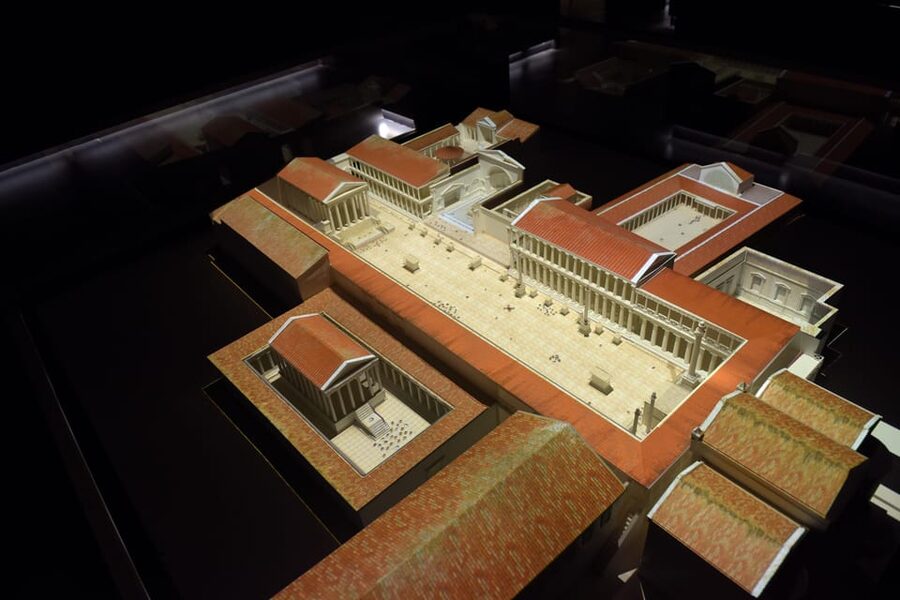
At $60 per person, this is not the cheapest way to enter Pompeii. You are paying for more than a basic admission ticket: reserved entry, a ticket for the Virtual Museum, a map, and Wi-Fi are included.
The price makes the most sense if you value two things: saving time at the entrance and having a visual introduction before exploring independently. The Virtual Museum can make the ruins easier to understand, particularly for a first visit. The reserved entry is also useful if your day is tightly planned.
The value is weaker if you mainly want a basic Pompeii admission. Since there is no transportation, guided tour, or audio guide, you must arrange your own route to the meeting point and provide your own interpretation on site. Villa dei Misteri is excluded as well, so you may need a separate ticket or plan if that building is essential to your visit.
I would compare this option with the cost of buying entry alone and adding an independent guidebook or audio resource. If the total price difference is small for your dates, the Virtual Museum and reserved entry may justify the extra cost. If you prefer a live expert, this is not the right product because no guide is included.
Practical details that can affect your day
The activity lasts one day, with starting times available according to the booking calendar. It is not a guided tour with a set walking sequence, so your total time inside depends on your own pace and interests.
Wear comfortable footwear and bring only what you need. Large bags and luggage are not allowed. Smoking, alcohol, and drugs are prohibited. Pets are generally not allowed, although small dogs can enter the archaeological area if kept on a leash and carried inside buildings.
Free admission is available for visitors with a certified disability. The information provided does not describe other accessibility arrangements, so check the current conditions before booking if you need specific assistance.
The activity is non-refundable. That matters more than usual for a full-day archaeological visit because weather, transport problems, or a change of plans may affect your schedule. Confirm the starting time, meeting point, and identification requirements before you commit.
Who will get the most from this Pompeii ticket
This experience suits you if you want to explore independently but prefer a visual introduction before facing a very large archaeological site. Families, first-time visitors, and anyone who finds bare ruins difficult to interpret may appreciate the 3D reconstructions.
It also works well for people with a clear personal agenda. You can spend extra time in houses, public baths, theaters, or the Forum without keeping pace with a group. The map gives you a basic way to organize the day.
I would be more cautious if you want detailed archaeological explanation at every stop. The ticket does not include a guide or audio guide, and the Virtual Museum cannot answer questions as you walk. You should bring your own reading material or arrange separate guidance if interpretation is central to your visit.
The format also suits a visitor who wants both the ancient remains and a modern explanation of what they once looked like. It is less appealing if you dislike computer-generated reconstructions or expect a polished, state-of-the-art multimedia show.
Should you book this Pompeii experience?
Book it if reserved entry and visual context matter to you, and you are happy to explore without a guide. The Virtual Museum can make Pompeii easier to read, while the independent format lets you move at your own speed through the Forum, streets, houses, baths, theaters, and amphitheater.
Skip it if you want transportation, a live archaeologist, a full audio guide, or entry to Villa dei Misteri included in the price. At $60, the value depends on how much use you will make of the virtual presentation and how much you value avoiding the standard ticket line.
For a first visit, I see this as a sensible middle option: more helpful than a bare entry ticket, but less explanatory than a proper guided tour. Arrive with your ID, a small bag, comfortable shoes, and realistic expectations about the dated presentation. Then let the map, the reconstructions, and Pompeii’s surviving streets work together.
FAQ
Is the Pompeii ticket skip-the-line?
Yes. The activity includes a skip-the-line ticket for the Pompeii archaeological site.
Where is the meeting point?
Report to the IBT Center/Touristation next to Chalet Donna Lucia.
Is a guided tour included?
No. A guided tour and audio guide are not included. You explore Pompeii independently with a city map.
Is the Virtual Museum included?
Yes. The activity includes a reserved ticket for the Virtual Museum, which presents 3D reconstructions of Pompeii and the eruption of Vesuvius.
Is Villa dei Misteri included?
No. Entrance to Villa dei Misteri is not included.
What should I bring to Pompeii?
Bring your passport or ID card. Luggage and large bags are not allowed, and small dogs must be kept on a leash and carried inside buildings.
Just added around Italy
- Oil museum and oil mill in Tuscany: tour and tasting★ 5.0 · 16 reviews
- Enchanted Castle of Sciacca – Museum Tickets★ 3.5 · 63 reviews
- Torino: FIAT Historic Museum and Lingotto District Tour★ 4.9 · 14 reviews
- Torino: The Car Museum Skip-The-Line Tour★ 4.7 · 22 reviews
- Timed Entry Ticket to the Uffizi Gallery★ 4.5 · 498 reviews
- Florence: Accademia Gallery Entry Ticket with Audio Guide★ 4.1 · 88 reviews
- Vatican City: Sistine Chapel, Museums, Basilica Private Tour★ 4.8 · 158 reviews
- Rome: Capitoline Museums and Centrale Montemartini Tickets★ 4.4 · 328 reviews
Museum Tours in Italy, compared.

Vatican: Museums & Sistine Chapel Entrance Ticket
Read our review →
Vatican Museums, Sistine Chapel & St. Peter’s Basilica Tour
Read our review →
Vatican Museums, Sistine Chapel & St Peter’s Basilica Guided Tour
Read our review →
Skip-The-Line Uffizi Gallery Timed Entry Ticket
Read our review →
Vatican Museums, Sistine Chapel and Basilica Tour
Read our review →
Vatican Museums & Sistine Chapel Skip-the-Line Entry Ticket
Read our review →
Vatican Museums, Sistine Chapel & Basilica Tour
Read our review →
Browse the lists this tour appears in