
Review · NORWAY
Oslo: Paradox Museum Entry Ticket
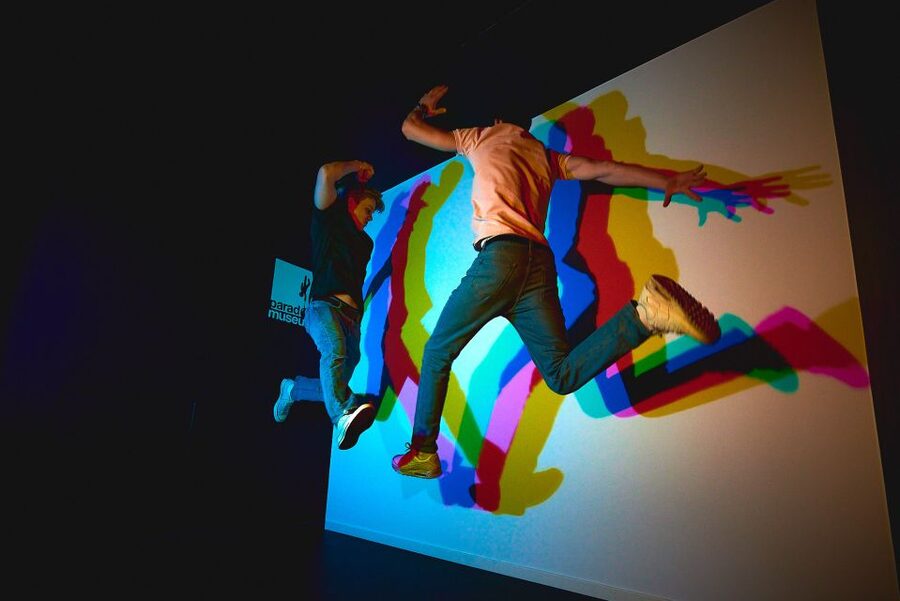
Paradox Museum Oslo turns ordinary rooms into puzzles for your eyes and brain. You may appear to shrink, lose your balance, or see a familiar space behave in impossible ways. It is playful, hands-on, and easy to fit into a day of sightseeing.
I like the clearly marked photo points, which show you where to stand for the best effect. I also like the short explanations and QR codes, since they add some science to what could otherwise be a string of photo props. The main drawback is value: at $29, the museum may feel expensive if you finish in less than an hour or have visited similar illusion museums elsewhere.
Key points
- More than 70 interactive exhibits explore perception, physics, perspective, and visual trickery.
- Marked photo spots make it easier to take the intended picture without guessing where to stand.
- The route is one way, so follow the signs and take your time before moving on.
- Staff speak English and Norwegian, with helpful staff members sometimes taking photos for solo visitors.
- Nationaltheatret and Stortinget stations are both only a couple of minutes away.
- The Paradox Boutique sells games, souvenirs, and small keepsakes at the end.
Entering the Paradox Museum in central Oslo
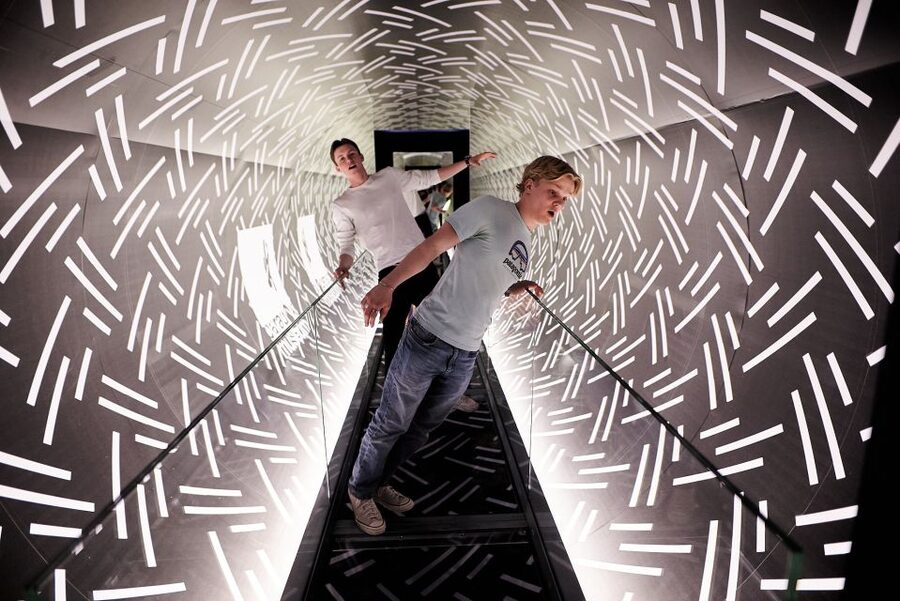
The museum sits in the heart of Oslo, close to two useful public transport stops: Nationaltheatret and Stortinget. Each is only a couple of minutes away, so you can reach the entrance without turning this into a separate half-day outing.
You need to show your ticket at the entrance and check in 10 minutes before your booked time. Timed entry helps keep the rooms from becoming too crowded, though the experience itself is not guided as a group tour.
The staff speak English and Norwegian. Their role is mainly to welcome you, explain how the route works, and help when needed. Staff support can vary from one room to another. Some visitors have found an attendant willing to take photos, while others wished there were more staff available beside each exhibit.
That matters if you are visiting alone. You can still enjoy the museum, but taking the best picture of yourself is harder without help. If you see a staff member nearby, ask politely. One staff member has been especially helpful to solo visitors by offering to take photos.
A few more museum visits around Norway worth comparing
- Kon-Tiki Museum Entrance Ticket
★ 4.5 · 1,096 reviews - The Fram Museum Admission Ticket
★ 4.5 · 490 reviews - Oslo: Munch Museum Admission Ticket
★ 4.5 · 193 reviews
How the one-way route works
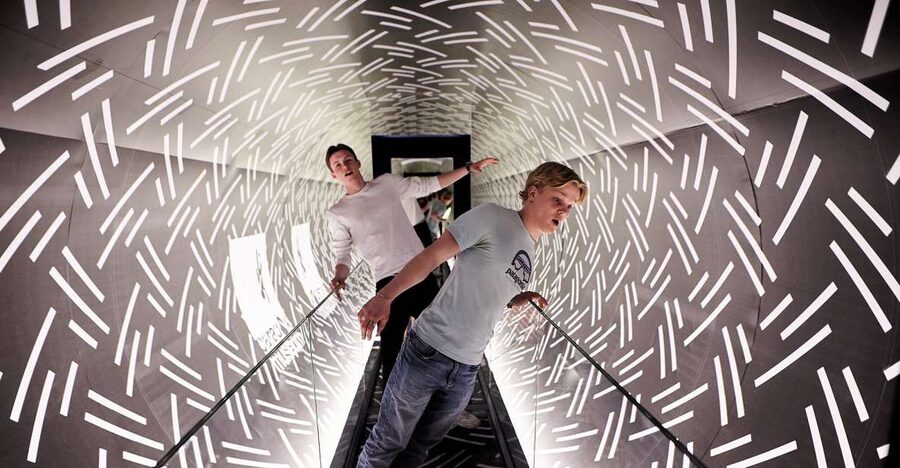
This is a one-way experience. Signs guide you from one installation to the next, so you do not need to work out your own route or worry about missing a room. The arrangement also keeps people moving in the same direction.
You will encounter more than 70 interactive exhibits. The exact experience depends on how long you spend at each one. A quick visit can take around an hour, which matches the stated duration. If you are with children, a partner, or friends, you may spend longer because each exhibit invites you to pose, test the effect, and take several pictures.
I suggest slowing down at the start. A few installations may seem confusing until you understand where to stand or what action the exhibit expects. The marked photo points help, but some visitors have wanted clearer instructions for certain displays.
Read the signs before rushing ahead. Many exhibits explain the trick with text or a QR code. That small pause gives the experience more substance and helps you understand why your eyes and brain are reaching the wrong conclusion.
The illusions: perception, physics, and perspective
The museum’s main subject is not magic. It is the gap between what your eyes see and what your brain decides is happening.
You may find rooms built around forced perspective, unusual angles, visual balance, and changes in scale. The fun comes from becoming part of the illusion. You are not simply looking at an object behind glass. You stand in the marked position, pose or interact, and watch the camera turn the result into something strange.
That makes the museum particularly good for families. Children can test the exhibits with their bodies, while adults can enjoy the clever construction behind each effect. It also works well for friends or couples who want playful pictures rather than a quiet museum visit.
The science notes are useful, but do not expect a long classroom lesson beside every display. Some exhibits have more explanation than others. If your main reason for visiting is photography, you may read only the highlights. If you are curious about perception and physics, use the QR codes and take time with the written descriptions.
The visual ideas are not all new. Some resemble effects found in other optical illusion museums or in Escher-inspired attractions. The appeal here is the number of effects gathered into one compact, attractive route. For some people, that collection is enough to justify the visit. For others, the familiar tricks may make $29 feel high.
Making the most of the photo points
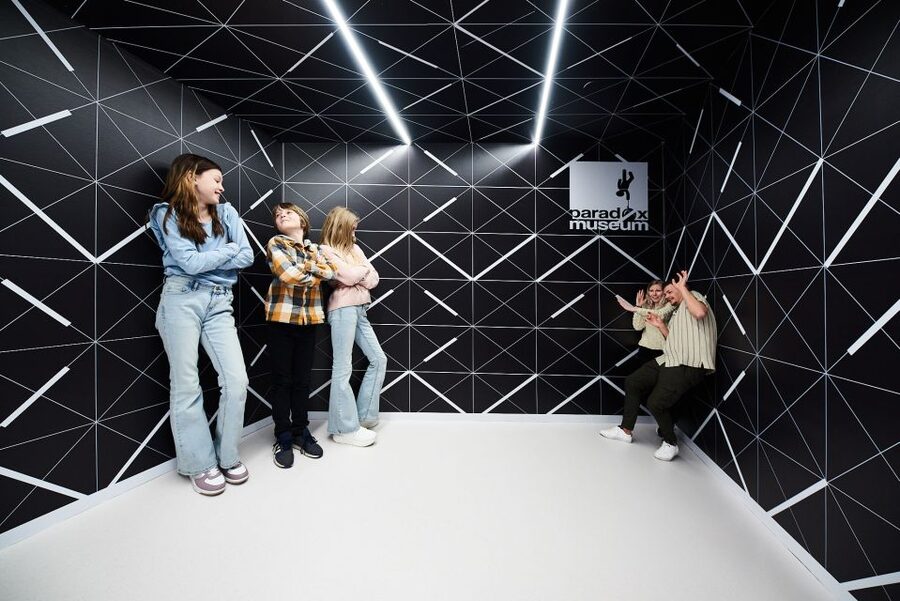
The marked photo points are one of the museum’s best practical features. They tell you where to stand so the illusion lines up correctly. Without them, you could easily take a picture from the wrong angle and lose the effect.
Give each exhibit a moment before reaching for your phone. First understand what the room is asking you to do. Then take a wide picture, a closer picture, and one with the camera held at the recommended position. The best image is not always the first one.
You will get more from the museum with a companion. Friends and couples can take turns posing and photographing one another. Families can make a small game of trying every effect, then compare the pictures at the end.
Solo visitors are not excluded, but they need a little more patience. Staff may help with photos when available, and the museum has had particularly friendly team members who notice when someone is alone. Still, there is not a photographer stationed in every area, so do not count on assistance at every stop.
Some people expect every room to create a dramatic photograph. That is not the case. A few installations are more interesting as a visual puzzle than as a social media picture. The larger exhibits tend to offer the most satisfying results, while smaller displays can feel fairly ordinary if you have already visited similar attractions.
Same city, a completely different collection:
- Oslo: Oslo Discovery Tour with 2 Museums Included
★ 4.7 · 376 reviews - Bergen: Troll Museum Entry Ticket + audio guide
★ 4.3 · 88 reviews - Ålesund-Aksla-Alnes-Giske-Sunnmøre museum 100 % Highlights 4.5 H
★ 5.0 · 84 reviews - Stavanger: Norwegian Petroleum Museum – Entrance Ticket
★ 4.8 · 78 reviews
How long to allow for the visit
The official duration is one hour, and that is a sensible planning time. You can move through the route in about an hour if you stop for the main effects and a few photos.
Your pace will make a big difference. A solo visitor who moves quickly may finish in less than an hour. With children or a partner, you may stop repeatedly to pose, retake pictures, and try to understand each illusion. Some people have spent close to two hours because they treated the museum as a playful activity rather than a quick series of rooms.
This makes it useful on a flexible Oslo day. You could visit before another central attraction, use it as an indoor break, or fit it into spare time before heading elsewhere. It is also a practical choice if the weather is poor, though food and drinks are not allowed inside.
Do not plan it as a full-day museum. The experience is compact. Its value comes from active participation, not from a large collection of historic objects or long galleries of text.
Staff help and the importance of timing
The staff are part of the experience, even though there is no regular guide leading you from room to room. Friendly help at the entrance can get you started, and staff may explain how the museum works or offer to take your picture.
The level of help is not uniform throughout the route. You might find an attendant in one area but no one nearby in the next. That can leave you guessing at first, especially when an illusion is not self-explanatory.
A timed ticket still helps with flow. Visiting at a quieter time may give you more space to test an exhibit and retake a photo. The museum has been less busy at some off-peak times, including February, but the available starting times depend on the day.
Arrive 10 minutes before your booked time. That is enough to check in without turning the entrance into a rush. Since food and drinks are not permitted, plan your snack or coffee stop before or after the museum.
Is $29 a fair price?
At $29 per person, this is not a cheap stop by Oslo standards. The price makes more sense if you are visiting with children, sharing the photo experience with friends, or planning to spend well over an hour testing the exhibits.
The museum gives you access to all exhibition areas and the Paradox Boutique. There is no separate charge for the interactive rooms, but food, drinks, and transportation are not included. The central location helps because you can reach it easily by public transport and avoid spending extra time getting there.
Value depends heavily on your expectations. If you want a fun indoor activity with lots of pictures, the price may feel reasonable. If you expect a large traditional museum with rare objects, long explanations, or several hours of content, you may be disappointed.
I would compare it with the cost of other indoor attractions in Oslo and think about your group. For a family, the shared amusement can make the ticket worthwhile. For one adult who has visited several similar illusion museums, the familiar effects may not feel as fresh.
Who will enjoy it most
This is best for curious people who like to touch, pose, test, and laugh. Families have plenty to do, and the exhibits can work for children of different ages because they do not depend on long reading sessions.
It also suits couples and groups of friends who want amusing pictures. The experience gives you a clear structure, but enough freedom to invent your own poses and retake shots.
Students and adults interested in perception, physics, and perspective can get more from the descriptions and QR codes. I would not call it a specialist science museum, but it offers simple examples of how easily your senses can be misled.
Solo visitors can enjoy it too, especially if they are comfortable asking staff for help with photos. Just allow some flexibility and accept that not every picture will be easy to take alone.
The museum is wheelchair accessible. Since the experience follows a one-way flow, check the signs as you move through rather than trying to retrace your steps.
Ending at the Paradox Boutique
The route finishes at the Paradox Boutique. It sells games, souvenirs, and keepsakes related to the museum’s central idea of puzzles and perception.
You do not need to buy anything, but the shop gives you a chance to take home a small reminder of the visit. It also makes the exit feel like part of the experience rather than an abrupt door back onto the street.
Should you book the Paradox Museum Oslo?
Book it if you want a cheerful, photo-friendly indoor activity in central Oslo and you enjoy hands-on illusions more than formal museum displays. It is particularly well suited to families, couples, and friends who will spend time posing and retaking pictures.
Think twice if $29 feels high for about an hour, or if you have already visited several similar optical illusion attractions. The effects are well arranged, but some may feel familiar, and a few exhibits may need clearer instructions or staff help.
For the best value, go with someone who will take pictures, read at least some of the science notes, and give yourself more than a rushed hour. The flexible cancellation policy allows you to cancel up to 24 hours before the visit for a full refund, and you can reserve now and pay later. That helps if your Oslo schedule is still taking shape.
FAQ
Where is Paradox Museum Oslo located?
It is in Oslo Municipality, in the heart of Oslo. The closest public transport stops are Nationaltheatret and Stortinget, both a couple of minutes from the museum.
How long does the visit take?
The stated duration is one hour. You may finish sooner if you move quickly, or spend longer if you stop for many photos and interactive activities.
How many exhibits are there?
The museum has more than 70 interactive exhibits focused on perception, physics, perspective, and visual illusions.
Do I need to arrive early?
Show your ticket at the entrance and check in 10 minutes before your booked time.
Is the experience guided?
There is no regular guided tour included. Staff speak English and Norwegian and can provide help at the museum.
Can I take photos?
Yes. The museum is designed for taking photos, and clearly marked photo points show you where to stand for the intended effect.
Are food and drinks allowed?
No. Food and drinks are not allowed inside the museum.
Is the museum wheelchair accessible?
Yes, the experience is wheelchair accessible.
What languages are available?
The available languages are English and Norwegian.
Can I cancel my booking?
Yes. You can cancel up to 24 hours in advance for a full refund. Reserve now and pay later is also available.
Just added around Norway
- Ålesund-Aksla-Alnes-Giske-Sunnmøre museum 100 % Highlights 4.5 H★ 5.0 · 84 reviews
- Stavanger: Norwegian Petroleum Museum – Entrance Ticket★ 4.8 · 78 reviews
- Oslo: Munch Museum Admission Ticket★ 4.5 · 193 reviews
- Oslo: Kon-Tiki Museum Entry Ticket★ 4.6 · 18 reviews
- Narvik: Narvik War Museum★ 4.8 · 21 reviews
- Maihaugen Museum/The Norwegian Olympic Museum, Lillehammer.★ 4.4 · 48 reviews
- Tromso: Full Steam Museum Entrance★ 4.1 · 43 reviews
- Kristiansand: Highlights Tour w/ Kristiansand Museum Ticket★ 4.4 · 17 reviews
Museum Tours in Norway, compared.



Ålesund-Aksla-Alnes-Giske-Sunnmøre museum 100 % Highlights 4.5 H
Read our review →
Stavanger: Norwegian Petroleum Museum – Entrance Ticket
Read our review →
Maihaugen Museum/The Norwegian Olympic Museum, Lillehammer.
Read our review →Browse the lists this tour appears in