
Review · ITALY
Palermo Museum of Illusions: an interactive experience for all ages
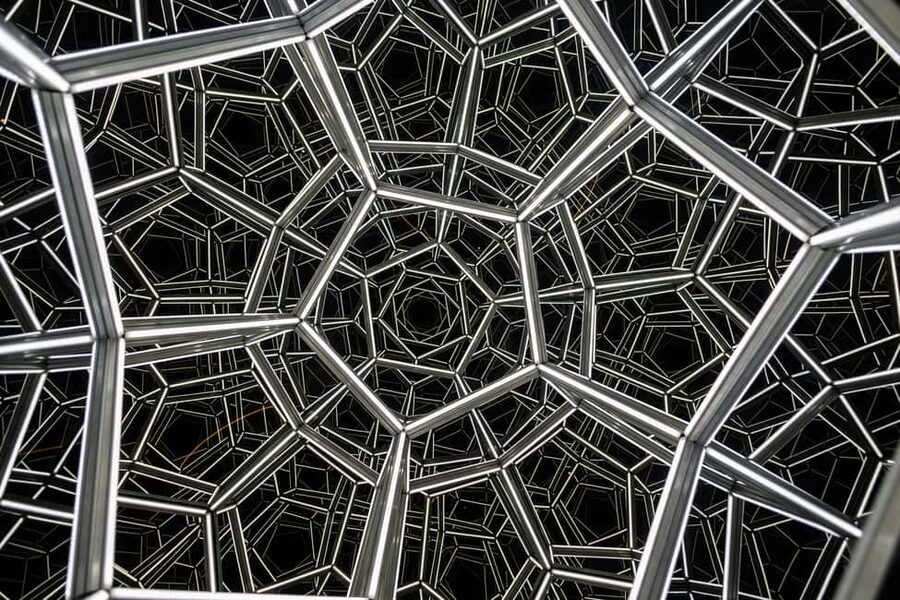
Palermo’s Museum of Illusions turns simple science into a hands-on outing. You walk through upside-down rooms, test your sense of balance in rotating tunnels, and search for the point where your eyes stop agreeing with your brain. The setting is playful rather than formal, so children, adults, couples, and curious solo visitors can all take part.
I like the freedom of a self-guided visit, since you can pause for photos instead of being pushed along with a group. I also like the friendly on-site help, the clean rooms, and the fact that staff can explain things in Italian or English. The main drawback is value: at $18 per person, the visit may feel short if you finish in less than an hour or want a large number of photo setups.
Key points at a glance
- Upside-down rooms and rotating tunnels: Expect installations that challenge balance, perspective, and your sense of direction.
- A 45 to 60 minute visit: This is an easy activity to fit between Palermo’s larger sights.
- Photos and videos are allowed: Bring your camera, but follow staff instructions around each installation.
- Self-guided format: You set the pace, with staff available when you want help or an explanation.
- Good for mixed-age groups: Families, couples, groups of friends, and solo visitors can all enjoy the rooms.
- Partially accessible setting: The museum is suitable for people with limited mobility in part, but not every area may be fully accessible.
What the Museum of Illusions Actually Offers
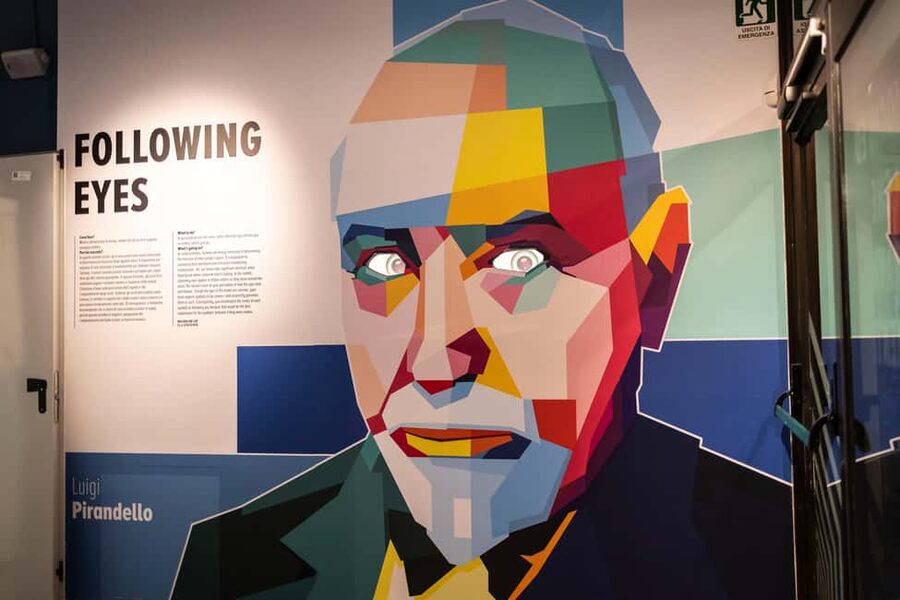
This is not a traditional museum filled with paintings, labels, and velvet ropes. It is a collection of interactive rooms and installations built to make you question what you see.
The appeal comes from doing rather than watching. You step into a room that appears to defy gravity, walk through a tunnel that seems to move, and pose in ways that make an ordinary photograph look impossible. Each installation gives you a small puzzle to solve with your eyes and body.
You do not need a background in science. The ideas are presented through direct experience, with staff available to explain what is happening. That makes the museum useful for children who learn by trying things, as well as adults who enjoy a clever visual trick.
The experience is self-guided. You move from room to room at your own speed, stop when you want to take a picture, and return to an installation if you did not understand the effect the first time. That freedom matters because some illusions make sense at once, while others need a second look.
More Museum of Illusions tickets:
- Prague: Museum of Fantastic Illusions Entry Ticket
★ 4.3 · 4,337 reviews - Madrid: Museum of Illusions Ticket
★ 4.1 · 1,909 reviews - Vienna: Museum of Illusions Vienna Admission Ticket
★ 4.0 · 1,392 reviews
Starting With the Upside-Down Rooms

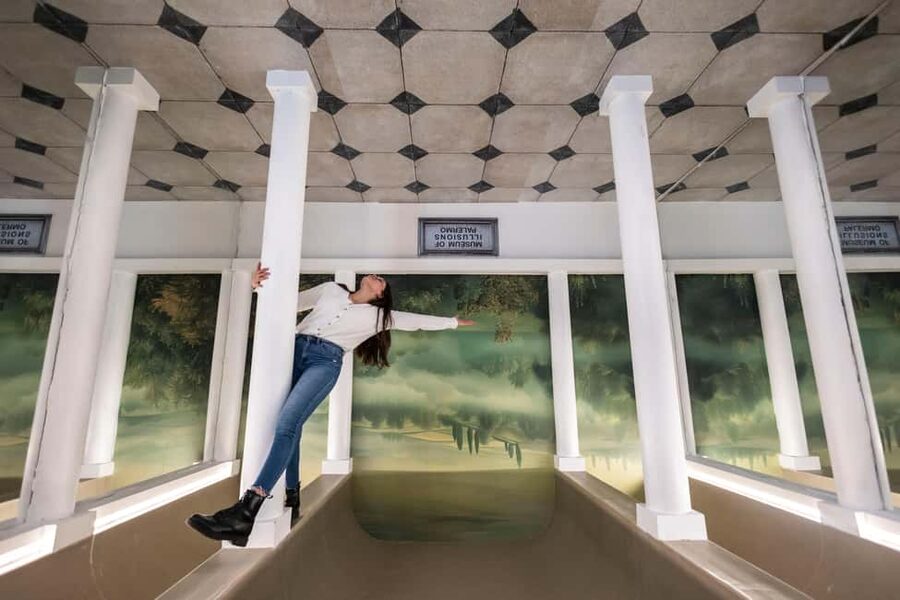
The upside-down rooms are among the easiest installations to understand and the most reliable for photos. Furniture and room details are arranged to make the ceiling appear to be the floor. With the right camera angle, you can create a picture that suggests you are standing on the ceiling.
This works best when you take a moment to plan the pose. Instead of rushing through, look at how the room is arranged and decide where the person taking the photo should stand. Staff can offer assistance, and the museum permits photos and videos, so you have room to try more than one idea.
For families, these rooms offer instant participation. A child can pose in an unusual position, while adults can help with framing and timing. Couples and friend groups can make the setup into a small photo session rather than simply taking a quick snapshot.
There is a practical limit, though. The museum has a finite number of installations, and not every room is built only for photography. If your main goal is a large collection of social media images, you may finish sooner than expected. One comment about the experience specifically wished for more photo spaces, which is a fair point at this price.
Testing Your Balance in the Rotating Tunnels
The rotating tunnels add a physical element that the still rooms do not have. As you move through them, the visual surroundings can make the floor feel unstable or the walls seem to turn. Your eyes receive one message while your body tries to maintain balance.
You do not need to be athletic, but you should take care with your footing. Move at a comfortable pace and use any available support as directed by staff. The effect is meant to confuse your senses, not to become a race.
This section works particularly well when you visit with friends or family because people react differently to the same illusion. One person may feel steady while another needs a slower approach. That contrast is part of the fun, and it gives you something to talk about between installations.
If you are sensitive to motion or have limited mobility, ask the staff for guidance before entering a moving or visually disorienting area. The museum is partially accessible for people with limited mobility, but the information does not promise that every installation can be used by every visitor.
Optical Tricks That Turn Into Photo Ideas
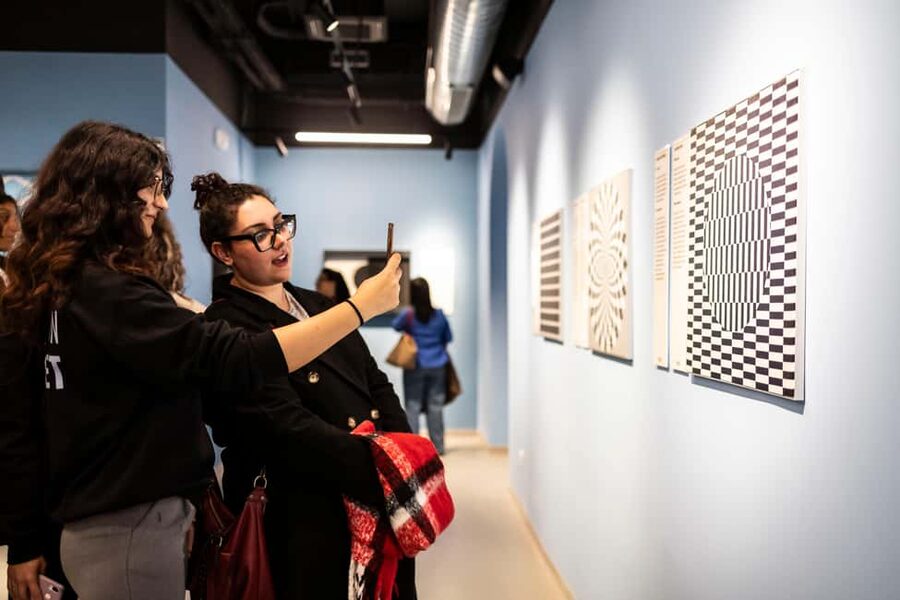
The optical illusions are the heart of the visit. These installations play with size, perspective, balance, and visual expectation. The point is not only to take a funny picture, but also to notice how easily the brain fills in information that the eyes provide.
I find this is where the museum offers more than a collection of photo backdrops. The best installations encourage you to ask why the effect works. You may first see an impossible scene, then spot the angle, arrangement, or visual clue that creates it.
You can photograph and film inside the museum, subject to staff instructions. Keep your camera ready, but do not let the search for a perfect image take over the whole visit. A quick look without a phone can help you understand the illusion before you try to capture it.
The museum uses Italian and English for information and assistance. Some content appears in its original language, so not every written element may be translated. The visual nature of the installations means language is unlikely to prevent you from taking part, and staff can help when an explanation is needed.
A few more museum visits around Italy worth comparing
- Vatican: Museums & Sistine Chapel Entrance Ticket
★ 4.5 · 144,003 reviews - Vatican Museums, Sistine Chapel & St. Peter’s Basilica Tour
★ 4.3 · 73,970 reviews - Vatican Museums, Sistine Chapel & St Peter’s Basilica Guided Tour
★ 4.5 · 39,149 reviews - Florence: Skip-The-Line Uffizi Gallery Timed Entry Ticket
★ 4.5 · 27,832 reviews
Why the Self-Guided Format Works
A guided tour can be useful at a museum built around science, but this setting benefits from flexibility. You are not tied to a fixed speech or a group schedule. You can spend a few minutes on a favorite room and move quickly through an installation that does not interest you.
Staff remain available throughout the visit. Their role is especially useful when a room is difficult to understand, when you want help taking a picture, or when you need advice about using an installation safely.
The quality of the welcome matters here. The staff are described as friendly, smiling, and approachable, which suits an activity built around play. One visitor who arrived late in the day found the instructions helpful, though the staff member spoke very quickly. If you need slower explanations, say so clearly. Italian and English assistance is available.
A late visit may also help you take your time. At around 6:40 p.m., one party found the museum nearly empty except for a small family. This is not a guarantee, but a quieter period can make it easier to photograph the rooms without waiting.
How Long to Allow and What $18 Buys You
Plan on 45 to 60 minutes. The ticket includes entry, access to all themed rooms and installations, the self-guided visit, and staff assistance on site.
That length makes the museum easy to add to a day in Palermo. You can schedule it between major sights without giving up half a day. It also works as a change of pace if you have spent the morning walking through churches, markets, or historic streets.
The price is $18 per person. I consider that reasonable for a short interactive outing if you enjoy taking photos, trying physical installations, or visiting with children. The value is stronger when you treat it as a shared activity rather than a long museum visit.
The calculation changes if you expect a large attraction with many rooms or a two-hour visit. Some people may be finished before the stated 45 to 60 minutes, especially if they move quickly or do not stop for photos. At that point, the price can feel high for the amount of time spent inside.
Your group also affects the value. A family can split the cost across an activity that keeps different ages involved. A couple or group of friends may get plenty from the photo opportunities. A solo visitor who is less interested in taking pictures may find the visit less substantial.
Who Will Enjoy This Most
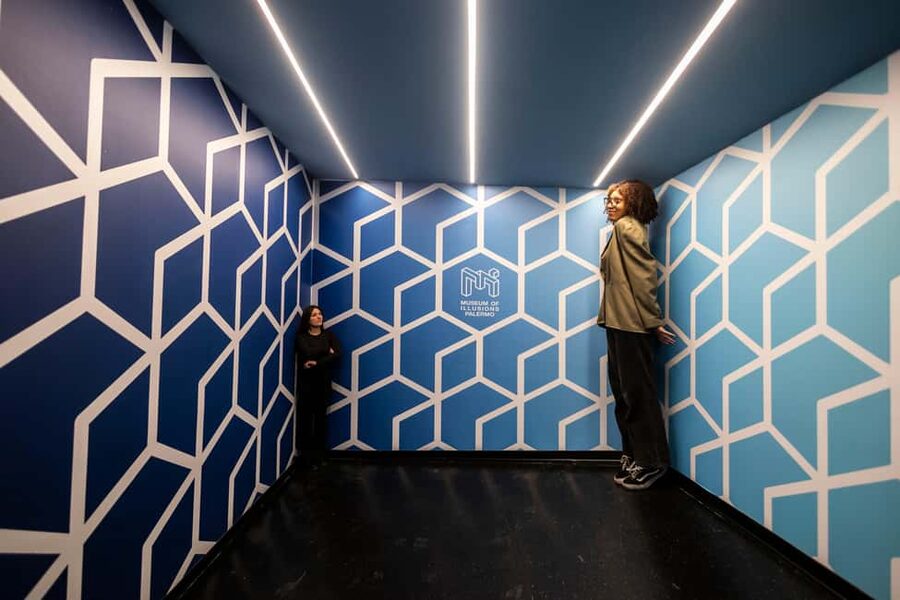
Families are a natural match. The museum gives children permission to touch, move, pose, and question what they see, while adults can join instead of simply supervising. It is also a useful option when young people need a break from historic buildings and formal sightseeing.
Couples can use the rooms for playful photos and a relaxed shared activity. Groups of friends will likely enjoy comparing reactions in the rotating tunnel and helping one another frame pictures.
Solo visitors can enjoy the installations too, though the photo side takes more planning. Staff are available to assist, but you may want to ask for help before entering a room if you want a picture of yourself rather than a quick selfie.
The museum suits curious people who like visual puzzles and unusual settings. It is less suited to someone seeking a long, quiet art collection or a detailed scientific exhibition. The emphasis is on participation, surprise, and simple explanations.
Pets are welcome when accompanied and kept under control. That is useful for people traveling with an animal, though you should still follow staff directions inside each room.
Practical Details for a Smoother Visit
Arrive at least five minutes before your selected time. This gives you a moment to check in, put away anything that should not be carried into an installation, and hear the basic instructions.
Wear something that lets you move comfortably. The museum includes rotating and visually confusing spaces, so you should not feel rushed or restricted while walking. Follow the staff’s guidance, especially in rooms where balance or perception is affected.
Keep your phone or camera ready, but watch where you place it. The best photos depend on angles, and you may need to step back or ask another person to stand in a particular spot. Staff assistance can save time.
The experience is valid for one day, with starting times based on availability. You can reserve now and pay later, and cancellation is free up to 24 hours before the visit for a full refund. These terms are useful if your Palermo plans are still shifting.
The museum is partially accessible for people with limited mobility. Since not every installation is confirmed as fully accessible, ask staff for help before booking or on arrival if access is important to you.
Is the Museum Worth Adding to a Palermo Day?
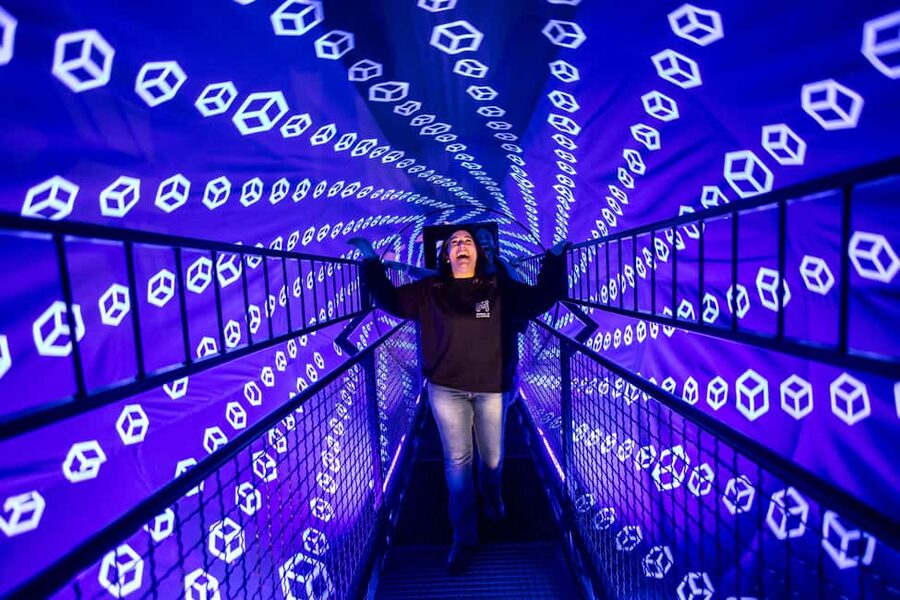
I would book this if you want a short, playful activity that brings your group together. The upside-down rooms and rotating tunnels give you something to do, not just something to look at, and the permission to take photos adds a clear reason to bring your camera.
I would be more cautious if you want a large museum or expect several hours of entertainment. At $18, the experience depends on how much you value the interactive rooms, the photo opportunities, and the chance to test the illusions at your own pace.
For the best value, visit with children, a partner, or friends, and allow enough time to stop at each installation. If you can choose a quieter late-day time, you may have more freedom to take photos. Book it as a compact Palermo activity, not as a major all-day attraction, and it should fit neatly into your plans.
FAQ
How long does the Museum of Illusions visit last?
The visit lasts about 45 to 60 minutes. Some people may finish sooner if they move quickly or do not spend much time taking photos.
How much does admission cost?
The listed price is $18 per person.
Can I take photos and videos inside?
Yes. Photos and videos are allowed, but you must follow the staff’s instructions while using the installations.
Is the visit guided?
The experience is self-guided. Staff are available on site to provide explanations and assistance in Italian and English.
Is the museum suitable for children?
Yes. The experience is suitable for all ages and is designed for families, couples, groups of friends, and solo visitors.
Is the museum wheelchair accessible?
The museum is partially accessible for people with limited mobility. The information does not confirm that every installation is fully accessible, so ask staff for guidance.
Can I bring my pet?
Yes. Pets are welcome if they are accompanied and kept under control.
Just added around Italy
- Oil museum and oil mill in Tuscany: tour and tasting★ 5.0 · 16 reviews
- Enchanted Castle of Sciacca – Museum Tickets★ 3.5 · 63 reviews
- Torino: FIAT Historic Museum and Lingotto District Tour★ 4.9 · 14 reviews
- Torino: The Car Museum Skip-The-Line Tour★ 4.7 · 22 reviews
- Timed Entry Ticket to the Uffizi Gallery★ 4.5 · 498 reviews
- Florence: Accademia Gallery Entry Ticket with Audio Guide★ 4.1 · 88 reviews
- Vatican City: Sistine Chapel, Museums, Basilica Private Tour★ 4.8 · 158 reviews
- Rome: Capitoline Museums and Centrale Montemartini Tickets★ 4.4 · 328 reviews
Museum Tours in Italy, compared.
Vatican: Museums & Sistine Chapel Entrance Ticket
Read our review →
Vatican Museums, Sistine Chapel & St. Peter’s Basilica Tour
Read our review →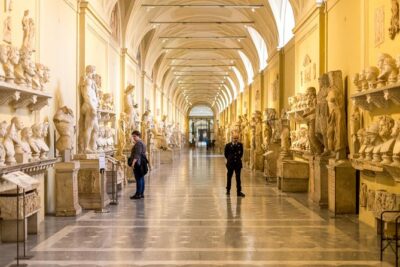
Vatican Museums, Sistine Chapel & St Peter’s Basilica Guided Tour
Read our review →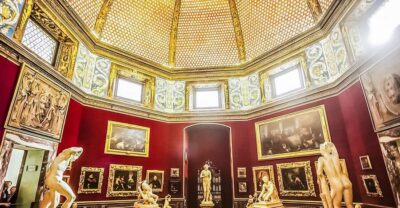
Skip-The-Line Uffizi Gallery Timed Entry Ticket
Read our review →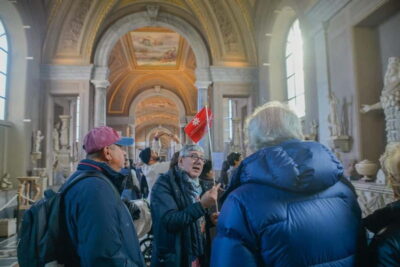
Vatican Museums, Sistine Chapel and Basilica Tour
Read our review →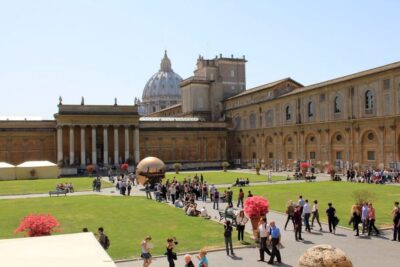
Vatican Museums & Sistine Chapel Skip-the-Line Entry Ticket
Read our review →
Vatican Museums, Sistine Chapel & Basilica Tour
Read our review →
Browse the lists this tour appears in