Review · ITALY
Paestum: Temples and Museum Tour with Archaeologist Guide
Paestum gives you something rare in Italy: three remarkably preserved Greek temples spread along ancient streets, with far fewer distractions than the country’s famous city sights. The Temple of Neptune, Temple of Ceres, and Basilica make the two-hour visit feel like a direct lesson in ancient architecture, not just a quick photo stop.
I like the private format and the museum visit most. Your guide can adjust the pace and answer questions, while the Tomb of the Diver gives the stones a human story. The main drawback is simple: transportation, food, and drinks are not included, so you must arrange your own way to the meeting point at Via Magna Graecia 917.
Key points
- Three major Doric temples: See the Temple of Neptune, Temple of Ceres, and Basilica in one archaeological park.
- A private archaeologist guide: Travel as your own group, with guiding available in English, Italian, Spanish, or French.
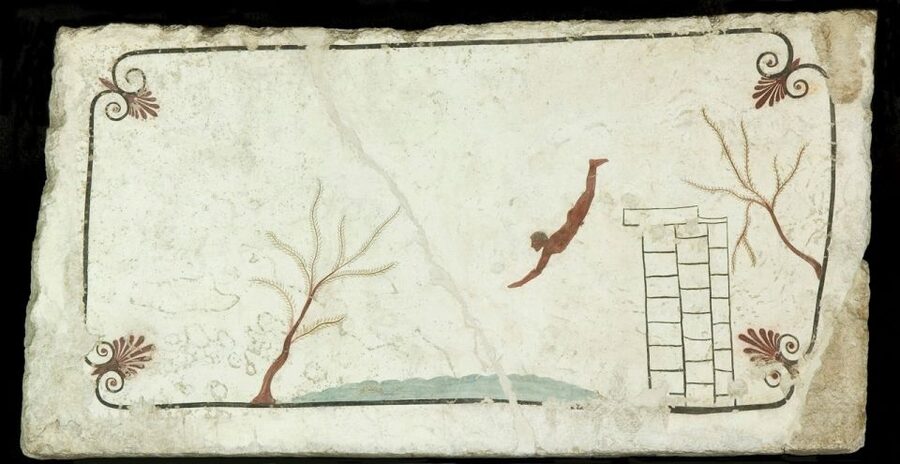
- The Tomb of the Diver: View one of Paestum’s most compelling painted tombs in the National Archaeological Museum.
- Two connected stops: The tour pairs the outdoor ruins with the museum’s sculpture, temple decorations, and Greek art.
- Skip-the-line entry: Your admission tickets are included, saving time at the entrances.
- A compact two-hour visit: This suits a planned stop in Paestum, but leaves little room for a slow, independent wander.
Why Paestum’s temples deserve your time
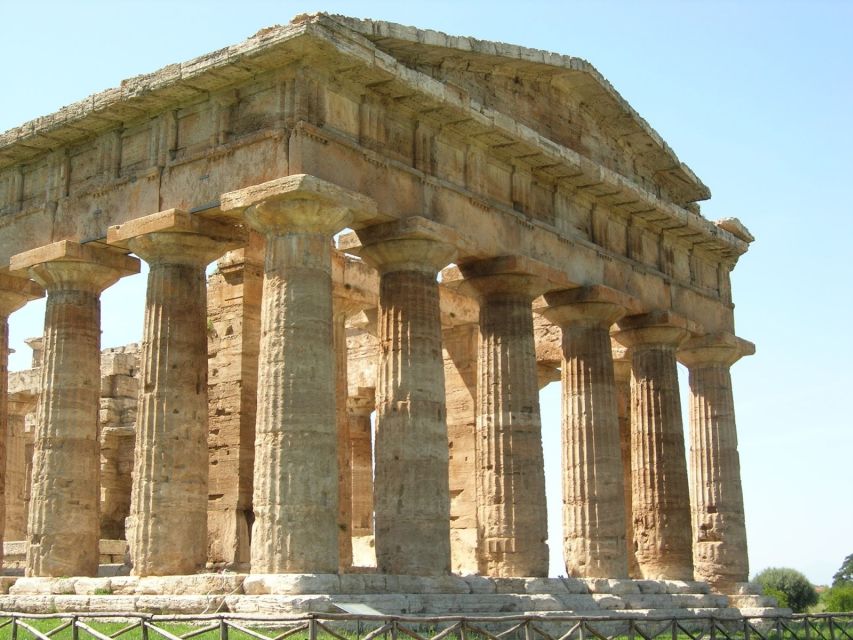
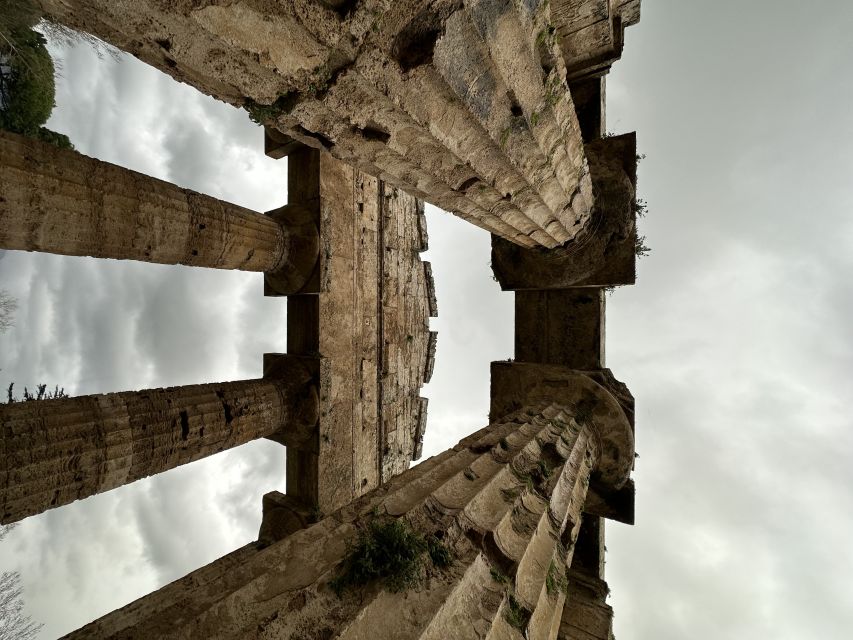
Paestum was founded as a Greek settlement, and its surviving religious buildings are the heart of the visit. You walk among ancient streets before reaching the three Doric temples, whose massive columns and orderly proportions remain unusually clear.
The setting makes the architecture easier to understand. Instead of viewing one isolated ruin, you can compare several temples in the same archaeological area. Your guide explains how the buildings relate to Greek religious architecture and points out details that can be easy to miss when you explore alone.
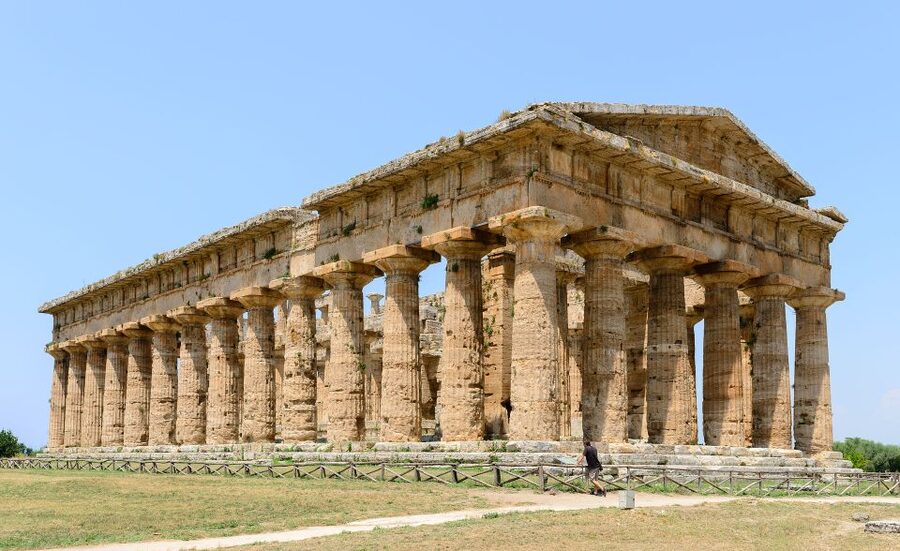
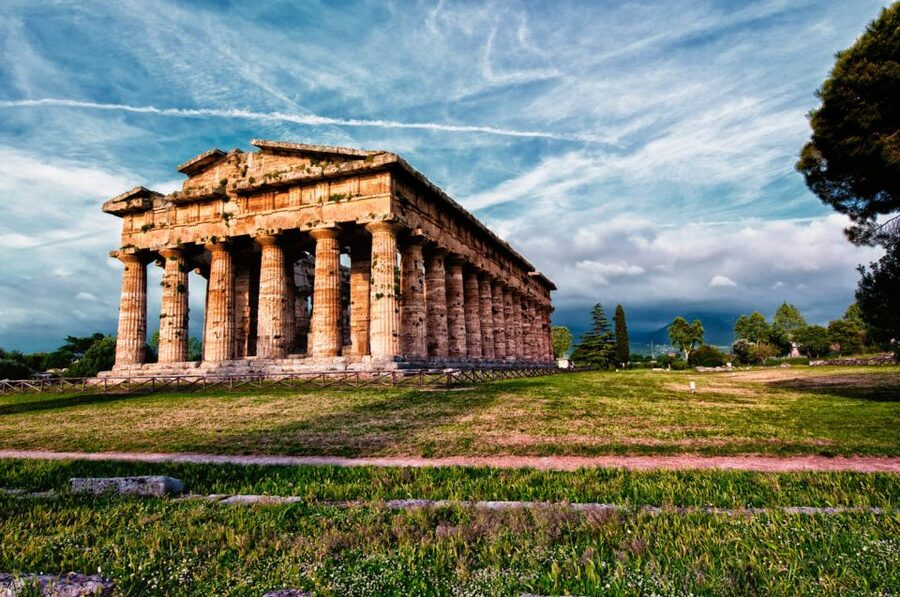
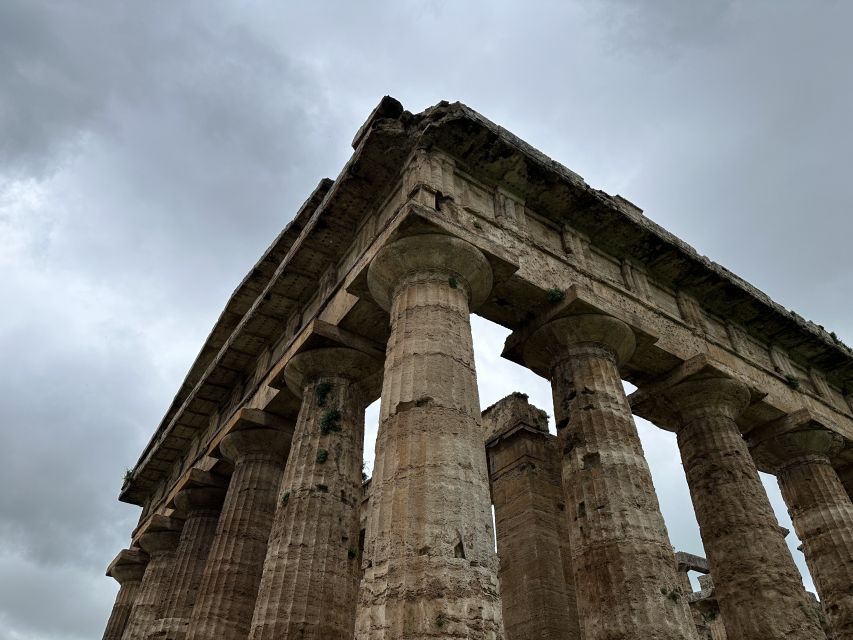
The Temple of Neptune is the headline sight. Its columns and broad structure give you a strong sense of the scale and discipline behind Greek temple design. The Temple of Ceres and the Basilica add useful contrast, helping you see that Paestum is not simply one famous building with a few scattered remains.
I appreciate that this is a guided walk rather than a temple-only photo visit. You get the ancient streets, the wider park, and the architectural context. That matters because ruins can look impressive but confusing when you do not know what you are seeing.
A few more museum visits around Italy worth comparing
- Vatican Museums, Sistine Chapel & St Peter’s Basilica Guided Tour
★ 4.5 · 39,149 reviews - Rome: Vatican Museums & Sistine Chapel Guided Tour
★ 4.3 · 12,117 reviews - Uffizi Gallery: Renaissance Masterpieces Guided Tour
★ 4.6 · 6,070 reviews
Walking through the Archaeological Park
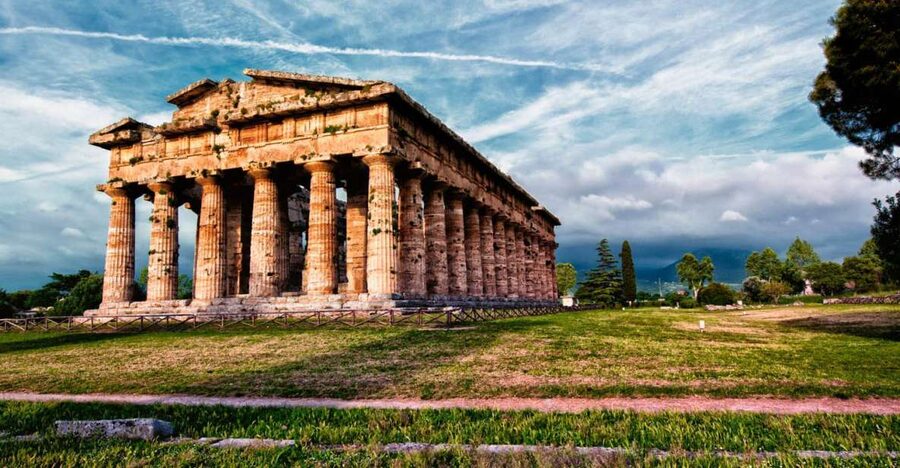
The meeting point is at the entrance to the Archaeological Museum of Paestum, at Via Magna Graecia 917. From there, the tour includes the archaeological park and its principal remains before moving inside the museum.
The outdoor portion is the most visually immediate part of the experience. You can expect a guided visit around the old streets and temples, with time for photographs. The official schedule lists a photo stop, a visit, and a guided tour, so bring a camera, but listen for the explanations that turn the view into a story.
A private group is useful here. If you want to ask why one temple is called the Basilica, or how the buildings differ, you can do so without worrying about holding up a large party. Guides are offered in English, Italian, Spanish, and French, and the tour is designed for one private group.
The two-hour length is both a strength and a limit. I like the efficient format for a day trip or a stop between other Campania plans. You can cover the key monuments without giving up an entire day. At the same time, you should not expect a long, unhurried archaeological study. If you want extensive time for independent photography or quiet exploration, plan extra time around the scheduled tour if possible.
The three Doric temples, seen together
The Temple of Neptune is the park’s main architectural draw. Its survival gives you a particularly clear look at Doric design, with strong columns and a sturdy, balanced form.
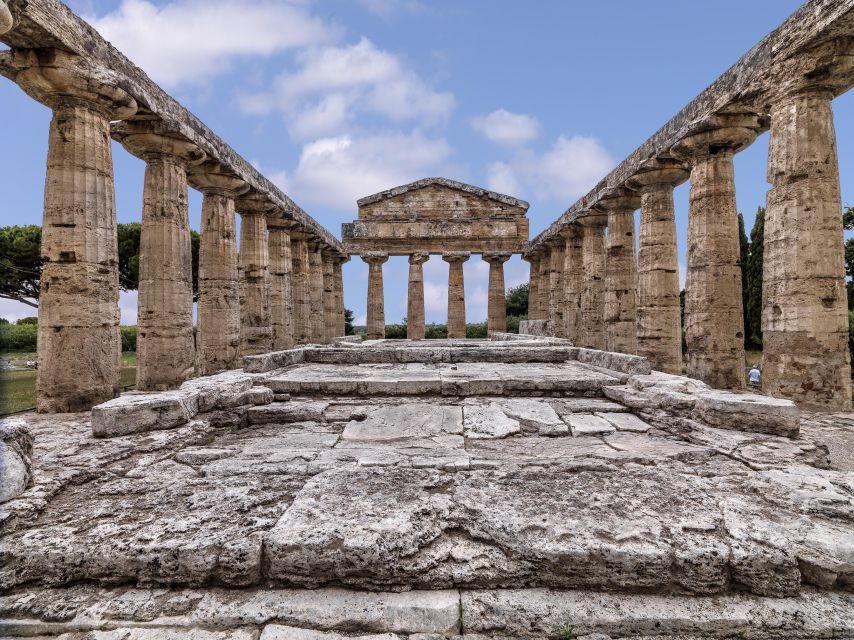
The Temple of Ceres offers another view of Paestum’s sacred buildings. Seeing it after the Temple of Neptune lets you compare scale and layout rather than treating each ruin as a separate postcard.
The Basilica completes the main trio. The name can be confusing to modern visitors, since the word later became associated with Christian buildings. A guide helps place the building in its ancient setting and explain why these remains matter.
I find this comparison one of the tour’s best features. You are not only told that Paestum has well-preserved Greek architecture. You can look from one temple to another and begin to recognize the repeated elements of Doric construction for yourself.
Inside the National Archaeological Museum
The museum is not an optional extra tacked onto the end. It supplies the objects and images needed to understand the temples you have just seen.
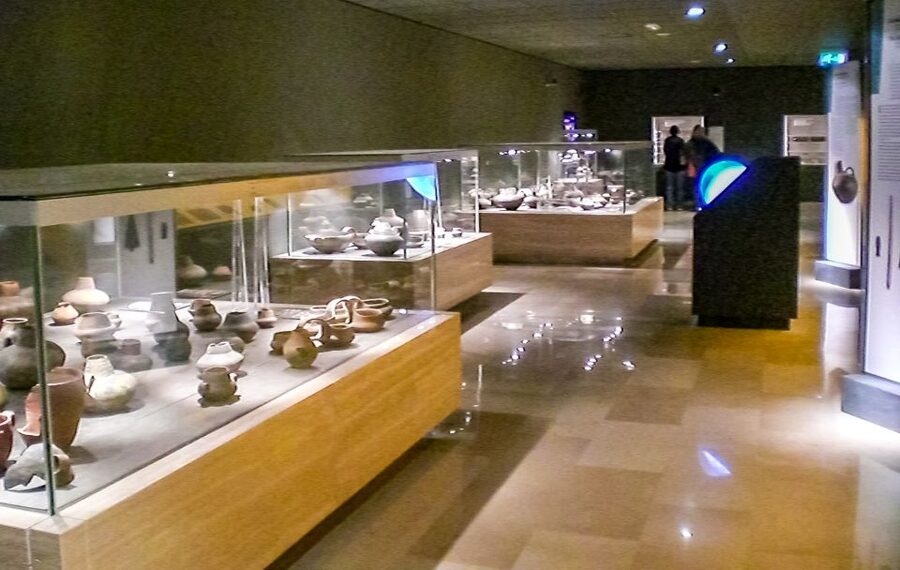
Inside, you can view relics that once decorated the religious buildings, along with important examples of Greek art. These pieces add color, craftsmanship, and human detail to the stone structures outside. After walking past columns and foundations, the museum gives you smaller objects to study at close range.
The museum also preserves painted tombs from Campania. This is where the visit shifts from monumental architecture to personal and funerary art. The contrast makes the two-hour route feel better balanced: first the public religious world of temples, then the intimate world of burial and painted imagery.
Your guide’s role matters especially here. Museum displays can be dense, and the Tomb of the Diver deserves more than a passing glance. A good explanation helps you understand why the tomb is important and what makes its painted decoration so memorable.
Same city, a completely different collection:
- Vatican: Museums & Sistine Chapel Entrance Ticket
★ 4.5 · 144,003 reviews - Vatican Museums, Sistine Chapel & St. Peter’s Basilica Tour
★ 4.3 · 73,970 reviews - Florence: Skip-The-Line Uffizi Gallery Timed Entry Ticket
★ 4.5 · 27,832 reviews - Rome: Vatican Museums, Sistine Chapel and Basilica Tour
★ 4.3 · 16,039 reviews
The Tomb of the Diver
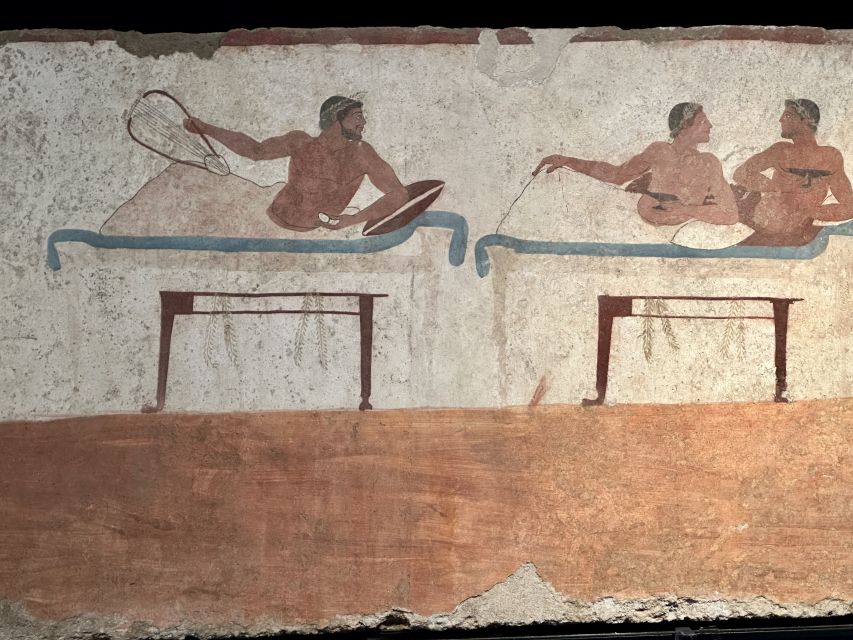
The Tomb of the Diver is the museum’s most distinctive object. Its painted scene has drawn large numbers of visitors, and it remains in remarkably good condition.
I would not rush this part of the tour. The tomb brings Paestum down to a personal scale. The temples show the power and order of a Greek religious community, while the painted tomb reminds you that the site was also connected to individual lives, death, memory, and artistic expression.
The available tour information does not specify exactly how long the guide spends at each museum display, so your experience may depend on questions and group interests. In a private visit, you can ask for more explanation here if the tomb is your priority.
What the private guide adds
The strongest part of this experience is the guide’s role. Angelo is praised for giving a clear introduction, answering questions, and keeping a comfortable pace. Angela is described as bringing strong historical knowledge and genuine enthusiasm to the visit. Luciana is also singled out for making the site and its information enjoyable.
Those details point to what you should expect from the format: not a recorded route or a simple escort, but a live explanation shaped around your group. The guides can make the temples easier to read and connect the outdoor remains with the museum’s art.
I also like the range of language choices. English, Italian, Spanish, and French are available, which makes the tour practical for many visitors. If precise language availability matters for your date, check it when you reserve.
A private guide does cost more than entering the park on your own. The price is $260.56 per group up to one, so the value depends heavily on how many people are in your party and how much you want expert interpretation. For a solo visitor, it is a substantial expense. For a private group sharing the cost, it can make more sense, especially if you care about questions, pace, and the museum’s finer points.
What is included, and what you arrange yourself
The guide’s services and skip-the-line entrance tickets are included. That makes the booking straightforward once you reach Paestum, and skipping the ticket line can protect your limited two-hour schedule.
Transportation is not included. You must get to the meeting point at the entrance to the Archaeological Museum of Paestum on your own, and the activity returns there at the end. Food and drinks are also excluded.
This matters because Paestum is not a simple add-on unless you already have transport plans. Check your route before booking, then leave enough time to reach Via Magna Graecia 917. The tour itself does not collect you from a hotel or station based on the information provided.
The meeting point also makes the sequence practical. You start at the museum entrance, visit the park, return to the museum for the guided visit, and finish back at the same location. You are not left wondering where the final stop is or how to reconnect with your plans.
Who will get the most from this visit
I would choose this tour if you want the main Paestum sights explained in a compact block of time. It fits people who value archaeology, ancient architecture, and museum objects but do not want to manage the site alone.
It also suits families or small groups with mixed levels of interest. A private guide can keep the explanations moving for people who want context while answering deeper questions from the history enthusiast in your group.
The tour is a particularly good match if you are comparing Paestum with other Campania archaeological sites. One guide described Paestum as more enjoyable than Pompeii, and that comparison is useful even if you ultimately visit both. Paestum offers a different kind of experience, centered on Greek temples and a compact museum collection rather than a large Roman city.
I would hesitate if you want a full-day archaeological excursion, included transportation, or a leisurely meal as part of the outing. None of those is part of this activity. The two-hour visit is focused, and that focus is its appeal.
Timing, cancellation, and practical planning
The duration is two hours, with starting times available according to the date you select. Since the schedule is not fixed in the supplied information, check the available time before making plans around trains, meals, or another attraction.
You can cancel up to 24 hours in advance for a full refund. The reserve-now, pay-later option also gives you some flexibility, since you can secure the booking without paying immediately.
The tour has a five-star rating from 14 reviews, with repeated praise for the guides’ pacing, explanations, and enthusiasm. I would treat that as encouraging evidence about the guiding rather than a promise that every visit will feel identical. Your experience will still depend on the guide assigned, your group’s questions, and the time available.
Wear whatever lets you walk comfortably through an archaeological park, and remember that the visit combines outdoor ruins with indoor museum rooms. The information provided does not specify accessibility conditions, so ask the provider directly if you need detailed access information.
Should you book the Paestum temples tour?
Book it if you want Paestum’s major temples and museum covered by one private archaeologist guide, with skip-the-line admission and a clear two-hour structure. The Temple of Neptune, the other Doric buildings, and the Tomb of the Diver give you three strong reasons to go, while the private format lets you ask questions at your own pace.
Think twice if you are traveling alone on a tight budget or need transport included. The price is easier to justify for a group sharing the cost, especially if you want more than photographs and would value the kind of clear introductions and friendly pacing associated with Angelo, Angela, and Luciana.
FAQ
Where does the Paestum tour start?
The tour starts at the entrance to the Archaeological Museum of Paestum, at Via Magna Graecia 917.
Where does the activity end?
The activity ends back at the meeting point at Via Magna Graecia 917.
How long does the tour last?
The tour lasts two hours. Starting times depend on availability for your selected date.
What languages are available?
Live guiding is available in English, Italian, Spanish, and French.
Is this a private tour?
Yes. The activity is arranged as a private group experience.
Are entrance tickets included?
Yes. Skip-the-line entrance tickets and the guide’s services are included.
Is transportation or food included?
No. Transportation, food, and drinks are not included.
Just added around Italy
- Oil museum and oil mill in Tuscany: tour and tasting★ 5.0 · 16 reviews
- Enchanted Castle of Sciacca – Museum Tickets★ 3.5 · 63 reviews
- Torino: FIAT Historic Museum and Lingotto District Tour★ 4.9 · 14 reviews
- Torino: The Car Museum Skip-The-Line Tour★ 4.7 · 22 reviews
- Timed Entry Ticket to the Uffizi Gallery★ 4.5 · 498 reviews
- Florence: Accademia Gallery Entry Ticket with Audio Guide★ 4.1 · 88 reviews
- Vatican City: Sistine Chapel, Museums, Basilica Private Tour★ 4.8 · 158 reviews
- Rome: Capitoline Museums and Centrale Montemartini Tickets★ 4.4 · 328 reviews
Museum Tours in Italy, compared.
Vatican: Museums & Sistine Chapel Entrance Ticket
Read our review →
Vatican Museums, Sistine Chapel & St. Peter’s Basilica Tour
Read our review →
Vatican Museums, Sistine Chapel & St Peter’s Basilica Guided Tour
Read our review →
Skip-The-Line Uffizi Gallery Timed Entry Ticket
Read our review →
Vatican Museums, Sistine Chapel and Basilica Tour
Read our review →
Vatican Museums & Sistine Chapel Skip-the-Line Entry Ticket
Read our review →
Vatican Museums, Sistine Chapel & Basilica Tour
Read our review →