
Review · THE NETHERLANDS
Oosterbeek: Airborne Museum Hartenstein Entry Ticket
The most powerful part of Airborne Museum Hartenstein is its setting: this former villa served as British General Urquhart’s headquarters during the Battle of Arnhem. You do not just read about the battle in a distant gallery. You follow its events inside the place where British command tried to hold the line.
I like the museum’s human scale, especially the stories of British, Polish, and German soldiers alongside Dutch civilians who were children during the fighting. I also like the freedom to move at your own pace with the audio tour, a useful touch when a subject this serious deserves time and quiet attention.
The main thing to consider is the tone. This is not a light family attraction, even though children have a special mission with Soldier Tommy. The material includes painful wartime testimony, so younger children may need help with the context.
Key points to know before you go

- General Urquhart’s former headquarters: Visit Villa Hartenstein, the wartime command post of the British forces during the Battle of Arnhem.
- An underground battle experience: Enter the Airborne Experience for a more atmospheric presentation of the fighting.
- Four-language audio tour: Listen in Dutch, English, German, or Polish and set your own pace.
- Civilian voices matter here: Eyewitness accounts explain what the war felt like for Dutch children, not only for soldiers.
- A child-friendly mission: Children can follow Soldier Tommy through an interactive audio tour.
- A practical $19 ticket: The price includes the museum, Airborne Experience, temporary exhibition, and audio tour, with entry valid for one day.
Why Villa Hartenstein makes the story feel immediate
The Battle of Arnhem is often reduced to troop movements, aircraft, bridges, and military plans. At Hartenstein, the story begins in a former headquarters, which gives the visit a firm sense of place. You are looking at a building that became the center of British operations in September 1944.
That setting helps you understand the pressure behind the decisions. Commanders were trying to direct a major operation while conditions changed around them. The museum takes you through the battle step by step, so you can follow the sequence instead of facing a wall of dates and names.
I find this chronological approach useful if your knowledge of Arnhem is limited. You do not need to arrive as a military history expert. The museum’s job is to explain what happened and show how the battle affected soldiers and civilians alike.
The Battle of Arnhem also matters beyond one September campaign. Its outcome affected the later course of the Second World War and helped shape the Europe that followed. The museum places the battle within that larger Dutch and European story without losing sight of individual lives.
A few more museum visits around the Netherlands worth comparing
- Amsterdam: Van Gogh Museum Ticket
★ 4.7 · 52,054 reviews - Moco Museum Amsterdam Entrance Tickets with Banksy & More
★ 4.4 · 10,088 reviews - Amsterdam: The Upside Down Museum Entrance Ticket
★ 4.4 · 9,506 reviews
British, Polish, German, and Dutch voices
One of the museum’s strongest choices is its refusal to tell the battle from only one side. You encounter the experiences of British and Polish soldiers, as well as German troops. That wider view gives the visit more balance and helps you see the battle as a human event rather than a simple contest between heroes and villains.
The Polish contribution is especially important to notice. The museum gives Polish soldiers a place in the story, alongside the British forces and the German side. You should allow time for these different perspectives rather than rushing toward the more dramatic displays.
Dutch civilians also receive major attention. Eyewitness accounts describe what it was like to experience the war as a child. These accounts can be harder to process than military facts because they connect the battle to ordinary homes, families, and daily fear.
I like this part of the museum because it widens your understanding of what a battle means. Soldiers make decisions in uniform, but civilians live with the consequences in streets and houses. The child’s point of view can make the events easier for younger visitors to grasp, though the emotional material still calls for an age-appropriate conversation.
The Airborne Experience underground
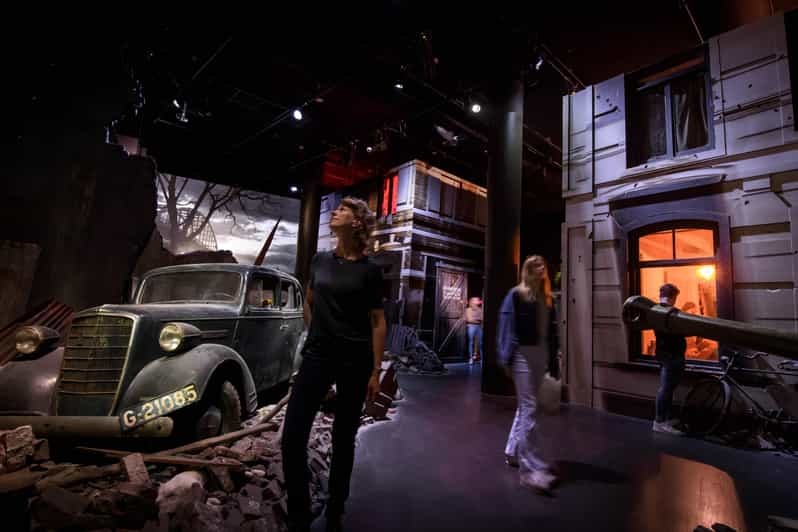
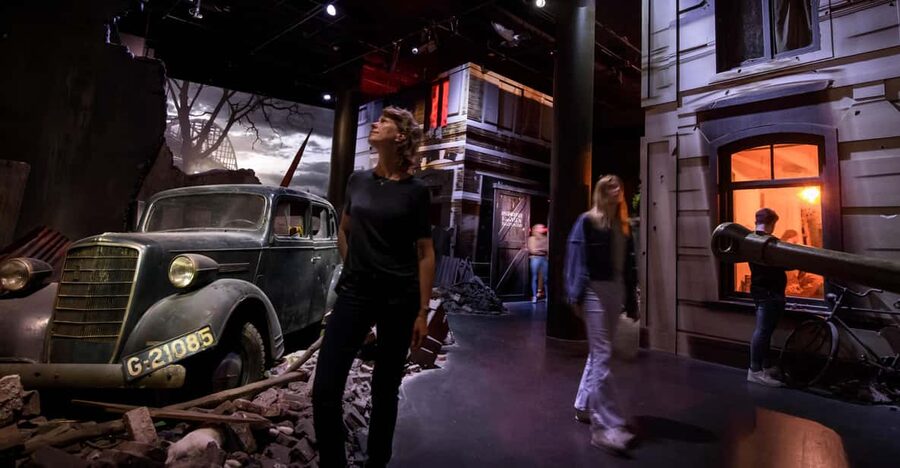
The Airborne Experience takes the story below ground. This is the museum’s more atmospheric section, built to give you a stronger sense of the battle than display cases alone can provide.
You should expect a presentation designed to place you inside the tension of the campaign. The underground setting is a good match for a story about command centers, danger, and uncertainty. It changes the rhythm of the visit after the more traditional museum sections.
The value here is not simply spectacle. A battle can feel abstract when it is presented only through maps and dates. A sensory, underground section can help you connect those facts with the pressure of the people who lived through them.
Still, I would not treat this as a standalone attraction. Its impact depends on the context you gain from the rest of the museum. Go through the main story first, then give the Airborne Experience your full attention.
Because the ticket also includes the temporary exhibition, check what is being shown during your visit. The supplied information identifies a temporary exhibition about BIDKL, described as work that visitors found very good. Since temporary displays change, the precise content may differ, but it is worth allowing time for this additional section.
Using the audio tour at your own pace
The free audio tour is available in Dutch, English, German, and Polish. That makes the museum easier to use for international visitors and for families or groups who do not all speak the same language.
I like an audio tour here because the subject can require pauses. You may want to stop after an eyewitness account, look more closely at an object, or spend extra time with one part of the battle. A fixed spoken tour can push you along. This format lets you decide when to continue.
You can also choose how much detail you want. If you already know the basic story, use the audio for personal accounts and lesser-known viewpoints. If Arnhem is new to you, listen closely to the chronological explanation before focusing on the smaller details.
The Dutch language is a natural fit for the setting, while English, German, and Polish make the material accessible to a wider audience. The audio option is included in the admission price, so you do not need to budget for a separate guide.
No individual guide names are provided for this activity. Instead, you should expect the audio tour to provide the main interpretation, with hosts or greeters available in Dutch, German, English, and Polish.
Same city, a completely different collection:
- Amsterdam: Red Light Secrets Museum Entry Ticket
★ 4.2 · 5,722 reviews - Amsterdam’s Weirdest Museum: Ripley’s Believe It or Not!
★ 4.5 · 4,920 reviews - Amsterdam: Van Gogh Museum Ticket and City Canal Cruise
★ 4.6 · 3,899 reviews - Amsterdam: Rembrandt House Museum Entrance Ticket
★ 4.7 · 3,385 reviews
A useful choice for families with children
Children can take part in a special mission with Soldier Tommy through the interactive audio tour. This gives younger visitors a task and a character to follow, rather than asking them to absorb a long sequence of military facts.
That feature can help families keep children involved during a serious museum visit. It does not make the subject cheerful, and parents should still explain that the stories concern war, death, fear, and displacement. The mission works best as a way to open a conversation, not as a way to hide the difficult parts.
Older children may appreciate having their own audio content while adults spend more time with the eyewitness accounts. Younger children may find the atmosphere or subject matter intense. Since no recommended age is provided, use your own judgment based on your child’s comfort with wartime history.
The museum’s civilian stories offer a useful bridge for family discussion. Children may understand the experience of another child more readily than a military map. You can talk about how ordinary people were affected, then connect that to the soldiers and commanders in the rest of the museum.
What the $19 admission includes
At $19 per person, the ticket covers more than basic entry. You receive access to the main Airborne Museum Hartenstein, the underground Airborne Experience, the temporary exhibition, and the audio tour.
That is fair value if you plan to use the full museum. You are paying for several connected parts of the story rather than a single room or short display. The audio tour is included in four languages, which adds practical value for international visitors.
The ticket is valid for one day. The activity information does not give a fixed visit length or a required starting time, so check availability when you book. I would avoid treating the museum as a quick stop if you want to hear the eyewitness accounts and follow the battle in order.
The value is strongest for people with a serious interest in the Second World War, Dutch history, or the human cost of military decisions. If you only want a brief look at a historic building, the ticket may feel less worthwhile. The museum asks for attention, not just a quick photograph.
Planning a calm and useful visit
You can keep your plans flexible because cancellation is allowed up to 24 hours before the visit for a full refund. A reserve-now, pay-later option is also available. These policies matter if your schedule around Gelderland is still changing.
The museum is wheelchair accessible, which makes the visit more practical for people who need step-free access. The activity information does not provide further details about specific routes or facilities, so contact the museum directly if you need precise accessibility guidance.
I would begin with the main chronological story. Pay attention to the British, Polish, German, and civilian perspectives before moving into the underground Airborne Experience. Finish with the temporary exhibition if you still have time and energy for another layer of information.
Do not rush the eyewitness material. The strongest part of this museum is not simply learning when events occurred. It is understanding how a major battle reached soldiers, commanders, children, and families.
Who should book this museum visit
I would recommend this ticket to anyone who wants more than a standard military display. It suits visitors who value personal testimony, careful historical context, and a museum visit that lets them set their own pace.
Families can make good use of the Soldier Tommy mission, but parents should prepare children for serious material. The museum can work well for older children and teenagers who are ready to discuss war rather than treat it as an adventure story.
The four-language audio tour makes it a sensible choice for international visitors. It also helps couples or groups with different levels of knowledge, since each person can listen and pause independently.
You may want to skip it if you are looking for a fast, cheerful activity or a short attraction with little reading and reflection. The subject is heavy, and the museum does not turn that weight into entertainment. That is a strength for many visitors, but it is still worth considering before you book.
Should you book Airborne Museum Hartenstein?
Yes, if you want a thoughtful account of the Battle of Arnhem that combines military events with the voices of civilians and soldiers from several sides. The former headquarters, underground Airborne Experience, eyewitness stories, and four-language audio tour give the $19 ticket solid value.
Book it with enough time to listen rather than race through. Families should use the Soldier Tommy mission but remain ready to explain the harder material. For anyone interested in the Second World War or modern Dutch history, this is one of the more meaningful ways to understand what Arnhem meant beyond the battlefield.
FAQ
Where is Airborne Museum Hartenstein?
The museum is in Oosterbeek, in Gelderland, Netherlands.
What historical event does the museum cover?
The museum focuses on the Battle of Arnhem, which took place in September 1944 during the Second World War.
What was Villa Hartenstein used for during the war?
Villa Hartenstein was the headquarters of British General Urquhart and the British troops during the Battle of Arnhem.
Does the ticket include the Airborne Experience?
Yes. Admission includes a visit to the underground Airborne Experience.
Is a temporary exhibition included?
Yes. The ticket includes access to the temporary exhibition. One current exhibition mentioned in the available information concerns BIDKL, but temporary content can change.
Is an audio guide included?
Yes. A free audio tour is included in Dutch, English, German, and Polish.
Is there an activity for children?
Yes. Children can join an interactive audio mission with Soldier Tommy.
Is the museum wheelchair accessible?
Yes. The activity is listed as wheelchair accessible.
Just added around the Netherlands
- Van Gogh Museum Tour excluding Entrance Tickets★ 5.0 · 16 reviews
- Van Gogh Museum Entry Ticket and Guided Tour★ 4.5 · 48 reviews
- Van Gogh Museum with Audio Guide★ 3.5 · 80 reviews
- Van Gogh Museum Skip the Queue with Audio Guide★ 4.0 · 261 reviews
- Amsterdam: Explore the Van Gogh Museum & His Masterpieces★ 3.5 · 64 reviews
- Amsterdam Van Gogh Museum with Audio or Guided Tour★ 4.0 · 266 reviews
- Van Gogh Museum, Rijks Museum & Walking Tour – Private Day Tour★ 5.0 · 17 reviews
- Van Gogh Museum Ticket with Audio Guide and Unlimited Access Time★ 5.0 · 25 reviews
Museum Tours in the Netherlands, compared.

Moco Museum Amsterdam Entrance Tickets with Banksy & More
Read our review →

Amsterdam’s Weirdest Museum: Ripley’s Believe It or Not!
Read our review →

Browse the lists this tour appears in