

Review · GREECE
Athens: National Archaeological Museum Ticket & Audio Guide
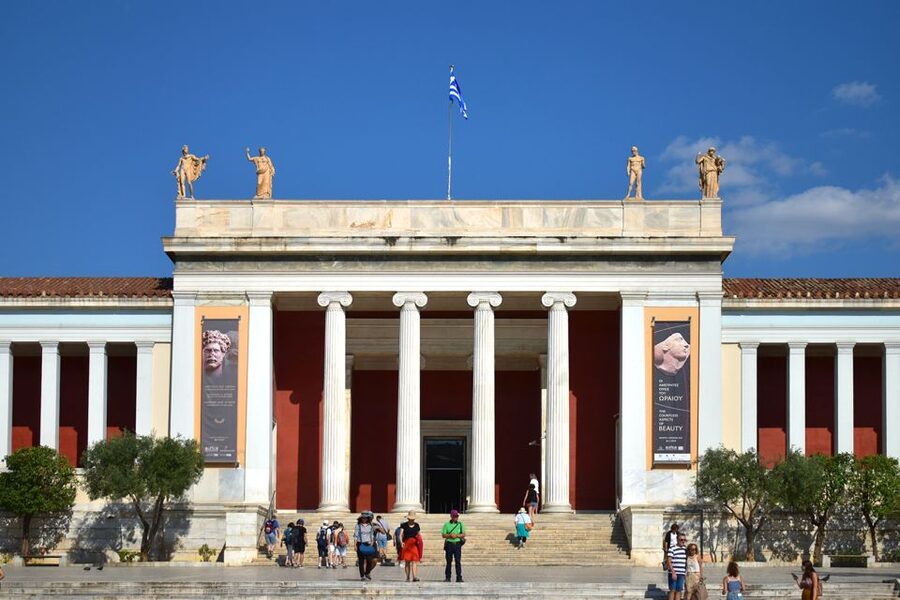
The National Archaeological Museum is the place to see ancient Greece in one sweeping visit, from Mycenaean gold to classical bronze statues and Roman portraits. I like the pre-booked entry ticket, which can save you from joining the ticket-buying queue, and I like the self-guided audio tour, which gives the objects a story instead of leaving you alone with a wall of dates.
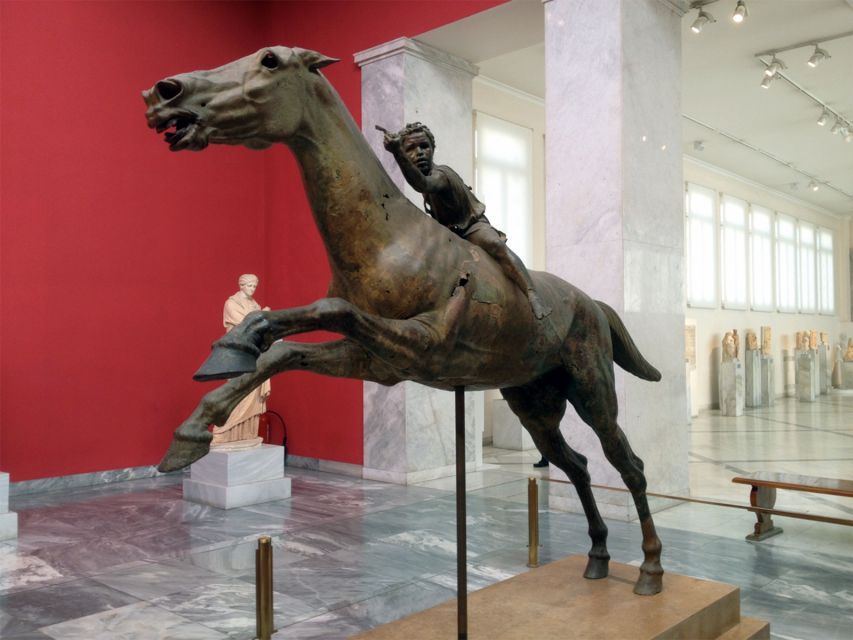
The audio route focuses on major pieces, including the Mask of Agamemnon, the Mycenaean Bull, the bronze Zeus or Poseidon, and the famous horse rider. The trade-off is coverage: it skips some rooms, and the directions can occasionally feel unclear in this large, slightly maze-like museum.
Key points to know before you go

- See Mycenaean gold and bronze treasures: The early Greek displays contain some of the museum’s most memorable objects, including the Mask of Agamemnon and metalwork from the Bronze Age.
- Use your phone as your guide: Download the ticket, audio, text, and maps before arrival, then explore without a scheduled group.
- Plan 90 minutes to four hours: The audio highlights can take about an hour and a half, while a serious museum visit deserves two to four hours.
- Enter faster with a pre-booked ticket: You still pass through security, but the ticket may spare you the ticket booth queue.
- Pause in the museum café: The ground-floor café sits in an inner courtyard with greenery and art, making it a useful break during a long visit.
- Bring the right equipment: You need a charged Android or iOS phone and your own headphones.
Why the National Archaeological Museum deserves your time
Athens has no shortage of ancient sights, but this museum gives you something the open-air ruins cannot: a close look at the objects people made, used, wore, worshipped, and carried into the grave.
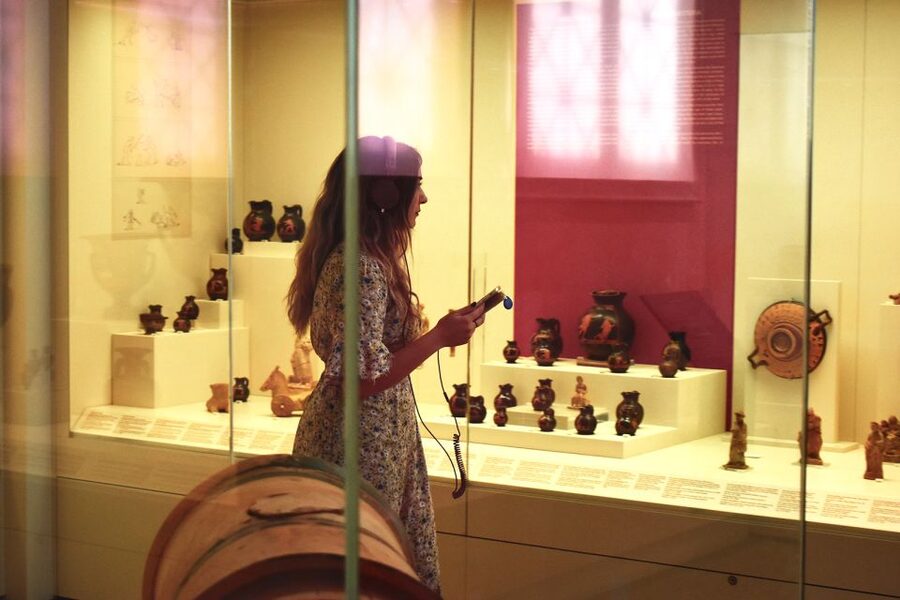
You see jewelry, tools, pottery, marble sculpture, bronze statues, and objects from several periods of Greek history. The collection reaches far beyond the familiar image of white marble temples. Gold burial goods, painted ceramics, battered weapons, and carefully modeled figures show how varied ancient Greek life was.
I especially like the way the visit can connect separate chapters of history. The early Mycenaean material leads toward the later classical world, while Roman sculptures show how Roman patrons admired and preserved Greek artistic ideals. One particularly interesting theme is the Roman emperor Hadrian’s attachment to Greek culture and classical forms.
The museum is large, but it is not described as an endless warehouse of objects. Several rooms are arranged along a historical line, which helps you follow the broad movement from the Bronze Age through classical and Roman periods. The order can still feel confusing in places, especially if you try to see everything in one pass.
More archaeological museums in Greece:
- Delphi: Archaeological Site & Museum Ticket with Audio Tours
★ 4.3 · 721 reviews - Athens: National Archaeological Museum Ticket w/ Opt. Audio
★ 4.4 · 713 reviews - Ancient Olympia: Archaeological Site and Museum Entry Ticket
★ 4.3 · 555 reviews
Getting inside with the mobile ticket
The ticket is delivered by email with instructions for downloading both your entry pass and the audio tour. You should handle this before reaching the museum. A charged phone is essential, and you need headphones because the experience is designed for personal listening.
At the entrance, expect a security check. The queue outside can look worse than it is because part of it may be for security rather than ticket purchases. With a pre-booked ticket, you can proceed to the entry point after security instead of waiting at the ticket booth.
This is useful during busy periods, particularly when you have a firm schedule. It is also helpful if you are visiting Athens on a short stop and cannot afford to spend part of your museum time buying admission.
Keep your ticket easy to open on your phone. Download the offline content, including the text, audio narration, and maps, while you have a reliable connection. The audio guide is not compatible with Windows phones, older iPhones, several older iPad models, or older iPod Touch devices.
A practical warning: this product includes the regular ticket for all ages. If you qualify for free or reduced-price admission, you should go directly to the museum ticket booth instead of paying for this package.
Starting with the Mycenaean treasures

The Mycenaean displays are a strong reason to visit. These early Greek objects bring the Bronze Age into focus through gold, silver, and bronze work rather than through vague mythology alone.
The Mask of Agamemnon is the headline object for many people. Its fame comes from its link to the legendary king of the Trojan War, though the museum’s wider collection matters just as much. Around it, you find the material culture of an early society: precious objects, tools, weapons, and art connected with elite burials and daily life.
The audio guide gives selected objects historical context and anecdotes, helping you see more than the material itself. That matters here because an ornate gold object can be beautiful while still leaving you wondering who used it, why it was made, and what it tells you about society.
The Mycenaean Bull is another named stop on the route. It offers a smaller, more focused encounter than the famous mask and helps show the range of early Greek artistic work.
Allow time to look at the objects after the narration ends. The audio is useful, but the museum’s best moments often come when you stop listening and simply study the workmanship.
Classical sculpture and the bronze gallery
The bronze sculptures are among the museum’s biggest rewards. Bronze survives differently from marble, and these works have a presence that can feel immediate. The bronze statue identified as Zeus or Poseidon is one of the collection’s essential stops, partly because the open hand once held an object that would help identify the figure.
The horse rider is another highlight. It combines a human figure, an animal, movement, and a sense of command in one compact work. The audio route uses these major pieces to make the collection easier to approach, especially if you are not already familiar with Greek sculpture.
The museum also contains many marble figures, some remarkably intact considering their age. You will see sculpture from different periods, and the contrast between idealized classical bodies, more individualized portraits, and later Roman works helps explain how artistic taste changed.
The audio narration does not cover every statue or room. That is a benefit if you want a manageable route, but a limitation if you expect a full explanation of the museum. I suggest treating it as a set of signposts rather than a complete scholarly guide.
A few more museum visits around Greece worth comparing
- Athens: Acropolis Museum Ticket with optional Audio Guide
★ 4.4 · 2,652 reviews - Athens: Acropolis Museum Ticket with Audio Guide
★ 4.1 · 835 reviews - Crete: Knossos Palace and Museum E-Tickets with Audio Guides
★ 4.0 · 828 reviews - Athens: Acropolis & Acropolis Museum Ticket with Audio Guide
★ 4.1 · 556 reviews
Roman works and Hadrian’s Greek interests
It is easy to think of the National Archaeological Museum as a purely Greek collection, but the Roman material adds an important layer. Hadrian’s sculptures are particularly interesting because they show how Roman power and Greek artistic traditions overlapped.
Hadrian was known for his admiration of Greek culture, and the displays help you consider Rome not simply as a force that replaced Greece, but also as a society that collected, copied, supported, and reshaped Greek ideas. This is one of the more useful historical connections in the museum.
The audio tour’s storytelling works best when it links an object to a broader question about society. You are not just looking at a head, torso, or fragment. You are considering who commissioned it, what style it followed, and how later people understood earlier Greek art.
If Roman history interests you, allow extra time beyond the main audio route. The route is designed around highlights, so you may need to explore nearby rooms independently.
How the audio tour works in practice
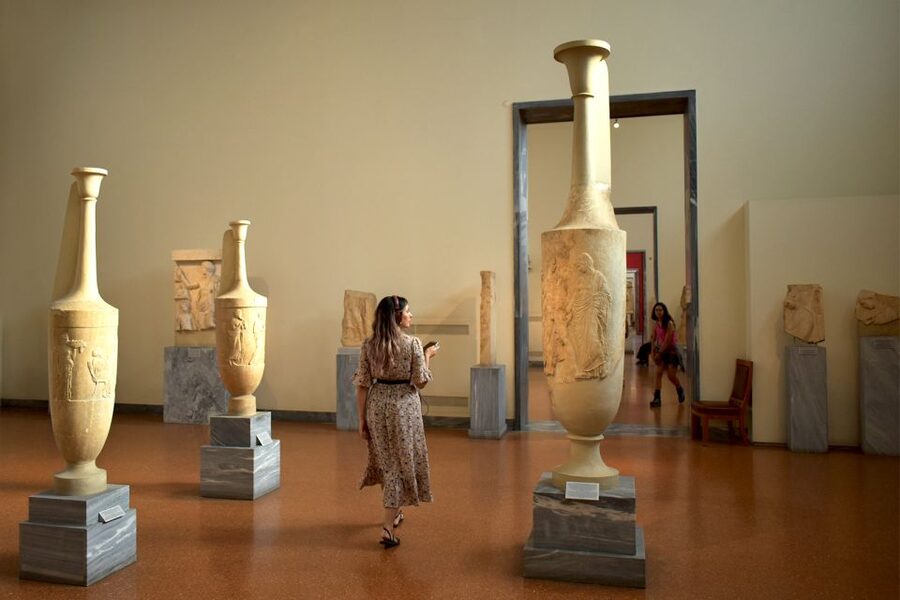
The audio guide is self-guided, not a live tour. You listen through your own smartphone, choose your pace, and can pause when an object catches your eye.
That freedom is the main advantage. You do not need to keep up with a group, and you can spend longer with the Mask of Agamemnon or move quickly through a room that does not interest you. You can also use the audio before or after the museum visit, and the content can be used repeatedly.
The narration is available in English, French, German, Greek, Italian, and Spanish. It aims at the main objects rather than every display, with explanations that make the collection easier to understand than a quick read of every label.
Still, you should expect occasional navigation problems. The museum can feel maze-like, and the audio route may send you past rooms that you later want to revisit. A few people have found the directions or order unclear. Downloading the map and checking the museum signs can help you get your bearings.
I would not choose this product if you want a specialist-led archaeology lesson or the chance to ask detailed questions throughout the visit. You get narration, not a live guide. For independent sightseeing, though, the format is practical and usually easier on your attention than trying to read every label.
How long should you spend inside?
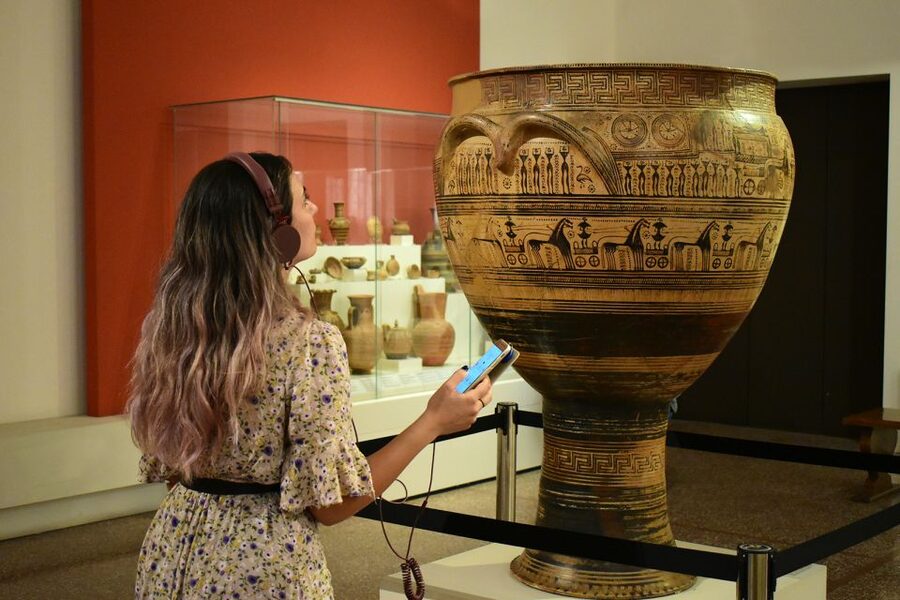
The advertised duration ranges from 45 minutes to four hours, depending on the option and how you use the audio. In real terms, 45 minutes is only enough for a very quick look, while the audio highlights can take around 90 minutes.
I would allow at least two hours if this is your first visit. That gives you time for the main route, photographs where permitted, and a few pauses without turning the museum into a race. Three hours works better if you enjoy sculpture, pottery, jewelry, or ancient tools.
Four hours is reasonable for someone who wants to see most of the major sections. The building and collection can absorb that time, especially if you return to rooms skipped by the audio guide.
Do not assume the audio tour marks the end of your museum visit. Once the narration finishes, you can keep exploring during the museum’s free time. This is important because the guide does not cover every item.
The café, building, and practical comforts
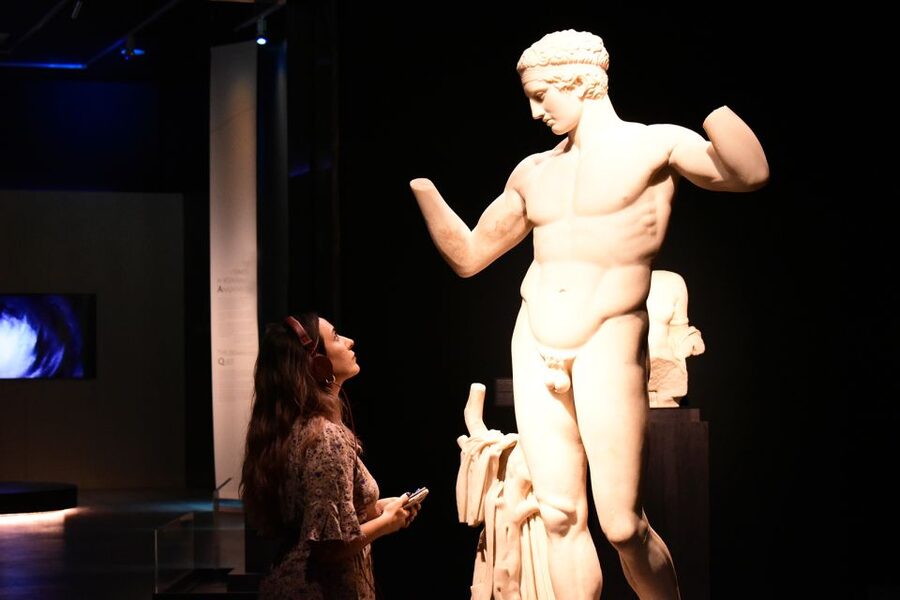
The museum itself is part of the experience. The building is light and airy, and the displays are arranged in spacious rooms rather than packed into a tight corridor. That makes it easier to stop in front of major sculptures and look without feeling rushed.
The ground-floor café is set in an inner courtyard with greenery and art. It gives you a place to rest after the bronze rooms or before continuing through the collection. Food and drinks are not included in the ticket, so plan to pay separately.
Air conditioning has been appreciated during hot weather, and the museum is described as clean. You can take photographs, but security procedures may require you to check bags at the entrance. Bring comfortable clothes and shoes because even a short audio route involves considerable time on your feet.
Pets are not allowed, except for assistance dogs.
Is the $31 price good value?
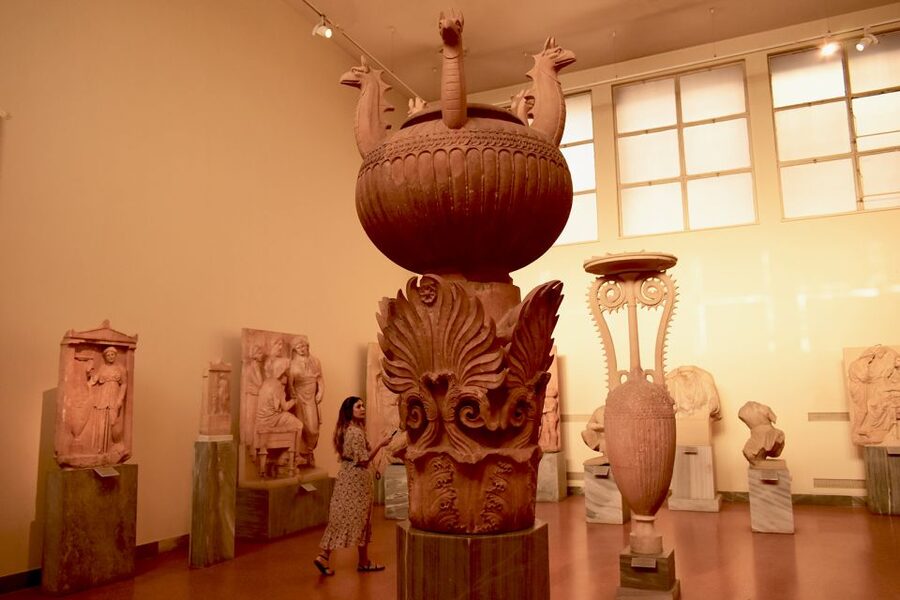
At $31 per person, the package costs more than simply walking up for a regular museum ticket if you do not need the audio guide or advance purchase. The value comes from convenience: a digital ticket, an audio route, offline maps and narration, and the chance to avoid the ticket-buying queue.
It is a stronger deal when you are visiting at a busy time or have limited time in Athens. Buying ahead can also reduce stress when you are planning several sights around a fixed schedule.
The value is weaker if you qualify for free or reduced-price admission, because this product includes only regular admission. It is also less appealing if you already have another audio guide for the museum or prefer reading labels at your own pace.
For most first-time visitors who want a guided structure without joining a group, the price is reasonable. Just remember that the audio tour covers highlights, not every gallery.
Who should book this experience?
I would recommend it to first-time visitors, independent sightseers, history fans, and anyone who wants context without committing to a live group. It also suits couples or families who prefer to move at different speeds.
The experience is particularly good for visitors interested in Greek mythology, classical sculpture, Mycenaean culture, Roman art, or the long development of Greek society. Students and archaeology enthusiasts may appreciate seeing objects they have studied in books, though they may want extra time beyond the guided route.
I would be more cautious if you have an older phone, no headphones, limited battery power, or a strong need for personal expert commentary. You should also skip this booking format if you qualify for reduced admission and want to claim it at the museum booth.
Should you book the National Archaeological Museum audio tour?
Book it if you want easy entry and a clear route through the main masterpieces. The Mask of Agamemnon, Mycenaean metalwork, bronze statues, horse rider, Roman portraits, and Hadrian displays give you plenty to see, while the audio adds useful stories and historical links.
Give yourself two hours at minimum, download everything before arrival, and bring headphones. If you have more time, continue beyond the audio route and explore the rooms it skips.
The main weakness is navigation. The museum is large, and the audio can occasionally be unclear. Even so, this is a practical way to meet the collection’s essential works without trying to decode the entire museum alone.
FAQ
What does the ticket include?
It includes regular museum admission, a self-guided smartphone audio tour, offline text, audio narration, maps, and free time to explore the museum.
Is there a live guide?
No. This is a self-guided audio tour on your own smartphone. A live guide is not included.
Which languages are available?
The audio guide is available in English, French, German, Greek, Italian, and Spanish.
Do I need my own phone and headphones?
Yes. You need a charged Android or iOS smartphone and your own headphones.
Can I use the audio tour offline?
Yes. Offline content includes the text, audio narration, and maps. Download the material after booking and before your visit.
How long does the visit take?
The listed duration ranges from 45 minutes to four hours. The highlights route may take about 90 minutes, while a fuller museum visit can take two to four hours.
Does the audio guide cover every room?
No. It focuses on selected highlights and may skip some rooms. You can continue exploring independently after the audio route ends.
Can I use a discounted or free museum ticket with this product?
No. The product includes only a regular ticket for all ages. If you qualify for free or reduced-price entry, go directly to the museum ticket booth.
Is the booking refundable?
No. This activity is non-refundable.
More Audio-Guided Visits in Greece
- Heraklion Archaeological Museum Ticket & Audio Guide
★ 4.3 · 396 reviews - Vothonas: Wine Museum Ticket with Tastings and Audio Guide
★ 4.8 · 360 reviews - Delphi: Archaeological Site & Museum Ticket with Audio Tour
★ 4.4 · 275 reviews - Olympia: Archaeological Site & Museum E-Ticket & Audio Guide
★ 4.3 · 272 reviews
Just added around Greece
- Ancient Athens tour: Acropolis, Parthenon and Acropolis Museum★ 5.0 · 256 reviews
- The Acropolis, Athens Walking City Tour and Acropolis Museum★ 5.0 · 442 reviews
- Athens: Acropolis Museum Ticket with Self-Guided Audio tour App★ 3.5 · 40 reviews
- Family Acropolis & Acropolis Museum Tour inspiredby Percy Jackson★ 4.5 · 40 reviews
- Acropolis of Athens, Parthenon and Acropolis Museum private tour with dinner★ 5.0 · 77 reviews
- Athens National Archaeological Museum E-Ticket with Audio Guide★ 3.0 · 57 reviews
- Private Tour: Half day Athens Sightseeing and Acropolis Museum★ 4.5 · 28 reviews
- Shore Excursion: Acropolis, Athens City tour and The New Acropolis Museum★ 4.5 · 30 reviews
Museum Tours in Greece, compared.
Acropolis, Parthenon & Acropolis Museum Guided Tour
Read our review →
The Acropolis, Parthenon & Acropolis Museum Guided Tour
Read our review →Acropolis, Parthenon & Acropolis Museum Guided Tour
Read our review →
Acropolis monuments & Parthenon Walking Tour with Optional Acropolis Museum
Read our review →
Athens All Included: Acropolis and Museum Guided Tour with Ticket
Read our review →
Combo: Acropolis & Acropolis Museum with Optional Tours
Read our review →
Acropolis Museum Ticket with optional Audio Guide
Read our review →
Small-Group Delphi, Museum & Arachova Day Trip
Read our review →Browse the lists this tour appears in