
Review · ITALY
Oil Museum and Mill in Tuscany: interactive tour and tasting
SuprEvo turns olive oil into a two-hour journey, beginning with old Tuscan tools and ending with a professional tasting. The most memorable moments are the 1800s stone mill and the 360-degree film, which gives a simple pantry staple a larger story.
I like the clear ten-stage route and the chance to compare oils properly rather than simply sample them from a spoon. I also like the practical location near Monte San Savino, with parking beside the museum and easy access from the A1 motorway.
The main consideration is that this is a dedicated oil attraction, not a broad Tuscan food tour. If olive oil does not interest you, two hours may feel long, and the tasting and shop are central parts of the visit.
Key points to know before you go

- Ten stages from olive tree to table: The visit links farming, family tradition, old equipment, modern production, art, and food.
- A real 1800s stone mill: You see the kind of machinery once used to press olives before modern processing.
- A 360-degree film room: A short film explains the world of oil through projection around you.
- A guided professional tasting: You taste extra virgin olive oils alongside food specialties made with olive oil.
- A convenient Monte San Savino location: The museum is near the A1 exit and the E78 road, with adjacent parking.
- A shop with practical souvenirs: Oils, food, and olive-oil cosmetics make it easy to take a taste of Tuscany home.
Why SuprEvo is more than a shop with a tasting counter
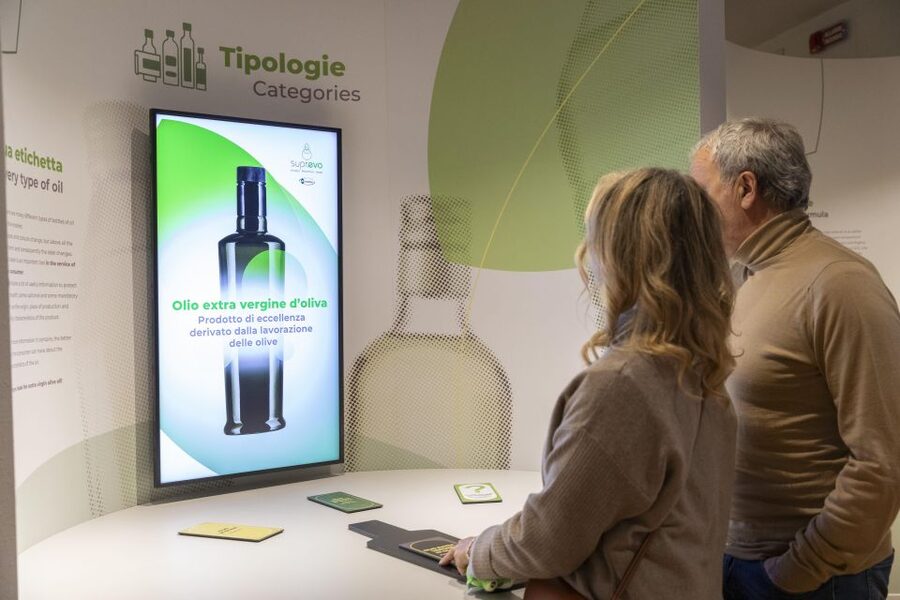
SuprEvo is set at the foot of the historic village of Monte San Savino, in the heart of Tuscany. It presents itself as a large oil-themed park, but the actual visit is more focused: you follow a planned route through ten stages, then finish with food and shopping.
That format works well because olive oil is easy to overlook. You pour it over bread, vegetables, or pasta, but you may not think about the olive tree, harvesting, pressing, storage, or tasting standards behind it. SuprEvo fills in those gaps without requiring a full agricultural lesson.
I would treat this as a useful stop during a driving day through Tuscany. The location near the A1 motorway makes it easier to fit into a route between major towns. You do not need to build an entire day around it, but you do need to allow the full two hours if you want the museum, tasting, and shop to feel worthwhile.
The visit is offered in Italian and English. A live guide leads the experience, so this is not simply a room of panels and machines. The guide explains the stages and helps you understand what you are seeing, which matters most during the tasting.
A few more museum visits around Italy worth comparing
- Olive Oil Museum: Extravirgin school – Food & wine tasting
★ 5.0 · 39 reviews - Parmesan and Balsamic Food Tour with Ferrari Museum
★ 4.8 · 25 reviews - Oil museum and oil mill in Tuscany: tour and tasting
★ 5.0 · 16 reviews
Stage one: meeting the olive tree and Tuscan oil culture
The early part of the route introduces the olive tree and the place of oil in Tuscany. The material connects the product with local history, family life, art, and culture rather than treating it as a factory item.
That context gives the later tasting more meaning. You begin to see why extra virgin olive oil is judged as a finished food, not just a cooking liquid. The visit also covers the path from plant to table, so you can follow the product from cultivation to the bottle on the shop shelf.
The family element is useful here. Oil making in Tuscany is tied to seasonal work and inherited habits, and the museum includes that human side along with the machinery. I like this approach because it keeps the subject grounded in daily life.
Do not expect an academic museum with long blocks of text. The presentation is designed to be interactive and accessible, with visual material and installations intended to keep the route moving. Families and visitors who prefer learning by seeing and doing should find this easier than a traditional museum display.
Stage two: old tools and the 1800s stone mill
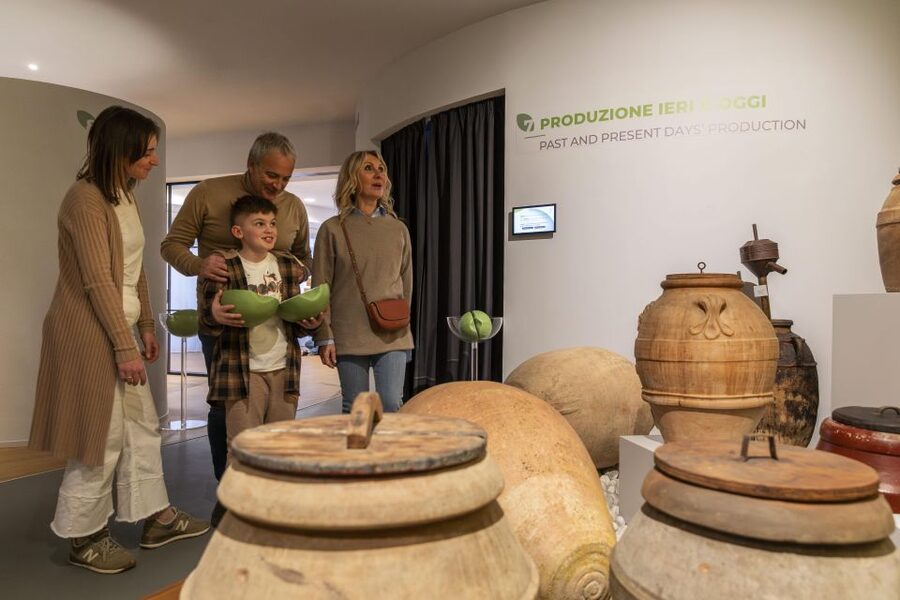
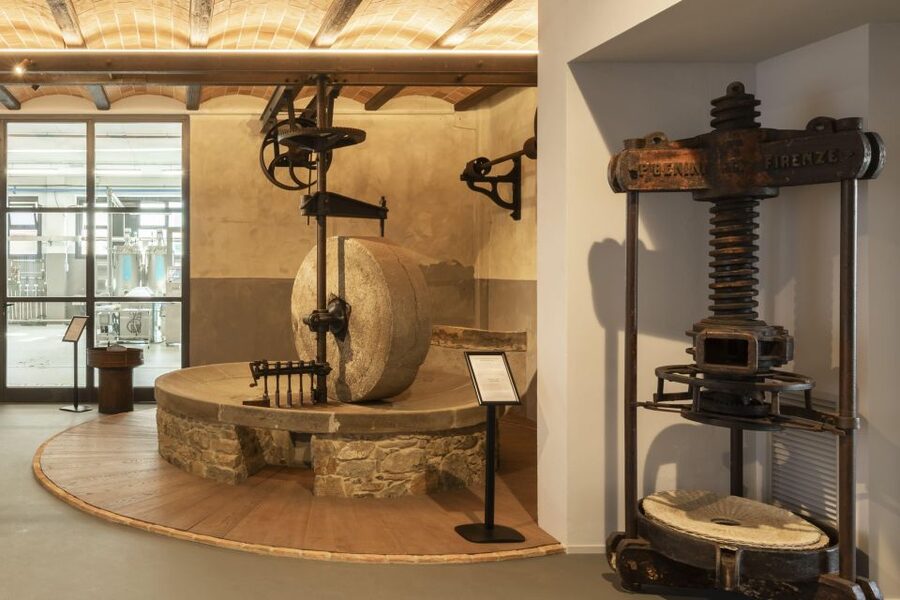
One of the strongest physical sights is the ancient stone mill from the 1800s. It gives you a direct comparison between earlier oil production and the modern equipment shown later in the tour.
The old mill is valuable because it makes the process visible. Stone, weight, and mechanical force are easier to understand when you can look at the original equipment rather than only read about it. The display also gives the museum a real sense of place, even though the wider experience uses modern technology.
This is the point where the visit shifts from cultural background to practical production. You see how much labor and machinery once went into making oil. The old tools are not merely decoration. They help explain why modern processing has changed the speed and consistency of the work.
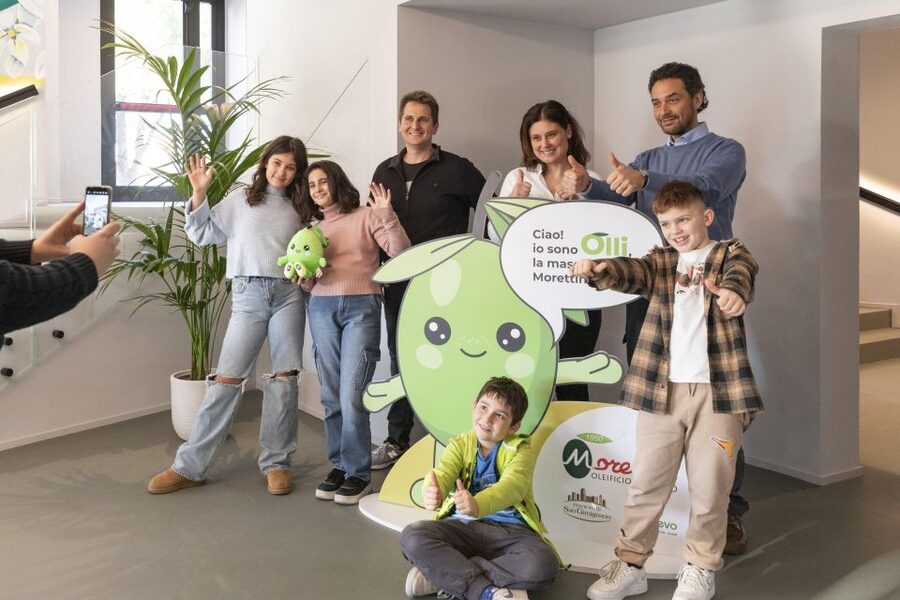
There is also a lighter side to this section. Giant olives and oversized oil bottles create a natural place for a photograph. That may sound like a small detail, but it helps break up the more technical parts of the route, especially for children or anyone who is not already interested in milling.
Stage three: modern processing and the oil mill today
SuprEvo also shows modern manufacturing technology. This is an important part of the visit because it prevents the museum from becoming a nostalgia display about rural Tuscany.
You get to see how current equipment handles the production process, alongside the old stone mill. The contrast is the point: traditional tools show where the craft began, while the modern plant shows how producers work today.
The supplied information does not promise that every machine will be running during your visit, so I would not book this expecting a full working-factory tour. Instead, think of this as an explanation of modern production technology within a museum route.
That distinction matters. If you want a long technical visit inside an operating mill, this may feel compact. If you want a clear introduction to both old and new methods, the format works better. The two-hour schedule gives enough time for explanation without making the machinery section the entire afternoon.
Same city, a completely different collection:
- Vatican: Museums & Sistine Chapel Entrance Ticket
★ 4.5 · 144,003 reviews - Vatican Museums, Sistine Chapel & St. Peter’s Basilica Tour
★ 4.3 · 73,970 reviews - Vatican Museums, Sistine Chapel & St Peter’s Basilica Guided Tour
★ 4.5 · 39,149 reviews - Florence: Skip-The-Line Uffizi Gallery Timed Entry Ticket
★ 4.5 · 27,832 reviews
Stage four: the 360-degree film room
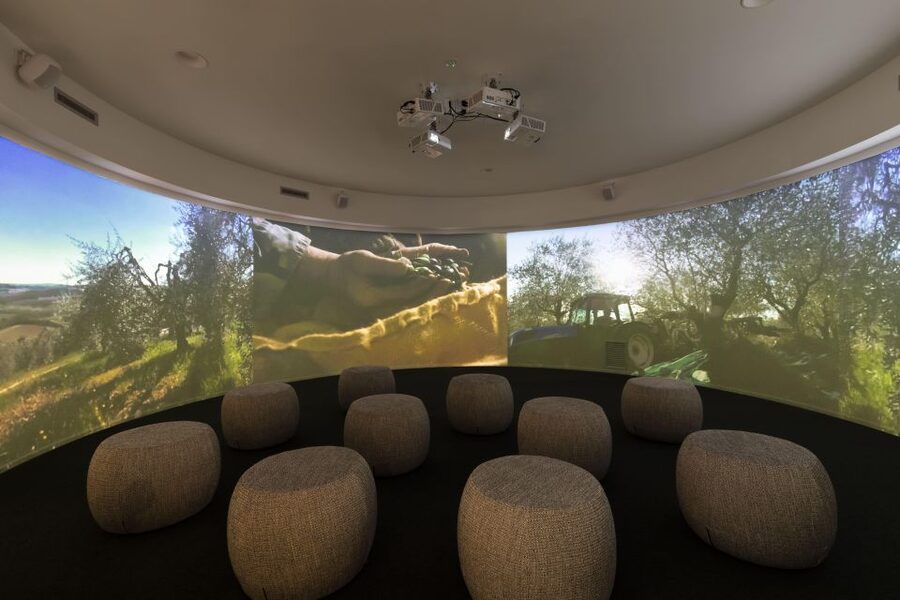
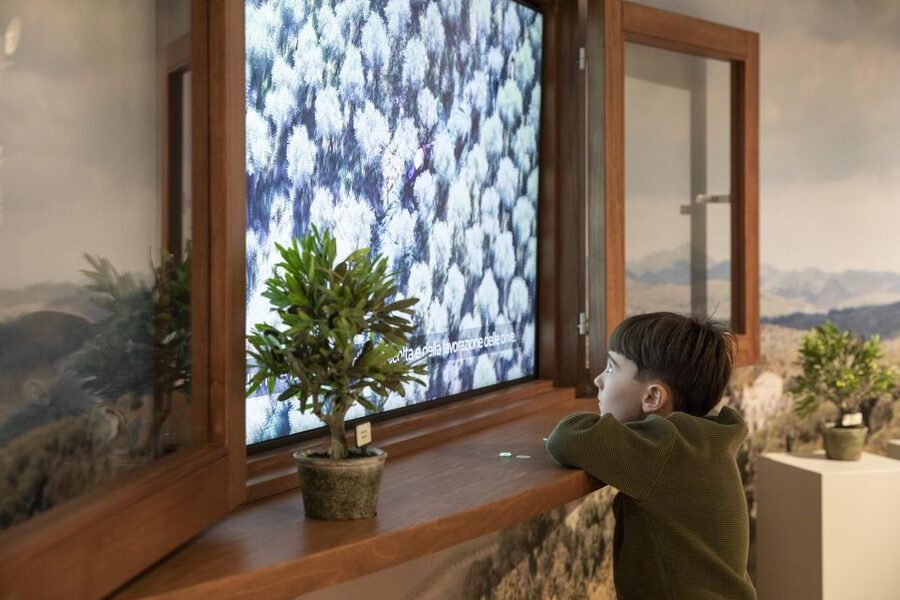
The 360-degree projection room is the most modern part of SuprEvo. A short film about olive oil plays around you, replacing a standard screen with images on all sides.
This section adds atmosphere and helps tell the story in a way that ordinary labels cannot. You can expect a visual presentation rather than a long lecture. It is especially useful if you have already seen old tools and machines and want a broader picture of olive growing and oil production.
The film is short, so it does not take over the tour. That is a sensible choice. A projection can be memorable, but it cannot replace the physical objects and guide explanation. Here it acts as one part of the ten-stage route.
SuprEvo also includes a talking olive mascot. The character gives the museum a playful tone and signals that the experience is meant to suit more than serious food specialists. If you prefer quiet galleries and formal interpretation, the playful touches may feel a little light. For families, they can make the subject easier to follow.
Stage five: learning how to taste extra virgin olive oil
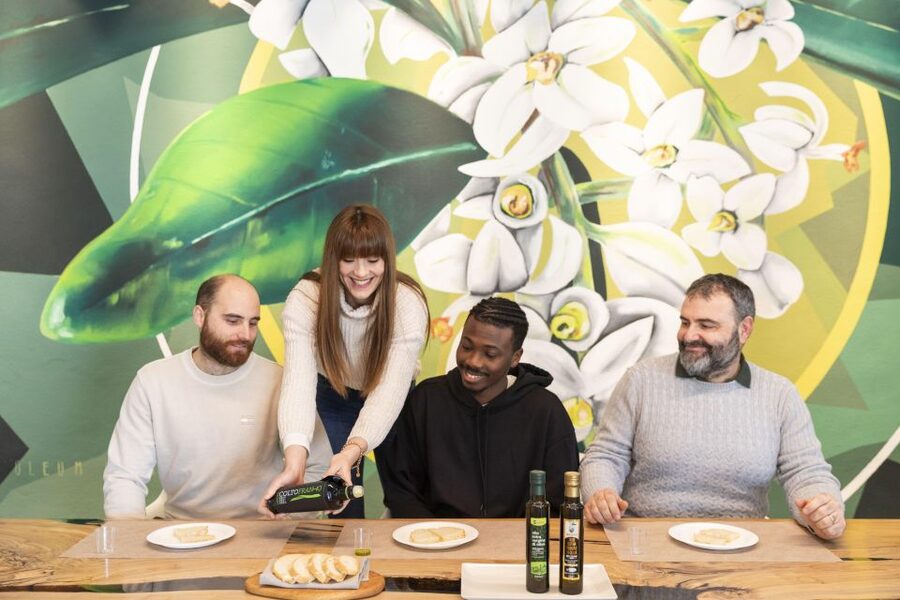
The tasting is the part that gives the entrance price its clearest value. You do not simply receive a small cup and move on. The tasting uses a professional technique, allowing you to pay attention to aroma and flavor.
The visit promises extra virgin olive oils, described as pure, along with gastronomic products based on the oil. That means you can compare the oil on its own and then see how it works with food.
I like this arrangement because it teaches you how to think about what you are buying. A bottle on a shelf can be hard to judge from its label alone. Tasting gives you a direct reference point, and the guide can explain what to notice.
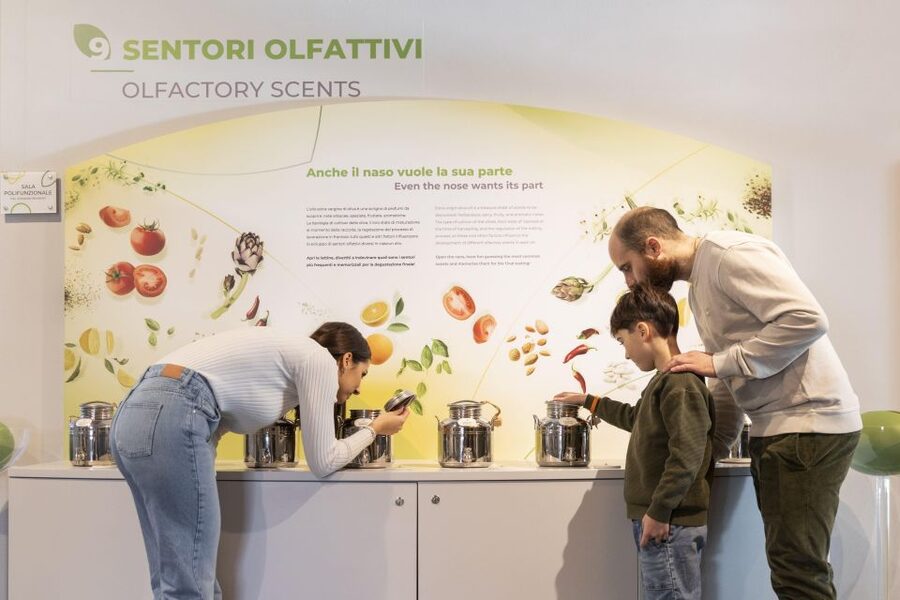
Expect aroma to be part of the experience. The tasting is built around the scent of the oils as well as their taste, so take your time rather than treating it like a quick snack. The exact products served can vary, and the information does not list a fixed menu, but olive-oil-based specialties are included.
The tasting also received especially strong praise in the available feedback. The repeated message is clear: the oils and food are a major reason to book, and the guide’s explanations help make the tasting easy to understand. If you have never compared extra virgin oils side by side, this is likely to be the most useful part of the visit.
Stage six: the final shop and olive-oil products
The route ends with a shop stocked with the museum’s oils, local food, niche products, and cosmetics made with extra virgin olive oil. This is not an afterthought. It is part of the experience, and you should expect time to browse after the tasting.
The shop is useful if you want a souvenir you can actually use. A bottle of oil is more practical than another small trinket, though you will need to consider how to pack it safely for the rest of your trip.
You can also find gastronomy products and olive-oil cosmetics. The selection gives you several price points and uses, from cooking ingredients to gifts. The information does not specify shipping arrangements, so ask at the shop if you need an item sent home rather than carried in your luggage.
I would avoid treating the shop as a pressure point. The tasting is already included, and you are free to decide what fits your budget. Still, tasting before buying is a real advantage. You can choose based on flavor rather than a label or attractive packaging.
The garden, parking, and location near Monte San Savino
After the indoor route, you can relax in the garden area among Tuscan olive trees. This gives you a quieter end to the visit and reinforces the connection between the product and the trees that produce it.
The location is one of SuprEvo’s practical strengths. It is close to the exit of the A1 motorway and near the E78 expressway linking Arezzo, Siena, and Grosseto. Parking is available beside the museum, so you do not need to hunt for a space in a historic center.
That convenience makes SuprEvo a better fit for a road trip than for a visitor relying entirely on trains or buses. Transfers are not included, and no transport service is provided with the activity. Plan to reach the museum independently.
You can combine the visit with time in Monte San Savino, though the experience itself is at the foot of the historic village rather than described as a tour through its streets. If you are already passing nearby, the museum offers a straightforward two-hour stop with food, culture, and a little shopping.
Who will get the most from the $23 price
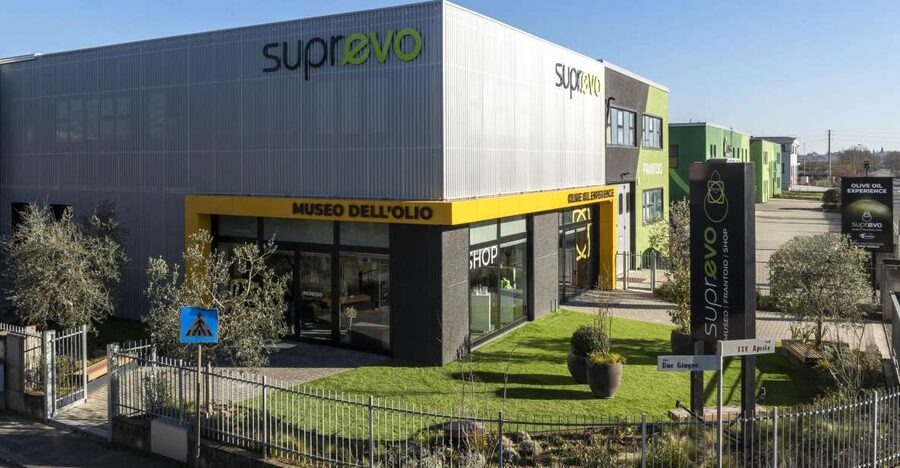
At $23 per person, SuprEvo is reasonably priced for a two-hour guided experience that includes the museum, modern production displays, the 360-degree film, and a tasting of oils and food products.
The value is strongest if you use the visit as both a museum and a tasting. The guide-led interpretation gives structure to the old tools and machinery, while the tasting provides something you cannot get from a display case.
The price is less compelling if you plan only to browse the shop. You can buy olive oil in many Tuscan towns, but the museum route explains what makes the products different and gives you a chance to taste them first.
I would also factor in the easy parking. A low-cost attraction that requires a difficult detour can lose its appeal during a busy driving day. SuprEvo’s position near major roads makes the price feel more practical, especially for a couple or family already traveling by car.
The activity currently carries a 4.9 out of 5 rating from 29 ratings. The most praised points are the guide’s clear explanations, the tasting, and the chance to buy products after trying them. Those strengths match the design of the experience itself.
Who should book, and who may want to skip it
I would recommend SuprEvo to food-minded visitors, families, road trippers, and anyone curious about how Tuscan olive oil is made. It also suits people who enjoy a mix of old objects, technology, film, tasting, and shopping rather than a single narrow museum format.
English speakers can take part without needing to follow Italian. The live guide speaks Italian and English, and the museum material is available in both languages.
The experience is wheelchair accessible, which is useful for visitors who need a more manageable cultural stop. The available information does not describe every surface or restroom detail, so contact the provider if you need specific access information.
I would skip it if you want a large historic site, a long countryside walk, or a full meal. SuprEvo is focused on olive oil, and the visit stays indoors for much of its route, with the garden as a place to relax rather than a major walking area.
Book at least 24 hours ahead if your plans may change, since cancellation is free up to that point. You can also reserve now and pay later, which helps if you are arranging several stops across Tuscany.
Should you book SuprEvo Oil Museum and Mill?
Book it if you want an engaging explanation of Tuscan olive oil, a look at an 1800s stone mill, modern milling technology, and a well-structured tasting for $23. The visit is particularly easy to add to a driving route near Monte San Savino, and the adjacent parking removes much of the usual stopover hassle.
Skip it only if olive oil is not on your list of interests or if you are looking for a broader Tuscan food experience. For everyone else, the strongest reasons to go are simple: the old mill makes the past tangible, the 360-degree film keeps the presentation lively, and the tasting lets you make an informed choice in the shop.
FAQ
Where is the SuprEvo Oil Museum and Mill?
It is in Tuscany at the foot of the historic village of Monte San Savino. The museum is close to the A1 motorway exit and the E78 expressway connecting Arezzo, Siena, and Grosseto.
How long does the experience last?
The visit lasts about two hours.
How much does the experience cost?
The price is $23 per person.
What languages are available?
The live guide speaks Italian and English. The museum route is also available in Italian and English.
Is a guide included?
Yes. The experience includes a live guide who leads the interactive museum visit and explains the oil production and tasting stages.
What does the tasting include?
You taste extra virgin olive oils using a professional technique. The experience also includes gastronomic products made with extra virgin olive oil.
Is transportation included?
No. Transfers to the museum are not included. Parking is available next to the museum.
Is the museum wheelchair accessible?
Yes, the activity is wheelchair accessible.
Can I cancel the booking?
You can cancel up to 24 hours in advance for a full refund. A reserve-now, pay-later option is also available.
Just added around Italy
- Oil museum and oil mill in Tuscany: tour and tasting★ 5.0 · 16 reviews
- Enchanted Castle of Sciacca – Museum Tickets★ 3.5 · 63 reviews
- Torino: FIAT Historic Museum and Lingotto District Tour★ 4.9 · 14 reviews
- Torino: The Car Museum Skip-The-Line Tour★ 4.7 · 22 reviews
- Timed Entry Ticket to the Uffizi Gallery★ 4.5 · 498 reviews
- Florence: Accademia Gallery Entry Ticket with Audio Guide★ 4.1 · 88 reviews
- Vatican City: Sistine Chapel, Museums, Basilica Private Tour★ 4.8 · 158 reviews
- Rome: Capitoline Museums and Centrale Montemartini Tickets★ 4.4 · 328 reviews
Museum Tours in Italy, compared.
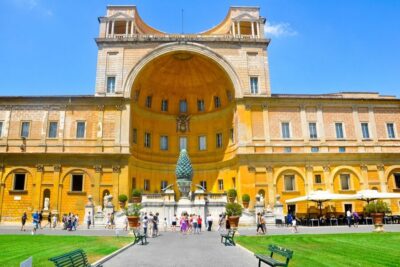
Vatican: Museums & Sistine Chapel Entrance Ticket
Read our review →
Vatican Museums, Sistine Chapel & St. Peter’s Basilica Tour
Read our review →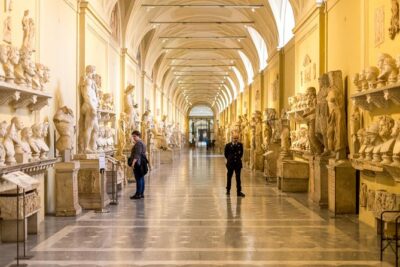
Vatican Museums, Sistine Chapel & St Peter’s Basilica Guided Tour
Read our review →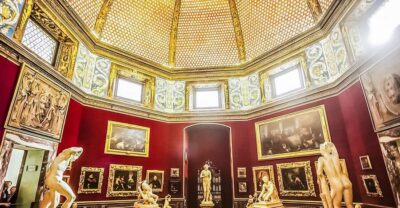
Skip-The-Line Uffizi Gallery Timed Entry Ticket
Read our review →
Vatican Museums, Sistine Chapel and Basilica Tour
Read our review →
Vatican Museums & Sistine Chapel Skip-the-Line Entry Ticket
Read our review →
Vatican Museums, Sistine Chapel & Basilica Tour
Read our review →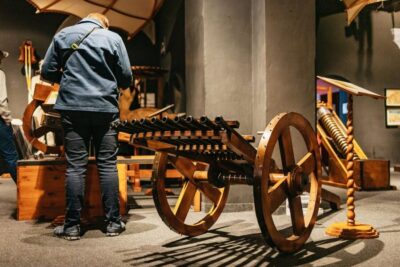
Browse the lists this tour appears in