
Review · ITALY
National Archaeological Museum of Naples Private Guided Tour
The best reason to book this tour is simple: it brings together the ancient world’s grandest art and its most ordinary objects under one roof. You’ll move from huge Farnese sculptures to Pompeii frescoes, Roman mosaics, and household items preserved by catastrophe. The MANN is not a quick side stop. It is one of Naples’ major cultural anchors.
I like the private format and the two-hour focus. Your licensed archaeologist can shape the visit around your interests, and the guide can explain why a mosaic, statue, or cooking vessel matters instead of leaving you to guess. I also like the language choice, with English, French, Spanish, and Italian available. Roberta, one of the guides, has shown that the tour can be adjusted for a 14-year-old without talking down to younger visitors.
The main drawback is the price: $260.56 for a group of up to one, as listed, is a serious outlay for two hours. The value improves if you want expert attention and a focused introduction to the museum, but budget-minded visitors may prefer a self-guided visit or a less costly group tour.
Key points to know before entering the MANN
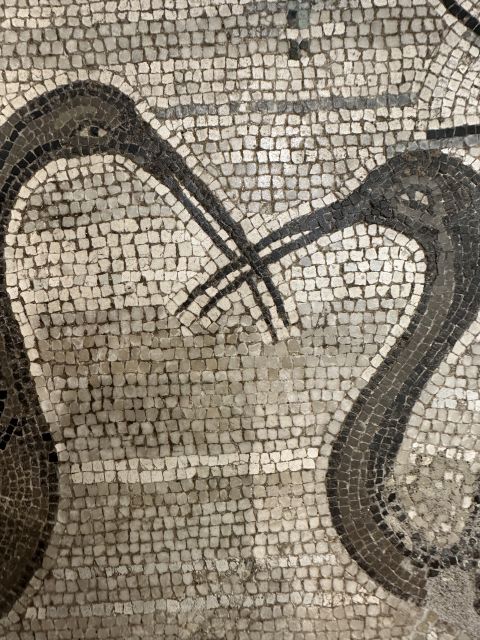
- Pompeii and Herculaneum take center stage: See frescoes, mosaics, statues, and everyday objects connected with Roman life.
- The Farnese Collection supplies the grand scale: Enormous classical sculptures give the museum a powerful visual opening.
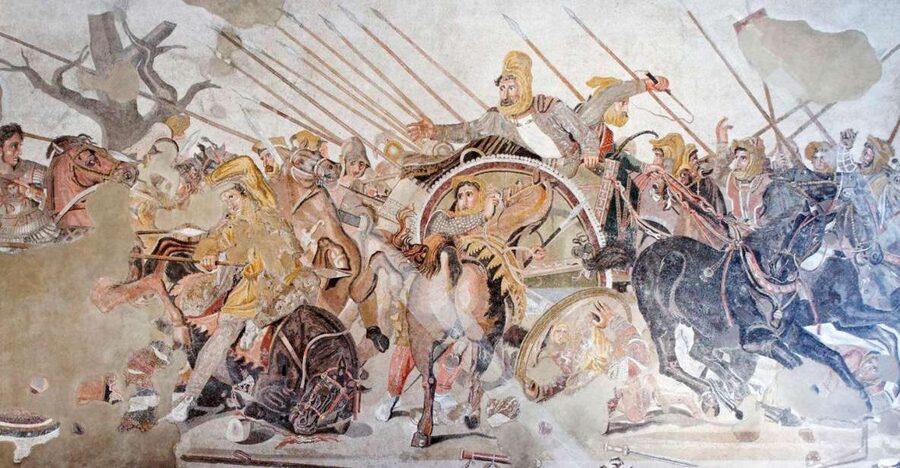
- Alexander the Great appears in mosaic form: The portrait mosaic is one of the tour’s key works.
- A private archaeologist guides the visit: You can ask questions and spend more time on the subjects that interest you.
- The two-hour route stays focused: You will not see every room, but you can avoid wandering without a plan.
- The tour returns to its starting point: Meet at the museum entrance, visit the museum, and finish there.
Why the National Archaeological Museum of Naples matters
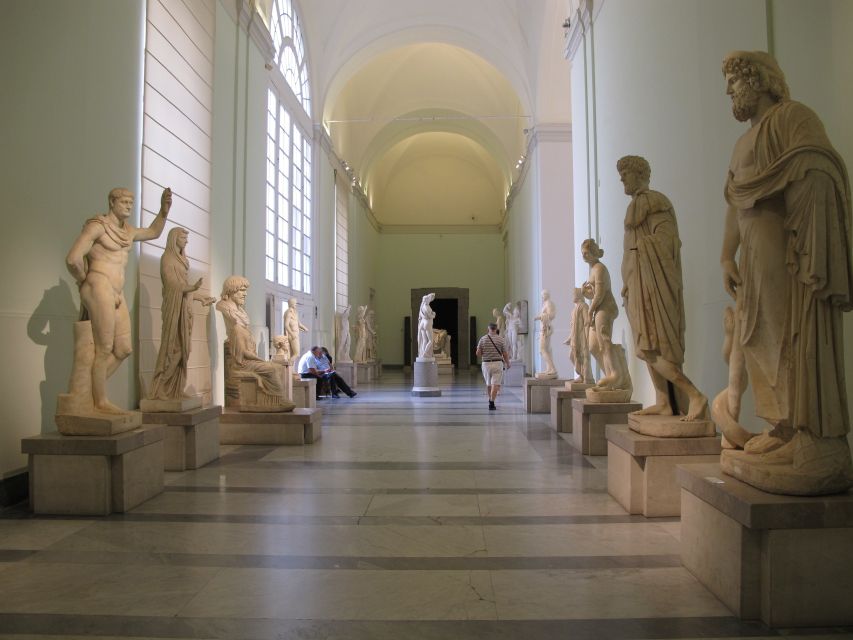
The National Archaeological Museum of Naples, usually called the MANN, is an unusual museum because it gathers several kinds of ancient evidence in one place. You do not see only polished statues or famous paintings. You also encounter mosaics, frescoes, household objects, and finds linked with Pompeii and Herculaneum.
That mix helps you understand ancient life at two levels. The large sculptures show what wealthy patrons and public spaces valued. The smaller objects help you picture daily routines, personal taste, and practical life in the Roman era. A good guide connects those two worlds.
The museum also gives you a useful companion to visiting Pompeii or Herculaneum themselves. At the archaeological sites, you walk through streets and buildings. At the MANN, you can examine the art and objects taken from those places at close range. The two experiences answer different questions, and this tour is especially useful if you plan to visit the ruined cities as well.
You should not expect a full survey of every gallery in two hours. The MANN is too large and its collections too broad for that. Instead, think of the visit as a carefully chosen introduction to its major works, with time for explanation rather than a hurried march through room after room.
More archaeological museums in Italy:
- Milan: Cathedral, Archeological Area and Museum Ticket
★ 4.5 · 1,093 reviews - Naples: National Archaeological Museum Ticket & Audio App
★ 4.4 · 617 reviews - Naples: National Archaeological Museum of Naples Guided Tour
★ 4.8 · 498 reviews
Meeting your guide at the museum entrance
The tour begins at the entrance of the MANN. Your guide waits there, and the activity ends at the same meeting point. That makes the logistics easy, especially if you are already exploring central Naples and do not need a hotel transfer.
There is no transport included. Food, drinks, and personal expenses are also your responsibility. Plan to arrive with enough time to find the museum entrance, since the two-hour visit begins there and does not include a pickup from your hotel.
The guide is a licensed archaeological guide, not simply someone assigned to point out a few famous works. That distinction matters in a museum where an object’s setting and purpose can be as interesting as its appearance. You can ask why a fresco survived, how a mosaic fits into Roman culture, or what separates an everyday object from a luxury item.
The private format should also make the pace more comfortable. You can ask for a simpler explanation if ancient art is new to you, or spend more time on sculpture and mythology if those are your main interests. The language options are English, French, Spanish, and Italian.
The Farnese sculptures and the power of scale
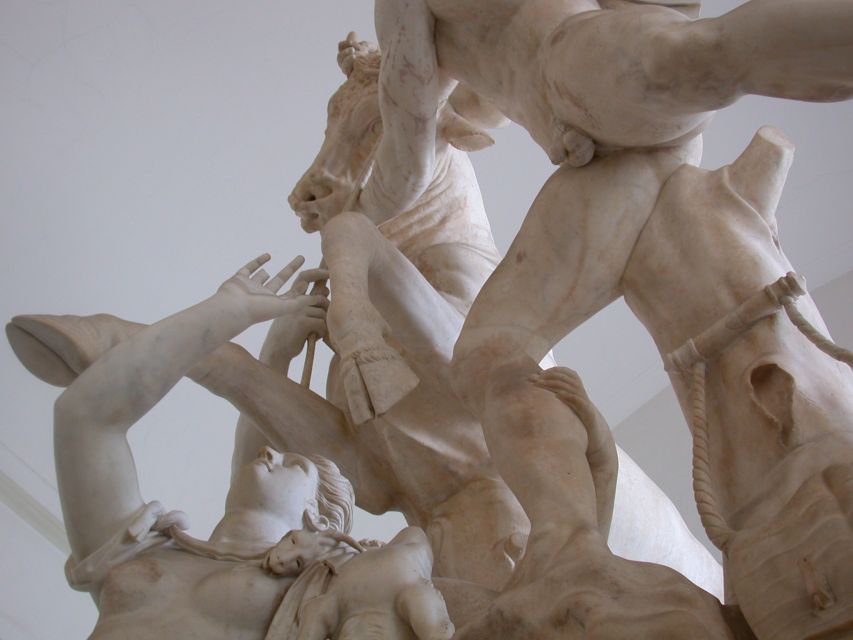
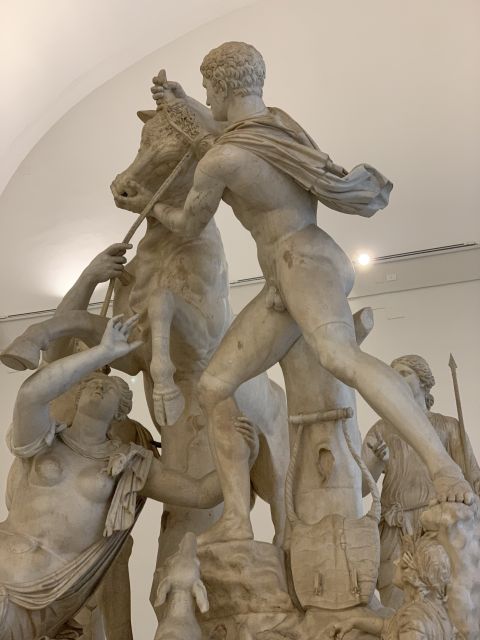
A major part of the visit centers on the Farnese Collection. Its large classical sculptures provide the museum with some of its most imposing works. Even before you know the stories behind them, their size and physical force make clear that these were not minor decorative pieces.
This is where an archaeologist’s explanation adds real value. Classical sculpture can look familiar at first, yet the details often carry the meaning: the pose, the body’s movement, the faces, and the relationship between figures. A guide can help you read those details instead of seeing only marble bodies lined up in grand rooms.
The Farnese works also set up a useful contrast with the Pompeii and Herculaneum galleries. The sculptures represent formal ideals and powerful patrons. The objects from the buried cities bring you closer to people’s daily surroundings. The tour works best when you notice that change in scale and purpose.
You may be tempted to spend the entire visit with the biggest statues. Resist that a little. The larger works are visually commanding, but the smaller pieces often explain how ancient people actually lived. A private guide can help you balance both.
The Alexander the Great mosaic
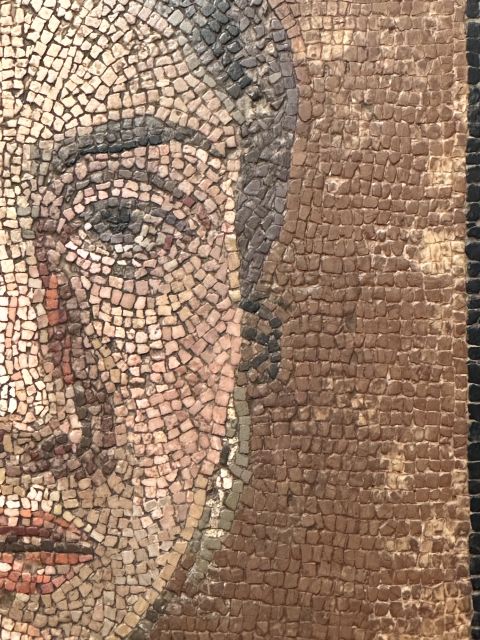
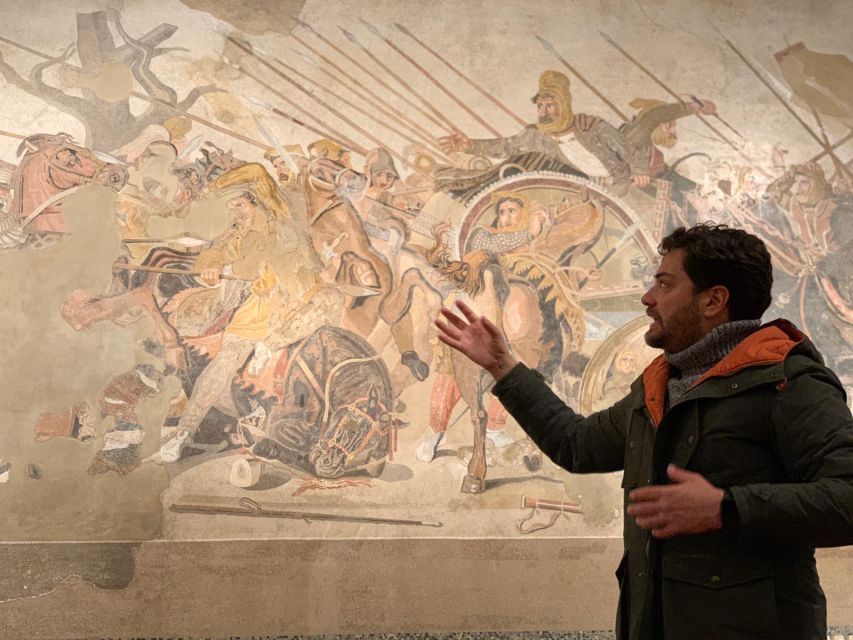
The portrait mosaic of Alexander the Great is another key moment. Mosaics are built from many small pieces, yet a successful portrait can show remarkable movement, expression, and detail. Seeing the work in person gives you a better sense of its construction than a small image on a screen.
The guide can place the mosaic within the wider world of ancient art and conquest. Alexander’s image was not merely a decorative face. It carried ideas about power, leadership, and cultural influence. You do not need a specialist background to follow the explanation, and the private setting gives you room to ask basic questions without feeling rushed.
This stop also shows why the MANN is more than a collection of isolated masterpieces. A single object can connect art, politics, and the spread of classical culture. The best part of the visit is not just identifying the famous work. It is understanding why it mattered.
More private museum tours in Italy:
- Private Vatican Museums and St. Peter’s Basilica Early Bird Tour
★ 5.0 · 980 reviews - Florence: Uffizi Gallery Discovery Private Guided Tour
★ 4.5 · 658 reviews - Vatican City: Sistine Chapel, Museums, Basilica Private Tour
★ 4.8 · 158 reviews - Turin: Egyptian Museum Skip-the-Line Private Guided Tour
★ 4.8 · 95 reviews
Pompeii frescoes with their colors intact
The Pompeii frescoes are among the most memorable parts of the route because their colors remain clear. You get a direct look at wall painting from the Roman era, not a later copy or modern reconstruction.
Frescoes also offer clues about the people who lived around them. Their placement, subjects, and color choices helped shape domestic spaces. With a guide beside you, you can look beyond the surface and consider what the paintings said about taste, status, and the rooms they decorated.
This section is particularly useful if Pompeii is on your itinerary. At the ruins, you see walls, rooms, and streets in their original setting. At the MANN, you can study important art at close quarters. The museum visit can make the later site visit easier to understand, since you will have seen examples of the objects and images that once filled Roman homes.
Still, the museum cannot recreate the experience of standing inside an ancient house or walking along a street. If you have time for both, treat them as separate parts of the same story rather than substitutes.
Herculaneum and the evidence of everyday life
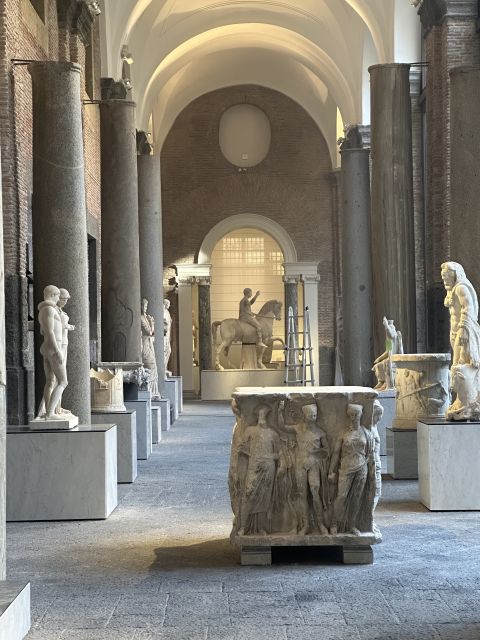
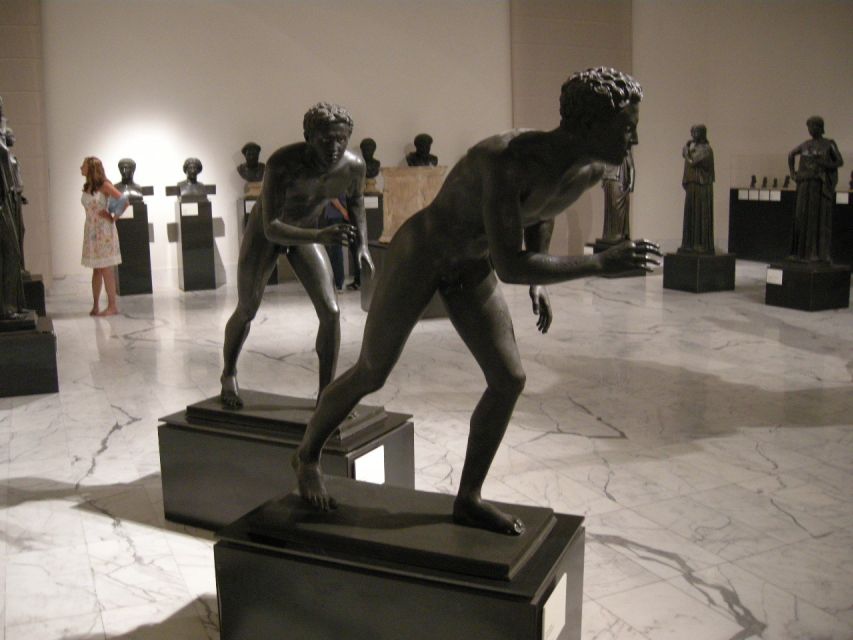
The Herculaneum and Pompeii collection includes more than prized artworks. It also contains ordinary and valuable objects from the Roman era. That range is one of the tour’s strongest features.
Everyday items can seem less dramatic than a giant statue, but they often make the past feel more understandable. A practical object tells you about use, materials, habits, and social differences. Precious objects, by contrast, show what people reserved for display or special occasions. Seeing both types together gives the collection more balance.
The tour also includes material connected with new archaeological discoveries from excavations. That keeps the museum from feeling like a fixed display of only famous pieces. Archaeology continues to add information, and the MANN’s collections reflect that ongoing work.
For beginners, this is a helpful way to avoid the usual problem with archaeology museums: too many objects and too little context. For experienced history enthusiasts, the ordinary pieces can provide a welcome change from the headline monuments.
A two-hour itinerary with a clear purpose
The listed route is compact. You meet at the National Archaeological Museum, spend two hours on a guided visit, and return to the same museum entrance. There is no separate neighborhood walk, transfer, meal, or second attraction folded into the schedule.
That focus is useful if you have limited time in Naples. You can place the tour between other plans without committing to a full-day outing. It also suits you if museums become tiring after several hours. Two hours gives you enough time for major works while limiting the risk of ancient statues blending into one long blur.
The tradeoff is coverage. You will not see every collection in a museum this large during a two-hour visit. If you want a complete visit, plan to return on your own, but do not assume the private tour will cover every gallery.
Ask your guide early about your priorities. If Pompeii is your main interest, say so. If you care more about classical sculpture, mosaics, or Roman daily life, make that clear at the start. A private tour is most useful when you help shape it.
How the private format changes the visit
A private group means the guide’s attention is reserved for your party. That gives you more control than a large group visit, where the route and pace are usually fixed.
The benefit is not just comfort. You can ask questions as they occur to you, and your guide can adjust the level of detail. The experience is suitable for serious history fans, but it is also designed to work for beginners. Roberta’s ability to adapt the tour for a 14-year-old is a good sign for families who want substance without a dry lecture.
The format can also help couples or solo visitors who want a clear route through a demanding museum. You do not need to spend the first half hour finding the main collections or deciding which famous works to prioritize.
The limitation is cost. A private guide costs more than entering the museum alone, and the listed rate of $260.56 is high for a two-hour activity, particularly for a solo visitor. If you are sharing the cost with family or friends, the price becomes easier to assess. If you are traveling alone, you need to value the personal instruction and saved planning time.
Is $260.56 good value for two hours?
The price makes sense only if you want more than admission. Your payment includes entry tickets and a licensed archaeological guide, not just access to the building.
I see three reasons the cost may be worthwhile. First, the museum holds several distinct collections, and a guide helps you connect them. Second, the private format lets you focus on your own interests. Third, the visit can prepare you for Pompeii and Herculaneum by showing you the art and objects removed from those sites.
The price is harder to justify if you enjoy wandering alone, already know the museum well, or want a long visit rather than a targeted one. Two hours passes quickly in a museum of this scale.
The flexible booking terms soften the decision. You can reserve now and pay later, and cancellation is allowed up to 24 hours in advance for a full refund. Those terms do not make the tour cheap, but they reduce the risk of locking in plans too early.
Who should book this museum tour?
I would recommend it to you if you want a strong first look at the MANN and prefer explanation to guesswork. It is especially well suited to:
- First-time visitors to Naples who want a clear introduction to ancient art
- Families who need a guide to adjust the visit for different ages
- Visitors planning to see Pompeii or Herculaneum
- Art and archaeology fans who want time with major sculptures and mosaics
- People who prefer a private pace and the chance to ask questions
- Visitors who need a two-hour cultural activity rather than a full-day tour
You may want another option if your main goal is a cheap museum entry, a broad self-guided visit, or a longer amount of time inside the galleries. The tour is focused and guided, not a replacement for exploring every room.
The museum is wheelchair accessible, and the private format may make it easier to communicate your needs. The supplied information does not specify the exact route through the building, so you should confirm any detailed access questions before booking.
Should you book the MANN private tour?
Book it if you want to understand what you are seeing, not simply stand in front of famous objects and read labels. The combination of Pompeii and Herculaneum material, Pompeii frescoes, the Alexander the Great mosaic, and the Farnese sculptures gives the two-hour route plenty of variety.
I would be most inclined to book this for a first visit to Naples, a family with mixed ages, or anyone planning to visit the ancient sites afterward. The high price is the main question. If you can share the cost across your private group and value a guide who can adjust the pace, it is a sensible splurge. If price matters more than context, enter the museum independently and spend longer at your own speed.
FAQ
Where does the National Archaeological Museum private tour begin?
The tour begins at the entrance of the National Archaeological Museum of Naples. Your guide waits for you there.
Where does the tour end?
The activity ends back at the museum meeting point.
How long does the guided tour last?
The guided tour lasts two hours. Starting times depend on availability.
Which languages are available?
The tour is available in English, French, Spanish, and Italian.
Is this a private tour?
Yes. It is offered for a private group.
Are museum admission tickets included?
Yes. Admission tickets and the guided tour with a licensed archaeological guide are included.
Can I cancel for a full refund?
Yes. You can cancel up to 24 hours in advance for a full refund. You can also reserve now and pay later.
Just added around Italy
- Oil museum and oil mill in Tuscany: tour and tasting★ 5.0 · 16 reviews
- Enchanted Castle of Sciacca – Museum Tickets★ 3.5 · 63 reviews
- Torino: FIAT Historic Museum and Lingotto District Tour★ 4.9 · 14 reviews
- Torino: The Car Museum Skip-The-Line Tour★ 4.7 · 22 reviews
- Timed Entry Ticket to the Uffizi Gallery★ 4.5 · 498 reviews
- Florence: Accademia Gallery Entry Ticket with Audio Guide★ 4.1 · 88 reviews
- Vatican City: Sistine Chapel, Museums, Basilica Private Tour★ 4.8 · 158 reviews
- Rome: Capitoline Museums and Centrale Montemartini Tickets★ 4.4 · 328 reviews
Museum Tours in Italy, compared.

Vatican: Museums & Sistine Chapel Entrance Ticket
Read our review →
Vatican Museums, Sistine Chapel & St. Peter’s Basilica Tour
Read our review →
Vatican Museums, Sistine Chapel & St Peter’s Basilica Guided Tour
Read our review →
Skip-The-Line Uffizi Gallery Timed Entry Ticket
Read our review →
Vatican Museums, Sistine Chapel and Basilica Tour
Read our review →
Vatican Museums & Sistine Chapel Skip-the-Line Entry Ticket
Read our review →
Vatican Museums, Sistine Chapel & Basilica Tour
Read our review →
Browse the lists this tour appears in