
Review · ITALY
Naples: National Archaeological Museum of Naples Guided Tour
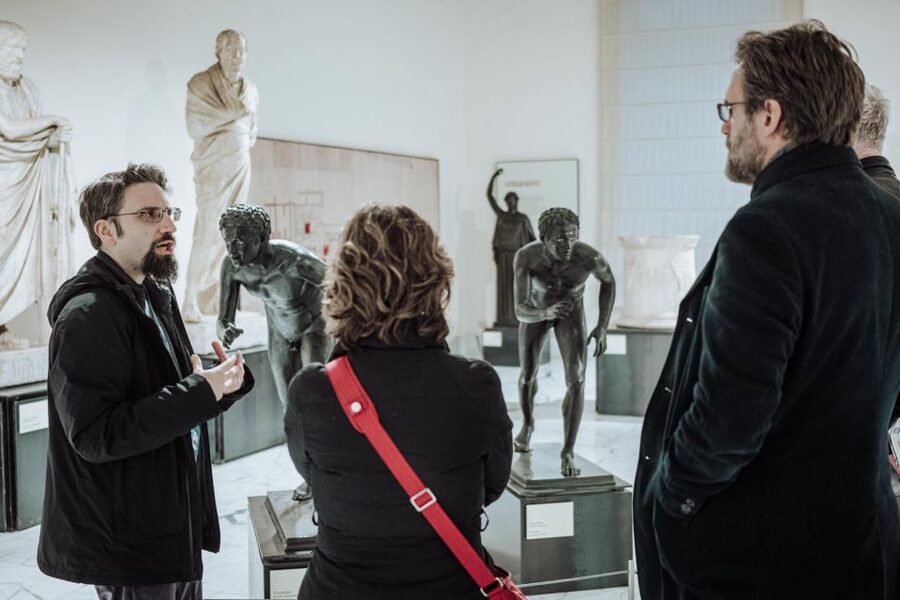
The most rewarding part of this tour is seeing Pompeii and Herculaneum through the museum’s best surviving art. A fresco or mosaic can feel detached in a gallery, but an archaeologist such as Silvia, who also works at Pompeii, can connect it to the streets, houses, and eruption you may have already seen.
I like the skip-the-line entry, which saves time at a large, busy museum. I also like the human scale of the experience: guides such as Nicoletta, Salvatore, and Silvia have been praised for answering questions, explaining difficult art plainly, and keeping small groups moving without rushing.
The main drawback is simple: two hours cannot cover this enormous museum. You will see the major rooms and masterpieces, but not every floor or collection. The tour is also not suitable for wheelchair users or people with mobility impairments, and large bags, strollers, and oversize luggage are not allowed.
Key points to know before you book
- Pompeii connections: The frescoes and mosaics make far more sense after visiting Pompeii or Herculaneum.
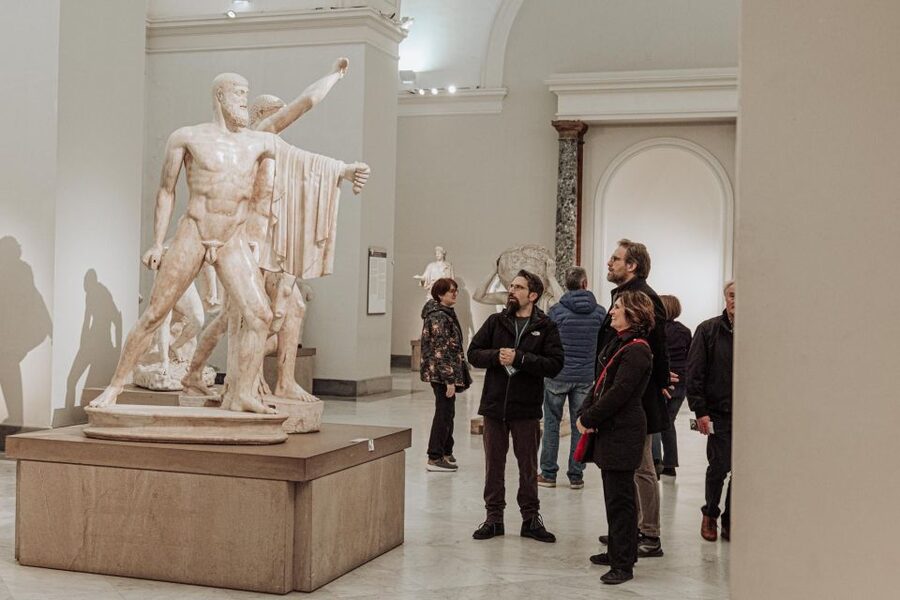
- Farnese highlights: Expect the colossal Hercules, Toro Farnese, Greek gods, Roman emperors, and other major sculptures.
- Archaeologist guides: Several guides, including Silvia and Nicoletta, are active archaeologists or specialists in ancient art.
- Small-group advantage: A smaller group makes it easier to hear explanations and ask questions in the museum’s vast galleries.
- Two-hour structure: The guide focuses on the key works, then you can stay inside and continue at your own pace.
- Practical limits: The tour includes museum entry but not food, drinks, transportation, or storage for large luggage.
Why the National Archaeological Museum deserves a guided visit
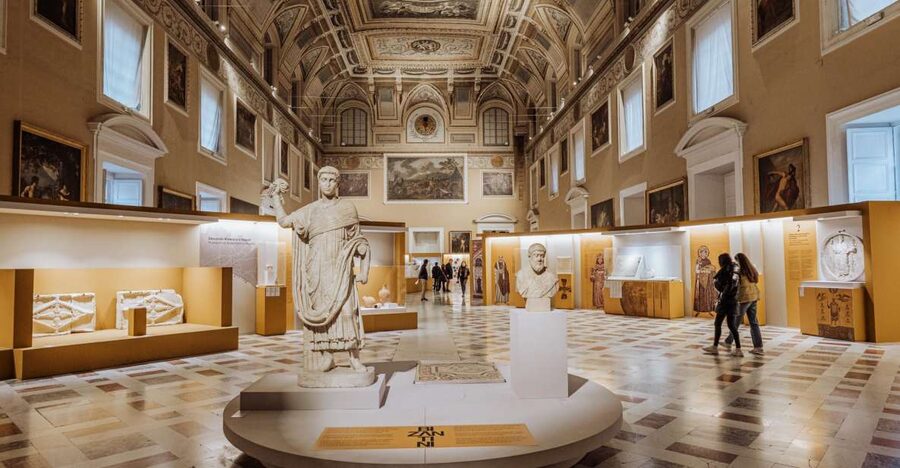
Naples’ National Archaeological Museum is not a quick collection of pretty statues. It is the place where the ancient world of the Bay of Naples comes together.
At Pompeii, you walk through houses, shops, temples, and streets frozen by Mount Vesuvius in 79 AD. At Herculaneum, you see another side of the disaster and the Roman seaside town. In this museum, you encounter the objects that once filled those places: wall paintings, mosaic floors, sculptures, coins, household pieces, and portraits.
That connection is the key to enjoying the museum. Without context, a long gallery of marble figures can blur into one impressive but tiring parade. With a good guide, you begin to understand what you are looking at, why it mattered, and how it fits into the ancient Campania story.
I would especially consider this tour if you have already visited Pompeii. Several guides make that link a central part of the visit, and it works. The museum supplies the close-up details that the archaeological sites cannot always give you.
More archaeological museums in Italy:
- Milan: Cathedral, Archeological Area and Museum Ticket
★ 4.5 · 1,093 reviews - Naples: National Archaeological Museum Ticket & Audio App
★ 4.4 · 617 reviews - Naples: National Archaeological Museum Tour & Digital Guide
★ 4.2 · 177 reviews
Meeting Askos Tours outside the ticket office
You meet outside the Archaeological Museum’s ticket office, where the guide carries an Askos Tours sign. This is worth noting because the museum is a large city building, and you do not want to wander around looking for the correct entrance or guide.
The tour includes museum admission and skip-the-line access. The adult museum ticket is listed as 20 euros, with a reduced 2 euro price for EU citizens aged 18 to 25. At a total cost of $52 per person, you are paying a premium over entry alone, but the difference buys more than a quick escort through the door.
It buys a structured route through a museum that can feel bewildering on your own. It also gives you a live person to answer questions, adjust the pace, and point out details you might walk past.
The exact starting time varies, so check availability when booking. The tour lasts two hours and is offered in English or Italian. Transportation is not included, so you arrange your own way to the museum.
The Farnese Collection and its giant marble figures
The Farnese Collection is the first major reason to come. It is known for some of the finest classical sculptures in the world, and the scale alone can catch you off guard.
The Farnese Hercules is a star attraction. The muscular hero appears exhausted after his labors, leaning on his club and covered with the skin of the Nemean lion. It is not simply a strong-man statue. The pose, expression, and sheer size give you plenty to discuss, especially when a guide explains how ancient sculpture communicated power, struggle, and physical perfection.
Then there is the Toro Farnese, or Farnese Bull. This huge sculptural group shows a dramatic mythological scene with several figures and an animal. It is difficult to appreciate fully in a photograph because the work is designed to be viewed from different angles. Your guide can help you read the action rather than seeing only a mass of marble.
The collection also includes representations of Greek gods, Roman emperors, and other figures from classical mythology and public life. A guide can help you distinguish a god from an emperor, identify familiar attributes, and explain how Roman artists borrowed heavily from Greek models.
This is where the live format earns its keep. An audio guide gives you information when you press a button. A person can notice what interests you, answer a follow-up question, or slow down when a sculpture catches your eye.
Pompeii and Herculaneum through fresco and mosaic
The museum’s Pompeii and Herculaneum collections are the emotional center of the visit for many people. These works survived the eruption of Vesuvius and still show color, movement, humor, luxury, and everyday taste.
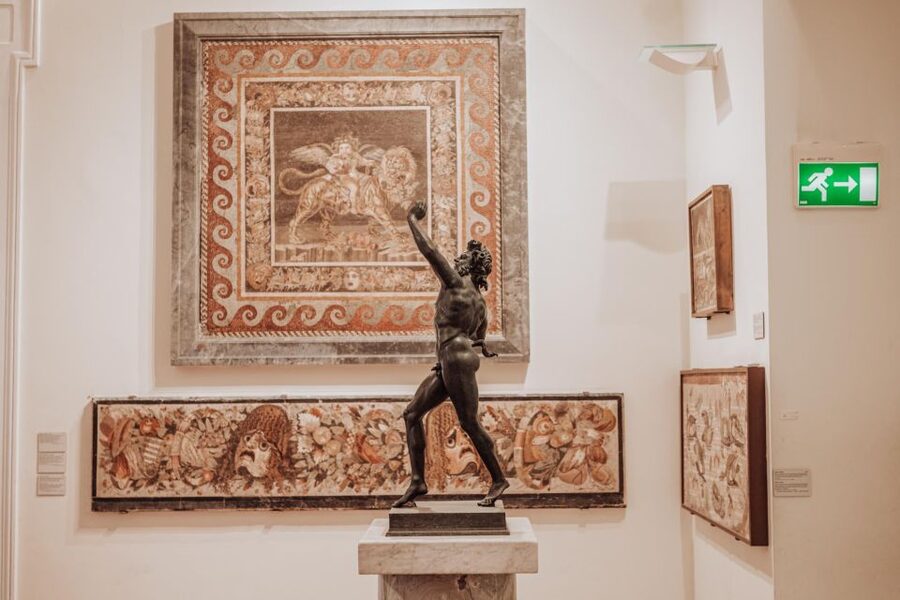
The frescoes once decorated Roman houses. You may see mythological scenes, architectural designs, garden images, and painted details that reveal how wealthy Romans wanted their rooms to feel. The mosaics show a different kind of skill, built from countless small pieces of stone or glass.
One famous work is the Alexander mosaic, which depicts the battle between Alexander the Great and Darius. It has required restoration, so the exact condition of the display can change. Even when portions are being worked on, it remains an important reason to see the museum.
The best way to approach these works is not as isolated masterpieces. Think about where they came from. A mosaic on the museum wall once belonged to a floor. A fresco once belonged to a room with a doorway, furniture, and people moving through it. Your guide can help you picture that original setting.
If you have visited Pompeii first, you will recognize the names of houses and sites, and the museum visit becomes a useful second chapter. If you have not, the tour still works, but you may want to visit Pompeii or Herculaneum afterward to see the works in their original setting.
A few more museum visits around Italy worth comparing
- Vatican Museums, Sistine Chapel & St Peter’s Basilica Guided Tour
★ 4.5 · 39,149 reviews - Rome: Vatican Museums & Sistine Chapel Guided Tour
★ 4.3 · 12,117 reviews - Uffizi Gallery: Renaissance Masterpieces Guided Tour
★ 4.6 · 6,070 reviews - Milan: San Siro Stadium and Museum Guided Tour
★ 4.3 · 5,567 reviews
A guided walk through corridors of gods and emperors
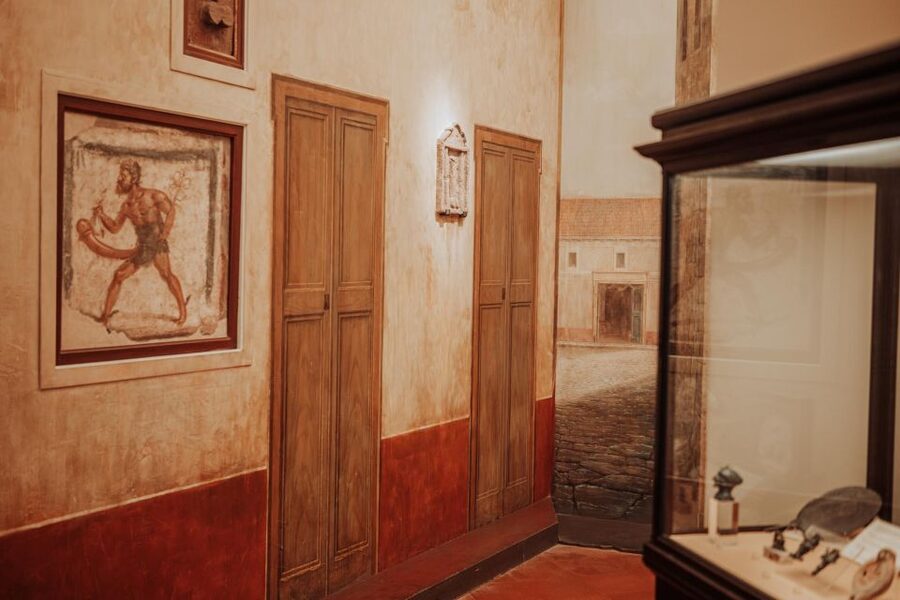
The route takes you through corridors lined with busts and statues. Roman portraiture can seem repetitive until you know what to look for. Hairstyles, facial features, clothing, and expressions could signal age, status, military power, or a deliberate political image.
Greek and Roman gods also appear throughout the collection. Their attributes help identify them: an object held in the hand, a particular pose, a helmet, a staff, or an animal connected with the myth. A guide turns those clues into a readable story.
The museum also holds coins, wall paintings, and other objects that broaden the visit beyond giant marble statues. These smaller pieces can tell you about trade, domestic life, religion, and personal identity. You might find that one modest object gives a clearer sense of ordinary life than a monumental sculpture.
The museum itself deserves attention. It occupies an impressive historic building, and the rooms, stairways, and long corridors add to the feeling that you are moving through a serious center of study rather than a simple display hall.
What the two-hour pace feels like
Two hours is a good introduction, not a full museum day. The guide needs to balance explanation with movement, and the strongest tours focus on the most important pieces rather than trying to tick every box.
That approach suits me. A huge museum can defeat you when you try to see everything. A clear route gives you a foundation, and you can return to the works that caught your attention after the guided portion ends.
Several guides have been praised for covering a lot without making the visit boring. Nicoletta is noted for connecting the museum with Naples, Pompeii, and the Roman world around the bay. Salvatore has been described as making the art approachable and answering questions with ease. Silvia is especially suited to visitors who want archaeological context, since she works at Pompeii and teaches archaeology at university.
The quality of the experience depends partly on the person leading your departure. The guides named in the feedback are not all the same, but the repeated strengths are clear: strong subject knowledge, passion for the material, clear English, and a willingness to respond to questions.
There are practical signs of a good tour, too. One visitor who is hard of hearing found that provided earpieces worked well. Other visitors had trouble hearing when a guide was ill or when the sound system was weak. If hearing clearly matters to you, ask at the start about the audio equipment and stay close to the guide.
The museum has places to rest, but you should not expect to sit through the entire route. One person specifically wished for more rest stops. If you tire easily, tell the guide early and use available seating when possible.
What is included, and what you still need to plan
The $52 price includes the guided tour, an archaeologist guide, and admission to the National Archaeological Museum. It does not include transportation, food, or drinks.
The value depends on how you like to visit museums. If you enjoy reading labels, choosing your own route, and spending ten minutes with one obscure object, a self-guided visit may give you more freedom. You can also enter for less than the tour price if you qualify for the reduced admission or visit on a free-access day, as one visitor noted about the first Sunday of the month.
If you want a strong introduction, the price is easier to justify. You avoid the ticket line, see the main highlights, and gain a useful framework for the rest of the museum. The ability to remain inside after the two-hour tour also matters. You are not forced to leave just because the guided part is over.
For many people, the best plan is to schedule the tour earlier in your museum visit, then spend extra time afterward with the collections the guide introduced. That turns two hours into a longer, more personal visit.
Who will get the most from this tour
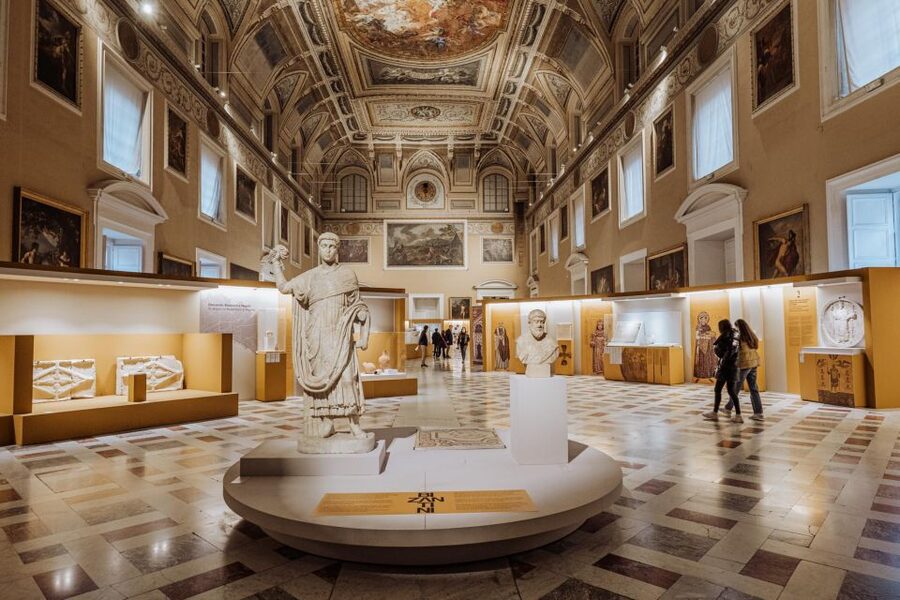
I would choose this experience if you are interested in ancient art but do not already know how to read Greek and Roman sculpture. It is also a strong match if Pompeii or Herculaneum is part of your Naples plans.
Families can benefit because a guide supplies stories and explanations that keep the statues from becoming a silent wall of marble. One person brought a grandmother and found the pace and help suitable for their visit, though mobility remains an important concern.
History lovers will appreciate the archaeological angle, especially when the guide has worked at Pompeii or teaches the subject. First-time museum visitors also gain a lot because the route removes the pressure of deciding where to begin.
I would hesitate if you dislike group tours, need a fully accessible route, or want to explore every gallery without interruption. The museum is large, and a two-hour highlight tour cannot satisfy someone seeking an exhaustive visit.
Large bags, oversize luggage, baby strollers, non-folding wheelchairs, and electric wheelchairs are not allowed. The activity is specifically listed as unsuitable for people with mobility impairments and wheelchair users, so check this carefully before booking.
How to plan your Naples museum day
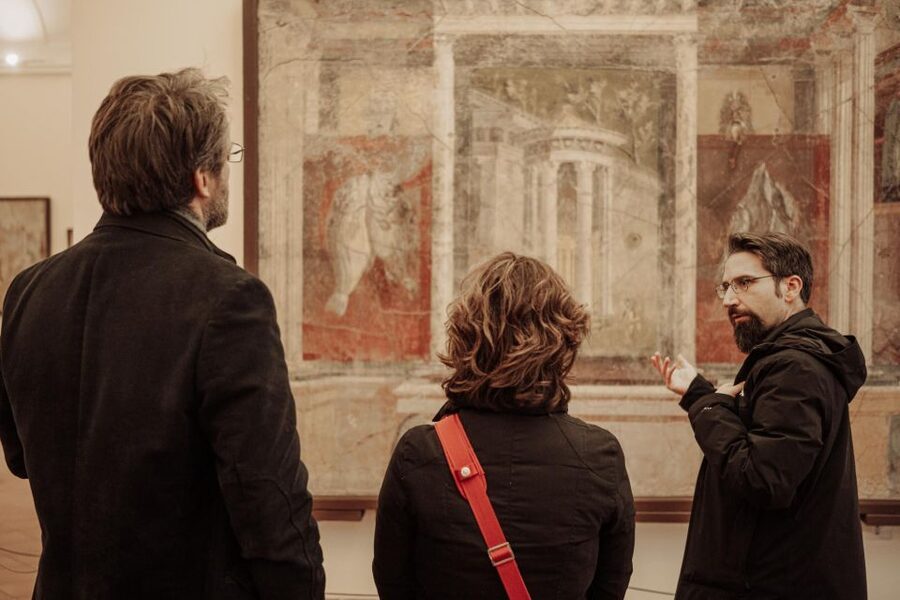
If possible, visit Pompeii or Herculaneum before the museum. You do not need to do both first, but seeing at least one archaeological site gives the paintings and mosaics a stronger setting.
Bring your questions. Ask about a sculpture’s original location, the meaning of a mythological scene, or how a work was removed from Pompeii. The guides are used to questions, and the interactive nature of the tour is one of its main advantages over an audio guide.
Allow time after the formal tour. You may want to return to the Farnese Hercules, look more closely at the mosaics, or visit sections not included in the main route. The museum is too large to treat as a quick stop, even with skip-the-line entry.
Finally, wear shoes suitable for standing and walking through a substantial building. The tour is only two hours, but the museum’s scale means you will cover a fair amount of ground.
Should you book the National Archaeological Museum tour?
I would book it if you want the museum to make sense rather than simply admire its biggest statues. The strongest reason is the guide, especially when you are led by an archaeologist such as Silvia or by an experienced speaker like Nicoletta or Salvatore.
The tour is particularly good after Pompeii, when the frescoes and mosaics become part of a story you already began outdoors. It is also a sensible choice for first-time visitors who want the major Farnese sculptures and Campania discoveries without spending the first hour finding their way.
Skip it if you need wheelchair access, want a completely independent route, or plan to spend an entire day studying every collection. For everyone else, $52 is a fair price for a focused introduction, expert interpretation, and the freedom to continue exploring after the two-hour walk.
FAQ
How long does the guided tour last?
The guided visit lasts two hours. After the tour, you can remain in the museum and continue looking at other collections on your own.
What languages are offered?
The tour is offered in English and Italian.
Where do I meet the guide?
Meet outside the ticket office of the National Archaeological Museum of Naples. The guide will hold an Askos Tours sign.
Does the price include museum admission?
Yes. The price includes entry to the Archaeological Museum of Naples and the guided tour. The listed adult admission is 20 euros, with a 2 euro reduced rate for EU citizens aged 18 to 25.
Is transportation included?
No. You are responsible for getting to the museum. Food and drinks are also not included.
Can I bring a large bag or stroller?
No. Oversize luggage, large bags, and baby strollers are not allowed. Non-folding and electric wheelchairs are also not allowed.
Can I cancel the booking?
Yes. You can cancel up to 24 hours in advance for a full refund. You can also reserve now and pay later, keeping your plans flexible.
Just added around Italy
- Oil museum and oil mill in Tuscany: tour and tasting★ 5.0 · 16 reviews
- Enchanted Castle of Sciacca – Museum Tickets★ 3.5 · 63 reviews
- Torino: FIAT Historic Museum and Lingotto District Tour★ 4.9 · 14 reviews
- Torino: The Car Museum Skip-The-Line Tour★ 4.7 · 22 reviews
- Timed Entry Ticket to the Uffizi Gallery★ 4.5 · 498 reviews
- Florence: Accademia Gallery Entry Ticket with Audio Guide★ 4.1 · 88 reviews
- Vatican City: Sistine Chapel, Museums, Basilica Private Tour★ 4.8 · 158 reviews
- Rome: Capitoline Museums and Centrale Montemartini Tickets★ 4.4 · 328 reviews
Museum Tours in Italy, compared.

Vatican: Museums & Sistine Chapel Entrance Ticket
Read our review →
Vatican Museums, Sistine Chapel & St. Peter’s Basilica Tour
Read our review →
Vatican Museums, Sistine Chapel & St Peter’s Basilica Guided Tour
Read our review →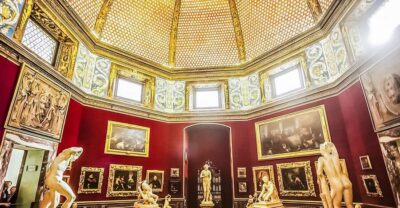
Skip-The-Line Uffizi Gallery Timed Entry Ticket
Read our review →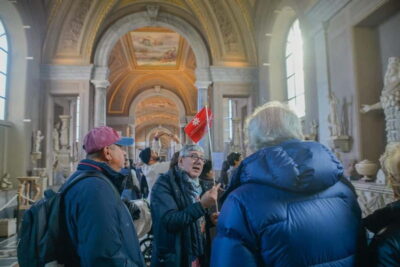
Vatican Museums, Sistine Chapel and Basilica Tour
Read our review →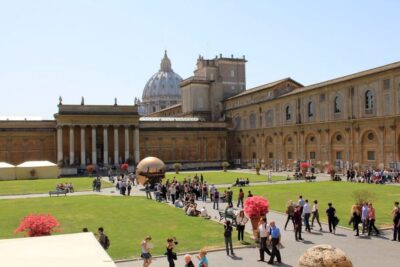
Vatican Museums & Sistine Chapel Skip-the-Line Entry Ticket
Read our review →
Vatican Museums, Sistine Chapel & Basilica Tour
Read our review →
Browse the lists this tour appears in