
Review · ATHENS
Athens: Kotsanas Ancient Greek Technology Museum Guided Tour
Ancient Greek technology was far more inventive than the marble temples usually suggest. At the Kotsanas Museum, working models show how Greek thinkers built robots, clocks, theatrical machines, and the Antikythera calculating mechanism, often with ideas that feel surprisingly modern.
I like the private format, which lets you ask questions instead of simply reading labels, and I like the hands-on displays that make complex mechanisms easier to grasp. Guides such as Vasilis, Irina, and Maria have been especially praised for making the visit clear and enjoyable. The main consideration is the short one-hour time limit, plus the museum is not suitable for people with mobility impairments.
Key points to know before you book
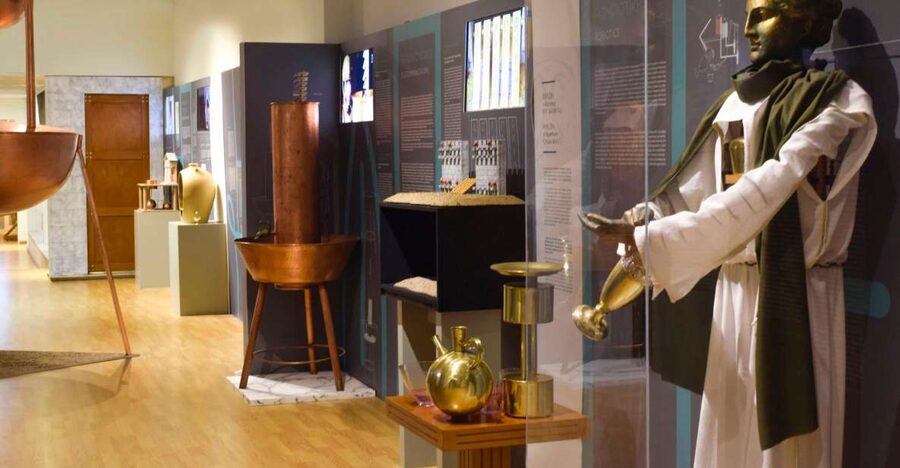
- See ancient machines operate: Working models demonstrate robots, clocks, automata, and the famous Antikythera mechanism.
- A genuinely private visit: Your group of up to four has a dedicated English-speaking guide.
- Guides with technical and historical backgrounds: Tours are led by an engineer, historian, archaeologist, or museologist.
- Easy central location: The museum is at Pindarou 6, about five minutes on foot from Syntagma Metro Station.
- Good value for a small group: The price is $54 per group of up to four, not per person.
- Plan for one focused hour: Entry and the private tour are included, followed by free time to look around.
Why this small museum changes your view of ancient Greece
The Kotsanas Museum presents an aspect of Greek culture that is easy to miss in Athens. You will still find the familiar temples, statues, and archaeological sites elsewhere in the city, but here the subject is practical ingenuity: how ancient inventors used air, water, gears, weights, sound, and motion to create machines.
That shift in subject is the museum’s great strength. Instead of only looking at old objects behind glass, you watch models operate and learn what each mechanism was designed to do. A private guide can connect the parts for you, explaining not just what a device looks like, but how it works and why it mattered.
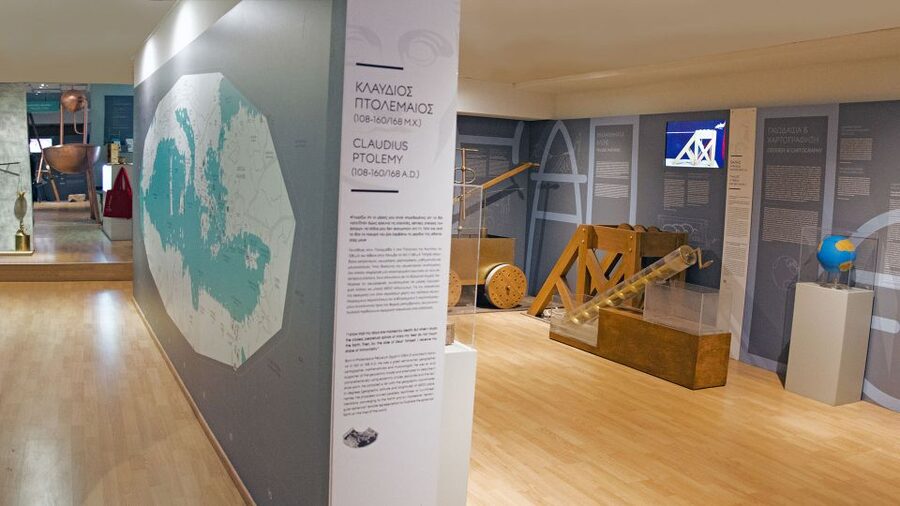
The museum occupies a historic Art Nouveau building with about 700 square meters of space. The exhibition on high-tech inventions of the ancient Greeks includes roughly 100 selected exhibits, while the wider interactive collection contains about 300 artifacts. You can expect a mix of reconstructed machines, explanatory displays, diagrams, photographs, and video material in Greek and English.
I would not treat this as a replacement for Athens’ major archaeological museums. It serves a different purpose. The Kotsanas visit is best when you want a compact, hands-on break from monuments and a clearer sense of the engineering behind ancient life.
More Museum Tours in Athens
- Athens: Acropolis, Parthenon & Acropolis Museum Guided Tour
★ 4.8 · 9,316 reviews - The Acropolis, Parthenon & Acropolis Museum Guided Tour
★ 4.7 · 8,493 reviews - Athens: Mythology of Delphi, Museum and Arachova Guided Tour
★ 4.7 · 5,102 reviews
Meeting your guide near Syntagma
You meet at Pindarou 6 in central Athens, around a five-minute walk from Syntagma Metro Station. That makes the museum easy to add before or after a walk through central Athens, though the activity does not include hotel pickup or transportation.
The tour is private for your group, with an English-speaking guide. Staff may come from engineering, archaeology, history, or museology backgrounds. That range matters because the displays need both technical explanation and historical context. A purely mechanical explanation could become dry, while a purely historical one might leave you wondering how the machine actually functioned.
The short walk from Syntagma is helpful, but take note of the mobility warning. The activity is not suitable for people with mobility impairments. The supplied information does not give a detailed description of access arrangements, so you should confirm any specific needs before booking.
The first hour: a guided tour of ancient machines
The core experience lasts one hour. Your guide leads you through the exhibits, using interactive models and visual material to explain the devices. Since the group is private, you can pause for clarification, ask about a particular invention, or spend more time on the machines that catch your attention.
The displays are built for explanation rather than silent viewing. Labels and large posters provide information, diagrams, photographs, and full bibliographical references. Projecting stations add video and animation, while documentaries show the exhibitor explaining the purpose and operation of various mechanisms.
That combination is useful if you do not have a technical background. You do not need to understand engineering before arriving. The guide can break the machine down into visible actions, while the model gives you something concrete to watch. One person who described being an admirer of history rather than an engineer still found the ideas memorable well after the visit.
The tour also works well for families. Children can see movement and cause-and-effect instead of being asked to study a static object. The private format helps here because the guide can adjust the pace and answer the inevitable practical questions.
Robots, automata, and the ancient taste for spectacle
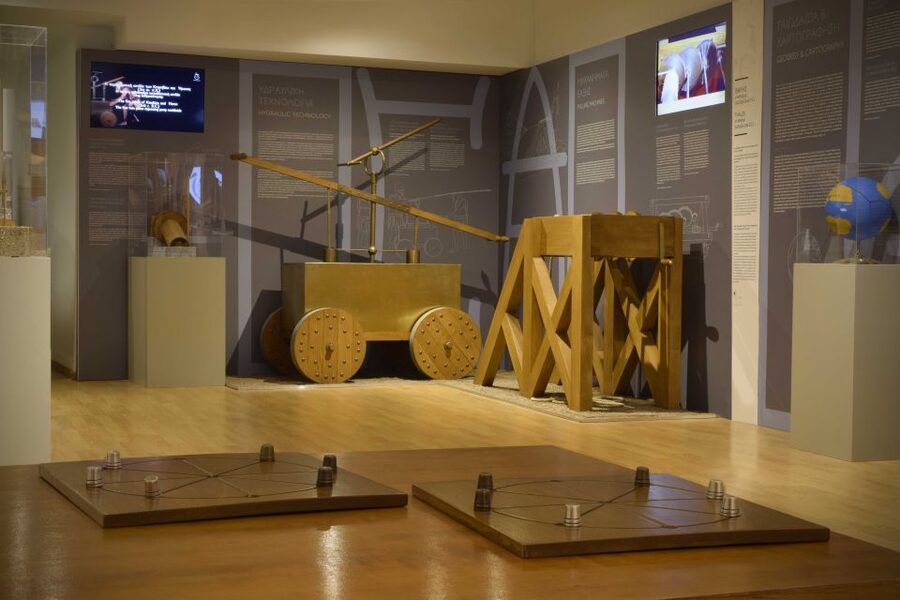
Among the selected exhibits are the robot-servant and the automotive puppet show associated with Heron. These machines show that ancient technology was not limited to farming tools or military equipment. Inventors also used mechanics to create movement, surprise, and entertainment.
Heron’s work is particularly useful for understanding the museum’s theme. A machine can be technically clever and still be made for performance. The puppet show and other theatrical devices connect engineering with public spectacle, giving you a glimpse of how mechanisms could shape an audience’s experience.
Philon’s robot-servant and cinema are also included in the exhibition. The word cinema needs a little context here. You should expect an ancient visual or theatrical mechanism, not a modern film screening. The point is the use of motion, images, and mechanical timing to create an experience that resembles later forms of entertainment.
These exhibits are among the easiest to appreciate without specialist knowledge. You watch the action, then the guide explains the mechanism behind it. That order makes the lesson stick.
A few more museum visits around Athens worth comparing
- Athens: Acropolis, Parthenon & Acropolis Museum Guided Tour
★ 4.8 · 3,579 reviews - Athens All Included: Acropolis and Museum Guided Tour with Ticket
★ 4.5 · 2,673 reviews - Athens: Acropolis Museum Ticket with optional Audio Guide
★ 4.4 · 2,652 reviews - Athens: Delphi Oracle & Museum Tour with a Licensed Guide
★ 4.8 · 2,121 reviews
The Antikythera mechanism and ancient calculation
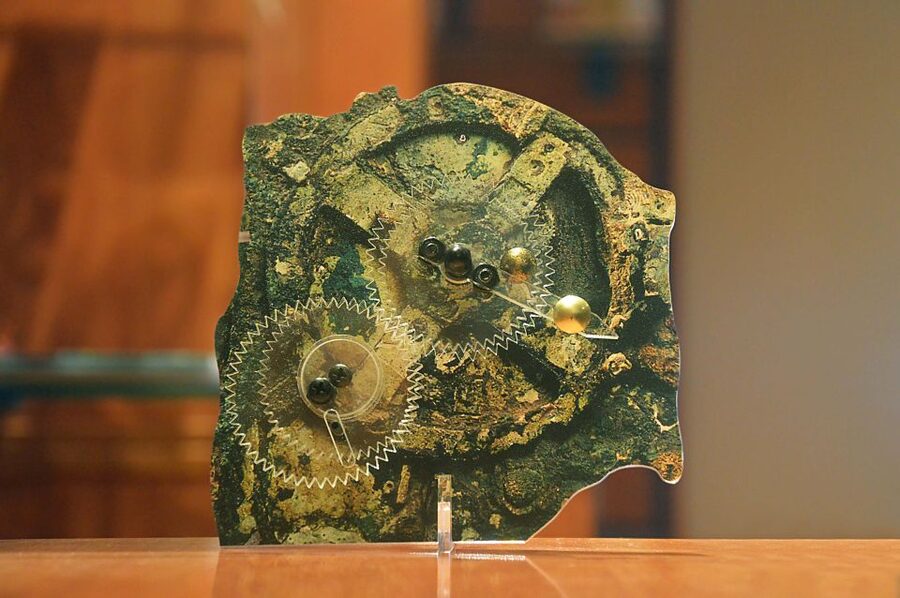
The Antikythera calculating mechanism is one of the main reasons to visit. It is often described as the oldest analog computer in the world, and the museum shows an operating model rather than asking you to imagine the mechanism from a photograph alone.
The model lets you consider how gears could represent cycles and calculations. Even if you are not comfortable with technical diagrams, seeing the parts move gives the object a practical reality. It becomes less an ancient mystery and more a piece of carefully designed equipment.
The museum also presents the hydraulic clock of Ktesibios. Water-powered timekeeping may sound simple at first, but the display helps show how water flow and mechanical control could be combined in a precise device. This is the kind of exhibit where a guide is valuable because the basic idea is easy to understand, while the details of its operation are not.
You may find yourself comparing these mechanisms with later clocks, calculators, and machines. That comparison is one of the visit’s strongest effects. The museum is not claiming that ancient inventors built modern devices in their present form. It shows that some of the underlying ideas, such as gearing, automation, control, and calculation, have much older roots.
What makes the interactive displays worthwhile
Interactive does not simply mean pressing a button. Here, many of the exhibits are operating reconstructions that help you see motion and function. A diagram can tell you that a machine used air pressure or water, but a working model shows the sequence.
That is particularly useful for visitors who lose interest in long museum labels. You can first watch a mechanism, then read the explanation, then ask the guide about the part that remains unclear. The large posters and projected videos give you extra detail without forcing the tour to stop for every technical point.
The written material is available in Greek and English. The guided tour itself is in English, which makes the visit straightforward for English-speaking bookers. The displays also give you a chance to continue learning after the formal tour ends.
Do not expect every exhibit to receive the same amount of time. The tour lasts one hour, and the museum has a substantial collection. The guide needs to keep the group moving, so tell them early if you are especially interested in clocks, automata, theatrical technology, or the Antikythera mechanism.
Free time after the guided portion
Entry and the one-hour private tour are included, and you have free time afterward to explore further. This extra period is important because the guided part gives you the framework, while the independent portion lets you return to displays you want to examine more closely.
I would use the free time to revisit the most complicated mechanisms. During the tour, you may understand the broad idea but miss a detail in the gears, diagrams, or video. A second look is more productive once you know what you are seeing.
The museum does not include food or drinks, and food and drinks are not allowed inside. Since the visit is only an hour plus free exploration, this is easy to plan around. Have a snack before arriving or after you leave, rather than trying to fit refreshments into the museum visit.
Is $54 good value for up to four people?
The listed price is $54 for a private group of up to four. If four people share the booking, that works out to $13.50 each, including museum entry, the one-hour private guide, and additional time to explore.
That is strong value for a small family or group of friends. A private guide would usually be less attractive if you were paying the full group price alone, but the price becomes much more reasonable when divided among four people. You are also paying for interpretation, not just access to the building.
The value depends on your interests. If you mainly want the famous archaeological sights of Athens, this may feel like a side trip. If you enjoy inventions, science, ancient engineering, or interactive museums, the guided explanation gives the visit more purpose than a quick self-guided walk-through.
The reserve-now-and-pay-later option adds flexibility, and you can cancel for a full refund up to 24 hours before the activity. Starting times vary, so you need to check availability when choosing your date.
Who will enjoy this Athens museum most?
I would recommend this experience to families, curious adults, and anyone who likes understanding how things work. It is also a good choice if you have already seen several ancient sites and want a different angle on Greek history.
The private format suits mixed groups. One person may care about the Antikythera mechanism, another about robots and theatrical machines, and a child may simply want to see something move. A guide can keep all three engaged better than a fixed group tour.
You do not need to be an engineer. The visit is designed around explanation and demonstration, and the technical displays are supported by labels, diagrams, videos, and working models. Still, anyone who prefers quiet galleries, polished sculpture, or a large conventional museum may find the machinery-focused format less appealing.
Because the tour lasts only an hour, I would pair it with another central Athens activity rather than build an entire day around it. The Syntagma location makes that easy, but remember to leave enough time for the walk and meeting point.
Should you book the Kotsanas Museum tour?
Book it if you want to see ancient Greece through invention rather than monuments. The private English tour, hands-on models, and chance to study machines such as the Antikythera mechanism give the visit a clear purpose. Vasilis, Irina, and Maria are among the guides associated with especially warm feedback, and the staff’s technical and historical backgrounds suit the subject well.
I would be more cautious if you need step-free access, dislike mechanical explanations, or want a long museum session. For everyone else, especially families and small groups of up to four, $54 is a fair price for an unusual one-hour lesson in ancient engineering.
FAQ
Where is the Kotsanas Museum of Ancient Greek Technology?
The meeting point is Pindarou 6, Athens 106 71, Greece. The museum is about a five-minute walk from Syntagma Metro Station.
How long does the guided tour last?
The private guided tour lasts one hour. Afterward, you have free time to explore the museum further.
Is the tour private?
Yes. It is offered as a private group activity for up to four people.
What language is the tour in?
The live guided tour is in English. Audio-visual material and explanatory information are available in Greek and English.
Who leads the tour?
The guide may be an experienced engineer, archaeologist, historian, or museologist. Guides named in the supplied information include Vasilis, Irina, and Maria.
What inventions can I see?
The displays include operating models of the Antikythera calculating mechanism, the robot-servant, Philon’s cinema, Heron’s automotive puppet show, and the hydraulic clock of Ktesibios. The exhibition includes about 100 selected exhibits within a wider collection of roughly 300 artifacts.
Is the museum suitable for people with mobility impairments?
The activity is listed as not suitable for people with mobility impairments. You should check directly with the provider if you have specific access requirements.
Can I cancel or pay later?
You can cancel up to 24 hours before the activity for a full refund. The reserve-now-and-pay-later option lets you book without paying immediately.
Just added around Athens
- Ancient Athens tour: Acropolis, Parthenon and Acropolis Museum★ 5.0 · 256 reviews
- The Acropolis, Athens Walking City Tour and Acropolis Museum★ 5.0 · 442 reviews
- Athens: Acropolis Museum Ticket with Self-Guided Audio tour App★ 3.5 · 40 reviews
- Family Acropolis & Acropolis Museum Tour inspiredby Percy Jackson★ 4.5 · 40 reviews
- Acropolis of Athens, Parthenon and Acropolis Museum private tour with dinner★ 5.0 · 77 reviews
- Shore Excursion: Acropolis, Athens City tour and The New Acropolis Museum★ 4.5 · 30 reviews
- Athens National Archaeological Museum E-Ticket with Audio Guide★ 3.0 · 57 reviews
- Private Tour: Half day Athens Sightseeing and Acropolis Museum★ 4.5 · 28 reviews
Museum Tours in Athens, compared.

Acropolis, Parthenon & Acropolis Museum Guided Tour
Read our review →
The Acropolis, Parthenon & Acropolis Museum Guided Tour
Read our review →Acropolis, Parthenon & Acropolis Museum Guided Tour
Read our review →
Acropolis monuments & Parthenon Walking Tour with Optional Acropolis Museum
Read our review →
Athens All Included: Acropolis and Museum Guided Tour with Ticket
Read our review →
Acropolis Museum Ticket with optional Audio Guide
Read our review →
Small-Group Delphi, Museum & Arachova Day Trip
Read our review →
Delphi Oracle & Museum Tour with a Licensed Guide
Read our review →Browse the lists this tour appears in