
Review · MADRID
Madrid: Prado Museum Masterpieces Tour with Entry Ticket
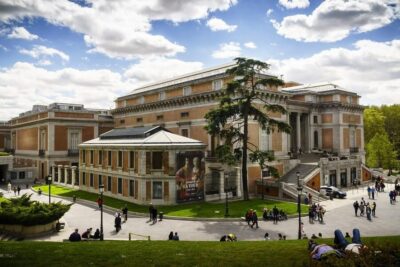
The Prado is not a museum you simply stroll through and understand. It is a vast collection shaped by Spanish kings, Catholic power, court taste, and four centuries of European painting. This tour gives you a clear route through that story, led by Delfi, an art restorer, rather than leaving you to face room after room of famous canvases alone.
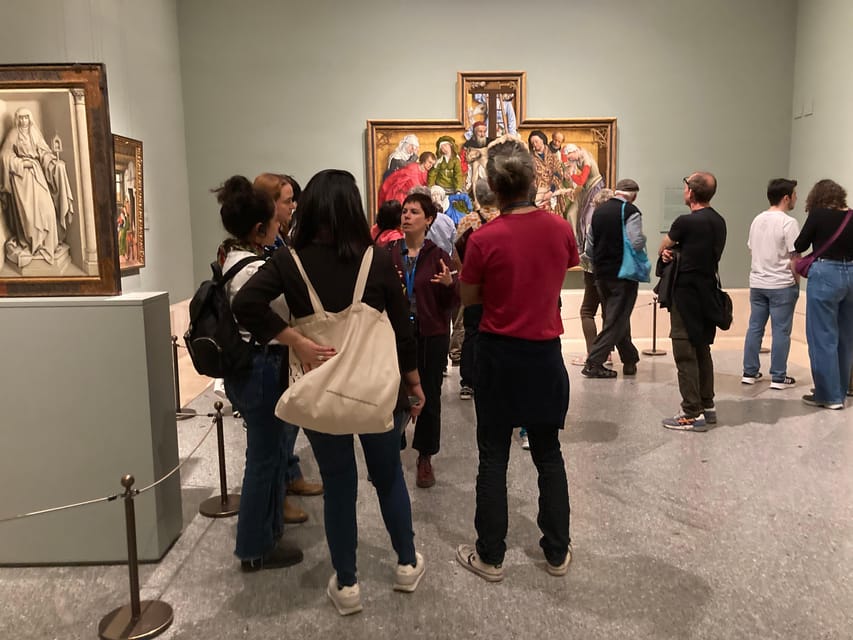
I like two things right away: the chronological order makes the changes in style easier to follow, and the group is limited to seven people. The small size gives you room to ask questions, and the headsets used during the tour help you hear Delfi even when other people are nearby.
The main consideration is time. Three hours sounds generous, but the Prado holds far more art than any guided visit can cover. You will see major works and selected supporting pieces, not every gallery, so this suits you best if you want a strong introduction rather than a full museum survey.
Key points at a glance
- A three-hour route through four centuries: Follow European and Spanish painting from the 15th through the 19th century in a logical sequence.
- Art restorer as guide: Delfi explains technique, symbolism, artistic influence, and the condition of a painting from a professional art background.
- Seven people maximum: A small group means better sight lines, easier questions, and a more personal pace.
- Major Prado names: Expect attention to Titian, El Greco, Rubens, Velázquez, Goya, and other central artists in the collection.
- History beside the art: Spanish rulers, the Hispanic Monarchy, religious life, politics, and royal taste help explain why these works exist.
- Practical entry included: Your Prado ticket is covered, and the tour begins at the Goya monument outside the museum.
Why the Prado needs a three-hour plan
The Prado can be intimidating on a first visit. Its collection is not arranged as a simple parade of greatest hits, and the building contains more important paintings than you can sensibly absorb in one sitting.
I find a guided route especially useful here because the value is not just in seeing a famous canvas. You need help noticing how an artist handles light, gesture, color, scale, and symbolism. You also need the larger story: why a Spanish monarch owned a certain work, why one painter influenced another, and how religious or political changes shaped what artists produced.
This tour follows the collection in chronological order. That choice gives the visit a clear backbone. Instead of jumping from Goya to Bosch to Velázquez and back again, you move through changing periods and styles.
You will not leave knowing every corner of the museum. That would take repeated visits. You should leave knowing which artists matter most, how their work connects, and which rooms deserve another look if you return on your own.
More Museum Tours in Madrid
- Madrid: Prado Museum Entry Ticket
★ 4.6 · 20,699 reviews - Madrid: Reina Sofía Museum Entrance Ticket
★ 4.5 · 8,788 reviews - Madrid: Small Group of Prado Museum Tour & Optional Tapas
★ 4.6 · 2,437 reviews
Meeting Goya before entering the museum
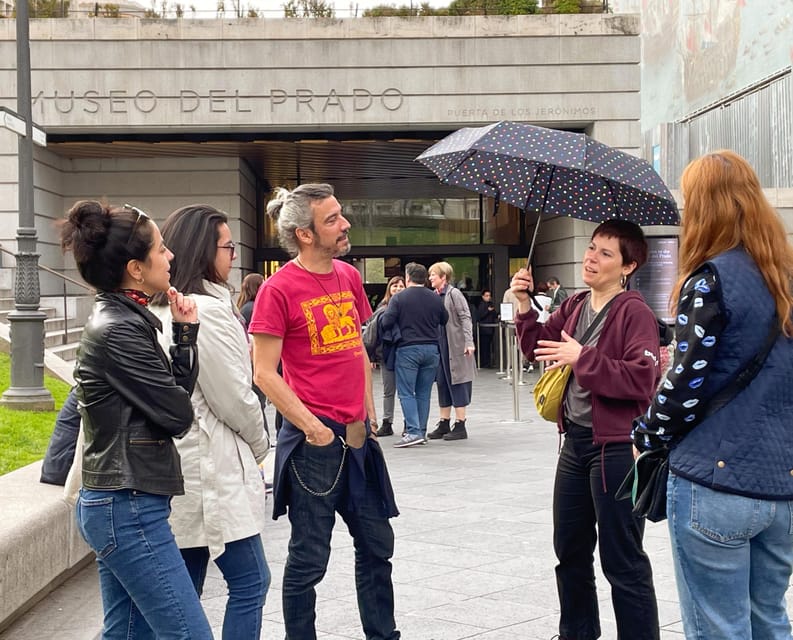
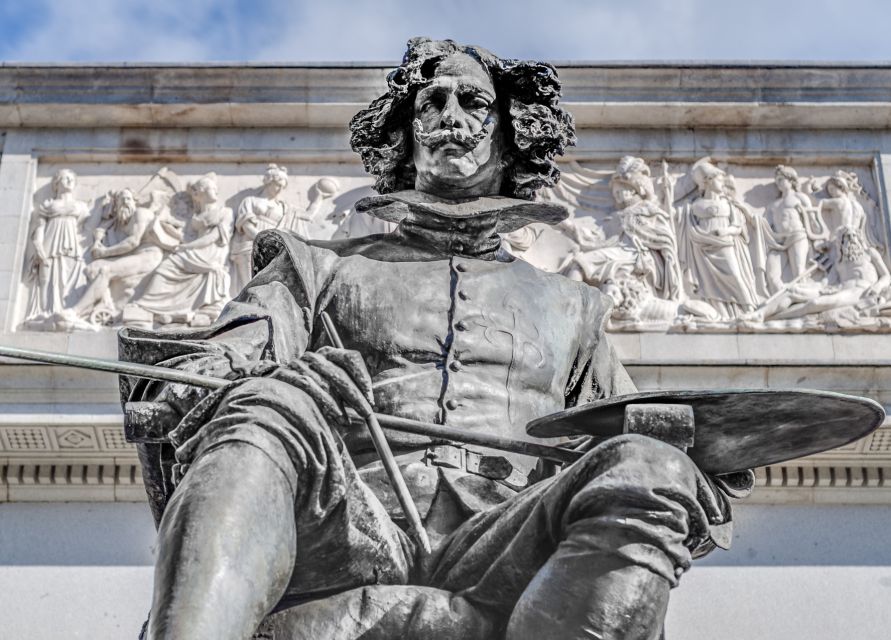
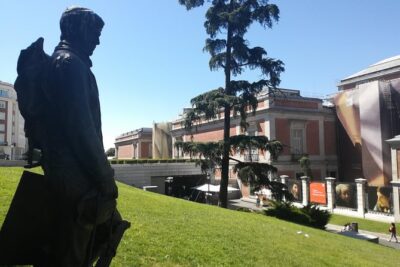
The meeting point is beside the Monumento a Goya, outside the Prado. Look for a dark gray umbrella with colorful polka dots, which is the guide’s marker.
Starting with Goya makes good sense. He is one of the Prado’s defining artists, and the monument gives the group an immediate link to the museum’s Spanish identity. Before entering, Delfi begins with the origin of the building and the origin of the collections. This short introduction matters because the Prado is not just a neutral storage place for art.
The museum grew from royal collections and later became a public institution. Understanding that background helps you read the galleries differently. The Spanish crown collected works for reasons tied to power, religion, taste, diplomacy, and status. The result is a museum where art history and Spanish political history are closely tied.
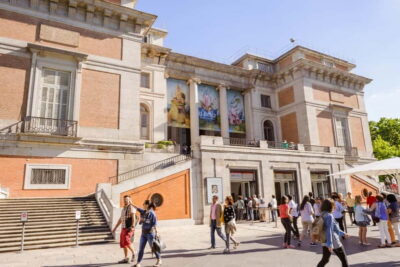
Allow a little extra time to reach the monument. The meeting instructions are clear, but the Prado sits in a busy central part of Madrid, and you do not want to begin the tour while still trying to find the right entrance area.
From the 15th century into the age of European courts

Once inside, the tour moves through the centuries rather than treating each painting as an isolated object. The early section gives you a base for understanding how European painting developed before the great Spanish court painters took center stage.
The exact works covered can vary, but the plan gives special weight to painters who worked in Spain or served the Hispanic Monarchy. This is one of the most useful choices in the route. The Prado’s holdings are international, but the collection makes most sense when you understand Spain’s role as a major European power and patron of the arts.
You may see how religious subjects were handled in earlier periods, then notice changes in human expression, perspective, realism, and the treatment of space. Delfi’s role is not simply to identify the painter. She explains what to look at and why the work mattered in its own time.
That approach is helpful if you know little about art history. It is also useful if you already visit museums often, because the tour connects individual paintings to wider changes in technique and taste.
Titian, El Greco, Rubens, and the royal connection
The route gives special attention to Titian, El Greco, Rubens, and Velázquez, among others. These names represent very different approaches to color, form, movement, and emotion.
Titian helps show the power of Venetian color and the importance of portraiture and court commissions. El Greco brings a more unusual visual language, with elongated figures and a spiritual intensity that can seem strikingly modern. Rubens offers energy, movement, and the grand scale associated with European courts.
The connection between these artists and the Hispanic Monarchy is important. Royal patrons did not collect paintings at random. They commissioned portraits, religious works, scenes of ceremony, and images that supported the authority of the crown.
Delfi places the paintings within that system. That can turn a portrait from a handsome face on a wall into a statement about rank, inheritance, diplomacy, or religious duty.
I especially value this kind of explanation because it gives you something concrete to carry into the rest of Madrid. The city’s palaces, churches, monuments, and public spaces make more sense when you understand how strongly royal and Catholic power shaped Spanish art.
More Prado tours and tickets:
- Madrid: Prado Museum Guided Tour with Skip-the-Line Ticket
★ 4.5 · 2,018 reviews - Madrid: Prado Museum Guided Tour With Fast Access
★ 4.8 · 1,785 reviews - Prado Museum Small Group Tour with Skip the Line Ticket
★ 5.0 · 1,738 reviews - Royal Palace & Prado Museum Skip the Line Guided Tour
★ 4.5 · 1,347 reviews
Velázquez and the Prado’s most famous rooms
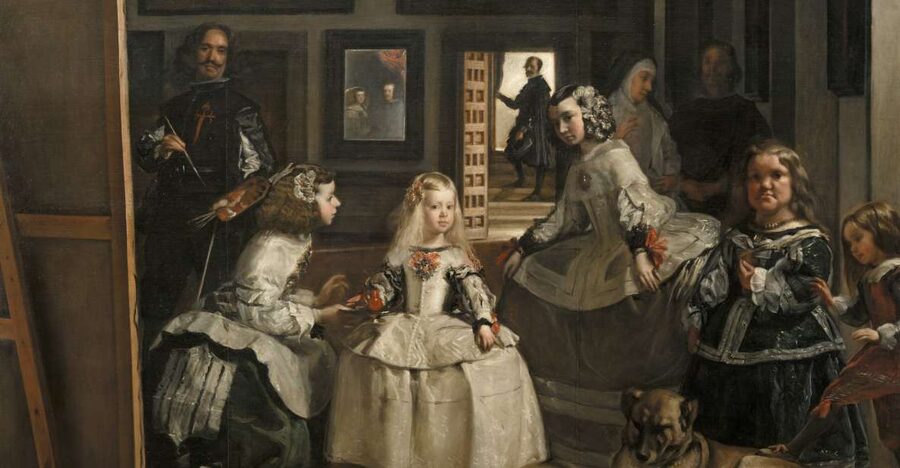
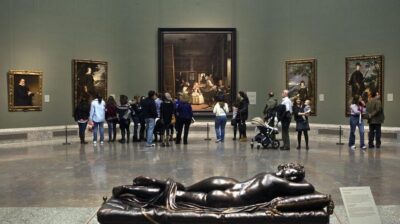
Velázquez is one of the central reasons many people visit the Prado. His paintings reward slow looking, but a first-time visitor can easily miss what makes them remarkable while trying to take in the crowd, the size of the canvas, and the fame attached to it.
Delfi’s art training helps you look at the construction of a scene rather than simply admire its reputation. You can pay attention to the placement of figures, the use of light, the relationship between the people shown, and the way the painter makes a formal subject feel alive.
Velázquez also provides a strong bridge between art and court life. His work was tied to the Spanish royal household, so the paintings reveal more than technique. They show how the monarchy wished to present itself and how an artist worked within that world.
You should expect to spend meaningful time with key works rather than race past them for a checklist. That is one reason the three-hour length matters. A shorter visit might show you the famous names, but it may not give you enough time to understand what you are seeing.
Goya and the change into the modern era
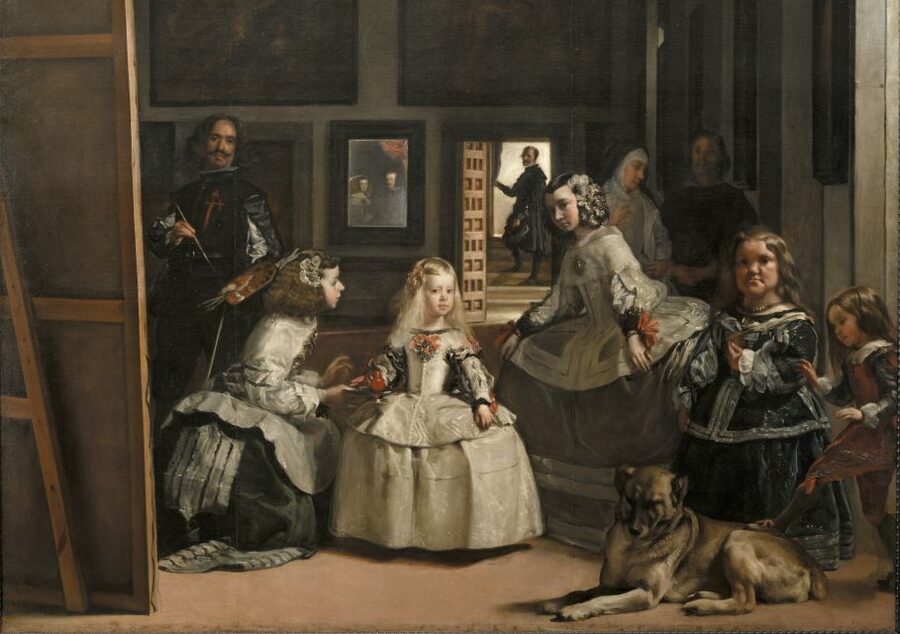
Goya brings the tour toward the 19th century and gives the story a sharp change in tone. His work can connect royal portraiture with war, suffering, social criticism, imagination, and the darker side of human behavior.
Beginning at his monument and later returning to his paintings creates a neat frame for the visit. You start with the artist who represents so much of the Prado’s identity, then encounter his work with a better sense of the museum and the historical pressures around it.
The tour does not treat Goya as a single-style painter. His work helps show how an artist can move between official commissions and deeply personal or unsettling subjects. That range makes him a strong ending point for a route that has traced changes in European painting across several centuries.
If you have seen Goya reproduced in books, the museum setting still adds something. Scale, surface, and the relationship between one work and the next are difficult to judge from a screen. A guide helps you slow down at the pieces that deserve it.
What an art restorer adds to the visit
Delfi’s background as an art restorer is one of the tour’s strongest features. A guide with restoration experience can direct your eye toward materials, brushwork, surface details, and the physical life of a painting.
That does not mean the tour becomes a technical lecture. The useful balance is between close looking and plain explanation. You learn about the artist’s choices, but also about the historical setting and the ideas represented in the scene.
Delfi is also described as friendly, patient, and easy to understand. Her English is clear, and she encourages questions. That matters in a small group because the visit can respond to the people in front of her rather than follow a rigid script from start to finish.
The guide also offers suggestions for other things to do in Madrid after the museum. That is a modest but useful extra, particularly if this is your first time in the city and you want help shaping the rest of your day.
Small group size and headsets
The group limit is seven people. That is far more manageable than a large museum crowd, especially in front of famous paintings where space is already limited.
A small group gives you a better chance to ask about a detail that caught your eye. It also makes it easier for Delfi to adjust her pace. One family used the format well because a member who was not especially interested in art stayed engaged through stories, context, and an approachable style.
Headsets are provided. This may sound like a minor detail, but it solves a common museum problem: you stand near a painting while your guide speaks softly over the sound of other groups. With the headset, you can listen while looking at the artwork instead of leaning toward the guide.
The equipment was praised for clear sound. You should still expect the normal Prado conditions: other groups, people moving through the rooms, and moments when the space feels crowded. The headset improves the experience, but it does not create a private gallery.
How the $74 price measures up
At $74 per person, this is not the cheapest way to enter the Prado. Your ticket is included, so the fee covers admission as well as three hours of guided instruction in a group capped at seven.
I think the price makes sense if you are visiting the Prado for the first time, have limited time in Madrid, or want more than a list of famous paintings. The small group and the guide’s art-restoration background add real value. You are paying for selection, structure, interpretation, and the ability to ask questions.
The calculation is less favorable if you already know the collection well or prefer to wander alone. You may want to buy entry and spend your own time with a smaller number of artists.
Still, the Prado is large enough that a clear route can save you from spending half your visit lost between galleries. If the alternative is rushing through without knowing what deserves your attention, $74 can be a sensible use of your museum budget.
Practical details before you go
Wear comfortable shoes. Three hours in a museum involves a lot of standing and walking, even though the pace is focused rather than hurried.
Bring a passport or identity card, as requested for the activity. Food and drinks are not allowed, and luggage or large bags cannot be taken along. All visitors must pass their belongings through an X-ray scanner, so allow time for that process.
Photography inside is not allowed. Plan to look closely and remember what you learn rather than relying on a camera to record the visit.
The tour is wheelchair accessible. It is conducted in English, and starting times depend on availability. You can cancel up to 24 hours in advance for a full refund, and the reserve-now, pay-later option gives you some flexibility when arranging a Madrid itinerary.
Who should book this Prado tour
I would choose this tour for a first visit to the museum, especially if you want Spanish painting explained through the country’s royal and political story.
It is also a good fit for:
- Couples or friends who want a focused museum visit without a large group.
- Families with teenagers who need stories and context to stay interested.
- Art lovers who want to compare artists, styles, and techniques.
- People who feel unsure how to approach major museum paintings.
- Experienced museum visitors who enjoy hearing a fresh interpretation from a working art restorer.
You may want a different option if you prefer complete independence, want to spend an entire day in one section, or dislike a planned route. Three hours is long enough to be worthwhile, but it is still a selection of the collection.
Should you book it?
I would book it if the Prado is new to you and you want the famous works to make sense rather than simply appear on a checklist. Delfi’s combination of art-restoration experience, clear English, historical context, and warm guidance gives the visit a strong center.
The best reason to choose this tour is the way it links paintings across time. You see how artists influenced one another, how Spanish rulers shaped the collection, and how styles changed from the 15th century through Goya.
Skip it only if you already have a detailed plan and prefer to explore alone. For most first-time visitors, the small group, included ticket, headsets, and three-hour route make this a practical way to meet the Prado’s greatest works without feeling overwhelmed.
FAQ
How long is the Prado Museum tour?
The tour lasts three hours. Starting times vary, so you should check availability when booking.
What language is the tour conducted in?
The live tour guide speaks English.
Who leads the tour?
The guide is Delfi, an art restorer who explains the paintings, artists, historical settings, and links between works.
How many people are in the group?
The group is limited to seven participants.
Where does the tour meet?
Meet beside the Monumento a Goya. The guide carries a dark gray umbrella with colorful polka dots to make the meeting point easier to spot.
Is the Prado entry ticket included?
Yes. The Prado Museum entry ticket is included in the price.
Is the tour wheelchair accessible?
Yes, the activity is wheelchair accessible.
What should I bring, and what is not allowed?
Bring a passport or identity card and wear comfortable shoes. Food, drinks, luggage, and large bags are not allowed, and photography inside is prohibited. All visitors must pass their belongings through an X-ray scanner.
Just added around Madrid
- Madrid: Afternoon Prado Museum Tour with Skip-the-Line Entry★ 4.4 · 491 reviews
- Small Group Prado Museum Guided Tour with Skip the Line★ 4.2 · 106 reviews
- Madrid: Reina Sofía Museum Guided Tour, Small Group★ 4.9 · 67 reviews
- Reina Sofía Museum – Guided tour IN ITALIAN with family discount.★ 4.8 · 19 reviews
- Prado Museum Tour with ticket, small group & expert guide★ 5.0 · 13 reviews
- Madrid: Prado Museum Skip-the-Line Guided Tour★ 4.3 · 254 reviews
- Prado Museum for kids & families: Private fun tour★ 5.0 · 32 reviews
- Madrid: Prado Museum guided tour optional Reina Sofía Museum★ 4.8 · 38 reviews
Museum Tours in Madrid, compared.
Prado Museum Guided Tour with Skip-the-Line Ticket
Read our review →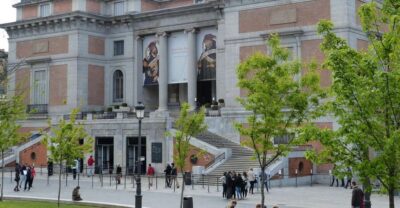
Prado Museum Small Group Tour with Skip the Line Ticket
Read our review →
Royal Palace & Prado Museum Skip the Line Guided Tour
Read our review →
Browse the lists this tour appears in