
Review · MADRID
Madrid: Nomad Immersive Museum – De Monet a Kandisky
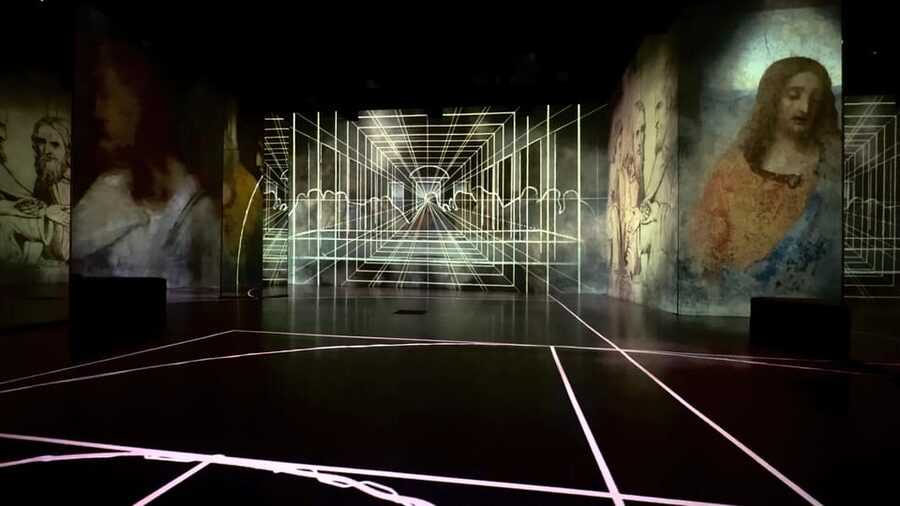
The best part of this Madrid art outing is the way paintings leave the frame. Monet, Van Gogh, Munch, Gauguin, Kandinsky, and other modern masters appear in motion across large screens, with music and digital animation turning a gallery visit into a carefully timed show. The art surrounds you rather than sitting quietly on a wall.
I like the chance to try virtual reality glasses, and I also like the odd, memorable side activities, especially the infinite corridor and the photograph of your iris. They give you something to do between the projection sequences instead of asking you to stand still and read labels.
The main caution is simple: this is a 40-minute audiovisual presentation with extra activities, not a traditional museum filled with original paintings. If you want close study of Monet’s brushwork, or a long look at his water lilies, you may find the $22 price hard to justify.
Key Points at a Glance
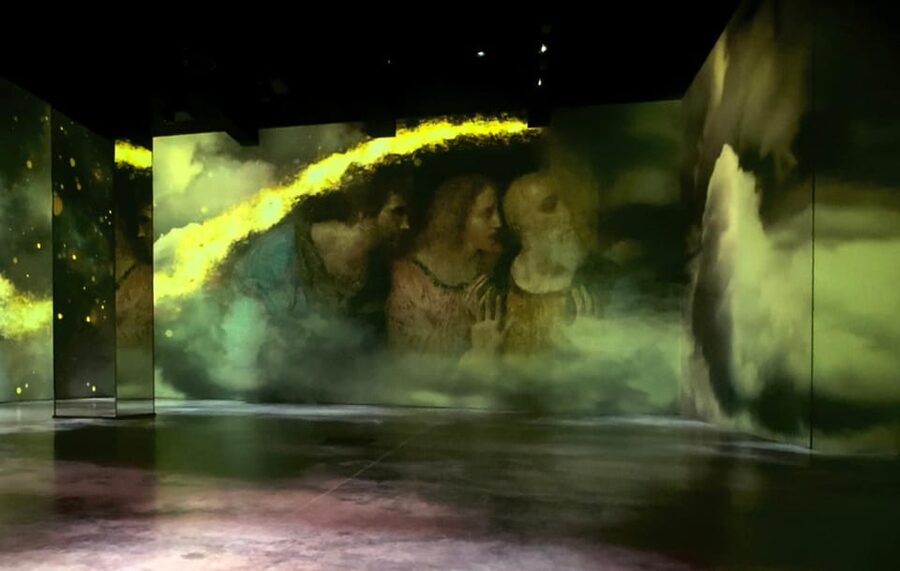
- A 40-minute moving art show: Paintings by Monet, Gauguin, Van Gogh, Munch, Gris, Delaunay, Klee, and Kandinsky spread across large digital surfaces with music and animation.
- A journey from realism to abstraction: The presentation follows Impressionism, Pointillism, Post-Impressionism, Cubism, and Expressionism in broad historical order.
- Several hands-on extras: You can try virtual reality, walk through an infinite corridor, photograph your iris, and use oversized brushes in a digital art activity.
- More show than museum: The focus is atmosphere, sound, color, and motion, not original works or detailed wall text.
- Good for families and casual art lovers: The playful stations add variety, though some adults may find the coloring and brush activities aimed at children.
- Easy access in Madrid: You simply show your ticket at the Nomad Museo Inmersivo reception. Staff speak Spanish and English, and the venue is wheelchair accessible.
What the Monet to Kandinsky Show Is Trying to Do
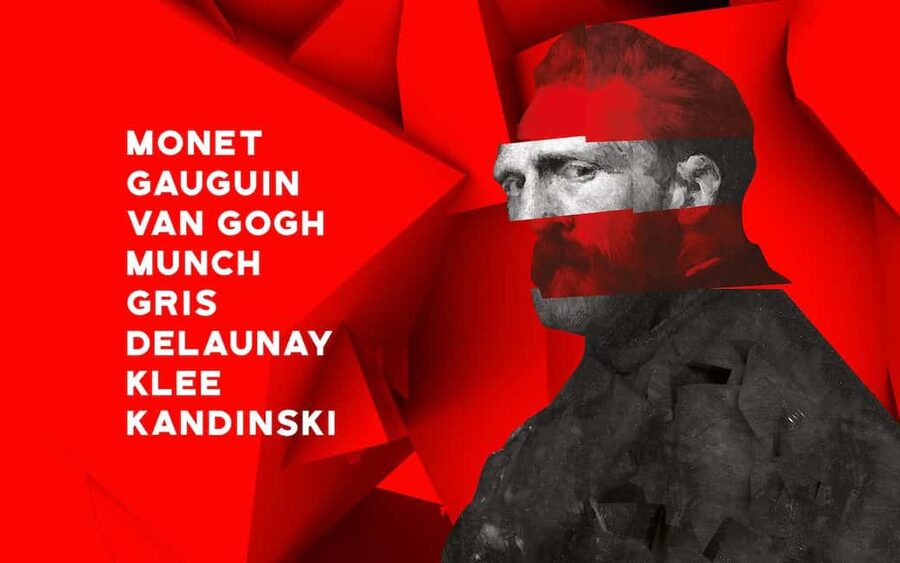
This presentation tells the story of a major change in European art. Painters moved away from copying the visible world and began to focus on light, fleeting moments, strong emotion, geometric form, and finally pure color and abstraction.
That idea gives the show its shape. You begin with artists who still painted recognizable scenes, then move toward works that break apart the old rules. The route from Monet to Kandinsky is not a detailed art-history class, but it gives you a useful visual thread to follow.
The artists named in the presentation include Claude Monet, Paul Gauguin, Vincent van Gogh, Edvard Munch, Juan Gris, Robert Delaunay, Paul Klee, and Wassily Kandinsky. That is a strong group, covering several movements and very different moods.
I find this format most useful when you already know a little about modern art but do not want a formal lecture. You can watch how color becomes less tied to objects, how brushwork grows bolder, and how artists begin to treat painting as a language of its own.
The show does not replace seeing the real paintings. A projected Van Gogh may be huge and spectacular, but you cannot study the actual paint, canvas, or scale in the same way. Think of this as a visual concert built from art, not a museum collection.
More Museum Tours in Madrid
- Madrid: Prado Museum Entry Ticket
★ 4.6 · 20,699 reviews - Madrid: Reina Sofía Museum Entrance Ticket
★ 4.5 · 8,788 reviews - Madrid: Small Group of Prado Museum Tour & Optional Tapas
★ 4.6 · 2,437 reviews
The 40-Minute Projection Show
The central presentation lasts about 40 minutes. During that time, images move, expand, glow, and shift across the screens while an enveloping soundtrack sets the pace.
This timing matters. Forty minutes is long enough to create a proper arc, but short enough to fit neatly into a busy day in Madrid. You can pair it with another nearby activity without giving up half a day.
The presentation is divided into chapters that trace the changes in art. Early sections connect with Impressionism and the artists’ interest in light and passing moments. Later scenes introduce the fractured forms of Cubism and the emotional force of Expressionism. The final movement points toward abstraction, where color, line, and shape no longer need to describe a recognizable object.
I like this progression because it gives the show a reason to keep moving. It is not just a slideshow of famous names. The images are meant to carry you from the real world toward invented worlds.
The music is an important part of the effect. It tells you when to slow down, when to expect a change, and when the imagery is building toward a larger scene. If you prefer quiet galleries, the soundtrack and crowd noise may feel like too much. This format asks you to watch as part of a group, not to contemplate each work in silence.
One practical point: people walking in front of the screen can interrupt the view. The presentation works best when you find a clear place to stand or sit and stay there. Voices from other people can also break your concentration, so this is not the ideal choice if you need a quiet art setting.
Monet, Van Gogh, and the Move Toward Abstraction

The show’s real value is its broad story about changing artistic ideas. Monet represents the effort to catch light and atmosphere rather than paint every object with hard edges. Gauguin and Van Gogh bring stronger color and more personal feeling. Munch adds a darker emotional charge.
When the presentation reaches Cubism, forms begin to break into planes and angles. Juan Gris helps represent this shift. Robert Delaunay pushes color and movement in another direction, while Paul Klee and Kandinsky take the journey closer to abstraction.
You will not get a separate, detailed portrait of every artist. The names work more like markers along a shared route. If you want to learn dates, studio locations, or the political setting behind each painting, you will need another source.
Still, the scale helps you see connections. A small image in a book can make these changes seem gradual. Here, the shift from recognizable landscapes to geometric and abstract forms happens in front of you, at a scale that makes the contrast hard to miss.
I especially like this for families or first-time art visitors. You can explain the basic idea in plain words: artists first changed how they painted the world, then changed what counted as a subject at all. The show gives you a visual example of that change without requiring a long art lesson.
VR, the Infinite Corridor, and the Iris Photograph
The main projection is only one part of the visit. You can also try virtual reality glasses, which add a more direct, three-dimensional element to the program.
The exact VR sequence is not described in detail, so I would treat it as a short add-on rather than the main reason to book. It is useful if you enjoy digital effects and want something more active than watching a screen. If your main interest is the painters, the projection show remains the heart of the visit.
The infinite corridor is another perception-based feature. It plays with mirrors, lights, and repeated space to make a short passage feel much larger than it is. This is a good place for photographs, though the effect depends on how many people are moving through it at the same time.
The iris photograph is a more unusual touch. Instead of taking a standard portrait, the activity focuses on the detailed patterns in your eye. It fits the show’s theme of looking at familiar things in a new way.
These extras help break up the 40-minute presentation. They also make the visit more social and playful. You are not only watching art projected around you, you are testing how your own senses respond to light, space, and close-up detail.
A few more museum visits around Madrid worth comparing
- Madrid: Prado Museum Guided Tour with Skip-the-Line Ticket
★ 4.5 · 2,018 reviews - Madrid: Prado Museum Guided Tour With Fast Access
★ 4.8 · 1,785 reviews - Prado Museum Small Group Tour with Skip the Line Ticket
★ 5.0 · 1,738 reviews - Royal Palace & Prado Museum Skip the Line Guided Tour
★ 4.5 · 1,347 reviews
Giant Brushes and the Winter Scene
The final activities have a hands-on, family-friendly feel. Oversized brushes let you take part in creating a winter scene, giving you a chance to add to the digital artwork rather than simply observe it.
This is fun if you arrive with children or enjoy interactive displays. It also gives younger visitors a clear way to connect with the idea of making art. You do not need to know anything about Impressionism or Cubism to enjoy moving a giant brush across a projected setting.
Adults looking for a serious art program may feel differently. The hands-on section can seem closer to a children’s activity area than to a gallery installation. One recent description of the visit found the post-show activities focused on coloring, which gives you a fair idea of the tone.
I would set your expectations before arriving. The program begins with art history and large-scale projection, then shifts toward play. That change is not a flaw for families, but it may feel underwhelming if you expected every part of the visit to offer new information about Monet or Kandinsky.
Is $22 a Fair Price?
At $22 per person, the value depends on what you want from a museum visit. For a digital show lasting about 40 minutes, the price is not a bargain if you judge it against the number of minutes alone.
The cost makes more sense if you plan to use the complete program: the projection show, VR, the corridor, the iris photograph, and the brush activity. You are paying for a designed audiovisual event, not simply access to a room of images.
I would compare it with the price of other ticketed entertainment in Madrid rather than with a standard art museum. The Prado and Reina Sofía offer far more original art and much more time for your money, but they require more attention and can feel demanding after a full day of sightseeing.
Nomad is easier to absorb. You can arrive, follow the presentation, try the activities, and move on without spending hours reading labels. That compact format may suit you if you want one modern, visually strong stop between other plans.
There is one point to watch: a recent Spanish purchase was described as costing €24, while the stated price for this activity is $22 per person. Check the price shown at booking so you know which currency and rate apply to your reservation.
When to Go and How to Plan the Visit
Your ticket is valid for one day, but you need to select an available starting time. Since the main show has a fixed length, arriving with enough time to check in will help you avoid rushing.
The meeting point is the reception at Nomad Museo Inmersivo in Madrid. Show your ticket there. Transportation is not included, so you are responsible for getting to the museum.
No guide leads you through a spoken tour. Staff assistance is available in Spanish and English, which is useful for check-in and basic questions. The presentation itself uses visual storytelling, music, and digital effects rather than a named art guide.
I would avoid treating this as an all-day museum. The listed duration is one day for ticket validity, but the central presentation lasts around 40 minutes. Add time for the side activities, but plan it as a short cultural stop rather than a full morning or afternoon.
The venue is wheelchair accessible. That makes this a practical choice for visitors who need step-free access, although the supplied details do not explain the layout of every activity or viewing area.
Who Will Enjoy It Most?

I would recommend this most strongly to:
- Families who want art with movement and hands-on activities
- Visitors curious about modern art but not ready for a long museum visit
- Fans of projection shows, music, virtual reality, and optical effects
- Couples or friends looking for a colorful indoor stop in Madrid
- Anyone who enjoys seeing familiar paintings presented in an unexpected format
I would be more cautious if you are an art specialist, a quiet-gallery person, or someone hoping to see many works by Monet in particular. The program includes Monet, but it does not promise a large focus on his water lilies. One visitor specifically wanted more of the Nymphéas series, and that is a reasonable concern if Monet is your main reason for booking.
Crowds also affect the result. Voices and people crossing in front of the screen can make it harder to focus. If you care about the full visual effect, choose a position with a clear view and expect some movement around you.
Should You Book Nomad Museo Inmersivo?
Book it if you want a short, accessible, highly visual introduction to the path from Impressionism to abstraction. The large projections, music, VR, infinite corridor, iris photograph, and giant brushes create a varied visit, and the staff can assist in both Spanish and English.
Skip it if you want original paintings, detailed art scholarship, or a quiet room for close looking. The central show is only about 40 minutes, and the later activities may feel aimed at children.
For most people, the deciding question is not whether the technology is impressive. It is whether you enjoy art as a moving, musical event. If that sounds appealing, $22 can be reasonable. If you want Monet’s actual paint on canvas, spend that money at a traditional museum instead.
FAQ
Where is Nomad Museo Inmersivo located?
It is located in Madrid, in the Community of Madrid, Spain. You should show your ticket at the reception of Nomad Museo Inmersivo.
How long does the presentation last?
The main audiovisual presentation lasts about 40 minutes. Additional activities are available as part of the visit.
What artists are included?
The presentation includes Monet, Gauguin, Van Gogh, Munch, Gris, Delaunay, Klee, and Kandinsky.
Which art movements are covered?
The experience covers Impressionism, Pointillism, Post-Impressionism, Cubism, and Expressionism.
Is transportation included?
No. Transportation is not included in the ticket.
Is the venue wheelchair accessible?
Yes, the activity is listed as wheelchair accessible.
What languages are available?
The available languages are Spanish and English. Host or greeter assistance is also available in Spanish and English.
Is the ticket valid for more than one day?
No. The activity is valid for one day, and you should check availability for the available starting times.
Can I cancel the booking?
No. This activity has a non-refundable cancellation policy.
Just added around Madrid
- Madrid: Afternoon Prado Museum Tour with Skip-the-Line Entry★ 4.4 · 491 reviews
- Small Group Prado Museum Guided Tour with Skip the Line★ 4.2 · 106 reviews
- Madrid: Reina Sofía Museum Guided Tour, Small Group★ 4.9 · 67 reviews
- Reina Sofía Museum – Guided tour IN ITALIAN with family discount.★ 4.8 · 19 reviews
- Prado Museum Tour with ticket, small group & expert guide★ 5.0 · 13 reviews
- Madrid: Prado Museum Skip-the-Line Guided Tour★ 4.3 · 254 reviews
- Prado Museum for kids & families: Private fun tour★ 5.0 · 32 reviews
- Madrid: Prado Museum guided tour optional Reina Sofía Museum★ 4.8 · 38 reviews
Museum Tours in Madrid, compared.
Prado Museum Guided Tour with Skip-the-Line Ticket
Read our review →
Prado Museum Small Group Tour with Skip the Line Ticket
Read our review →
Royal Palace & Prado Museum Skip the Line Guided Tour
Read our review →
Browse the lists this tour appears in