
Review · GREECE
Lychnostatis Open Air Museum: Entry Ticket with Add-Ons
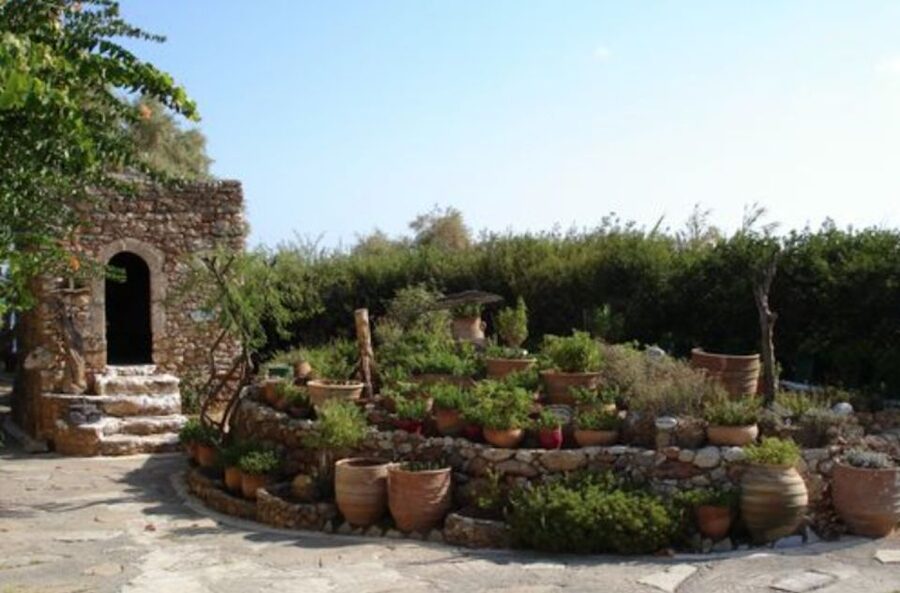
Lychnostatis is not a museum of glass cases and dusty labels. It is a reconstructed Cretan village where you can walk into a traditional home, inspect an olive press, see how raki was made, and wander among herbs, fruit trees, workshops, and old farm tools. The visit gives you a practical sense of how people lived on Crete roughly 200 years ago.
I especially like the hands-on village setting and the chance to connect ordinary objects with daily life. The raki distillery, weaving area, herb garden, and stone displays give the visit more variety than a simple house museum. The main consideration is that some written information may need attention. One Finnish visitor found the guide sheets damp and worn, so the optional audiovisual film or Greek guided tour may help if you want a clearer explanation.
Key points to know before you go
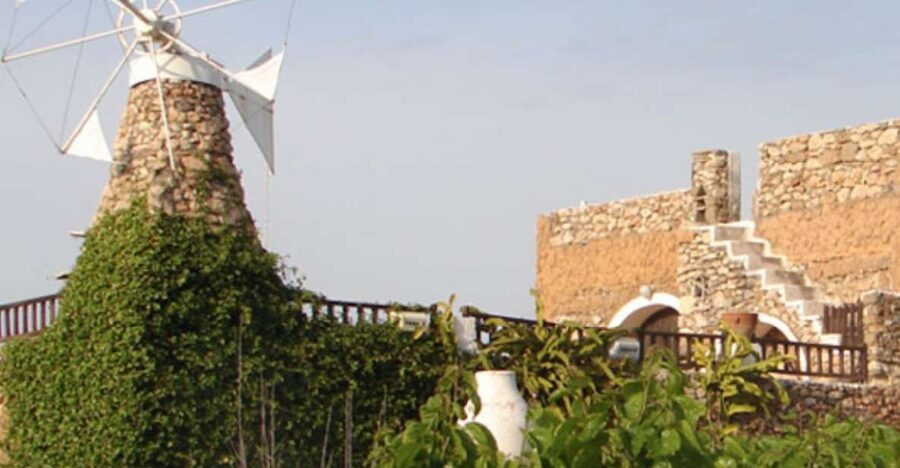
- Traditional village buildings: Enter a Cretan home, chapel, distillery, olive press, workshops, and other working spaces.
- Culture beyond architecture: Collections cover folk customs, nature, farming, crafts, minerals, books, and local food traditions.
- A taste of Crete: The café serves typical drinks and sweets, including traditional Cretan beverages.
- Flexible visit length: Your ticket is valid for one day, giving you time to explore at your own pace.
- Optional added context: Choose an audiovisual film or a private guided group tour in Greek.
- Easy arrival: Transportation is not included, but you can reach the museum by car or taxi.
A Cretan village rather than a standard museum
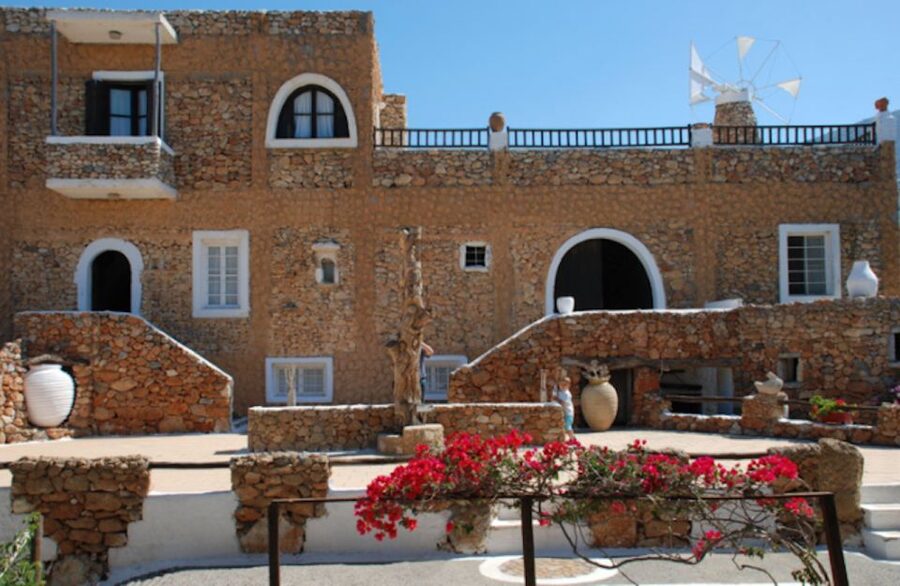
The first thing to understand is the layout. Lychnostatis Open Air Museum is designed as a village, not as one large indoor building. You move between traditional structures, gardens, workshops, collections, and small cultural spaces.
That arrangement matters. Instead of seeing a farm tool behind glass and trying to imagine its use, you see the tool in a setting that explains its purpose. A threshing floor makes more sense beside agricultural buildings. An olive oil press belongs near the story of farming. A distillery helps explain how grapes became tsikoudia, the strong local spirit also known as raki.
The museum’s themes reach across Cretan folk tradition and ethnology, Cretan nature, and the island’s everyday culture. The focus is not only on grand events or famous figures. It is on work, food, religion, clothing, craft, plants, and the routines that shaped village life.
You should allow yourself time to wander. This is not the place for a rushed twenty-minute stop. The ticket is valid for one day, so you can set your own pace and pause when something catches your attention.
More open-air museums in Greece:
- Lychnostatis Open Air Museum : Grape-Feast every Wednesday
★ 4.8 · 32 reviews - Cappadocia: Small-Group Red Tour, Open Air Museum with Lunch
★ 4.8 · 862 reviews - Full-Day Tour in Cappadocia with Open Air Museum
★ 5.0 · 87 reviews
Inside the traditional house and chapel
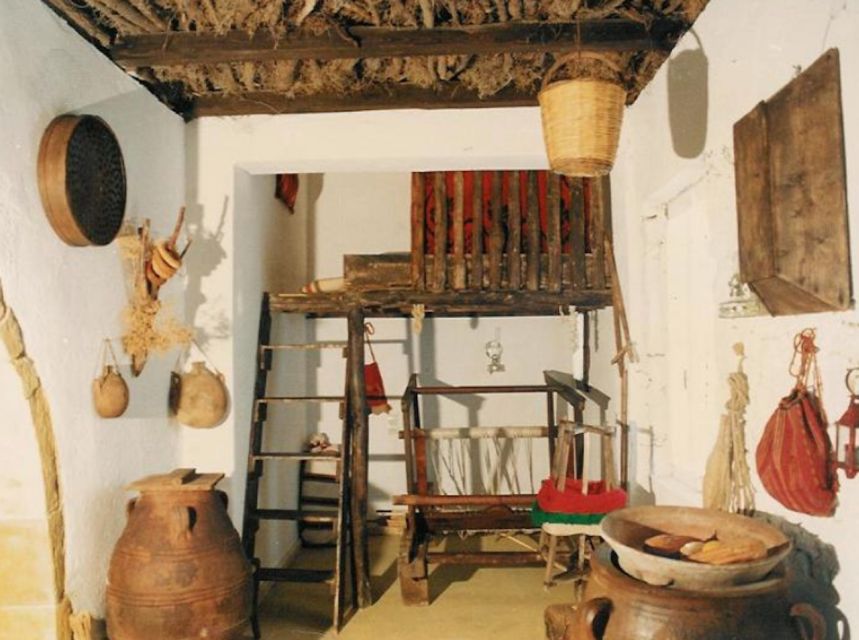
The traditional dwelling is one of the most useful stops for understanding old Cretan life. You can enter the house and look at the interior rather than only viewing an exterior facade. That change in scale helps you think about how families organized daily work, storage, cooking, and rest.
The museum is trying to show a whole way of life. That includes the practical details that are easy to overlook in a conventional history museum. Old tools and domestic objects tell you about the work required to produce food, maintain a home, and make useful items by hand.
The chapel adds another part of village life. It shows that religious spaces were not separate from the community’s daily rhythm. Along with the house, it helps place family life, farming, and local tradition in the same setting.
The buildings are also helpful for visitors who want a break from beaches and resort streets. You are still close to the major holiday area of Crete, but the subject changes from modern tourism to local customs and older ways of working.
Olive oil, raki, and the work behind Cretan food
The olive oil press and tsikoudia distillery are among the most memorable stops because they connect the museum to food and drink you may encounter elsewhere in Crete.
At the press, you can consider the labor behind olive oil, one of the basic ingredients of Cretan cooking. The display gives a physical sense of production, from harvested olives to the oil used in homes and kitchens.
The distillery explains the setting behind raki, or tsikoudia. This is a traditional Cretan drink, and the museum gives you a chance to see where that part of local culture fits into village life. The café can make this section more enjoyable at the end of your visit, since you can stop for a typical drink or sweet.
Food and drink are not included in the $10 admission, so plan to pay separately at the café. That is a small extra cost, but it can be worthwhile if you want to finish with something local rather than simply walking back to your car or taxi.
The museum does not promise a full food tour, so you should not book it expecting a meal or a tasting menu. Its value is in showing the tools, places, and traditions behind Cretan food culture.
Workshops that explain everyday skills
The workshop area gives the museum much of its character. You can see spaces devoted to ceramics, weaving, plant dyeing, bees and wax, shoe-making, carpentry, and other traditional skills.
I like this part because it keeps the visit grounded. Folk culture can feel vague when it is presented only through costumes or decorative objects. A loom, workbench, shoe-making area, or wax display shows the time and skill needed to make useful goods.
The ceramic shop and Cretan folk artists’ gallery add a more finished side to the story. Here, the focus shifts from household production to objects made for display or sale. The souvenir shop is also on site, giving you a chance to browse after seeing how some traditional crafts fit into local culture.
Do not expect every workshop to operate like a modern demonstration class. The supplied information describes the spaces and collections, but it does not promise hands-on participation or live craft production at every stop. Think of this as a place to inspect, compare, and understand the crafts rather than a guaranteed workshop where you make something yourself.
A few more museum visits around Greece worth comparing
- Athens All Included: Acropolis and Museum Guided Tour with Ticket
★ 4.5 · 2,673 reviews - Athens: Acropolis Museum Ticket with optional Audio Guide
★ 4.4 · 2,652 reviews - Athens: National Archaeological Museum Ticket & Audio Guide
★ 4.3 · 1,330 reviews - Athens: Acropolis Museum Ticket with Audio Guide
★ 4.1 · 835 reviews
Gardens, herbs, minerals, and the natural side of Crete
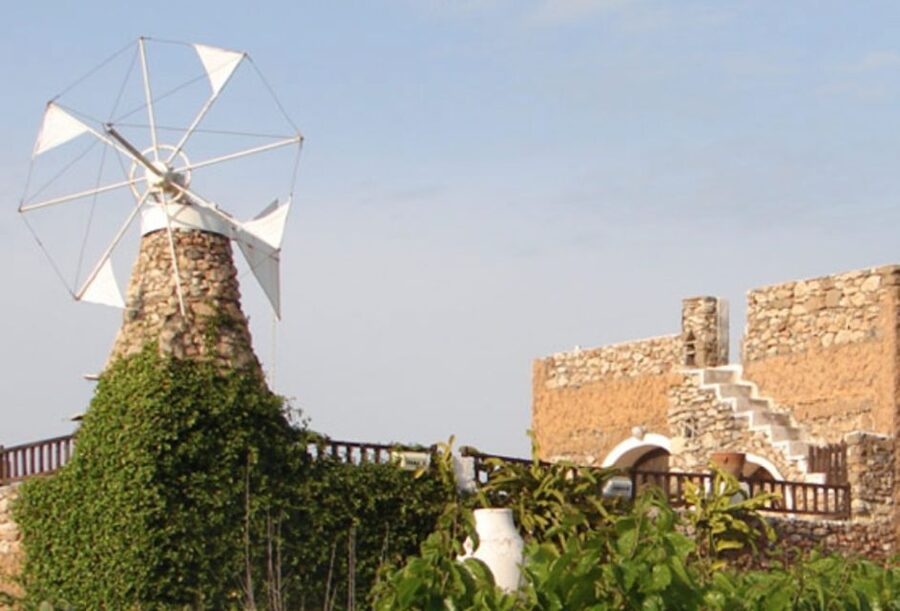
Lychnostatis also looks at the natural world that supports Cretan life. The grounds include a herbarium, Cretan fruit garden, herb garden, and an exhibition of minerals and stones.
The gardens are more than decoration. Herbs and fruit connect directly to cooking, medicine, farming, and household knowledge. The herbarium adds a more organized study of plants, while the mineral and stone exhibition shows another part of the island’s natural setting.
This section gives the visit a welcome change of pace. After looking at tools and buildings, you can move outdoors among plants and open spaces. If you are visiting in strong summer heat, the outdoor setting may also feel easier than a crowded indoor collection, though you should still plan your own pace and breaks.
The museum’s nature displays are best for people who want to understand how Cretan culture developed in its surroundings. You are not only looking at what people made. You are also seeing the plants, stone, and agricultural resources that shaped what they could make and eat.
The library, auditorium, and cultural program
The library is stocked with Cretan books and periodicals. It may appeal most to visitors who want more than a quick visual tour, especially if you have a strong interest in local customs, folk studies, or the island’s written culture.
The museum also has a 100-seat auditorium for audiovisual shows, seminars, and related programs. A 250-seat open-air theater hosts cultural and artistic events. These spaces show that Lychnostatis is intended to support ongoing cultural activity, not only display old objects.
There is also a temporary exhibitions hall. Because temporary displays can change, you should treat it as an extra rather than plan your entire visit around a particular exhibition unless the current program has been confirmed.
If you select the audiovisual film, it can add structure to the visit. This may be useful if you prefer a clear introduction before exploring on your own. The other option is a private guided group tour, led in Greek. Since the available language is Greek, international visitors should confirm that this suits their needs before choosing the guided option.
How much time should you set aside?
The ticket is valid for one day, but no fixed visit length is stated. That flexibility is useful because the museum has many separate areas rather than one short route.
A quick visit could focus on the traditional house, chapel, olive press, distillery, and a few workshops. A slower visit would add the gardens, library, exhibitions, cultural spaces, café, and shop.
I would not treat the one-day validity as a reason to spend the whole day on site automatically. Instead, use it to avoid pressure. You can take time with the displays, stop for a drink, and revisit an area without feeling that you must hurry through every building.
The museum is wheelchair accessible, which is important for visitors who need step-free access. Still, the site includes multiple outdoor areas and separate buildings, so anyone with specific mobility needs should confirm the practical route before arrival.
Is the $10 ticket good value?
At about $10 per person, the basic ticket is reasonably priced for a cultural stop with a full day of validity. You are paying for access to a broad collection of buildings, workshops, gardens, exhibitions, and cultural spaces rather than a single room.
The value is strongest if you enjoy self-guided visits. You can explore freely without paying for transportation or committing to a long organized excursion. The ticket does not include food, drinks, or transport, so add those costs to your plan.
The audiovisual film or private guided group tour may be worth the extra cost if you want help putting the displays together. The basic ticket is enough for an independent visit, but the museum covers many subjects, and added interpretation could help you understand the links between the buildings, crafts, plants, and customs.
Skip-the-ticket-line access is included, which can save a little time at the entrance. It does not mean the museum is a timed, tightly managed attraction. The main benefit is a smoother start.
Getting there and planning the visit
The meeting point is the museum itself. Transportation is not included, so you need to arrive by car or taxi.
That makes this experience easiest to add to a day when you already have access to a vehicle or are staying close enough to take a taxi. It is not presented as a hotel pickup excursion, and you should not expect transport to be arranged for you.
Bring a plan for the return journey, particularly if you choose to spend time at the café or stay for a cultural program. The museum includes an open-air theater and auditorium, but the supplied details do not provide a regular event schedule.
You can reserve now and pay later, and cancellation is free up to 24 hours before the activity for a full refund. Those terms are useful if your Crete plans may shift, but they do not change the need to arrange your own ride.
Who will enjoy Lychnostatis most?
This museum suits you if you want a cultural break from resort life and prefer seeing real objects in reconstructed settings. Families can use the open-air layout to keep moving, while adults interested in folk customs, craft, food, and rural life will find plenty to examine.
It is also a good choice for anyone who wants a short, manageable introduction to Cretan tradition without joining a full-day island excursion. The $10 price keeps the commitment low.
You may be less satisfied if you want a polished, multilingual audio system, a large art collection, or a fully guided tour in English. The stated live guide language is Greek, and one visitor found some printed information worn and damp. In that case, choose the audiovisual option only after confirming its language, or treat the visit as a visual and self-guided experience.
Should you book this museum visit?
Book Lychnostatis if you want to understand Cretan life through homes, tools, plants, workshops, and food traditions rather than only through famous archaeological sites. The traditional house, olive press, raki distillery, gardens, and craft areas offer a useful range of subjects for a modest admission price.
I would choose the basic ticket for a flexible independent visit, then add the film or Greek private tour if you want more explanation. Just arrange your own car or taxi, budget separately for the café, and allow enough time to explore without rushing.
FAQ
Where is the Lychnostatis Open Air Museum?
The museum is in Crete, Greece. You start the experience at the museum itself.
How much does admission cost?
The listed price is $10 per person. Food, drinks, transportation, and any optional add-ons are not included in the basic admission.
How long is the ticket valid?
The ticket is valid for one day. You can check availability for the available starting times.
Can I visit without transportation provided?
Yes. Transportation is not included, but you can reach the museum by car or taxi.
Is there a skip-the-line entry option?
Yes. Skip-the-ticket-line access is included.
What can I see at the museum?
You can see traditional dwellings, a chapel, an olive oil press, a tsikoudia distillery, a threshing floor, craft workshops, gardens, a herbarium, mineral and stone displays, a library, exhibition areas, a café, and a souvenir shop.
Can I add a film or guided tour?
Yes. You can choose an audiovisual film or a private guided group tour as an add-on.
What language is the live tour guide?
The live tour guide option is in Greek.
Is the museum wheelchair accessible?
Yes. The activity is listed as wheelchair accessible.
Just added around Greece
- Ancient Athens tour: Acropolis, Parthenon and Acropolis Museum★ 5.0 · 256 reviews
- The Acropolis, Athens Walking City Tour and Acropolis Museum★ 5.0 · 442 reviews
- Acropolis of Athens, Parthenon and Acropolis Museum private tour with dinner★ 5.0 · 77 reviews
- Athens: Acropolis Museum Ticket with Self-Guided Audio tour App★ 3.5 · 40 reviews
- Family Acropolis & Acropolis Museum Tour inspiredby Percy Jackson★ 4.5 · 40 reviews
- Shore Excursion: Acropolis, Athens City tour and The New Acropolis Museum★ 4.5 · 30 reviews
- Athens National Archaeological Museum E-Ticket with Audio Guide★ 3.0 · 57 reviews
- Private Tour: Half day Athens Sightseeing and Acropolis Museum★ 4.5 · 28 reviews
Museum Tours in Greece, compared.
Acropolis, Parthenon & Acropolis Museum Guided Tour
Read our review →
The Acropolis, Parthenon & Acropolis Museum Guided Tour
Read our review →Acropolis, Parthenon & Acropolis Museum Guided Tour
Read our review →
Acropolis monuments & Parthenon Walking Tour with Optional Acropolis Museum
Read our review →
Athens All Included: Acropolis and Museum Guided Tour with Ticket
Read our review →
Combo: Acropolis & Acropolis Museum with Optional Tours
Read our review →
Acropolis Museum Ticket with optional Audio Guide
Read our review →
Small-Group Delphi, Museum & Arachova Day Trip
Read our review →Browse the lists this tour appears in