
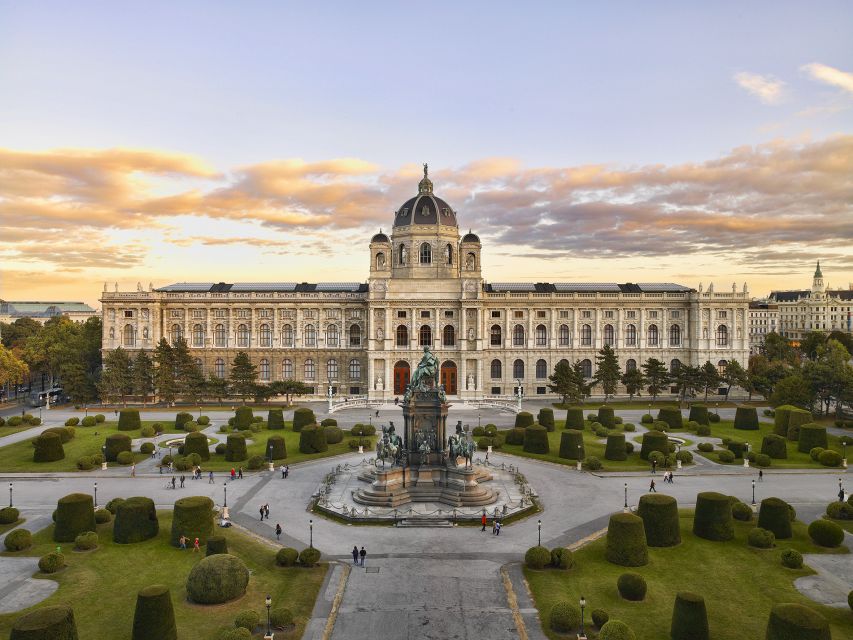
Review · VIENNA
Vienna Kunsthistorisches Museum Day Admission Ticket
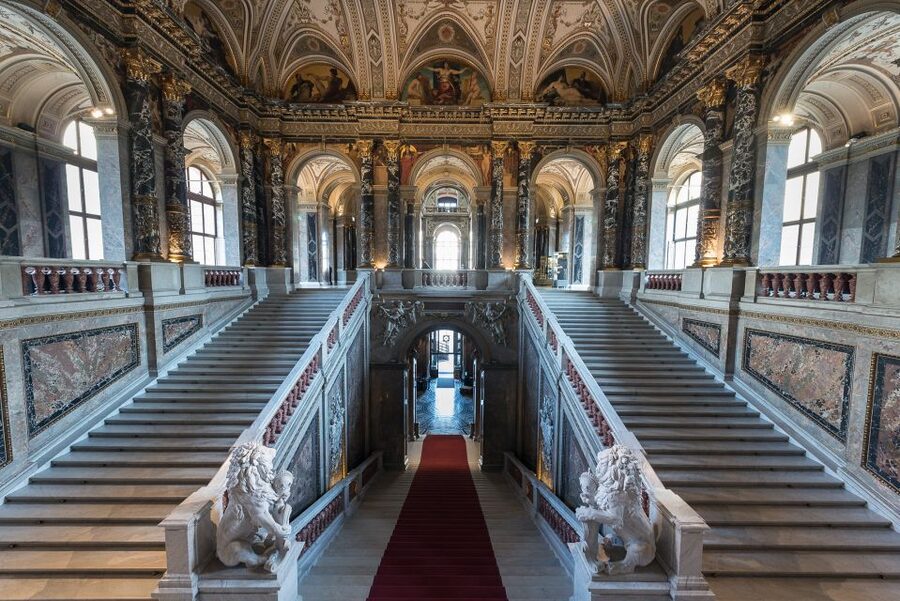
The Kunsthistorisches Museum is the kind of place where the building competes with the collection. You enter beneath a grand staircase decorated with paintings made with Gustav Klimt’s help, then move from Egyptian artifacts and Roman antiquities to Rubens, Rembrandt, Raphael, Vermeer, Velázquez, Titian, and Dürer. I like the sheer range, and I like that the imperial collections are displayed in rooms that feel worthy of them.
I also like the chance to see fine objects beyond paintings, including Benvenuto Cellini’s goldsmith work, ivory sculpture, imperial jewelry, and legendary treasures linked with the Holy Grail and the unicorn. The main drawback is scale: two hours gives you a good taste, but four to five hours is more realistic if you want to see the major galleries without rushing.
Key points at a glance
- Klimt’s painted staircase: The museum itself begins the visit, with an imposing entrance and staircase decorated with paintings created with Gustav Klimt’s collaboration.
- Old Masters in depth: Rubens, Rembrandt, Raphael, Vermeer, Velázquez, Titian, and Dürer anchor the Picture Gallery.
- Ancient worlds under one roof: Egyptian, Greek, and Roman collections make this more than a painting museum.
- The Kunstkammer’s small treasures: Look for Cellini’s goldsmith work, carved ivory, sculpture, automata, jewels, and unusual imperial objects.
- A long visit, not a quick stop: Plan at least two hours, and four to five hours if you want a serious look at the collection.
- One practical ticket wrinkle: Printed vouchers must be exchanged for an actual admission ticket at the museum’s voucher or group ticket office.
Why this museum deserves a place on your Vienna list
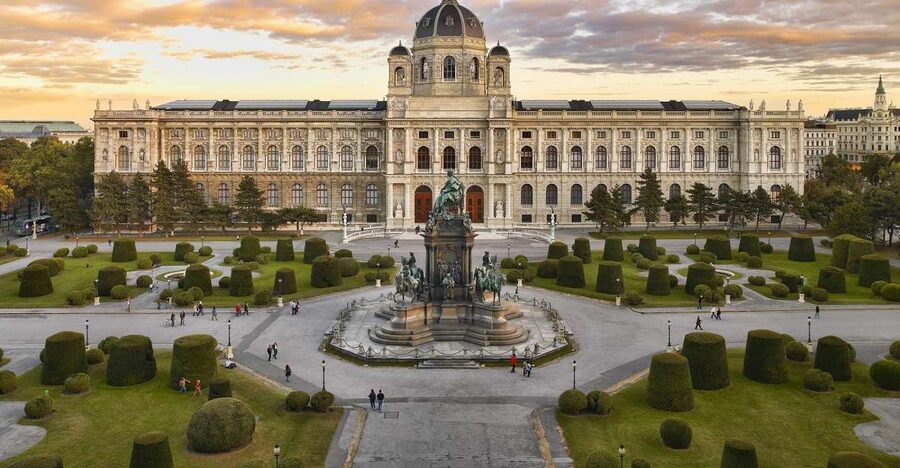
Vienna has no shortage of grand museums, but the Kunsthistorisches Museum offers an unusually broad sweep in one building. Emperor Franz Joseph built it to house the imperial collections, and that original purpose still shapes the experience. You are not simply walking through a sequence of unrelated exhibitions. You are seeing the objects once gathered for the Habsburg court, from ancient remains and ceremonial pieces to paintings collected across Europe.
I like this kind of museum because it rewards different moods. You can come for Raphael and Rembrandt, spend an hour in the Egyptian galleries, or focus on small objects that reward close looking. If paintings are not your main interest, the antiquities and Kunstkammer keep the visit from feeling repetitive.
The museum is also a good choice on a hot or rainy day. One visitor found the building comfortable even when Vienna reached 33 degrees Celsius outside, and the galleries provide a cool indoor change from the city streets. The size can tire you out, though, so avoid treating it as a quick filler between other attractions.
More Museum Tours in Vienna
- Vienna: Skip-the-Line Sisi Museum, Hofburg and Gardens Tour
★ 4.8 · 5,918 reviews - Tickets for the Albertina Exhibitions
★ 4.7 · 2,126 reviews - Sigmund Freud Museum Ticket
★ 4.6 · 1,668 reviews
Start with the building before the art
Give yourself a few minutes before heading straight for the galleries. The interior is part of the admission, not just a container for the exhibits.
The grand staircase is the obvious starting point. Paintings made with Gustav Klimt’s collaboration decorate the approach, and the architecture sets the tone for the rest of the visit. You may find yourself looking upward as much as forward. The effect is formal and theatrical, but it also gives you a sense of the museum’s imperial purpose.
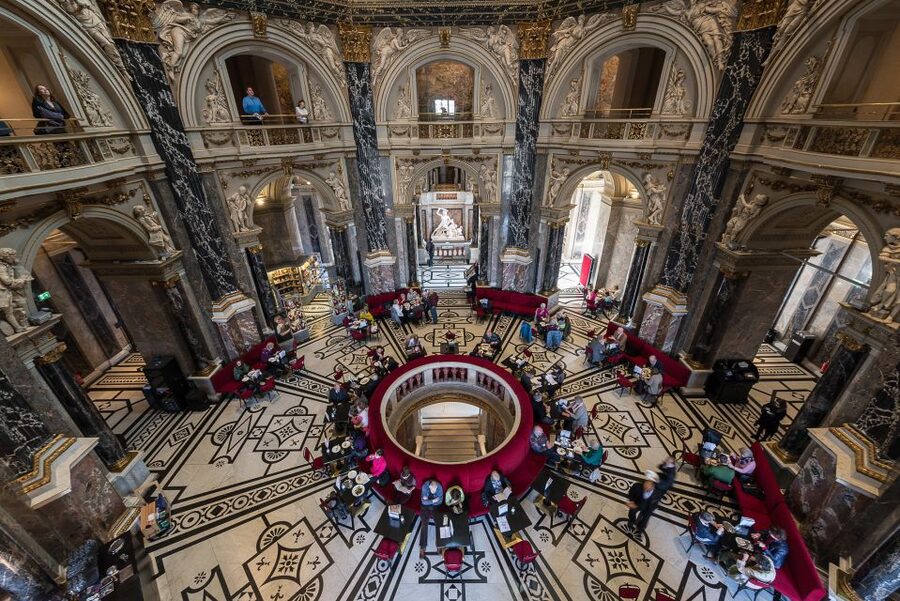
The building’s beauty is one of the most praised parts of the experience. Even people who are selective about the collection often find the interior worth seeing on its own. I would not rush past the entrance simply because you are eager to reach the Picture Gallery.
A café inside the museum adds another useful pause. It is known for its elaborate decor, and it gives you a chance to rest in surroundings that feel more special than a standard museum canteen. Prices are on the high side, comparable to a London museum café, so consider it a treat rather than a budget meal.
The Picture Gallery and its famous names
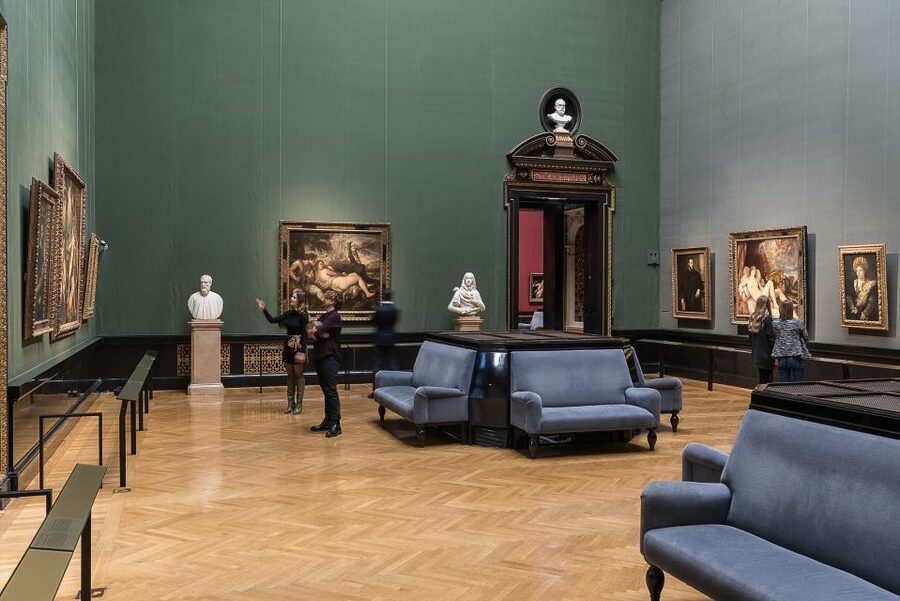
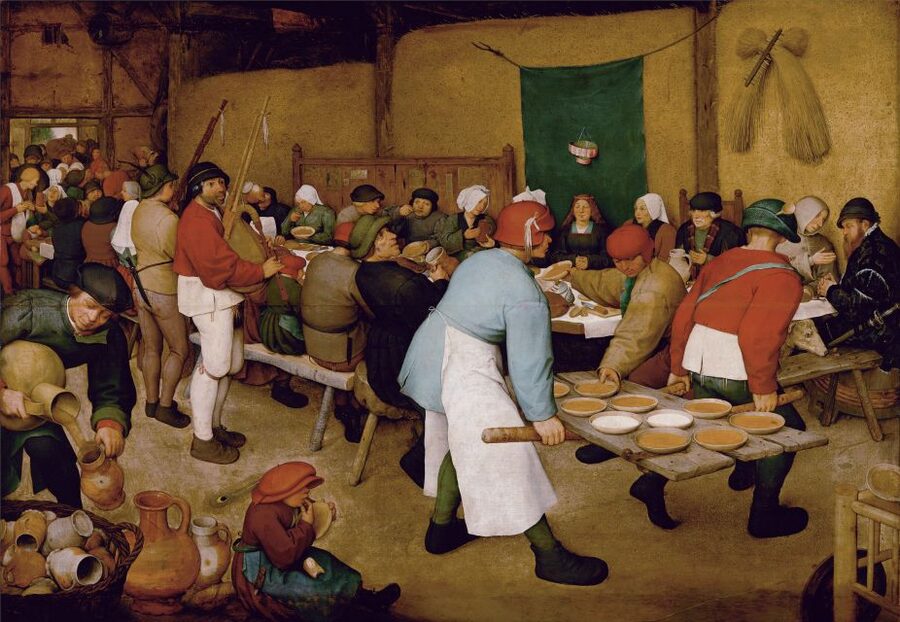
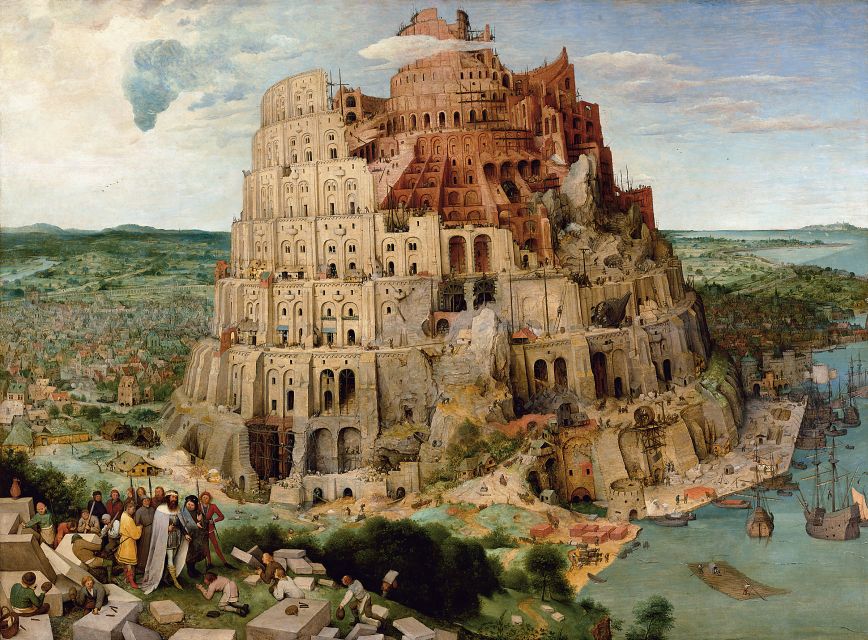
The Picture Gallery is the main draw for many visitors. Its strength is not one isolated masterpiece, but the chance to see major European painters represented in the same visit.
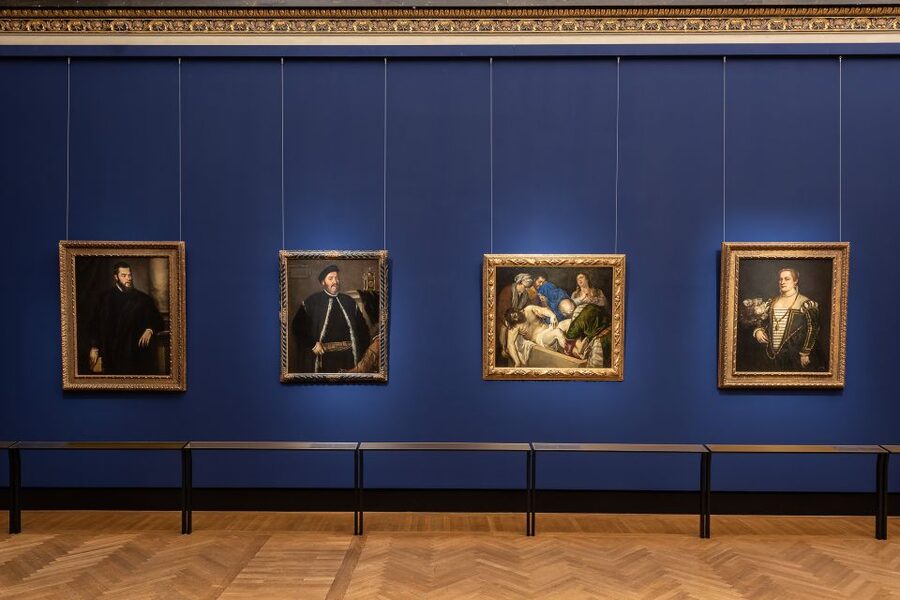
Rubens receives especially strong attention. His large-scale works have the drama and movement you expect, and the Rubens section alone can occupy a good part of your morning. Rembrandt offers a different mood, with a more restrained and psychologically focused approach. A dedicated Rembrandt exhibition has also been praised for its educational value, so check what is on display when you visit.
Raphael is another essential stop. One particularly pleasant feature is that seating is available near at least some major works, allowing you to sit and look rather than shuffle past with the crowd. That matters here. The collection is large enough that the best experience comes from choosing a few pictures and giving them time.
You will also find Vermeer, Velázquez, Titian, and Dürer. Each name could justify a separate museum visit, but here they form part of a much larger route. Velázquez brings the courtly Spanish tradition into the mix, while Titian represents the Venetian color and grandeur that shaped later European painting. Dürer adds a northern European precision that feels very different from the broad theatrical style of Rubens.
The room arrangement makes it possible to compare artists and periods, but it can also create overload. I suggest choosing three or four painters before you arrive. You can then add discoveries along the way instead of trying to absorb every label and every canvas.
Ancient Egypt, Greece, and Rome
The ancient collections give the visit a second center of gravity. Egyptian objects, Greek material, and Roman antiquities carry the story far beyond the era of the Picture Gallery.
The Egyptian exhibition is a particular favorite for many people, and it is an excellent first choice if you want more than European painting. You might find tomb-related objects, sculpture, and artifacts that feel very different from the ornate rooms upstairs. Pay attention to distance rules around fragile pieces. One visitor had an unpleasant encounter with a security guard after getting too close to an Egyptian tomb, even without touching it. The lesson is simple: keep behind barriers and follow staff instructions carefully.
Roman antiquities are another strong area. The collection helps explain how the imperial holdings extended across cultures and centuries. If you enjoy objects with a direct connection to daily life, religion, power, and burial customs, allow more time here than the headline list of painters might suggest.
This section is also useful for families because it changes the pace. After several rooms of framed paintings, the sculptures, vessels, and archaeological objects offer a different way to look at the past. Children under 19 generally enter free, making the museum a more attractive family option than the adult ticket price alone suggests.
A few more museum visits around Austria worth comparing
- Vienna: St. Stephen’s Cathedral & Dom Museum Wien Tickets
★ 4.5 · 1,652 reviews - Vienna: Museum of Illusions Vienna Admission Ticket
★ 4.0 · 1,392 reviews - Vienna: Leopold Museum Skip-the-Line Entry Ticket
★ 4.7 · 968 reviews - Combo Ticket: Kunsthistorisches Museum & Imperial Treasury
★ 4.7 · 785 reviews
The Kunstkammer and the art of small things
The Kunstkammer is where the museum’s collecting culture becomes especially clear. This is the place to slow down and examine objects made for courts, wealthy patrons, and collectors who valued rare materials and remarkable technique.
Benvenuto Cellini’s goldsmith work is a major highlight. Gold objects can be easy to dismiss as decoration, but here the craftsmanship is the point. Look at how the material has been shaped, detailed, and turned into a display of status and skill.
The collection also includes sculpture and delicate ivory work by leading artists of the period. These pieces reward close viewing more than a quick walk through. You may need to step nearer, then back away, to see how the surface, texture, and scale work together.
The Kunstkammer includes jewels and diamonds, including parts of jewelry connected with Empress Elisabeth. These objects add a personal and royal dimension to the collection. Instead of only seeing grand portraits of rulers, you get a sense of the objects associated with their public image and private world.
Some of the most memorable pieces are also the strangest. The museum presents legendary treasures such as objects associated with the Holy Grail and the horn of the unicorn. The value here is not that every old claim should be taken literally. It is that these objects show how earlier collectors understood rarity, belief, science, and wonder.
Automata are another appealing feature. The display includes mechanical objects, though you should not assume that every piece will be demonstrated in motion. If moving mechanisms interest you, check what is operating on the day of your visit and allow time to study the construction.
How much time should you allow?
Two hours is enough for a brisk introduction. You can see the building, sample the Picture Gallery, and visit one or two other departments. It is a sensible plan if you have a packed Vienna schedule.
Three and a half hours gives you a better balance. You can focus on the major painters, spend real time with Egyptian and Roman objects, and visit the Kunstkammer without turning the whole visit into a march.
Four to five hours is the better target if the museum is one of your main stops. Several people have spent about four and a half hours inside, and one determined visitor stayed from opening almost to closing without seeing everything. That tells you what kind of admission this is: flexible enough for a full day, but too large to conquer casually.
I would not plan another demanding museum immediately afterward. The building involves plenty of walking and some steps, and the visual concentration adds up. Take a café break, sit near a favorite painting, and accept that you will leave some rooms for another visit.
Audio guide or self-guided visit?
The admission ticket does not include an audio guide. You can add one at the museum for €5, or two for €7. The device provides information about the building and selected paintings, helping you notice details you might otherwise pass.
I consider it a good extra for a first visit, particularly if you do not already know much about Renaissance or Baroque art. It can also give structure to a large collection. Instead of wandering without a plan, you follow a sequence of important works and then explore at your own pace.
The audio guide will not explain every object in every room, so it is not a substitute for reading labels or deciding what interests you. If you prefer quiet looking, skip it and use the museum’s written information. If you want context without joining a guided tour, the small additional charge is reasonable.
No named live guide is included with this experience. It is an admission ticket for independent exploration, not a guided walk led by a historian.
Ticket exchange and arrival advice
The museum is at Maria-Theresien-Platz in Vienna’s 1010 district. The meeting point listed for the experience is Kunsthistorisches Museum Wien.
Bring the required printed voucher. The online voucher must be exchanged for the actual admission ticket at the museum’s voucher or group ticket office before you enter. This is the main practical trap. If you go straight to the entrance, staff may send you back, costing you time in the queue.
Look for the voucher container or group ticket office outside the museum and confirm the exchange point before joining an entry line. Booking ahead can save money compared with buying on the day, but the saving is less useful if you lose 30 minutes because the exchange step was unclear.
The ticket is valid for one day, and availability should be checked for the available starting times. The activity is wheelchair accessible. The small-group designation is limited to 10 participants, but remember that this is still a self-guided museum admission rather than a small-group tour with a guide.
Children and young people under 19 generally enter free. School groups under 19 must be registered through the museum’s booking department at [email protected] without exception. Adult group leaders should also check the rules: one guide may receive free admission for groups of more than 10 people, while guides with smaller groups are charged as paying participants. State-certified tourist guides generally enter free.
Is the $25 ticket good value?
At $25 per person, the ticket is good value if you plan to spend at least three hours inside. You are paying for access to a major Picture Gallery, Egyptian and classical collections, the Kunstkammer, imperial objects, and an ornate building that is itself part of the experience.
The value drops if you only have 60 to 90 minutes. In that case, the museum’s scale works against you. You will see a few famous works, but you will spend part of your visit orienting yourself and walking between departments.
The optional audio guide adds a small cost, but it may be worth it for a first visit. The café is useful, though you should budget separately for food and drinks. The admission does not include the audio guide or café purchases.
Free admission for most visitors under 19 changes the calculation for families. Adults who love art, architecture, history, or decorative objects can easily justify the price, especially compared with buying several separate museum tickets across Vienna.
Who will enjoy this most?
I would book this for anyone who wants one museum visit to cover many periods and styles. It suits art lovers who want Rubens, Rembrandt, Raphael, Vermeer, Velázquez, Titian, and Dürer, but it also works for people more interested in Egyptian pieces, Roman antiquities, jewels, ivory, and unusual treasures.
Families can do well here if they set a clear target instead of attempting every room. Pick the Egyptian galleries, a few famous paintings, and the Kunstkammer. The free admission policy for children and young people under 19 helps.
It is less suitable if you dislike grand interiors, long walks, or museums that require choices. The size is a real drawback for anyone hoping for a quick highlight reel. Visitors with limited stamina should plan regular rests and use the café as a proper break, not an afterthought.
Should you book the Kunsthistorisches Museum ticket?
Yes, if you can give it several hours and remember to exchange the printed voucher before entering. The collection is unusually broad, the building is memorable, and $25 buys access to far more than a single gallery of famous paintings.
I would book it as a half-day visit, add the audio guide if you want more background, and choose a short list of priorities before you arrive. If your time is tight, focus on the Klimt staircase, the Picture Gallery, and either the Egyptian collection or Kunstkammer. If you have most of a day, let yourself wander. That is when the museum’s less famous objects begin to make the strongest impression.
FAQ
Where is the Kunsthistorisches Museum located?
The museum is at Maria-Theresien-Platz, 1010 Vienna, Austria.
How long is the admission ticket valid?
The ticket is valid for one day. Check availability for the applicable starting times when booking.
Is an audio guide included?
No. An audio guide can be purchased at the museum for €5 each, or two for €7.
Do children enter free?
Children and young people under the age of 19 generally receive free admission. School groups under 19 must be registered through the museum’s booking department at [email protected].
Is the museum wheelchair accessible?
Yes, the museum is wheelchair accessible.
Do I need to exchange my voucher before entering?
Yes. A printed voucher is required, and the voucher must be exchanged for the actual admission ticket at the museum’s voucher or group ticket office before entry.
Just added around Austria
- Vienna: Jewish Museum Vienna and Museum Judenplatz Tickets★ 4.5 · 170 reviews
- Salzburg: Stiegl Brewery Museum Entry Ticket & Beer Tasting★ 4.0 · 35 reviews
- Belvedere Palace & Museum Tour★ 4.5 · 18 reviews
- Vienna: Tickets for Kunst Haus Wien: Museum Hundertwasser★ 4.6 · 651 reviews
- Combo Ticket: Kunsthistorisches Museum & Imperial Treasury★ 4.7 · 785 reviews
- Vienna: Skip-the-Line Hofburg and Empress Sisi Museum Tour★ 4.8 · 801 reviews
- Vienna: Leopold Museum Skip-the-Line Entry Ticket★ 4.7 · 968 reviews
- Vienna: Hofburg and Empress Sisi Museum Guided Tour★ 4.7 · 1,460 reviews
Museum Tours in Vienna, compared.

Skip-the-Line Sisi Museum, Hofburg and Gardens Tour
Read our review →
St. Stephen’s Cathedral & Dom Museum Wien Tickets
Read our review →
Skip-the-Line Hofburg and Empress Sisi Museum Tour
Read our review →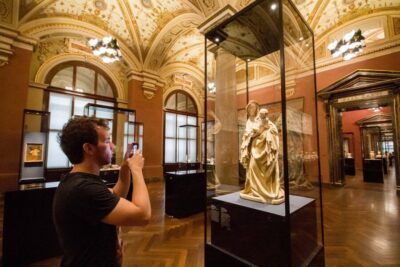
Combo Ticket: Kunsthistorisches Museum & Imperial Treasury
Read our review →
Tickets for Kunst Haus Wien: Museum Hundertwasser
Read our review →Browse the lists this tour appears in