

Review · ISTANBUL
Istanbul Archaeological Museums Entry Ticket & Audio Guide
Istanbul’s Archaeological Museums put several thousand years of art and empire in one stop, from Greek sculpture and Egyptian objects to Mesopotamian finds and early Ottoman work. The Alexander Sarcophagus, Crying Women Tomb, and Statue of Hermes give you plenty of major pieces to seek out.
I like the 25-language audio guide, especially if you want context without joining a group. I also like the digital QR entry, which can save you the ticket-buying queue. The main catch is that it does not remove the security check, and the audio system and QR codes may need a little patience.
- Alexander Sarcophagus: One of the museum’s major ancient treasures and an essential stop on your route.
- Fourteen audio languages: Options include English, Turkish, Japanese, Arabic, French, German, Spanish, and more.
- Three distinct museum experiences: See the main Archaeological Museums, Old Eastern Works Museum, and Enameled Kiosk Museum.
- Gulhane access: The T1 tram stops at Gulhane, followed by an easy five to ten minute walk.
- Independent pace: This is an entry ticket with audio commentary, not a live guided tour.
- Passport check required: Bring valid passports for every person, including children, for age validation.
Three Museums, One Archaeological Story

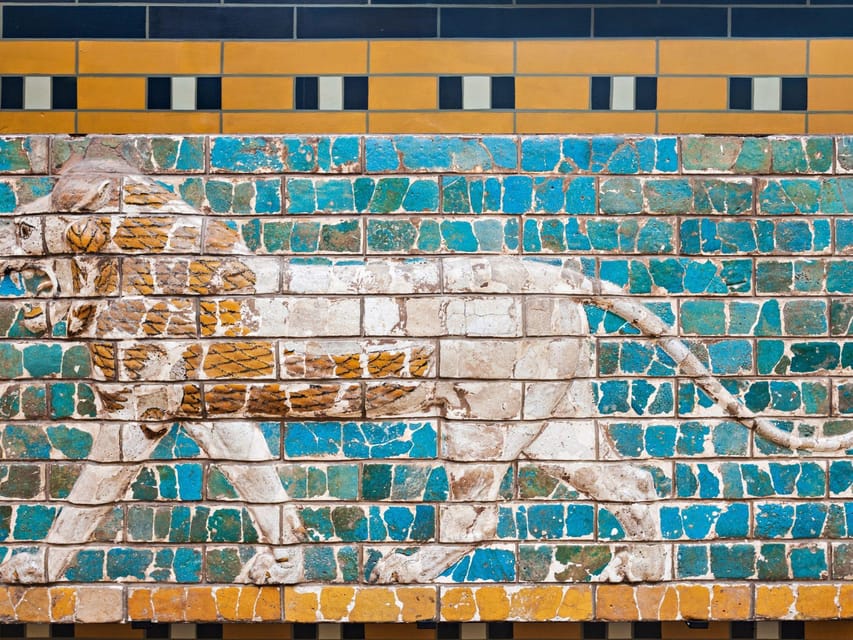
The Istanbul Archaeological Museums are not a single-room collection that you can rush through between major sights. They bring together ancient art and objects from Greece, Egypt, Mesopotamia, Anatolia, Arabia, and other cultures connected with the lands around Istanbul.
That range is the chief reason to come. You are not looking at one narrow slice of antiquity. Instead, you can compare monumental sculpture with small carved objects, funeral art with everyday pieces, and ancient material with early Ottoman decoration.
The experience is self-guided. You receive a QR entry ticket and an audio guide link by separate email from Istanbul Tourist Pass®. There is no guide leading a group from room to room, so you decide how long to spend with a sarcophagus, statue, carving, or display case.
That freedom suits me. You can listen closely to the objects that catch your eye and move quickly past material that feels less relevant to you. If you want a fixed story, a guide’s personal interpretation, or a group walking tour, this is not that kind of experience.
Getting There from Gulhane Station

The simplest route is the T1 Bağcılar to Kabataş tram. Get off at Gulhane station, then walk for about five to ten minutes to the museum.
This is useful if you are already exploring Sultanahmet and the old imperial center. The tram stop gives you a clear starting point, and the walk is short enough to fit into a day of sightseeing. Transportation is not included in the ticket, so you will need to pay your own tram fare.
Plan your arrival with your phone ready. The QR tickets are shown only when you are near the museum entrance, and you need an internet connection to retrieve them. Do not assume that a saved booking confirmation alone will get you through the door.
You will receive the entry QR codes and audio guide link in separate emails. Check both before leaving your hotel or apartment, and make sure every person in your party has the required passport available.
More Museum Tours in Istanbul
- Istanbul: Hagia Sophia Skip-the-Line Ticket & Museum Option
★ 3.7 · 4,958 reviews - Istanbul: Hodjapasha Whirling Dervishes Show & Exhibition
★ 4.4 · 4,790 reviews - Istanbul: Topkapi Palace & Harem Museum Ticket & Audio Guide
★ 4.1 · 3,977 reviews
What the QR Ticket Really Saves You
The digital ticket is designed to skip the ordinary ticket line. That can be useful at a busy city museum, particularly when you want to spend your limited morning or afternoon inside rather than waiting at a counter.
There is an important limit. You cannot skip the mandatory security line. Every person must pass through security, and there may still be a queue at the entrance.
The QR system is not always foolproof. A booking in February 2026 had a scanning problem that required help from the supplier. That does not mean your ticket will fail, but it is a good reason to arrive with the supplier email open, your internet connection working, and enough time to sort out a technical issue if one appears.
The ticket also requires passport checks for all people and children. Staff use valid passports to confirm age, so bring the original documents rather than relying only on a photograph or copy.
Following the Main Archaeological Collection

Start with the main archaeological displays and give yourself time to adjust to the scale. The collection covers artifacts from several major ancient cultures, so the appeal is not just one famous statue. You are building a picture of how people worshipped, buried their dead, recorded events, decorated objects, and made images of gods and rulers.
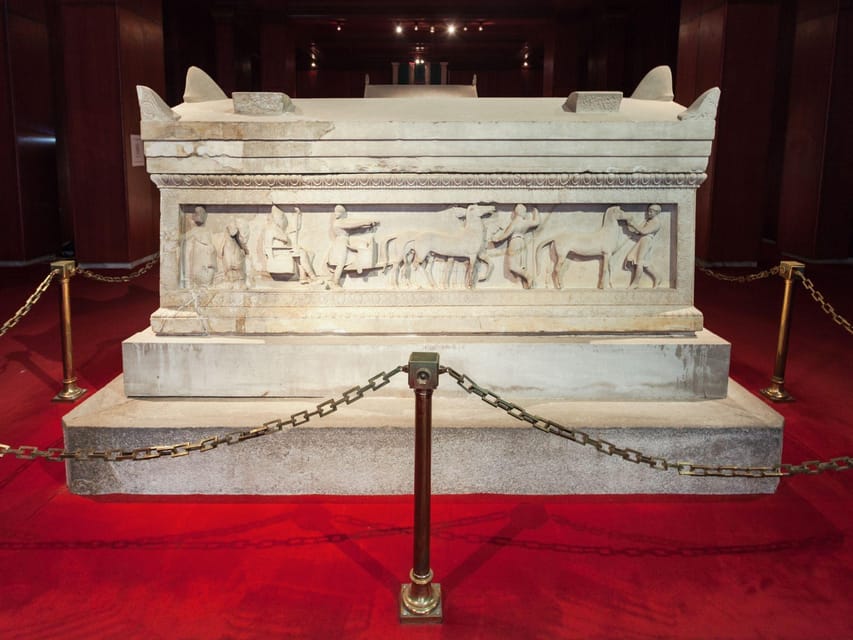
The Alexander Sarcophagus deserves special attention. It is one of the important named works in the collection and gives you a chance to study ancient funeral art at a large scale. The name draws people in, but the carved scenes and workmanship are what make the stop worthwhile.
The Crying Women Tomb and Lykia Tomb add another angle. Tombs are valuable because they connect art with burial customs and ideas about death. As you listen to the audio commentary, consider the difference between a grand monument made for public display and the smaller objects created for personal or ritual use.
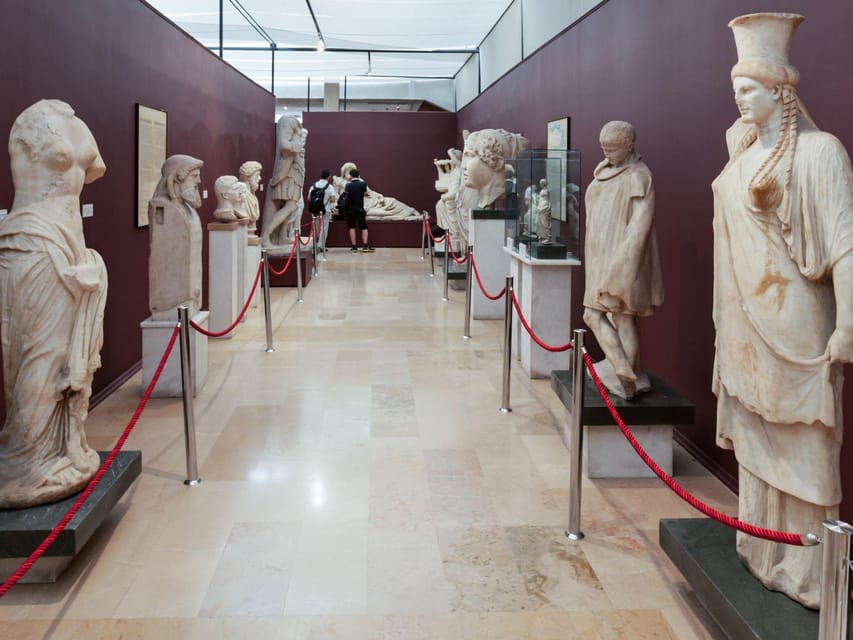
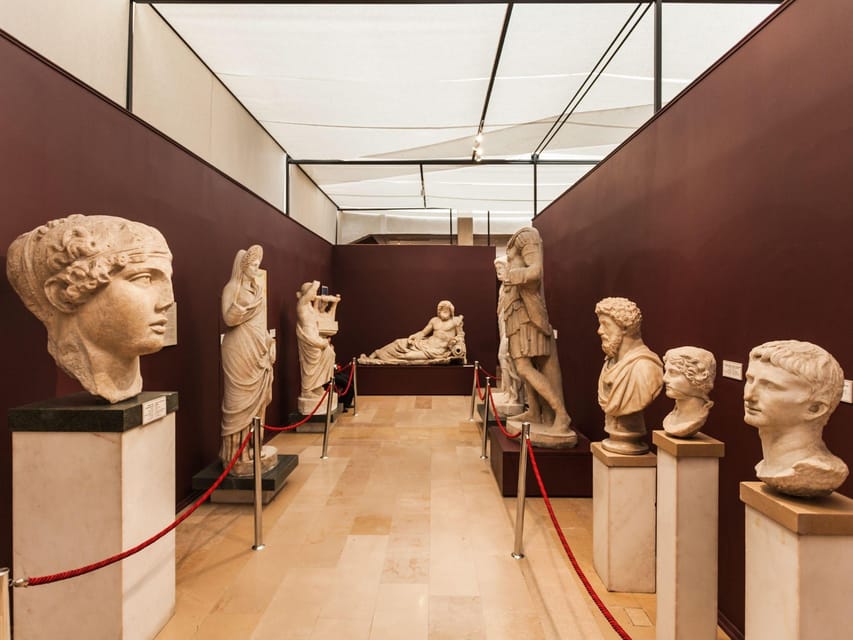
The Statue of Hermes and the Aphrodite are also listed among the collection highlights. These are the sort of works that help you understand the role of the human figure in ancient Greek art. Look for the details in posture, clothing, surface treatment, and expression rather than simply checking off famous names.
The collection includes both large-scale pieces and intricate carvings on everyday objects. That contrast matters. Monumental works show the power and wealth of rulers or religious institutions, while smaller objects can hint at ordinary habits, craft skills, and private beliefs.
The Old Eastern Works Museum
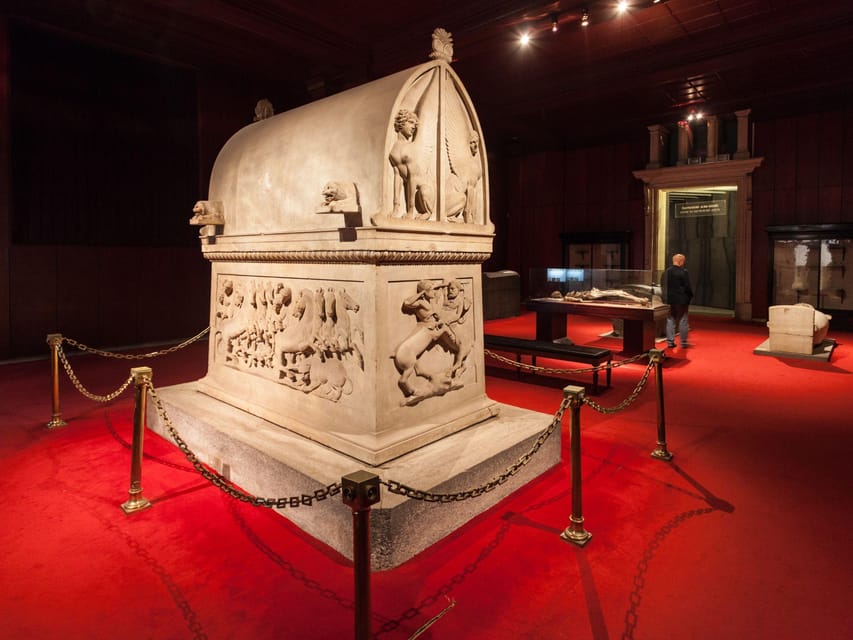
The Old Eastern Works Museum broadens the visit beyond the classical Greek world. Its displays include material from Anatolia, Mesopotamia, Egypt, and Arabia.
This section is particularly useful if you want to see how many cultures shaped the history of the region. Istanbul is often presented through its Roman, Byzantine, and Ottoman monuments, but these collections reach much further back and farther east.
Expect a varied selection rather than one single theme. The museum presents objects connected with different places and periods, so the audio guide can help you make sense of the shifts between cultures. If your interests are ancient writing, ritual, early states, or Near Eastern art, allow extra time here.
The broad range may also feel less immediately simple than a museum organized around one country or period. I suggest listening to the overview material first, then choosing displays that interest you instead of trying to absorb every object at the same speed.
More archaeological museums in Turkey:
- Istanbul: Archaeological Museums Fast-Track Entry Ticket
★ 3.5 · 76 reviews - Athens: National Archaeological Museum Ticket & Audio Guide
★ 4.3 · 1,330 reviews - Milan: Cathedral, Archeological Area and Museum Ticket
★ 4.5 · 1,093 reviews - Delphi: Archaeological Site & Museum Ticket with Audio Tours
★ 4.3 · 721 reviews
The Enameled Kiosk and Early Ottoman Art
The Enameled Kiosk Museum provides a change of mood and period. Fatih Sultan Mehmet established the building in 1472, and it presents an early Ottoman artistic setting rather than another gallery of ancient Greek or Egyptian material.
This stop is useful because it places the archaeological collections within Istanbul’s own imperial story. You can move from ancient civilizations to early Ottoman art without leaving the museum complex.
Do not treat the Enameled Kiosk as a quick add-on. Its historical value comes from the building itself as well as what it displays. The shift in decoration, period, and artistic language gives your visit a better sense of Istanbul’s long cultural timeline.
Access to some parts of the complex can change. Exterior renovation was reported in early 2026, with part of one building closed off. Check conditions when you arrive and expect that a route may not include every area described in older information.
Making the Audio Guide Work for You
The audio guide is offered in 25 languages: Arabic, Bulgarian, Chinese, Croatian, Dutch, English, French, German, Greek, Hindi, Hungarian, Indonesian, Italian, Japanese, Korean, Persian, Polish, Portuguese, Romanian, Russian, Spanish, Swedish, Turkish, Ukrainian, and Urdu.
That is a real advantage if you prefer to hear explanations in your strongest language. The Japanese option was described as clear and natural to follow, though its numbering did not always match the rooms or objects in a simple sequence.
This is not a live guide who can answer questions or adjust the route. Think of it as commentary you use when useful. The audio may explain a particular object while offering less help with the overall layout of a room.
A practical method is to read the text information first, then play the matching audio. If the number appears out of sequence, use the object name or room information rather than following the numbers blindly. You may also want to use your phone’s translation function for written material, though that requires your own data connection.
The audio guide is included, but Wi-Fi access at the museum is not. Downloading or opening the link before arrival may save you trouble, but the QR tickets themselves require internet access near the entrance.
How Long You Need Inside
The ticket is valid for one day, with starting times based on availability. You can explore at your own pace rather than follow a fixed timed route.
The full complex may reward a slower visit, especially if ancient art is a major interest. At the same time, one early 2026 experience found that the visit did not take very long. That is a useful warning if you are paying $25 and expect an all-day attraction with constant commentary.
Your time inside depends on how closely you study objects and how much of the audio you hear. A focused visit can cover the major named works and the main collections without taking an entire day. A slower visit gives you room for the Old Eastern Works Museum, the Enameled Kiosk, tomb displays, and smaller objects.
I would not book this as your only major activity for the day. Pair it with other sights in the historic center, but leave enough time that you are not listening to the final audio tracks while hurrying toward your next appointment.
Restrooms are not well signposted, so locate them early if you need one. This is a small point, but it can matter in a large museum complex.
Is $25 a Fair Price?
At $25 per person, the value rests on two things: the time saved at the ticket counter and your use of the audio guide.
If the ordinary ticket queue is long, the QR entry can make the price easier to justify. You also receive commentary in a wide selection of languages, which can be valuable if you would otherwise have to read every label or search for information on your phone.
The calculation changes if the museum is quiet, the QR code takes time to scan, or you move through the collection quickly. The ticket does not include transportation, Wi-Fi, or a live guide. It also does not remove the security queue.
I would call it reasonable for an independent visitor who values convenience and wants structured information without joining a group. It is less appealing if you are mainly looking for a quick look at a few statues or if you are comfortable buying a standard ticket and reading labels on your own.
Who Will Enjoy This Museum Ticket Most?
This experience suits you if you like history but want control over the pace. You can linger over ancient funeral art, listen to the section on Hermes, then move on without waiting for a group.
It is also a good choice for families or mixed-interest groups. One person can spend time with Greek sculpture while another focuses on Egypt, Mesopotamia, Anatolia, or Ottoman art. The independent format avoids the pressure of keeping up with a guide.
The language range is another strong point. English, Turkish, Japanese, Arabic, French, German, Spanish, and many other choices make the commentary accessible to a wide audience.
You may want a different arrangement if you need expert answers, a tightly planned route, or a personal explanation of the museum’s layout. This ticket gives you entry and audio, not a historian beside you.
Booking Advice Before You Go
Reserve only when your schedule is fairly clear, even though cancellation is allowed up to 24 hours before the visit for a full refund. The reserve-now, pay-later option lets you hold a place without paying immediately.
Before setting out, confirm that you have:
- The separate email with your QR entry codes
- The separate audio guide link
- Internet access on your phone
- A valid passport for every person and child
- Enough time for security screening
- A plan for reaching Gulhane station by tram
Keep the supplier contact details handy in case the QR code does not scan. The ticket is meant to save time, but technical problems can erase that benefit if you arrive with no spare time.
Should You Book It?
Book this ticket if you want to see Istanbul’s major archaeological collections independently and value audio commentary in your own language. The Alexander Sarcophagus, Crying Women Tomb, Lykia Tomb, Hermes, and Aphrodite give you strong targets, while the Old Eastern Works and Enameled Kiosk add useful range.
Skip it if you want a live guide, guaranteed access to every building during renovation, or a full-day attraction for $25. The ticket removes the ordinary ticket queue, not security, and the audio numbering may require some improvisation.
For most independent sightseers, the best approach is simple: arrive with your passport and phone ready, enter through the QR line, use the audio selectively, and give yourself enough time to move between ancient collections and Ottoman art without rushing.
FAQ
Is this a guided tour?
No. This is an entry ticket with an audio guide. You explore the museums independently and choose your own pace.
What languages are available for the audio guide?
The audio guide is available in Arabic, Bulgarian, Chinese, Croatian, Dutch, English, French, German, Greek, Hindi, Hungarian, Indonesian, Italian, Japanese, Korean, Persian, Polish, Portuguese, Romanian, Russian, Spanish, Swedish, Turkish, Ukrainian, and Urdu.
Can I skip the security line?
No. The QR ticket can help you skip the ticket line, but security checks are mandatory for everyone.
Do I need to bring my passport?
Yes. Every person and child must present a valid passport at the museum so staff can validate age.
Is transportation included?
No. Transportation fees are not included. You can take the T1 Bağcılar to Kabataş tram to Gulhane station, then walk about five to ten minutes to the museum.
Do I need internet access?
Yes. You need an internet connection on your smartphone to show the QR tickets near the museum entrance. Wi-Fi access at the museum is not included.
More Audio-Guided Visits in Turkey
- Bruges: Choco-Story Museum with Audio Guide and Tastings
★ 4.2 · 1,825 reviews - Madrid: Prado Museum Ticket with In-App Audio Guide
★ 3.6 · 1,154 reviews - Medieval Torture Museum Ticket with Audio Guide and Ghost Hunting
★ 5.0 · 962 reviews - Rome: Borghese Gallery Ticket and Optional Audio Guide
★ 4.3 · 902 reviews
More Self-Guided Tours in Turkey
- Istanbul: Hagia Sophia History Museum Entry with Audio Guide
★ 4.1 · 102 reviews - Paris: Orsay Museum Entry Ticket and Digital Audio Guide App
★ 4.4 · 3,170 reviews - Florence: Uffizi Gallery Timed Entry Ticket & Audio Guide
★ 4.2 · 2,794 reviews - Athens: Acropolis Museum Ticket with optional Audio Guide
★ 4.4 · 2,652 reviews
Just added around Turkey
- Selfie Park Antalya the Biggest Selfie Museum in Europe★ 4.5 · 35 reviews
- Antalya Sand Sculpture Museum Admission Ticket★ 3.5 · 38 reviews
- Antalya: Aquarium, Wax Museum & Combo Package Options★ 4.5 · 35 reviews
- Half Day Antalya Aquarium Tour And Wax Museum★ 5.0 · 12 reviews
- Antalya Aquarium and Face to Face Wax Museum Private Transfer★ 4.5 · 12 reviews
- Istanbul: Topkapi Palace and Harem Museum Tour with Ticket★ 4.8 · 307 reviews
- Side: Scuba Diving & Under Water Museum with Hotel Transfer★ 4.2 · 18 reviews
- Side: Scuba Diving, Underwater Museum, 2 Dives incl. Lunch★ 4.3 · 146 reviews
Museum Tours in Istanbul, compared.

Hagia Sophia Skip-the-Line Ticket & Museum Option
Read our review →
Hodjapasha Whirling Dervishes Show & Exhibition
Read our review →
Topkapi Palace & Harem Museum Ticket & Audio Guide
Read our review →Istanbul Hodjapasha Whirling Dervishes Show & Exhibition
Read our review →
Topkapi Palace and Harem Museum Tour with Ticket
Read our review →
Hagia Sophia Mosque and Museum Skip-The-Line Combo
Read our review →
Hagia Sophia History Museum Entry with Audio Guide
Read our review →
Browse the lists this tour appears in