
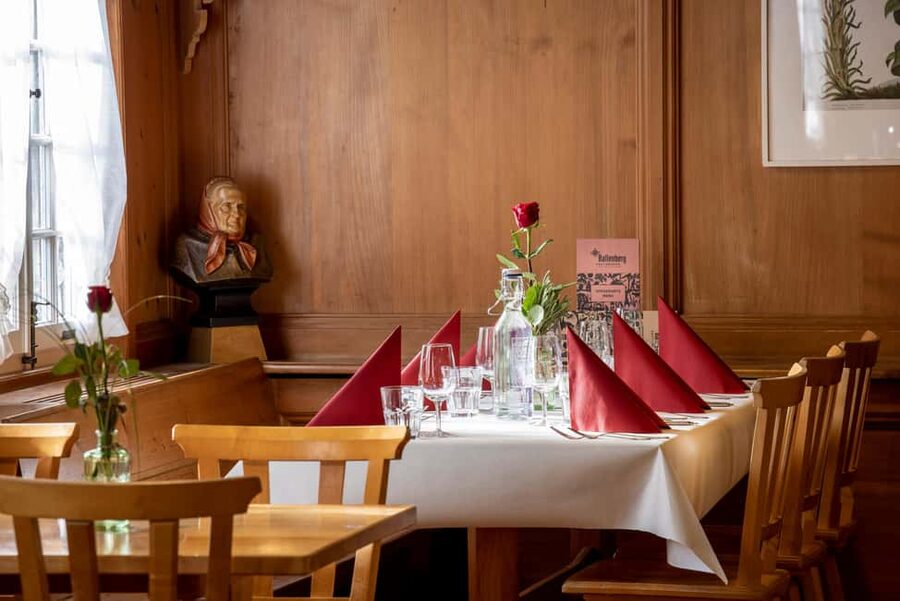
Review · SWITZERLAND
Interlaken: Admission ticket for the Ballenberg Open-Air Museum
The most memorable part of Ballenberg is its scale. Across 66 acres, you can walk among more than 100 historic Swiss buildings, from farmhouses and stables to bakeries, then see traditional skills such as blacksmithing, basket weaving, cheese making, and bobbin lace.
I like the hands-on craft demonstrations and the way the museum connects buildings with everyday work. I also like the animal areas and medicinal herb garden, which give children something active to do while adults study the architecture. The main drawback is simple: the grounds are so large that you may not see everything in one day.
Key points to know before you go
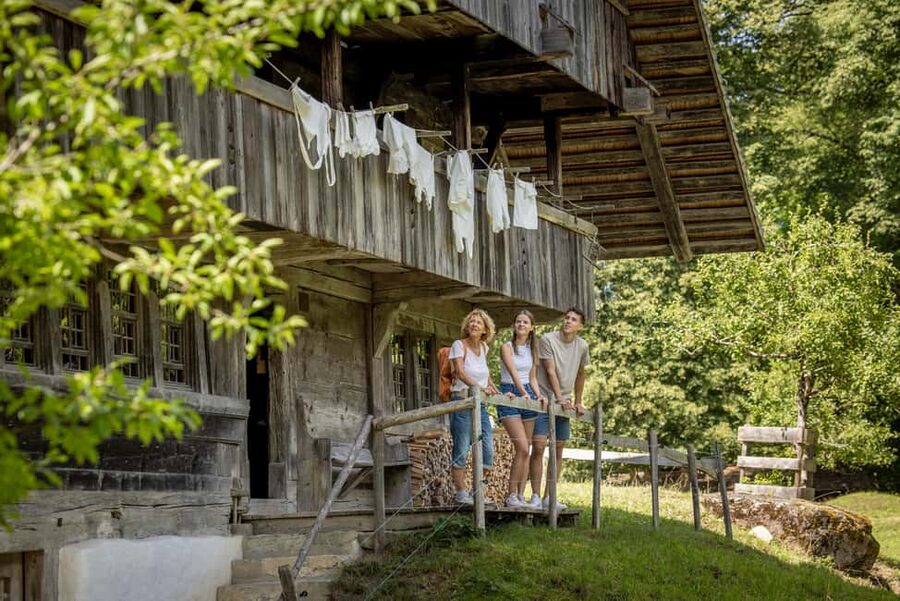
- More than 100 buildings: Explore homes, farm buildings, bakeries, and other structures moved from different parts of Switzerland.
- Crafts in action: Depending on the day, you can see bread baking, blacksmithing, brick making, cheese making, basket weaving, and bobbin lace.
- Plan for a full day: The park covers 66 acres, and one visitor found it impossible to see everything without spending the whole day there.
- Good for families: The petting zoo, farm animals, children’s activities, and handcarts available while supplies last add variety for younger visitors.
- Bring or buy lunch: You can use picnic areas, bring your own food, or eat regional dishes and freshly baked bread on site.
- Two entrances: Parking is available at the East entrance in Brienzwiler and the West entrance in Hofstetten.
Ballenberg is rural Switzerland in one large park
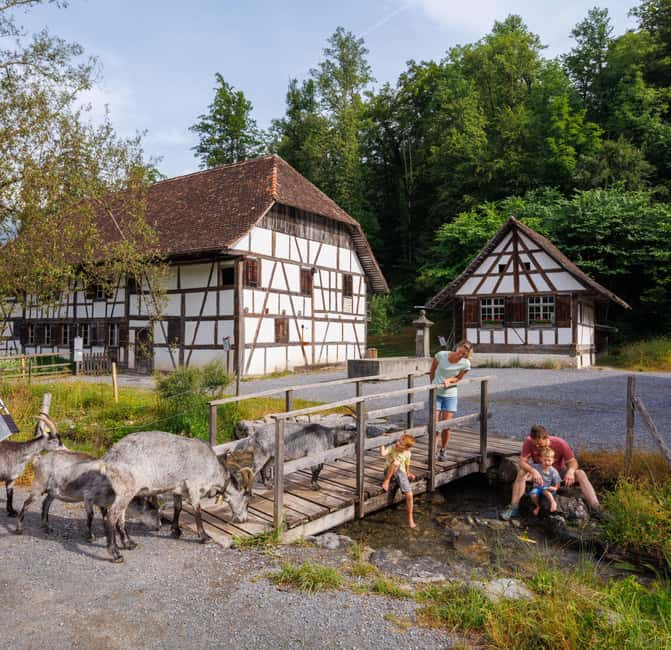
Ballenberg is not a museum where you move from one glass case to the next. It is an open-air collection of real historic buildings arranged across a broad site. You walk outdoors between houses, barns, stables, gardens, workshops, and animal areas.
That format helps you understand how Swiss country life worked. A farmhouse is not just an old building here. It sits alongside the tools, food production, domestic work, and animals that made the building useful. You can look at construction details, then watch a craft that explains why the building was designed that way.
The collection includes structures from different parts of Switzerland. That matters because Swiss rural architecture changes from one region to another. Ballenberg gives you a chance to compare those differences without spending days crossing the country.
You should expect a lot of walking. The grounds cover 66 acres, so this is best treated as a full-day outing rather than a quick stop between Interlaken activities. The size is part of the appeal, but it also creates the main challenge: you need to choose what matters most to you.
A few more museum visits around Switzerland worth comparing
- Lindt Home of Chocolate Museum Entry Ticket
★ 4.7 · 9,329 reviews - Zurich: FIFA Museum Entry Ticket
★ 4.7 · 1,461 reviews - Zurich: Swiss National Museum Entry Ticket
★ 4.6 · 267 reviews
Start with a plan, not a race
Your ticket is valid for one day, and the admission includes all houses and exhibitions. Since the site is large, I would begin by checking the digital overview map and marking two or three priorities.
You might focus on historic houses and regional architecture. Or you might build your day around working crafts, animal areas, and food. Families may want to reach the petting zoo and children’s activities early, while adults interested in traditional skills may prefer to plan around the craft demonstrations.
Do not assume that a fast walk through every building will give you the best experience. A hurried visit can turn Ballenberg into a long list of houses. The better approach is to allow time inside selected buildings, watch a demonstration from start to finish when possible, and leave room for a meal or rest.
Parking is available at both museum entrances. The East entrance is in Brienzwiler, and the West entrance is in Hofstetten. On especially busy days, a parking service is on duty. Having two entrances is useful, but you should pay attention to where you leave the car, since the park itself is large.
Historic houses that explain daily life
The buildings are the heart of the experience. You can enter farmhouses, stables, bakeries, and other structures that represent different parts of Switzerland. The point is not simply to admire old walls. These buildings show how people lived, worked, stored food, raised animals, and organized home life.
The houses are presented as part of wider working settings. A stable gives more meaning to a farmhouse. A bakery connects the building to food production. A garden adds another piece of the household economy. These links help the museum feel like a series of lived-in places rather than a collection of isolated objects.
I would take time to compare the buildings instead of treating them as identical examples of Swiss design. You may notice changes in size, materials, layout, and practical details as you move through the site. The displays also help explain a lifestyle that can feel far removed from modern Switzerland.
Some content is shown in its original language. That adds authenticity, but it may require more patience if you do not speak that language. The visual setting and demonstrations still carry much of the story, yet anyone seeking detailed written explanations should allow time to read the available displays carefully.
Traditional crafts are the museum’s moving parts
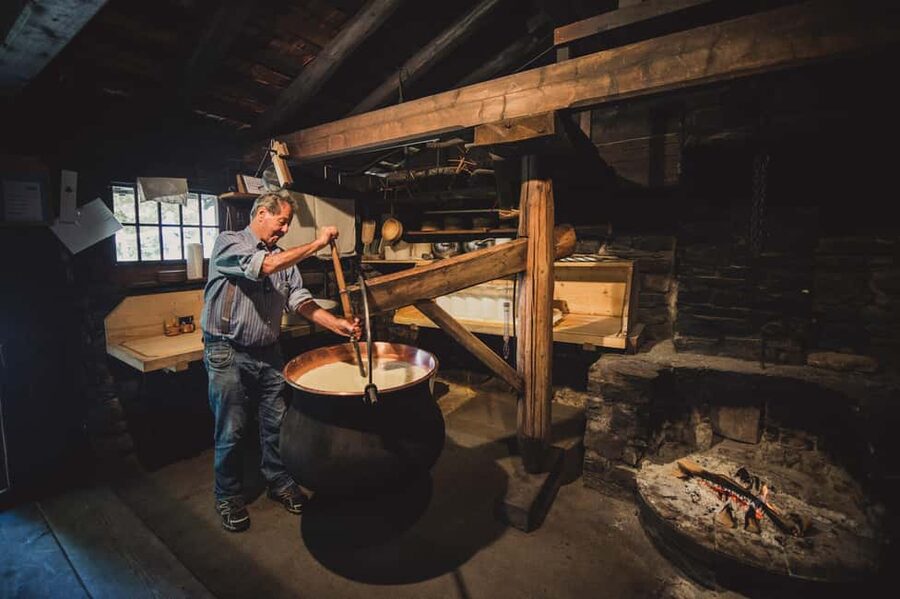
The craft program gives Ballenberg more life than a static historic village. You may see bread baked in a wood-fired oven, a blacksmith at work, bricks being made, or cheese produced using traditional methods. Other craft subjects include basket weaving and bobbin lace.
These demonstrations are valuable because they show the skill and labor hidden inside old buildings and household objects. A basket is no longer just a finished item when you see how it is woven. Bread becomes part of a larger story when you connect it to the bakery, the oven, and the work needed to prepare it.
The demonstrations also give you natural pauses during a long day. Walking across a large park can become tiring, so spending time at a workshop gives you a reason to stop without feeling that you are wasting time.
The exact rhythm of demonstrations may vary, and the supplied information does not provide a fixed daily timetable. Check what is happening when you arrive and shape your route around the activities that interest you most. If blacksmithing or bread baking is a priority, do not leave it until the last hour.
For adults, the craft work may be the most rewarding part of the museum. For children, it offers a clear answer to the question of how things were made before modern factories and machines handled much of the work.
Same city, a completely different collection:
- Zurich: Sightseeing Bus Tour with Optional FIFA Museum
★ 4.2 · 822 reviews - Zurich: City Tour with Lake Cruise + Optional FIFA Museum
★ 4.0 · 729 reviews - Beatenberg: Beatus Caves Entry Ticket with Museum
★ 4.6 · 253 reviews - Lucerne Swiss Museum of Transport Entrance Ticket
★ 4.4 · 189 reviews
Gardens, animals, and family-friendly stops
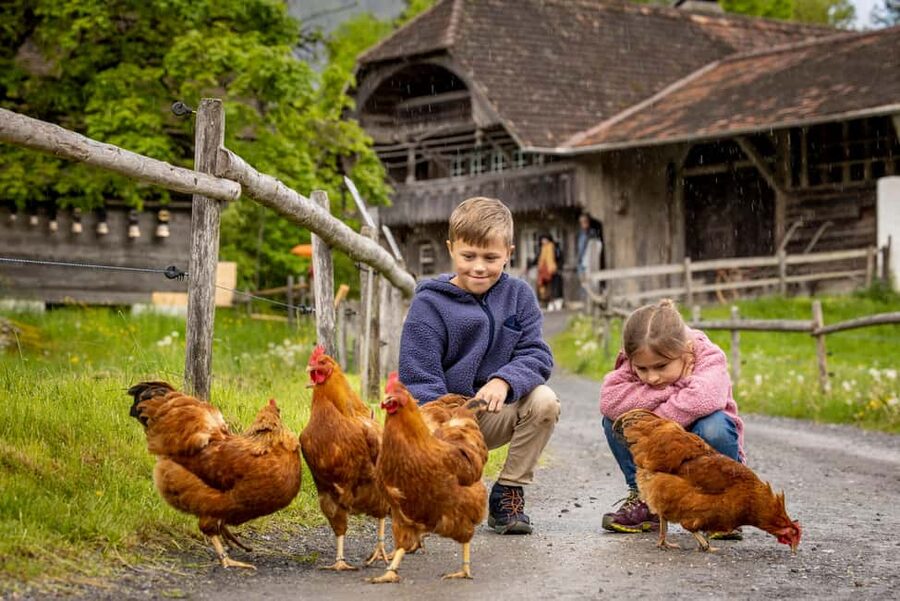
Ballenberg is not only about buildings. The medicinal herb garden adds a quieter, more detailed stop. It connects plants with traditional household use and gives you a chance to slow down after the larger structures and workshops.
The farm animals make the setting feel active. You can see local farm animals and visit the petting zoo for closer contact. This is especially useful if you are visiting with children who may not want to spend several hours examining architecture.
There are also activities aimed at both children and adults. Handcarts for children are available while supplies last, which may help families manage the long distances between areas. I would not count on getting one, but it is worth asking early in the day.
The animal areas also help explain why the buildings were arranged as they were. Farmhouses, stables, gardens, and workshops make more sense when you see them as parts of one rural system. That is one of Ballenberg’s strengths: the experience links culture, work, food, and animals in a way that a standard indoor museum cannot.
Lunch at the wood-fired oven
Food is not an afterthought here. You can eat at restaurants serving regional dishes, use the picnic areas, or bring your own meal. You can also buy freshly baked bread from the museum’s wood-fired oven.
I like this range of choices because it lets you control the cost. The admission is already $41 per person, so bringing food can make the day more economical. On the other hand, buying bread or choosing a regional dish gives you another way to connect with the old farming culture on display.
The picnic areas and resting spaces matter because Ballenberg is physically demanding. You will likely want a proper pause rather than a quick snack while standing. A meal can divide the day into two manageable sections and help you return to the buildings and demonstrations with more energy.
If you are visiting with a family, bring enough food and water for flexibility, even if you plan to buy lunch. The supplied information confirms dining and picnic options, but it does not give a full menu or opening schedule for each food outlet.
Is $41 good value for a full day?
At $41 per person, Ballenberg is not a cheap admission ticket. The value depends heavily on how you use it.
If you stay only two or three hours and see a few buildings, the price may feel high. One local assessment specifically found the admission expensive. That is a fair concern, especially for families paying several admissions.
The calculation changes if you spend most of the day there. Your ticket covers all houses and exhibitions, craft demonstrations, adult and children’s activities, and the digital park map. You are also paying for a large outdoor setting rather than a single gallery.
The strongest value comes from treating Ballenberg as a full-day destination. You can combine architecture, working crafts, gardens, animals, food, and rest without paying separate fees for each part. If you enjoy museums that let you move at your own pace, the price is easier to justify.
Families should also consider the free or included activities. The petting zoo, animal areas, and children’s programs can keep younger visitors engaged, while adults explore the buildings and crafts. Handcarts are available while supplies last, but they are not guaranteed.
The practical shape of a full day
A useful day might begin with the digital map and a visit to the buildings closest to your entrance. From there, you can choose a cluster of houses rather than crisscrossing the entire site.
Late morning is a good time to watch a craft demonstration, depending on the day’s schedule. Bread baking, blacksmithing, brick making, and cheese making each give you a different view of traditional work. Basket weaving and bobbin lace offer a slower contrast to the louder or more physical workshops.
After lunch, you could visit the medicinal herb garden and animal areas. Families may want to place the petting zoo earlier, especially if children are eager to see the animals. Adults with a stronger interest in architecture might use the quieter afternoon for the houses and exhibitions.
You do not need to follow a fixed guided route because a guided tour is not included. That gives you freedom, but it also means the experience requires some self-direction. The digital map is your main planning tool.
A horse-drawn carriage ride is also not included. It is offered from mid-May to early October, but the activity information does not specify its price, schedule, or availability on your chosen day. Treat it as an optional extra, not part of the admission.
Access, language, and comfort
The museum is wheelchair accessible, which is an important practical advantage on a site of this size. Still, the experience takes place outdoors across a large area, so you should plan your energy and rest stops carefully.
Some content is presented in its original language. You can still understand much through the buildings, objects, demonstrations, and setting, but language may affect how much written information you can follow.
There is no guide included, so you are free to explore independently. That works well if you prefer to linger at selected houses or change plans during the day. If you want a structured interpretation of the site, you will need to investigate guided options separately.
The two entrances and available parking make arrival straightforward for visitors coming by car. On busy days, parking assistance may be in place. Since the grounds are extensive, remember where you entered and plan your return before you become tired.
Who will enjoy Ballenberg most?
I would recommend Ballenberg to you if you like historic buildings, traditional work, outdoor museums, regional food, or hands-on cultural experiences. It is particularly well suited to families because the animals and children’s activities break up the walking and architectural displays.
You will get the most from it if you can give it a full day. One Japanese visitor found the site too large to see completely and recommended arriving at opening time. That is sensible advice if you want to cover a lot of ground.
You may enjoy it less if you prefer compact museums, short visits, or tightly scheduled guided tours. The park can feel overwhelming if you try to see every building. A little planning makes a big difference.
The experience also works well for adults who want to understand Switzerland beyond famous mountain views and city centers. Here, the focus is on rural life, practical work, food, animals, and regional buildings. It shows a quieter side of the country.
Should you book Ballenberg?
Book it if you can reserve a full day and want a broad look at Swiss rural culture. The combination of more than 100 buildings, working crafts, animals, gardens, food, and picnic areas gives you plenty to do for the admission price.
I would be more cautious if you have limited time in the Interlaken area or dislike long walks. In that case, the size may work against you, and $41 can feel steep for a short visit.
My practical advice is to arrive early, use the digital map, choose a few priority areas, and leave time for one or two craft demonstrations. Bring food if you want to keep costs down, or plan to buy regional dishes and wood-fired bread for a fuller local experience. With that approach, Ballenberg becomes less a checklist and more a day spent understanding how Swiss country life once worked.
FAQ
How long is the Ballenberg admission valid?
The admission is valid for one day. The site covers 66 acres, so a full day is recommended if you want to see a wide selection of buildings, exhibitions, crafts, and animal areas.
What does the admission ticket include?
The ticket includes admission to all houses and exhibitions, access to craft demonstrations, children’s and adult activities, and a digital overview map of the park.
Are guided tours included?
No. A guided tour is not included with the admission ticket. You explore the museum independently.
Is parking available?
Yes. Parking is available at both entrances, East in Brienzwiler and West in Hofstetten. A parking service operates on heavily frequented days.
Can I bring my own food?
Yes. You can bring your own food and use the picnic areas. Restaurants serving regional dishes and freshly baked bread from the wood-fired oven are also available on the grounds.
Is Ballenberg wheelchair accessible?
Yes, the activity is listed as wheelchair accessible.
Is a horse-drawn carriage ride included?
No. The horse-drawn carriage ride is not included. It is available from mid-May to early October, subject to the relevant schedule and additional cost.
Just added around Switzerland
- Swiss Finance Museum Admission Ticket★ 4.0 · 26 reviews
- Lausanne: The Olympic Museum Entry Ticket★ 4.7 · 123 reviews
- Lucerne: Swiss Museum of Transport Full Day Pass★ 4.8 · 78 reviews
- Lucerne Swiss Museum of Transport Entrance Ticket★ 4.4 · 189 reviews
- Zurich: Lindt Home of Chocolate Museum Ticket & Transfer★ 3.7 · 83 reviews
- Geneva Countryside And Art Museum At A Castle Wine By E-Bike★ 3.8 · 16 reviews
- Beatenberg: Beatus Caves Entry Ticket with Museum★ 4.6 · 253 reviews
- Zurich: Swiss National Museum Entry Ticket★ 4.6 · 267 reviews
Museum Tours in Switzerland, compared.

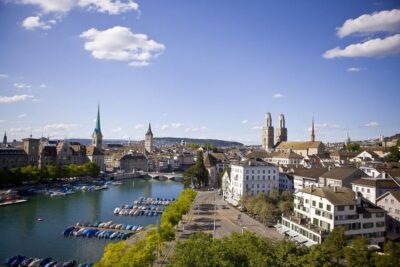
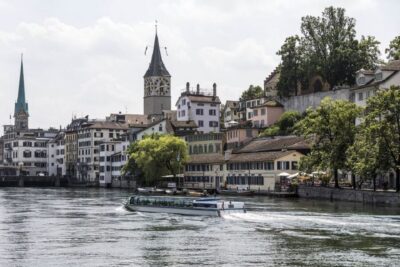
City Tour with Lake Cruise + Optional FIFA Museum
Read our review →
Beatenberg: Beatus Caves Entry Ticket with Museum
Read our review →
Lucerne Swiss Museum of Transport Entrance Ticket
Read our review →
Browse the lists this tour appears in