
Review · AMSTERDAM
Amsterdam: Van Gogh Museum Guided Tour with Entry Ticket
Van Gogh’s paintings are famous, but this two-hour museum tour helps you see how his work changed over time, from the dark earth tones of The Potato Eaters to the bright, restless brushwork of Sunflowers. Guides such as Rolf Schreuder and Evert van Eijk place the paintings beside Van Gogh’s letters to Theo, giving you a clearer sense of the man behind the myth.
I like the very small group, which leaves room for questions and makes it easier to study details without losing your guide in the crowd. I also like the express security entry, especially when museum demand is high and regular tickets have disappeared.
The main drawback is price: at $230 per person, this is a serious splurge for two hours. The value depends on how much you want personal art commentary and help managing a busy museum, rather than simply seeing the collection on your own.
Key points
- Two hours with a specialist guide: Follow Van Gogh’s life, work, techniques, and struggles in a clear sequence.
- Very small group: The activity is advertised for two participants, with availability information noting that some times allow up to four.
- Express security entry: Useful when the museum is crowded or regular admission is sold out.
- Letters to Theo included: Learn how Van Gogh’s correspondence reveals his working methods and state of mind.
- Major paintings explained: Look closely at The Potato Eaters, Sunflowers, portraits, and other museum highlights.
- Dutch, English, or German: Choose from the languages offered when checking your date.
Why a guide changes the Van Gogh Museum
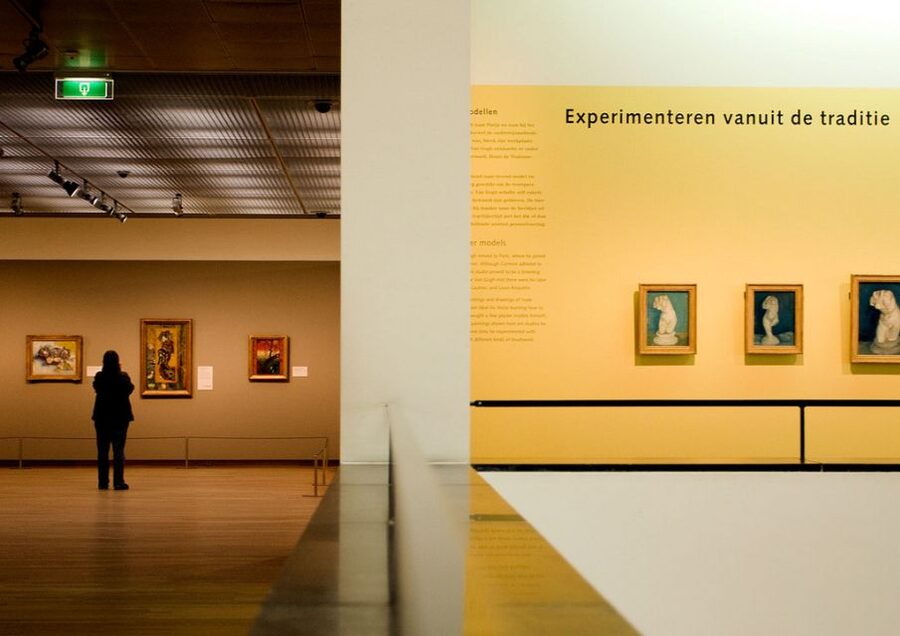
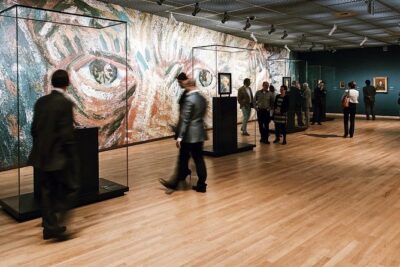
The Van Gogh Museum is not just a room full of famous paintings. It is a carefully arranged account of an artist who worked for only a short time, struggled for recognition, and changed his style rapidly.
On your own, it is easy to move from one familiar image to another while missing the links between them. A guide gives you a route through Van Gogh’s life and points out details that are easy to pass by, such as the rough surfaces, altered colors, repeated motifs, and signs of changing technique.
That context matters most if your art background is limited. You do not need to know the difference between Impressionism and Post-Impressionism before arriving. A good guide can explain those shifts in plain language, then connect them to what you are looking at.
The tour is also useful if you have already read about Van Gogh. One guest who had studied books about The Sunflowers and the move away from realism said the guide helped put those ideas into perspective. That is the real strength of a live tour: you can ask about a specific painting instead of following a fixed audio track.
More Museum Tours in Amsterdam
- Amsterdam: The Upside Down Museum Entrance Ticket
★ 4.4 · 9,506 reviews - Amsterdam: Red Light Secrets Museum Entry Ticket
★ 4.2 · 5,722 reviews - Amsterdam’s Weirdest Museum: Ripley’s Believe It or Not!
★ 4.5 · 4,920 reviews
Meeting beneath the Bathtub building
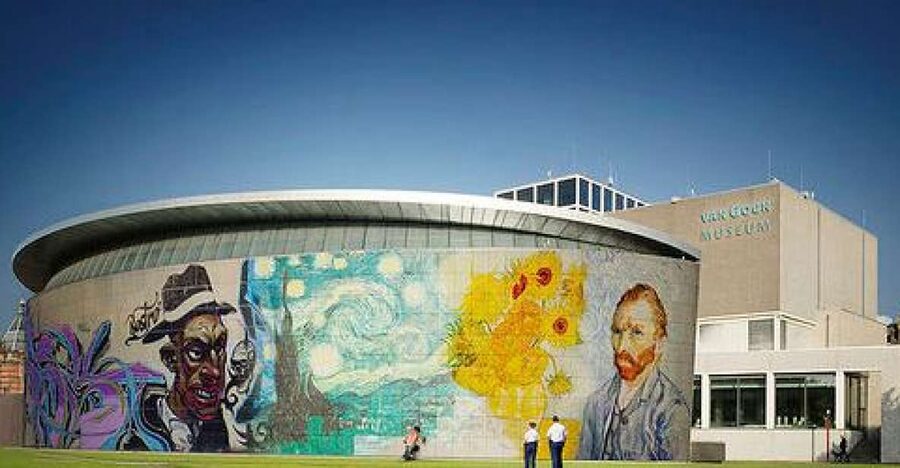
Your meeting point is across from the museum entrance, underneath the unusual building commonly called the Bathtub. Look for your guide there rather than joining the main museum queue first.
This detail matters. The museum sits in a busy cultural area, and the entrance can be confusing when crowds gather. Guides have been described as punctual and easy to find, but I would still arrive with enough time to identify the building and stand in the correct spot.
The guide handles the transition into the museum, including the express security check. That does not mean you can ignore security rules, but it should reduce the uncertainty of arriving at a popular museum with a timed entry.
The tour provider works directly with the Van Gogh Museum, so this experience may be available on dates when ordinary museum admission is sold out. That does not guarantee a place at every time, and availability varies by day, so check your preferred date before building your schedule around it.
Following Van Gogh from early portraits to major works
The visit begins with Van Gogh’s life and early development. Guides have used portraits of the artist to introduce the person before turning to the paintings, a helpful choice because Van Gogh’s face and self-image changed along with his work.
You will hear about his ambitions, his difficulties, and the fact that he sold only one painting during his lifetime. That detail is often repeated, but it becomes more meaningful when placed beside the scale of his later reputation. The museum lets you see the gap between the uncertain working artist and the cultural icon he became after his death.
From there, the guide follows the collection in a broadly chronological way. The exact route can depend on the museum’s display and the crowd, but you should expect attention on major periods and key paintings rather than a random selection of highlights.
The Potato Eaters
The Potato Eaters offers a useful starting point because it looks so different from the bright Van Gogh most people know. Its dark palette and concentrated figures show his early interest in ordinary working people and hard rural life.
This is a painting where a guide earns the fee. You might notice the faces, hands, table, lamp, and rough setting, but a guide can show how those elements work together. Small choices in lighting and expression make the meal feel serious rather than decorative.
Do not expect the same quick visual thrill as Sunflowers. The value here is seeing Van Gogh practice observation, mood, and human character before his style became more colorful and forceful.
More Van Gogh Museum tickets:
- Amsterdam: Van Gogh Museum Ticket and City Canal Cruise
★ 4.6 · 3,899 reviews - Amsterdam: Van Gogh Museum Ticket & Canal Cruise
★ 4.5 · 3,304 reviews - Van Gogh Museum Amsterdam Exclusive Tour w/ Reserved Entry
★ 5.0 · 1,760 reviews - Van Gogh Museum Tour Reserved Entry Semi Private
★ 5.0 · 1,437 reviews
Sunflowers and the problem of familiarity
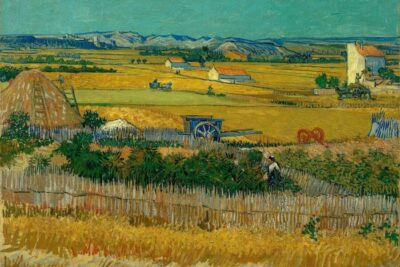
Sunflowers are so widely reproduced that it can be hard to approach the original with fresh eyes. In the museum, you can see the surface, paint handling, and color relationships in a way that a poster cannot match.
A guide can also help separate the different versions and explain why the subject mattered to Van Gogh. Look at how the flowers vary in age, how the yellow tones are balanced, and how the thick paint gives the blooms physical weight.
This is where the tour’s focus on technique becomes useful. Rather than simply telling you that the painting is famous, the guide can direct your attention to how it was made and what Van Gogh was trying to achieve.
Portraits, brushwork, and changing technique
Van Gogh’s portraits reveal his habit of studying people through color and line. The guide may point out how faces are built with visible strokes rather than smooth modeling, and how the background can carry as much energy as the sitter.
You will also hear about the struggles that shaped his work, including the pressure of making a living and the difficulty of sustaining his artistic life. The tour does not treat those problems as a substitute for looking at the paintings. Instead, the personal story helps explain why the work feels so urgent.
Pay attention to the way brushstrokes change across the collection. A guide can make those changes easier to read, especially if you are not used to discussing paint technique. This is one reason several guides, including Rolf Schreuder and Bart, have been singled out for clear explanations and lively storytelling.
Theo’s letters bring the paintings closer

Van Gogh’s correspondence with his younger brother Theo is one of the museum’s most important tools for understanding the artist. Theo was not just a family member. He was a key source of practical and emotional support, and the letters show Van Gogh thinking through his work in his own words.
The tour uses this correspondence to explain how he planned paintings, described his aims, discussed money, and dealt with setbacks. You get a glimpse of the working process rather than only the finished canvas on the wall.
This is also a useful guard against turning Van Gogh into a simple tragic figure. His letters show uncertainty, but they also show discipline, ambition, reading, experimentation, and a serious interest in other artists.
If you have limited art knowledge, the letters provide an approachable entry point. You can begin with a human question, such as what Van Gogh wanted his brother to understand, then connect that answer to the painting in front of you.
What the small group means inside the museum
The activity is presented as a small-group tour limited to two participants, while the availability information notes that some sessions can accommodate up to four people. In practice, you should check the exact date and time rather than assume the group will always have the same size.
A small group has clear advantages. You can ask questions without interrupting a large lecture, stand close enough to follow a detail, and tell the guide what interests you. Several past participants valued the chance to ask many questions and have the visit adjusted to their level of interest.
It also helps with movement. The museum can be crowded, and one guide described by past participants was praised for getting the group through the rooms efficiently. That does not mean you will have every painting to yourself, but it can prevent the visit from becoming a slow shuffle behind a large party.
There is a tradeoff. A private or nearly private tour costs much more than a standard entry ticket or audio guide. If you mainly want quiet time with the paintings, a live guide may feel intrusive. If you want interpretation and conversation, the small format is the point.
Is $230 per person good value?
At $230 per person, this is not a budget museum visit. The included items are the guided tour and Van Gogh Museum entry, with a duration of two hours. You are paying mainly for access at a difficult-to-book museum and for one-on-one or near-private attention from an art guide.
The price makes more sense for a couple, family, or small party that wants a focused visit and does not want to spend hours preparing in advance. It may also appeal if regular museum tickets are sold out and this tour is one of the few remaining ways to get inside.
For a solo visitor who enjoys reading labels and moving at an independent pace, the cost is harder to justify. The same is true if your main goal is to see every gallery slowly. Two hours gives you a strong route through the highlights, but it is not an entire day at the museum.
Families can gain particular value from the format. One past guide kept an 11-year-old engaged by turning the visit into a learning experience rather than a string of dates and art terms. Still, children’s interest varies, and the tour remains centered on paintings and discussion.
Which guide might you meet?
Rolf Schreuder appears repeatedly in the guide feedback and is described as energetic, friendly, professional, and deeply familiar with Van Gogh’s life and techniques. He has also been noted for fluent English and for adjusting the visit to the group’s existing knowledge.
Evert van Eijk has been praised for his understanding of the Van Gogh family and for a patient manner. One earlier visit described his presentation as refined, funny, and well organized within the two-hour format.
Bart has also led the tour, with attention to stories and anecdotes that make the paintings easier to understand. The guide assigned to your booking can vary, so treat these names as examples rather than a promise that one particular person will lead your visit.
The common thread is an emphasis on explanation rather than simple escort service. The strongest version of this tour gives you a chronological structure, historical context, and time to ask questions.
Languages, access, and timing
The tour is offered in Dutch, English, and German. Confirm your preferred language when checking availability, since the guide and starting time depend on the booking.
The stated duration is two hours, although one earlier visit lasted about an hour and a half. You should plan for the advertised two hours, while understanding that the exact length can vary slightly with the route, crowd, and discussion.
The museum tour is wheelchair accessible. That is useful for visitors who need step-free access, but the museum can still be busy, so you may want to ask the provider about the most suitable meeting and movement arrangements when booking.
Cancellation is allowed up to 24 hours before the start time for a full refund, and the reserve-now, pay-later option lets you hold a place without paying immediately. These policies are useful when your Amsterdam plans are still shifting, but the key practical point is to check the date carefully because small-group availability changes.
Who should book this experience?
I would choose this tour if you want the paintings explained rather than simply viewed. It suits first-time visitors, couples, families with older children, and anyone who has tried to find museum tickets but discovered that the available times have vanished.
It is also a good fit for people who have read about Van Gogh and want to connect the letters, artistic movements, and techniques in the actual galleries. The guide can respond to your questions in a way an audio tour cannot.
I would skip it if you are watching your budget closely, prefer a slow independent visit, or already have a strong plan for studying the collection on your own. The museum entry is valuable, but the premium is for the guide and the small-group attention.
Final call: book it for access and interpretation
Book this tour when Van Gogh is a major reason for your Amsterdam visit and you want help making sense of the collection in two focused hours. The best reasons are the small group, express security entry, and discussion of Theo’s letters alongside works such as The Potato Eaters and Sunflowers.
At $230 per person, it is expensive. But if regular tickets are sold out, or if you want the kind of personal explanation associated with guides such as Rolf Schreuder, Evert van Eijk, and Bart, the cost can be reasonable for a special museum visit. Check the exact group size, language, and date before paying, then arrive at the Bathtub building with your questions ready.
FAQ
How long is the Van Gogh Museum guided tour?
The advertised duration is two hours. One earlier visit lasted about an hour and a half, so the exact length may vary slightly.
What is included in the price?
The price includes the guided tour and entry to the Van Gogh Museum.
How much does the tour cost?
The listed price is $230 per person.
Where do I meet the guide?
Meet across from the Van Gogh Museum entrance, underneath the unusual building known as the Bathtub. Look for the guide there before joining the museum entry process.
What languages are available?
The tour is offered in Dutch, English, and German.
How many people can join?
The activity is described as a small group limited to two participants. Availability information also says that some indicated times allow a maximum of four people, so check your selected date.
Can I join if regular museum tickets are sold out?
The provider works directly with the Van Gogh Museum and may offer this tour when standard museum admission is sold out. Availability varies by day.
Is the tour wheelchair accessible?
Yes, the activity is listed as wheelchair accessible.
Can I cancel for a refund?
Yes. You can cancel up to 24 hours in advance for a full refund.
Do I have to pay when I book?
No. The reserve-now, pay-later option allows you to reserve a place without paying immediately.
Just added around Amsterdam
- Van Gogh Museum Tour excluding Entrance Tickets★ 5.0 · 16 reviews
- Van Gogh Museum Entry Ticket and Guided Tour★ 4.5 · 48 reviews
- Van Gogh Museum with Audio Guide★ 3.5 · 80 reviews
- Amsterdam: Explore the Van Gogh Museum & His Masterpieces★ 3.5 · 64 reviews
- Van Gogh Museum Skip the Queue with Audio Guide★ 4.0 · 261 reviews
- Amsterdam Van Gogh Museum with Audio or Guided Tour★ 4.0 · 266 reviews
- Van Gogh Museum, Rijks Museum & Walking Tour – Private Day Tour★ 5.0 · 17 reviews
- Van Gogh Museum Ticket with Audio Guide and Unlimited Access Time★ 5.0 · 25 reviews
Museum Tours in Amsterdam, compared.


Amsterdam’s Weirdest Museum: Ripley’s Believe It or Not!
Read our review →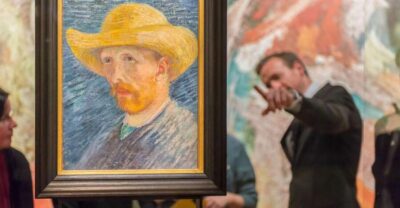

Van Gogh Museum Amsterdam Exclusive Tour w/ Reserved Entry
Read our review →
Moco Museum Amsterdam Admission Ticket with Banksy and more
Read our review →Browse the lists this tour appears in