Review · ITALY
Guided tour of the Trapani Salt Pans and Salt Museum
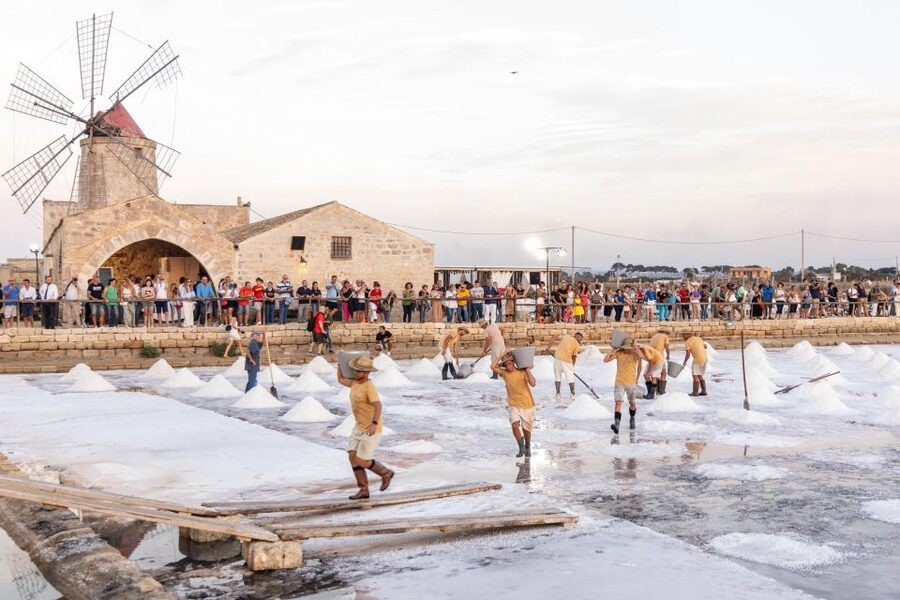
Trapani’s salt pans offer a rare chance to see an everyday ingredient made by hand, from seawater to crystals. At Saline Culcasi, you walk beside reflective pools, touch salt forming in the tanks, and finish inside a family-run museum built around a 1400s mill.
I like the mix of working salt production and protected nature, and I like that tasting is part of the visit rather than an afterthought. The family has worked salt here for four generations, and the flavored fleur de sel gives you a clear sense of the product’s character.
The main caution is the walking. The tour lasts 75 minutes but includes about an hour on foot, so comfortable shoes, a hat, and basic fitness matter. The wheelchair-accessible listing is useful, but you should confirm how the walking route fits your needs before booking.
Key points to know
- Touch salt in the production tanks: You can collect forming salt by hand and follow the process from seawater to finished crystals.
- See Trapani’s famous salt colors: White salt, gray clay, blue water, and pink pools create the visual appeal.
- Taste several local salts: The visit includes whole salt and flavored fleur de sel made by the Culcasi family.
- Visit a 1400s mill and salt museum: The second half moves indoors to an old farmhouse filled with the story of salt making.
- Meet a four-generation salt family: This is the only tour offered by the Culcasi family at their salt pans.
- Plan for a one-hour walk: The route is accessible for many age groups, but it is not a quick stop beside the parking area.
Why Saline Culcasi is worth your time
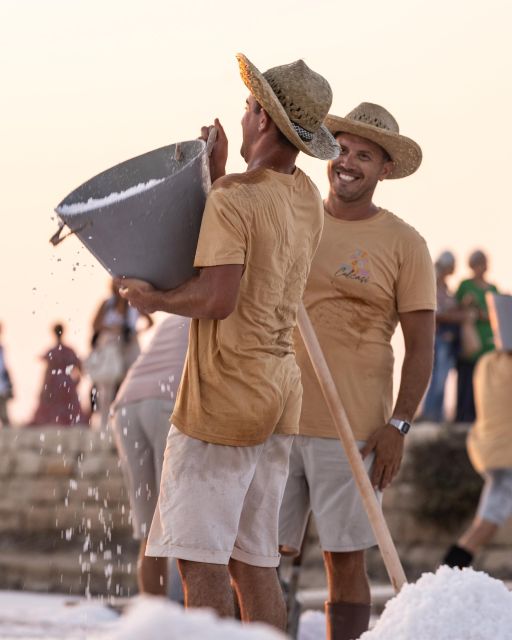
Trapani’s salt pans are not simply scenic pools set aside for photographs. They are part of a working tradition tied to the sea, the weather, and patient manual labor. The Culcasi family has worked salt for four generations, and that family connection gives the visit a personal focus that a drive-by viewpoint cannot provide.
I like experiences that explain how a place functions, not just how it looks. Here, the white crust on the water has a purpose. The shallow tanks allow seawater to change as it evaporates, and the salt becomes visible in stages. You get to see and touch part of that process instead of hearing only a general explanation.
The tour also takes place within a WWF reserve, among protected plants and birds. The supplied information does not promise particular bird sightings, so I would not book this as a dedicated bird-watching trip. Still, the reserve setting adds a useful layer to the walk: the salt works are part of a living natural area, not an isolated industrial display.
The published score is 4.7 from 423 ratings, and the most positive feedback centers on clear information about salt harvesting and the chance to taste different salts and spice blends. That matches the shape of the experience: it is strongest when you want a hands-on lesson with a local food connection.
A few more museum visits around Italy worth comparing
- Vatican Museums, Sistine Chapel & St Peter’s Basilica Guided Tour
★ 4.5 · 39,149 reviews - Rome: Vatican Museums & Sistine Chapel Guided Tour
★ 4.3 · 12,117 reviews - Uffizi Gallery: Renaissance Masterpieces Guided Tour
★ 4.6 · 6,070 reviews
Starting beneath the windmill

Your meeting point is the ticket office in the forecourt below the windmill at Via Salina Chiusa, 1. Look for the guide behind the salt sales counter. This detail matters because the salt pans cover an open area, and wandering around looking for the start would be an unnecessary nuisance.
The tour is offered in English and Italian. No individual guide names are provided, so you should not expect to request a particular guide. The family-run setting is the main personal element, with the salt works and museum carrying the story.
Before setting out, wear shoes you can walk in comfortably and bring a hat. The route is outdoors, and the practical clothing advice is worth taking seriously. Comfortable clothes are also recommended, especially since the walk follows the perimeter of the salt pan rather than staying in one compact exhibit area.
The tour lasts 75 minutes. About one hour is spent walking, with the remaining time focused on the museum and old mill. That makes this easy to fit into a day around Trapani, but it is not a five-minute photo stop.
A walk through white, blue, gray, and pink
The first part follows the perimeter of the salt pan toward the banks where the water reflects the sky. The colors are the natural reward: bright white salt, blue water, gray clay, and pink-toned pools. The scene changes with the salt, water, light, and surfaces of the different tanks.
This is the part where you should slow down. The value is not only in reaching one viewpoint. You are watching a working process spread across several pools, with each section playing a role in turning seawater into salt.
The route is described as suitable for all age groups, but the basic fitness warning should guide your decision. You need to manage roughly an hour of walking. The information does not state the distance, ground surface, shade, or number of seats, so anyone with limited stamina should ask for current route details before paying.
The salt pans are also a good choice for families who want something more active than a museum. Children can see salt as a physical material, not merely a white powder in a kitchen container. The chance to touch the salt in the tanks gives the lesson a simple, memorable hook.
At the same time, you should not expect a polished theme-park attraction. The appeal comes from the working salt pans, open air, and direct explanation. Weather and outdoor conditions are part of the experience, and the route may feel less comfortable than an indoor museum visit on a hot or windy day.
Seeing salt form in the tanks

One of the best parts is the chance to collect salt with your hands from the production tanks. You follow the changes step by step, from seawater through evaporation to the salt that people use at home.
This turns an abstract process into something you can understand quickly. You see the shallow tanks, notice the crystals, and connect the work of the salt pans with the final product. The activity is simple, but it gives the tour a physical quality that many food-themed visits lack.
The process also explains why the sea is so central to Trapani’s salt tradition. The museum later adds family and historical context, but the tanks show the present-day work. You are not looking only at a preserved craft. You are seeing salt production in the place where it happens.
The tour includes a tasting of whole salt and fleur de sel in different flavors produced by the family. Fleur de sel is the delicate salt gathered from the surface of the water, and tasting several versions lets you compare the salt itself with added aromas and seasonings.
This is a small tasting rather than a full meal. You should think of it as a way to understand the family’s product and perhaps choose something to take home, not as a substitute for lunch. The tasting is included in the $21 price, which makes the cost easier to justify for anyone interested in local food.
Same city, a completely different collection:
- Vatican: Museums & Sistine Chapel Entrance Ticket
★ 4.5 · 144,003 reviews - Vatican Museums, Sistine Chapel & St. Peter’s Basilica Tour
★ 4.3 · 73,970 reviews - Florence: Skip-The-Line Uffizi Gallery Timed Entry Ticket
★ 4.5 · 27,832 reviews - Rome: Vatican Museums, Sistine Chapel and Basilica Tour
★ 4.3 · 16,039 reviews
Inside the ancient salt museum
The second part moves into an ancient farmhouse that houses the salt museum. The museum is included in the official guide of the European Union, and its setting helps explain the close link between salt and the sea.
The old mill dates from the 1400s. That age gives the visit a firm historical anchor, but the real interest is how the mill fits into the family story and the hard work of salt harvesting. The museum is not presented as a collection of unrelated objects. It traces the labor, tools, and family continuity behind the salt pans.
I like the change of pace here. After walking among the tanks, you can put the physical work into a wider context. The outdoor section shows the process. The museum shows how that process shaped the people who ran it across generations.
Do not expect a large museum complex with hours of galleries. The information describes an ancient farmhouse and mill, so the visit is likely focused and compact. That is a benefit if you want a clear introduction to Trapani salt rather than a long museum session.
The family story is especially important. Four generations of salt workers give the museum a human scale. Salt production can sound technical when reduced to evaporation and crystals, but the family connection brings in questions of labor, continuity, and local identity.
What the $21 price includes
At $21 per person, the price covers a 75-minute guided visit to the salt pans and salt museum, plus the tasting of whole salt and flavored fleur de sel. You are paying for more than access to a viewpoint. The fee includes an explanation of the working site, a nature walk, the museum, the old mill, and food sampling.
The value is strongest if you want context. You can see the salt pans from the road or take photographs from nearby, but that will not show you the production process in the same way. The guide helps connect the colors, tanks, tools, family history, and tasting.
The price is less compelling if you want only scenery or have no interest in salt production. The tour is short, and the outdoor route requires walking. Someone looking for a longer nature outing, a full meal, or a broad history museum should set expectations accordingly.
At the end, you can also have an aperitif with a wide view or eat at the restaurant. These options are mentioned as possibilities after the tour, but they are not part of the $21 guided visit. Plan on paying separately for anything you order.
Who will enjoy this visit most
I would recommend the tour to anyone interested in traditional food, working crafts, Sicilian family businesses, or unusual natural settings. It also suits families who want an activity with something to see, touch, and taste.
Photography fans should find plenty to work with in the reflections and changing colors of the pools. The white salt and pink water are the most distinctive details, while the blue sea and gray clay give the scene contrast.
The tour can also work well as a change from churches, ruins, and city streets. It gives you open space and a direct connection to the coast. The experience is not about grand monuments. It is about noticing how nature and human labor meet in a very specific place.
I would be more cautious if you have limited mobility, are recovering from illness, or dislike walking outdoors. One low rating came from someone who only discovered after signing up that the tour required an hour of walking. Take that warning seriously. The activity is described as wheelchair accessible, but accessibility does not remove the need to clarify the route and walking demands.
Timing, cancellations, and practical planning

Starting times vary, so check availability for the day you want. The tour is available with English or Italian live guides. You reserve a place without paying immediately, and cancellation is allowed up to 24 hours before the start for a full refund.
Those policies are helpful when your Sicily plans are still moving around. Still, I would make the walking question your first check, not the cancellation policy. Bring a hat, choose comfortable shoes, and wear clothes suited to an outdoor route.
The meeting point is the ticket office beneath the windmill, not a general town center address. Arrive with enough time to locate the forecourt and the salt sales counter. Once you find the guide there, the visit begins with the salt pans before moving to the museum.
The best parts and the limits

The strongest feature is the combination of direct contact and explanation. You do not simply look at salt. You touch it in the tanks, hear how it is produced, taste different forms, and then see the tools and family story in the museum.
The salt tasting is another clear plus. Whole salt and flavored fleur de sel give the visit a local food angle, and the chance to compare aromas makes the product feel more specific than a standard souvenir.
The main limits are the short length and the walking requirement. Seventy-five minutes is enough for an introduction, but not enough for a long study of every part of the reserve. The information also does not provide a group size, exact walking distance, or details about shade and surfaces, so you may want to ask directly if any of those affect your plans.
The experience is also dependent on the guide’s presentation. The site itself is interesting, but the explanation gives it shape. English and Italian are available, which helps many visitors, though no details are provided about other languages.
Should you book the Culcasi salt-pan tour?
Book it if you want a practical, hands-on look at one of Trapani’s oldest working traditions. The combination of salt pans, protected nature, a 1400s mill, family history, and flavored fleur de sel makes good use of 75 minutes and gives the $21 price solid value.
Skip it if you want a very short stop, cannot manage about an hour of walking, or are looking only for a restaurant or scenic viewpoint. For everyone else, this is a thoughtful addition to a Trapani day, especially when you want an experience that connects the sea, local work, and Sicilian food.
FAQ
How long does the salt-pan tour last?
The guided experience lasts 75 minutes. About one hour involves walking through the salt pans, followed by the museum and ancient mill portion.
How much does the tour cost?
The listed price is $21 per person.
What does the ticket include?
It includes entry, a guided tour of the Culcasi salt pan and salt museum, and a tasting of whole salt and fleur de sel in different flavors made by the family.
Is the tour offered in English?
Yes. Live guides are available in English and Italian.
Where is the meeting point?
Meet at the ticket office in the forecourt below the windmill at Via Salina Chiusa, 1. The guide will be behind the salt sales counter.
Do I need to be fit for the tour?
You need a basic level of fitness because the tour includes about one hour of walking. Comfortable shoes, a hat, and comfortable clothes are recommended.
Can I cancel the booking?
Yes. You can cancel up to 24 hours before the tour for a full refund. You can also reserve now and pay later.
Just added around Italy
- Oil museum and oil mill in Tuscany: tour and tasting★ 5.0 · 16 reviews
- Enchanted Castle of Sciacca – Museum Tickets★ 3.5 · 63 reviews
- Torino: FIAT Historic Museum and Lingotto District Tour★ 4.9 · 14 reviews
- Torino: The Car Museum Skip-The-Line Tour★ 4.7 · 22 reviews
- Timed Entry Ticket to the Uffizi Gallery★ 4.5 · 498 reviews
- Florence: Accademia Gallery Entry Ticket with Audio Guide★ 4.1 · 88 reviews
- Vatican City: Sistine Chapel, Museums, Basilica Private Tour★ 4.8 · 158 reviews
- Rome: Capitoline Museums and Centrale Montemartini Tickets★ 4.4 · 328 reviews
Museum Tours in Italy, compared.

Vatican: Museums & Sistine Chapel Entrance Ticket
Read our review →
Vatican Museums, Sistine Chapel & St. Peter’s Basilica Tour
Read our review →
Vatican Museums, Sistine Chapel & St Peter’s Basilica Guided Tour
Read our review →
Skip-The-Line Uffizi Gallery Timed Entry Ticket
Read our review →
Vatican Museums, Sistine Chapel and Basilica Tour
Read our review →
Vatican Museums & Sistine Chapel Skip-the-Line Entry Ticket
Read our review →
Vatican Museums, Sistine Chapel & Basilica Tour
Read our review →