Review · ITALY
Genoa: Galata Maritime Museum and Nazario Sauro Submarine
The most memorable part of this Genoa visit is the chance to walk through the Nazario Sauro submarine, a real Italian Navy vessel built in 1976. Tight passageways, compact sleeping spaces, machinery, and sound effects give you a clear sense of how little room sailors had at sea. It is a far more physical experience than a glass case full of naval artifacts.
I like the museum’s broad sweep, from Christopher Columbus and rowing galleys to steamships and modern migration. I also like the Mirador terrace, where the port, old town, and harbor arch come together in one wide view. The main drawback is language: several sections have limited English signage, and French speakers may find the lack of French explanations frustrating.
Key points to know before you go
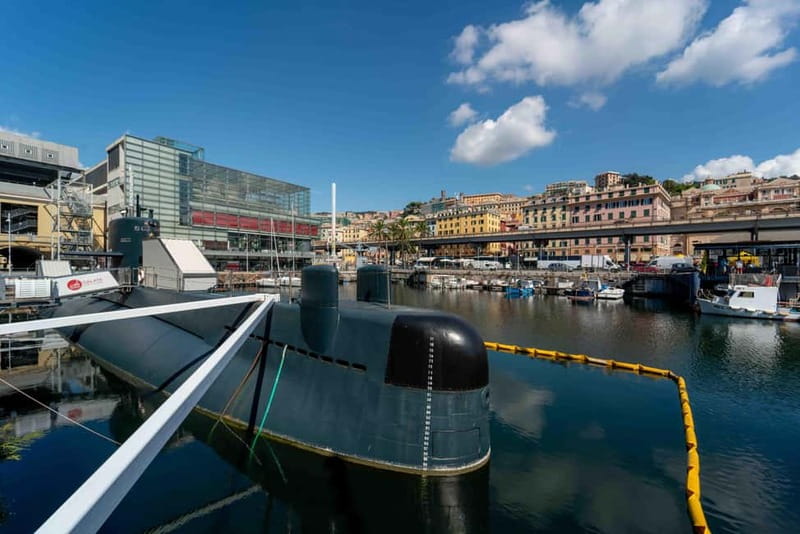
- A real submarine at the waterfront: The Nazario Sauro was built by Fincantieri for the Italian Navy and opened to the public in 2010.
- Five floors and 31 halls: The Galata museum covers maritime culture through objects, art, models, and hands-on environments.
- The rooftop view is part of the experience: The Mirador terrace offers a 360-degree look over Genoa’s old town and harbor.
- Allow more time than you expect: One visitor had only an hour left after touring the submarine and had to rush through the museum.
- Language can affect your visit: Information is available in Italian, Spanish, and English, but French explanations are not provided.
- Good access for many visitors: Ramps, lifts, tactile stations, a free cloakroom, lockers, and requested wheelchairs are available.
Start with the Nazario Sauro submarine
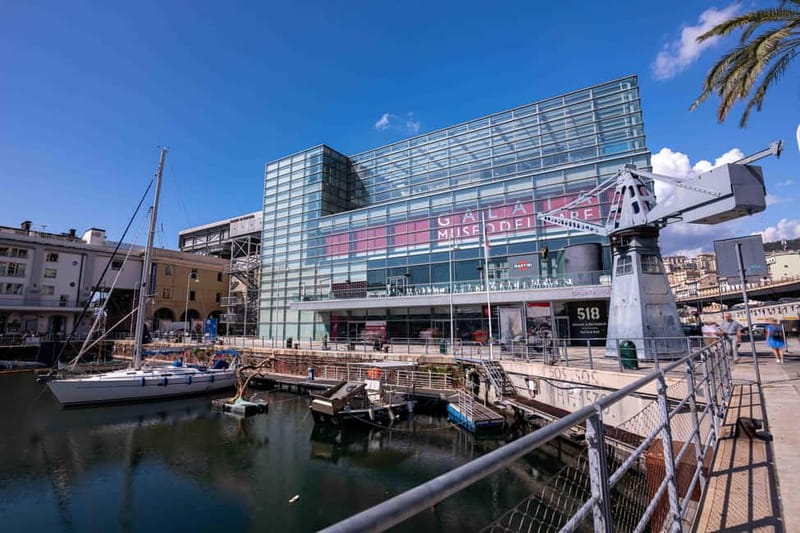
The submarine is the museum’s most distinctive feature, and I suggest making it your first stop if you have limited time. It sits docked beside the Galata Maritime Museum as part of the Galata Open Air Museum. You enter a genuine vessel, not a modern replica built only for display.
The Nazario Sauro was constructed by Fincantieri for the Italian Navy in 1976. After being abandoned in 2002, it was donated to Mu.MA, the organization connected with Genoa’s maritime museums. Since 2010, it has been open to the public and is described as the only boat of its kind in Italy.
Inside, the value comes from scale. The submarine’s narrow corridors and compact working areas show the practical side of naval life. You get a much better sense of the sailors’ daily conditions by moving through the vessel yourself than by looking at a diagram. The experience focuses on how people lived and worked in a confined space, with the submarine’s equipment providing the setting.
Sound effects make the visit feel more active. They simulate the vessel in operation and add atmosphere as you move through the interior. This is useful for families and younger visitors, since the submarine gives the museum visit a clear physical focus.
The submarine is not a spacious attraction. You should expect tight quarters and a more confined route than in the main museum. That is part of its value, but it may not suit everyone. If you prefer roomy galleries or find narrow interiors uncomfortable, spend your time in the museum’s open exhibition halls instead.
A few more museum visits around Italy worth comparing
- Vatican: Museums & Sistine Chapel Entrance Ticket
★ 4.5 · 144,003 reviews - Vatican Museums, Sistine Chapel & St. Peter’s Basilica Tour
★ 4.3 · 73,970 reviews - Vatican Museums, Sistine Chapel & St Peter’s Basilica Guided Tour
★ 4.5 · 39,149 reviews
Follow Genoa’s maritime story across 31 halls
The Galata Maritime Museum opened in 2004 and occupies a modern building designed by Catalan architect Guillermo Vasques Consuegra. The collection is spread across five floors and 31 halls, so this is not a quick room or two beside the harbor.
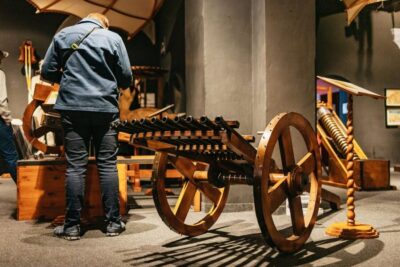
The museum uses man and the sea as its central thread. Instead of presenting only naval hardware, it connects ships to work, travel, art, trade, exploration, and migration. That wider focus gives the museum more range than a collection devoted only to military vessels.
Your route moves through several periods and subjects:
- Christopher Columbus and the age of exploration
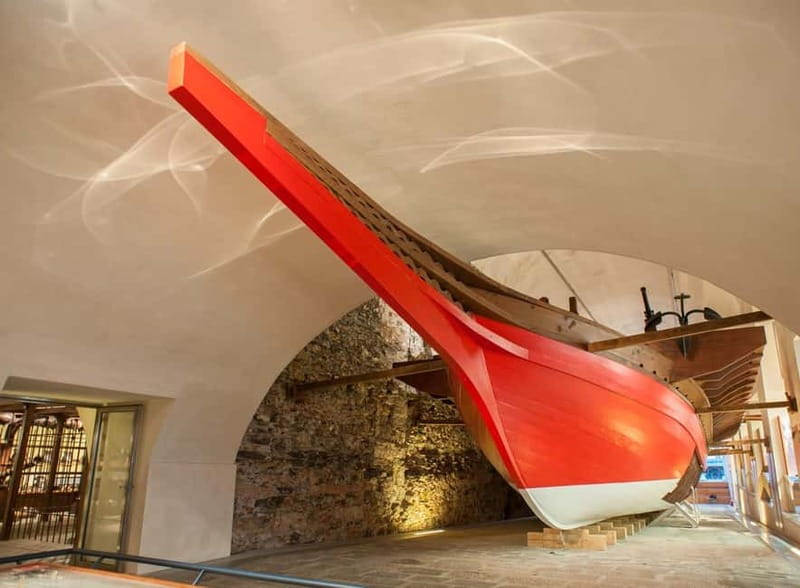
- Rowing vessels and ancient galleys
- Sailing ships
- Steamships
- Maritime art
- The ocean liner Andrea Doria
- Contemporary migration
The order creates a broad sense of change. You see how ships developed, but also how life at sea changed with them. Rowing and sailing required different skills and working conditions from steam-powered travel. Later sections connect the sea with passenger journeys and migration, bringing the story closer to the present.
Models are a major part of the museum’s appeal. They make large ships and complex vessels easier to understand, especially when the real objects would be too large to display indoors. The models are also likely to hold the attention of children, though the museum’s full value comes from taking time with the surrounding explanations.
A practical warning: do not treat the museum as a short add-on after the submarine. The museum can take much longer than expected. One visitor gave priority to the submarine and was left with only an hour for the main collection, forcing a fast visit. If you want to see the floors properly, plan your day around the museum rather than squeezing it into a spare half-hour.
See Genoa through its sea paintings
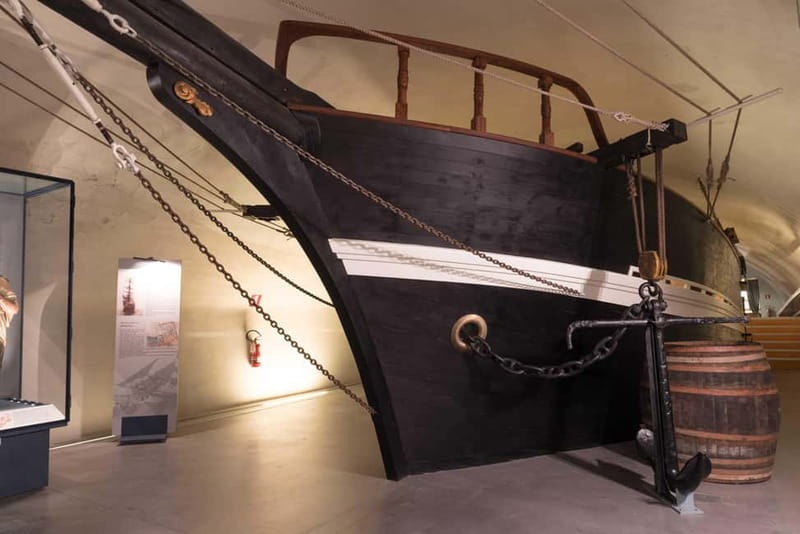
One of the museum’s quieter sections presents paintings of the sea from the 1800s and 1900s. This part gives the visit a welcome change of pace after the ship models, historic objects, and submarine.
The paintings help show how the sea was viewed during the 19th and 20th centuries. They add a human and artistic layer to the practical story of ships and sailors. You can pause here and consider the sea not only as a route or workplace, but also as a subject for artists.
This collection also leads toward a large terrace planted with Mediterranean shrubs. The outdoor setting gives you a break from the indoor galleries and prepares you for the views later in the visit. If you have been moving quickly through the museum, this is a good place to slow down.
Give the Andrea Doria story some time
The museum includes a section devoted to the ocean liner Andrea Doria and its sinking in 1956. The subject gives the collection a strong narrative focus. You are not just looking at a ship as an object, but following the story of a famous liner and the event that ended its career.
This section works best if you enjoy maritime accidents, passenger ships, and the human stories connected with ocean travel. It also links the museum’s earlier subjects, such as sailing and steamships, with the era of large ocean liners.
The Andrea Doria display comes near the end of one museum floor, before the Mirador terrace. That makes the terrace feel like a natural pause after a more concentrated exhibition. You can take in the harbor from above and connect the historical ships inside with the working waterfront outside.
Same city, a completely different collection:
- Florence: Skip-The-Line Uffizi Gallery Timed Entry Ticket
★ 4.5 · 27,832 reviews - Rome: Vatican Museums, Sistine Chapel and Basilica Tour
★ 4.3 · 16,039 reviews - Vatican Museums & Sistine Chapel Skip-the-Line Entry Ticket
★ 4.4 · 13,838 reviews - Rome: Vatican Museums, Sistine Chapel & Basilica Tour
★ 4.7 · 13,217 reviews
End at the Mirador terrace
The Mirador is one of the strongest reasons to complete the museum route. From this outdoor terrace, you get a 360-degree view over Genoa’s old town and harbor arch.
The view is useful as well as attractive. Genoa’s port can be hard to understand from street level, where buildings and waterfront structures break up the scene. From the terrace, the relationship between the historic city and the harbor becomes easier to read.
I would save enough energy for this stop. It is easy to rush through the upper levels while thinking mainly about the submarine, but the terrace rewards a full visit. The old town and port provide a fitting final image for a museum built around the sea.
There is also a garden area with Mediterranean shrubs near the sea-painting collection. Together, these outdoor spaces prevent the museum from feeling like a long run of enclosed galleries. They give you room to reset before continuing.
How much value do you get for $22?
At $22 per person, the admission is reasonable if you plan to use the full day. You are paying for two distinct experiences: a large maritime museum and access to an actual submarine. Either one alone would give the visit a clear focus, while the combination offers more variety.
The value depends on your pace. If you only have an hour, the price becomes harder to justify because the museum contains five floors and 31 halls. If you can give it a substantial part of your day, the cost covers a wide range of material, including models, artworks, historical displays, the Andrea Doria section, the submarine, and the Mirador terrace.
The attraction also works across age groups. Children may respond first to the submarine and ship models. Adults may spend longer with the art, exploration, passenger ships, and migration displays. That mix makes the ticket more useful for a family or mixed-interest group than a narrowly focused museum.
The experience has an overall rating of 4.4 out of 5 from 51 ratings, which fits the attractions on offer. The submarine and models are likely to be the strongest draws, while the language and wayfinding issues may affect how easily you follow the collection.
Plan around language and signs
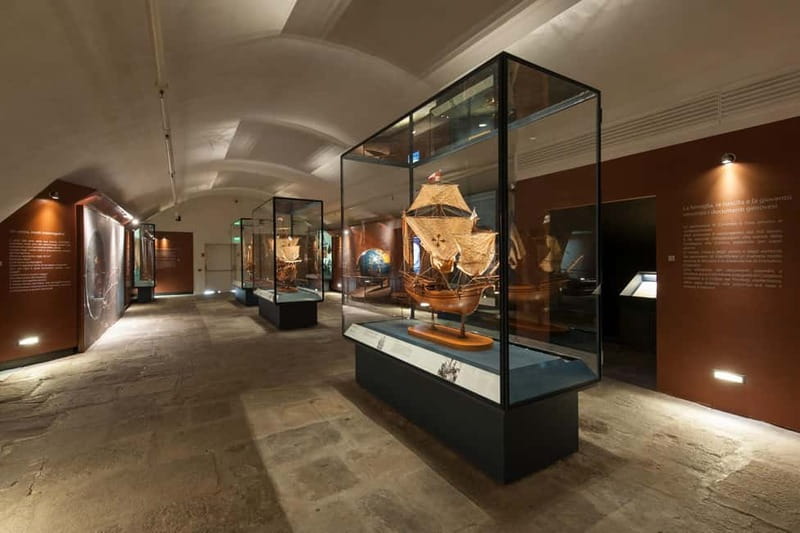
The museum provides information in Italian, Spanish, and English. If you speak one of those languages, you should be able to follow the main route, but the English signage may not always be as clear as you want. One practical criticism concerned signs showing which way to go for the next exhibition.
That matters in a five-floor museum. A weak sense of direction can lead to missed rooms or an uneven route through the collection. Take a moment at each floor to check where the next section begins, and do not assume that every display follows an obvious path.
French speakers face a bigger limitation. French explanations are not available, and the absence of a French audio guide was specifically a concern. If French is your main museum language, you may get more from the objects, models, paintings, and submarine than from the written interpretation.
The supplied information does not name a guide, and this is not presented as a guided tour with a named leader. You should expect a self-guided museum visit, with the displays providing the explanation.
Access, facilities, and practical comfort
The museum is accessible to visitors with mobility impairments through ramps and lifts. Wheelchairs can be requested, and the museum has three tactile stations for interactive experiences. These features make the main museum route more workable for a broad range of visitors.
The submarine is a separate consideration because its interior is narrow and its route differs from the open gallery spaces. The provided information confirms general museum accessibility, but it does not give detailed access specifications for every part of the submarine. If submarine access is essential for your visit, ask the ticket office for current details before you go.
A free secure cloakroom and lockers are available. This is useful because you can leave bags before moving through the galleries and submarine. A nursery and a nursing area are also available, which can make a longer visit easier for families with small children.
Smoking and littering are not allowed. The museum uses video surveillance for safety. If you lose something, contact the lost and found service at the ticket office.
The experience is valid for one day, and the ticket includes admission to both the Galata Maritime Museum and the Nazario Sauro Submarine. Free cancellation is available up to 24 hours in advance for a full refund, and you can reserve now and pay later. Availability and starting times should be checked when booking.
Who will enjoy this most?
I would recommend this visit to anyone interested in ships, ports, naval life, and Genoa’s connection with the sea. It is especially well suited to families because the submarine and models provide a strong visual and hands-on focus.
It also suits visitors who want more than a traditional art museum. The collection includes paintings, but its main subject is the sea as a place of work, travel, exploration, conflict, and migration. That gives you several ways into the visit.
You should be prepared to read and move at your own pace. Since there is no named guide included and language support is limited, the experience depends on how much you want to study the displays. If you need extensive French interpretation or perfectly clear English wayfinding, this may feel less satisfying.
Should you book the Galata Maritime Museum and submarine?
Book it if you can give it several hours and want a substantial Genoa museum visit with a real submarine at its center. The Nazario Sauro, the ship models, the Andrea Doria story, and the Mirador view give the $22 ticket real value.
I would not book it solely for a quick submarine visit unless that is your only goal. The museum is large, and rushing through it means missing much of what makes the ticket worthwhile. English and Spanish speakers should find the visit easier than French speakers, though English signs may need improvement.
The best plan is simple: start with the submarine, move through the museum floors without rushing, pause with the sea paintings and Andrea Doria display, and finish at the Mirador terrace. That approach lets you enjoy both the close quarters of naval life and the broad view of Genoa’s port.
FAQ
What does the $22 ticket include?
The ticket includes entrance to the Galata Maritime Museum and access to the Nazario Sauro Submarine.
How long is the experience valid?
The admission is valid for one day. You should check availability for the applicable starting times when booking.
Where is the museum located?
The Galata Maritime Museum is in Genoa, in Italy’s Liguria region. The Nazario Sauro Submarine is docked at the museum’s waterfront.
What languages are available?
Museum information is available in Italian, Spanish, and English. French explanations and a French audio guide are not available.
Is the museum wheelchair accessible?
The museum has ramps and lifts for visitors with mobility impairments. Wheelchairs can be requested, but detailed access information for every part of the submarine is not provided.
Are there tactile or family facilities?
Yes. The museum has three tactile stations, a nursery, and a nursing area.
Can I store luggage or bags?
Yes. A free secure cloakroom and lockers are available.
Can I cancel the booking?
Yes. You can cancel up to 24 hours in advance for a full refund. You can also reserve now and pay later.
Just added around Italy
- Oil museum and oil mill in Tuscany: tour and tasting★ 5.0 · 16 reviews
- Enchanted Castle of Sciacca – Museum Tickets★ 3.5 · 63 reviews
- Torino: FIAT Historic Museum and Lingotto District Tour★ 4.9 · 14 reviews
- Torino: The Car Museum Skip-The-Line Tour★ 4.7 · 22 reviews
- Timed Entry Ticket to the Uffizi Gallery★ 4.5 · 498 reviews
- Florence: Accademia Gallery Entry Ticket with Audio Guide★ 4.1 · 88 reviews
- Vatican City: Sistine Chapel, Museums, Basilica Private Tour★ 4.8 · 158 reviews
- Rome: Capitoline Museums and Centrale Montemartini Tickets★ 4.4 · 328 reviews
Museum Tours in Italy, compared.
Vatican: Museums & Sistine Chapel Entrance Ticket
Read our review →
Vatican Museums, Sistine Chapel & St. Peter’s Basilica Tour
Read our review →
Vatican Museums, Sistine Chapel & St Peter’s Basilica Guided Tour
Read our review →
Skip-The-Line Uffizi Gallery Timed Entry Ticket
Read our review →
Vatican Museums, Sistine Chapel and Basilica Tour
Read our review →
Vatican Museums & Sistine Chapel Skip-the-Line Entry Ticket
Read our review →
Vatican Museums, Sistine Chapel & Basilica Tour
Read our review →