
Review · POLAND
Gdansk: Private Communism Tour with Solidarity Center Museum
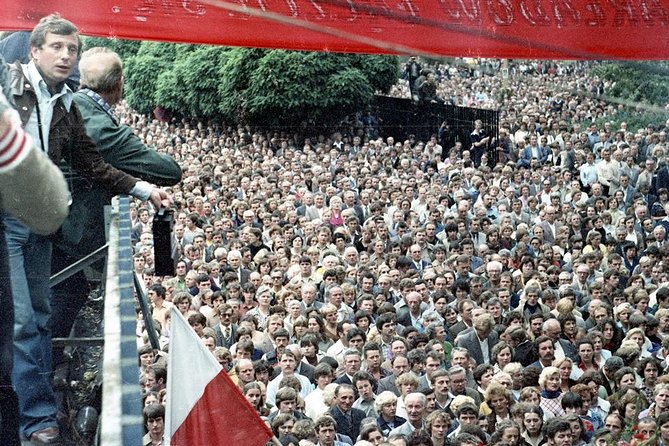
Gdansk’s Solidarity story began not in a parliament, but among shipbuilders who challenged a Communist regime from inside their workplace. This tour connects the European Solidarity Centre with the actual shipyard sites where the movement took shape, making the political story easier to grasp.
I like the private guide format, especially because the subject needs context rather than a quick walk past monuments. I also like the original 21 Postulates, the worker demands from 1980, and the visit to Sala BHP, where the Gdansk Agreement was signed.
The main consideration is the price: at $184 per person, this is not a budget sightseeing walk. It earns its cost best if you want personal explanations, hotel transport, and access to the 4-hour route, since the shorter option does not include every stop.
Key points
- Original Solidarity documents: See the handwritten 21 Postulates at the European Solidarity Centre.
- Sala BHP visit: Enter the room where the Gdansk Agreement was signed on 31 August 1980.
- Shipyard setting: Walk through Gdansk Shipyard, where 17,000 shipbuilders began civil resistance in 1980.
- Personal historical guidance: Ask questions about Lech Walesa, Anna Walentynowicz, the strikes, and the 1989 changes.
- Easy city logistics: Pickup is available from accommodation within 1.5 kilometers of the meeting point in Gdansk Old Town.
- A small PRL touch: The 4-hour option ends with a shot of traditional Polish vodka.
Why Gdansk is the right place to study Communism
Gdansk gives this subject a real location, not just a museum label. The port and shipyard were workplaces, political pressure points, and gathering places during the resistance to Communist rule.
On 31 August 1980, workers and government officials signed the Gdansk Agreement after a major strike. The deal recognized the right to form an independent trade union, creating the foundation for Solidarity. That movement later helped open the way to Poland’s first pluralistic election since 1947 and the wider collapse of the Communist Bloc.
I find this local focus more useful than a general tour of Cold War Poland. You are not only hearing that people opposed the system. You are seeing where the workers organized, where their demands were recorded, and where the government was forced to negotiate.
The guide’s role matters here. The tour is offered in English, German, Polish, or Russian, and the private format lets you stop when a document or personal story catches your attention. A French-speaking guide named Małgorzata has also led this route, explaining the museum and shipyard in French. A German-language group of 18 people was handled by a guide who used personal stories to explain everyday life under the Polish People’s Republic.
More private museum tours in Poland:
- Warsaw: Ghetto, Jewish Cemetery & POLIN Museum Private Tour
★ 4.8 · 132 reviews - Krakow: Skip-the-line Oskar Schindler’s Museum Private Tour
★ 4.7 · 34 reviews - Gdansk Private WWII Tour with Museum of the Second World War
★ 4.9 · 22 reviews
Inside the European Solidarity Centre
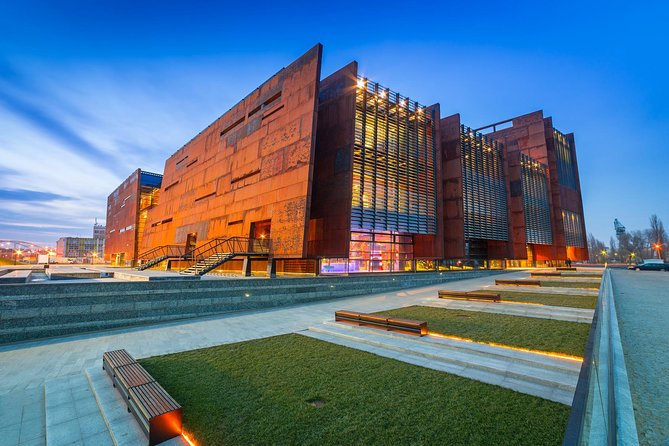
The European Solidarity Centre is the main museum stop, and the skip-the-line ticket saves time at a place where you could easily spend the entire morning. The museum presents the Solidarity movement in stages, beginning with Communist-era Poland and moving through the strikes, negotiations, and political changes of 1989.
The most important object is the original set of 21 Postulates. These were the written demands prepared by striking workers at the Lenin Shipyard, now called Gdansk Shipyard. They give the movement a practical shape. Workers were not making vague complaints. They were putting specific demands on paper and insisting that the authorities respond.
You will also see documents and photographs connected with the strikes and the trade union’s campaign for freedom. The exhibits cover the 1989 Round Table talks and the first pluralistic election in Poland since 1947, so the visit reaches beyond the shipyard strike itself.
I like having a guide inside the museum because the material can otherwise feel dense. Names, dates, slogans, and political changes arrive quickly. Your guide can explain the roles of Lech Walesa, Anna Walentynowicz, and other figures, while also showing how the movement affected life beyond Gdansk.
This is not a light museum stop. The subject includes repression, conflict, and the cost paid by workers and families. Give it your attention. If you prefer only scenic sightseeing, the four-hour program may feel serious and demanding.
Solidarity Square and the 1970 workers’ monument
The route continues to Solidarity Square, where the Monument to the Fallen Shipyard Workers of 1970 rises above the former shipyard area. The monument commemorates workers killed during protests in 1970, a tragedy that helps explain why later strikes carried such emotional force.
Your guide explains the link between the 1970 deaths and the 1980 movement. This connection is important. The later strike did not appear out of nowhere. Workers remembered earlier violence and knew what could happen when the state treated protest as a threat.
I would pay close attention here rather than treating the square as a quick photo stop. The monument is one of the clearest reminders that Solidarity was built through fear, courage, and memory. Its location also helps you orient yourself before walking farther into the shipyard district.
The area is changing, and that affects the experience. Some parts may feel like working industrial space, while other areas have been adapted for new uses. A guide familiar with the site can help you read what remains instead of leaving you to guess which buildings and gates mattered.
Sala BHP and the Gdansk Agreement
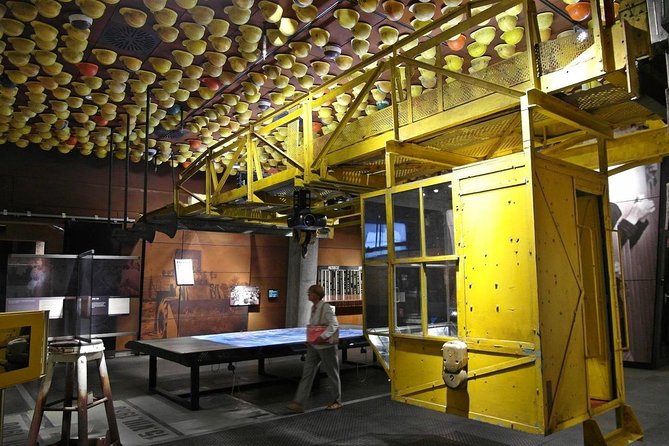
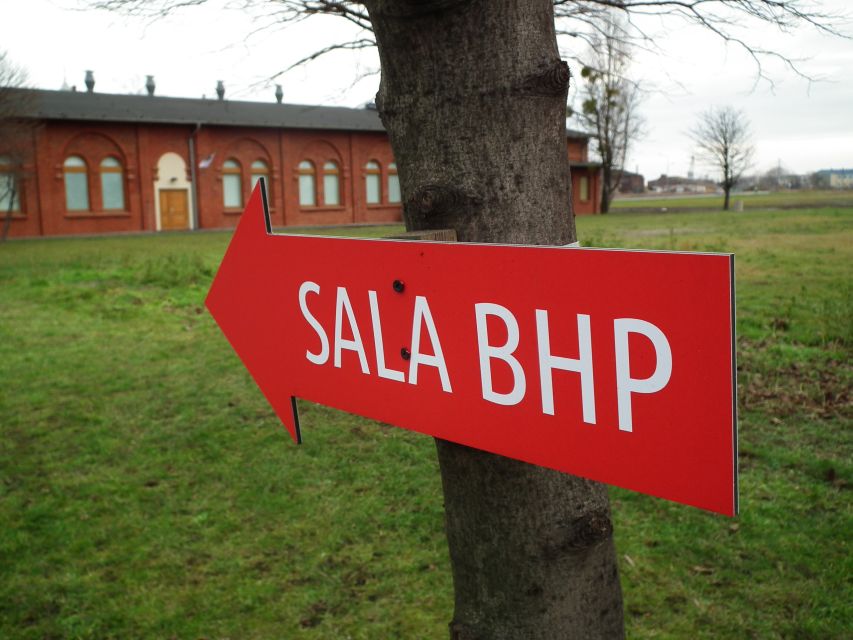
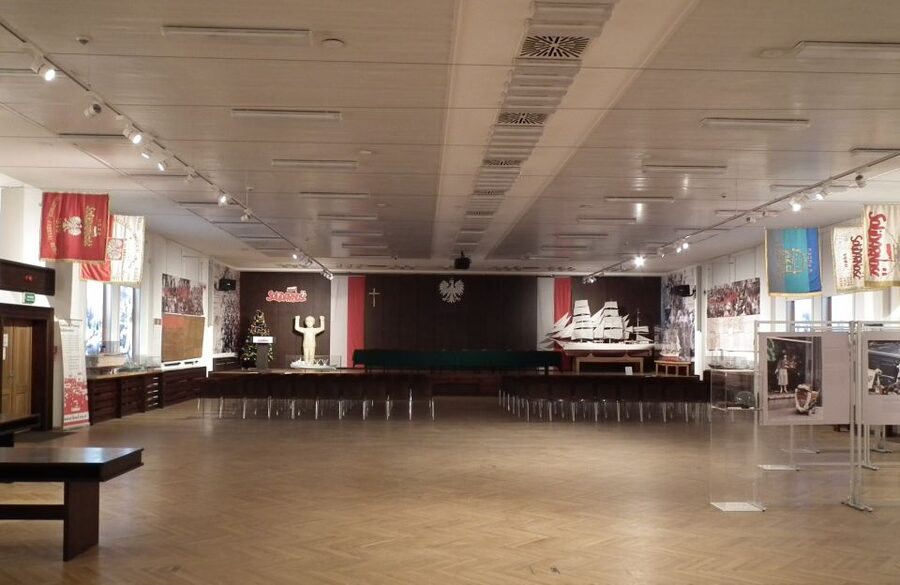
The four-hour route includes Sala BHP, the historic worker protection center of the Gdansk Shipyard. This is where the Gdansk Agreement was signed on 31 August 1980.
For me, this is one of the most valuable additions to the museum visit. The European Solidarity Centre gives you the broad story and original objects. Sala BHP puts you in the room associated with the agreement that turned a strike into a national political event.
The stop works best when your guide explains what the agreement meant at the time. The workers were pressing for rights that challenged the Communist state, including independent labor organization. The signing did not solve every problem, but it marked a major shift in what citizens could demand publicly.
Access to Sala BHP is included only with the 4-hour option. If you choose the shorter program, you will not receive this part of the route, along with the extended shipyard visit. That difference is worth checking before you book.
A few more museum visits around Poland worth comparing
- Auschwitz-Birkenau Museum and Memorial Guided Tour from Krakow
★ 4.5 · 1,510 reviews - Warsaw: POLIN Museum of the History of Polish Jews Ticket
★ 4.7 · 1,142 reviews - Krakow: Rynek Underground Museum Guided Tour
★ 4.6 · 1,122 reviews - Warsaw: Polish Vodka Museum Tour with Tasting
★ 4.6 · 788 reviews
Walking through Gdansk Shipyard
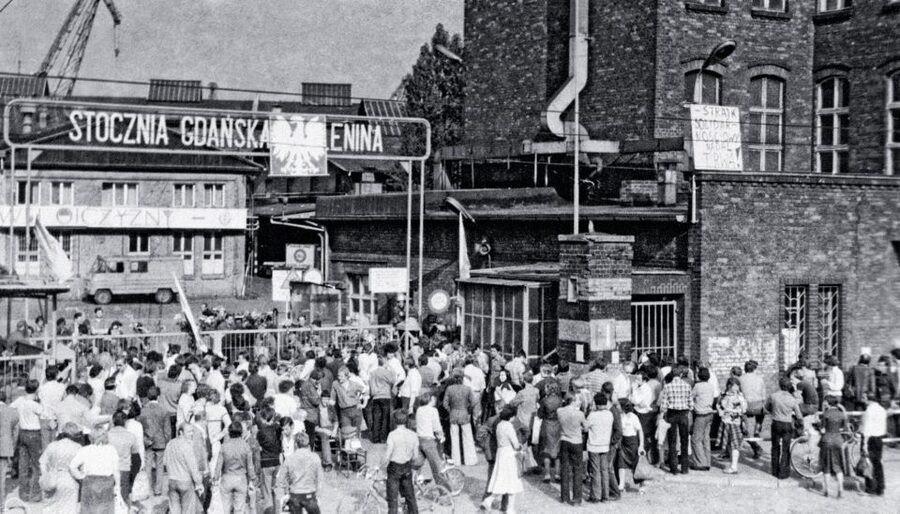
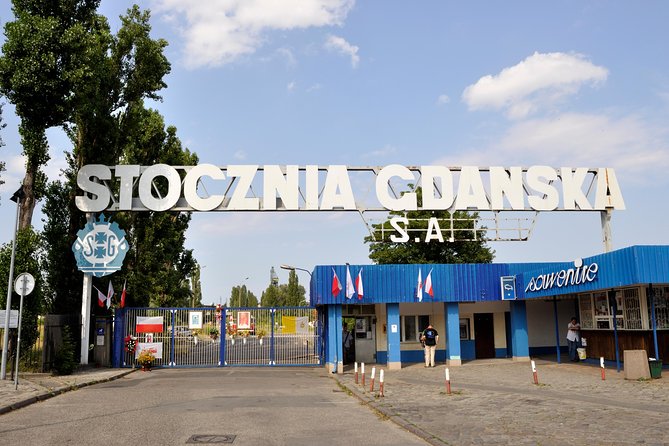
The final major stop is Gdansk Shipyard, known in Polish as Stocznia Gdansk. This is where roughly 17,000 shipbuilders began civil resistance against the Communist regime in 1980.
The shipyard gives the story scale. A museum can show you photographs of a strike, but the industrial setting helps you understand that this was a mass workplace action involving thousands of people. You can connect the names and documents from the museum with the physical place where the events unfolded.
The shipyard district is also changing, so the route may not feel like a preserved historical park. That is part of its value, but it can also make the area harder to read. A guide who knows its corners can point out what mattered and explain how the site has developed.
Małgorzata’s familiarity with the shipyard has been especially useful on this route. She knows the area well and can help you make sense of a district that does not present its story in a neat line. That kind of local orientation is one reason I would choose a private tour instead of relying only on a museum audio guide.
What the private format adds
A private guide changes the pace. You can ask how Communist-era Poland worked, how the strikes spread, or why particular leaders mattered without waiting for a large group to move on.
The tour is described as a private experience, but the reported German-language booking included 18 people. If you are arranging this for a large family, association, or school group, confirm how the private format will be organized before paying. A group that size may need different pacing and audibility from a couple or small family.
The language choice is another practical strength. English, German, Polish, and Russian are available, while a French-language guide has also led the route. Historical explanation is much easier when you can discuss political terms and personal stories in the language you handle best.
Hotel pickup and drop-off are available in Gdansk Old Town when your accommodation is within 1.5 kilometers of the meeting point. Otherwise, meet the guide beneath the Monument to the Fallen Shipyard Workers of 1970 at Plac Solidarności. If you provide your address at booking, pickup can be arranged when it fits the distance rule.
Is $184 per person a fair price?
At $184 per person, the tour costs more than a standard museum ticket and self-guided walk. You are paying for several services together: a private history guide, transport from eligible Old Town accommodation, skip-the-line entry to the European Solidarity Centre, access to Sala BHP and the shipyard on the longer route, and a four-hour schedule.
The value is strongest for people who want interpretation. The museum entry alone cannot explain every political connection, and walking around the shipyard without help may leave you unsure what you are seeing. The guide turns separate sites into one story.
The price is harder to justify if you only want a quick introduction or plan to study the museum at your own pace. You may prefer the shorter option if your schedule is tight, though you will miss Sala BHP and the extended shipyard portion.
The included vodka shot is a small cultural detail, not a reason to buy the tour. It adds a bit of PRL-era flavor at the end, but the real value lies in the guide and access to places tied directly to the 1980 movement.
Timing, access, and practical planning
The full experience lasts four hours. Check the available starting times when booking, since the schedule can affect how it fits with other Gdansk plans.
Avoid Saturday and Sunday if you want the Gdansk Shipyard stop. The shipyard is closed on those days, and the itinerary may need to change. This is the most important scheduling warning in the booking information.
The experience is wheelchair accessible. Still, because the route includes a museum, square, historic interior, and shipyard area, you should confirm the day’s exact path if you have specific mobility needs.
Free cancellation is available up to 24 hours before the tour, and you can reserve now and pay later. Check your email the day before departure for final instructions and any meeting details.
Who will get the most from this tour?
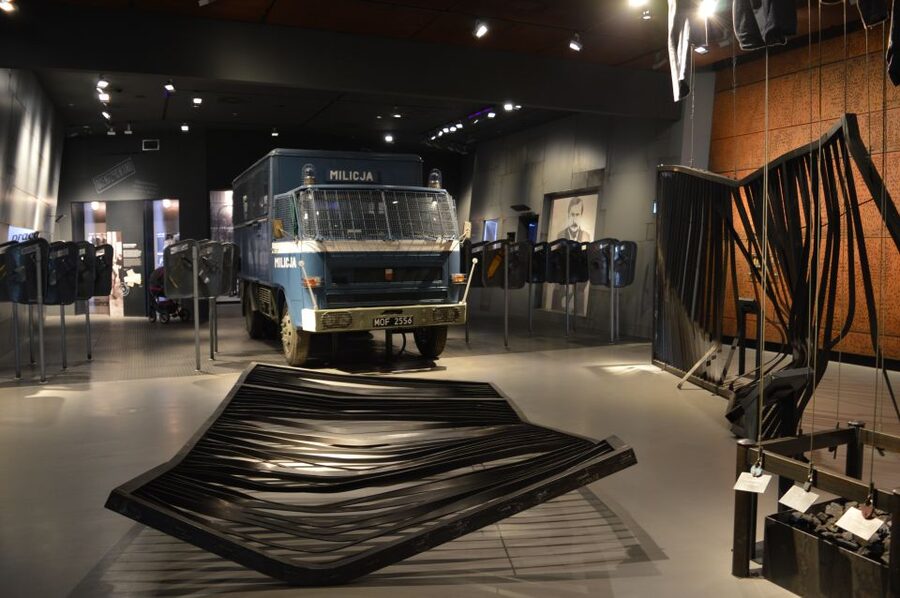
I would choose this for anyone with a strong interest in modern Polish history, the Cold War, labor movements, or the fall of Communist rule in Eastern Europe. It also suits visitors who want a serious Gdansk experience beyond the old center’s architecture and waterfront.
Families with older children and teenagers may find the worker stories and real locations more memorable than a general lecture. The private format also makes it easier to adjust explanations to your group’s age and interest.
This may not be the right pick if you want a relaxed sightseeing outing, dislike museum time, or have only a short window in Gdansk. The subject is weighty, and the four-hour route asks you to concentrate.
Should you book it?
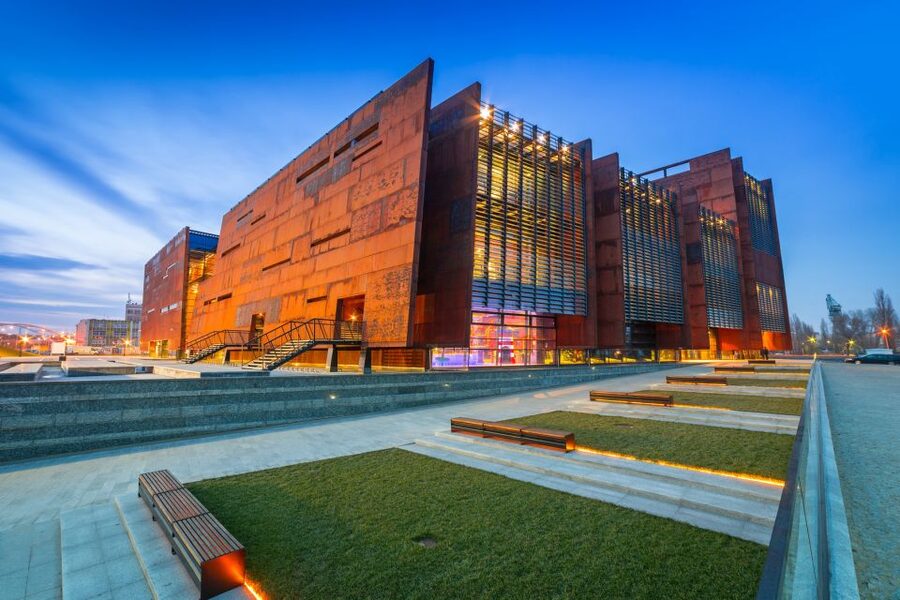
Book this tour if you want the Solidarity story explained by a person who can connect the museum displays with Solidarity Square, Sala BHP, and the shipyard itself. Choose the 4-hour option if those real locations matter to you, and schedule it from Monday through Friday.
Skip it if your main goal is low-cost sightseeing or if you will not have time for a serious museum visit. For everyone else, the strongest reason to book is the combination of original documents, significant sites, and a private guide who can explain why Gdansk helped change Poland and Eastern Europe.
FAQ
How long does the Gdansk Communist tour last?
The described experience lasts four hours. Starting times depend on availability.
What does the 4-hour option include?
It includes a private Communist-themed tour, skip-the-line entry to the European Solidarity Centre, a licensed guide, Sala BHP, Gdansk Shipyard, hotel pickup and drop-off where eligible, and a shot of traditional Polish vodka.
Is hotel pickup available?
Pickup is available from accommodation in Gdansk Old Town located within 1.5 kilometers of the meeting point. If your address is outside that area, the itinerary may change, and you may need to meet the guide beneath the Monument to the Fallen Shipyard Workers of 1970.
What languages are offered?
The tour is available in English, German, Polish, and Russian. A French-speaking guide has also led this experience.
Where does the tour meet?
The meeting point is beneath the Monument to the Fallen Shipyard Workers of 1970 at Plac Solidarności, Gdansk.
Can I visit Gdansk Shipyard on a weekend?
Gdansk Shipyard is closed on Saturdays and Sundays. Schedule the tour on a weekday if you want the shipyard visit.
Is the tour wheelchair accessible?
Yes, the activity is listed as wheelchair accessible. You can confirm the specific route details when arranging your booking.
Just added around Poland
- Schindler’s Factory Skip-the-line Museum Ticket★ 4.9 · 15 reviews
- Schindler’s Factory Museum Guided Tour – Krakow★ 4.5 · 15 reviews
- Krakow: Schindler’s Factory Museum Guided Tour★ 4.1 · 86 reviews
- Schindler’s Factory Museum in Krakow – Guided Tour★ 4.3 · 33 reviews
- Krakow: Rynek Underground Museum Skip-the-line Guided Tour★ 4.7 · 138 reviews
- Krakow: Vodka Factory Museum Entry Ticket and Tasting★ 4.3 · 75 reviews
- Krakow: Rynek Underground Museum Guided Tour & Stories★ 4.8 · 26 reviews
- Krakow: Skip-the-Line Rynek Underground Museum Guided Tour★ 4.7 · 26 reviews
Museum Tours in Poland, compared.
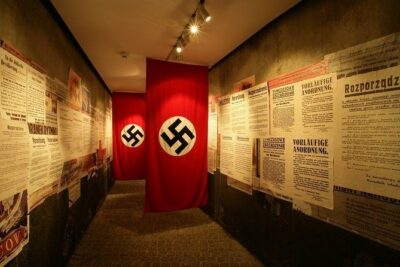
Schindler’s Factory in Krakow: Guided Tour & Skip the Line Ticket
Read our review →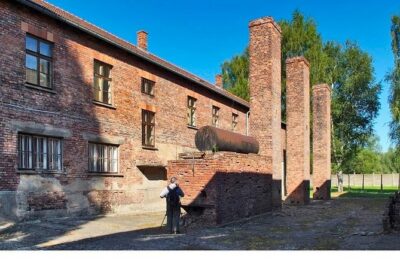
Auschwitz-Birkenau Museum and Memorial Guided Tour from Krakow
Read our review →
POLIN Museum of the History of Polish Jews Ticket
Read our review →


Krakow Schindler’s Factory Museum Guided Tour in English
Read our review →Browse the lists this tour appears in