
Review · FLORENCE
Florence: Leonardo Interactive Museum Entry Ticket
Leonardo’s notebooks can seem like a maze of mirror writing, gears, wings, and wild ideas. This small Florence museum turns many of those drawings into working machines you can touch and operate, making the great Renaissance thinker easier to understand than a glass case ever could. You can test a catapult, examine a water lift, and puzzle over mechanisms based on his codices.
I like the hands-on format, which gives children and adults a reason to slow down and think. I also like the low $5 price and central spot near the Duomo and Accademia Gallery. The tradeoff is size: some people finish in 30 minutes, while careful visitors may need 60 to 90 minutes, and the museum can feel child-focused when busy.
Key points to know before you go
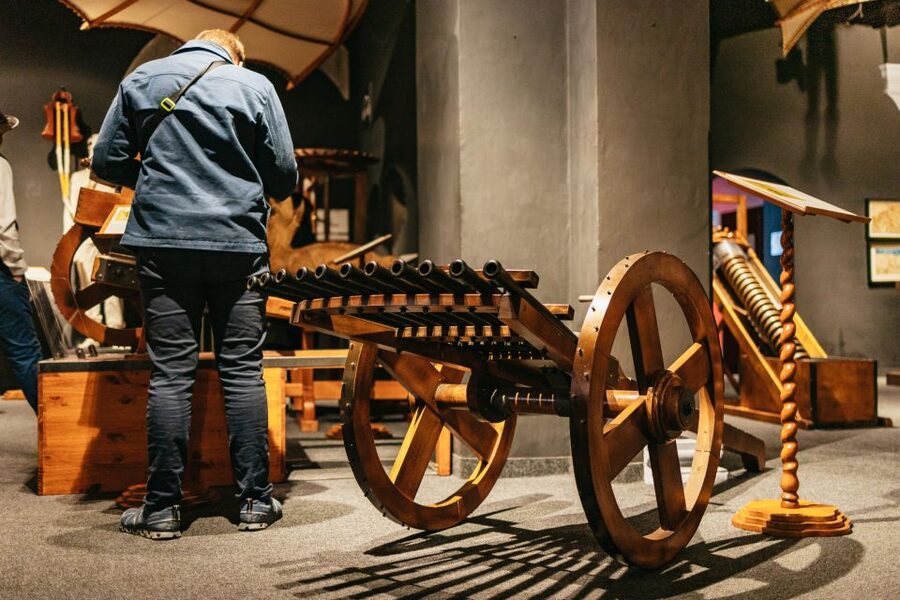
- Leonardo’s drawings become physical models: Try machines such as the tank, catapult, hydraulic saw, printing press, and Archimedean screw.
- The visit is self-guided: Use your own smartphone and earphones for audio in Italian, English, French, Spanish, German, or Portuguese.
- Hands-on workshops add value: Build bridges, domes, and polyhedrons rather than only reading labels.
- Plan for one hour, but stay longer if you read everything: Fast visitors may finish in 30 minutes, while curious families can spend up to 90 minutes.
- The museum suits children from about age 7 or 8 upward: Younger children may enjoy the moving parts, but the official guidance excludes children under 7.
- Check the entrance carefully: The museum is near the Duomo and Accademia, but misleading red signs marked Da Vinci Museum can point you away from the correct door.
What this Florence museum is really like
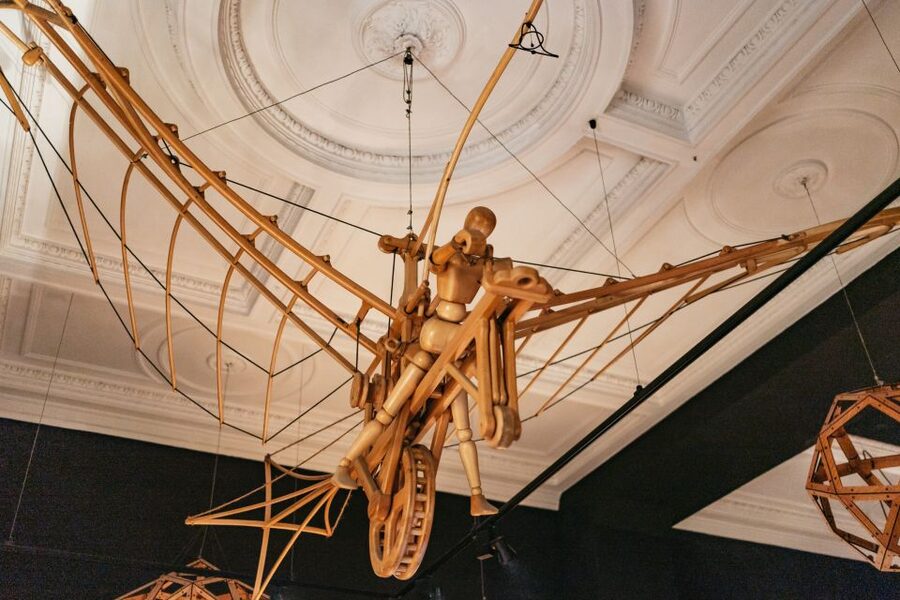
This is not a grand palace museum filled with original paintings. It is a compact, practical exhibition built around replicas of Leonardo da Vinci’s designs. Its main purpose is to show you how his ideas worked, not simply to tell you that he was brilliant.
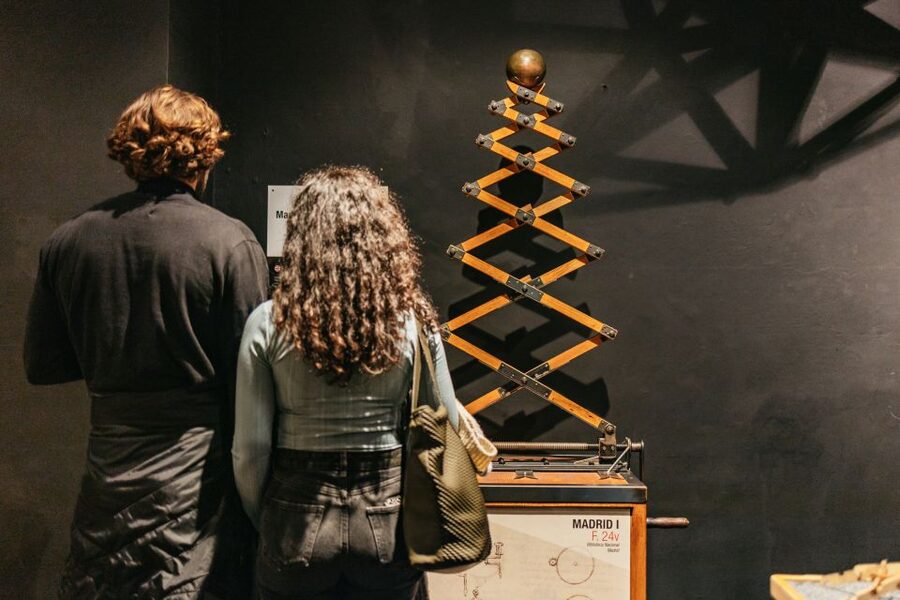
That difference matters. A sketch of a gear system can look abstract, even when you know it changed engineering. Pull a handle and watch a series of wooden parts move, and the idea becomes clear. You see how Leonardo studied force, motion, water, construction, and the human body through careful observation.
The museum covers engineering, physics, anatomy, and painting. The mechanical displays receive the most attention, but the wider material helps place those inventions within Leonardo’s work as an artist and observer.
You can move at your own pace. There is no live guide leading a group, so you are free to spend five minutes on a machine that catches your eye or move quickly past a section that does not interest you. The audio guide works through your smartphone, and you need to bring your own earphones.
More Museum Tours in Florence
- Florence: Skip-The-Line Uffizi Gallery Timed Entry Ticket
★ 4.5 · 27,832 reviews - Florence Accademia Gallery Tour with Entrance Ticket Included
★ 4.5 · 6,148 reviews - Uffizi Gallery: Renaissance Masterpieces Guided Tour
★ 4.6 · 6,070 reviews
Finding the entrance near the Duomo
The museum sits just a few steps from Florence’s Duomo and the Accademia Gallery, making it an easy addition to a central walking day. You can pair it with Michelangelo’s David at the Accademia, then walk over for an hour of machines and puzzles.
Take care when approaching from the Duomo. A red vertical advertisement in one corner says Da Vinci Museum and shows two arrows pointing right. Those signs do not lead to this museum entrance. This is the sort of small Florence detail that can waste time when you are already navigating crowded streets, so rely on the booked address and check the doorway rather than following every sign.
Tickets are sold online, and the online system lets you select a date and time. The ticket provides skip-the-ticket-line entry, which is useful in a city where even small sights can attract a queue. The activity also offers free cancellation up to 24 hours before the visit and a reserve-now, pay-later option.
The museum is wheelchair accessible. It is also air conditioned, a useful point during Florence’s hotter months.
The machines: where Leonardo’s ideas start moving
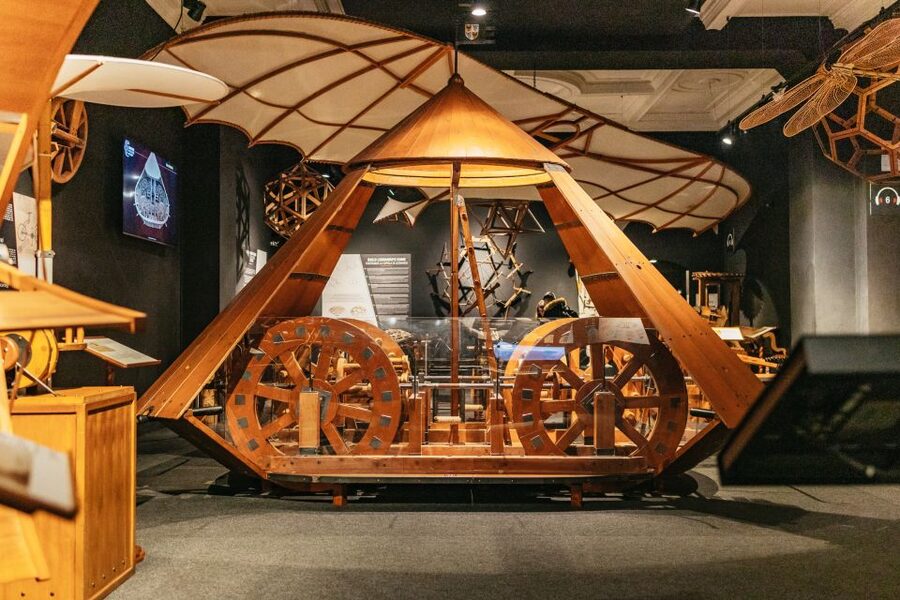
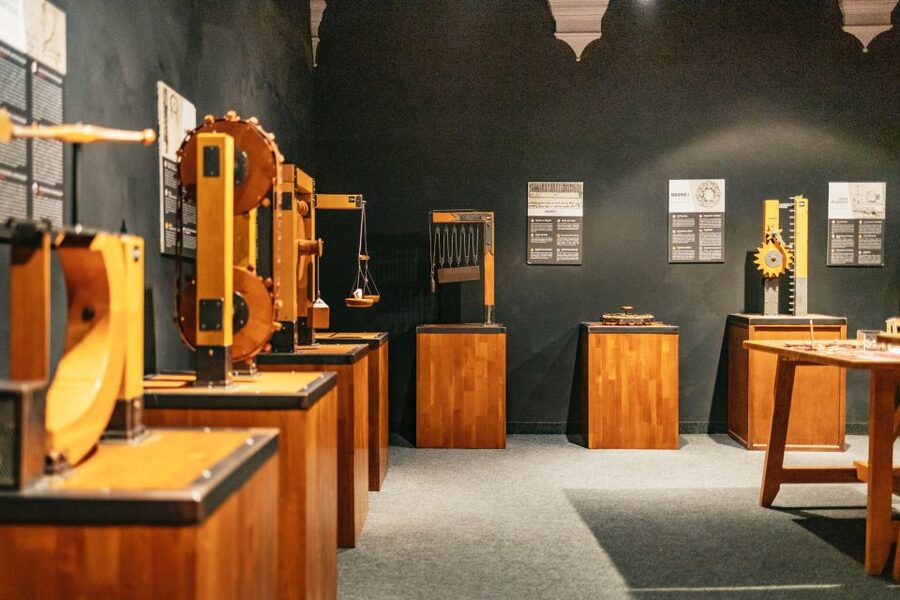
The main attraction is the collection of models based on Leonardo’s codices. These are not original inventions from the Renaissance, but physical interpretations of his drawings. That makes the museum especially useful for understanding the gap between a two-dimensional sketch and a working mechanism.
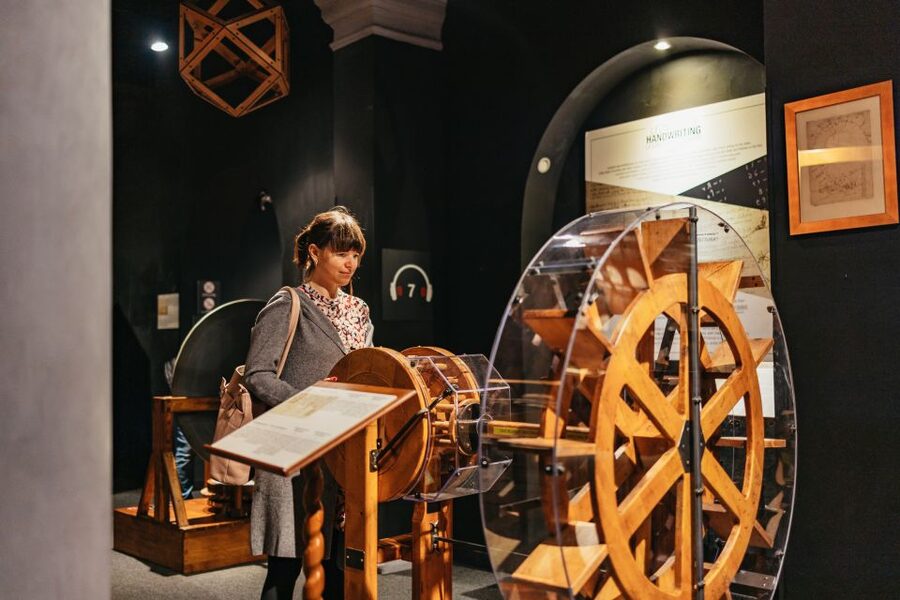
You can try a model tank, a catapult, a worm screw, and a vertical screw. The water-lifting design, often linked to the Archimedean screw, shows how a rotating spiral can move water upward. Other displays explore gears, lifting systems, rolling mechanisms, and force.
The hydraulic saw gives you a look at how water power could drive machinery. The printing press connects Leonardo’s mechanical thinking with the spread of information. A flywheel, rack and pinion gearing, eccentric cam, ball bearings, and rolling mill show how many basic mechanical ideas appear in his work.
Some exhibits are especially satisfying because you can operate them yourself. Turn, pull, lift, or push, then watch the result. That physical response is the reason this museum works so well for families. Children do not need to understand every term before they can see cause and effect.
The displays are not all identical in quality or condition. Some machines may be unavailable or restricted for safety reasons. Some have less explanation than you might want. Treat the museum as a hands-on introduction rather than a technical course on Renaissance engineering.
Bridges, domes, and puzzles for active minds
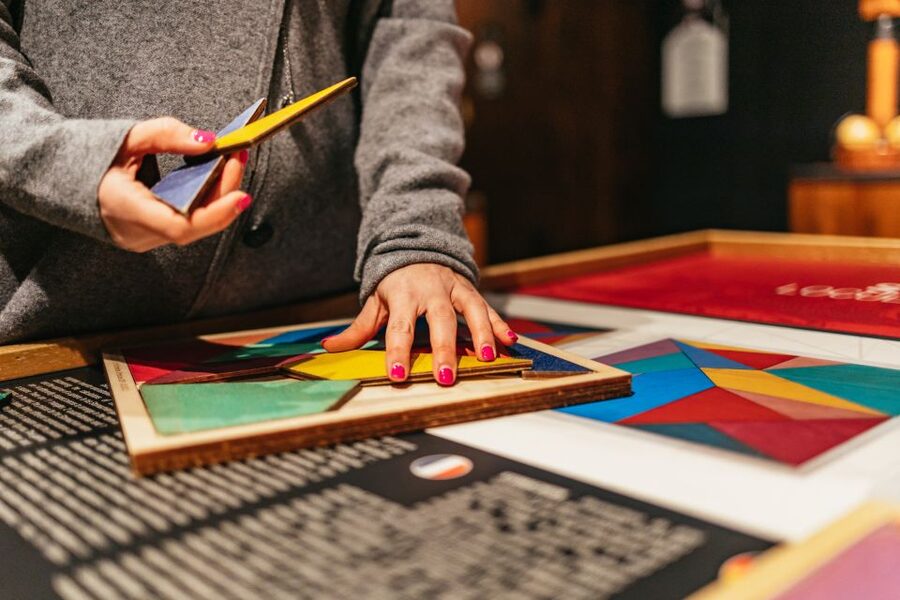
The museum also includes activities where you can build bridges, domes, and polyhedrons. These sections shift the focus from looking at Leonardo’s ideas to solving a small construction problem yourself.
That is valuable because Leonardo’s work was often about testing how parts fit together. A bridge is not just a shape on paper. It must carry weight and balance forces. A dome depends on the way pieces support one another. A polyhedron turns geometry into something you can hold.
I would give these activities extra time if you are visiting with children or teenagers. They provide a break from reading and make the visit feel like a workshop. Adults who enjoy puzzles, design, or science will find plenty to do as well, though the museum’s tone is clearly family-friendly.
The hands-on sections can become crowded. If several families reach the same popular machine, you may need to wait or move on and return later. The small size helps make the visit manageable, but it also means activity areas can feel busy when the museum fills.
A few more museum visits around Florence worth comparing
- Florence: Uffizi Gallery Timed Entry Ticket & Audio Guide
★ 4.2 · 2,794 reviews - Florence: Accademia Gallery Guided Tour with Entry Ticket
★ 4.6 · 2,253 reviews - Florence: Uffizi Gallery Small-Group Guided Tour with Ticket
★ 4.7 · 2,003 reviews - Florence: Accademia Gallery & David Skip-the-Line Ticket
★ 4.6 · 1,905 reviews
What the audio guide adds
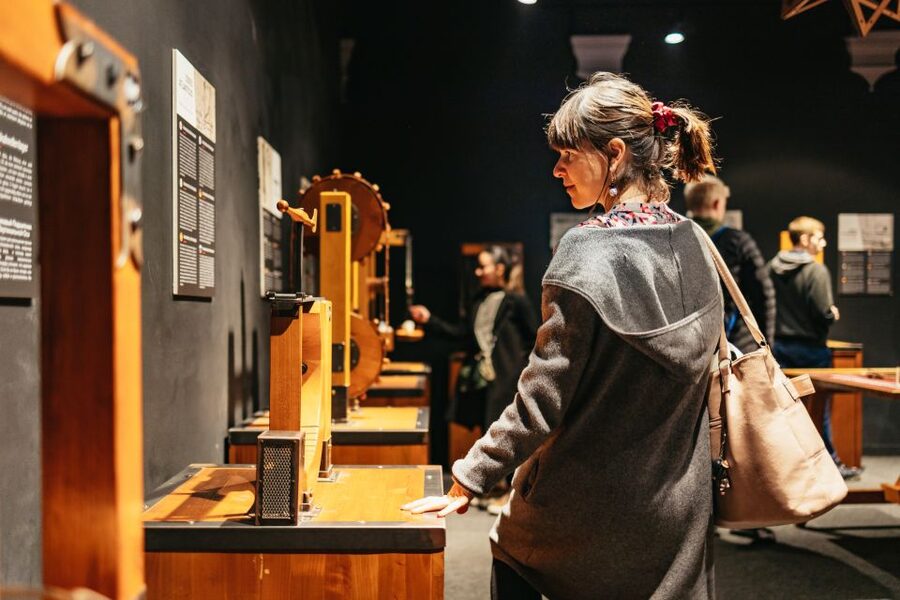
The included audio guide lets you explore without joining a scheduled group. It is available in Italian, English, French, Spanish, German, and Portuguese.
Bring earphones, since you listen through your own smartphone. The guide is useful for giving a short explanation of each section and helping you connect the machine in front of you with Leonardo’s wider work.
I would not rely on the audio alone. The museum’s best moments come from operating the models, and you should look closely at the diagrams and mechanisms as well. Use the audio as a companion, not as the entire visit.
The lack of a live guide has two sides. You do not get personal answers or a guide pointing out the best photo spots, but you also avoid being tied to someone else’s pace. If you want a detailed lecture on Leonardo’s life, this will feel light. If you want a clear and flexible introduction, the format works well.
How long you should allow
The stated duration is one hour, and that is a sensible target for most visitors. You can see the main machines, try several interactive stations, listen to selected audio sections, and look through the displays within that time.
Your pace will make a big difference. One visitor may move through in 30 minutes, especially if the museum is being added between larger Florence sights. Someone who reads the explanations and tests every available model may need 90 minutes.
I would schedule 60 minutes, with a little flexibility. Do not plan a tight connection immediately afterward if your children are enjoying the machines. The museum is small enough to fit into a busy day, but interesting enough to stretch when you let curiosity lead.
Early morning can be a good choice if you want more room at the displays. A visit around 10 a.m. has been described as quiet, though conditions can change. Booking a time slot online helps you avoid the main ticket queue.
Who will enjoy it most
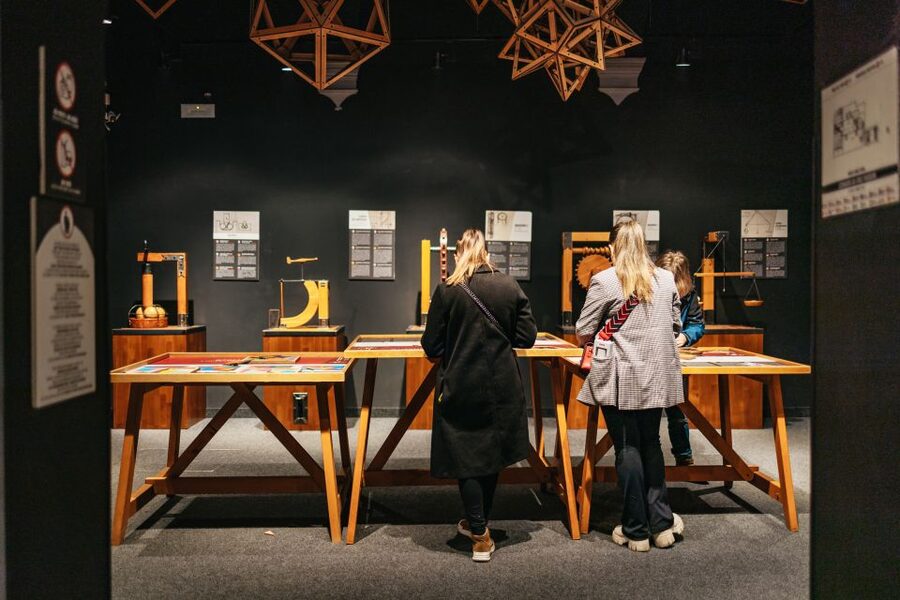
Families with school-age children are the clearest match. The museum gives children something to do with their hands, and the models turn lessons about force, gears, water, and construction into visible actions.
The official guidance says the experience is suitable for ages 7 or 8 and above and is not suitable for children under 7. A younger child might still enjoy moving parts, but the explanations and workshop elements are aimed at older children. The museum is not a dedicated preschool attraction.
Teenagers can also enjoy it, especially those interested in science, machines, design, or creative problem-solving. It offers a welcome change after several churches and art galleries where the rule is mostly look but do not touch.
Adults should not dismiss it as only a children’s stop. The models offer a useful look at Leonardo’s working method, and the machines make his drawings easier to read. Still, if you want original Renaissance objects, a large collection of paintings, or a formal scholarly presentation, choose another museum or add this as a short extra.
The museum also suits couples and solo visitors who want a quick, inexpensive activity near the city’s main sights. It is easy to visit without giving up half a day.
Price and value at $5
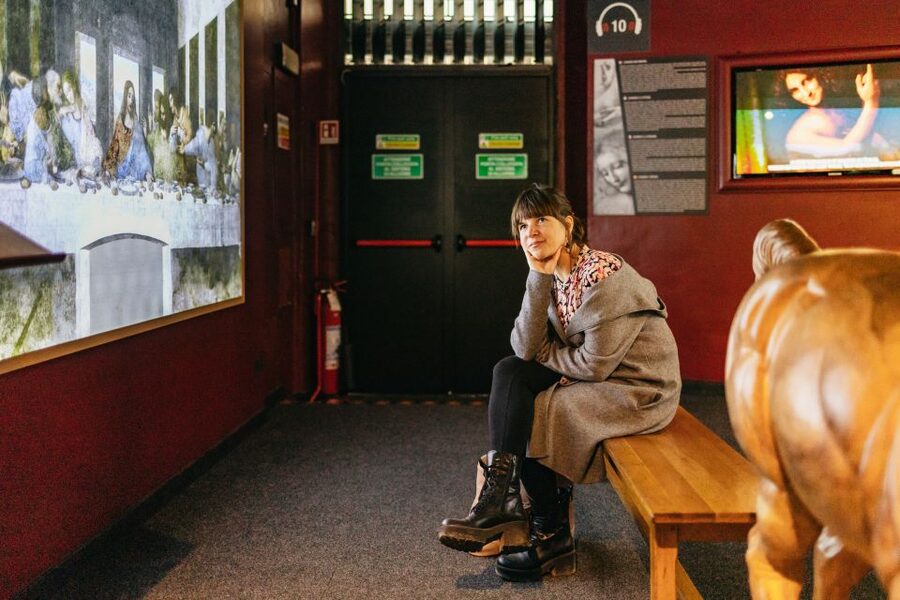
At $5 per person, this is one of the easier Florence experiences to justify. The price is low enough that you do not need the museum to carry an entire afternoon. You are paying for a focused, interactive hour in a very central location, with an audio guide and Wi-Fi included.
The value comes from the chance to operate the models. A standard display of Leonardo’s drawings might give you more historical detail, but it would not show you how a catapult, gear system, or water lift behaves. Here, the physical action does much of the teaching.
There are limits. The museum is smaller than some first-time visitors expect, and a fast visit can be over in 30 minutes. A few machines may be disabled, and not every display has the same level of explanation. If you need a major museum with many rooms, original works, and hours of material, $5 does not change that this is a short visit.
For a family, the price is particularly appealing because the museum offers an activity that can hold attention better than another room of static objects. For adults traveling without children, the value depends on your interest in mechanisms and Leonardo’s ideas.
How it compares with other Leonardo attractions
The museum is a good introduction, but it is not the only place in Tuscany connected with Leonardo. Vinci, Leonardo’s birthplace, has another historical museum and offers a different setting. Visiting both can help you see how the designs appear in more than one context.
Some displays may be similar across Leonardo-focused museums, so you do not need every version if your schedule is tight. The Florence museum wins on convenience. It is in the city center, close to the Duomo and Accademia, and takes about an hour.
Florence’s Galileo Museum is a better choice if you want a broader science museum experience. The Leonardo museum has a narrower focus and a more playful approach. Choose it for direct contact with da Vinci’s machines, not as a replacement for every science or art museum in Florence.
Small practical details that improve the visit
Book online if you want to avoid the ticket line and secure a time that fits your day. Since the museum uses timed entry, check the selected day and hour before setting off.
Bring your smartphone and earphones for the audio guide. The included languages are Italian, English, French, Spanish, German, and Portuguese.
Wear something that lets you move comfortably around the displays. You will be operating mechanisms, leaning in to inspect details, and taking part in construction activities. Use care with the machines, as the museum asks visitors to try them cautiously.
Do not expect a live guide. You will guide yourself through the rooms, which is ideal if your group has different interests or energy levels. If you prefer a person explaining every exhibit and answering questions, this format may feel too independent.
The museum is wheelchair accessible, but the supplied information does not detail the exact layout of every machine or workshop station. If you need a specific accessibility arrangement, confirm it before booking.
Should you book the Leonardo Interactive Museum?
Book it if you want a short, affordable, hands-on stop close to Florence’s biggest sights. I especially recommend it for families with children over 7, teenagers who like machines, and adults who want Leonardo’s drawings explained through moving parts rather than long labels.
Skip it if you are looking for original masterpieces, a large formal museum, or a full guided history of Leonardo’s life. Also think twice if your day is already packed with major museums and your group has little interest in puzzles or mechanical models.
For most people, the decision is simple: at $5, the risk is small, and the central location makes the museum easy to fit into a Florence itinerary. Allow an hour, bring earphones, ignore the misleading red signs near the Duomo, and give yourself time to turn the handles and see the ideas work.
FAQ
How much does entry to the Leonardo Interactive Museum cost?
The listed price is $5 per person.
How long does the museum visit take?
The stated duration is one hour. A quick visit may take about 30 minutes, while visitors who try the machines and read the explanations carefully may spend up to 90 minutes.
Is there a live guide?
No. The ticket includes an audio guide that you use on your smartphone with your own earphones.
Which languages are available for the audio guide?
The audio guide is available in Italian, English, French, Spanish, German, and Portuguese.
Is the museum suitable for children?
The museum is suitable for children aged about 7 or 8 and older. Children under 7 are not considered suitable for the experience.
Where is the museum located?
The entrance is in central Florence, a few steps from the Accademia Gallery and the Duomo.
Can I cancel my booking?
You can cancel up to 24 hours in advance for a full refund. A reserve-now, pay-later option is also available.
Just added around Florence
- Timed Entry Ticket to the Uffizi Gallery★ 4.5 · 498 reviews
- Florence: Accademia Gallery Entry Ticket with Audio Guide★ 4.1 · 88 reviews
- Florence: Skip-the-Line Tour of Uffizi & Accademia Galleries★ 4.4 · 14 reviews
- Florence: Skip-the-Line Accademia Gallery Entry Tickets★ 4.3 · 44 reviews
- Florence: Walking Tour with Skip-the-Line Accademia Gallery★ 4.6 · 148 reviews
- Florence: David’s Accademia Gallery Guided Tour★ 4.2 · 207 reviews
- Florence: Uffizi Gallery Private Tour w/ Skip-the-Line Entry★ 4.9 · 24 reviews
- Florence: 2-Hour Private Guided Visit to the Uffizi Gallery★ 4.8 · 15 reviews
Museum Tours in Florence, compared.

Skip-The-Line Uffizi Gallery Timed Entry Ticket
Read our review →
Florence Accademia Gallery Tour with Entrance Ticket Included
Read our review →
Uffizi Gallery: Renaissance Masterpieces Guided Tour
Read our review →
Uffizi Gallery Timed Entry Ticket & Audio Guide
Read our review →

Accademia Gallery Guided Tour with Entry Ticket
Read our review →Browse the lists this tour appears in