
Review · FLORENCE
Florence: Accademia Gallery Timed Entry Ticket
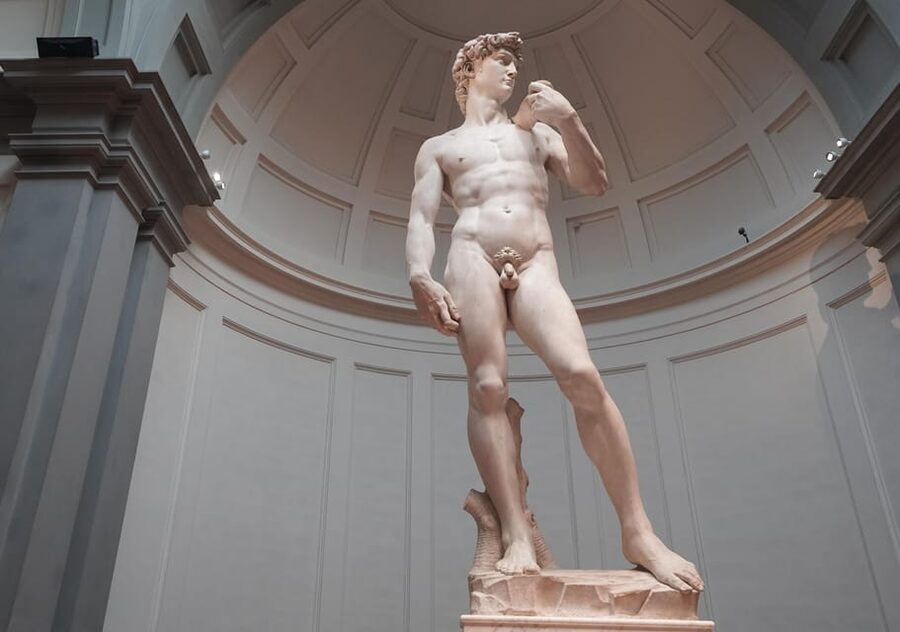
Michelangelo’s David is the reason most people enter Florence’s Accademia Gallery, and the first sight of that enormous marble figure is genuinely hard to forget. A timed ticket lets you bypass the ticket-office queue and focus on the museum rather than gambling on same-day availability.
I like the efficient one-hour format, especially if you have a packed Florence schedule. I also like that the visit includes more than David: you can see Michelangelo’s unfinished statues, original Medici instruments including three Stradivarius pieces, and a useful mobile audio guide.
The weak point is the meeting arrangement. You must exchange your voucher for a physical ticket at the blue meeting point near Ricasoli 45, and two recent bookings reported long waits or confusion about the date and location. Arrive early, read the instructions carefully, and do not ring the bell.
Key points to know before booking
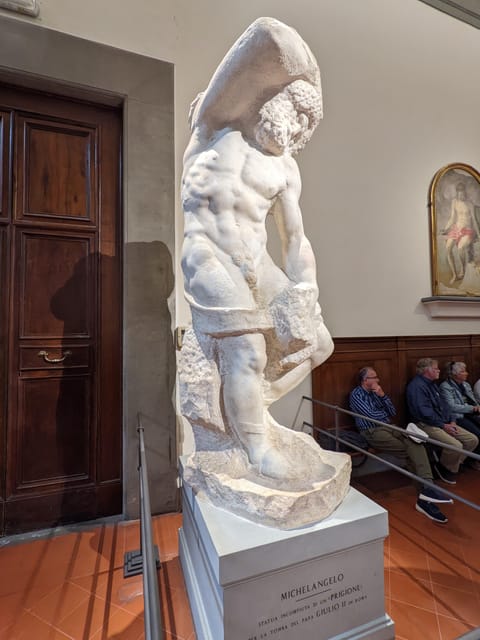
- David is the star attraction, but Michelangelo’s unfinished works nearby show how his chisel gradually released figures from the marble.
- Your timed ticket saves queue time, but you still need to meet the English-speaking assistant first and collect a physical ticket.
- The visit lasts about one hour, making it easy to fit between other Florence sights.
- The museum has more range than sculpture, with medieval and Renaissance paintings, huge altarpieces, plaster models, and Medici musical instruments.
- The $50 price buys convenience, not a private tour. There is no live guide, but a mobile audio guide application is included.
- Meeting-point care matters: use the blue point in front of the entrance area at Ricasoli 45, not an office, and keep your voucher and identification ready.
Seeing David without spending the morning in line
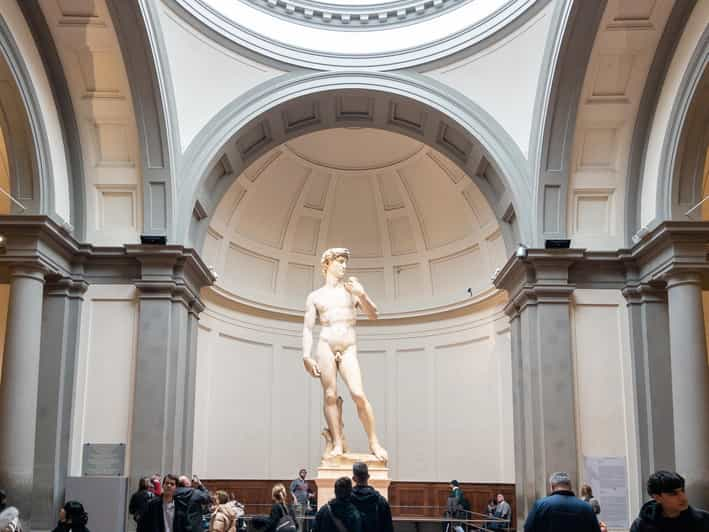
The Accademia Gallery is one of Florence’s most popular museums, largely because Michelangelo’s David draws a steady stream of people. A normal ticket-office wait can eat into a short city break, so the timed reservation has a clear practical benefit.
This ticket is designed for independent sightseeing. You meet a See Florence Italy assistant, receive the physical museum ticket, and enter at the reserved time through the designated separate entrance. You do not join a full guided group, and no live art historian leads you from room to room.
That arrangement suits me when I already know how I want to spend my time. You can look closely at David without being tied to someone else’s pace, then use the mobile audio guide application for extra context. The listing also mentions a PDF guide, so check your booking instructions to see how that material is delivered.
The $50 price is not cheap for a one-hour museum visit. It makes the most sense during busy periods, for a first visit to Florence, or for anyone who values a fixed schedule. You are paying for the reservation fee, ticket assistance, and the reduced risk of arriving to find that admission has sold out.
If your dates are flexible and you are comfortable handling museum entry yourself, a cheaper direct ticket may offer better value. This option is mainly about time and certainty, not personal guiding.
More Museum Tours in Florence
- Florence: Skip-The-Line Uffizi Gallery Timed Entry Ticket
★ 4.5 · 27,832 reviews - Florence: Leonardo Interactive Museum Entry Ticket
★ 4.5 · 12,957 reviews - Florence Accademia Gallery Tour with Entrance Ticket Included
★ 4.5 · 6,148 reviews
The meeting point at Ricasoli 45
This is the part I would handle with care. Your voucher is not the final admission ticket. You must exchange it for a physical ticket at the blue meeting point on Via Ricasoli 45, in front of the entrance door near the red point.
The instructions say the location is not an office. Do not ring a bell. Stay in front of the door and look for the See Florence Italy assistant, who is supposed to help you once you arrive.
Arrive with enough spare time to locate the point calmly. Florence’s center is easy to walk around, but the Accademia area can be crowded, and a rushed arrival leaves little room for confusion. Keep your booking details open on your phone and bring identification for each person listed on the reservation.
There have been problems with this step. One person waited more than 45 minutes because the contact did not appear, then asked museum staff for help. Another booking was apparently treated as being scheduled for the following day, and the assistant reportedly directed the visitor to a different door number before making calls.
Those incidents do not cancel out the convenience of a reserved entry, but they do change how I would plan. I would arrive early, double-check the date and time before leaving your hotel, and remain at the exact blue meeting point rather than walking to a nearby office or museum door.
The host or greeter is listed as English-speaking. A live tour is not included, so the assistant’s role is mainly ticket handover and entry help.
Michelangelo’s David and the Hall of Prisoners
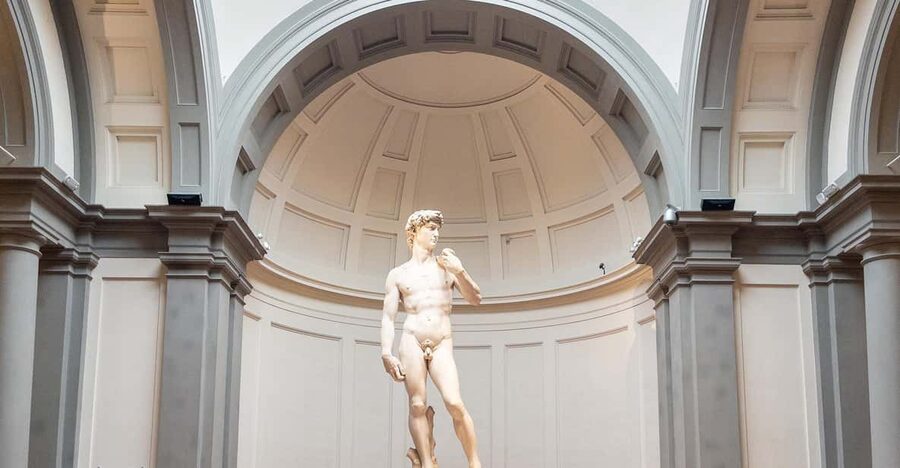
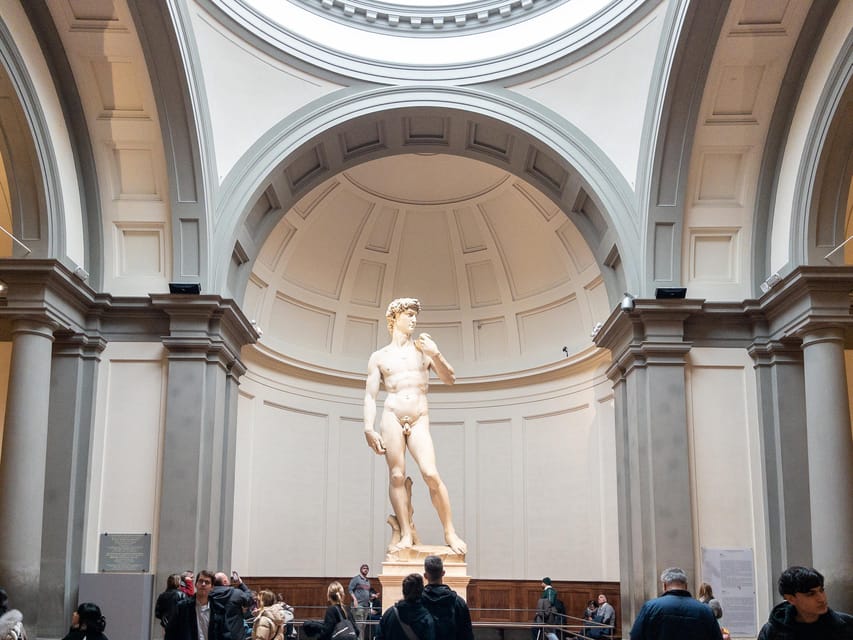
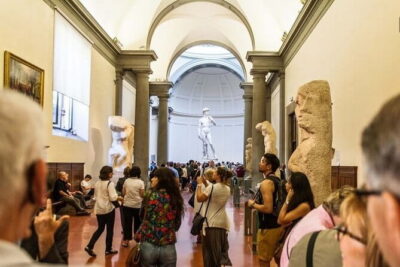
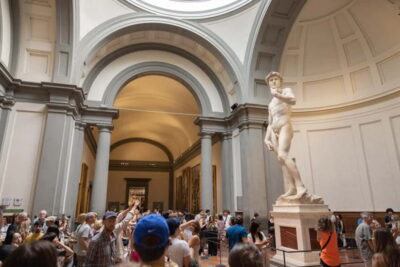
Once inside, head to the main hall. David is displayed at the end of the gallery, where you can see the sculpture from several angles as you approach.
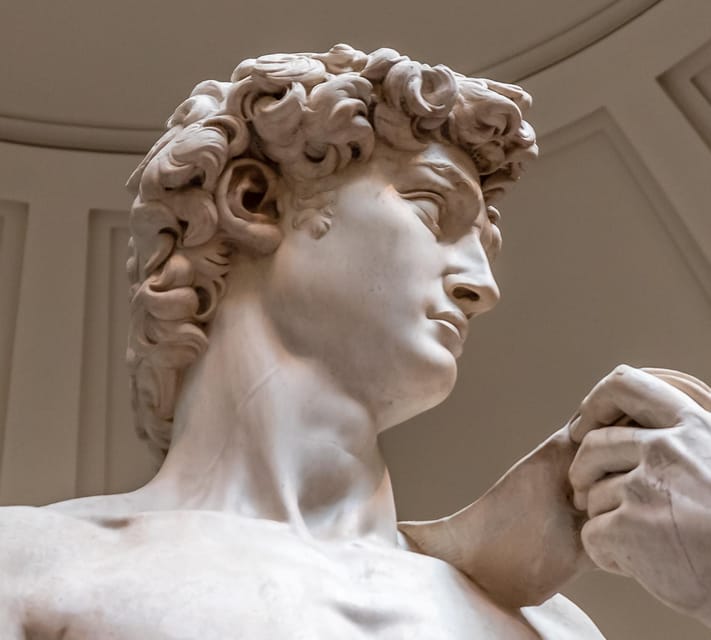
The statue represents David before his fight with Goliath. Even without an art lecture, the scale and attention to the human body are easy to appreciate. You can study the hands, face, stance, and carved surface at close range. This is not a quick glimpse from a distant balcony. The gallery places you near the work, which is the main reason the museum belongs on a Florence itinerary.
Give yourself a few minutes before reaching for your phone. Look at the figure as a whole, then notice the small details that make the marble feel alert rather than still. Flash photography is not allowed, so use ordinary photography only if museum rules permit it.
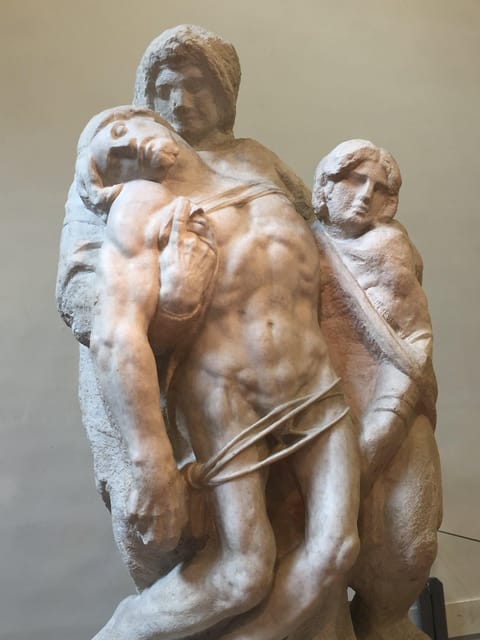
Nearby, Michelangelo’s unfinished sculptures offer a useful contrast. These figures still appear to emerge from their blocks, with visible chisel marks on the marble. The rough sections let you see the work in progress rather than only the polished final result.
I find this pairing especially valuable. David shows the finished power of Michelangelo’s craft, while the unfinished pieces expose the physical process behind it. You do not need technical art training to understand the difference. Smooth anatomy and rough stone sit close together, making the comparison immediate.
The main hall can become the busiest part of your visit. Spend your best attention here, then move on before you become tired of looking upward at David. A one-hour ticket gives you enough time for the major rooms, but not enough for a slow study of every painting and sculpture.
The Gipsoteca and its plaster models
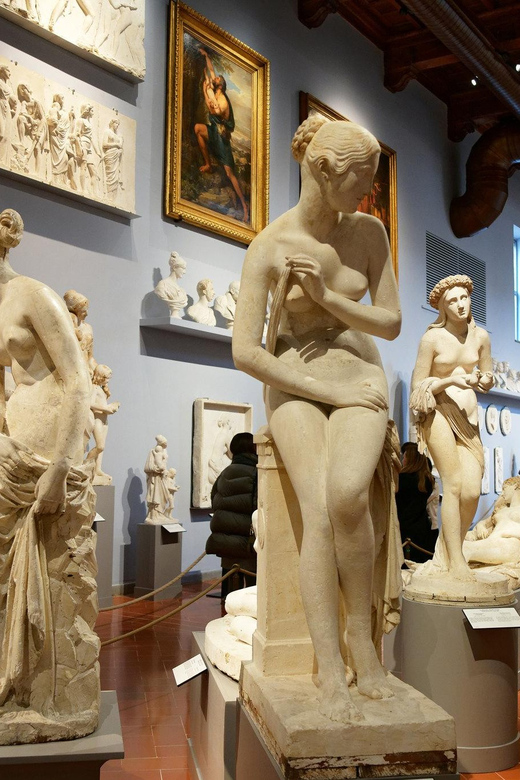
The Gipsoteca contains original plaster models made by nineteenth-century Florentine sculptors. These are not the same kind of work as Michelangelo’s marble sculptures, but they add another layer to the museum’s story.
Plaster models help show how sculptors planned and developed finished pieces. Their pale surfaces and repeated forms may feel less dramatic than David, yet they reward a slower glance. You can compare scale, pose, and modeling without the pressure of the main hall.
This room will probably appeal most to people who like process. If you are visiting only for David, it is easy to hurry through. I would still include it, particularly because the ticket is already covering the whole museum and the gallery does not take long to cross.
The contrast between the Gipsoteca and Michelangelo’s unfinished works is useful. One presents working models connected with later Florentine sculpture. The other shows rough marble and chisel marks from an earlier master. Together, they remind you that a finished statue is the final stage of a long sequence of planning and physical labor.
More ways to see the David:
- Florence: Accademia Gallery Guided Tour
★ 4.6 · 4,156 reviews - Florence: Accademia Gallery Skip-the-Line Guided Tour
★ 4.8 · 3,044 reviews - Florence: Art Tour, Accademia Gallery and David
★ 4.5 · 2,407 reviews - Florence: Accademia Gallery Guided Tour with Entry Ticket
★ 4.6 · 2,253 reviews
Medici instruments and three Stradivarius pieces
The musical instrument collection adds an unexpected change of pace. It includes original instruments connected with the Medici, including three made by Stradivarius.
You may arrive expecting only sculpture and painting, so this section gives the visit a welcome surprise. The instruments connect the museum to court culture and the collecting interests of Florence’s ruling family. They also give you something delicate and finely made to examine after the large, forceful marble figures.
The collection is not presented here as a separate concert or demonstration. You see the instruments as museum objects. There is no indication that music is performed during the visit, so think of this as a display rather than an interactive stop.
If you are traveling with someone who is less interested in Renaissance sculpture, the instruments may help keep the museum visit varied. They are also a good reason not to treat the Accademia as a single-object museum. David gets the attention, but the Medici collection broadens the experience.
Renaissance paintings and the top-floor altarpieces
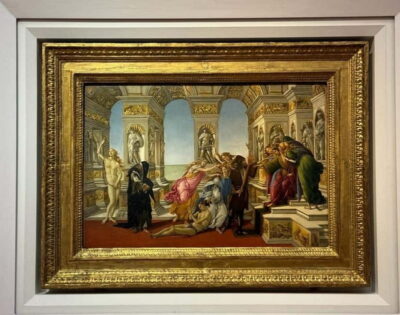
After the sculpture halls, continue to the painting galleries. You can see works by medieval and Renaissance painters, with styles that change as you move through the rooms.
The paintings give you a different way to understand Florentine art. Sculptures occupy space around you, while painted altarpieces organize attention through color, figures, and religious scenes. You may find the change refreshing after the visual force of David.
The top floor holds large medieval altarpieces. Their size is part of the appeal. These works were made to command attention in churches, and even in a museum setting they retain a strong sense of scale.
You do not need to identify every painter to enjoy this section. Instead, notice how the huge panels were arranged, how many figures are packed into a single composition, and how different the medieval works feel from the more natural forms of the Renaissance.
Time is the main drawback. The one-hour duration is enough for a clear overview, but it is short if you want to read every label, listen to the entire audio guide, and study David at length. I would reserve the first part of your visit for the main hall, then use the remaining time for the Gipsoteca, instruments, and painting floors.
What the $50 ticket really buys you
At $50 per person, this is a convenience ticket rather than a budget museum visit. The cost includes timed admission, a reservation fee, skip-the-line handling, meeting-point assistance, and a mobile audio guide application.
There is no hotel pickup or drop-off. There is no live guided tour, and a headset is not included. The English-speaking host helps with the entry process, but you should not expect a personal explanation of every work.
I would call the price reasonable when Florence is crowded or your day is tightly planned. Losing an hour in a queue can cost more than the ticket premium if you have only a short stay. It is also useful if you want to guarantee a visit to David instead of leaving admission to chance.
For a relaxed visitor with several days in Florence, the calculation is different. You may prefer to compare this price with the museum’s direct options before booking. The strongest value here is the reserved time and assistance, not the added interpretation.
The cancellation terms are friendly: you can cancel up to 24 hours ahead for a full refund. You can also reserve now and pay later, which helps if your Florence schedule is still changing.
Practical details for families and access needs
The activity is listed as wheelchair accessible. The supplied information does not describe the exact route or equipment, so if you need a specific access arrangement, confirm it before booking.
Bring a passport or national ID card. A copy is accepted according to the instructions. Children aged 6 to 17 need valid photo identification showing their date of birth to receive the reduced ticket. Without that ID, they may be charged the adult price.
Children under six do not need a ticket. That can make the visit easier for families with very young children, though the one-hour museum format may be most comfortable for older children who can appreciate David and the instruments.
Pets, weapons, and sharp objects are not allowed. Flash photography, alcohol, and drugs are also prohibited. Do not bring alcoholic drinks into a vehicle, although transportation is not part of this activity.
Who will get the most from this visit
I would recommend this ticket to a first-time Florence visitor who wants to see David at a set time and does not need a private guide. It also fits independent art lovers who prefer to move at their own speed.
It suits:
- People with only a few hours in Florence
- Visitors who want to avoid the ticket-office line
- Families able to bring the required identification
- Museumgoers who like sculpture, paintings, and musical instruments in one compact visit
- Visitors comfortable using a mobile audio guide rather than joining a live tour
I would think twice if you are looking for a detailed art lesson from a specialist. The guide is digital, and the host is there for ticket assistance. I would also be cautious if you dislike meeting-point arrangements or cannot arrive early enough to deal with a possible delay.
The rating attached to this experience is 4.4 out of 5 from 157 bookings, with especially strong praise for seeing David up close and for the artwork overall. The lower scores focus on the contact person failing to appear and confusion over the meeting location or date. That tells me the museum itself is the dependable part; the handoff before entry is where you need to pay attention.
Should you book the Accademia timed ticket?
Book it if David is a must-see, your Florence schedule is tight, and you value a reserved entrance more than the lowest possible price. The unfinished Michelangelo works, Medici instruments, and Renaissance paintings make the hour worthwhile, even though David remains the clear focus.
Skip it if you want a full guided tour, hotel transportation, or a long scholarly visit. You can also consider another ticket source if you are comfortable arranging admission on your own.
For the best chance of a smooth visit, verify the date, arrive early at the blue point near Ricasoli 45, do not ring the bell, and wait in front of the stated door for the See Florence Italy assistant. Do that, and this becomes a compact, practical way to meet one of Florence’s most famous works without surrendering half your day to a queue.
FAQ
How long does the Accademia Gallery visit last?
The stated duration is one hour. Check the available starting times when booking.
Is a live guided tour included?
No. The activity includes an audio guide mobile application and a PDF guide, but not a live guided tour or headset.
Where do I collect the physical ticket?
You exchange your voucher at the blue meeting point near Via Ricasoli 45, in front of the entrance door and near the red point. It is not an office, and you should not ring any bell.
What identification should I bring?
Bring a passport or ID card for each person. A copy is accepted according to the activity information. Children aged 6 to 17 need photo ID showing their date of birth to receive the reduced ticket.
Do children under six need a ticket?
No. Children under six do not require a ticket.
Is the Accademia Gallery wheelchair accessible?
The activity is listed as wheelchair accessible. The supplied information does not give further details about the accessible route or equipment.
Can I cancel the booking?
Yes. You can cancel up to 24 hours in advance for a full refund. The activity also offers a reserve-now-and-pay-later option.
Just added around Florence
- Timed Entry Ticket to the Uffizi Gallery★ 4.5 · 498 reviews
- Florence: Accademia Gallery Entry Ticket with Audio Guide★ 4.1 · 88 reviews
- Florence: Skip-the-Line Tour of Uffizi & Accademia Galleries★ 4.4 · 14 reviews
- Florence: Skip-the-Line Accademia Gallery Entry Tickets★ 4.3 · 44 reviews
- Florence: Walking Tour with Skip-the-Line Accademia Gallery★ 4.6 · 148 reviews
- Florence: David’s Accademia Gallery Guided Tour★ 4.2 · 207 reviews
- Florence: Uffizi Gallery Private Tour w/ Skip-the-Line Entry★ 4.9 · 24 reviews
- Florence: 2-Hour Private Guided Visit to the Uffizi Gallery★ 4.8 · 15 reviews
Museum Tours in Florence, compared.
Skip-The-Line Uffizi Gallery Timed Entry Ticket
Read our review →
Florence Accademia Gallery Tour with Entrance Ticket Included
Read our review →
Uffizi Gallery: Renaissance Masterpieces Guided Tour
Read our review →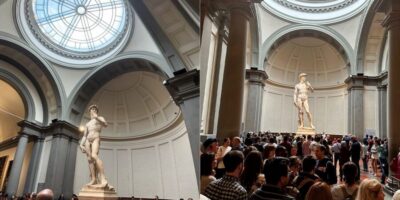
Uffizi Gallery Timed Entry Ticket & Audio Guide
Read our review →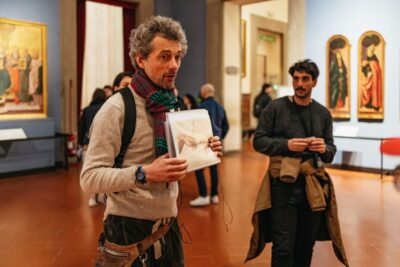
Browse the lists this tour appears in