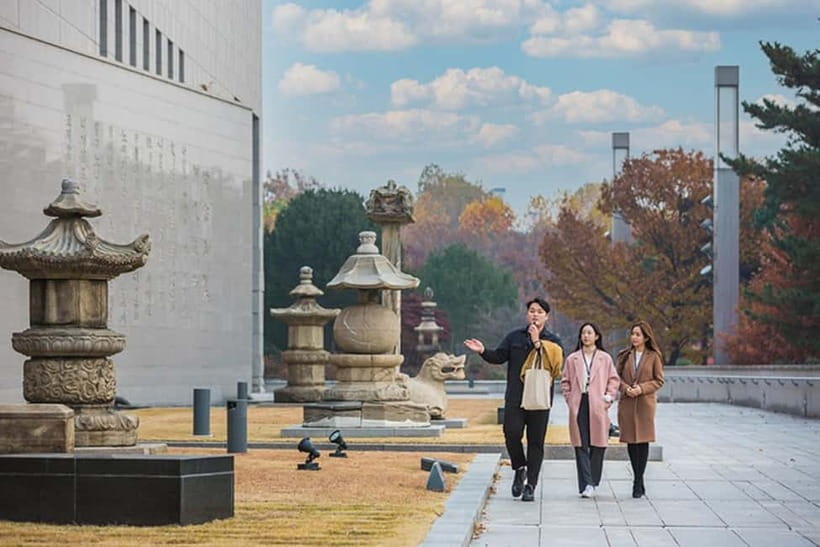
Review · GUIDED
Seoul: National Museum of Korea Guided Tour
The most interesting part of this National Museum of Korea tour is its focus beyond the entrance hall. In two hours, your guide connects Buddhist art, ceramics, and daily Korean life, helping you see why objects such as a hand axe and comb-pattern pottery matter.
I like the small group, limited to 10 people, and the chance to ask detailed questions. I also like the cultural focus: this is not just a march past display cases, but a guided look at Korean taste, belief, and craft. The main drawback is timing. Two hours gives you a useful introduction, but not enough time to see the entire museum, and weekend or holiday reservations cannot be confirmed.
Key points to know before you book
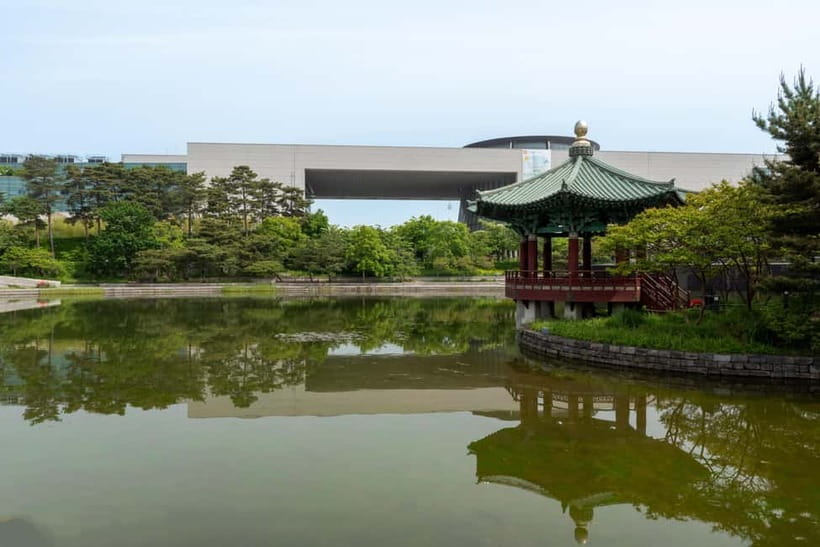
- Two-hour museum focus: Spend your time on Korean Buddhism, ceramics, and selected cultural treasures rather than trying to cover every gallery.
- Small English-speaking group: The group is limited to 10 participants, which makes questions easier than on a large coach tour.
- A guide-led introduction: Recent guides have included Sue, Sally, Minju, and MJ, with a strong emphasis on history and cultural context.
- A central meeting place inside the museum: Meet at the Great Hall, on the first-floor lobby of the Exhibition Hall.
- A useful first visit: This tour gives you a framework for returning to the museum on your own and exploring further.
- Check the minimum group size: If fewer than four people book, the tour may be canceled by WhatsApp.
Why the National Museum of Korea needs a guided visit
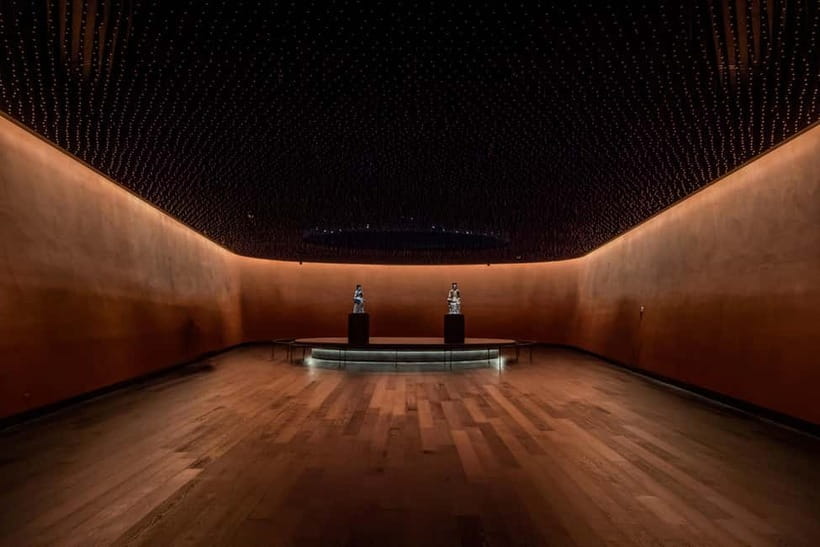
The National Museum of Korea is the sort of place where a quick look can leave you with only a blur of beautiful objects. You may remember the grand entrance, a few statues, and perhaps a large ceramic piece, but the meaning behind those objects can slip away.
This tour gives the collection a clear shape. Rather than treating Korean history as a long line of dates, it uses two major themes: Buddhism and ceramics. Those subjects reveal how people worshipped, decorated their homes, expressed social status, and developed ideas about beauty.
I find that approach useful because museums often arrange objects by period or material, while you experience them through questions. Why was this item made? Who used it? What did its design say about the maker or owner? A good guide helps you ask those questions at the right moment.
The tour also points toward less obvious objects. A 2017 museum survey found that the hand axe and comb-pattern pottery were among the exhibits people remembered most. That is a useful reminder that Korea’s story begins long before royal palaces and famous Buddhist statues. Ordinary tools and early pottery can tell you just as much about human life.
A few more museum visits around the world worth comparing
- Vatican Museums, Sistine Chapel & St Peter’s Basilica Guided Tour
★ 4.5 · 39,149 reviews - Rome: Vatican Museums & Sistine Chapel Guided Tour
★ 4.3 · 12,117 reviews - Louvre Museum Masterpieces Guided Tour with Access
★ 4.5 · 12,023 reviews
Meeting at the Great Hall
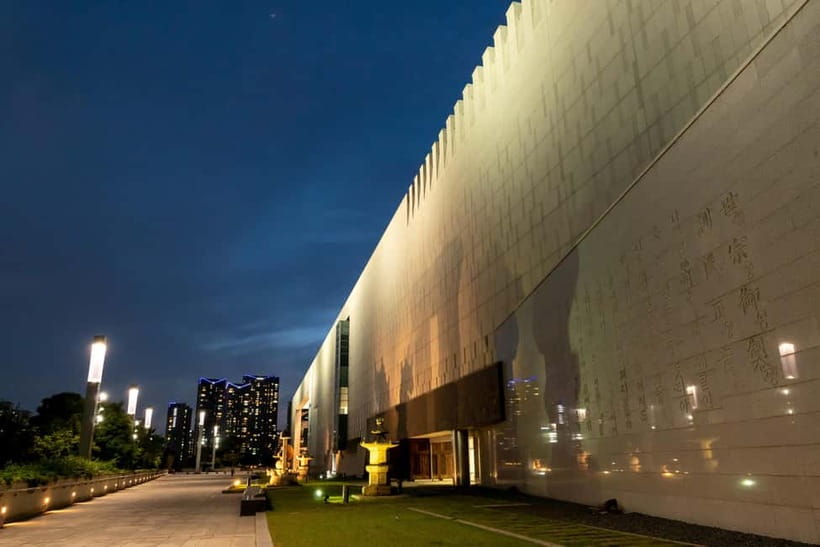
Your meeting point is the Great Hall, in the first-floor lobby of the Exhibition Hall at the National Museum of Korea. This is an important detail because the museum is large, and arriving at the wrong entrance or gallery could cost you precious time.
Your guide communicates the meeting time and related details by email or WhatsApp. I would check those messages before leaving for the museum, especially because reservations cannot be confirmed on weekends and holidays. The tour itself is in English.
Once the group gathers, expect a short orientation before moving into the collection. The group size is capped at 10, so you are not dealing with a large crowd trying to hear a guide across a huge room. That smaller format matters most when you have a question or want a closer explanation of a particular object.
The museum admission is included in the $38 price. You do not need to purchase a separate museum ticket for the guided visit.
Ancient tools and comb-pattern pottery
The tour’s wider story begins with early Korea, not with the most famous works in the building. The hand axe and comb-pattern pottery are useful starting points because they show how much can be learned from simple objects.
A hand axe is practical and direct. It speaks to work, survival, and the ability to shape stone for a purpose. Comb-pattern pottery, with its distinctive surface decoration, brings in another side of early life: making, design, and the wish to give a useful vessel a recognizable look.
I like this part of the concept because it prevents the tour from becoming a parade of elite objects. Korea’s past was shaped by ordinary tools, household vessels, religious objects, and skilled craft workers, not only by rulers.
Your guide may use these pieces to show how material culture changes over time. You will not simply be told that an artifact is old. You will be encouraged to consider what its form, decoration, and use reveal about the people who made it.
Since the tour lasts two hours, the guide must choose carefully. That is a strength if you want a clear introduction, but a limitation if your main goal is to inspect every prehistoric gallery. Think of this as a selected route with explanation, not a complete museum survey.
Buddhist art and Korea’s spiritual life
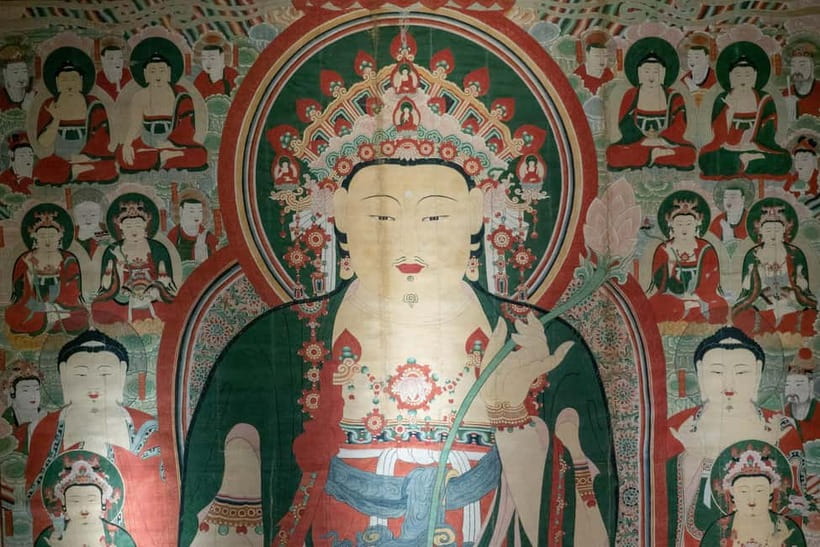
Buddhism is one of the tour’s main subjects, and it gives the collection an important human dimension. Religious objects were not made only to look beautiful. They helped people express faith, create sacred spaces, and understand the world around them.
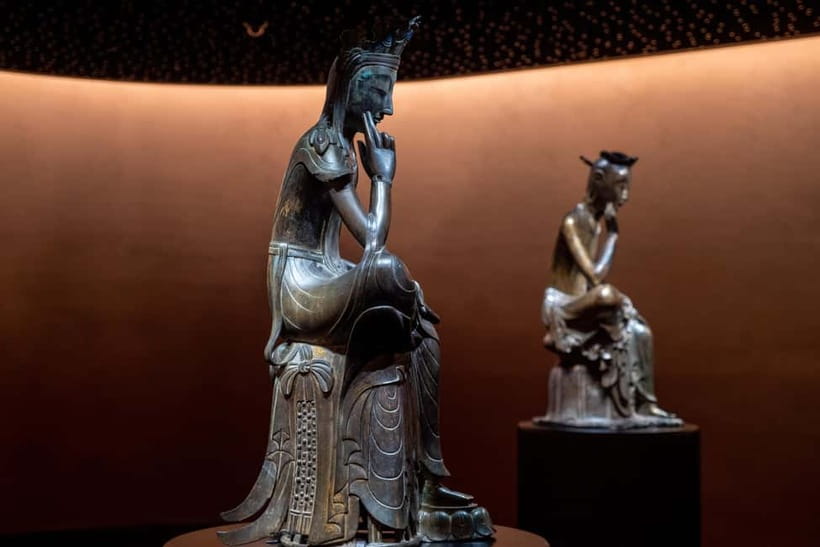
A guide can explain how a statue, ritual object, or image fits into Korean religious life. You may notice posture, hand position, facial expression, clothing, and the treatment of the body in a new way. These details are easier to appreciate when someone explains what they communicate.
I especially value the chance to connect religious art with everyday culture. Buddhism influenced architecture, sculpture, painting, and craft. Its effect was not limited to temples. It helped shape ideas about calm, discipline, compassion, and refined beauty.
The guides who have led recent sessions include Sue, Sally, Minju, and MJ. Their approaches may differ, but the strongest theme in the available feedback is clear explanation. One guide, MJ, is described as bringing a perspective shaped by Filipino, Chinese, Korean, and American cultural backgrounds. That kind of comparison can help you notice how national identity and personal experience affect the way history is explained.
You should still expect interpretation rather than a religious service or hands-on activity. The value lies in learning how to look at the objects and understand their place in Korean culture.
Same city, a completely different collection:
- Vatican: Museums & Sistine Chapel Entrance Ticket
★ 4.5 · 144,003 reviews - Vatican Museums, Sistine Chapel & St. Peter’s Basilica Tour
★ 4.3 · 73,970 reviews - Paris: Louvre Museum Timed-Entrance Ticket
★ 4.6 · 71,977 reviews - Amsterdam: Van Gogh Museum Ticket
★ 4.7 · 52,054 reviews
Ceramics, restraint, and Korean beauty
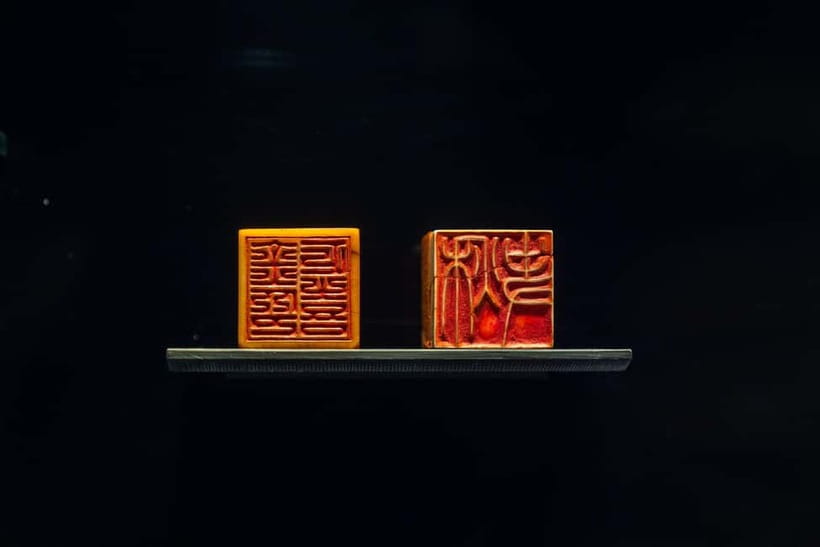
Ceramics are the second major thread. Korea’s pottery traditions offer a useful lesson in the difference between decoration and restraint. Shapes, glazes, colors, and small irregularities can carry ideas about taste and craftsmanship.
Your guide connects ceramics to everyday life, not just museum display. A vessel may have served a practical purpose, but its form also reflects the maker’s decisions and the owner’s sense of beauty. Looking at ceramics in this way makes the gallery less about fragile bowls and more about how people lived.
The tour description emphasizes Korean elegance and refined taste. That language can sound vague without examples, so listen for the concrete details your guide gives you. The important point is not that every Korean object looks the same. It is that craft traditions reveal changing ideas about simplicity, balance, usefulness, and beauty.
This is another area where a small group helps. You can ask why one ceramic piece seems plain while another is more decorated, or how a certain style fits into a period of Korean history. The guide can answer at the case rather than saving every question for the end.
If ceramics are your main interest, two hours may leave you wanting more. That is not a flaw in the collection or the tour. The museum is simply too large for a complete treatment in one sitting. The guided route gives you a foundation, then leaves room for a return visit.
What the guides add to the experience
The strongest praise for this experience centers on the guides’ ability to explain history clearly and keep the visit moving. One guide was noted for answering questions in detail and staying direct. Another was praised for presenting an overview that made the visitor want to return and explore the museum further.
That is the right role for a museum guide. You do not need a speech at every display. You need someone who knows which objects matter, explains why they matter, and notices when the group needs a simpler explanation.
Recent sessions have included Sue, Sally, Minju, and MJ. Minju has been praised for telling historical stories in an engaging way, while Sue has been described as patient and clear when explaining both objects and cultural context. MJ has been appreciated for her passion for Korean culture and her ability to discuss Korean identity from more than one cultural viewpoint.
Guide assignments can change, so you should not book on the assumption that a particular person will lead your tour unless the provider confirms it. Still, the repeated emphasis on patience, detail, and clear storytelling is encouraging.
You should also feel free to bring questions. The experience is especially well suited to people who want to understand how Korea developed, rather than simply collect photographs of famous artifacts.
Is $38 good value for two hours?
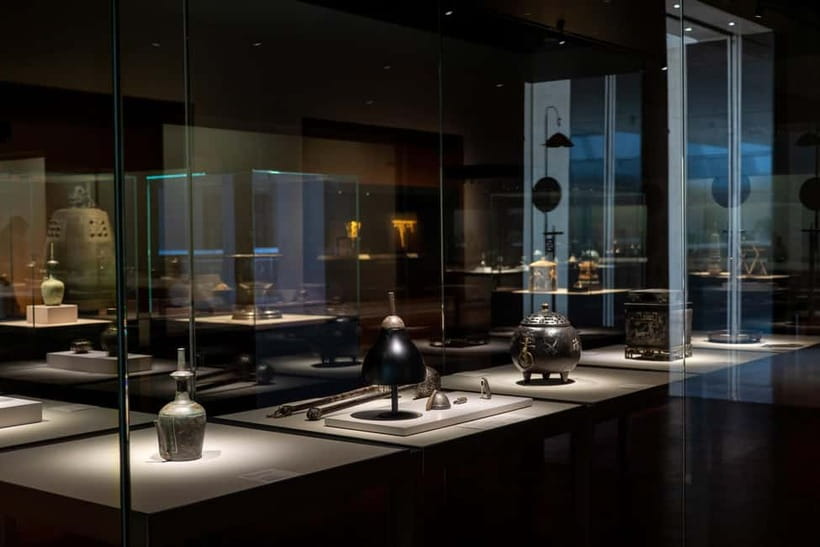
At $38 per person, this is not the cheapest way to enter a museum. Admission is included, but the main thing you are paying for is interpretation and structure.
I think the price makes sense if you are visiting Seoul for a limited time, feel unsure where to begin, or want the collection explained in English. A large national museum can be free or inexpensive to enter on your own, but wandering without a plan may mean missing the objects and connections that make the visit worthwhile.
The value is strongest for first-time visitors. In two hours, you get a guided introduction to prehistoric objects, Buddhist art, ceramics, and Korean cultural ideas. You also gain a route for a later self-guided visit.
The value is weaker if you already know the museum well or prefer to read every label at your own pace. You will have less control over the route and the amount of time spent at each display. Art specialists may also want a longer, more focused program.
A small group improves the price comparison. With no more than 10 participants, the guide can respond to questions and adjust explanations. That is more personal than a large group tour, though the exact quality will depend on the guide assigned that day.
Planning around the two-hour format
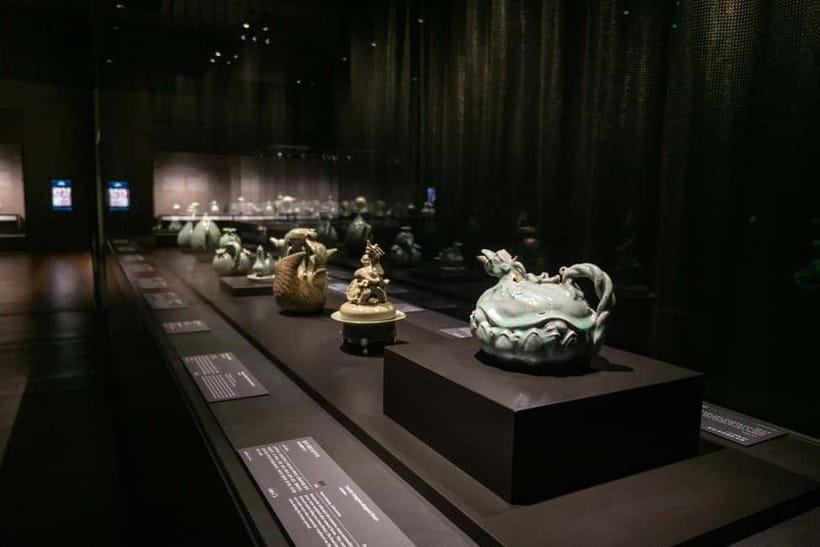
Two hours is long enough for a focused introduction and short enough to fit into a busy Seoul itinerary. You can pair it with other time in the museum if you want to continue exploring independently.
Do not expect to see every gallery. The tour is built around selected themes, especially Buddhism and ceramics, with early objects such as the hand axe and comb-pattern pottery helping set the wider context.
The museum meeting point is indoors, which is helpful, but you should still allow time to find the Great Hall and first-floor Exhibition Hall lobby. Read the email or WhatsApp message carefully for the confirmed time and meeting instructions.
The tour needs at least four participants to operate. If the number falls below that level, cancellation is possible, with notice sent through WhatsApp. This makes it wise to keep some flexibility in your Seoul schedule.
You can cancel for a full refund up to 24 hours in advance. A same-day cancellation or no-show receives no refund. If you have allergies, tell the provider ahead of time, even though food is not described as part of the activity.
Who should book this museum tour?
I would recommend it to a first-time visitor who wants Korean history explained in plain English. It is also a good match for anyone who enjoys asking questions, likes art but does not know how to read museum objects, or wants more cultural context than a standard sightseeing stop provides.
Families and mixed-age groups may appreciate the short format and selected themes, though the supplied information does not specify a minimum age or a child-focused program. People with a strong interest in Buddhist art or ceramics should find the subject matter especially useful.
I would be more cautious if you want a full-day museum study, a private tour, or a guaranteed particular guide. None of those is promised. The tour is a small-group introduction, not a specialist seminar.
Should you book the National Museum of Korea guided tour?
Book it if you want the museum to make sense quickly. The combination of early tools, comb-pattern pottery, Buddhist art, and ceramics gives you a stronger grasp of Korean culture than a rushed walk through the entrance galleries.
The best reason to go is the guide-led explanation. Sue, Sally, Minju, and MJ have each been praised for clear storytelling, patience, detailed answers, and a real interest in Korean history. The small group makes those qualities more useful because you can take part in the conversation.
Skip it if you prefer complete freedom, already understand the collection, or want to spend several hours on one narrow art period. For most first-time visitors to Seoul, though, $38 is a reasonable price for a focused two-hour introduction, museum admission, and a better sense of what to see when you return on your own.
FAQ
How long is the National Museum of Korea guided tour?
The tour lasts two hours.
What language is the tour conducted in?
The live tour guide speaks English.
Where do I meet the guide?
Meet at the Great Hall, in the first-floor lobby of the Exhibition Hall at the National Museum of Korea.
Is museum admission included?
Yes. Admission to the National Museum of Korea and a local tour guide are included.
How many people are in the group?
The group is limited to 10 participants.
Can I cancel for a refund?
You can cancel up to 24 hours before the tour for a full refund. No refund is provided for a no-show or cancellation on the day of the tour.
Just added around the world
- Girona, Figueres, Dalí Museum and Cadaqués Tour from Barcelona★ 4.5 · 36 reviews
- Erotic Museum Admission Ticket with Audioguide★ 5.0 · 527 reviews
- Dali Museum and Costa Brava Small Group Day Trip from Barcelona★ 5.0 · 77 reviews
- Football Club Barcelona Museum Immersive Tour Guided Visit★ 3.5 · 52 reviews
- Madrid by High-Speed Train with Prado Museum Private Tour★ 4.0 · 33 reviews
- Guitar Legends Hall: Entrance to the Immersive Rock Museum★ 5.0 · 25 reviews
- White Rabbit Museum: The Best Immersive Experience in Catalonia★ 5.0 · 538 reviews
- Private Dali Museum, Besalú & Girona Tour from Barcelona★ 5.0 · 15 reviews
Guided, compared.
Vatican Museums, Sistine Chapel & St Peter’s Basilica Guided Tour
Read our review →
Vatican Museums & Sistine Chapel Guided Tour
Read our review →
Louvre Museum Masterpieces Guided Tour with Access
Read our review →
Acropolis, Parthenon & Acropolis Museum Guided Tour
Read our review →
The Acropolis, Parthenon & Acropolis Museum Guided Tour
Read our review →
Louvre Museum – Exclusive Guided Tour (Entry Included)
Read our review →
Uffizi Gallery: Renaissance Masterpieces Guided Tour
Read our review →