
Review · THAILAND
Samui:Elephant Jungle experience & The First Elephant Museum
The most valuable part of this three-hour Samui experience is the chance to see rescued elephants walking freely through the jungle, rather than performing tricks or bathing for an audience. You begin with Thailand’s elephant heritage at the museum, then move outside to watch the animals forage, wander, and interact at their own pace.
I like the hands-off approach and the seed-bomb activity, which gives you something useful to do beyond taking pictures. Guides such as Angie, Katy, and Noot are praised for clear explanations and real care for the animals. The trade-off is that the museum and teaching portion takes a good share of the visit, so anyone hoping for a long period right beside the elephants may find the field time short.
Key points to know before you book
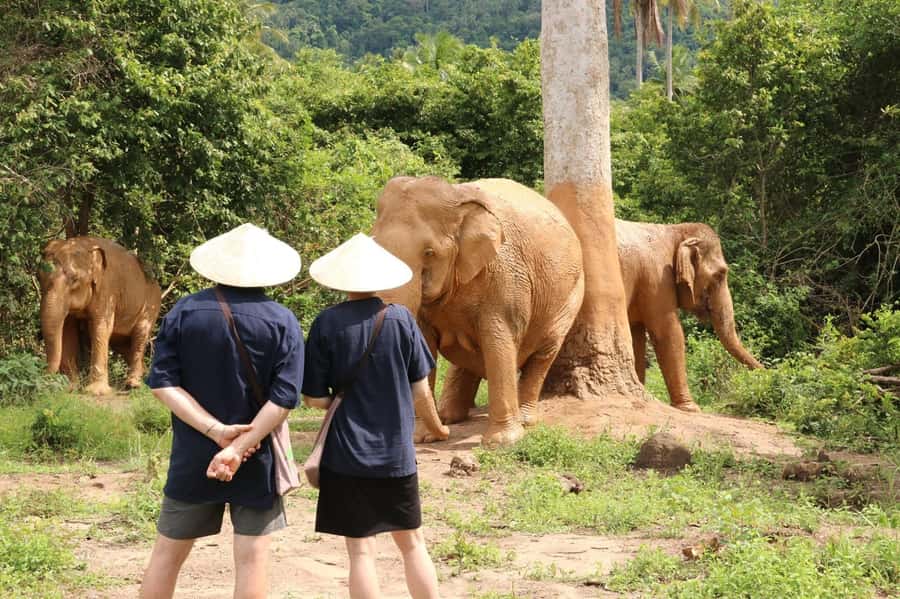
- Rescued elephants roam in the forest: You watch natural behavior instead of staged shows.
- Samui’s first Elephant Museum: Learn how elephants shaped Thai work, culture, spirituality, and daily life.
- No forced mud bath: The program avoids an activity that can be stressful or unsafe for elephants.
- Seed bombs support future food sources: You make clay-and-seed balls and launch them into the forest with a traditional slingshot.
- Strong guides make the difference: Angie, Katy, and Noot are noted for clear English, warmth, and detailed elephant knowledge.
- Three hours with hotel pickup: Roundtrip transfer around Koh Samui, insurance, a welcome drink, and a live English guide are included.
A thoughtful alternative to elephant entertainment
Koh Samui has no shortage of animal attractions, but the details matter. This program is built around observation, education, and care. You are not promised a performance, a ride, or a dramatic bathing session. Instead, you learn why elephants need space and then watch them use it.
That may sound less exciting on paper. In practice, it can be more rewarding. An elephant choosing where to walk, what to eat, or when to rest tells you more about its real behavior than an animal following a routine for a crowd.
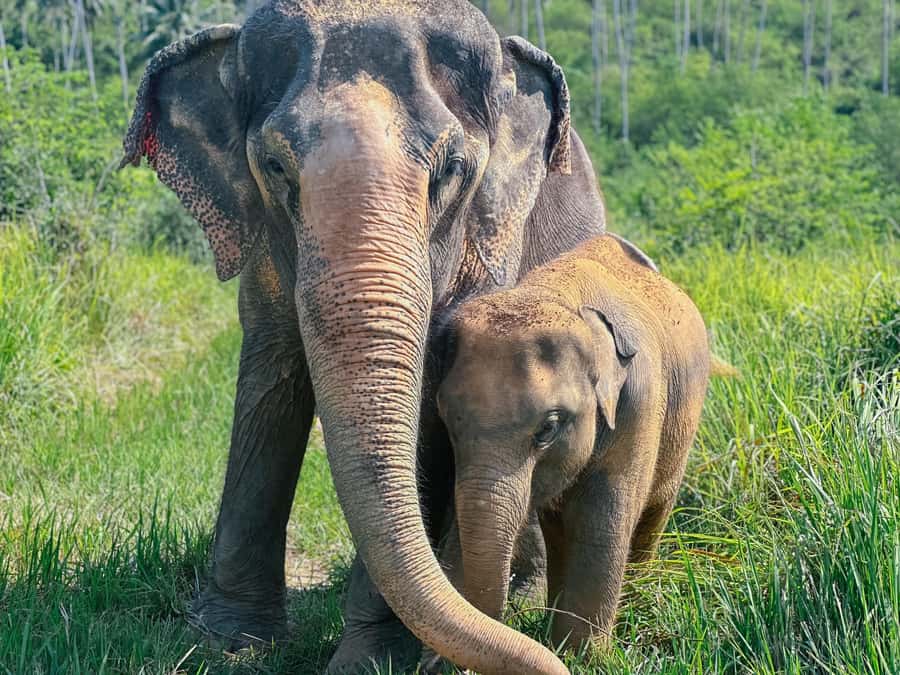
The center cares for nine rescued elephants, including eight adult females and one young male. The elephants’ past lives are part of the educational story, but the focus is on their present welfare and future care. You learn how rescue changes an elephant’s daily life and why proper food, shade, water, and quiet routines matter.
I especially like that the program explains what it does not offer. Mud bathing is avoided because close contact in that setting can be dangerous. You may have a chance to feed elephants, and some sessions allow limited touching, but the overall message is clear: the animal decides how much contact is comfortable.
A few more museum visits around Thailand worth comparing
- Takua Pa: Food Market, Tsunami Museum, Temple, & Old Town
★ 4.9 · 165 reviews - Samut Prakan: The Erawan Museum Admission Ticket (NON THAI)
★ 4.8 · 89 reviews - Chiang Mai: Art in Paradise Illusion Museum Entry Ticket
★ 4.4 · 82 reviews
Starting at Samui’s Elephant Museum
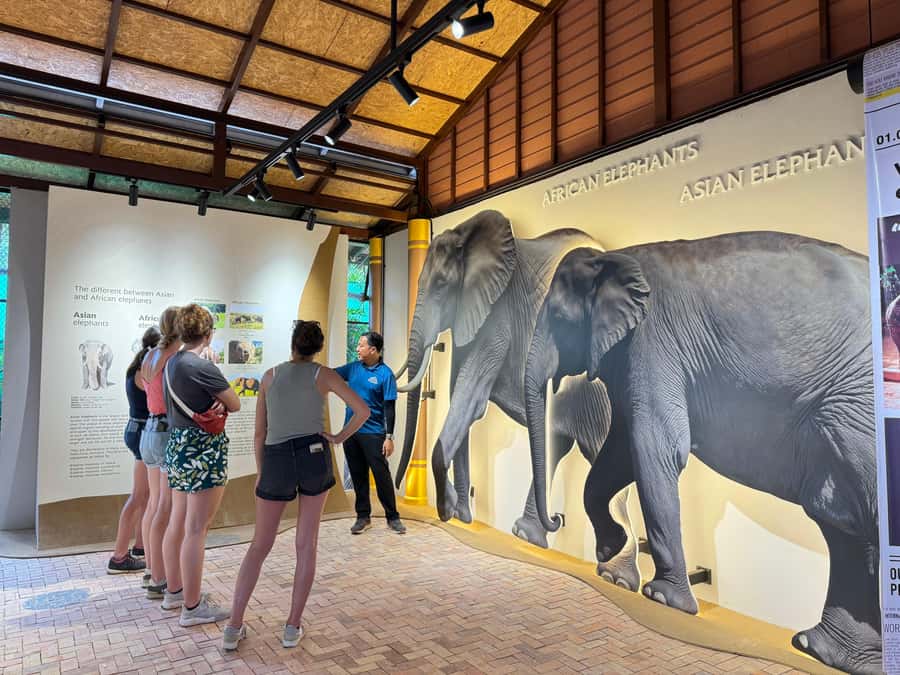
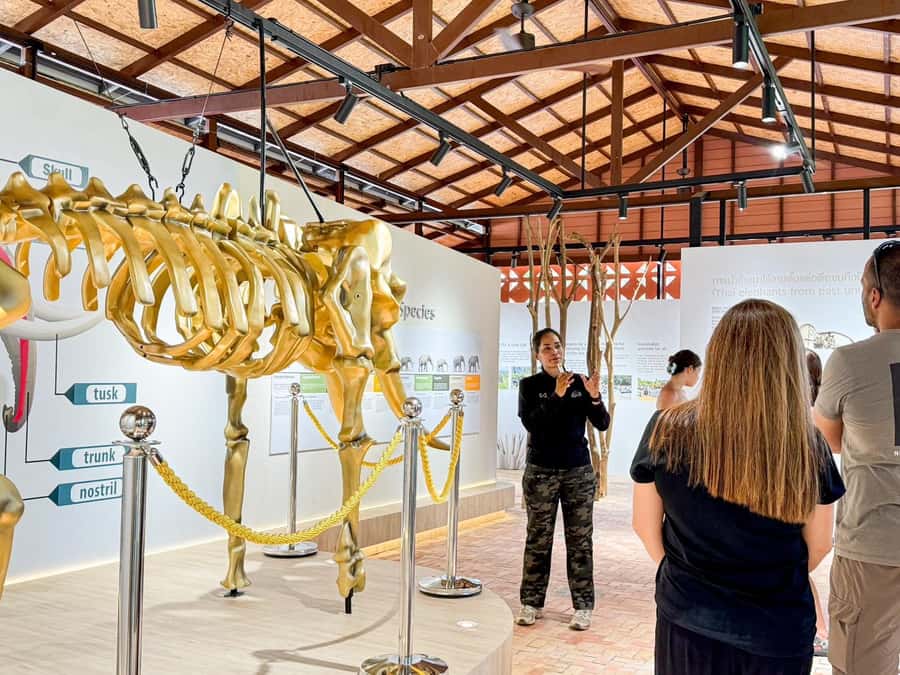
The visit begins at Samui Elephant Home, with a welcome drink, safety briefing, and guided museum visit. The museum is not just a holding area before the outdoor part. It sets up the cultural side of the experience.
Inside, you learn about the long relationship between elephants and Thai people. Displays and storytelling cover their role in work, religious life, national identity, and everyday society. This helps explain why elephant care in Thailand is not only an animal welfare issue. It is also tied to culture and changing ideas about responsible tourism.
Your guide leads the presentation in English and explains the exhibits in a conversational way. Angie is frequently praised for making the information easy to follow, while Katy and Noot are also noted for their strong explanations and friendly manner. The exact guide depends on the day, but the English-language format is part of the experience.
The museum lasts about an hour, including the safety briefing and class-style instruction. That is a reasonable amount of time if you enjoy context and want to understand the program before meeting the elephants. If you mainly want photographs, it may feel long. One practical lesson from the structure is simple: this is an educational visit with elephants, not a photo stop with a short lecture attached.
Walking into the jungle with the elephants
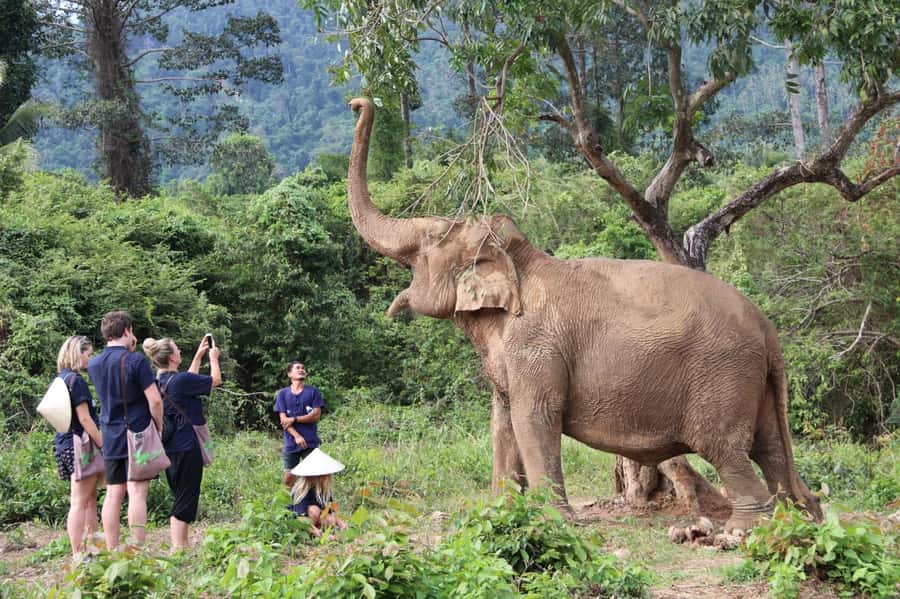
The outdoor portion lasts about an hour and a half. You walk through the forest and observe the elephants in a setting designed to let them move freely. They may forage, explore, rest, or keep their distance. That uncertainty is part of the point.
You are not following a fixed animal performance schedule. Your guide explains each elephant’s personality, social links, and habits while reminding you to respect personal space. The result feels calmer than a typical animal attraction, though it also means you should not expect every elephant to come close on demand.
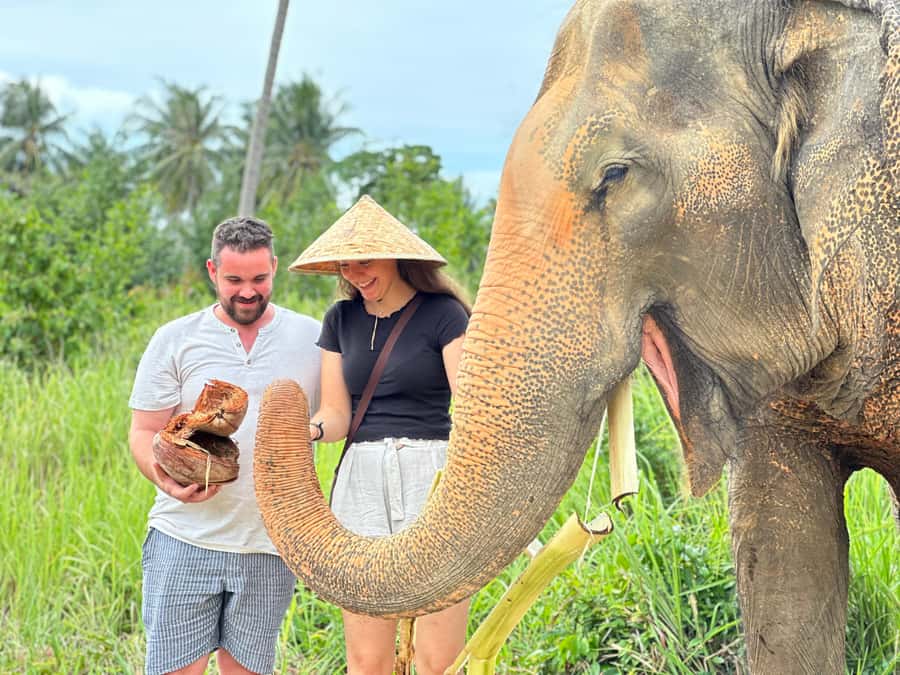
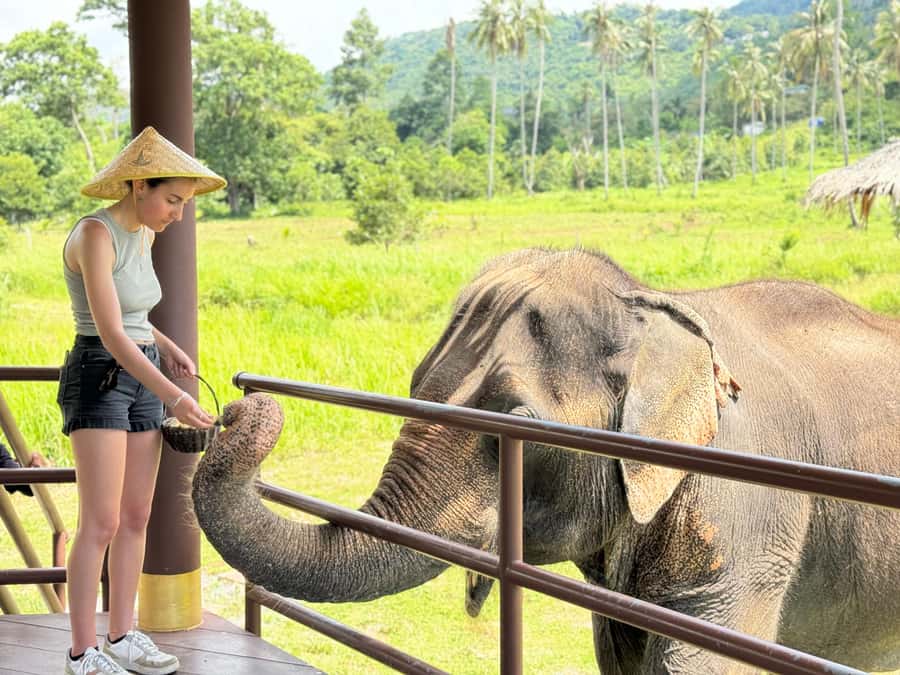
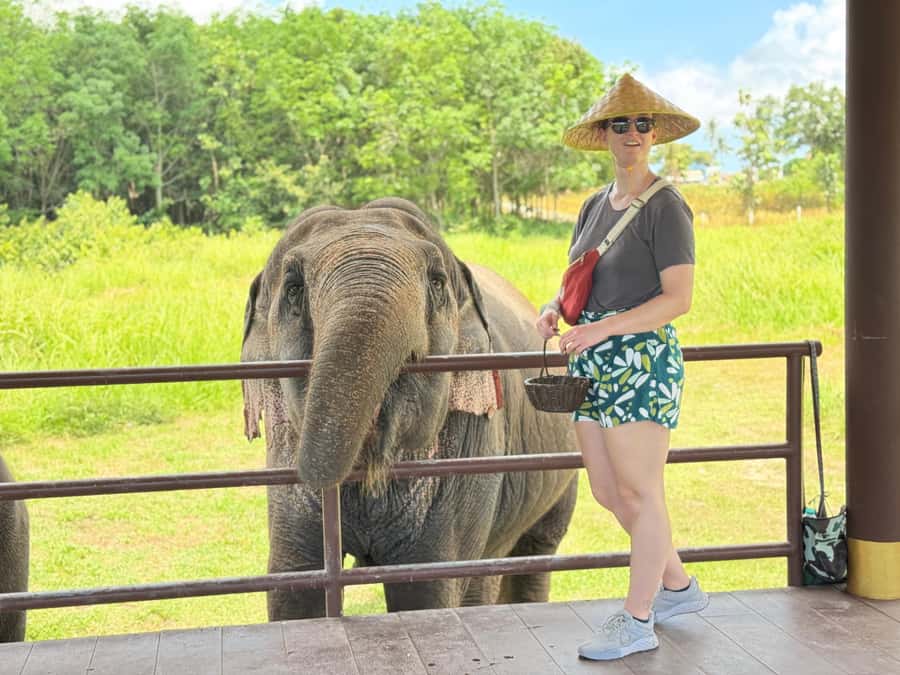
Feeding can be included under staff direction, with treats such as bananas, sugarcane, or other prepared food. The emphasis is on offering food safely rather than calling an elephant over for a staged picture. Some people may be allowed to touch an elephant briefly, but the program’s strongest feature is its mostly hands-off policy.
That policy is worth taking seriously. Elephants are large, powerful animals, even when they seem gentle. Keeping contact limited protects you and the animals, and it gives you a better chance to see behavior that is not shaped by constant human handling.
The young male elephant can be a memorable part of the visit. He is described as playful and cheeky, while the adult females offer a chance to observe more settled social behavior. You might not see every animal at close range, but the group gives the guide plenty to explain.
How ethical feeding and care are explained
At some point during the outdoor visit, mahouts demonstrate how organic food is prepared for the elephants. This is a useful detail that many quick animal encounters skip. Food is not just a pile of treats. It supports health, energy, growth, and recovery.
Your guide explains dietary needs and how food choices can change with age and condition. You see that care involves regular preparation and close attention, not only affection. The demonstration also helps put feeding into perspective. A banana offered by a visitor is a small treat, while the elephants’ overall wellbeing depends on a steady, suitable diet.
The mahouts’ role is another important part of the experience. They know the individual animals and help manage the visit without turning it into a show. Watch how they respond to the elephants’ pace and mood. The calm tone of the program works best when you also stay calm, keep your voice controlled, and follow instructions.
You should bring a camera if you like, but do not let it become the main event. The center asks you to respect the animals’ space, and that means waiting for a photograph rather than stepping closer for one.
Same city, a completely different collection:
- Skip the Line: Patpong Museum Guided Tour
★ 5.0 · 80 reviews - Pattaya: Art in Paradise 3D Museum Discounted Ticket
★ 4.6 · 75 reviews - Bangkok: Ancient City Muang Boran and Erawan Museum Tour
★ 4.7 · 55 reviews - Khao Lak Eco-Safari: Elephants, Tsunami Museum, and Turtles
★ 4.7 · 50 reviews
Making seed bombs for the forest
The conservation activity is a clever addition. You use clay and native plant seeds to make seed bombs, then launch them into forest areas with a traditional slingshot. The aim is to help restore plant growth and create future food sources for the elephants.
This is not a substitute for large-scale habitat work, but it gives you a clear connection between tourism and care. You are not simply observing a rescue center and leaving. You take part in a small action that supports the forest environment around the elephants.
The activity is also a welcome change of pace after the museum and guided explanations. Families and older children may find the slingshot especially entertaining, though you still need to follow the staff’s directions and use it responsibly. The seeds are the important part, not hitting a target.
Planting pumpkin seeds has been part of some visits, and the larger idea is the same: support vegetation that can help feed the elephants in the future. It is a modest activity, but it makes the conservation message practical and memorable.
Watching elephants cool down naturally
Thailand’s tropical heat shapes the final part of the program. After walking through the jungle, you learn how the mahouts help the elephants stay comfortable without forcing them into a bathing routine.
Shade, water, and quiet time are central. You observe the elephants cooling down naturally and learn why allowing them to choose their behavior is better than directing them into a tourist activity. Some elephants may spend time resting, while others may continue moving or feeding.
This section is a good reminder that ethical care can look uneventful. There is no need for loud excitement. A comfortable elephant in the shade is a success, even if it produces a less dramatic photograph.
The program’s decision not to include mud bathing is one of its more sensible choices. Many visitors want close contact, but an activity that looks fun for people can create pressure or risk for the animal. Here, the priority is comfort and choice.
What the three-hour schedule feels like
The advertised duration is three hours, with roughly one hour at the museum and about an hour and a half outdoors. The remaining time allows for the welcome, safety guidance, movement between areas, and the final return.
Roundtrip hotel pickup is included around Koh Samui. You are asked to wait in the hotel lobby about 15 minutes before the scheduled pickup time. That is useful on an island where traffic and hotel access can vary, and it saves you from arranging a separate taxi.
The group size can make a noticeable difference. Some departures are small, with only four people, which allows more room for questions and a quieter visit. The supplied details do not promise a fixed group size, so you should not book on the assumption that every departure will be private.
The center is wheelchair accessible, but the outdoor section includes walking and forest paths. If mobility is a concern, contact the provider before booking to confirm how the route will work on your chosen day.
Wear comfortable walking shoes. A hat, sunscreen, insect repellent, and water-friendly clothing are sensible choices for a warm jungle setting. Alcohol and drugs are not allowed, and cameras are fine for personal use as long as you keep the animals’ space in mind.
Is the $64 price good value?
At $64 per person, this is not the cheapest elephant encounter on Koh Samui. The price includes roundtrip hotel transfer, full insurance, a welcome drink, the museum, an English-speaking guide, the jungle walk, the seed-bomb activity, and supervised learning about elephant care.
I consider that a fair package for a three-hour program, particularly if you value transport and education. A cheaper visit might offer a shorter contact session but less context, less conservation work, or fewer included services. Here, part of what you pay for is the decision to let the elephants set the pace.
The value depends on what you want. If your priority is touching an elephant for as long as possible, this may not satisfy you. If you want to understand Thai elephant culture, see rescued animals living with more freedom, and support a center that emphasizes welfare, the price makes better sense.
The strongest value comes from the combination of the museum and the forest. You leave with cultural background, practical information about nutrition, and a clearer idea of what responsible elephant tourism should look like.
Who should book this Samui experience?
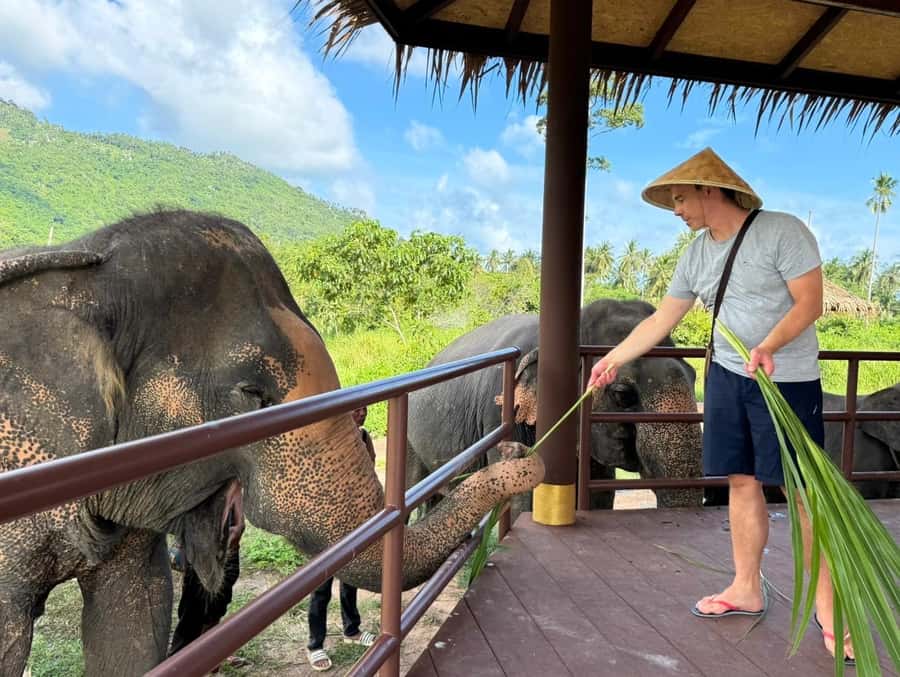
I would recommend it to families, couples, first-time visitors to Koh Samui, and anyone who wants an animal encounter without a show. It also suits people who prefer a guide-led experience with a clear educational purpose.
The program works well for visitors who care about conservation but still want some close connection. You may feed the elephants, and limited touching may happen, but the center does not treat contact as the main product.
It is less suitable if you want a long hike, a full-day wildlife outing, or guaranteed close-up photographs. The museum takes time, the elephants choose their distance, and the outdoor walk is structured around observation rather than chasing a perfect encounter.
English is the stated tour language. Wheelchair access is available, though you should confirm the practical details of the walking section if you need assistance.
Booking flexibility and practical details
You can cancel up to 24 hours before the activity for a full refund. The reserve-now, pay-later option lets you hold a place without paying immediately, which is useful when your island plans are still shifting.
The tour includes insurance and hotel pickup, but you should still arrive prepared for heat, insects, and walking. Bring comfortable shoes, a hat, sunscreen, insect repellent, and a camera if you want one.
Keep your expectations realistic. The best moments may be quiet ones: an elephant selecting leaves, a mahout preparing food, or a young animal playing without being prompted. That is exactly what gives this experience its value.
Should you book it?
Book this tour if you want ethical elephant viewing with real explanation, not a staged animal show. The museum, the seed bombs, the food demonstration, and the natural cooling routine give the three hours a clear purpose.
I would be especially comfortable recommending it to anyone who wants to avoid forced bathing and constant touching. Guides such as Angie, Katy, and Noot add a personal touch, and the center’s focus on rescued elephants gives the visit emotional weight without making it purely sentimental.
Skip it if your only goal is extended hands-on contact. The field time may feel brief to you, and the museum requires patience. For most visitors, though, the balance is right: enough contact to feel connected, enough distance to respect the animals, and enough education to understand why that distance matters.
FAQ
How long is the Samui Elephant Home experience?
The activity lasts three hours. About one hour is devoted to the museum, guided learning, and safety briefing, followed by roughly one and a half hours of outdoor walking and elephant viewing.
Is hotel pickup included?
Yes. Roundtrip transfer from hotels around Koh Samui is included. You are asked to wait in your hotel lobby about 15 minutes before the scheduled pickup time.
What language is the tour conducted in?
The tour is conducted in English with a live guide. Guides who lead the experience include Angie, Katy, and Noot, depending on the departure.
Can I feed or touch the elephants?
You may feed the elephants under staff supervision, with treats such as bananas or sugarcane. Limited touching may be possible, but the program follows a mostly hands-off approach and asks you to respect the animals’ space.
Does the experience include elephant bathing or mud bathing?
No. The program does not include mud bathing with the elephants. It explains how shade, water, and calm routines allow the animals to cool down naturally.
What should I bring?
Bring comfortable walking shoes, a hat, sunscreen, insect repellent, and a camera if desired. Cameras are allowed for personal use, but you must respect the elephants’ space.
Can I cancel the booking?
Yes. You can cancel up to 24 hours in advance for a full refund. The reserve-now, pay-later option is also available.
Just added around Thailand
- Private Guided Day Tour to Erawan Museum & Ancient City★ 4.5 · 25 reviews
- Skip the Line: Patpong Museum Guided Tour★ 5.0 · 80 reviews
- Samut Prakan: Erawan Museum Discounted Admission Ticket★ 4.8 · 20 reviews
- Pattaya: Buddha, Floating Market, Gems Museum Tour & Lunch★ 3.7 · 31 reviews
- Pattaya: Art in Paradise 3D Museum Discounted Ticket★ 4.6 · 75 reviews
- Khao Lak Eco-Safari: Elephants, Tsunami Museum, and Turtles★ 4.7 · 50 reviews
- Bangkok: Floating Market, Dragon Temple, Na Satta Museum★ 4.9 · 16 reviews
- Chiang Mai: Museum of Broken Relationships Entry Ticket★ 4.7 · 25 reviews
Museum Tours in Thailand, compared.
Takua Pa: Food Market, Tsunami Museum, Temple, & Old Town
Read our review →
Samut Prakan: The Erawan Museum Admission Ticket (NON THAI)
Read our review →
Chiang Mai: Art in Paradise Illusion Museum Entry Ticket
Read our review →

Pattaya: Art in Paradise 3D Museum Discounted Ticket
Read our review →

Khao Lak Eco-Safari: Elephants, Tsunami Museum, and Turtles
Read our review →
Pattaya: Buddha, Floating Market, Gems Museum Tour & Lunch
Read our review →Browse the lists this tour appears in