
Review · ROME
Rome: Private Capitoline Museums Tour
The best part of this private Capitoline Museums tour is the way it links Rome’s famous symbols to the actual streets, ruins, and artworks around you. You begin in Michelangelo’s elegant square, meet the She Wolf and Marcus Aurelius, then look down toward the Roman Forum from the museum itself.
I like the private format, since your guide can keep the visit focused instead of marching a large group from room to room. I also like the strong mix of art and archaeology: marble statues, bronze sculpture, ancient temple remains, and one of Rome’s finest city views all fit into 2.5 hours.
The main consideration is access. The museum has one elevator, but it does not reach every level, so this tour is not suitable for wheelchair users or people with limited mobility. Large bags and video recording are also not allowed.
Key points at a glance
- Michelangelo’s Capitoline Square: Begin outside with one of Rome’s most carefully designed public spaces.
- The She Wolf: See the bronze symbol of Rome in the collection that helped shape the city’s public museums.
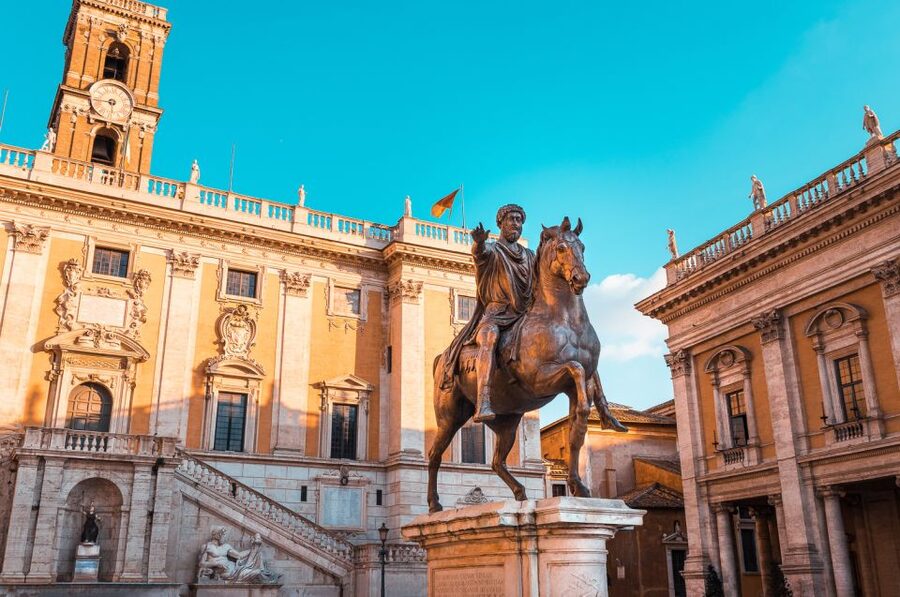
- Marcus Aurelius in bronze: Enter the Marcus Aurelius Exedra and view the famous second-century statue.
- Ancient Jupiter Temple remains: Connect the museum to the sacred hill that once dominated Roman public life.
- Private guiding: English and Italian guides, including Vincenzo, Vicente, and Martina, bring the objects into a clear story.
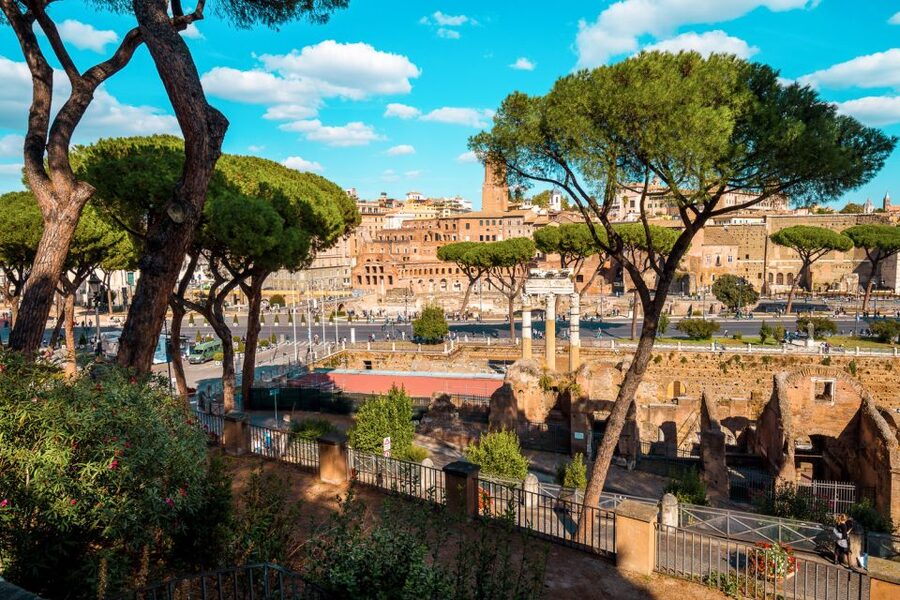
- Roman Forum views: End with a high viewpoint over the ruins, a strong payoff for the museum visit.
Why the Capitoline Museums matter in Rome
Rome can feel like a giant outdoor museum, but its objects are often scattered across different ruins and churches. The Capitoline Museums give you a more orderly way to understand the city. Here, sculpture, inscriptions, architecture, and archaeological remains help fit separate pieces of Roman history together.
The collection began as a public gift from Pope Sixtus IV at the end of the 15th century. That detail matters. This was not assembled only for a private palace or a royal household. It was created for public access, making it one of Europe’s oldest public collections of antiquities.
I find that context useful before you enter. You are not simply walking into a building filled with old statues. You are visiting a museum with a long civic role in Rome, one tied closely to the city’s identity and its most important hill.
The private guide is especially helpful here. The museum contains plenty of famous objects, but fame does not automatically make an artifact easy to understand. A good explanation can tell you why a statue mattered, how it was used, and how it connects with the ruins outside.
More Museum Tours in Rome
- Vatican Museums, Sistine Chapel & St. Peter’s Basilica Tour
★ 4.3 · 73,970 reviews - Vatican Museums, Sistine Chapel & St Peter’s Basilica Guided Tour
★ 4.5 · 39,149 reviews - Rome: Vatican Museums, Sistine Chapel and Basilica Tour
★ 4.3 · 16,039 reviews
Michelangelo’s Capitoline Square sets the tone
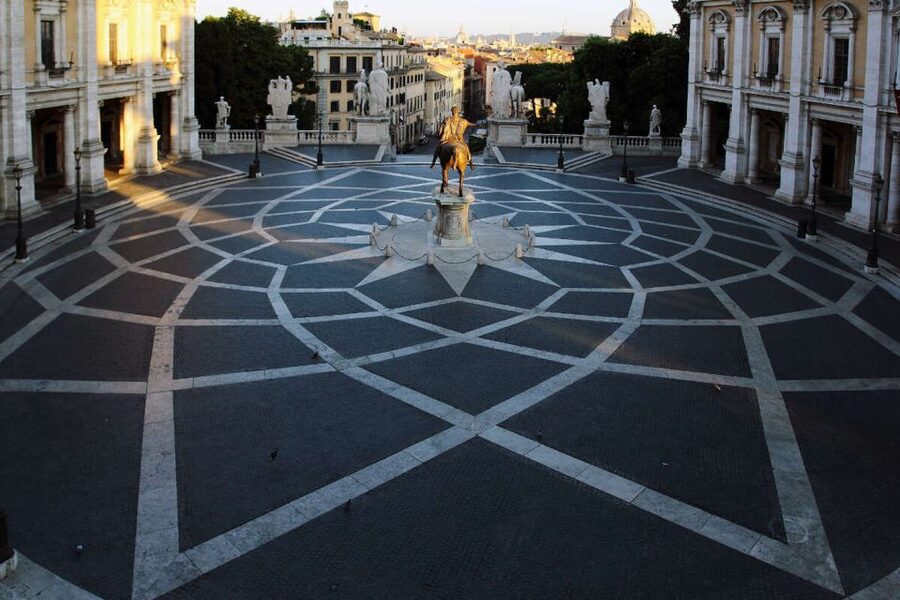
Your meeting point is in the middle of Capitoline Square, in front of the statue of Marcus Aurelius. Your guide holds a sign with your name and gives you the museum tickets. This is a practical arrangement, since you do not need to search for a ticket desk after reaching the hill.
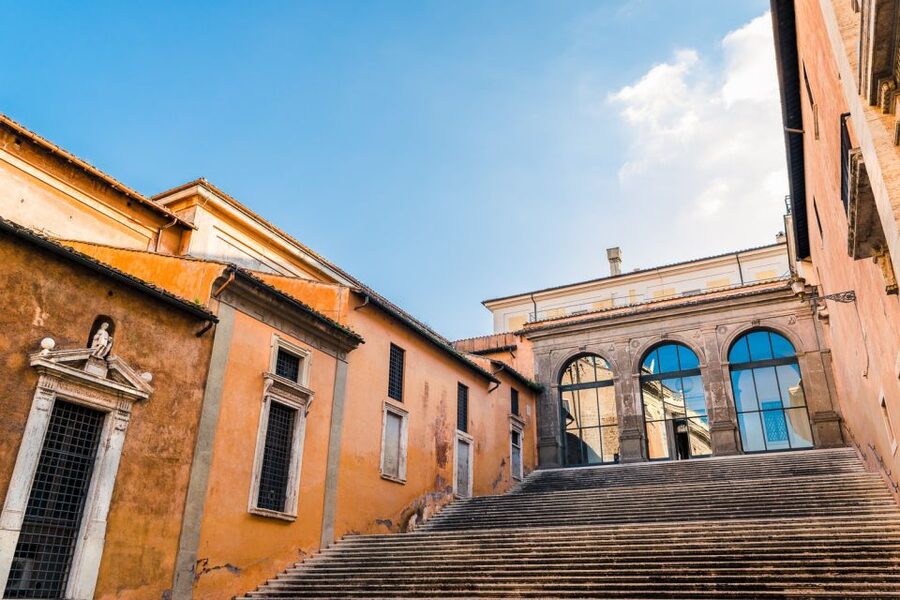
Before going inside, take a moment to look at the square. Michelangelo designed this space with a sense of order that contrasts with Rome’s usual jumble of streets and buildings. The paving, the surrounding palaces, and the central statue all direct your eye toward the square’s main axis.
The setting also gives your guide a useful starting point. Roman history is not hidden behind glass here. The buildings, paving, hill, and surrounding views all help explain why the Capitoline was such an important place.
I would arrive ready to listen before entering the galleries. The opening explanation gives you a framework for the rest of the tour. Without it, the museum can feel like a long sequence of impressive but disconnected rooms.
The She Wolf and Rome’s founding story
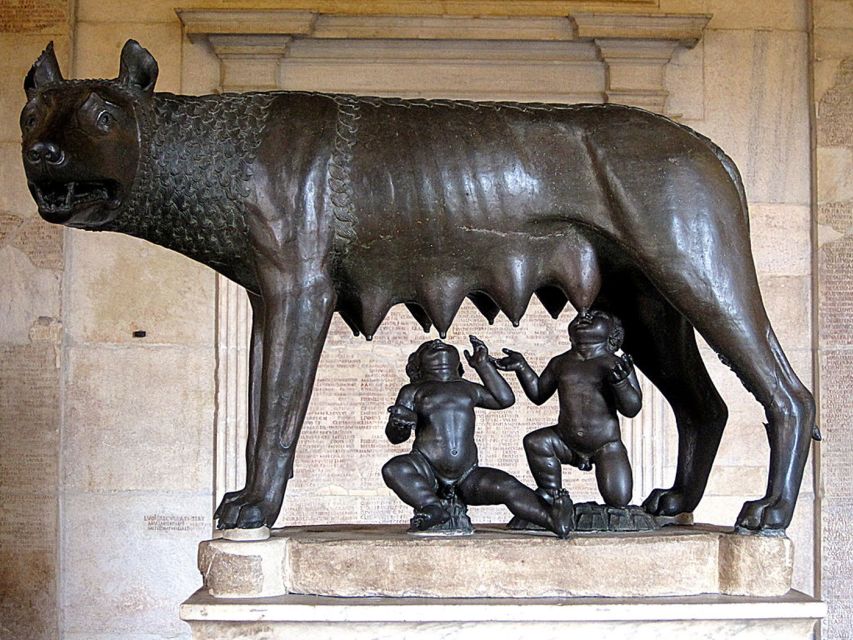
One of the essential stops is the She Wolf, the image most closely tied to Rome’s origin story. The sculpture shows the she-wolf associated with Romulus and Remus, the legendary founders of the city. It is not just an attractive bronze object. It is a symbol of Roman identity, repeated in civic images and souvenirs throughout the city.
This is a good moment to ask your guide about the difference between legend and historical evidence. The museum allows you to see how Romans used stories of their origins to define the city and its people. Your guide can also explain the object’s place within the wider collection rather than treating it as a quick photo stop.
The tour’s private format helps here. If your group wants to spend more time on the She Wolf, compare it with another sculpture, or ask about the story behind it, you can do so without holding up a large party.
Still, keep your expectations sensible. The tour highlights the most important objects rather than covering every room in equal detail. That is an advantage for a first visit, but art lovers who want a long, quiet study of each gallery may need extra time on their own.
Marcus Aurelius in the Exedra
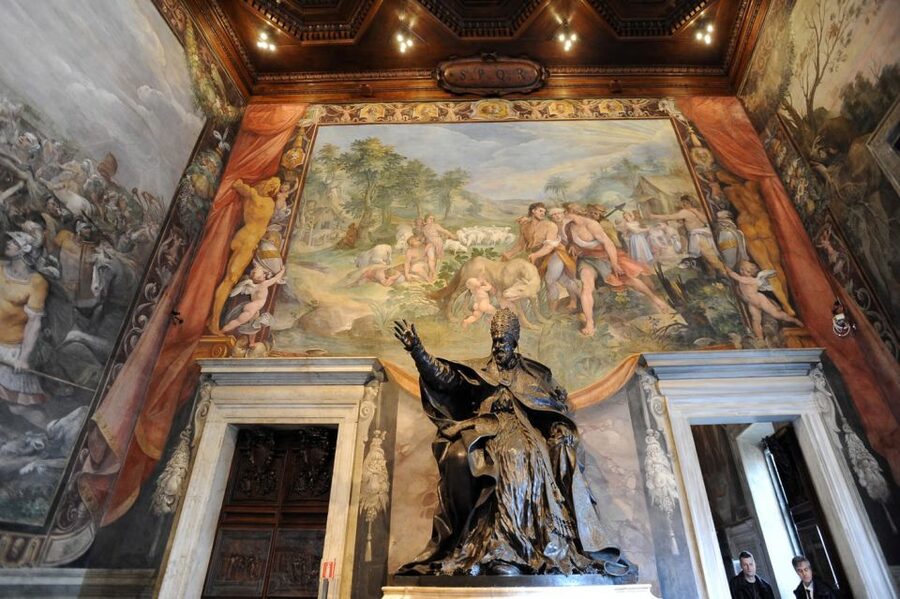
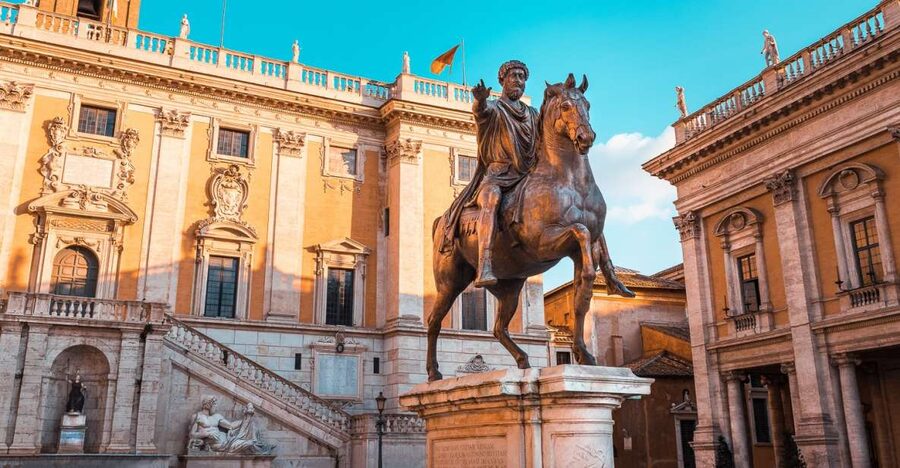
The bronze statue of Marcus Aurelius is another major focus. It dates from the second century A.D. and is displayed in the Marcus Aurelius Exedra, a setting designed to give the sculpture proper space and attention.
This is one of those Roman works that rewards a guide’s explanation. Marcus Aurelius is remembered as an emperor and philosopher, but the statue also tells you how Roman power was presented in public. The scale, material, posture, and placement all matter.
You will meet the guide at this statue, then return to it as part of the museum visit. That makes the meeting point easy to recognize, but it also means the statue becomes an anchor for the whole experience. You begin and end at the same square, with the bronze emperor linking the outdoor space to the indoor collection.
The guides praised most highly for this experience include Vincenzo, also called Vincent, Vicente, and Martina. The descriptions of their style point to lively delivery, useful facts, and a clear focus on the museum’s best pieces. That is important in a collection like this, where a dry list of dates would quickly wear you down.
More private museum tours in Rome:
- Private Vatican Museums and St. Peter’s Basilica Early Bird Tour
★ 5.0 · 980 reviews - Vatican City: Sistine Chapel, Museums, Basilica Private Tour
★ 4.8 · 158 reviews - Rome: Private Leonardo da Vinci Exhibition Guided Tour
★ 4.6 · 54 reviews - Skip the line Vatican Museum Sistine & St.Peter Private Tour
★ 4.7 · 40 reviews
Marble, bronze, and the remains of Jupiter’s temple
Beyond the headline pieces, the museum gives you a close look at Roman marble and bronze sculpture. You can expect the guide to select important works rather than attempt a room-by-room inventory. That approach works well in a 2.5-hour visit, especially if this is your first museum stop in Rome.
Marble can appear calm and familiar after you have seen several Roman statues, but the guide’s context helps separate portraits, religious figures, and civic images. Bronze offers a different experience, with its darker surface and connection to public monuments. The contrast between materials gives the collection useful variety.
The archaeological remains of the ancient Capitoline Temple of Jupiter add another layer. The temple was tied to the religious and political life of ancient Rome, and its remains remind you that this hill was important long before the modern museum buildings took shape.
I like this part of the itinerary because it keeps the visit from becoming a parade of famous names. You move from an object that represents Rome, to an emperor, to the physical remains of a temple that helped define the Capitoline. The result is a more grounded picture of the city.
The Roman Forum view is the final reward
The museum’s view over the Roman Forum is one of the tour’s strongest features. From above, the scattered columns and foundations begin to make more sense. You can see the ancient center as a connected urban space rather than a collection of isolated ruins.
This viewpoint is valuable even if you have already visited the Forum at ground level. Down among the ruins, you notice stones, arches, and fragments. From the museum, you can take in the broader arrangement and understand how the Forum sat within Rome’s civic core.
It is also a satisfying end to the tour. You have just seen objects removed from, or linked to, the ancient city. Now you look toward the ruins themselves. The indoor collection and outdoor archaeology reinforce each other.
The tour ends back at the original meeting point. That makes planning easier, especially if you want to continue through central Rome afterward. Hotel pickup, drop-off, and private transport are not included, so you need to arrange your own route to and from Capitoline Hill.
How the 2.5-hour private format affects the visit
Two and a half hours is long enough to build a story but short enough to fit into a busy Rome day. You can see the main highlights without giving up an entire morning or afternoon.
I would choose this length for a first visit. The museum has enough material to fill much longer, but a focused introduction helps you avoid fatigue. You get the square, key sculptures, temple remains, and Forum view in one guided sequence.
The private group is the bigger advantage. Your guide can adjust the pace and answer questions that matter to your party. Parents, first-time visitors, and people who prefer explanation over silent gallery wandering may find this especially useful.
The tradeoff is cost. At $135.94 per person, this is not a budget museum ticket. The price includes entry, a professional local guide, and a private tour, but not food, drinks, transportation, or hotel transfers. The value depends on how much you want interpretation and personal attention.
For one person or a couple, the cost may feel high compared with entering a museum alone. For a family or small group, the private price can make more sense because you are paying for one shared guide rather than joining a large public group. If you already know Roman art well, independent entry may offer better value. If you want the collection explained clearly, the private format earns more of its price.
Guide style and what you can expect
The strongest guide experiences are described as energetic, interactive, and focused on the museum’s most important artifacts. That style suits the Capitoline Museums. You need someone who can keep the story moving and decide which objects deserve your limited time.
Vincenzo, also known as Vincent, is praised for enthusiasm and for making the collection easier to understand. Vicente is described as high-energy, with interesting facts and a strong ability to steer a group toward the main highlights. Martina is noted for being friendly, well informed, and helpful with general Rome tips.
Your guide may be Vincenzo, Vicente, Martina, or another member of the Rome Guides team. The tour is offered in English or Italian. Since the activity is private, you can ask questions directly rather than waiting for a large group to move along.
I would treat the guide as the main reason to book, not simply as a ticket escort. The museum’s most famous objects are easy to find in a basic sense. The value comes from understanding why they matter and how they connect to Rome’s wider story.
Practical details before you reserve
Meet in the center of Capitoline Square, directly in front of the Marcus Aurelius statue. Look for the guide holding a sign with your name. Tickets are issued there, and the tour returns to the same point.
Leave large luggage and oversized bags behind. Video recording is not allowed. The activity runs rain or shine, though most of the museum visit is indoors.
Plan on walking and using areas that may not be fully served by the elevator. One elevator is available, but it does not reach every museum level. The tour is not suitable for wheelchair users or people with limited mobility.
You can cancel up to 24 hours before the start time for a full refund. The reserve-now, pay-later option is useful if your Rome schedule is still changing. Starting times vary, so check availability before you build the rest of your day around the visit.
Is this Capitoline Museums tour worth booking?
I would book this tour if you want Rome’s art and archaeology explained by a dedicated guide, especially on your first visit. The She Wolf, Marcus Aurelius, Jupiter’s temple remains, Michelangelo’s square, and the Forum view form a well-chosen route through the museum.
The price is easier to justify for a private group than for a solo visitor. You are paying for personal guidance, museum admission, and a focused visit rather than transportation or refreshments. Choose independent entry instead if you prefer to set your own pace or already have strong knowledge of Roman art.
The clearest reason to skip it is mobility. The uneven access between levels and the lack of full elevator service make this a poor fit for wheelchair users and anyone who needs step-free movement. For everyone else who wants a compact, story-led introduction to one of Rome’s most important collections, this is a smart use of 2.5 hours.
FAQ
How long does the Capitoline Museums tour last?
The tour lasts 2.5 hours. Starting times vary, so check availability when choosing your date.
Where does the tour begin?
Meet your guide in the middle of Capitoline Square, in front of the statue of Marcus Aurelius. The guide will hold a sign with your name and provide the tickets.
What languages are available?
The live tour guide is available in English or Italian.
Is this a private tour?
Yes. The activity is offered for a private group.
Are hotel pickup and transportation included?
No. Hotel pickup, hotel drop-off, and private transportation are not included. Food and drinks are also excluded.
Is the tour suitable for wheelchair users?
No. The tour is not suitable for wheelchair users or people with limited mobility. There is one elevator, but it does not serve all levels of the museum.
Just added around Rome
- Vatican City: Sistine Chapel, Museums, Basilica Private Tour★ 4.8 · 158 reviews
- Rome: Hop-on Hop-off Bus & Vatican Museums Ticket★ 3.5 · 41 reviews
- Rome: Vatican Museums, Sistine Chapel, and St. Peter’s Tour★ 4.5 · 49 reviews
- Skip-The-Ticket Line-Vatican Museum & Sistine Chapel★ 3.9 · 383 reviews
- Skip the line Vatican Museum Sistine & St.Peter Private Tour★ 4.7 · 40 reviews
- Skip-the-Line Vatican Museums and Sistine Chapel Guided Tour★ 4.3 · 130 reviews
- Skip-the-Line Tickets: Vatican Museum and Sistine Chapel★ 3.5 · 114 reviews
- MAXXI – Museum of Contemporary Art of 21st century★ 4.0 · 91 reviews
Museum Tours in Rome, compared.
Vatican Museums, Sistine Chapel & St. Peter’s Basilica Tour
Read our review →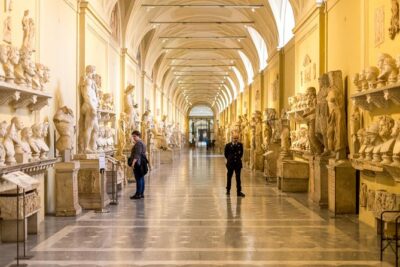
Vatican Museums, Sistine Chapel & St Peter’s Basilica Guided Tour
Read our review →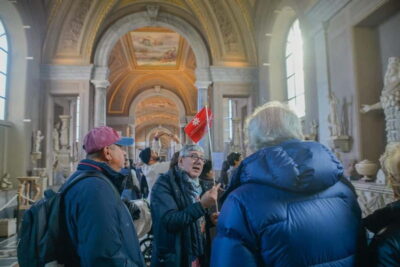
Vatican Museums, Sistine Chapel and Basilica Tour
Read our review →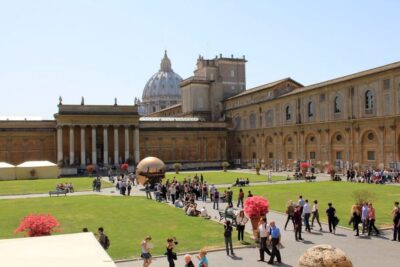
Vatican Museums & Sistine Chapel Skip-the-Line Entry Ticket
Read our review →
Vatican Museums, Sistine Chapel & Basilica Tour
Read our review →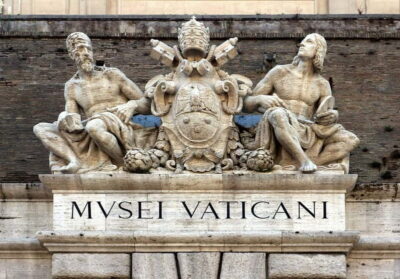
Vatican Museums & Sistine Chapel Guided Tour
Read our review →
Vatican Museums & Sistine Chapel Skip-the-Ticket-Line Tour
Read our review →
Vatican Museums, Sistine Chapel and St. Peter’s Basilica Tour
Read our review →Browse the lists this tour appears in