
Review · MUSEUM OF ILLUSIONS
Kuala Lumpur: Museum Of Illusions Standard Admission Ticket
Kuala Lumpur’s Museum of Illusions turns a short indoor visit into a cheerful battle between your eyes and your brain. You may appear to shrink, lose your sense of balance in the Vortex Tunnel, or watch a friend’s head become part of a playful display.
I like the hands-on design, since you do more than look at exhibits. I also like the Infinity Room and Smart Playroom, which give the visit both a strong photo moment and a few puzzles that make you stop and think. The main drawback is size: some people may find the museum small for the $10 admission, especially if they expect a full-day attraction.
- Forty-plus optical illusions give you plenty of quick experiments with sight, balance, scale, and reflection.
- The Vortex Tunnel creates a strong feeling of movement and makes a simple walk surprisingly tricky.
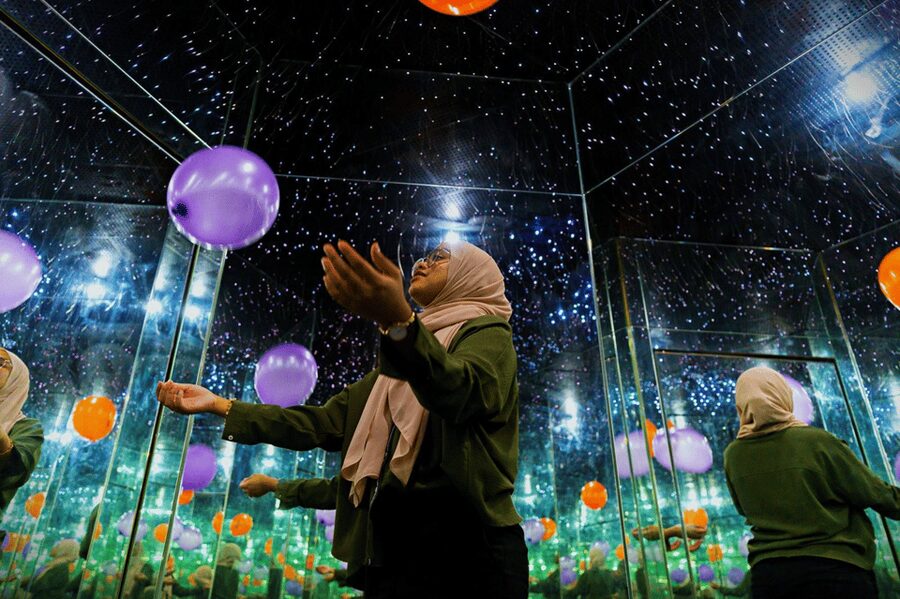
- The Infinity Room uses mirrors and light to produce endless-looking reflections for memorable photographs.
- The Smart Playroom adds puzzles and brain teasers, so the visit is not only about taking pictures.
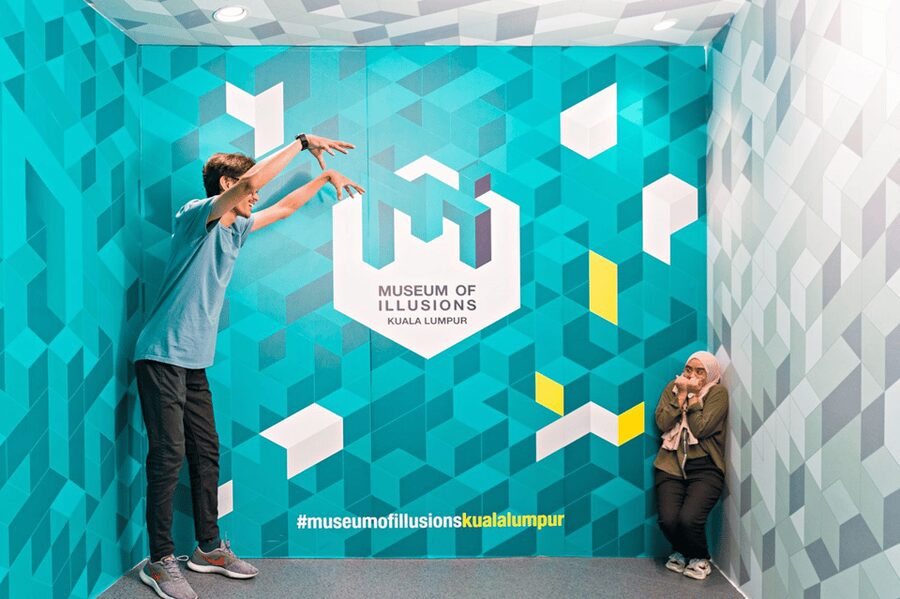
- The Ames Room and Anti-Gravity Room play with size and physical orientation in ways that work well for families.
- A 45-minute visit suits a spare hour in Kuala Lumpur, but you can stay longer if you enjoy repeating the displays.
What the Museum of Illusions Kuala Lumpur Actually Offers
This is not a traditional museum filled with paintings, old objects, or long historical labels. It is a compact, interactive attraction built around one idea: your senses can give you the wrong answer.
You move through more than 40 displays that use mirrors, perspective, light, balance, and visual scale. The exhibits are made for participation, so you become part of the scene rather than simply standing behind a barrier.
That distinction matters. If you enjoy taking photos, you will find many spots where a friend can frame you inside the trick. If you prefer quiet museum rooms and detailed collections, this may feel more like a playful photo attraction than a serious museum.
The explanations add useful context. They show how the eye and brain process what you see, giving the fun a small science lesson underneath it. You do not need a background in physics or psychology. The basic idea is simple: your brain makes quick assumptions, and these rooms exploit those assumptions.
The Vortex Tunnel Tests Your Balance
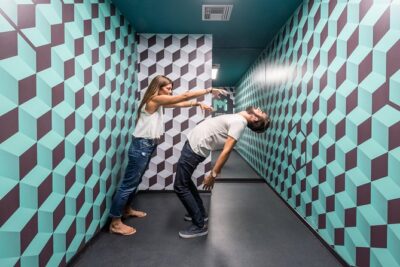
The Vortex Tunnel is one of the more physical stops. You walk through a passage that appears to rotate around you, even though the floor remains stable.
Your eyes tell you that the surroundings are moving. Your body tries to correct for that message, which can make a few steps feel awkward. This is the sort of illusion that works best when you take your time and hold your balance instead of rushing through.
I would treat this as a brief sensory challenge, not a ride. Visitors with mobility limitations, people who are pregnant, and anyone who feels unsteady should move at their own pace and use caution. The museum is wheelchair accessible, but individual displays may still feel different depending on your mobility and comfort.
The Vortex Tunnel is also a good example of the museum’s appeal. You are not only reading about perception. You feel how easily your senses can be persuaded.
More Museum of Illusions tickets:
- Prague: Museum of Fantastic Illusions Entry Ticket
★ 4.3 · 4,337 reviews - Madrid: Museum of Illusions Ticket
★ 4.1 · 1,909 reviews - Vienna: Museum of Illusions Vienna Admission Ticket
★ 4.0 · 1,392 reviews
The Anti-Gravity Room Turns Familiar Rules Upside Down
The Anti-Gravity Room offers another physical illusion. Its design makes ordinary orientation feel wrong, so photographs can suggest that you are standing at an impossible angle or moving against gravity.
This is a simple idea, but it gives you an immediate activity. You can pose, change your position, and let the camera create the punch line. The best results depend on how you frame the picture, so having another person with you can make the stop more enjoyable.
Solo visitors can still take part, but the attraction is naturally more social when someone else is available to photograph you. Families and groups of friends will probably spend more time here than visitors who are moving through alone.
The room does not require a long explanation. You understand the trick quickly, which keeps the visit moving. It also means you should not expect one exhibit to occupy half an hour.
The Infinity Room Is the Main Photo Stop
The Infinity Room uses mirrors and reflections to make the room appear to continue far beyond its actual walls. The result is a repeating pattern of lights, images, and reflections that can look endless through a camera lens.
This is likely to be one of your favorite stops if you want a distinctive photograph from Kuala Lumpur. The room gives you a strong visual contrast with the more active exhibits, since the effect comes from looking into the repeated reflections rather than walking through a physical challenge.
Take a moment to look around before taking your picture. The room’s appeal is not only the final image. It shows how mirrors can make a small space feel much larger and how your brain accepts repetition as a suggestion of distance.
Because the museum is compact, this is also a place where you may want to pause instead of racing to the next display. You can stay longer than the estimated 45-minute visit, so there is no need to treat every room as a quick checkpoint.
The Ames Room Plays With Your Size
The Ames Room creates a striking change in apparent scale. Depending on where you stand, you may look unusually large or unusually small compared with another person in the same room.
The trick works through perspective. The room is shaped in a way that appears normal from a particular viewing position, but the space is not as regular as your eyes assume. When two people stand in different places, the contrast can look dramatic.
This is one of the better exhibits for families because the result is easy to understand and fun to compare. It also shows the educational side of the attraction without turning the experience into a lecture.
You will get more from the room if you follow the marked viewing position and let someone else take the photograph. The effect depends on where the camera and subjects are placed, so a quick snapshot from the wrong angle may not show the illusion clearly.
A few more museum visits around the world worth comparing
- Vatican: Museums & Sistine Chapel Entrance Ticket
★ 4.5 · 144,003 reviews - Paris: Louvre Museum Timed-Entrance Ticket
★ 4.6 · 71,977 reviews - Amsterdam: Van Gogh Museum Ticket
★ 4.7 · 52,054 reviews - NYC: 9/11 Memorial & Museum Timed-Entry Ticket
★ 4.8 · 31,428 reviews
The Playful Displays Invite You Into the Trick
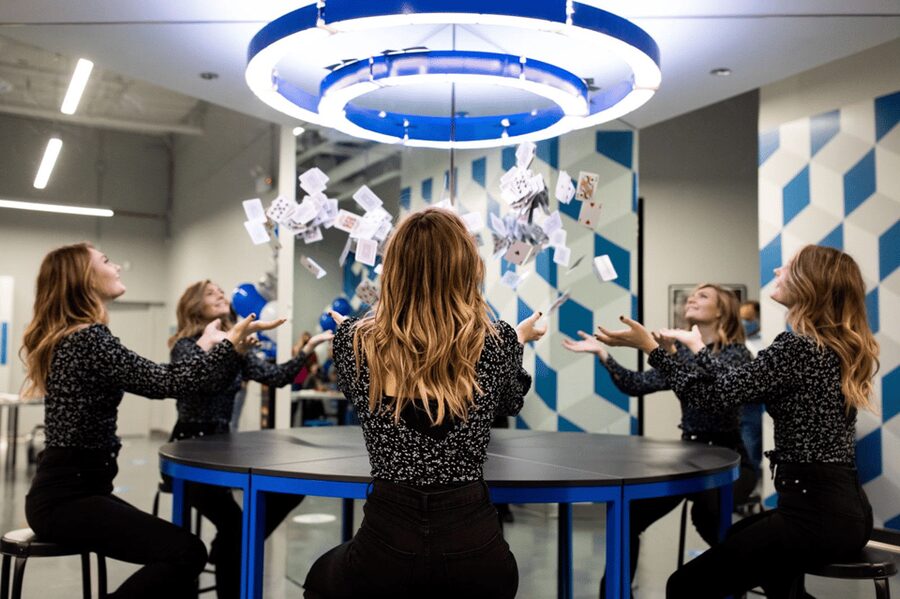
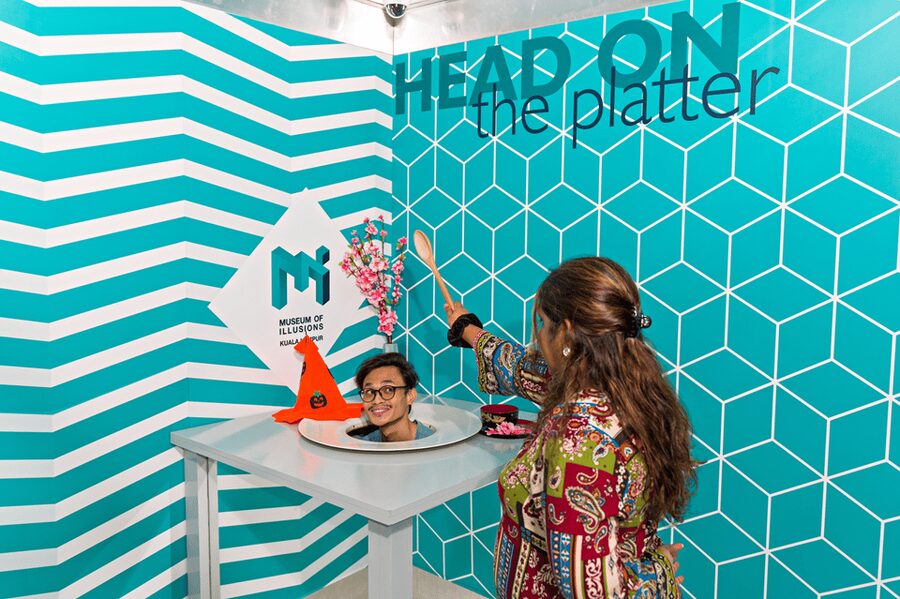
Several exhibits use familiar scenes and visual setups to make you part of the illusion. One display can make it look as if you are serving a friend’s head on a platter. Other spaces let you create kaleidoscopic patterns or pose inside unusual visual frames.
These displays are intentionally lighthearted. They are not designed to make you study one image for a long time. Instead, they give you a quick surprise, a chance to laugh, and a photograph that explains the trick better than words can.
I find this style useful for mixed-age groups. Younger children can react to the visual joke, older children can ask how it works, and adults can help line up the shot. The attraction also works for a social outing because people naturally take turns posing and photographing each other.
Still, keep expectations sensible. The museum is not an all-day program with a long sequence of elaborate activities. It is a collection of short encounters, and the enjoyment comes from the variety.
The Smart Playroom Adds More Than Photo Opportunities
The Smart Playroom changes the pace. Instead of relying mainly on mirrors and perspective, it offers puzzles and brain teasers that ask you to reason through a problem.
This section is valuable if you want the visit to involve more than taking pictures. You may find yourself testing patterns, trying different solutions, or watching another person approach the same puzzle in a completely different way.
The puzzles also support the museum’s educational purpose. They show that perception and problem solving are connected, and they give children a chance to learn through trial and error without the pressure of a classroom.
Do not assume every puzzle will suit every age. Children aged 5 to 15 have a separate admission category, while children from 0 to 4 enter free. Adults still need to supervise children, and anyone under 18 must be accompanied by a paying adult.
How Long to Allow and When to Go
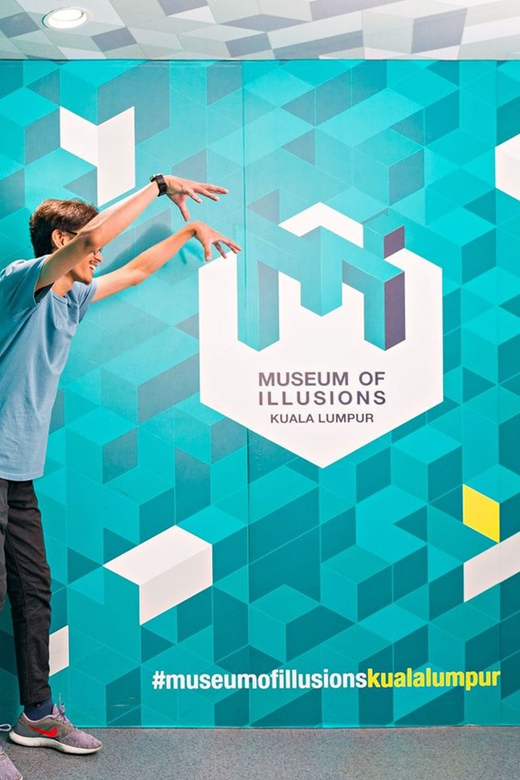
The stated visit time is about 45 minutes. That makes the museum easy to fit into a day of sightseeing, especially when you need an indoor break or have a free hour before another plan.
You can stay longer if you want to repeat a puzzle, retake photographs, or give children time to try each activity. The exact length depends on how many exhibits you stop to explore and how busy the rooms feel.
The museum is open daily from 10:00 AM to 10:00 PM. That broad schedule gives you useful flexibility. A morning visit may suit families who want to keep children fresh, while an evening stop can work as a short activity after other Kuala Lumpur plans.
The ticket is valid for one day, with entry at the museum’s ticketing counter. You do not receive transport, meals, drinks, or souvenirs as part of the admission, so plan this as a self-guided attraction rather than a hosted tour.
Is $10 Good Value for a 45-Minute Visit?

At $10 per person, the value depends on what you want from a museum. If you judge the ticket by time alone, it may feel expensive for an attraction that many people finish in about 45 minutes.
The price makes more sense if you value the interactive element and the photographs. You are paying for access to many small experiments, not for a single show or ride. A group can also share the fun by taking turns posing and solving puzzles.
The mixed satisfaction level is worth keeping in mind. Some people find the museum entertaining and memorable, while others find it underwhelming, small, or not strong value for the price. Staff helpfulness may also affect your impression, although the attraction is mainly self-guided.
I would book it for a short, playful stop rather than making it the main event of your Kuala Lumpur day. If you want a large museum with hours of galleries, this is the wrong choice. If you want a compact activity with photo tricks and simple science, the ticket can work well.
Who Will Enjoy This Most
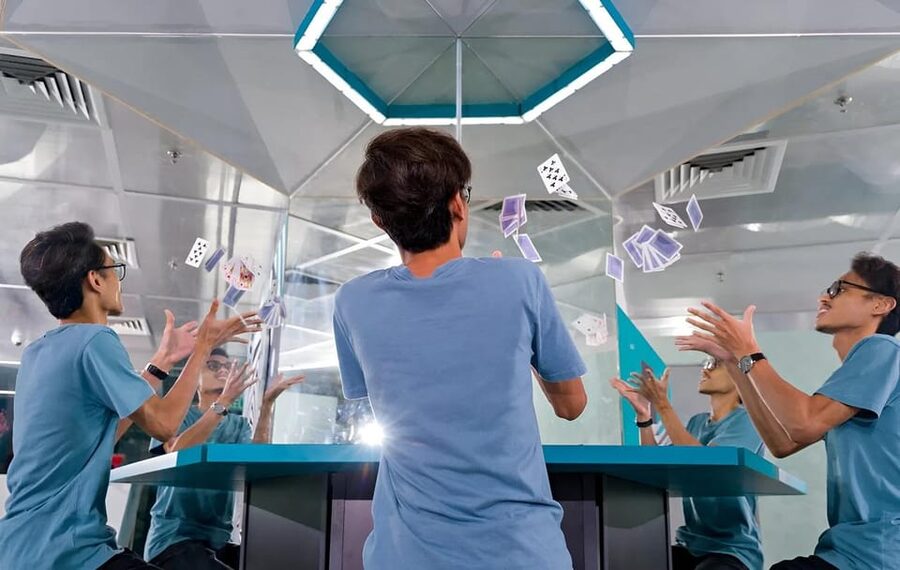
The museum suits families with children, groups of friends, couples who enjoy taking unusual photographs, and solo visitors who like hands-on exhibits. It also provides an easy indoor option for people who want a break from walking around the city.
Children aged 5 to 15 have a child ticket, and admission is free for children aged 0 to 4. Every child from 0 to 17 must be accompanied by a paying adult. Students need to bring a valid student card, and all visitors should carry a passport or ID card.
The attraction is accessible to wheelchair users, older visitors, people with prams, and people living with disabilities. That does not mean every illusion will feel equally easy for every person, so take your time with displays that affect balance or visual orientation.
Food and drinks are not allowed inside. You should also remember that transport is not included. Go directly to the museum’s ticketing counter to redeem your admission.
Practical Tips for a Smoother Visit
Wear or bring whatever helps you feel steady in the balance-based rooms. The museum is not described as a strenuous attraction, but the Vortex Tunnel and Anti-Gravity Room can feel disorienting.
Ask a companion to take photographs from the suggested viewing points. Many illusions depend on camera position, and a rushed picture may miss the effect.
Give the Smart Playroom enough time. It is easy to focus on the colorful photo rooms and move past the puzzles, but this area gives the museum more substance.
If you are visiting with children, plan for breaks and let them choose which displays to repeat. The museum is short enough that you do not need to force a fast route.
Finally, check your ticket category before arriving. Adults are listed as ages 16 to 54, children as ages 5 to 15, and students need valid student identification. Malaysian citizens can use Malaysian tickets with a valid Malaysian ID card.
Should You Book the Museum of Illusions?
Book this attraction if you want a short, interactive outing with unusual photographs, simple science, and activities that work across several age groups. The Infinity Room, Ames Room, Vortex Tunnel, and Smart Playroom give the visit enough variety for a pleasant break in Kuala Lumpur.
Skip it if you expect a large museum, a guided tour, or several hours of serious exhibits. At $10, the admission is easiest to justify when you enjoy posing, experimenting, and sharing the experience with family or friends.
My practical verdict: treat it as a 45-minute add-on, not a full-day destination. With that expectation, it can be a fun change of pace. If the price feels high for a compact attraction, compare the value against your available time before booking, since the ticket is non-refundable.
FAQ
How long does the Museum of Illusions Kuala Lumpur visit take?
The museum takes approximately 45 minutes to experience. You can stay longer if you want to repeat exhibits, take more photographs, or spend extra time in the Smart Playroom.
What are the museum’s opening hours?
The museum is open daily from 10:00 AM to 10:00 PM.
Is the museum suitable for children?
Yes. Children aged 5 to 15 use the child ticket, while children aged 0 to 4 enter free. Children aged 0 to 17 must be accompanied by a paying adult.
Do students need identification?
Yes. Students must present a valid student card for admission. All visitors should also bring a passport or ID card.
Is the Museum of Illusions wheelchair accessible?
Yes. The museum is accessible to wheelchair users, older visitors, people with prams, and people living with disabilities. Visitors with mobility limitations or who are pregnant should use caution and move at their own pace.
What is included with the admission ticket?
The ticket includes standard admission to the Museum of Illusions Kuala Lumpur. Transport, meals, beverages, personal expenses, and souvenirs are not included. Food and drinks are not allowed inside.
Just added around the world
- Girona, Figueres, Dalí Museum and Cadaqués Tour from Barcelona★ 4.5 · 36 reviews
- Football Club Barcelona Museum Immersive Tour Guided Visit★ 3.5 · 52 reviews
- Erotic Museum Admission Ticket with Audioguide★ 5.0 · 527 reviews
- Dali Museum and Costa Brava Small Group Day Trip from Barcelona★ 5.0 · 77 reviews
- Madrid by High-Speed Train with Prado Museum Private Tour★ 4.0 · 33 reviews
- Guitar Legends Hall: Entrance to the Immersive Rock Museum★ 5.0 · 25 reviews
- White Rabbit Museum: The Best Immersive Experience in Catalonia★ 5.0 · 538 reviews
- Private Dali Museum, Besalú & Girona Tour from Barcelona★ 5.0 · 15 reviews
Museum of Illusions Tickets, compared.




Big Fun Museum & Museum of Illusions Experience
Read our review →
Admission Ticket to the Museum of Illusions in Sofia
Read our review →Browse the lists this tour appears in