

Review · POLAND
Krakow: Polish Aviation Museum Entry Ticket
The Polish Aviation Museum gives you far more than a quick look at a few old planes. Its former airport setting, rare aircraft, Cold War hangars, and wide outdoor grounds make it one of Krakow’s best-value museums for anyone curious about flight. The collection has more than 300 objects, including military aircraft from two world wars and machines from the Soviet era.
I like the mix of indoor and outdoor displays, and I like that the museum works for both serious aviation fans and families. You can study unusual aircraft such as the Grigorovich M-15 flying boat, then let children try hands-on physics activities. The main drawback is that many displays have limited English information, and opening hours can change, so check the official museum website before you go.
Key points to know before you go
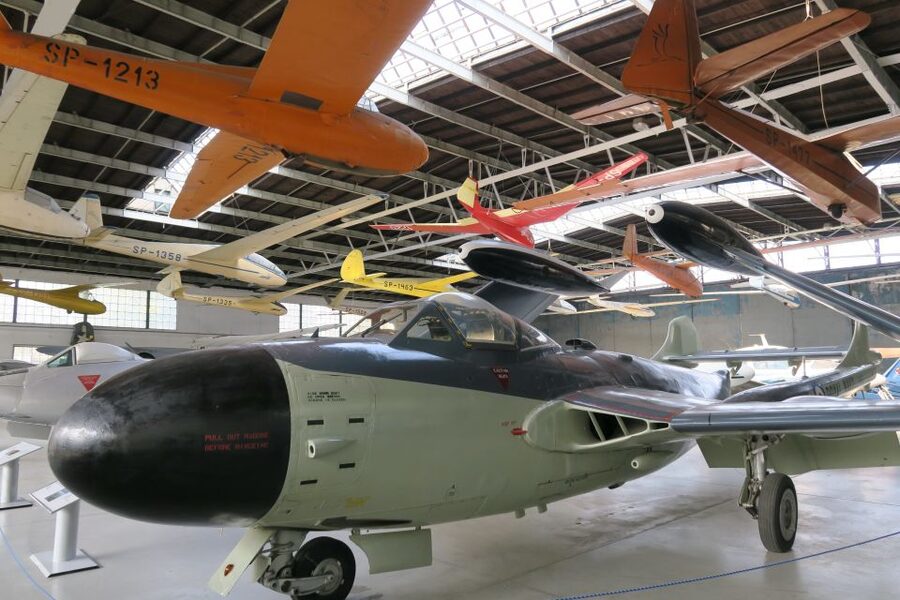
- More than 300 aircraft and aviation objects: See planes, helicopters, gliders, aircraft parts, and technology from early flight through the modern era.
- A former airport with real historical weight: The museum occupies the Rakowice-Czyżyny airfield, one of Europe’s oldest airports.
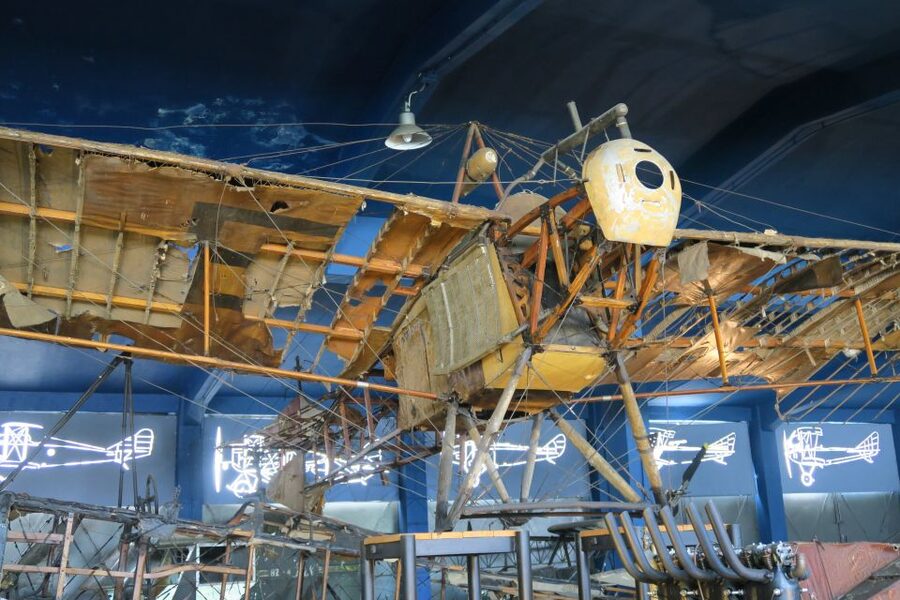
- Rare aircraft and unusual survivors: Look for the Halberstadt Cl.II and Roland D.IV hulls, plus the only remaining Russian Grigorovich M-15 flying boat from 1916.
- A strong Cold War and Soviet-era collection: Antonov AN-26 and the Polish PZL 130 Orlik are among the large outdoor exhibits.
- Good family features: Children have an interactive zone, simple experiments, and plenty of open space.
- Plan for at least two hours: A quick visit works, but the spread-out grounds and many hangars reward a longer stay.
Krakow’s old airport becomes an aviation museum

The setting is part of the experience. The museum occupies the former Rakowice-Czyżyny airport, an airfield with roots reaching back to the early years of European aviation. Instead of viewing aircraft in a generic gallery, you walk through the grounds of a place built for flight.
That setting gives the visit a useful sense of scale. Large aircraft sit outside in the park, while smaller planes, aircraft parts, and themed displays fill the hangars. You move between enclosed exhibitions and open paths, so this feels more like a compact aviation campus than a single museum hall.
The site is easy to reach by tram, and the Jakdojade transport app can help you choose the right route. A taxi or rideshare is another simple option for getting there, while returning to Krakow’s Old Town by tram is inexpensive and straightforward.
Give yourself more time than you first expect. Some people can see the main areas in about two hours, but the collection is larger than the modest ticket price suggests. If you have a strong interest in aircraft, history, or military technology, three hours is a safer target.
A few more museum visits around Poland worth comparing
- Schindler’s Factory in Krakow: Guided Tour & Skip the Line Ticket
★ 4.5 · 1,714 reviews - Warsaw: POLIN Museum of the History of Polish Jews Ticket
★ 4.7 · 1,142 reviews - Warsaw: Museum World of Illusion Entry Ticket
★ 3.9 · 666 reviews
Start with early flight and rare aircraft
The indoor displays help you follow aviation from its first pilots to modern machines. The story is not limited to famous commercial aircraft. You will see military designs, aircraft components, gliders, helicopters, and machines built for very different jobs.
Several objects are especially unusual. The hulls of the German World War II Halberstadt Cl.II and Roland D.IV are important because surviving examples of these aircraft are rare. The Russian Grigorovich M-15 flying boat is even more distinctive. The museum holds the only remaining example of this 1916 aircraft.
You do not need to be an aviation expert to appreciate these objects. Look at the construction, the materials, and the shapes of the aircraft. Early machines can appear delicate compared with later military planes, which makes the change in design easy to see as you move through the collection.
English information is not consistent across the museum. Some areas are clear and informative, but other displays have little or no English translation. An English guidebook would make the visit easier for international visitors, particularly in the first entrance area and the sections without translated labels.
If you want detailed technical explanations, you may need to spend more time reading whatever English material is available or use your own background knowledge. The museum is still rewarding without that, but the lack of translation is a real limitation.
Themed hangars make the collection easier to follow
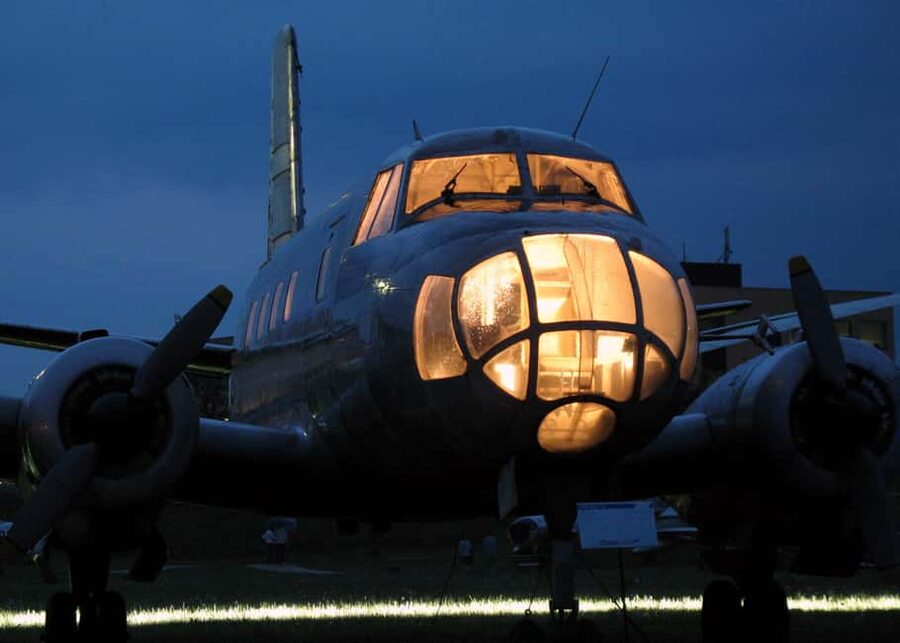
The themed buildings give the museum a useful structure. Rather than seeing every aircraft as an isolated object, you can connect some machines with a period or a style of aviation.
The Cold War area is especially appealing if you are interested in the decades after World War II. The large aircraft and more severe military designs show how different aviation became during the age of radar, long-range travel, and competing military powers.
The hangars also provide welcome shelter when the weather is poor. Much of the collection is outside, but not everything is exposed to the elements. This indoor and outdoor mix makes the museum workable in different seasons, though you should still dress for a fair amount of walking outside.
One important practical warning: a section may occasionally close for a private event or another temporary reason. The admission price does not necessarily change when that happens. Check the museum’s current information before setting aside a full day, especially if one particular hangar is your main reason for visiting.
Outdoor aircraft are the heart of the visit
The open-air section gives the museum its strongest visual appeal. Large aircraft are easier to understand when you can walk around them, compare their size with your own, and see their wings and landing gear from several angles.
The collection includes well-known Soviet-era machines such as the Antonov AN-26. You can also see the Polish PZL 130 Orlik, a trainer aircraft associated with Polish aviation. These displays add local interest to a collection that could otherwise feel focused mainly on foreign military aircraft.
The outdoor grounds are attractive and spacious, with trees and paths around the exhibits. Children have room to move, and adults can take a break between the more technical displays. The setting is particularly pleasant in good weather, but sunshine can make the visit tiring because there is a lot of open-air walking.
Bring water and wear comfortable shoes. The museum is not a quick indoor circuit, and the distance between hangars matters more than you might expect. On a hot, sunny day, plan a slower pace and use the indoor areas as natural rest stops.
Same city, a completely different collection:
- Auschwitz-Birkenau Museum and Memorial Guided Tour from Krakow
★ 4.5 · 1,510 reviews - Krakow: Rynek Underground Museum Guided Tour
★ 4.6 · 1,122 reviews - Warsaw: Polish Vodka Museum Tour with Tasting
★ 4.6 · 788 reviews - Krakow: City Card with Public Transport and Museums
★ 3.9 · 675 reviews
A papal helicopter and other personal connections
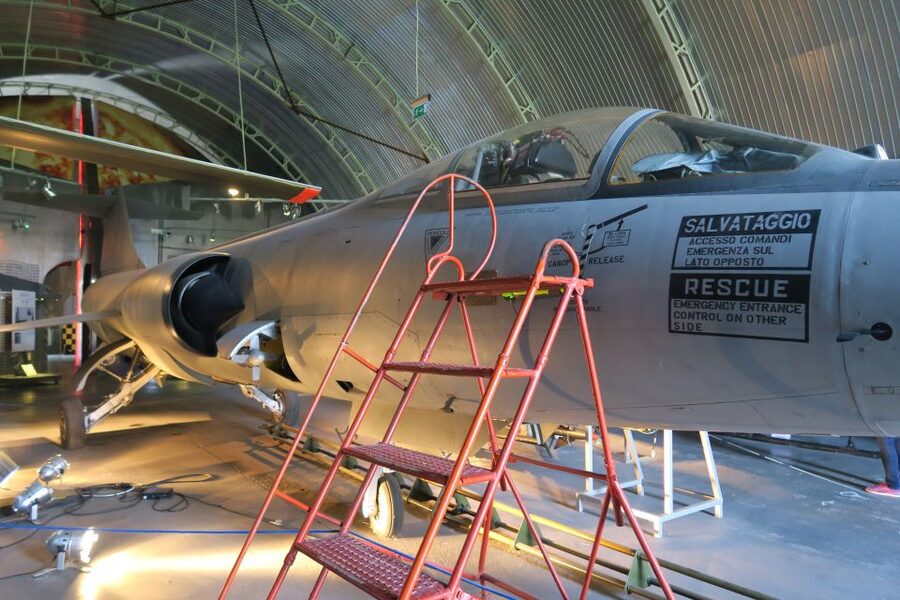
Not every exhibit is about military power or engineering. The papal helicopter adds a direct connection to modern Polish public life and gives the collection a more personal angle.
That kind of object can be useful for visitors who are not aircraft specialists. You can approach it through Polish history, religion, politics, or popular memory rather than through technical details alone. It also helps show how aircraft serve public figures, institutions, and communities, not just armed forces.
As you walk, look for the contrast between utilitarian military machines, training aircraft, early experimental designs, and aircraft linked with public life. The collection is strongest when you treat it as a record of changing needs, not simply a display of large machines.
Interactive displays give families a reason to linger
The museum includes an interactive area where you can explore basic aerodynamic principles. This turns some of the science into something you can test and see, rather than simply read about on a wall.
Children also have a dedicated area for experiments. That matters because the aircraft collection can be demanding for younger visitors, especially when labels are technical or not translated. The hands-on activities provide a change of pace and make the visit easier for families.
There is plenty of outdoor room for children to run, though the museum remains a place where adults should keep an eye on them around large exhibits and paths. The family features do not turn the whole museum into an amusement attraction. They simply give younger visitors a more active way to connect with flight.
Teenagers may find the Cold War aircraft and military technology particularly interesting. Younger children may prefer the interactive zones and the chance to see planes at full size. Adults who are not aviation enthusiasts can still enjoy the park-like setting, but you should not expect every gallery to offer broad cultural interpretation.
How much time should you allow?
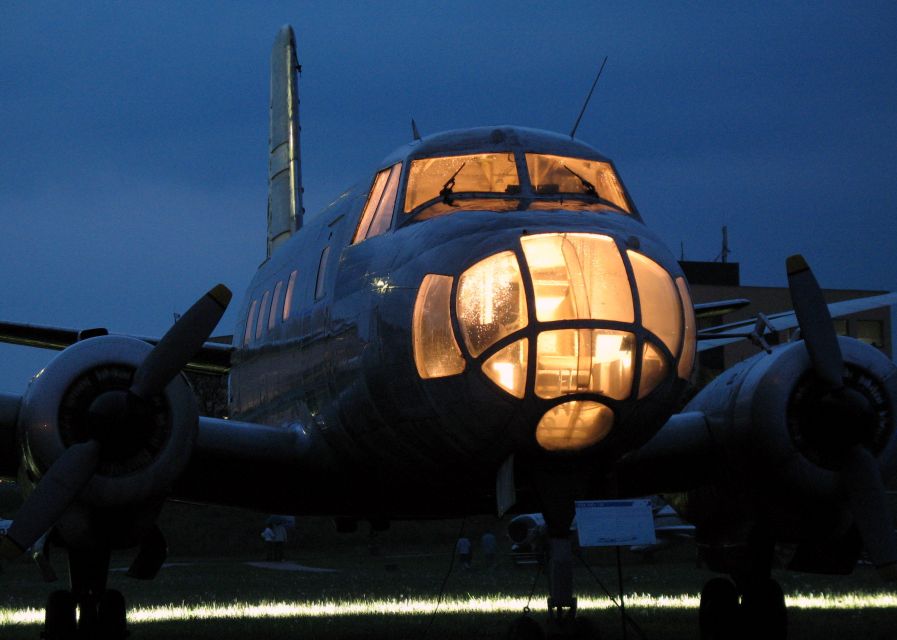
The ticket is valid for one day, so you do not need to race through the grounds. That is useful because the collection is spread across hangars and outdoor areas.
For a quick visit, allow around two hours. That gives you time for the main hangars, a walk through the open-air collection, and a look at the most unusual aircraft.
Allow three or more hours if you want to read labels, spend time in the Cold War section, explore the interactive displays, and examine the aircraft from several angles. Aviation enthusiasts could easily make this a half-day stop.
The last entrance is 30 minutes before closing, but do not treat that as the time you should arrive. You need enough daylight and energy to cover the outdoor section. Opening hours can differ from the times shown when you book, so check the official museum website on the day before your visit.
Is the $10 ticket good value?
At about $10 per person, this is an easy museum to recommend on value. You get access to more than 300 aviation-related objects, the outdoor aircraft, the interactive areas, and the themed hangars. The collection is large enough that the ticket does not feel like a short stop with a few props.
The value is strongest if you like aircraft, military history, engineering, or Polish history. Families also get good use from the price because children have dedicated activities and open space rather than only static displays.
Students can receive discounts with a valid student ID. Also check the age rules before purchasing a child ticket. One booking experience noted that children under seven may enter free at the museum, so confirm this directly before paying for a child admission.
The ticket includes entry only. A guided tour is not included, so you should plan to explore independently. That keeps the price low, but it also means you will get more from the visit if you enjoy reading, comparing aircraft, and setting your own pace.
Transport, timing, and small practical details
The museum is in the Lesser Poland region of Poland, at the former Rakowice-Czyżyny airport. It is easily reached by tram, and a taxi or rideshare can save time if you are traveling with children or carrying bags.
Use Jakdojade to check public transport directions if you are unfamiliar with Krakow’s tram system. The return journey to the Old Town by tram is inexpensive and easy to manage.
The grounds are mostly outdoors, so the season affects the experience. On a warm sunny day, you will appreciate the park but may find the open areas tiring. In cold or wet weather, the hangars become more important, and you should confirm which sections are open.
Free cancellation is available until 24 hours before the scheduled start time, and the booking can be made with payment later. That flexibility helps if your Krakow plans depend on weather or changing opening hours.
Who will enjoy this museum most?
You should book this experience if you are an aviation enthusiast, but you do not need to know aircraft types in advance. The range of machines gives specialists plenty to inspect, while the size and variety make the visit accessible to newcomers.
It suits families better than a standard technical museum because children have experiments, an interactive zone, and space outside. It is also a good choice for teenagers who like military aircraft, engineering, or the Cold War.
History fans will find plenty to connect with, especially in the early aviation and military displays. The museum is less suitable if you want polished English interpretation at every stop, a guided narrative, or a compact indoor attraction that can be finished in under an hour.
Should you book the Polish Aviation Museum?
For $10, I would book it if you have even a moderate interest in aircraft or 20th-century history. The former airport setting, rare early aircraft, Cold War hangars, papal helicopter, and large outdoor collection give the visit real variety.
Go with realistic expectations about the English signage and the amount of walking. Check opening hours, confirm any temporary closures, and allow at least two hours. If those conditions suit you, the Polish Aviation Museum offers one of Krakow’s strongest low-cost museum visits.
FAQ
Where is the Polish Aviation Museum located?
It is located at the former Rakowice-Czyżyny airport in Krakow, in Poland’s Lesser Poland region.
How many exhibits can I see?
The museum has more than 300 aviation-related objects, including aircraft, aircraft parts, helicopters, gliders, and aviation technology.
How long is the ticket valid?
The ticket is valid for one day.
Are guided tours included?
No. The admission ticket provides access to the museum, but a guided tour is not included.
Does the museum have outdoor exhibits?
Yes. The open-air section includes aircraft such as the Antonov AN-26 and Polish PZL 130 Orlik, along with other aviation machines.
Is there anything for children?
Yes. Children can use an interactive zone, try experiments connected with flight and physics, and enjoy open space around the museum.
Can I see aircraft from the world wars?
Yes. The collection includes military aircraft and aircraft remains connected with both world wars, including the hulls of the German Halberstadt Cl.II and Roland D.IV.
Is there a student discount?
Discounts are available for students who show a valid student ID.
Can I cancel the booking?
Yes. Cancellation is available up to 24 hours in advance for a full refund, and the stated information also allows cancellation until the activity start time. Check the exact terms during booking.
Just added around Poland
- Schindler’s Factory Skip-the-line Museum Ticket★ 4.9 · 15 reviews
- Schindler’s Factory Museum Guided Tour – Krakow★ 4.5 · 15 reviews
- Krakow: Schindler’s Factory Museum Guided Tour★ 4.1 · 86 reviews
- Schindler’s Factory Museum in Krakow – Guided Tour★ 4.3 · 33 reviews
- Krakow: Rynek Underground Museum Skip-the-line Guided Tour★ 4.7 · 138 reviews
- Krakow: Vodka Factory Museum Entry Ticket and Tasting★ 4.3 · 75 reviews
- Krakow: Rynek Underground Museum Guided Tour & Stories★ 4.8 · 26 reviews
- Krakow: Skip-the-Line Rynek Underground Museum Guided Tour★ 4.7 · 26 reviews
Museum Tours in Poland, compared.

Schindler’s Factory in Krakow: Guided Tour & Skip the Line Ticket
Read our review →
Auschwitz-Birkenau Museum and Memorial Guided Tour from Krakow
Read our review →
POLIN Museum of the History of Polish Jews Ticket
Read our review →


Krakow Schindler’s Factory Museum Guided Tour in English
Read our review →Browse the lists this tour appears in